Blogs
|
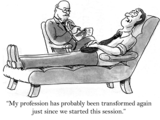
So is training dead? Some people think so!
When we think of how - and more importantly, to what extent - technology has changed the world, we very often understate quite just how dramatically it has impacted upon almost every aspect of our daily lives. The internet, email, smartphones, GPS, online banking, online shopping, you name it ….the last ten years has effectively seen every element of our lives re-packaged, for want of a better word, and given back to us in a completely different format.
But let’s be very clear here. Although technology has obviously transformed how business is conducted, it has not "killed off" core business concepts that have been around for centuries. Far from it in fact; all it has done is added to them through the process of modernisation, streamlining them to make them more user friendly, more consumable, more efficient.
Think of it like this - I don’t recall anyone ever proclaiming that "banking is dead" since the advent of online banking, do you?!
Why should training be any different?
So, by the same token, it is clear that training isn’t dead either! So why then is there a sometimes cynical misconception that, just because the internet offers vast volumes of information resources on any subject matter under the sun, anyone and everyone can automatically become self-taught and training can simply be cast aside, consigned to the annals of history?
Unfortunately, sometimes the problem is that "the internet" (you can take this as a catch-all phrase referring to everything that it entails!), can sometimes lead to the gross simplification of functions that are just not that straightforward. This in turn causes people to make sweeping judgements on matters that require much greater, much more in-depth consideration.
This is where the preconceptions / misconceptions (call them what you will!) occur when it comes to the subject of training.
If "training" is the problem, call it something else!
Perhaps the word "training" itself is where part of the problem lies. Does it, for example, automatically conjure up an image of a classroom collective involving a traditional teacher and pupil environment?
If so then perhaps how it is perceived is the real problem, because clearly nobody can argue against the ideal of training itself (it is after all and at the very minimum, a conscious attempt at self- improvement).
So, if for example, training is associated solely with formal, rote learning and seen as a passive experience delivered via a traditional teacher-pupil method, then perhaps it is entirely understandable that it may be regarded as being outdated and unnecessary?
Clearly what we need to understand and take on board is that not everyone thinks about training in the same positive light. To counter this, it may be that new and nuanced terminology needs to be used, to ensure that training (or whatever we wish to call it), remains valued and relevant to everybody. Believe it or not, phraseology and the way in which something is presented to an audience, is always critical to securing buy-in. First impressions and all that….
For training, read learning!
So instead of using the word training when we talk of upskilling, why not refer to learning instead?! It is a subtle difference but crucially, learning suggests an active willingness to develop a new skill or upgrade an existing one, as against training which could be perceived as something very structured, rigid and even intimidating.
Think about it like this: offering an employee a range of different learning opportunities, supported by different technologies will be perceived very differently than if that same employee is instructed to go on a training course, don’t you think?
It makes sense perfect really because, whilst the vast majority of people will be grateful for an opportunity to upskill, they will also very much appreciate being part of the decision making process in terms of deciding what learning they need - in the context of their individual skillset -and what the best learning approach is for them.
Collaboration is the key
In this age of collaborative, two way communication, nobody is ever going to appreciate being instructed to go a training course, without consultation. Individuals have very different learning patterns and behaviours so instead of having a one-size-fits-all approach, why not engage with employees through a process of collaborative consultation, to see what learning approach will most appeal to them?
After all, if employees have a clear preference for one learning medium over another, listening to them will result in a win-win situation for everyone - because people always learn more in an environment in which they feel comfortable.
The bottom line is that we all still need up-skilling, now more than ever. The world is changing at an incredibly fast pace, faster than ever before, across every possible industry sector. As a result, no-one can afford to sit still and think that they have a sufficient skillset to get them through their careers.
Equally though, people do now have much more access to information resources than ever before so it stands to reason that the delivery methods of training need to be much more interactive, innovative and engaging, beyond simply the dissemination of information that is already widely available.
So go on. Be brave. And remember, training is not dead - it merely changes in terms of how it is delivered and perceived, just in the same way that every industry must change and adapt to new technologies and new thinking. Just as banking was still banking when it went online, training will still be training no matter what name is applied or what methodologies are used for delivery. The only difference is that the more open minded you are in approaching it, the better and more effective it will become.
Fiona Quigley, Director of Learning Innovation
Logicearth Learning Services specialise in designing, delivering and supporting modern workplace learning solutions, which brings results for individuals and organisations. We are learning technology experts and along with specialist interactive multi-device content development skills, we can provide a complete service for all your organisation’s modern learning needs. Logicearth has offices in Belfast and Dublin but deliver services worldwide, including Ireland, UK, USA and throughout Europe.
The post Training isn’t dead? appeared first on e-Learning | Compliance | Training | LMS | Logicearth.
Logic Earth
.
Blog
.
<span class='date ' tip=''><i class='icon-time'></i> Jul 17, 2015 09:19am</span>
|
|
Inspiring the spark of change
This is our new Friday curation spot. Here I have identified 10 posts - a combination of blogs, Linkedin, news and other articles/media that I have come across over the last few weeks. I have identified each one as a possible inspiration to spark new ideas for your L&D team. I’d love to see any of your posts too.
Enjoy!
How can you make use of these sparks?
So let’s take an example. Spark 10, from Neil Morrison, a HR professional (Twitter @neilmorrison) is about considering your employee engagement scores in a different light. Could you organise a meeting between L&D and HR to talk through your latest employee scores. What could L&D do to help?
Spark 1
Employee engagement, love, belief systems and simplicity (Blog from Meg Peppin)
Key message: Create time and space for people to talk with each other to make meaning. Time, patience, space, respect. Simple and yet so difficult.
Spark 2
L&D outside the box (Blog from Harold Jarche)
Key message: learning has to be part of the work. L&D have to refocus on helping people to do that, rather than just generate content or book courses.
Spark 3
Whose job is it any ways? (Blog from Andrew Jacobs)
Key message: L&D managers need to develop support and oversight; the mechanics don’t really matter.
Spark 4
12 Habits of exceptional leaders (LinkedIn)
Key message: inspire learning and development by what you are doing. People believe what they see you doing as a leader.
Spark 5
Could do better for Britain’s managers (Blog from @FlipChartRick)
Key message: although UK has high number of graduates in managerial positions, it seems their skills aren’t being used well and UK is becoming a high skill, low pay, low productivity economy.
Spark 6
Why you need to fail to have a good career (TED talk video)
Key message: fear of failure holds people back from success - inspire learning and development by getting people to talk about their failures
Spark 7
The happy secret to better work (TED talk video)
Key message: should work make us happy or should we focus on helping people to be happy?
Spark 8
The three failures of performance appraisal (Blog from @David_Goddin)
Key message: performance usually focusses on outputs, but sometimes this can reduce the complexity of what makes good performance, including teamwork, sharing new ideas etc.
Spark 9
The evolution of training from Santander (Blog)
Key message: moving from expensive classroom only training to blended learning using a range of technologies helps create richer learning experiences and is more cost effective.
Spark 10
Engage your brain (Blog from @neilmorrison)
Key message: instead of accepting employee engagement scores, analyse and think more about what the organisation might be doing to disengage people!
Fiona Quigley, Director of Learning Innovation
Logicearth Learning Services specialise in designing, delivering and supporting modern workplace learning solutions, which brings results for individuals and organisations. We are learning technology experts and along with specialist interactive multi-device content development skills, we can provide a complete service for all your organisation’s modern learning needs. Logicearth has offices in Belfast and Dublin but deliver services worldwide, including Ireland, UK, USA and throughout Europe.
The post Inspire learning and development appeared first on e-Learning | Compliance | Training | LMS | Logicearth.
Logic Earth
.
Blog
.
<span class='date ' tip=''><i class='icon-time'></i> Jul 17, 2015 09:18am</span>
|
|
Use of social media in education have introduced new learning activities in classroom. Instagram can be a great tool in the classroom too! We suggest you 7 ways by which you can implement Instagram effectively in classroom.
Share this Infographic On Your Site
<p><strong>Please include attribution to fedena.com with this graphic.</strong></p>
<p><a href='http://www.fedena.com/blog/2015/05/use-instagram-in-classroom.html'><img src='http://www.fedena.com/blog/wp-content/uploads/2015/05/Final-01.png' alt='7 Interesting Ways to Use Instagram in Classroom' width='1000px' border='0' /></a></p>
<p>
The post Infographic: 7 Interesting Ways to Use Instagram in Classroom appeared first on Fedena Blog.
Fedena
.
Blog
.
<span class='date ' tip=''><i class='icon-time'></i> Jul 17, 2015 09:18am</span>
|
|
What do we mean by performance management?
So this is next in our series of #FF curation. This week we’re looking at performance management. How can L&D get involved in improving performance management across the organisation?
So I think - performance management is about helping people to be the best they can be, for themselves and for the company. If you, like me, have been in the workplace for a few years, you’ll probably have many stories about performance management.
As a young graduate, I hated performance reviews and found them pointless. I remember the company I was working for had formal performance management procedures in place and very specific bonus payments if you got a certain ‘score’. At my annual review, I got the highest score amongst my peers, but ended up with the same bonus payment as the top 1/3 of the team. Something to do with normal distribution they said! Hmm…oh and yes not to mention getting feedback on my performance way too long after I should have made the changes. I did mention it was an ‘annual’ review?
Here are 10 sparks that might get you thinking. I’ve a few ideas at the end of the post that you could try too.
Spark 1
Understand what really motivates people at work - reading Daniel Pink’s book, Drive is a good place to start. But if you want the cheat sheet, check out this summary video. You might find some of it surprising!
Spark 2
Managers are the key to performance management (@SGHRTalks)
Key message - following on from #1, carrot and stick motivation should be long gone, focus on purpose, autonomy and mastery.
Spark 3
7 ways to humanise performance management (Juliana Stancampiano, TLNT online)
Key message: rethink performance management - should be an on-going process, continuous feedback rather than a one off event!
Spark 4
Serious about performance (@dougshaw1)
Key message: Performance is input and output. It is about understanding your potential and developing it so that you achieve the best results you can. Most people think performance is just about output.
Spark 5
10 tips for first time supervisors (@hrbartender)
Key message: learning how to be a supervisor means learning new skills such as delegation and asking for feedback. This is vital for good performance.
Spark 6
Re-inventing performance management (Harvard Business Review)
Key message: Many executives aren’t happy with traditional performance management systems. Re-design performance management using speed, agility, one-size-fits-one, and constant learning. Refocus efforts on spending more time helping people to use their strengths.
Spark 7
The career advice you didn’t get (TED Talk)
Key message: why are so many women ‘stuck’ in middle management and what needs to happen to help them move to the top? This talk looks at the missing 33% to close the gender gap at the top level of business.
Spark 8
Dear informal learning (@sukhpabial)
Key message: many different types of learning happen naturally in the workplace without the need for formality. Perhaps it is time to promote the message - "don’t worry people, just put your faith in people’s own L&D activity".
Spark 9
Learning and performance (Steve Wheeler @timbuckteeth)
Key message: performance is the externalisation of learning to help us ‘become’. But we keep learning and keep adjusting our performance - we don’t stop becoming. Performance of knowledge through social media will be one of the vital components of education and training in the coming years.
Spark 10
Only 55% of employees think performance appraisal is effective (Dan Pontefract @dpontefract)
Key message: employees are not looking for their performance to be managed; rather, they yearn for truly personalized career development at all junctions in their workplace tenure.
So what can you do with all these performance management insights?
Well - let’s take Spark 6 and Spark 8. Could you meet with team managers and discuss the Deloitte research? Could you discuss informal learning? High performers in your organisation likely use a lot of informal learning strategies - they don’t want to go on a ‘course’ to learn. Perhaps you could ask high performers to share their insights? Once you get the insights into informal learning strategies, could you share them with everyone?
If you have any other insights into performance management and what has worked, I’d love to hear from you. Horror stories are welcome too!
Fiona Quigley, Director of Learning Innovation
Logicearth Learning Services specialise in designing, delivering and supporting modern workplace learning solutions, which brings results for individuals and organisations. We are learning technology experts and along with specialist interactive multi-device content development skills, we can provide a complete service for all your organisation’s modern learning needs. Logicearth has offices in Belfast and Dublin but deliver services worldwide, including Ireland, UK, USA and throughout Europe.
The post Performance management - inspire L&D appeared first on e-Learning | Compliance | Training | LMS | Logicearth.
Logic Earth
.
Blog
.
<span class='date ' tip=''><i class='icon-time'></i> Jul 17, 2015 09:18am</span>
|
|
When a teacher manages to engage his students in the learning process through interactive techniques, they are able to increase their focus and improve their critical thinking skills. Active participation is important for students to gain meaningful learning experiences in the classroom.
How do you motivate your students to get engaged, when most of them don’t give you a chance to show how fun learning can be? The following online tools will support you on that mission!
How-To-Study.com
This website will be a faithful companion throughout your growth as an educator. It offers effective study tips and articles that help students improve their learning skills. In addition, you will find a separate section for teachers, which offers over 200 free tips provided by experienced educators. New content is being added on regular basis, so make sure to stay updated with the trends.
The teaching resources are separated in the following categories: Reference Sources, Classroom Management, Teaching Techniques, Subject Areas, Language Arts, Math, and Other Teaching Tips. When you start exploring the content at this website, you’ll realize that your potential as a teacher is directly related to the engagement of your students.
ExamTime
Teachers have a great responsibility to provide proper support during exam sessions. You cannot expect for your students to study effectively if you solely provide the textbooks and leave them on their own. Luckily, those teaching strategies are outdated.
ExamTime is a tool you can recommend to your students. It transforms their learning potential by enabling them to organize the studying process and focus on the most important aspects of the material. The free learning platform provides all tools that students need for successful learning.
4Tests
How can you make tests less scary? By enabling your students to practice as much as possible. You don’t have to give tests each day until you make them feel more comfortable with the challenge; that would only increase the stress levels in the classroom.
At 4Tests.com, your students can take free practice exams with no pressure. You won’t be aware of the results they achieve, so they will be intrigued to test their knowledge and see how well they would do on an actual test.
Novel Guide
If you don’t have time to write novel guides for your students, you will definitely appreciate this website, which offer materials on most literature pieces you cover in class. In addition to a plot summary, the website offers discussion and questions for each piece of literature.
When your students rely on these resources, they won’t neglect the actual novels. On the contrary; they will get proper guidance on how to read and understand the author.
Essay Mama
The essay writing assignments are among the most challenging projects your students face throughout their learning adventure. No matter how hard you try to engage them in the process of academic writing, it’s hard to make all topics attractive. Essay Mama is a website that offers professional assistance on all types of assignments. Your students can collaborate with expert PhD authors, who will guide them through the essay writing stages.
The blog section is just as useful for you as it is for your students. It offers a detailed glossary of essay writing terms, as well as a free academic writing guide. In addition, you can read great articles related to education.
myHomework
Your students love using their smartphones and tablets, so you should definitely instruct them to install this cross-platform student planner. The paper planner is not as effective as it used to be. With this app, your students won’t need to worry about forgetting the planner or carrying it around everywhere they go.
The app makes tracking school work as easy as it gets. Thanks to myHomework, they will never forget an assignment again.
StudyBlue
Most conventional learning strategies are outdated for today’s educational system, but that’s not the case with flashcards, review sheets and quizzes. These tools are still effective when it comes to getting the students engaged in the learning process. The free platform offers the largest library of online study materials generated by users.
Your students can find resources on any topic and save a lot of time when they are trying to learn new things.
Fun Brain
What could possibly inspire your students more than properly-chosen educational games? At this website, you will find great games for different ages. The reading section contains books and comics that will bring literature closer to the understanding of young learners. The fun math games will make even the scariest subject more approachable.
ACCA Student Blog
Unfortunately, you don’t have much time for motivational speeches when you have tons of coursework material to cover in class. That’s why the ACCA blog can help! Recommend this website when you notice that some of your students have lost their passion for learning. The motivational resources will help them achieve their full potential, find the right learning methods, surpass different obstacles, and deal with exam failure.
Study Guides and Strategies
"Study is like the heaven’s glorious sun." This Shakespeare quote is the motto of the website, which offers useful study guides, project management and problem solving strategies, teamwork tips, thinking/memorizing guidance, research and reading tips, and much more.
The guides for learning and studying are very effective for students at different age levels. They will find tips on active learning as an experiential, engaging, and mindful way of processing information.
The post 10 Online Tools to Engage Students in Studying Process appeared first on Fedena Blog.
Fedena
.
Blog
.
<span class='date ' tip=''><i class='icon-time'></i> Jul 17, 2015 09:18am</span>
|
|
Why the focus on social learning? Is it really new?
While the function of training has always been about learning through social interactions and collaborative learning, this has never been more in evidence than in this "the age of communication".
Where in the past training was delivered largely and almost exclusively in a formal, teacher-student top down environment (mimicking mainstream education to a large extent), the present and the future is very much about social learning - ie learning via social media platforms.
So, if you are still approaching training in the way that you did even 5 years ago, perhaps the time is now to reflect upon your approach, and to help you to change for the better, here are 10 great (and easy to follow!) tips that will help you embrace the concept of learning through social media:
1. Assess and evaluate your current e-learning approach
OK this seems obvious but the truth is that sometimes the hardest thing about change is recognising that there are flaws in how we do things at present. So, the first thing to do is evaluate where you are at present, because this will help you to realise what needs to be done to get to where you really want to be.
2. Learn as much as you can about social media!
As a training and learning professional, you will already be aware that the whole concept of social learning is based around social media. However, you will also be aware that that are a multitude of different social media platforms to choose from and therefore you need to identify which the right ones are for you in the context of engaging your learning group. Social media is wonderful but focussing your time and effort into the wrong channels is really not going to achieve a whole lot for anyone. As a result, you need to know what the different social media platforms do, and how they might work for you! So learn to distinguish your tweets from your blog posts and you’ll be half way there!
3. Identify your learning goals
Once you are you are familiar with the various different social media channels that are out there, you will have a much clearer understanding of which ones you need to invest your time and energy in to. Will your learners be using mainstream social networking sites such as Twitter and Facebook for example? Or are they perhaps using industry specific community sharing information blogs? The answer lies in research!
Some companies, for example, use internal blogs as a way to share information between teams and also as a tool for reflection. Why not give it a go?
4. Embrace the social media philosophy of individualism
Many people who are not familiar with the concept of social media will naturally fear the uncontrollable openness which is at the very heart of it. If you are going to embrace social media channels for the purpose of developing your social learning model, you simply have to "let go" and accept that your role as a modern instructor is to facilitate learning by probing, rather than by dictating.
5. Re-think ownership
One thing which is for certain when it comes to social media, including social learning, is that there is no such thing as ownership. Yes, indeed you may be the learner, instructor, or whatever else you wish to call yourself, but always remember that social learning is shared learning and everyone who is involved must be allowed to have an equal role to play in proceedings!
6. Share!
Sharing is always good, as we are taught from an early age. It is one of life’s many valuable and important social etiquettes and it applies to everything including of course communication and training. Share links, articles, interesting tit bits of information with your learners (using your chosen favoured social channels), because this will actively engage them.
7. Collaborate
You may have noticed that a clear pattern has emerged from these top tips; almost everything in some way relates back to the concepts of collaboration, ownership and sharing. And that sort of makes sense really because, at the end of the day these are probably the three most important words when it comes to understanding social learning and where all three are present, it is very likely that a very powerful social learning group has developed.
8. Get feedback
Another feature of social media is that feedback is the norm; the social media (including social learning) generation like to be heard and are never afraid to offer their opinions or contributions to groups of which they feel a sense of belonging. Do not try to hush people for fear that they may offer feedback that you don’t want to hear - the fact is, they will give their opinion so be open and upfront about accepting criticism in the same way as you would be about accepting praise. At the end of the day, feedback gives you the chance to improve too!
9. Teach and be taught
By all means always teach your learners about their role in a successful social learning environment but by the same token, do also be open to being taught by your learners. Remember that nobody has a monopoly on learning and nobody can stake a claim to the ownership of knowledge. The more that you facilitate the social learning experience, the more your learners will trust that you are on their side rather than trying to outwit them.
10. Keep on learning!
As a learning professional whose role is to facilitate learning, make sure you stay in tune with what is happening in your industry. The world of social media and online interaction is constantly influx - the most difficult thing in fact is actually staying up to date with the ever- changing social landscape. However, if you commit to trying to stay ahead of the game then chances are, you will always identify the very latest innovations in social learning - and in the process, helping you to ensure that your learners stay actively enthused.
So what do you think? Are you ready to take the social learning plunge? Feel free to talk to us on Twitter @fionaquigs or @logicearth if you need a helping hand on your social learning journey. You’ll find us on Facebook and LinkedIn too. We’ve a few other blog posts that you might want to read - learn about Twitter here and more about learning in the modern workplace here.
Fiona Quigley, Director of Learning Innovation
Logicearth Learning Services specialise in designing, delivering and supporting modern workplace learning solutions, which brings results for individuals and organisations. We are learning technology experts and along with specialist interactive multi-device content development skills, we can provide a complete service for all your organisation’s modern learning needs. Logicearth has offices in Belfast and Dublin but deliver services worldwide, including Ireland, UK, USA and throughout Europe.
The post 10 simple ways to bring social learning to your organisation appeared first on Logicearth.
Logic Earth
.
Blog
.
<span class='date ' tip=''><i class='icon-time'></i> Jul 17, 2015 09:18am</span>
|
|
Learn the skills you need to know to become a web developer. I'll share everything I know. Nearly 20 yrs later, I have yet to stop learning.
We Can Code IT
.
Blog
.
<span class='date ' tip=''><i class='icon-time'></i> Jul 17, 2015 09:18am</span>
|
|
Today’s blog is a guest post from Sinead Sharkey, who is an Organisational Development specialist. Sinead has worked in various HR, training business improvement and performance management roles for the last 20 years.
State of performance management
The longer I work and see it handled so badly by so many managers, the more I wonder. If we can understand how to get the best from our people rather than vainly hoping it will just happen by magic, the better our results will be. And isn’t that what we managers are all about?
Having worked in large corporations for 20+ years it has become increasingly clear that no matter how many initiatives and changes we make, without grasping this fundamental management toolkit we, will never properly tap into our key resource, our people. This has lead me to ponder on how my own performance has been managed over the years.
My first performance appraisal
My first experience was as a child. I’m the youngest of 4 and we are the offspring of a perfectionist father. His technique to get us performing to our best has a standout moment for me. I was a total daddy’s girl and like most kids loved to impress my dad. He was a great character, larger than life, with a big booming laugh. In fact I remember him once playing Santa Claus and I couldn’t think of a better man with his big belly and sense of joy. I remember a time at the age of 8 I think, I’d got 97% in a maths test which wasn’t my strongest area, so I was over the moon. I came home excited, dying to tell him my big news. As he came through the door and kissed my mum, there I was dancing in my seat, and as soon as he came through the living room door I ran and jumped into his arms and spilled my news. His response floored me "so what happened to the other 3%?".
Talk about bursting my bubble. It took a while, but I picked myself up, dusted myself off, and weirdly it worked a treat on me. This push had the desired effect of making me work harder. I can’t say that was true for all 4 of us though.
How NOT to do it?
Fast forward to my first appraisal in the world of work and I didn’t have the best experience of my life. I was working for a perfectionist (of course!), someone I learned a hell of a lot from as a fresh graduate. She demanded such a high standard, and no matter what I produced would always have a red pen out. This pushed me for a while, but over time became demotivating, but between her and my dad, a level of excellence was pretty well programmed into me. But the appraisal scarred both my confidence and my view of performance management. I have a particularly strong memory about one piece of criticism. An internal customer had made a complaint about me, which is a perfectly acceptable thing to raise, but not when it happened almost a year ago. What was I supposed to do with that information a year after the event…other than beat myself up?
In my various roles in the workplace, I have trained, coached, supported and developed many a manager since this time, in addition to being a manager myself. What I notice time and again, is that it is the simple things that are missed. Managing performance is definitely one of the most neglected, underused, misunderstood arts. This is particularly frustrating to see when it is the most crucial skill, both in managing others and in managing yourself. So, what is it that’s stopping us from doing it and doing it well? Here are my thoughts…
Fear
Of having not just the difficult conversations, but also the good ones! Those pesky emotions really get in the way on both sides. What if they react badly? What if they don’t like me? What if they disagree and things get worse? Some of the many questions that may put us off.
Lack of knowledge and skill
We are dealing with people, which can admittedly be tricky, and like my father’s approach, a one size definitely does not fit all. We have a tendency to work from our own style and preferences rather than taking time to understand and bend to others’. Take time to get to know how your staff tick - do you know what demotivates them, as well as what motivates them?
Not using the tools at your disposal
We have never been better equipped with psychological tools and techniques, yet many of us are still winging it.
So what can we do about it?
To be honest there are so many small, simple changes you can make, that once you start, you may wonder what the heck you were doing before! There is one underlying principle though, and that is consistency. This is no more clearly evident than when dealing with kids, which is often the best training ground for managing people. I’m convinced none of us ever really grow up!
So be that person; be consistent. Follow it through. Apply religiously. A haphazard approach won’t get you there. And here are some more tweaks that I have seen really work well too:
Set expectations - start by being clear, know what you want and be specific. What will success in this task look like? I watch people time and again communicating on different tracks and then not understanding why their people aren’t producing what they expect.
Talk to staff everyday - whether you have a team or one person, I cannot recommend having a daily touch point enough. The premise is simple, is everyone ok? What do you need to achieve today? Is there anything in your way? How can I or the team help? This helps you keep a pulse check on what’s going on and give your support where it’s needed.
Feedback continuously - as simple as…tell your people what they’re doing well (be specific) and you’ll get more of the desired behaviour, encourage them to think of ways they can do even better and be prepared with a few suggestions.
Regular 1:1’s - best practise has shown that meeting with your team fortnightly has the biggest impact on managing and improving performance. This may seem like a lot but it doesn’t have to be a lengthy discussion, and is it really such a big investment if you’re getting the results you need? This time enables the setting of expectations, opportunity to deal with issues, focus on development, and timely feedback.
Understand your staff - what do your staff want from their jobs? When you know this you can go for the sweet spot - this is the middle ground between what you and the company want, and what they want. If you can achieve a win-win your staff will be more motivated and keen to achieve. In addition it’s helpful to notice what switches them on or off - do they respond to praise or are they , are they enthused by setting goals or the pressure being turned up, 6. Going for the sweet spot - this is the middle ground between what you and the company want, and what they want. If you can achieve a win-win your staff will be more motivated and keen to achieve.
Visual management/metrics - what gets measured gets done. The more visible you can make it, the easier it is for your team to become self-managing in terms of performance. Also where you use metrics agreed by the team, they are bought in and it can help minimise the emotion around performance conversations.
So what do you think? What are your performance management stories? I think good performance management is vital to business to success, but others would argue differently. I’d love to hear from you.
Logicearth Learning Services specialise in designing, delivering and supporting modern workplace learning solutions, which brings results for individuals and organisations. We are learning technology experts and along with specialist interactive multi-device content development skills, we can provide a complete service for all your organisation’s modern learning needs. Logicearth has offices in Belfast and Dublin but deliver services worldwide, including Ireland, UK, USA and throughout Europe.
The post Does performance management really matter? appeared first on Logicearth.
Logic Earth
.
Blog
.
<span class='date ' tip=''><i class='icon-time'></i> Jul 17, 2015 09:18am</span>
|
|
Much in the same way as every single element of our lives - both personal and professional, has been completely transformed since the internet became this incredible, collaborative space with the dawning of Web 2.0, training in the modern age has changed beyond all recognition.
Where once upon a time training was one-dimensional and consisted of formal, classroom-based learning, the era of new training is all about collaboration and the breaking down of barriers, through a process of customisation and recognition of the individual.
The industrial age
In the days of old learning we learned by rote; we attended training programmes - arranged on our behalf by our L&D team - so that we could all learn the same thing, at the same time, in the same place, and in the same way.
Usually, old style learning was conducted in a formal classroom environment, where we listened but didn’t really participate in any meaningful way. We didn’t need to because we had copious amounts of handouts to follow - and of course, take home to read at a later date. And we all read those handouts - really, didn’t you?
No doubt there were of course exceptions to this approach but you get the idea - old learning methods were derived from education and academia; perfect for some learners but far from perfect from others who simply did not learn effectively in this way; learning for the sake of learning, in many instances.
New learning for the new information age
No matter what industry we look at, from grocery shopping to holidays, the simple fact is that there no longer operates a one-size-fits-all approach to anything.
Every different product or service that we buy nowadays, offers a range of different options in terms of how we choose to buy or consume them. This of course is the exact opposite of how things used to be in the pre-internet era, when owing to a lack of choice, we all bought the same limited products and services in exactly the same way. But some of us are still applying these industrial age methods to our existing workplace learning!
And the reasons for this are pretty easy and plain to see.
Choice and personalisation
For one thing, we are all now used to having choice in everything that we do. We have choice and we like it. Secondly, we like having the power to choose and we simply can no longer countenance not having a choice in anything. And finally, because there is now so much choice in everything, as consumers we are now incredibly discerning when it comes to knowing what we want and how we want it.
And these reasons can be applied to training in the same way as they can be applied to most anything else - this is simply the new way, the way of the modern world.
To put it even more simply, we as consumers are now so empowered by choice that we have collectively progressed beyond a one-size-fits all approach when it comes to training. Instead, our focus is now on collaboration, individualism, and personal suitability, including of course the training delivery method.
Modern learning expectations in the modern age
There are now so many training/learning approaches that every single individual need can be effectively catered for. There is now a delivery method to suit every modern learner, and increasingly your staff will expect to choose how, when, where and what they want to learn.
As an L&D professional, your role is no longer just about arranging training courses, and providing training for the masses; it is a lot more sophisticated than ever before. It is about understanding the needs of individual staff members on your team and encouraging them to keep on learning and developing within the business, by making learning exciting, engaging, highly personalised and truly self-rewarding.
Being a modern L&D professional requires an understanding of people on a human level, in order to understand how your staff (that is, modern and forward-thinking staff) think when it comes to training and learning.
The role of modern L&D staff
Your role is to encourage your staff to explore learning opportunities from a range of different mediums, to be proactive in suggesting options for up-skilling, as well creative in finding innovative, interesting, highly relevant learning methods that you know will enthuse and motivate them!
So, challenge yourself to embrace the era of new training and think of yourself as a facilitator of learning, and as a proactive supporter of staff. Because remember that staff, as people, will always appreciate innovation and flexibility - and the proof will be there for all to see when the ROI is measured in the context of your business.
If you want to read more about modernising workplace learning, check out our slideshows here, and also an example of modern learning here. What are you doing with your workplace learning - are you able to build in personalisation and choice? We’d love to hear from you.
Thanks for reading our blog today!
Logicearth Learning Services specialise in designing, delivering and supporting modern workplace learning solutions, which brings results for individuals and organisations. We are learning technology experts and along with specialist interactive multi-device content development skills, we can provide a complete service for all your organisation’s modern learning needs. Logicearth has offices in Belfast and Dublin but deliver services worldwide, including Ireland, UK, USA and throughout Europe.
The post Why industrial age training doesn’t work in the information age appeared first on Logicearth.
Logic Earth
.
Blog
.
<span class='date ' tip=''><i class='icon-time'></i> Jul 17, 2015 09:17am</span>
|
|
March 9, 2015 will mark a monumental day for Cleveland's tech industry, as we kick off our first women-only coding bootcamp. Our 3-month immersive women-only coding bootcamp will provide women with...
We Can Code IT
.
Blog
.
<span class='date ' tip=''><i class='icon-time'></i> Jul 17, 2015 09:17am</span>
|