Blogs
|
U.S. Doctorates in the 20th Century (pdf) NSF June 2006 The availability of new types of data on doctorates, the significant changes in doctoral education known to have occurred in the past 25 years, and the close of the 20th … Continue reading →
Katrin Becker
.
Blog
.
<span class='date ' tip=''><i class='icon-time'></i> Jul 17, 2015 09:10am</span>
|
|
Kids ages 8 through 14 will learn electrical engineering and computational thinking concepts while building an amusement park in Minecraft using redstone! Kids learn 21st century skills like logical, analytical, and "computational thinking" concepts that are rarely taught in schools while having the time of their lives! We engage kids so that they love learning, and become curious about investigating more.
We Can Code IT
.
Blog
.
<span class='date ' tip=''><i class='icon-time'></i> Jul 17, 2015 09:09am</span>
|
|
The Ironman Draft of the next ACM/IEEE CS Curricula is out. CS2013 Ironman Draft Available « Computing Education Blog. We are happy to announce the availability of the ACM/IEEE-CS Computer Science Curricula 2013 - Ironman v0.8 draft. The draft is … Continue reading →
Katrin Becker
.
Blog
.
<span class='date ' tip=''><i class='icon-time'></i> Jul 17, 2015 09:09am</span>
|
|
From learning design to learning joy
Today’s post is from our design lead, Darren Rooney. Darren has been working hard over the past few months using innovative learning design techniques to help bring energy and enthusiasm to often dry, verbose and fact-laiden content.
From Logicearth’s 7 ID principles, you can see how inspiring and supporting people through a learning journey is vital for the success of any eLearning initiaitive. Darren’s great talent is in helping our ID team to visualise the concepts and skills that are inherent the content we want to present.
Over to Darren…
1. Humour
eLearning has a reputation of being boring. A little humour in your courses can help to dispel this stereotype. Design your courses to be something that users will enjoy doing, rather than something which they have to do. A lighthearted approach can change the way a learner will view your entire course. Superheros are always good for an alternative lightedhearted approach.
2. Mnemonics
We all remember these from our school days. Whether it was the colours of the rainbow or musical notes, there was a clever rhyme to help us recall the information. This device works in eLearning too, assisting and improving the user’s memory of important facts.
3. Realistic interactivity
In today’s society people are constantly bombarded by information. They have a very short attention span for large blocks of text and images, so adding even subtle interactivity across your courses helps to engage the user. It will also break up large chunks of information by guiding users through the content in an intuitive way. But think a little differently - help your learner visualise the concept that they need in real life.
In this example, we use a map of the world, with various country flags - this is to help teach the different rules each country has on data protection.
4. Encouraging realistic practice
The best learning journey is continuous and should extend into workplace activities. If you can encourage peer based learning, it gets everyone talking about it.
5. Challenges & games
A great way to engage a learner is to appeal to their competitive side. We all enjoy a challenge so if you present your learning content in the form of a game or puzzle it will focus the learner’s attention. One example we used was to turn a quiz into a mountain climbing game where the user must answer questions correctly to reach the summit.
Thanks for reading our blog today. As always, we’d love to hear your comments below.
Logicearth Learning Services specialise in designing, delivering and supporting modern workplace learning solutions, which brings results for individuals and organisations. We are learning technology experts and along with specialist interactive multi-device content development skills, we can provide a complete service for all your organisation’s modern learning needs. Logicearth has offices in Belfast and Dublin but deliver services worldwide, including Ireland, UK, USA and throughout Europe.
The post 5 awesome ways to boost learning design appeared first on Logicearth.
Logic Earth
.
Blog
.
<span class='date ' tip=''><i class='icon-time'></i> Jul 17, 2015 09:09am</span>
|
|
Mel McGee, We Can Code IT's CEO, talks about the importance of advancing underrepresented groups in technology, which includes women and diverse populations, with Cleveland's Inside Business Magazine.
We Can Code IT
.
Blog
.
<span class='date ' tip=''><i class='icon-time'></i> Jul 17, 2015 09:09am</span>
|
|
Here’s a Devastating Account of the Crap Women in the Games Business Have to Deal With. In 2012.. http://alivetinyworld.com/2012/11/27/too-many-reasons-why/ There’s a certain amount of this that happens in science too, though we should really note the point made by one … Continue reading →
Katrin Becker
.
Blog
.
<span class='date ' tip=''><i class='icon-time'></i> Jul 17, 2015 09:09am</span>
|
|
You’re a what? A Learning Consultant?
One of the core services we offer to clients is learning consultancy. It is quite difficult to describe what a learning consultant can do for a client until a client actually uses the services. Today’s post comes from Mark Gourley, one of our very experienced learning consultants. Mark loves talking to clients about how people learn, learning technologies, getting the most from their LMS and how to create really good eLearning content that people actually want to complete.
To demonstrate how beneficial learning consultancy is, we’re currently offering a FREE 1/2 day with one of our learning consultants.*
Over to Mark…
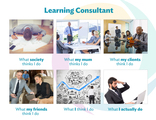
When people in my social circle ask me what I do for a living, I can generally predict the blank expression (or as I like to call it, the ‘what’s that?’ face!) when I reply ‘Learning Consultant’. If I wanted to explain it in short I suppose I could reply: ‘I work with clients to enrich their L&D offering’. But then what exactly does that entail? So (deep thinker that I am) it got me thinking about how I can better articulate what I think a learning consultant does and why, in the evolving world of eLearning, we can be the difference between a successful and unsuccessful L&D transition for your company!
So here are five reflections from me that I hope will help you. If you want to drop me an email to ask any questions, I’d be happy to answer them.
1. We are ‘In The Know’!
These days many companies want to enrich their L&D offering, and by enrich I mean truly modernise it. Modern learning is evolving at a fast pace and, if you want your company’s L&D offering to bear fruit, then it’s is probably time to add to your classroom and formal training offerings. It is not that all classroom training needs overhauled, but if you adhere to 70:20:10 as a guiding principle, then you will understand that less is better! For companies making these sorts of changes, it can be a daunting task. Where do you start? What’s the first major change you need to make? What direction do you take? This is where the learning consultant is key. A good learning consultant will be ‘ahead of the game’, so to speak, and fully aware of all the modern technological advances that make the possibilities for you and your employees endless! In short, we have the knowledge to start you on your successful L&D evolution. You can see an example of how we helped one of our clients - eircom business, to modernise here.
2. It’s all about you
Being knowledgeable is one thing, but does that mean if you start working with a learning consultant they will just suggest all the latest modern technology and expect you to fit it around your L&D offering? A one size fits all approach? I say to that…absolutely not! The key, for me, is in the job title; Learning Consultant. The good learning consultant’s will work with you to discover how your current L&D offering functions, how it fits into the company’s overall strategy and where key wins and successes can be achieved in the short, medium and long term. Using your knowledge of the company and our knowledge of modern learning we will work toward a solution, in partnership, that works for and will benefit both your L&D team and, more importantly, the wider company.
3. Ask. Listen. Advise
I have always wanted to devise my own tagline and in describing the role of a learning consultant I may just have managed it (if I do say so myself!) - Ask. Listen. Advise.
ASK - The good learning consultant will begin any consultation by asking the key questions to get to the root of your L&D needs - we will exhaust the who, what, where, when and why until we have a crystal clear understanding of your requirements.
LISTEN - We will listen to all your areas of need/pain points and take note of the key things that are important in developing your L&D strategy. We’ll also get to grips with any constraints we must be aware of. At heart, we are pragmatists and very agile in how we approach the challenges and solutions that your business needs.
ADVISE - Finally, based on all the information gathered, we will advise on the best solution for you based on your key requirements and our knowledge of the industry. We will never be afraid to have those hard conversations, which others might shy away from; those coversations ultimately benefit your team and your organisation as a whole.
Ask. Listen. Advise. A simple but highly effective method.
4. Implement
So, with the solution firmly in place, it’s all about implementation. Time to put the words into action and start building the blocks for that shiny new modern L&D offering. It might be tempting, at this stage, to think that the learning consultant’s journey should stop and everything is handed over to the L&D team to put in motion. They have the solution, surely it’s up to them to implement it? I baulk at the thought! Implementation, for me, is only really the beginning of the hard work and the Learning Consultant should be on hand every step of the way to offer guidance and support to the L&D team through the implementation process. The relationship between the learning consultant and the L&D team is one of partnership after all. Only through solid partnership can we build that world class modern L&D offering that will be the talk of the town and that benefits your entire organisation!
5. Follow Up!
So the L&D evolution is thoroughly underway and your team are firmly on the correct path. You might think that this is the jumping off point for the learning consultant and, in a way, it is. However, I am a firm believer in ensuring that things are never allowed to slip. Just because the house is built does not mean it still doesn’t need some TLC on a regular basis to keep it strong and sturdy. With the development of your new L&D offering, if you don’t consistently review the progress and give it some on-going attention, then you are in danger of letting things slide out of control - and you’ll be saying hello to your old friend ‘square 1’ before too long.
So as a learning consultant, we are there to follow up with you and your team to ensure that those structures you have put in place are still working for you, and that new opportunities to enhance the L&D offering are consistently presented. The L&D evolution is truly an evolution….it continues indefinitely!
In summary, when people ask me what a learning consultant does and what they bring to the table, apart from pointing them to this (hopefully) informative blog, I will compare Learning Consultants to the infamous Gordon Ramsey (angry shouting and swearing aside!). We will come in to help with your L&D nightmare (or slight challenges), we will listen to your concerns and have those hard but necessary conversations, and then we will set about helping you to transform your L&D offering to a truly world class standard!
But remember, it doesn’t stop there…we will always come back from time to time to check in and offer the benefits of our industry knowledge so your L&D can continue to grow and prosper.
What other work can a learning consultant do?
As a final insight for you, take a look at a few of these L&D projects that our Learning Consultants have been involved with over the last few years.
Client: Global manufacturing company
Challenge: A new expenses and invoicing system needed to be rolled out world-wide. Based on traditional classroom methods, training costs were prohibative and would take too long to benefit the business.
What we did: Our Learning Consultants outlined a a simple task simulation and demonstration solution to capture the screens of the new expenses system quickly and efficiently, and worked with our Instructional Designers to deliver the final solution - in both French and English.
Client: Major telecoms and communications company
Challenge: Our client had gone through a major re-organisation and re-structuring, reducing their L&D team to just one central person but still needed to deliver the same training and learning for all staff.
What we did: Our Learning Consultants helped the central L&D person to re-organise their work so they were better at meeting the needs of the business; we introduced modern learning technology, taught key staff to create their own content and delivered a 95% learner satisfaction rate on eLearning content.
If you would like to experience this service yourself, sign up for our FREE 1/2 day session with one of our learning consultants. Just click on the button below.
Thanks for taking the time to read our blog today. Feel free to comment - have you worked with a learning consultant before? What was your experience? Feel free to email Mark with any questions
Logicearth Learning Services specialise in designing, delivering and supporting modern workplace learning solutions, which brings results for individuals and organisations. We are learning technology experts and along with specialist interactive multi-device content development skills, we can provide a complete service for all your organisation’s modern learning needs. Logicearth has offices in Belfast and Dublin but deliver services worldwide, including Ireland, UK, USA and throughout Europe.
*Terms & Conditions apply.
The post Could a learning consultant help your business? appeared first on Logicearth.
Logic Earth
.
Blog
.
<span class='date ' tip=''><i class='icon-time'></i> Jul 17, 2015 09:09am</span>
|
|
Happy Monday, everyone!
I wanted to jump in and share a quick tip this week on something simple you can do to help market your online courses to your existing network. Whether you’re launching a course for the first time or mentioning an existing course in an email out, it’s important to do a double take to be sure you’ve fully captured your existing contacts in your email list.
My favourite way to do this is by exporting my LinkedIn connections. Even if I did this originally I’m always adding contacts and may not have captured everyone I want in my email list. Here’s how to do it:
Visit the LinkedIn exporter at: http://linkedin.com/addressBookExport (it will prompt you to log in to your account if you aren’t already)
Choose your export type (I suggest sticking with the default .CSV file for most uses)
Hit Export. That’s it!
Once you have your .CSV file of your LinkedIn contacts, you can import the list into whatever tool you use to manage your list. Here are the instructions for a couple of them:
Mailchimp import instructions
Constant Contact import instructions
AWeber import instructions
Many of our instructors find that their existing networks are one of their biggest assets when promoting new courses, but don’t realize there’s an easy way to export email addresses of these connections. When dealing with email, always remember to play nice by abiding by any applicable anti-spam legislation in your country, and giving subscribers the chance to opt-out. Otherwise, email is a great way to stay in touch with your network!
Happy emailing!
The post Updating your email list with LinkedIn connections appeared first on Thinkific.
Thinkific, Inc.
.
Blog
.
<span class='date ' tip=''><i class='icon-time'></i> Jul 17, 2015 09:09am</span>
|
|
These are public postings of my writings for the first course of the Graduate Certificate Program in Serious Game Design and Research at Michigan State University. Each week, we are required to post three responses/reactions to queries posted by other … Continue reading →
Katrin Becker
.
Blog
.
<span class='date ' tip=''><i class='icon-time'></i> Jul 17, 2015 09:09am</span>
|
|
How does your organisation view intercompany communications, knowledge sharing and learning?
Today’s blog comes from Logicearth co-founder, Peter Carlin. Hot on the trail of finding more effective solutions to boost our client’s success, Peter talks about re-thinking workplace learning based on modern technlogies and learning techniques. And an astute observation on high performers!
Over to Peter…
The convergence of intercompany communications, knowledge sharing and learning has already happened. It is workplace learning, but not as we know it. To better understand this revolution, it is time we looked at how the most effective people in your organisation learn and develop their careers.
Learning & communications, two sides of the same coin
Courses and communication items are both written by wordsmiths and are designed to be brief, impactful and sticky. The learning community, however, always had a card up its sleeve because its systems were able to track distribution, completion and understanding.
Although internal communications tools are starting to catch up, learning technologies continue to evolve at a rapid pace with many more modern and social elements. For these reasons, it is suitable discuss these topics from a heavily weighted learning perspective. There are two great frameworks in use today to help us understand how learning and communication really take place in the modern workplace.
70:20:10 learning model
of all learning takes place formally (yet interestingly this is where 95% of all training and development spend takes place in most organisations), normally in a classroom but equally through directed online experiences.
is through exposure to others, learning and developing with others socially.
is learning and developing through day to day tasks, challenges and practice. The exact split of the percentages, the 70:20:10 model, when used as a guide, provides us with a thought provoking reality check as to how we could engage with our teams in a more meaningful way.
The other learning model is called the Five moments of need (Gottfredson & Mosher), providing us with a framework to help our employees improve their day to day jobs with "performance support" tools and content.
Moments of need
Again, this model provides a structure for knowledge provision at the exact moment of need. In particular, the "Apply" moment is key:
"Apply is the sweet spot of performance support. There is much that can and needs to occur here. When people are at this moment, when they need to actually perform on the job, they need instant access to tools that will intuitively help them do just that—perform. This help must be immediate and tailored to the role and situation of the performer. The aid needs to allow the performer to dive as deep as necessary, depending upon his or her need to plan, remember, adapt, or reference information required for successful performance."
The application of both models, using various tools, content, techniques and processes, ensures that we can deliver highly successful and high impact learning and communication programmes. One aspect of workplace learning, we feel hasn’t been exploited yet, is the role of high performers. Let’s look at this next.
Using the insights of high performers
High performing people understand that knowledge is power, they are highly driven and efficient at managing their own personal development. They take control of their own continuous knowledge acquisition and goal setting. It is about skills development - the best want to improve their skills to become even better, so they look for ways to learn and grow personally that will also help them to help the company grow.
Self-direction - the best employees are more likely to perform their own research and spend more time on projects than average performers. They self-motivate and self-initiate new assignments and challenges. They seek out those in the organisation who have the influence and the knowledge they need to achieve their goals and progress to the next level.
In a world of tech, good people skills still rule
High performers tend to have larger professional networks than average workers. They realize that "who you know" can often help advance a career. They will call on their contacts inside and outside the company for basic insights into how to approach a problem or for general support. They don’t have to be "life of the party" extroverts but they understand the value of nurturing professional relationships.
High performers:
High performing teams have the same traits and many are using social tools to work and learn collaboratively. Our challenge in the modern workplace is to help and support the remaining high potential members of our employee base to make it easy for them to emulate these high performing traits. A useful role, we believe for L&D is to seek out and better understand the high performers in their organisations.
Building a team collaboration and social learning strategy
(Thanks to Jane Hart for this excellent explanation. You can reference Jane’s full website of other excellent articles here.)
If we believe in the concepts of the 70:20:10 model, then it is apparent that knowledge acquisition and learning is primarily a social activity.
Therefore in order to execute an effective strategy, we need to develop a multi-faceted, managed and facilitated service to truly engender knowledge sharing across the teams. The user experience has to fully match the high standards of the world’s creative industries, it must be mobile, web responsive and fun to use. In summary, the solution must have the following core pillars:
How is it for you?
Does your organisation look at its high peformers in this way? Do you have an active plan in place to help people transition from high potential to high perfomer? With high performers contributing approximately 400% more to the organisation that an average employee, investing time in analysing this might just be a clever move.
As always, we’d welcome your thoughts or insights below.
Logicearth Learning Services specialise in designing, delivering and supporting modern workplace learning solutions, which brings results for individuals and organisations. We are learning technology experts and along with specialist interactive multi-device content development skills, we can provide a complete service for all your organisation’s modern learning needs. Logicearth has offices in Belfast and Dublin but deliver services worldwide, including Ireland, UK, USA and throughout Europe.
The post The convergence of communcations, knowledge sharing and learning appeared first on Logicearth.
Logic Earth
.
Blog
.
<span class='date ' tip=''><i class='icon-time'></i> Jul 17, 2015 09:08am</span>
|