Blogs
|
Today, we are excited to announce our newest release, Fedena 3.4.2 featuring a simpler way to schedule exams, a faster and convenient way to process various student fees, SMS notifications when importing data into Fedena, and many more. In addition to the new and enhanced functionality, we’ve also focused on some key bug fixes directed towards an even better usability for all users.
To highlight some of the new and enhanced features:
Save time by scheduling exams for all batches of a course at the same time.
Customize the type of donor information you want to capture by adding custom additional fields.
In addition to the payment gateways that Fedena already supports (PayPal, Interswitch, and Authorize.net.), Fedena will now also support:
Stripe
Braintree
PayU
CCavenue
And to offer you even greater control and flexibility for online payments, you can now integrate any custom payment gateway with Fedena.
Enhanced the Continuous and Comprehensive Evaluation (CCE) grading system to keep in line with the Central Board of Secondary Education (CBSE) guidelines.
SMS notifications are not just for activities performed in the Fedena interface. Now, send and receive SMS notifications for activity performed through Custom Import and using Fedena API as well.
Collect and process all types of student fees, such as finance fee, transport fee, and hostel fee from a single view.
Generate the employee attendance report for any date range that you specify.
We hope you are excited as much as we are with the new features and enhancements.
And to make this release even sweeter for us, today Foradian celebrates its 6th anniversary. That’s right! Foradian turns six years old. So whether you’ve worked with Foradian over the past six years or have just been introduced to us, thanks for being a part of our journey.
Write to us at info@fedena.com and let us know your thoughts, questions, and feedback about the release. We would also like you to share how your experience has been with Foradian over the past six years on our Facebook or Twitter pages with the hashtag #ForadianTurnsSix.
The post Introducing Fedena 3.4.2 appeared first on Fedena Blog.
Fedena
.
Blog
.
<span class='date ' tip=''><i class='icon-time'></i> Jul 17, 2015 09:25am</span>
|
|
Dwyer O’Gorman, Training Manager at Allstate Northern Ireland, talks about working with Logicearth on a key software development training project:
Click here to download the interview transcript.
About Allstate Northern Ireland
Allstate Northern Ireland provides high quality software development services and business solutions in support of their U.S. parent’s global operations. The Allstate Corporation is the largest publically held personal lines property and casualty insurer in America.
Allstate NI play a strategic role in developing, transforming and maintaining the various technology platforms used within Allstate. Allstate NI provide support for the day to day business, looking after the different systems that you might expect one of the world’s largest insurance giants to run.
About Logicearth
Logicearth Learning Services specialise in designing, delivering and supporting modern workplace learning solutions, which brings results for individuals and organisations. We are learning technology experts and along with specialist interactive multi-device content development skills, we can provide a complete service for all your organisation’s modern learning needs. Logicearth has offices in Belfast and Dublin but deliver services worldwide, including Ireland, UK, USA and throughout Europe.
The post Client spotlight - mobile software development appeared first on Logicearth Learning Services.
Logic Earth
.
Blog
.
<span class='date ' tip=''><i class='icon-time'></i> Jul 17, 2015 09:25am</span>
|
|
Technology and education are connected to each other, in a way that makes education and learning more engaging and fun. Smart technology for teachers are available to shape the way children learn, in a better way. Today, we talk about 10 such technologies that teachers can utilize in classroom to optimize the learning process.
Khan Academy: Technology resources for teachers definitely includes Khan Academy which offers excellent collection on various subjects like maths, science subjects; lectures on finance subjects as well as quizzes to carry out normal classroom activities.
Quora: Quora has been in use widely for quite a number of purposes and it can be one of the best technology tools for teachers and educators. A nice medium to get the students engaged in a discussion on education topics or get their doubts cleared by posting questions in quora.
Capzles: Capzles allow you to gather videos, photos, blog posts and documents in one place. Teachers can use it for conducting online projects and for classroom learning as well. Explore and use Capzles for different ways in the classroom.
Google Docs: Google docs is an effective technology for teachers in the classroom. Educators can create feedback forms for projects done by students. Moreover, creating and sharing documents, spreadsheets, presentations between the teacher and students in the classroom is swift with Google Docs.
Evernote: Evernote allow its users to be well-organized; capture and store photos, ideas, recordings or anything else and get access to it anytime, anywhere. Perfect for lesson-planning.
Socrative: Encourage students in various exercises and games through this student response system called Socrative. Available in tablets, computers as well as mobile, this tool let teachers get access through students progress and grades also.
YouTube: YouTube contains lot of important study materials that can be utilized in the classroom to optimize learning. YouTube also has a special section for education as well. Some restrictions and students can make the most out of YouTube without getting distracted.
Dropbox: One of the best technology resources for teachers to store, get access and share any kind of data from anywhere, Dropbox is free and easy-to-use.
Twitter: Twitter has a lot to offer to educators- letting teachers get connected with their counterparts from different parts of the world and talk about teaching methods, share their ideas and use it in classroom to connect with students.
SlideShare: Uploading presentations, video projects and any other documents is pretty easy with SlideShare. Share with students and also, ask students to upload their classroom projects and presentations.
The post 10 Smart Technology Tools for Teachers appeared first on Fedena Blog.
Fedena
.
Blog
.
<span class='date ' tip=''><i class='icon-time'></i> Jul 17, 2015 09:25am</span>
|
|
The good, the bad and the ugly off-the-shelf eLearning
There is so much to say on this subject, I hardly know where to begin. Over the years, I have witnessed so much bad practice off-the-shelf eLearning content both at an implementation level and from vendors. Nearly every conversation I have with clients involves me saying; "there is a fine line between great success and absolute failure when implementing eLearning, if we don’t get it right, there is no point trying".
This is even more relevant to off-the-shelf eLearning content. Given that our modern learning tool kit should be comprehensive and varied, off-the-shelf eLearning portfolios are still important, so let’s look at the pitfalls and strategies for success.
Off-the-shelf eLearning - Vendors: what do you need to know?
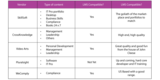
There are many vendors in the marketplace with size and scale varying massively and each with their own specialisms and advantages. Here are but a few (all of which we partner with):
For more examples, see much more off-the-shelf eLearning here.
Researching off-the-shelf eLearning
The styles, formats and quality of off-the-shelf eLearning content across vendors is varied and research is required on your part as a potential buyer to choose the one that suits your needs best.
All the major vendors have, on the face of it, a very simple licensing model:
How many people you have (X) unit price for a major portfolio for a 1 year access licence
Vendor options are limited and they will generally steer away from any other approach. As the buyer, you are faced with either a high overall price or a high price per person depending on your numbers. Additionally the rules are strict; if one learner accesses just one course for a few minutes then the licence is used up with no discussion. There are many other nuances to the process, too many to list in this blog post. Safe to say care and preparation should be taken.
ROI for off-the-shelf eLearning?
If you are going to spend hard fought for cash on your learning infrastructure, you will need to demonstrate a return on investment. You will want to market to your company that this is a successful investment and that learners are improving their performance. The risk with the available licensing models is that you get to the end of your first year licence trying to assess why usage has been low for the given spend with no discernible results. As I said earlier, there is no point to the exercise if the outcome looks like this.
To avoid this outcome we have to consider 4 things:
How will I sell the benefits of the content to my users before a contract is made? (assessing demand)
What depth of content do I really need?
What strategies will I use to promote the use of the content?
What negotiation stance will I take with the vendor?
Negotiating off-the-self eLearning licenses
Being fully prepared and armed to the teeth with knowledge will always drive a successful negotiation. Canvassing your learner community beforehand will give you a good barometer for the number of licences you will actually need. Vast libraries of content are not always required and "custom libraries" can sometimes assist negotiations. If you are thinking of procuring content for large teams or wider a good rule of thumb for utilisation is 30%.
For your own benefit, have a usage plan worked out at this early stage. Leaving people alone with elearning does not work and you will need pre-planned blended learning programmes, comms items with featured courses and other tricks to engender usage. Think about how you will give your users access, normally an approval process on your LMS will help control your licences.
Logicearth off-the-shelf eLearning
Here comes the sales part: we at Logicearth provide this procurement service on behalf of many clients. They value our ability to source from a variety of vendors where our buying power is strong. They value the level of flexibility that we can negotiate on their behalf particularly over the longer term. It means we can find a licensing model to suit you and not the vendor.
This blog is just scratching the surface of this topic. Watch this space as we will run a short webinar in March 2015. I’d love to hear your success stories or horror stories, let’s continue the discussion here or on twitter @logicearth.
Peter Carlin, Co-founder
Logicearth Learning Services specialise in designing, delivering and supporting modern workplace learning solutions, which brings results for individuals and organisations. We are learning technology experts and along with specialist interactive multi-device content development skills, we can provide a complete service for all your organisation’s modern learning needs. Logicearth has offices in Belfast and Dublin but deliver services worldwide, including Ireland, UK, USA and throughout Europe.
The post Off-the-shelf eLearning content appeared first on Logicearth Learning Services.
Logic Earth
.
Blog
.
<span class='date ' tip=''><i class='icon-time'></i> Jul 17, 2015 09:25am</span>
|
|
From inception to date, Fedena’s Timetable module has been helping schools and colleges of various sizes schedule and manage timetables. The Timetable module has evolved since Fedena’s inception in 2009. After three major Fedena releases, a number of minor releases, many enhancements, and bug fixes, the Timetable module has come a long way. Thanks to our customer feedback and employee input, we have been able to enhance the experience for our users with every release.
How good it used to be
When Fedena was introduced back in 2009, the Timetable module was one of our major selling points. Then, the Timetable module allowed institutions to create only one timetable. This timetable had to be followed by all batches in the institution. This meant, for all batches, every period had to begin and end at the same time. Though institutions liked how easy it was to create a timetable, it soon became a challenge when each batch had different period timings and needed their own timetable.
For those of you who have been with us from the start, here’s a hazy image that might bring back some good memories, and some not so good ones as well.
A point I must add, from the very beginning, Fedena’s user experience has always been one of our top priorities. Even back then, the Timetable module was easy to use and included the smooth drag and drop functionality what you see today.
How better it became
With releases that followed, the Timetable module quickly evolved. Soon features such as the ability to create a timetable for each batch, define the workdays in a week for each batch, together with a few cosmetic enhancements were introduced. By now the Timetable module was gaining popularity among users. This is what the Timetable module looked like back then.
Then, with the release of Fedena 3.0, we introduced the concept of ‘class timings’. Class timings allowed institutions to define the number of periods and the duration of each period in a workday. The class timings were then automatically applied to all workdays of the week. Though this gave institutions a little more flexibility when creating timetables, it later brought about the question of ‘What if for a batch, periods begin and end at different times on each workday?’
The best yet…
As an answer to that question, we introduced ‘class timing sets’. Similar to the concept of ‘class timings’, a ‘class timing set’ defined the number of periods and the duration of each period in a workday. The difference was, institutions were now able to assign a unique class timing set to each workday. This brought about a small change in the workflow of creating a timetable. Here’s the current workflow to create a timetable.
In addition to all the enhancements, we also managed to give the Timetable interface a facelift, as seen in the image below.
All these features put together now offer institutions even greater control over the timetables they create. Today, Timetable is one of the most used modules by Fedena customers. And to let you in on how we plan to improve the Timetable module, we’re now working on ways to automate timetable generation to enable you create timetables even faster. So stay tuned for upcoming releases.
The post How Timetable has Evolved to Become One of Fedena’s Most Used Modules appeared first on Fedena Blog.
Fedena
.
Blog
.
<span class='date ' tip=''><i class='icon-time'></i> Jul 17, 2015 09:24am</span>
|
|
The interactive video revolution?
Want to avoid this? Read on!
The use of video in learning has increased steadily since YouTube first launched in 2005. Cheaper hardware (mobile phones, mini-cameras etc) and easier to use video editing tools have taken video out of the hands of the professionals into everyday users. Even long-standing traditional professionals have undergone the modern digital transformation. ‘Citizen journalism’ where we are all armed with powerful mobile devices allow us to record anything and everything on-the-go.
Interactive video in corporate learning
But what of corporate learning? Where has the video revolution had the most impact? And what type of videos are typically produced?
The good news is that video is being used a lot more. The bad news is that most of it is overly long and leads to a passive viewing experience. The typical corporate Induction programme, for example, often starts with a 5 minute introduction from the CEO or other senior staff. There is little or no chance for interaction. Viewing video, while the sound and pictures help, is just as passive as reading a piece of text. Unless you build in opportunities for interaction, there is little chance of the information being thoroughly understood and assimilated.
A lot of corporate eLearning has these type of head-to-camera sequences. It usually consists of one person, who is not used to sitting in front of a camera, reading rather nervously through a tightly scripted, slightly lacklustre corporate message. The result is generally uninspiring for both the person being filmed and your audience!
Getting to interactive video
What if your learners could ask questions of the CEO while they went through the course? What if the video itself was filmed differently - e.g. actually created to answer questions from your staff? What if your CEO told more stories about his/her experiences? What if you tried something more humorous or quirky, such as the CEO doing a walkaround and stopping to answer questions as he/she goes in docu-soap style. Even techniques such as quickly shot VoxPops can work well.
Why not try this - ask your senior team to answer this question in two sentences or less and tell them it will be filmed in one take. You don’t need any fancy video equipment - try using your phone or the camera on a tablet.
What do you need to be successful in this company?
To edit it all together - add some funky music and maybe some animated transitions between each person answering. Hey presto, you’ve got a much more authentic, engaging and useful video. And it sends a great message of trying to do something different to all your staff. It is still passive though…but once you start to think beyond the head-to-camera tightly scripted approach, you are getting closer to a more engaging experience.
What interactive video tools can help?
Check out Zaption and Vialogues. A quick summary:
Zaption - Add hotspots to click for more information and other interactive elements such as quizzes and diagrams. Their moto - don’t just watch learn is the key message of this post!
Vialogues - create your video, upload it and then invite people to discuss the video. Imagine asking your CEO questions on his (more funky) video and having him/her respond as your staff go through their induction content.
Want to learn more?
Check out our previous post on the basics of creating good video content for eLearning.
Also, as an alternative to head-to-camera filming, remember to think of other ways of delivering your video messages. Here are a few ideas from our Youtube channel:
Tell a story, using simple text, images and some dramatic music
Use a funny character to bring uninspiring information to life
Getting started - your first interactive video project
Why not review your company’s induction programme. Are there any videos you could re-shoot based on the tips in this blog post. If you do make some changes, we’d love to hear from you. You can comment below or email us here.
Fiona Quigley, Director of Learning Innovation
Logicearth Learning Services specialise in designing, delivering and supporting modern workplace learning solutions, which brings results for individuals and organisations. We are learning technology experts and along with specialist interactive multi-device content development skills, we can provide a complete service for all your organisation’s modern learning needs. Logicearth has offices in Belfast and Dublin but deliver services worldwide, including Ireland, UK, USA and throughout Europe.
The post From passive to interactive video appeared first on Logicearth Learning Services.
Logic Earth
.
Blog
.
<span class='date ' tip=''><i class='icon-time'></i> Jul 17, 2015 09:24am</span>
|
|
Using TLC on your eLearning interactions
Unfortunately in this case, TLC doesn’t stand for tender loving care! Although some may argue that much modern eLearning content needs to be designed with more care…
So what does TLC stand for? T is for type, L is for location and C is for content.
TLC is a simple mnemonic that I have used with new Instructional Designers and clients who are new to creating eLearning interactions. It is a simple idea, but if executed well, can really add much needed engagement to your eLearning content. It is designed to help you to make good or better choices when you are designing eLearning interactions - particularity at the planning stage of your content.
What is the purpose of eLearning interactions?
eLearning interactions are designed to engage the learner’s mind, not just their fingers! This engagement can come in a variety of guises - from helping with understanding and memory, right through to supporting practice and applying new skills.
But too many eLearning interactions are passive and boring. There are only so many times you can keep clicking boxes on screen to reveal chunks of text or images. The brain needs variety and stimulus, or else it just ignores what you are presenting. If you are providing structure through an interaction, be clear on why; it shouldn’t just be to fit items together on one screen! If you use the same interaction twice in a row, don’t use it a third time.
Model your interactions on real life challenges and activities that the learner will have to do in the workplace. Natural learning interactions help the learner to better apply what they have learned to their everyday jobs. The aim for interactivity is to help people to think DIFFERENTLY about a key aspect of the content, which is related to their experience.
T is for Type
So if T is for Type, then this is the first decision you should make. The most basic decision is passive or active?
Active eLearning interactions challenge and engage the learner
Passive is good for helping to break down complex information to make it easier to remember. But too many passive eLearning interactions won’t challenge the learner sufficiently and it won’t be long before you lose their interest. An active interaction challenges the learner and asks them to think differently. You might for example, target current misunderstandings or help them to solve common problems. All active interactions should provide personalised critical feedback based on the choices learners select. A good multiple choice question can be an effective active interaction - particularly if it is scenario-based and helps the learner to think about a real-life challenge.
For more information on different types of interaction, check out this blog.
L is for Location
Most learners start off naturally engaged and then this engagement wanes as times goes on. A general rule of thumb is that you should have an interaction every 3-5 pages. You should also pay careful attention to the start and end of a piece of content. Starting off with a interaction that poses a challenge for the learner to solve as they go through the content is a good motivator. It immediately answers the question, WIIIFM (what is in it for me), which is a great motivator for adult learners. Finishing with a consolidating interaction that gives the learner practice opportunities and closure helps to maintain good cognitive load so that the learner can better take on board the new skills and concepts.
If you compare page 3 and page 4 of our new Data Protection course, you’ll see how deliberately moving from passive to active eLearning interactions can help to better pace the learning and therefore prevent cognitive overload. It also makes the content more ‘sticky’ (learning that lasts).
Also - interaction points need to be chosen carefully and strategically - what do people need to think the most about? Another mnemonic, DIF, is useful to consider at content planning stage - DIF analysis:
What is Difficult?
What is Important?
What is Frequent - pain points, common myths/misunderstandings - what holds people back from success/learning?
Designing good eLearning interactions is one of the keys to prevent cognitive overload.
C is for Content
Most modern eLearning courses contain a variety of media, include text, images, animation and audio or video. Yet for most people who are new to designing eLearning content, there is a tendency to stay ‘safe’ with only text and image-based eLearning interactions. While audio and video can be a powerful learning tool, it is still just passive content. It is possible though to make video and animated content more interactive. There are so many new interactive video tools on the market now that will better engage your learners to have fun with your content. Check out our recent blog post on getting from passive to interactive video here.
So there you have it - TLC; when planning and designing your eLearning interactions, consider the:
Type of interaction (active/passive)
Location (managing cognitive load) and,
Content (use a variety of content types)
Add a bit of Tender Loving Care too while you are at it!
Fiona Quigley, Director of Learning Innovation
Logicearth Learning Services specialise in designing, delivering and supporting modern workplace learning solutions, which brings results for individuals and organisations. We are learning technology experts and along with specialist interactive multi-device content development skills, we can provide a complete service for all your organisation’s modern learning needs. Logicearth has offices in Belfast and Dublin but deliver services worldwide, including Ireland, UK, USA and throughout Europe.
The post Improving eLearning interactions appeared first on e-Learning | Compliance | Training | LMS | Logicearth.
Logic Earth
.
Blog
.
<span class='date ' tip=''><i class='icon-time'></i> Jul 17, 2015 09:23am</span>
|
|
Teaching through technology in the classroom will just not be the guidance that students require in today’s world, it’ll infuse in them, the required technological skills that’ll be their success key in the future. And teachers, being at the forefront of a student’s learning experience, plays an important and much responsible role of giving out the best learning experience to the students. With the help of various ways of teaching through technology, teachers can inspire students to learn more effectively. In this article we share with you, some effective ways to optimize teaching through technology in classroom.
Blended learning: Technology for teaching and learning has a new face- blended learning. It is a kind of learning opportunity that bring in together the traditional face-to-face and online learning. The main objective of blended learning is to prepare students with diverse learning styles, integrated in the day-today classroom learning activities. Teaching through technology like blended learning, allows students to learn better, at a faster rate and at their own convenience, at reduced cost of study materials- definitely, a smarter option for optimized learning.
Digital resources: With teaching through technology, have come the increased usage of digital resources in educational institutions that have given the right boost to learning and teaching in classroom. Digital portfolios, electronic grade books, learning games and real-time feedbacks on students and teachers are some of the smart technologies to power learning in the classroom.
A podcast for learning: Encouraging students and getting them into a podcast for the class, like reading out class lessons or discussions on particular topics can boost learning. Because, these podcasts are very good study references for the students in future.
Use social media platforms like Twitter and Pinterest: Pinterest is a great medium for teaching through technology, specifically because its a great visual medium that can encourage students to share their projects, classroom activities, photos, etc. Technology for teaching and learning can also include Twitter as a good learning platform. Students who are above 13 years can create important hashtags for classroom lessons and promote participation from experts in Twitter.
Technology if used in the right direction, can create wonders for teaching and learning. Teaching through technology at the right time, can inspire students to embrace technology without much hesitation, to optimize their learning. Teachers, on their part, can promote a healthy learning environment in the classroom with technology for teaching and learning.
The post 4 Smarter Ways to Optimize Teaching through Technology in the Classroom appeared first on Fedena Blog.
Fedena
.
Blog
.
<span class='date ' tip=''><i class='icon-time'></i> Jul 17, 2015 09:23am</span>
|
|
Solving L and D pain points?
We at Logicearth Learning Services are privileged to meet a wide variety of L and D professionals from our client base and beyond. We have supported clients through ongoing change and continuous improvement for many years.
In the past few years a lot has been written about L and D not supporting their organisations in the way that they should. Articles and blog posts from people like Donald Taylor and Elliot Masie, learning industry leaders, constantly call for change. But many still complain that the changed needed is just not happening fast enough.
So what are these L and D pain points and why does change seem so slow - from their perspective? This is what our clients say:
Doing more with less
Dealing with the daily grind
Getting their voice heard
Changing how they are perceived
Keeping up with everything
We’ve found, that because of rationalisation, many L and D and training departments have been reduced to one or two people. But they still have to deliver and support the same level of services. Our core business is helping L&D to transform, especially following rationalisation. We’ve had our most success with clients when we talk to them about:
Doing more with less means changing your perspective; you need to facilitate more rather than deliver more.
Saying no to certain requests is appropriate - it is ok to challenge the need and challenge suggested solutions.
Shifting responsibility back to learners and their managers is a good strategy but to do that you need to facilitate self-service. This is easier said than done, but we’ve successfully helped many clients with this.
There is lots of content and resources out there, you just need to know how to get it to it smartly. Many of our clients have benefited from our expertise in procuring modern and effective off-the-shelf content.
Lack of resources in the L and D function is always prevalent so don’t be afraid to outsource to your learning services provider.
The key to transforming the L and D function and to address L and D pain points is to be proactive. This means doing something that has an affect on sales and/or staff performance - this will ALWAYS get noticed.
Getting help with L and D pain points
Think about benchmarking your L and D provision with another company. You will open your eyes.
If you are not already active on social media, you should consider it - Twitter and Blogs are a great way to keep up with good practice and connect with others with similar L and D pain points.
L and D pain point resources
1 hour webinar - Twitter for L and D professionals, Wednesday 11th March
Subscribe to the Logicearth blog - we write regularly about L and D transformation and share our client success stories
Follow industry leader blogs like Donald Taylor, Jane Harte, Charles Jennings and Elliot Masie
Follow the eLearning feeds blog for multiple learning industry perspectives.
Coming soon - a pain free L and D solution
#painfreeLnD
Launching in April 2015, we are bringing a unique learning infrastructure solution to market. It is a complete solution to service all your organisation’s L and D and/or training needs. We’ll provide the technology infrastructure to get you up and running in record time with modern eLearning content, help you address common L and D pain points, like making compliance training interesting, doing more with less in a strategic way, and much more! If you want to hear more about this, send us a comment through this blog, email us here or try our real-time chat tool (9-5pm, GMT, Monday to Friday) to talk to a learning consultant now. You could also give us a call - we have offices in Dublin and Belfast.
Fiona Quigley, Director of Learning Innovation
Logicearth Learning Services specialise in designing, delivering and supporting modern workplace learning solutions, which brings results for individuals and organisations. We are learning technology experts and along with specialist interactive multi-device content development skills, we can provide a complete service for all your organisation’s modern learning needs. Logicearth has offices in Belfast and Dublin but deliver services worldwide, including Ireland, UK, USA and throughout Europe.
The post L and D pain points appeared first on e-Learning | Compliance | Training | LMS | Logicearth.
Logic Earth
.
Blog
.
<span class='date ' tip=''><i class='icon-time'></i> Jul 17, 2015 09:22am</span>
|
|
The Fedena team loves building new features that enable you to do things that weren’t possible before. But sometimes, it’s the small details that make a big difference. Along with all the big features that we have been releasing, there are also a number of little features and improvements we’ve made to Fedena. Here are some recently introduced features and improvements that will allow you to personalize Fedena and improve your efficiency as well.
Date Format
Fedena comes with a standard format for showing dates. However, you can change the date format to what you’d like in the General settings page. The date formats you can choose from are:
DMY - Date/Month/Year
MDY - Month/Date/Year
YMD - Year/Month/Date
In addition to the format, you can also choose a date separator you want to use, a forward slash (/) or a hyphen (-).
Something to note is that wherever dates are displayed in Fedena, they are displayed in predefined long formats (March 10, 1986) or short formats (10/03/1986).
K-12 vs. Higher Education
What type of institution are you? A K-12 institution who teaches preschool to class 12 or a college or university that offers various courses? You can choose your institution type in the General settings page.
If you select K-12 as the institution type, the term ‘Class’ is used throughout Fedena’s interface to indicate ‘a year of education’. ‘A year of education’ can be, Grade 7, Class 7, Standard 7, or Form 7, depending on your country’s educational system.
If you select Higher Education as the institution type, the term ‘Course’ is used throughout Fedena’s interface to indicate ‘the study of a particular topic’ such as, Bachelor of Zoology, Master of Business Administration, and so on.
Language Settings
Today, Fedena is used all over the world to manage an institution’s day to day activities. Fedena has been translated into the following languages:
Deutsch (German)
Dominican Español (Dominican Spanish)
Dutch
English
Español (Spanish)
Galego (Galician)
Italiano (Italian)
Russian
Türkçe (Turkish)
Français (French)
Português (Portuguese)
tiếng Việt (Vietnamese)
монгол хэл (Mongolian)
العربية (Arabic)
کوردی (Kurdish)
मराठी (Marathi)
हिंदी (Hindi)
ગુજરાતી (Gujarati)
中國的 (Simplified Chinese)
日本の (Japanese)
Instant Fee Particulars & Instant Fee Discounts
It can be a challenging task to schedule and track fee payments for all the students in your institution. Sometime, after meticulous planning and scheduling, you realize you have left out some students, or there are some last minute fees that a student has to pay. In such instances, you need not go through the complete process of creating fee categories, fee particulars, fee discounts, fines, and then setting up a new fee collection schedule. You can create instant fee particulars and instant fee discounts at the time of collecting and processing student fees.
Course-wise Exam
If two or more batches of a course are being taught the same subjects, you can schedule an exam for all batches, or only selected batches at the same time.
Go to the Create exam page (Module access icon > Academics > Examination > Exam Management).
In the top right, click the Course-wise Exam button and then schedule an exam.
Processing all student fees. One screen.
Why go to a different module every time you need to collect and process tuition, exam, hostel, transport, or any other fees for a student? It can all be done form one screen in the Finance module.
You can either do it when collecting fees batch-wise:
Or when collecting fees from each student using the ‘Pay All Fees’ option:
Activating and Deactivating Batches
When all students of a batch are transferred or graduated, the batch automatically becomes inactive. But did you know you can also manually activate and deactivate batches from the Manage Batch page (module access icon > Administration > Settings > Manage Course/Batch > Manage Batch)? Say you’ve created a batch and then decided you don’t want to use it immediately. So you don’t want to delete it, but at the same time you don’t want empty batches to appear in all the dropdown lists. In such instances, you can deactivate the batch temporarily and activate it only when you decide to use it.
Or, if you just want to view the list of inactive batches, you can do that as well.
The post Little Improvements to help you Personalize Fedena & Improve your Efficiency appeared first on Fedena Blog.
Fedena
.
Blog
.
<span class='date ' tip=''><i class='icon-time'></i> Jul 17, 2015 09:22am</span>
|