Blogs
|
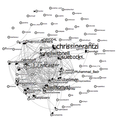
So the latest #BYOD4L iteration has come to a close. Well formally the non-course has come to a close, but initiatives like this are often just the beginning for all those participants that have connected with others. I suspect many will have made long term connections just like I have done in previous iterations.Anyway, last week I posted a summary and analysis of the first few days of tweet chats, which summarised activity as well as identifying concepts such as social capital and betweenness centrality. So this post is a follow up to complete the week.Wednesday Chat #3 - CuratingWednesday's Tweetchat was the most active of the week with around 750 tweets and for me, is one of the most interesting topics because it's something a lot of people don't really do - Curating. I certainly seen a couple of tweets along those lines, and other than this blog, I don't really do much curation myself (although whatever works for you, or me, is still valuable).The recurring theme in looking at the visuals for these tweet chats is that we see some nodes that are not connected to the discussion at all, skirting around the edges. And then we tend to have a tight knitted ball where the majority of the activity takes place.I've zoomed to get a better feel of some of those key nodes in the chat. There are some obvious key players in the chats like Sue and Chrissi, but I like to identify some of the non-organisers (so to speak). The likes of s_j_lancaster is a regular and one for always stimulating discussion - there's no wonder that there is a lot of activity around him - almost forming his own sub network. @iwilsonysj and @neilwithnell have also been active in this chat with lots of incoming and outgoing edges. You can easily imagine the impact it would have on this discussion if they were not present - their betweenness centrality is high because they've been central to the discussions taking place. Thursday Chat #4 - CollaboratingThursday's tweet chat saw just over 650 tweets on the topic of collaborating. Interestingly, this chat didn't have any outliers like the previous chat, which is actually becoming rather common. The magnified view of the chat is showing more close knit discussions, this time around @andrewmid and some other not-so-familiar faces like @podzilla and @isobel_gowers. @sheilamcn is again pretty active around @chrissinerantzi and a few others, whilst @neilwithnell is linking around @suebecks. These are beginning to form subgroups with some of these key figures demonstrating betweenness centrality and social capital.Friday Chat #5 - CreatingFriday's chat was the least active with around 450 tweets (of course still no mean feat). But what we can see here, is that whilst the volume of tweets were lower, there appears to be greater weighting amongst the nodes.This time we see the likes of @whitneykillgore, @juliedesigns, @samillingworth and @diverselearners coming to the fore along with the usual suspects.Overall SummaryWhat fascinates me with these tweet chats is that they start off with a series of questions coming from a single account. It would be easy to expect individual responses to just go back to that account, but the rich discussions that seem to naturally emerge demonstrate just how great an enabler technology, and in this case twitter, really can be.The week seen around 3000 tweets using the #BYOD4LChat hashtag across 177 users, with almost 10% containing a link - evidence that the community are really building on the discussions and sharing resources.The top 10 most active nodes were as follows (some of which are not surprising):@chrissinerantzi - 266 tweets@byod4l - 197 tweets@neilwithnell - 173 tweets@suebecks - 157 tweets@sheilamcn - 119 tweets@juliegillin - 101 tweets@iwilsonysj - 89 tweets@anortcliffe - 88 tweets@sonofedd - 88 tweets@cpjobling - 86 tweetsAnother interesting view to take is the amount a single node's tweets that were retweeted. For example, 51% of @alexgspiers tweets were retweeted. #influence @cpjobling and @juliegillin (both 44%) and @sonofedd (41%) were also very influential in the tweet chats which adds more value than simply their number of tweets. Other users are clearly valuing the points made by these nodes, increasing their social capital. I suspect these would be good people to follow (it's just as well I am :-))Anyway, it's difficult to make sense of the overall visuals for the week due to the sheer volume, so I leave you with a few of them to make your own mind up.As always, if you have any reflections on the week I'd be eager to read them, as would the rest of the #BYOD4L team.Peter@ReedyreedlesThe Reed Diaries by Peter Reed is licensed under a Creative Commons Attribution-NonCommercial 3.0 Unported License
Peter Reed
.
Blog
.
<span class='date ' tip=''><i class='icon-time'></i> Jul 20, 2015 07:29am</span>
|
|
Learning is deeper, more sustainable when students are active participants and responsible for their learning.What better way to do this than to focus on the opportunities that we provide students for learning? I think that it is important to consider active strategies that we can embed each day. I consider my strategies by asking questions. […]
Deborah McCallum
.
Blog
.
<span class='date ' tip=''><i class='icon-time'></i> Jul 20, 2015 07:29am</span>
|
|
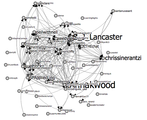
The first #lthechat tweet chat of 2015 took place last night, with David Walker (@drdjwalker) and I (reedyreedles) as facilitators covering the topic of The Language of Feedback.The topic itself is something that many people can easily connect with, so the hectic hour or so that ensued was hardly a surprise. In trying to stimulate discussion, we asked the following questions:What does feedback mean to you? #LTHEChatDo students (and staff) know the difference between formative and summative? #LTHEChatDo terms like 'high-stakes' & 'low-stakes' encourage students to value tasks differently? #LTHEChatWhat are the qualities of constructive feedback? #LTHEChatDespite interventions across HE students are still notably less positive about feedback than other aspects of study. Why? #LTHEChatWhat is the relationship between feedback and assessment criteria? #LTHEChat There were lots of really interesting points made and thoughtful discussions.Do staff and students really know what Formative and Summative mean? And if not why do we continue to use them? Is it like a secret code that you need to know in order to be part of the club?The notion of feed-foward was prevalent - in that feedback should be timely and related well enough to feed into future work. On a basic level, this could be as simple as providing feedback to improve how a student references/cites existing work so they can avoid losing marks on a second assignment. On a deeper level, this can provide much richer and detailed feedback so students can improve 'performance' within the same module and ultimately achieve better results.Also important in the discussion was the idea that feedback is the beginning point of a dialogue with students about their performance, rather than a one-way "here's your mark and feedback now get on with it" type approach.In this sense, and something I emphasised in my tweets/discussions, the importance on moving away from typical end of module high-stakes assessment is critical. If we can move away from 5000 word essays worth 60, 70 or 80% of the module mark, we can introduce more authentic assessment types that enable us to engage with students in a dialogue about their work and how they can improve, which can then feed into the next assignments. I spoke about this at the eAssessment Scotland conference in September, through emphasising visualising assessment timelines - I even shared a draft timeline of our medical curriculum.Anyway, here are the visuals from last night's tweet chat. When looking at the archive last night I was sure there was around 1000 tweets but having run it again this morning there appears to be around 650. I may have done something wrong.... Anyway.... @s_j_lancaster and @annakwood were very active last night and played a key role in the discussions. I kept forgetting to include the hashtag in discussions which I suspect is something a few people do by accident (I hope), which means those tweets are not captured in the archive.I thought it would be nice to have a specific view of @s_j_lancaster 's network through the tweet chat last night so captured this as well... We can see he engages a lot, with a lot of people. Quite how he manages this is beyond me knowing how hectic it can be, but he's clearly a pivotal node in the network with a high betweenness centrality. We can also tell from this image that whilst some of his tweets are directed to/from individual nodes, there is also a lot of tweets involving multiple nodes (see upper and right part of image). Peter@ReedyreedlesThe Reed Diaries by Peter Reed is licensed under a Creative Commons Attribution-NonCommercial 3.0 Unported License
Peter Reed
.
Blog
.
<span class='date ' tip=''><i class='icon-time'></i> Jul 20, 2015 07:29am</span>
|
|
View image | gettyimages.com I have been inspired to think more about Collaboration after the twitter #satchat this weekend. I couldn’t help but think that I needed to think beyond the idea of collaboration just for collaboration’s sake. It would be easy to talk about the benefits of collaboration, including the benefits of students working […]
Deborah McCallum
.
Blog
.
<span class='date ' tip=''><i class='icon-time'></i> Jul 20, 2015 07:29am</span>
|
|
Oh wait, there is....The Really Useful #EdTechBookIt's called "The Really Useful #EdTechBook".Some time ago David Hopkins (@hopkinsdavid) came up with this wonderful idea of editing a book comprising chapters from lots of people engaged with #edtech on a daily basis and I was honoured that he asked me to be one of those authors, along with the likes of +Sheila MacNeill , +David Walker +Wayne Barry +Sue Beckingham and +Sharon Flynn (amongst many others).The whole writing of the book was interesting in itself, with authors dotted all over the place working in Google Docs and engaged in discussion with each other. David conducted short interviews with each of us and at the time of mine, he was shacked up in a hotel room - for me something that really summed up the impact technologies have had on us all.So my chapter attempts to take a view of Learning Technologists and the teams in which they sit within HEIs. I'm sure it's by no means a holistic picture but I think it sets the scene for the variations in both the roles and the teams. I consulted a few tweeps in the making to ensure that what I was writing was as accurate as can be.As I was writing the chapter I thought about the various pressures on HE and the LT role in particular. It struck me that as we move to a post-digital era, and with continued financial pressures on institutions, the variations of the Learning Technologist will not cease any time soon. Who knows what's in store for us...Anyway, you can buy the book, get on major eBook readers and there's also a cheeky pdf you can grab for free. Head over to David's blog here for more details.Oh, and a big hats off to David and all the authors for achieving this in such a short period of time.Peter@ReedyreedlesThe Reed Diaries by Peter Reed is licensed under a Creative Commons Attribution-NonCommercial 3.0 Unported License
Peter Reed
.
Blog
.
<span class='date ' tip=''><i class='icon-time'></i> Jul 20, 2015 07:29am</span>
|
|
We are hearing about the term ‘Innovation’ more and more now. I think that this is essential for supporting teachers in the quest to consider new possibilities and ways of thinking. Innovation encompasses changing the way we think about how learning should happen and changing the ways we view curriculum. We need to know where we […]
Deborah McCallum
.
Blog
.
<span class='date ' tip=''><i class='icon-time'></i> Jul 20, 2015 07:28am</span>
|
|
You know sometimes when you start a new job and you always hear about some great work that's been taking place in parts of the University? Well this post is about one such project - Dr. Anna O'Connor's 3D Eye Animations for the teaching of eye movement disorders in our Orthoptics department. What's even better, is that they're openly available on the web - #UKOER.Rather than me tell you about it, Anna and her students have provided me with some brief text...From Anna...3D concepts, such as eye movement disorders, are difficult to explain and visualise from 2D static images. That’s why we were very excited about the opportunity to work with the elearning unit to develop a series of eye animations showing eye movement disorders. These animations will be an invaluable resource, which students can access to support their learning at university, and to reinforce their learning while on clinical placement at hospitals around the UK. They are freely available for anyone interested, whether a student, patient, clinician or teacher. We started with normal eye movements which were a big hit, being accessed by over 2,000 people around the world in the first year. Now we want to let everyone know about the new developments. Huge thanks go to the elearning unit and Scott Dingwall for creating these amazing animations.From the Students...As Student Orthoptists, it is very important for us to know about different conditions that effect the muscles of the eyes and what problems can occur when these muscles stop working properly. When it comes to revision and studying, it can sometimes be quite difficult to visualise what happens to the eyes with certain conditions. These animations show how the 6 muscles around the eye (known as the extra ocular muscles or EOM's) act when certain conditions occur - such as Duane's retraction syndrome, Brown's syndrome and nerve palsies - where the innervation to the muscle is not working.The eye animations really are the next best thing to having a real patient in front of you! They are easy, quick and simple to use and it allows you to see the action of the muscles in all 9 positions of gaze in different conditions.So there you are. Another great project taking place at Liverpool. I think it's wonderful that they've managed to get a development like this together with a limited budget - the skills required to develop these 3D animations are not everyday skills so massive pat on the back for Scott, as well as for Anna to have the vision (no pun intended) to see the value in this. And even nicer to see students are appreciating it.Feel free to head over to the eye animations to have a play and you can follow Anna on Twitter (@Drannoc).Peter@ReedyreedlesThe Reed Diaries by Peter Reed is licensed under a Creative Commons Attribution-NonCommercial 3.0 Unported License
Peter Reed
.
Blog
.
<span class='date ' tip=''><i class='icon-time'></i> Jul 20, 2015 07:28am</span>
|
|
Originally posted on Mrs. McCallum's Grade 4's:Today we read the next chapter of the Creature Department. In our read aloud I modelled strategies that readers use to understand what they read. We created our own personal ‘tweets’ to authors about our Silver Birch books. Some of the authors even got back already!! So…
Deborah McCallum
.
Blog
.
<span class='date ' tip=''><i class='icon-time'></i> Jul 20, 2015 07:28am</span>
|
|
Englebart's Mouse PrototypeIt's seemed like for many years the relative genius of The Mouse as an input device was truly innovative. It enabled us to interact with iconography on our desktops and thus transform the personal computer from something a bit geeky to something that, through the use of some strange metaphor-inspired icons, would be usable to millions of people across the world. Importantly, the metaphors of the User Interface - the desktop, trash can, folders and files - went hand-in-hand with its success at supporting users understand and move from the analogue world to a digital one.The mouse has quite an interesting history, since its early prototypes by Douglas Englebart (who named it) through to the Xerox Alto and ultimately, the Macintosh Lisa (a decent-enough history is available on wikipedia). It has ruled as the main input device since, and has seen many slight variations in its design. But, it's still a mouse.Of course, Apple really blew our minds when they introduced the iPhone and its touch screen, which has ultimately led to almost all smartphones being touch screen; the introduction of a viable tablet device and even touch screen laptops and desktop PCs. To a large degree, controlling our devices with the touch of a finger, a pinch and zoom, or a swipe has become second nature to many of us. In fact for some young thundercats, it's all they've ever really known.Leap Motion | CC BY Flickr user David BerkowitzIt wasn't until around 2010 when we seen Leap Motion - a gesture based controller, enabling us to wave our hands in front of the screen to control what we would typically use a mouse for. It was all a bit exciting and Minority Report-like. I still find it fascinating how that movie is seen as almost the goal for technological development. The Leap is now quite affordable (about £60 on Amazon) but for one reason or another, I think it's still seen as a gimmicky type of device that hasn't really impacted on computing, or even educational technology, quite as much as I thought it might. Which is a shame.The latest gesture-based interaction is something that I've just come across (and actually which inspired me to write this post) - an app called ControlAir. Well actually, it's the webcam which is the device, and the clever software does the donkey work. It enables the user (using a Mac) to control certain apps (iTunes, Spotify, etc) by the use of a gesture. For example, to mute the volume, bring your index finger up to your mouth (as though you're telling it to shush!). Genius. To raise/lower volume and move back and forward, raise your index finger and click your finger in mid-air. Check out the marketing clip below. I downloaded this over the weekend and love it already. Yes, it's hugely gimmicky but offers an insight into how we might be controlling our devices in the future. It's easy to see how we might point and click to select items on a screen, pinch and zoom, fast forward through movies or swipe away. Apply this to scenarios enabling students to interact with virtual skeletons, muscles and organs and it's actually quite exciting.Head over to the eyeSight website to see ControlAir.Peter@ReedyreedlesThe Reed Diaries by Peter Reed is licensed under a Creative Commons Attribution-NonCommercial 3.0 Unported License
Peter Reed
.
Blog
.
<span class='date ' tip=''><i class='icon-time'></i> Jul 20, 2015 07:28am</span>
|
|
Contribute to the Big Ideas in Education! In the spirit of collaboration, I would love to generate new ideas and relevant discussions on the Big Ideas in Education. Sharing ideas and building our knowledge together is important and something we aim to accomplish with our learners each day. Guest Blogger Guidelines: Share your thoughts on […]
Deborah McCallum
.
Blog
.
<span class='date ' tip=''><i class='icon-time'></i> Jul 20, 2015 07:28am</span>
|