Blogs
|
Mobile phones, personal laptops - any distraction, really. How do you handle distractions in the classroom? In this two-part topic, I’ll share my thoughts on allowing students to use cellphones or computers during content delivery.
When I teach, I struggle with the idea of allowing participants to check cellphones or look at content other than the class content. I’d love to think that I’m so engaging that no student could be torn away from my voice. Or that the students are so invested in the course that nothing would entice their attention away from it. But then I think that it’s pretty judgmental of me to think that a student looking at a phone doesn’t care about their success in the course.
Almost 15 years ago, I traveled as a technical trainer for a large high-tech company. Having already spent 12 years in public education, I was very comfortable in front of a classroom. But teaching adults was a very different experience (as I noted in a previous blog post). My thoughts on managing distractions were influenced by my experience as a student during the 3 months of preparation. This is what my day would look like:
8:00 a.m.: I’d arrive in the classroom, take my seat, take out my computer, and chitchat with my neighbors.
8:15 a.m.: The facilitator would introduce the syllabus and take care of any classroom business.
8:30 a.m.: The facilitator would begin going through the slide deck and delivering content.
8:40 a.m.: I’d start to get heavy eyelids and need to do something to keep my eyes open.
8:43 a.m.: I’d sneak my cellphone out and check my Facebook for about 5 minutes. I was terrified that my facilitator could see me and I’d get in trouble.
9:00 a.m.: The facilitator would do a quick review, and I’d be able to answer all of the questions.
9:15 a.m.: Break time.
9:30 a.m.: We’d return to class and repeat the first six bullet points.
Let me make a couple of observations:
EntireNet
.
Blog
.
<span class='date ' tip=''><i class='icon-time'></i> Jul 20, 2015 07:38am</span>
|
|
Originally posted on Mrs. McCallum's Grade 4's:Originally posted on Mrs. McCallum's Grade 4's: View original
Deborah McCallum
.
Blog
.
<span class='date ' tip=''><i class='icon-time'></i> Jul 20, 2015 07:38am</span>
|
|
In part 1 of this topic, I talked about my experience as a student. In part 2, I want to share how I manage potential distractions in the classroom as an instructor.
You see, there are different learning styles. To expect students to sit still during a course might be unrealistic. Some learners do need to take copious notes in order to track the content. Some need to do activities and are lost during delivery. Some need to be doing a few things at a time in order to stay focused. Some need to walk to the back of the room occasionally to get the blood flowing. I’d like to be able to trust my students to know their own learning style. But I also know that I can’t always trust that my students have assessed themselves accurately. So I have come up with an introduction that allows participants to work within their learning style, without shame, while giving me an opportunity to assess. Here’s a summary of what I share with my students:
EntireNet
.
Blog
.
<span class='date ' tip=''><i class='icon-time'></i> Jul 20, 2015 07:38am</span>
|
|
Another lively discussion ensued in the Bonfire night special edition of #LTHEChat, expertly facilitated by Dr Liz Bennett (@LizBennett1) & Dr David Walker (@drdjwalker). The theme for this chat was developing staff digital fluency and had many people questioning their own thoughts and views on certain issues.+Chrissi Nerantzi and @S_J_Lancaster were the most prolific tweeters of the night (as the image on the right shows), but they were closely followed by quite a few people - this is particularly pleasing as it demonstrates a very active and vibrant community of practice. There were over 600 tweets sent using the #lthechat hashtag, and probably many more related tweets that didn't.The network diagram below (made using Hawkesey's TAGS Explorer) visualises the messiness of such tweet chats - You can access the interactive version of the network diagram below via this link. The bigger the name, the greater influence in the network and the arrows show tweets sent and received to/from others in the network.Peter@ReedyreedlesThe Reed Diaries by Peter Reed is licensed under a Creative Commons Attribution-NonCommercial 3.0 Unported License
Peter Reed
.
Blog
.
<span class='date ' tip=''><i class='icon-time'></i> Jul 20, 2015 07:38am</span>
|
|
I’ve spent the last 15 years focused on adult learning in the global corporate environment, and over the years, there has been increasing demand for more flexibility in the classroom. When I began managing training programs, a big part of the budget was spent on the traditional classroom environment, with an instructor and all participants in the same room. Then, over time, the audience for the training grew and was spread out geographically to the point that the biggest part of the budget was spent on simply getting people from A to B. This could get very expensive very quickly! I had to find new approaches to deliver training to vastly different locations simultaneously.
Here are some of the essential best practices I learned from these experiences:
EntireNet
.
Blog
.
<span class='date ' tip=''><i class='icon-time'></i> Jul 20, 2015 07:37am</span>
|
|
Network or Community: TAGS visualisation of BYOD4L Tweet ChatsI'm revisiting some literature for my PhD that I thought I knew quite well - Emphasis on *I thought*.I think as social networking sites have become popular, we tend to relate to our 'networks' and 'communities of practice' interchangeably, but there is actually quite a big difference.Networks refer to sets of relationships and connections among participants, viewed as a set of nodes. They can help information flow, joint problem solving and knowledge creation. My total list of followers on Twitter would be my Twitter 'Network'.Communities (of practice) refer to the development of a shared identity around a particular domain of interest, representing a collective intention to steward and sustain learning about that domain. They often include many networks. So my connections who come together around the #BYOD4L initiative could be seen as a community, or indeed, those that follow my beloved Everton, and within the community we can sit quietly around edges (legitimate peripheral participation) and be much more active (full membership).Personal networks are rarely communities as the nodes/people are unlikely to have much in common other than being connected to the same person. Members of these networks may not even know of each other’s existence. Conversely, you can see community through allegiance and identity to a cause such as donors to a charity. They may not form a network as there may not be any interactions or connections between them but they can still have that shared identity that a community has.The danger to community is that it can be stuck its ways - 'hostage to its history' and established ways of working. The danger of network is 'noise'. Whilst expanding connections increases the chance of useful access, it also increases the level of noise. How do we determine between significance and noise? The work of the community is develop partnerships and identity and to specify why people are there, what they can learn and achieve together. The work of the network is optimize the connectivity among people, enabling new connections and strengthening existing connections.So given that, does the size of your network matter? What value do we get from engaging with networks and communities? How do we measure and communicate that? Do we get value at all, or do we just procrastinate?ReferenceWenger, E., Trayner, B., & de Laat, M. (2011). Promoting and assessing value creation in communities and networks : a conceptual framework. Open Universiteit. Retrieved from http://wenger-trayner.com/wp-content/uploads/2011/12/11-04-Wenger_Trayner_DeLaat_Value_creation.pdf Peter@ReedyreedlesThe Reed Diaries by Peter Reed is licensed under a Creative Commons Attribution-NonCommercial 3.0 Unported License
Peter Reed
.
Blog
.
<span class='date ' tip=''><i class='icon-time'></i> Jul 20, 2015 07:37am</span>
|
|
Originally posted on Mrs. McCallum's Grade 4's:Today our Read Aloud was for ‘Oddrey’ - a picture book about a girl who was different. An excellent book that won the Blue Spruce Award last year! The reading strategy that we were focussing on was ‘Making Connections’. We discussed making connections of text-to-text, text-to-world, and…
Deborah McCallum
.
Blog
.
<span class='date ' tip=''><i class='icon-time'></i> Jul 20, 2015 07:37am</span>
|
|
I sat in recently on a workshop about the "empathetic voice" that was delivered to some of our Microsoft partners in Shanghai. The express purpose of this presentation was to teach writers how to make their technical documentation more "end-user friendly," more "natural sounding and conversational." Per my Official Style-bashing in recent posts, I’m all in favor of those goals. Technical documentation remains one of the most durable bastions of The Official Style, with all its pointless pomp, mystification, and reliance on jargon.
But at one point, one of the attendees asked the presenter for specific tips on how English-as-a-second-language (ESL) writers can actually achieve this "relaxed, conversational" tone, given that non-native English speakers are just never going to have the same ear as native speakers for the "natural" way of saying something in English. What struck me, as the presenter struggled to come up with a useful response, was that he apparently hadn’t even considered the special challenge that non-native writers face in trying to adopt a natural-sounding voice and tone in English.
EntireNet
.
Blog
.
<span class='date ' tip=''><i class='icon-time'></i> Jul 20, 2015 07:37am</span>
|
|
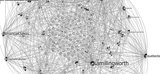
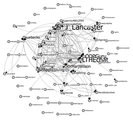
So the third #LTHEChat focussed on engaging the unengaged learner, and was facilitated by @suebecks and myself.I think the questions started off quite broad and narrowed in a little. There were lots of questions coming back at us which showed people were certainly thinking into these topics and there were over 600 tweets using the hashtag and 82 nodes (people) involved.The questions we explored were as follows:Q1: What does an engaged learner do to signify they are engaged?Q2: What signs would you say identify an unengaged learner?Q3: What motivates you personally to engage with learning/CPD? Q4: What type of activities work best to engage learners? Q5: Do you see opportunities to introduce social media to keep learners engaged? Explain. Q6: What examples can you share where students use of social media has increased engagement? There was lots of rich discussion, adding further contextual aspects to the questions e.g. f2f or online settings, what it means to be (un)engaged, and later, a lot of love for some social media tools (but not so much for the poor VLE/LMS).So what you've all been waiting for is the Hawksey Magic (c / Trademark)....There are three images to cast your eyes over below.The first image is the overall tweet chat with all nodes visible. There are a number of nodes on the periphery - these were perhaps people who were included in a tweet for reference, rather than them engaging in the tweet chat fully. The centre of the image shows the tight mass of nodes and connections (or edges).Of course the larger names indicate the betweenness centrality of the node - so once again, @S_J_Lancaster was a key figure in bringing people together in discussion, and it was nice to see @ODPGuru (someone I've not seen before) being a key figure too. Myself and @suebecks were not so significant in this chat as we were tweeting from the @lthechat account.The second image takes a closer look at the centre of the network. This gives a view that there are lots of tweets coming in to the LTHE account, but impressively, @S_J_Lancaster is king of the chat, demonstrating so many incoming and outgoing edges, and stealing the crown from +Chrissi Nerantzi .Impressed as I am regarding the role of @S_J_Lancaster, I've also included a third image - a look at his personal network within the community. His incoming replies and mentions were not far off his total outgoing edges, so he plays a key role in discussion and bringing people together.As I discussed in yesterday's post, networks and communities are different things. A Network includes all of the nodes - people we might be connected to for one reason or another. A Community contains a group of people that have a shared domain of interest. I think the #LTHEchat is demonstrating how a number of individual networks come together to form a single community, and in a holistic and organic way, the community feeds back to create a richer and more dynamic network through new contacts and connections.The LTHEchat is also an opportunity to cut through the noise we see on our timeline and find significance, through a focussed facilitated discussion. Quite what impact we create in terms of noise for other nodes in our network (not community) is another matter though...If you want to have a play about, you can access the interactive version of the images via this link.Peter@ReedyreedlesThe Reed Diaries by Peter Reed is licensed under a Creative Commons Attribution-NonCommercial 3.0 Unported License
Peter Reed
.
Blog
.
<span class='date ' tip=''><i class='icon-time'></i> Jul 20, 2015 07:37am</span>
|
|
Are new ‘ways’ of teaching really new? Or are we just not yet implementing the key strategies for success promoted for centuries by many key philosophers, psychologists and scientists. This includes the likes of Socrates, Plato, John Dewey and countless others. Is inquiry based learning really new? Are questioning skills new? What about blogging? The […]
Deborah McCallum
.
Blog
.
<span class='date ' tip=''><i class='icon-time'></i> Jul 20, 2015 07:36am</span>
|