Blogs
|
In the first part of this discussion, I appeared to contrast the goals of the so-called empathetic voice* with those of global English. Does this mean, then, that global English and the empathetic voice are mutually exclusive? No, I’d argue that the main problem with the empathetic voice is the simplistic and ethnocentric way in which it’s often framed. I’ll go out on a limb and suggest that a global English approach is, in fact, the most user-friendly and accessible way to present technical information to the broadest possible audience (given that English is now the closest thing the world of enterprise has to a lingua franca).
Granted, some of the global English guidelines—"split long sentences into several shorter sentences whenever it’s logically possible," for example—draw complaints from writers and engineers. They argue that these practices "dumb down" their writing and make it sound choppy and unsophisticated. Frequently, though, these complaints mask the fact that the writer is not particularly competent where the basic rules of English grammar and syntax are concerned.
Habitual reliance on overly complex sentence structures that are full of subordinate clauses and misplaced modifiers poses difficulties not only for ESL readers and localizers, but also for native English readers. It may be true that the writer does actually speak this way when yammering with his fellow engineers about a technical scenario, and therefore assumes that his target audience, being just like him, will understand exactly what he’s talking about. But even readers who are "just like him" may have a hard time with a sentence like this (stumbled across in a white paper not long ago): "Upon clicking the notification, assuming the update install has started, the dialog below displays."
EntireNet
.
Blog
.
<span class='date ' tip=''><i class='icon-time'></i> Jul 20, 2015 07:36am</span>
|
|
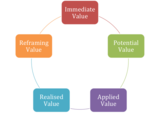
I posted recently to distinguish Networks and Communities as separate (but perhaps cooperative?) entities, and the comments pointed me towards some interesting further (and quite similar & complementary) work around Nets and Sets (thanks again Len & Natalie). I've been thinking more about the questions I left at the end of the post - what is value in a network/community, how do we get value and how is that realised/communicated.Well the obvious 'recipient' of value from networks and communities would be the individual participating. I get some value from this engagement, otherwise why would I bother. Further to this though, the organisation I work for can also benefit from my network, for example if I ask a question or come across some practice via Twitter that directly informs a project at Liverpool. We're often very good at building and maintaining those networks (e.g. following and being followed by other people), but one key challenge is battling through the 'noise' to use that network/community for the benefit of work or learning. A further interesting complication is how management see the value of employers engaging in social networking.Wenger, Trayner and De Laat suggest five 'Value Cycles' and I've summarised them as follows:Cycle 1: Immediate value Interactions within a network/community is valuable in itself - we might help someone with a question, or we might ask a question which is answered, etc. Key questions: What happened and what did we make of it? Participation? Fun? Relevant? Did I make connections?Cycle 2: Potential valueNot all value within a community is realised, but the knowledge capital can be useful. For example we can learn from someone’s experience of a particular situation and we may or may not call upon that in the future. We might learn a skill, learn a piece of information, have access to information like a connection's blog posts, or even build and value reputations for trust.Key questions: Have I acquired new skills or knowledge? Has my understanding/confidence developed? Have I developed new connections, trust or reputation? Do I see new opportunities?Cycle 3: Applied valueTaking something from the network/community to change practice. This could be reusing a survey or an OER that someone has put together.Key questions: Where/how/why have I implemented something from the community? Cycle 4: Realised valueWe can’t presume that changing practice is necessarily improving practice. It’s important to reflect on changes and evaluate. Key questions: What effect did the implementation have? Success? Time saving? Better outcomes? Cycle 5: Reframing valueRedefining success. Achieved when social learning causes a reconsideration of learning and the criteria by which success is defined.Key questions: have we reflected on what matters? Does this suggest new metrics? How has it translated to change - new frameworks, policies, etc? It’s important to note that one cycle does not necessarily lead on to the next in a procedural fashion. Members of the network/community may be more interested in the production of outputs (cycles 1 and 2), or in solutions to improve their own practice (cycle 3). Managers might be interested in results (cycle 3) and strategic outputs (cycled 5).For me, thinking through these cycles has been reassuring that there is actually a purpose to social networking. Sometimes it can feel completely like procrastinating, but the cycles above really do add some weight to it as a genuine professional activity. Peter@ReedyreedlesThe Reed Diaries by Peter Reed is licensed under a Creative Commons Attribution-NonCommercial 3.0 Unported License
Peter Reed
.
Blog
.
<span class='date ' tip=''><i class='icon-time'></i> Jul 20, 2015 07:36am</span>
|
|
Creating a training class, but don’t have access to the tools or any way to complete hands-on activities for your learners? Sounds like the perfect opportunity for that new superhero, Super Simulations.
However, are there times when simulations don’t work? Are we forcing ourselves (and our students) to use them just because they’re the latest technology for learning?
When should you create a simulation? This question could generate a lot of answers, ranging from "all the time" to "never," depending on the subject matter. But are there some subjects that are a natural fit for simulations?
I love the opportunity to get learners to the real-life experience. If there’s a way for them to get their hands dirty (so to speak) with the tools, processes, or soft skills that they’ll be using, why not create a simulation?
EntireNet
.
Blog
.
<span class='date ' tip=''><i class='icon-time'></i> Jul 20, 2015 07:36am</span>
|
|
Rethinking The "Old-School" Graduate Degree.
Deborah McCallum
.
Blog
.
<span class='date ' tip=''><i class='icon-time'></i> Jul 20, 2015 07:36am</span>
|
|
Intelligence is the ability to adapt to change." — Stephen Hawking
Because the "age of mobility" is clearly not going away any time soon, supporting knowledge workers with appropriate instructional aids should be a key component of any comprehensive learning strategy. However, many of us are challenged with identifying and fostering the right skill sets for our learning teams. Have you assessed your team’s skills recently? What skills and capabilities should you seek for the "2020 instructional designer (ID)"?
EntireNet
.
Blog
.
<span class='date ' tip=''><i class='icon-time'></i> Jul 20, 2015 07:35am</span>
|
|
After having been a Teacher-Librarian, AQ Instructor, and starting a family for the past 10 years, it is a learning curve being back in the classroom. Working with students and teaching students all day in some capacity, will never be quite the same as being responsible for your own classroom of students. I am not […]
Deborah McCallum
.
Blog
.
<span class='date ' tip=''><i class='icon-time'></i> Jul 20, 2015 07:35am</span>
|
|
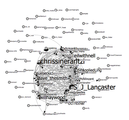
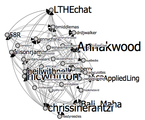
Last night's #LTHEchat focussed on The Flipped Classroom and facilitated by +Sue Beckingham and guest Dave Smith (@dave_thesmith), was the busiest, most hectic one yet.Around 727 tweets were posted with the hashtag during the tweet chat, and as there was a lot of discussion post the 9pm shut down, I have included some of that in the numbers as well.The Flipped Classroom is something that has received a lot of attention over the last few years despite being a practice that has existed for many years - that's what a catchy title can do for you I suppose. Essentially, it's concerned with replacing the didactic (boring?) elements of teaching by moving that to out-of-class work, thus freeing up time in class for more active, engaging activities.Dave's questions for the tweet chat were as follows:Q1: What does flipped classroom teaching mean to you?Q2: How does a flipped classroom benefit the student?Q3: How do you/could you prepare the students for a flipped classroom session?Q4: What type of learning activities could do you do within the flipped classroom?Q5: How could you or your students curate the ideas and conversations encountered during the session?Q6: What is the students perspective on the flipped classroom?What follows are two visualisations from the tweet chat. The first being the full view, and the second slightly zoomed in to get a better view of the big messy ball of interconnections.I think what's becoming increasingly evident throughout the tweet chats, and especially when thinking back to the original tweet chats we held for #BYOD4L, is that they are becoming less reliant on a single person. Even though there are key nodes in the network (see @s_j_lancaster & @chrissinerantzi), the 'betweenness centrality' is almost certainly lower as we are less reliant on individuals to connect other members and act as the gateway. Perhaps this is a sign that we are moving from a broad network to a community of practice? I posted the differences on these here last week. Perhaps it's also a sign of growing popularity of #lthechat? Will be nice to see how this progresses.When I was thinking about this last night, I think we are starting to form a community. If we were so inclined, we could simply post a single tweet in response to the leading questions and the discussion would be near none-existent. Instead what we see, are complex threads of discussion taking place between different people. Often someone else might be copied in to a tweet as it might be of interest to them, or alternatively someone might see the conversation and want to jump in to add a point. Of course this is nothing new to the world of social networking...Another nice little observation I made was in the participation of @neilwithnell - in last week's tweet chat I think he was mentioned a single time in a tweet but didn't engage. This week it's clear he was much more active which was nice to see.Another thing I've been thinking about recently is how the participants in the tweet chat might leverage value. Again this is something I posted about recently in relation to Value Cycles (Wenger, Trayner and De Laat). I'm sure many will benefit from the later value cycles through new ideas to implement in their practice. Would be good to hear some accounts of this and we're encouraging participants to reflect on their experiences - more info on the summary post over at lthechat.com.Anyway, I would encourage you to head over to the interactive version of the network visualisation here to have a little play about.Peter@ReedyreedlesThe Reed Diaries by Peter Reed is licensed under a Creative Commons Attribution-NonCommercial 3.0 Unported License
Peter Reed
.
Blog
.
<span class='date ' tip=''><i class='icon-time'></i> Jul 20, 2015 07:35am</span>
|
|
Potential Power of Blogging for Pedagogy.
Deborah McCallum
.
Blog
.
<span class='date ' tip=''><i class='icon-time'></i> Jul 20, 2015 07:34am</span>
|
|
So I've been blogging for the last few years with reasonable regularity, and mainly blog for myself - clarifying my own thoughts and making meaning of various things. Whenever possible I also share whatever I can, whether that's data I've gathered or useful references for a particular topic.I've never really blogged with the aim of being nominated for awards, as I think that can detract from the purpose of the blog - I wonder if the blog then takes on a hidden aim. Would that make it almost dishonest?I was pleased to be nominated in the top 100 UK educational blogs a while back and admit to have kept an eye of the list from eLearning Feeds after my inclusion there, however this last one is partly based on the amount/frequency of posts as well as social traction, etc. So it becomes easy to make pretty crappy posts with the aim of satisfying their algorithms - something I'm not doing...Having said that, when people in the edtech community go out of their way to nominate you/your blog for an award it's a really rewarding feeling - that kind of peer acceptance (for want of a better word) and the sense that someone has found something I've shared of interest or useful. [Not that I'm always getting nominated for awards mind...]Anyhow, I've recently been nominated in the the Edublogs award (#eddies14) in the category of Best Ed Tech / Resource Sharing Blog which I'm quite proud of. I had canvassed people previously to vote for me, but that might sound a little hypocritical after what I have just said so I won't be doing that again. It's an absolute bonus that I've been nominated in the first place and I'm honoured.If you want to take a look, head over the edublog award pages - you might find some new blogs you haven't come across previously. My category is available here...Peter@ReedyreedlesThe Reed Diaries by Peter Reed is licensed under a Creative Commons Attribution-NonCommercial 3.0 Unported License
Peter Reed
.
Blog
.
<span class='date ' tip=''><i class='icon-time'></i> Jul 20, 2015 07:34am</span>
|
|
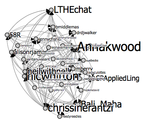
After taking a few weeks off to look after my fresh new baby, I'm back to facilitating #LTHEchat. This week's chat focussed on Games and Learning in HE and we were lucky to have the guest appearance of Dr. Nicola Whitton from MMU.I thought her line of questioning was probably the best of all of the chats thus far - really interesting and thought-provoking questions:Q1: Have you ever used a game - traditional or digital - in the classroom? What worked well? What bombed? #LTHEchatQ2: What reservations (if any) do you have about the idea of games for learning in Higher Education? #LTHEchatQ3: Gamification uses game techniques - typically points, quests, badges, leaderboards. Is it appropriate in HE? #LTHEchatQ4: How can we get over the media perceptions of gamers - violent, solitary, addictive - to make games acceptable in for learning? #LTHEchatQ5: Stealth learning is the idea that an activity can help people learn without being aware of it. Does this work in HE? #LTHEchatQ6: What do you feel about stealth assessment? #LTHEchat There is a storify of the chat available here. And of course here are a couple of visuals of the network throughout the chat. Although Nicola was hectic in facilitating the chats, this chat wasn't actually as busy as some other chats - we were missing a couple of proven big hitters from previous chats though, notably @s_j_lancaster. It was lovely to see +Maha Bali getting involved.Peter@ReedyreedlesThe Reed Diaries by Peter Reed is licensed under a Creative Commons Attribution-NonCommercial 3.0 Unported License
Peter Reed
.
Blog
.
<span class='date ' tip=''><i class='icon-time'></i> Jul 20, 2015 07:33am</span>
|