Blogs
|
Education. It’s not Rocket Science…. Right? You just follow the expectations set out by the curriculum, follow along the prescribed chapters from the textbook, read the standardized books, and make sure that all students meet all expectations. Right? Why would we do anything else? Why do we have so much difficulty understanding the Inquiry Process, […]
Deborah McCallum
.
Blog
.
<span class='date ' tip=''><i class='icon-time'></i> Jul 20, 2015 07:40am</span>
|
|
As some people will already know, the Bring Your Own Device for Learning initiative was a great success. One of the key highlights was the flurry of activity around the synchronous tweet chats that took place on each of the five evenings.Reflecting on the 'non-course', Sue and Chrissi suggested we could try to introduce a more general regular tweet chat outwith #BYOD4L. So after months of deliberation and back bench heckling, we can now introduce #LTHEChat - a weekly tweet chat that will cover a whole host of topics related to learning and teaching in higher education, and participants will be able to vote for topics that we could cover in future weeks.DetailsTwitter Hashtag: #LTHEChatTwitter account: @LTHEChatWhen: Wednesday evenings, from 8-9pmLaunch: Wednesday 29th October, 8pmWebsite: http://lthechat.comFacilitators: Sue Beckingham, Chrissi Nerantzi, David Walker, and me, Reedyreedles.So we hope you all get involved and look forward to tweeting soon :-) If you have any suggestions for topics to discuss in the earlier sessions, feel free to tweet one or all of us!Peter@ReedyreedlesThe Reed Diaries by Peter Reed is licensed under a Creative Commons Attribution-NonCommercial 3.0 Unported License
Peter Reed
.
Blog
.
<span class='date ' tip=''><i class='icon-time'></i> Jul 20, 2015 07:39am</span>
|
|
What do we want students to learn, and how will we know when learning has happened? These are 2 amazing questions posed to me once by a Principal whom I greatly admire. I now take these questions with me into each and every lesson that I do. Today I have related them to a conversation […]
Deborah McCallum
.
Blog
.
<span class='date ' tip=''><i class='icon-time'></i> Jul 20, 2015 07:39am</span>
|
|
Over the years, I’ve been asked to design and develop blended content several times. As I think about these projects, I’d say that there was only one common thread in the requests from the customers: the desire for content that could be consumed both through instructor-led training (ILT) and through an eGuide that the learner could use independently. However, beyond the request for these two delivery modalities, the door was left wide open in terms of what the end product should look like. In this post, I’ll discuss two models that I found to be incredibly successful and effective for handling such requests.
EntireNet
.
Blog
.
<span class='date ' tip=''><i class='icon-time'></i> Jul 20, 2015 07:39am</span>
|
|
I came across an interesting paper this morning - Instructional Design Quality of MOOCs in the journal 'Computers & Education'. The abstract reads:"We present an analysis of instructional design quality of 76 randomly selected Massive Open Online Courses (MOOCs). The quality of MOOCs was determined from first principles of instruction, using a course survey instrument. Two types of MOOCs (xMOOCs and cMOOCs) were analysed and their instructional design quality was assessed and compared. We found that the majority of MOOCs scored poorly on most instructional design principles. However, most MOOCs scored highly on organisation and presentation of course material. The results indicate that although most MOOCs are well-packaged, their instructional design quality is low. We outline implications for practice and ideas for future research."So, MOOCs aren't great from an instructional design perspective. Tick.MOOCs are well organised and presented. Tick.It was an interesting read. My first impression went something like this - let's say what we think is good practice, and then see if these MOOCs live up to what we say is good practice, even though we know what the answer is a big fat No!But as I read on I think I was being harsh as there is more rigour to study, but it still leaves me with a few questions.Firstly, how would traditional face-to-face undergraduate courses fare in this experiment in comparison with MOOCs? There is a whole lot of chalk and talk still taking place in HE - the analogue counterpart to many MOOCs, and I wonder if they would be less organised. Granted it would be difficult to sample...Secondly, whilst the instrument used looks reasonably comprehensive (albeit rather subjective) it's not clear if the researchers went through every single topic in each of these MOOCs.Finally, although the authors tip their hat towards such research, it would have been nice to see some comparison between MOOC platforms e.g. Futurelearn vs Coursera, etc. That is of course, if some of the points in the instrument are even related to the platform or if it's solely course design.Regardless of my questions, it's still an interesting read. Head over to the journal to read for yourself (sorry if it's behind a paywall)...Peter@ReedyreedlesThe Reed Diaries by Peter Reed is licensed under a Creative Commons Attribution-NonCommercial 3.0 Unported License
Peter Reed
.
Blog
.
<span class='date ' tip=''><i class='icon-time'></i> Jul 20, 2015 07:39am</span>
|
|
I recently attended and had the privilege of presenting at the YRDSB edtechcamp conference where Holly Clark and Tanya Avrith were the AMAZING keynotes. Motivating speakers whose presentations served to engage us and motivate us to take our instructional practice to the next levels. Tanya did a superb job of sharing an informative and engaging […]
Deborah McCallum
.
Blog
.
<span class='date ' tip=''><i class='icon-time'></i> Jul 20, 2015 07:39am</span>
|
|
Evaluations, surveys, or feedback (whatever you want to label it) has always been important to me as a corporate trainer and now as an instructional designer. My goal in any area of my life has always been to keep learning. One way I can make sure I’m on the right track is to ask for feedback or an evaluation on what I’ve presented.
However, the typical evaluation has some drawbacks. If I personally ask the consumers to provide feedback and mention (in passing) that I’d really appreciate all 5’s on the form, am I getting the results to help me learn? If I ask customers to fill out the form before they leave the training and they just circle "Excellent" on all the questions, how do I improve for the future?
EntireNet
.
Blog
.
<span class='date ' tip=''><i class='icon-time'></i> Jul 20, 2015 07:39am</span>
|
|
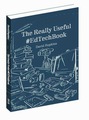
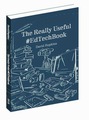
Don't read any further than this paragraph. Just take 10 seconds to sit back and visualise a learning technologist. Think of them in work. Are they at a desk? Do they have lots of kit around them? Is their office like a store cupboard brimming with cables, old desktops computers and printers. Keyboards and mice? Ok you can read on now...I've just finished an asynchronous written interview with @hopkinsdavid related to the chapter I'm writing in the upcoming #EdtechBook. I suggested to him that the interviews would be great in a video format, and began to visualise the scenes with each of the authors. I quickly thought that each of us would be sat with varying pieces of technology surrounding us - computers, laptops tablets and smartphones. Maybe even having some code on a screen. In fact, David sent through the latest book cover the other day, and as well as those obvious things, there are some printed books (remember them?), a coffee mug, a video camera (more kit), a satchel, a kit kat and a twix (ok, they're just for +Sheila MacNeill).But then I sat back and thought about this. My chapter discusses the variety of people that hold learning technologist positions and the things they do on a day-to-day basis. Do they fit this mould? Is that a representative picture of all of the learning techs I've worked with?I think the answer is a resounding no! Learning technology is primarily about learning. The technology comes second. We're always quick to put pedagogy first and technology second, so why do visualisations of learning technologists emphasise the technology so much? By these views, we could be programmers or web developers. In fact, some LTs may even do these roles. But all of them? Is it representative?I think this isn't just questioning the visualisation of learning technologists in general, but I also wonder if this might harm the role through such a techno-determinist portrayal, or at least put a dent in the message we often try to portray to academic staff....Would love to hear your thoughts on this one...Peter@ReedyreedlesThe Reed Diaries by Peter Reed is licensed under a Creative Commons Attribution-NonCommercial 3.0 Unported License
Peter Reed
.
Blog
.
<span class='date ' tip=''><i class='icon-time'></i> Jul 20, 2015 07:39am</span>
|
|
Let’s look a little closer at each level.
Organizational scorecard
What’s the most effective talent management strategy for improving organizational performance? You use a roll-up of both the macro and micro scorecards to understand your company’s business model and define what constitutes value. Through the scorecard, you’ll discover where and how this value is created, and connect business processes and talent management interdependencies.
Functional scorecard
Use the functional (macro) scorecard to track activity and efficiency. For this type of scorecard, it’s important that you identify the audience before you design the scorecard. You need to consider all uses for the data that you receive and the requirements for the source data. Then, pilot test your scorecard with a sample audience before releasing it for broader implementation.
Micro scorecard
The micro scorecard will be a one- to two-page table of activity metrics and should list business objectives. This is where you can really see the impact in a granular way. You should evaluate on each the following levels:
Satisfaction
Learning
Application
Business impact
Return on investment (ROI)
For this type of scorecard, you need to make sure that you plan for evaluation before and during the design of the scorecard. You want to keep it simple and conservative while accounting for the influence of other factors. Most importantly, you should involve staff and management in the process of planning and executing data collection. This is where you can gather very specific information about how each person in your organization aligns with the business objectives.
EntireNet
.
Blog
.
<span class='date ' tip=''><i class='icon-time'></i> Jul 20, 2015 07:39am</span>
|
|
Originally posted on HBR Blog Network - Harvard Business Review:Reid Hoffman, co-founder and executive chair of LinkedIn and investor in Facebook, Zynga, and Groupon, sees networks. "It’s not like The Sixth Sense," he told the crowd at TED on Wednesday. "I don’t see dead people. But I do see networks." This lens has given…
Deborah McCallum
.
Blog
.
<span class='date ' tip=''><i class='icon-time'></i> Jul 20, 2015 07:39am</span>
|