Blogs
|
So you may have heard by now, but that +David Hopkins (@hopkinsdavid) has had another brainwave of putting together a new book covering a range of aspects of educational technology. I'm very pleased to be writing a chapter for the book, which also includes chapters from other people like the wonderful +Sheila MacNeill (@sheilamacneill), David Walker (@drdjwalker) and Sue Beckingham (@suebecks).My chapter in particular is one of those that can set the scene - given the various roles in the different HEIs I've held, I'll be discussing the variety of roles we see within the 'Learning Technologist' job title - perhaps becoming something of an umbrella term for #edtech roles. I'll also be discussing the variety of institutional approaches to technology enhanced learning support - what works best? Central provision or devolved school/faculty responsibilities? You get the drift.Anyway, I've recently finished a really enjoyable interview with David about the chapter that he's published on his blog. He's asked some very interesting questions that got me thinking a lot. He asked how I use different tools to support my role and my tips for other people new to such tools. I think the interview got more interesting as he probed into deeper depths, teasing out how we might get colleagues engaged in wider open networking, the implications of (not) doing so, and considering the work-life (or working 9-5) balance. In response to a question about technology taking over our lives, I responded:"Over the past few years I’ve come to believe that a career is a significant part of your life. A career isn’t ‘just a job’ so you don’t (or can’t) leave everything at the office - not "can’t" because of any requirement, but "can’t" because you’re always engaged. You read books, see programmes and speak to people, and relate all these things to your role. It’s something you care about beyond just a pay packet each month. You might get an idea that would work in implementing a strategy or a cool idea for a staff development programme. These happen at all hours of the day, on every day of the week!" Anyway, I'd encourage you to head over to David's blog to read the full interview. The interview itself led me to think more about what a 'typical' learning technologist looks like, so why not read that post too :-)Peter@ReedyreedlesThe Reed Diaries by Peter Reed is licensed under a Creative Commons Attribution-NonCommercial 3.0 Unported License
Peter Reed
.
Blog
.
<span class='date ' tip=''><i class='icon-time'></i> Jul 20, 2015 07:39am</span>
|
|
A long-time Microsoft editor recently posted the following link to the company’s main distribution list for editors:
Science Says You Can Split Infinitives and Use the Passive Voice
http://www.motherjones.com/environment/2014/10/inquiring-minds-steven-pinker-style-bogus-grammar-rules
What initially caught my eye was the Steven Pinker reference in the URL. Pinker, a one-time Noam Chomsky acolyte, is well-regarded across a wide range of language-studies schools of thought, and I’ve had a generally positive impression of him. So, that headline gave me pause—could Pinker really be taking issue with Richard Lanham’s advocacy of the active voice as a way of cutting through the gibberish of The Official Style, the self-serving spin of the government or corporate bureaucrat? (Example: "Mistakes were made.")
EntireNet
.
Blog
.
<span class='date ' tip=''><i class='icon-time'></i> Jul 20, 2015 07:39am</span>
|
|
I feel very privileged to be a part of the movement to join Michael Fullan and others in the Global initiative to radically rethink education. This project is called New Pedagogies for Deep Learning. It is not just a new journey, but more like an expedition or exploration of new worlds. We are reminded that […]
Deborah McCallum
.
Blog
.
<span class='date ' tip=''><i class='icon-time'></i> Jul 20, 2015 07:38am</span>
|
|
"As a language changes from beneath our feet, we feel the sands shifting and always think that it’s a deterioration," explains Pinker. But Lanham might reply that language, just like other cultural and political institutions, doesn’t just shift and evolve naturally like the wind and tide patterns. Rather, language is a field of battle and contention, and the underdog who aims to speak truth to power needs to analyze how the language of the entrenched and powerful works to hide the role of those vested interests in manipulating information into very particular, self-serving narratives.
Lanham’s critique is a corrective against the blinkered, uncritical adoption of the passive-voice statements that mark The Official Style. But because his message hit such a nerve and became so popular (especially among college writing instructors), we’ve supposedly seen the active voice turn into a new sort of dogma. And true enough, it’s sometimes pushed ignorantly and without careful attention to context and circumstance. Pinker fastens on this in promoting the cliché that it’s the grammarians who are the real elitists, and that their "bogus rules … serve as a tactic for one-upmanship." And although he eventually exhibits a degree of nuance about the issue, the article title goes out of its way to cite the push against the passive voice as a classic example of this unscientific, elitist rule-mongering.
EntireNet
.
Blog
.
<span class='date ' tip=''><i class='icon-time'></i> Jul 20, 2015 07:38am</span>
|
|
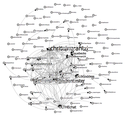
So last night saw the inaugural tweet chat for the new #LTHEChat initiative that I'm involved in, along with @suebecks, @chrissinerantzi and @drdjwalker. I blogged about the initiative a while back and was happy to see its launch last night, focussing on the theme of new ways of engaging with bite sized professional development.This first image shows the entire usage of the #LTHE tag over the past couple of weeks (720 ish tweets).I've deleted the first batch of tweets which took place before the actual tweet chat last night, so we can get a more accurate representation of last night - as such we have 650 tweets (not bad hey?). The image below shows a tight knitted group at the centre - those that were most active in the chat - and a number of outliers who may have tweeted but didn't really interact with many other people on the night. I see I'm one of those with only 15 tweets (although to be fair I had lots of subsequent tweets that just didn't include the hashtag and hence not included here)!If we zoom in a little tighter we can get a better picture of those more active in the chat. Unsurprisingly, +Chrissi Nerantzi & the @LTHEChat account were key figures, but it's also nice to see a lot of other names in there such as @s_j_Lancaster, @trabimechanic, @libgoddess and @KayAppletonUAE.I managed to connect to some new people, including someone who also works at Liverpool but I've not met before - @NickBearmanUK. Another highlight for me was a chat with @sambasite about the value of journal clubs and how we'd love to organise a virtual one - perhaps managed through Twitter or Google+. Any takers or suggestions????Anyway, that's week 1 out the way and we'll be back next Wednesday evening with more #LTHEChat - don't forget you can vote for future topics over at LTHE Headquarters...Peter@Reedyreedles$nbsp;The Reed Diaries by Peter Reed is licensed under a Creative Commons Attribution-NonCommercial 3.0 Unported License
Peter Reed
.
Blog
.
<span class='date ' tip=''><i class='icon-time'></i> Jul 20, 2015 07:38am</span>
|
|
My background is in education in the public schools. In fact, I spent 5 years teaching middle school - easily the most frightening educational territory I can imagine. Middle school students know everything: just ask one of them. They know EVERYTHING. This makes teaching a classroom filled with middle school students a special adventure. The key? Rapport. You have to build rapport with your students in order to get them to pay attention to you. If they’ve connected with you, they’ll listen to you.
Working with adult learners isn’t much different when it comes to rapport. The first 10 minutes of class are often the most important 10 minutes for me - I want to connect with my students quickly. In those first 10 minutes, it’s critical that I accomplish the following:
EntireNet
.
Blog
.
<span class='date ' tip=''><i class='icon-time'></i> Jul 20, 2015 07:38am</span>
|
|
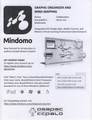
Originally posted on ~ Mark's Musings ~ blog.markwcarbone.ca:There is lots of exciting news on the OSAPAC front. The new OSAPAC website was launched at the recent Bring IT Together conference. In this post, I am highlighting four newsworthy items. One of the new exciting Ontario provincial licenses is for Mindomo, web based mind…
Deborah McCallum
.
Blog
.
<span class='date ' tip=''><i class='icon-time'></i> Jul 20, 2015 07:38am</span>
|
|
Whether you call it onboarding, orientation, or new employee training, the idea is the same: you have information that you need to instill in an employee, and you need to do it fast and efficiently.
If you’ve been a corporate trainer or an instructional designer for a while, you’ve created these types of programs. In some cases, it’s a simple course that you create to explain new processes or procedures. However, most onboarding or orientation programs can be very lengthy and detailed.
There are various methods for providing this information to the employee. We’d all like to be able to take an experienced employee and do a "Vulcan mind-meld" to the new employee to pass along all the information that the experienced employee has gleaned over the years. But since that technology isn’t available yet, we need to create programs or training sessions that will provide everything that the employee will need.
Best practices for these types of programs can include items such as the following:
EntireNet
.
Blog
.
<span class='date ' tip=''><i class='icon-time'></i> Jul 20, 2015 07:38am</span>
|
|
Having had my first PhD supervisory meeting I'm hitting the literature. My topic is around the use of social media/networking amongst undergraduate medical students (I'll be tightening up the question very soon).As we began to unpick the topic three key areas emerged:identity within communities of practice; social networking B.C (Before Computers) and A.C (After Computers); and finally, the impact of social media on the undergraduate journey to becoming a professional and holding a professional digital identity.In this post I just wanted to share some thoughts about one piece I've read on professionalism.Hilton and Slotnick (2005) discuss the concept of professionalism amongst medical students and practicing doctors. They suggest six domains of professionalism - three are personal (intrinsic) attributes of professionals, including: ethical practice; reflection/self-awareness; and responsibility/accountability for actions. The other three are co-operative attributes including; respect for patients; working with others and social responsibility.Critically, the authors suggest these six attributes of professionalism are not merely traits of medics as individuals, but more as a state achieved through prolonged learning, instruction, experience and reflection on experience. They suggest it further relies on what Aristotle (in Nichomachean ethics) termed ‘phronesis’ - what Wikipedia suggests is a type of wisdom or intelligence, or what the authors say is: "prudence or practical wisdom, such that professionals know which rules to break and how far to break them to accommodate the reality at hand" (Hilton & Slotnick, 2005).This is a very practical skill borne from experience and reflection, and the authors introduce the term 'Proto-Professionalism' to relate to the journey of (in this case, medical) students towards such a state. The concept is something very appealing and I wonder how this translates into other fields - trainee teachers for example?But some key questions stand out for me here - what implications does technology provide for the proto-professional? What risks and challenges must they become aware to and overcome on their journey, particularly related to the introduction of social media? What can they do and what rules can they break? And critically, what are we doing to support them on this journey.So if you like a bit of jazz, I leave you with Phronesis (see what I did there??)ReferencesHilton, S. R., & Slotnick, H. B. (2005). Proto-professionalism: how professionalisation occurs across the continuum of medical education. Medical Education, 39(1), 58-65. doi:10.1111/j.1365-2929.2004.02033.x Peter@ReedyreedlesThe Reed Diaries by Peter Reed is licensed under a Creative Commons Attribution-NonCommercial 3.0 Unported License
Peter Reed
.
Blog
.
<span class='date ' tip=''><i class='icon-time'></i> Jul 20, 2015 07:38am</span>
|
|
12 Tech-Savvy Educator’ Favorite Apps.
Deborah McCallum
.
Blog
.
<span class='date ' tip=''><i class='icon-time'></i> Jul 20, 2015 07:38am</span>
|