Blogs
|
In the previous posts in this series, we discussed how to leverage Design Thinking modes to help create more effective learning experiences. In some respects, the Design Thinking modes (Empathy, Define, Ideate, Prototype) are similar to the traditional ADDIE process steps of Analysis, Design, Develop and Implement. We think the key differences between the two, however are quite stark. We’ve separated them into these elements:
A more radical collaboration among the internal and external teams
The ability to gain deep user insight
Heavier reliance on prototyping
Radical Collaboration
Too often, we fail to both effectively collaborate with our internal teams while designing learning experiences, and to foster a deeper collaboration with external stakeholders and the audiences we support. By conducting what we refer to as radical collaboration, you let go of the ego-centricity that many learning designers fall back on -- especially those of us that have many years’ experience doing what we do. We look at radical collaboration as "checking your ego at the door" and encourage people to provide input every step of the way on the solution being built. This is where you may consider adding elements of Agile into your process: daily stand-ups where you share what you’re working on with your team, granular user stories where you work out features and benefits, and constant feedback opportunities to ensure you’re on the right track.
EntireNet
.
Blog
.
<span class='date ' tip=''><i class='icon-time'></i> Jul 20, 2015 07:47am</span>
|
|
Entirenet sits down with Tom King, Former Chief Learning Technologist at Boeing Flight Services to discuss the concept of what elearning is all about.
EntireNet
.
Blog
.
<span class='date ' tip=''><i class='icon-time'></i> Jul 20, 2015 07:47am</span>
|
|
CC BY:NC:ND flickr photo by Tiger PixelI had the thought of writing this post last week, but to be honest it feels a bit funny writing it. I've gained a lot of experience over the last 10 years working in HE - much of which could form good advice to younger/newer players to the game like, for example, the TEL technicians we have in our Faculty at Liverpool.The strange thing is that in many ways I don't feel greatly experienced - I'm still relatively less experienced in research - something my PhD will hopefully address, and of course technologies are changing so there's always more to learn about - from advances in the open (or not so open) education such as MOOCs through to things like Augmented Reality. This kind of links back to a discussion I had with @hopkinsdavid last week around the Learning Technologist as Jack (or Jane) of All Trades - that is, we know a bit about a lot, but there's always more to learn...But more than anything with people new to a role, I'd much rather than a proactive person with little experience than someone with more experience but doesn't actually do much. So what advice do/would I give to those less experienced in learning technology? Here are my top pointers....Actually think about what it is you're doing, and make sure you're doing it right! If you make a mistake, that's ok. Just learn from it and try not to do it again and that way, a mistake is never a mistake - it's always a learning curve.Say Yes to every opportunity - whether it's meetings, working groups or projects, it will serve you well to get involved. You'll learn new things and see things from different and new perspectives (which can never hurt, even if you disagree or just identify certain people as being 'all talk'). At the same time, know what things to say 'No' to. When I started out I was clear what my job included and what it didn't. I found it was important to set my stall out on this from the very beginning.If you are keen to progress in your career, try to think back on your day/week/month/year. How did it go? What things do you like doing? Pursue those opportunities more. What are you weak at? Pursue that too. What's your knowledge base or understanding of topics that are discussed in meetings or amongst colleagues? Go and read up on them - just enough so that you know what's going on in that area and know where to go if and when you need to find out more. If there's something you don't know the answer to, don't just pass the buck on (or even worse turn people away). Make it your mission to find out the answer. If the root of the problem sits with another department, either make the necessary introductions or provide suitable redirection.Be proactive. The nature of the role means there can be quite times, say, in the summer. Use that time to seek out new and exciting projects or use that time for personal development.Although this one is cliched I have always lived by it - dress for the job you want, not the job you've got. Even in my first helpdesk job I got fresh out of Uni I made an effort to wear a shirt and trousers, and often a tie. Don't be concerned with how other people dress - You're a professional so dress like one..I'm also very relaxed and informal in conversation with other people. Sometimes to a fault I think - speaking before I think. But people see the real me and I've certainly found that building relationships with colleagues is something that comes quite natural to me and being personable is a critical aspect of the role of the learning technologist.Get out the confines of your office and meet people. This can be tricky. Whilst colleagues I've worked with often think I'm some super networker, I'm actually not. I tend to put myself about to share the work I'm doing rather than purely go along to network at things. There's definitely a balance to be found here. I find this way, people can judge me for my work and they'll know that I know what I'm talking about (if indeed, I know what I'm talking about :-) ).When you get worn down by bureaucracy or unhappy with the boring tasks you're dumped with, do whatever you can to take on more (and a wider range of) work. This is obviously tough when you're already super overworked, but the experience will serve you well when you apply for new jobs :-)Hopefully that doesn't sound too much like a self-help guide and I'd love to hear from others to see what your top tips would be.Peter@ReedyreedlesThe Reed Diaries by Peter Reed is licensed under a Creative Commons Attribution-NonCommercial 3.0 Unported License
Peter Reed
.
Blog
.
<span class='date ' tip=''><i class='icon-time'></i> Jul 20, 2015 07:47am</span>
|
|
Every classroom presents a new dynamic of collective learning opportunities - yet we still need to differentiate and follow practices designed to promote increased student success. Should we look at a classroom and the learning process as broken down into its smallest components? Or we can look at it as a complex interconnected web - […]
Deborah McCallum
.
Blog
.
<span class='date ' tip=''><i class='icon-time'></i> Jul 20, 2015 07:46am</span>
|
|
I was giving some thought the other day to the plethora of devices available these days, as well as the vast range of apps and tools on those devices that people are using on a daily basis. And then as I thought back to my top 11 tools of 2011 from my old blog, I realised that my habits and the tech and tools I rely heavily upon haven't changed. At all.I continue to rely on the iOS ecosystem because I find the old chiche is true - it just works. And it works well. The mail and calendar apps are critical for me, and the upcoming 'handoff' feature looks to be a treat too so I can easily transfer stuff from my Mac and my iPad! Other than that there aren't many specific reasons why I would use a Mac at work [iMac] and at home [MBP], other than the fact it's just a much nicer experience. I have discovered the Memory Clean app which is useful to remind me when I have too many things going on which slows down my machine.I continue to rely on the same old tools. Evernote and dropbox are the hub of my productivity. Chrome is my portal to the web (I quite like the Google tools) even though I do really like the Apple-ness of Safari. Twitter is where to find me online despite my presence (but limited activity) on LinkedIn and G+ - still don't use Facebook a great deal. I tried to use Apple Pages and Keynote, and whilst I do really like them, it's often more hassle to convert the outputs into .docx and .pptx files so others can access the files. They always require a touch of editing and actually, the drawing tools in Powerpoint are better than those in Keynote anyway.In the past couple of years I have had to move away from Google Reader for obvious reasons. I loved the Reader App for iOS and having paid for them once, I was reasonably miffed that the upgrade required purchasing all over again. They are nice apps and I bought the iOS version but wasn't paying the £5+ for the desktop version, largely because I've managed reasonably well using Feedly (free).So what?So my habits and tools/tech haven't really changed in the last few years.What does this all mean? It possibly says more about me than it does the technology. But it does pose the questions - do we need the abundance of technology we have at our fingertips, and is there an optimum number of tools/apps for us?? Is there a lull in innovative new developments in software and apps?
Peter Reed
.
Blog
.
<span class='date ' tip=''><i class='icon-time'></i> Jul 20, 2015 07:46am</span>
|
|
Earlier this summer, I created a Thinglink Grid to help me think about Reading difficulties - the purpose was to essentially neatly package student reading progress into specific categories. A tool, if you will, that could easily be harnessed to provide quick and easy strategies for teachers and parents to help students on their way […]
Deborah McCallum
.
Blog
.
<span class='date ' tip=''><i class='icon-time'></i> Jul 20, 2015 07:46am</span>
|
|
As I embark on a new school year with 6 iPads in my classroom, I will also be watching to see how it influences student learning. More specifically, I will be evaluating how well they can support successful reading programs, and how I can enhance […]
Deborah McCallum
.
Blog
.
<span class='date ' tip=''><i class='icon-time'></i> Jul 20, 2015 07:45am</span>
|
|
So another #ALTC conference has come and gone rather quickly. I presented this afternoon on my work around Hygiene Factors and VLE minimum standards for student (dis)satisfaction. I had quite a few positive comments and requests for more info and/or slides, so thought I'd pull them together.Firstly, the slides from the session are on slideshare (well, slides I've used previously are embedded below).Secondly, I've blogged much of this work already, so those that are interested can head over to the following brain dumps of mine :-) Of course if you need any more info or just want to comment, please do.Staff & Student perspectives on introducing VLE Minimum standardsTEL and Herzberg's Two-Factor TheorySector-wide subscription to VLE minimum standardsELESIG Small Grants & my minimum standards workMinimum Standards - automating content for our baseline Presentation of work around VLE Minimum Standards at the North West ALT SIG (7/5/14) from Peter Reed Peter@ReedyreedlesThe Reed Diaries by Peter Reed is licensed under a Creative Commons Attribution-NonCommercial 3.0 Unported License
Peter Reed
.
Blog
.
<span class='date ' tip=''><i class='icon-time'></i> Jul 20, 2015 07:45am</span>
|
|
Originally posted on doug --- off the record:It’s a week "back at it" and Ontario Edubloggers are sharing their thoughts. Who knew? Check out and feel some of the excitement that was shared online this past week. Needless to say, Monday night would be sleepless but the sleep will come from the exhaustion Tuesday…
Deborah McCallum
.
Blog
.
<span class='date ' tip=''><i class='icon-time'></i> Jul 20, 2015 07:45am</span>
|
|
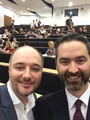
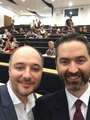
Keynote Selfie with @glynnmark at #EAS14So last week was a bit hectic for me - getting back from the #VegasWedding, and after a little sleep heading straight down to Warwick for #ALTC. Then on Thursday I travelled up to the eAssessment Scotland Conference in Dundee as I was delivering a keynote presentation (and inherited a few other tasks, namely a 2nd Keynote and chairing a discussion panel with familiar faces such as Peter Hartley and Mark Glynn).I’ve come across the eAssessment Scotland conference in the past and really fancied attending given some of the great names they’ve attracted in recent years - much of which has been down to the hard work of David Walker and Kenji Lamb (yes, no jokes here about it going downhill this year!).So my morning keynote kicked the conference off and I used Brookfield’s lenses of reflection as the key focus, which encourages reflection through 4 lenses: self-reflection, students, literature and peers. I joked that this just was just an excuse to enable me to flit from one thing to another, but those that know me probably know this was true :-) One of the things I was conscious of was that I didn’t want to deliver some high level, political and philosophical keynote, partly because I knew I was seeing excellent keynotes from Catherine Cronin and Audrey Watters that week at ALT and well, why even bother trying to live up to those standards (you should check those keynotes out by the way). So what I hoped to deliver was a blend of theory and some practical stuff that colleagues could go away and implement. I think (read hope) I achieved this. Some of the key examples I gave related to:the need to integrate digital technologies into the curriculum (with a nod to the student as producer) to prepare students for the world of work. This was then contrasted with the comparison of how we typically see a range of devices used in learning and teaching, mismatched against traditional assessment practices such as written essays/exams.the need to consider other people when planning assessments, made tangible by assessment timelines. I've blogged the need to move away from typical high stakes essays at the end of the module, and shared the timelines I produced for a draft version of our medical curriculum. I got inspiration for the actual drawings from the ESCAPE project at Hertfordshire, and was pointed towards the Map My Programme Tool that came from Greenwich. The second keynote of the day was from Mark Glynn of Dublin City University. He spent some time introducing learning analytics and assessment analytics, and shared some extremely interesting work they’d done with Moodle in identifying and sharing a student’s relative position in a cohort based on their assessment grades. This looked great and something I think a lot of people would be interested in. It all aligned well with a presentation I’d seen earlier in the week at ALT that had demonstrated a Moodle block that enabled academic staff to see a student’s previous grades/feedback/submission even if they were not enrolled on those other modules.Anyway, Mark and I had planned it quite well so that my second keynote (the third of the day) would pick up on assessment analytics a bit more. I shared some information about LIFTUPP (a project from our Dental School at Liverpool) and shared data from a pilot we’ve run on using Grademark to provide grades/feedback to students. I’ll blog this soon but essentially, we can reasonably easily gather data on student (and potential staff) performance in written works using Tii/Grademark, such as the amount of quick marks left, average marks awarded, etc). This led nicely into asking the audience to consider a range of questions, many related to ethical issues in the collection and sharing of such data, which fed into the panel discussion which I was supposed to chair, but couldn’t escape being asked for, or just offering, my opinion.Overall it was a great day. I can honestly say that other than the traveling aspect, it was one of the best conferences I’ve ever been to (even if I was run ragged for most of the day). I also find it amazing that they have managed to keep this conference absolutely free for delegates (yes, even English delegates).So I’ll very much consider attending the conference next year, and would definitely recommend you consider it too! Massive props to Kenji Lamb (and David Walker even though he’s moved on from Dundee), Lynn Boyle (@Boyledsweetie), Mark Glynn (@glynnmark), Lorraine Anderson, Monica Matthews and the rest of the fabulous team that made the day so great. Slides from the dayKeynote Part 1 Keynote presentation pt.1 at eAssessment Scotland 14: Viewing Summative Assessment Through Different Lenses from Peter Reed Keynote Part 2 Keynote presentation pt.2 at eAssessment Scotland 14: Viewing Summative Assessment Through Different Lenses from Peter Reed Peter@ReedyreedlesThe Reed Diaries by Peter Reed is licensed under a Creative Commons Attribution-NonCommercial 3.0 Unported License
Peter Reed
.
Blog
.
<span class='date ' tip=''><i class='icon-time'></i> Jul 20, 2015 07:44am</span>
|