Blogs
|
"I haven’t got time to use technology": Have you really got the time not to? For quite a few years now I’ve been enjoying the benefits of teaching and learning tools, which can be accessed via the Internet, that are free and very easy to use. I’ve been delivering staff development in the use of […]
Collin Gallacher
.
Blog
.
<span class='date ' tip=''><i class='icon-time'></i> Jul 20, 2015 07:49am</span>
|
|
So it's been quite a while that I've been MOOC-free, (I wonder if I should get a coin of celebration for each month?), but I've fallen off the wagon! I'm back on the MOOC trail because I liked the sounds of this course from the Open University - Talk the Talk. I was/am particularly interested in this for a number of reasons:I've had a lot of experience presenting and talking to audiences, be it from teaching students, presenting at conferences or delivering staff development sessions. And well, it would be good to be able to polish that experience a little. Everyone can get better, and I'm no exception;It's from the OU - it must be good. They're like, the rulers of online learning.The course intro suggests I'll be engaging people like Mr Bean (Martin, that is):"Talk the Talk will provide you with the language and strategies to deliver talks with a difference. It will boost your confidence and turn public speaking into a valuable experience."So my intro email popped through and I set aside some time to dip in. The first thing to disappoint me was learning that the MOOC would be so interactive:"In Week 1 you will explore some talks online and decide on a topic for your own talk. Wait, I have to do my own talk?Weeks 2 and 3 will look at the content of your talk - the introduction, middle part and the conclusion. At the end of Week 2, you will record and share your own introduction and receive feedback from your fellow learners.In Week 4 you will examine other elements of a talk - what does your body language say? Who are your audience? You will finish your talk in Week 5, and give and receive feedback after making a recording of your entire talk. You will reflect on what you’ve learnt in Week 6 and also examine how you can enhance a talk with visuals. " Now I don't know why this makes my heart sink, but it did. It might be because earlier MOOCs have somehow conditioned me that it's easy to be more passive. It might be because I already see myself as a reasonably experienced presenter and don't feel the need or want to go through a peer review process of my ability to present (in a totally non-arrogant way, that is).Perhaps this MOOC like so many others, isn't for me? Or, perhaps I can get away without engaging with the peer review aspect and get to some teaching material to help me brush up. So I clicked on... The next page - why am I here? I was prompted to reflect on what I wanted to get out of the course. The same old stuff facilitators always as at the beginning of workshops. I looked at the discussion for this page. 598 comments already. None of the first 3 pages would actually class as a discussion though. Just individuals posting a message, with only 1 response to any post (occurring on 3 occasions) with a one line comment - 'sure, I know what you mean'. Hum...On to to watching a short TED clip, encouraging me to identify good/bad aspects of the talk. It was alright. Reasonably interesting I suppose. But it didn't blow my socks off. I wonder if that was by design? I actually can see the point of this activity. Reflect on this to inform my own practice. But is it going anywhere. Well yes, but at no blistering pace...A couple of pages of nothing much, and then the good old end of week quiz. Not much content in the week at all, and no multimedia content from the OU. Hmmm.Questions 1, 2 and 3 were reasonably easy to answer without paying too much attention to the content. But it is question 4 that has prompted this post and ignited my MOOC-frenzied-fury (not too dissimilar that which sparked Beatrix Kiddo's Roaring Rampage of Revenge).Which of the following words does Bill [the presenter in the TED video earlier] use most often to begin a sentence?SoAndIWellSeriously? WTF? Does it matter? Who cares?The correct answer was 'And'. And here's the feedback..."He uses ‘and’ 18 times. Most of the times, it is used to join two related ideas together. You will learn in the next few weeks about both the importance of linking ideas together in a talk and how to link ideas effectively. Davenhall has obviously prepared and rehearsed, but he’s not reading from a script. Therefore, sometimes during his talk, his use of words like ‘and’ and ‘so’ serve no grammatical function. It is perfectly acceptable to do this in a relatively informal speech, but you need to be careful not to overuse certain words or phrases that do not carry any meaning."So again, what is the point? Tenuously linked to learning about joining ideas together?'And' and 'So' serve no grammatical function. This question serves no pedagogic function, but unfortunately for me, it is still there!So what?Ok, I don't just want this to be about me ranting. There has to be something to it. Right? I think my frustration is multi-faceted:I expected something very good from the OU. 15 minutes spent completing this first week leaves a lot to be desired. Yet more poor attempts at instigating online discussion, which, whether being down to the prompts themselves or the platform, just doesn't work.Let's say I am old and bitter in this MOOC game (which I probably am), what experience is this MOOC providing to the young and fresh, enthusiastic MOOCites? If I try to set my bias aside (if that's possible), I'm still left somewhat disappointed. The MOOC game, and the platform, haven't innovated at all. Ok, rant over. I will check back in for week two when the time comes. Right now though, I need a cuppa!Peter@ReedyreedlesThe Reed Diaries by Peter Reed is licensed under a Creative Commons Attribution-NonCommercial 3.0 Unported License
Peter Reed
.
Blog
.
<span class='date ' tip=''><i class='icon-time'></i> Jul 20, 2015 07:49am</span>
|
|
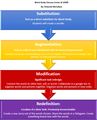
The following is a brief example of a literacy center idea I designed for integrating word study with edtech, Forest of Reading and the SAMR. This is a center for the development of fluency and comprehension. Where students will learn to automatically recognize and read high frequency words. This is a design strategy to give […]
Deborah McCallum
.
Blog
.
<span class='date ' tip=''><i class='icon-time'></i> Jul 20, 2015 07:49am</span>
|
|
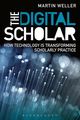
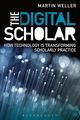
I read Martin Weller's book a while back - The Digital Scholar: How technology is transforming scholarly practice (you can access it free here). This is no book review, but I just want to pick up on a few things that this book has me thinking about.The book begins with Martin explaining to his daughter the concept of the book, that is, how technology like the Internet is changing the way people work. It seems quite obvious now that the Internet has changed how we learn and how we teach, but what about how we work? And is this digital, and often open, way of working recognised and rewarded?Well for me, yes. Anyone who has read any of my posts will know I'm very open in sharing the work I'm doing via this blog. This form of Open Scholarship has been around for quite a while, and Martin delves into Boyer's work on scholarship to focus on four components:"Discovery - This is the creation of new knowledge in a specific area or discipline. This is often taken to be synonymous with research. This is probably closest to the public conception of scholarship, as universities are often the site of significant breakthroughs. Integration - This is focused on interpretation and interdisciplinary work. It is moving away from the pure, ‘genesis’ research of discovery. Boyer states that it is ‘making connections across the disciplines, placing the specialties in larger context, illuminating data in a revealing way, often educating non-specialists’. Application - This is related to the concept of service, but Boyer makes a distinction between citizenship and scholarly types of service, and for the latter it needs to build on the scholar's area of expertise. It can be seen as engagement with the wider world outside academia, which might include public engagement activities as well as input into policy and general media discussions. This can also include the time spent peer-reviewing journal articles and grant applications and sitting on various committees. Teaching - Much of the interpretation of Boyer can be seen as an attempt to raise the profile of teaching. He argues that ‘the work of the professor becomes consequential only as it is understood by others. Yet, today, teaching is often viewed as a routine function, tacked on’."Weller, Chapter 4, pp 41-51 Social Networking and Blogging can either tick these boxes or certainly support the components, so I tend to disagree when some question whether blogging is dead. For me, you have to relate that back to the original purpose of blogging. If like me, the primary purpose of blogging relates back to Boyer's (or Martin's) points above, how can it be dead? One of my primary goals in blogging is take stock of my own thoughts - it's often like I'm thinking aloud in this online space. It is primarily for me and the way I write probably reflects that. If other people see that, can connect with it, then great. No major problems if they don't.But is there academic value in it? Again, yes. As I am employed on an academic contract, I am expected to develop an (inter)national profile, especially if I am to go for a promotion to the next pay scale. My online presence is certainly helping that - for example I've recently been invited to keynote the upcoming eAssessment Scotland Conference in September. That certainly wouldn't have happened if it wasn't for the work I've discussed here. As a scholarship activity, that will be a huge tick in the box when it comes to PDR time.Now I'm not getting carried away with this and I do recognise more formal routes of scholarship will need attending to - conferences, journal publications, etc. Why? Because the system is still the system. It takes time for these systems to change, and whilst that change is clearly happening, the transformation isn't complete. It may never be complete. But in the meantime, Digital Scholarship is valued.Digital Scholarship is real.Peter@ReedyreedlesThe Reed Diaries by Peter Reed is licensed under a Creative Commons Attribution-NonCommercial 3.0 Unported License
Peter Reed
.
Blog
.
<span class='date ' tip=''><i class='icon-time'></i> Jul 20, 2015 07:48am</span>
|
|
http://voice.adobe.com/v/9v34VYNFXFM
Deborah McCallum
.
Blog
.
<span class='date ' tip=''><i class='icon-time'></i> Jul 20, 2015 07:48am</span>
|
|
How quickly an election comes around when most individuals and organisations are still dealing with the current policies. Suddenly along come a whole new lot of manifestos for us to choose from and this time with education and in particular apprenticeships featuring highly by all main parties. Each vehemently pledging more quantity and quality in […]
Collin Gallacher
.
Blog
.
<span class='date ' tip=''><i class='icon-time'></i> Jul 20, 2015 07:48am</span>
|
|
The following is a link to my classroom blog. Informally, I like to think of it as the place ‘where the rubber hits the road’. I have had a classroom blog and website for years, but am starting fresh in my new role with literacy this fall! I have a lot of BIG ideas […]
Deborah McCallum
.
Blog
.
<span class='date ' tip=''><i class='icon-time'></i> Jul 20, 2015 07:48am</span>
|
|
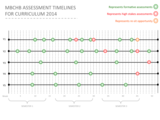
From time to time I try to step back from the work I'm doing and think about things from other people's perspectives - through Brookfield's reflective lenses. I find this helps take a holistic view of situations and identify challenges/benefits that you wouldn't normally come across. This is partly how I started thinking about visualising assessment timelines. As an academic, I've tended to only really care about how I'll be assessing within my own modules. What other people do in their modules is down to them.But is it? Does anybody take a holistic view? How will my assessment requirements impact upon the wider student experience and workload? How will it impact on the admin team? The timetabling team? Marking and Moderators? I'd love to hear about your views on this in the comments.I wrote a few months back about visualising assessment timelines, and shifting from having a small number of high stakes assessment activities to more lower stakes assessments. Well in this post, I'm sharing a draft timeline of the entire Medical Curriculum at Liverpool.The nature of the MBChB curriculum is different - there are no modules/units, so being able to see the bigger picture is increasingly important for the management and admin processes in the school. Furthermore, a simple visual take on assessments would undoubtedly be a useful reference for students.Over the past couple of months I've met with the Director of Assessment in the School of Medicine to discuss the assessment timings in the new curriculum and have put together a visual overview (see below).[please remember this is just a draft and not final details - more to be added]The Year of study goes horizontal. Weeks go vertical. Now although some details are missing, you can see the general pattern of the programme from this overview - students are more heavily based at the University in the first couple of years, and then are pretty much never here later on (particularly 5th year). Here the assessments represent something along the lines of a sign off meeting to ensure the student is doing the things they're supposed to be (I'm actually not a specialist on the Medical Curriculum, as you can probably tell).We can also see that in the back end of semester 2, there are quite a few assessments taking place across a short space of time. Over that 10 week period there is almost at least one assessment per week. The benefit of these visuals is that we can easily see that and plan accordingly. Perhaps we might shift assessments from one week to the next so we can more effectively manage the workload. Are we over/under assessing students across the years? Could we distribute the assessments more effectively?So the overview can be a pretty useful tool, but a more specific view of (a year/module) can tell us more information. The image below samples Years 1 and 2.[again, draft]So this time, we can see the online formative/low stakes assessments (green) relate to the blocks of study (these used to be our PBL modules but have changed slightly in our new curriculum). If we wanted, we could add further details, just as I have done for the higher stakes/summative pieces e.g. 2 x 1.5 hr papers.The Research & Scholarship refers to one of the themes in the new spiral curriculum. Again we could add more detail here.What's next?We could fairly easily make an interactive version of these timelines that enabled students to quickly browse all of their assessment requirements for the whole programme, with the ability to drill down to a specific assessment. We just need the information, and although that can sometimes be a painful process, I can't imagine a situation where any school management and admin teams would not want this overview. In fact, some institutions require assessment type and date, etc, at the beginning of the year - in which case this should prove an easy task.So why can't/shouldn't we do this for every single programme?When we do this on a modular programme, we could see how assessments might be clustered at specific points in the calendar. We could also try to emphasise a shift from high stakes to low stakes assessments. This would be less stressful for students if nothing else.One key factor for consideration is the terminology we use when developing any guidance for students, let alone a visual guide with few explanatory words. For example;'high stakes' can strike fear into students;'low stakes' could be taken for 'doesn't matter';'formative' and 'summative' - well do students even know what they mean?So as we release these timelines to students, we will have to consider the terminology we use.I'll be talking about this a bit more at the eAssessment Scotland conference in September. So if you're going, try to forget this post ;-)Peter@ReedyreedlesThe Reed Diaries by Peter Reed is licensed under a Creative Commons Attribution-NonCommercial 3.0 Unported License
Peter Reed
.
Blog
.
<span class='date ' tip=''><i class='icon-time'></i> Jul 20, 2015 07:48am</span>
|
|
When running a food manufacturing company in an earlier life, a young engineer that I had called in to address a packaging machine problem, asked about the antics going on at a different machine which had operators going to great lengths to ‘keep the production line going.’ I explained that we hadn’t time to shut down for […]
Collin Gallacher
.
Blog
.
<span class='date ' tip=''><i class='icon-time'></i> Jul 20, 2015 07:48am</span>
|
|
Might be a good time to bring your processes into 2015 I realise that this is same old stuff that I have espoused previously, but in the same week that we had an election and Learning Providers returned to their office to discover (surprise, surprise) that the impending changes and cuts to FE Funding hadn’t […]
Collin Gallacher
.
Blog
.
<span class='date ' tip=''><i class='icon-time'></i> Jul 20, 2015 07:48am</span>
|