Blogs
|
View image | gettyimages.com Our personal schemas about math greatly impacts how we feel about math and ultimately how we will perform in math. From the time we are born, we are impacted by the attitudes and beliefs of those around us. The effects of nurture that shape our schemas of how the world works, […]
Deborah McCallum
.
Blog
.
<span class='date ' tip=''><i class='icon-time'></i> Jul 20, 2015 07:27am</span>
|
|
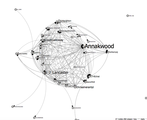
Last night's #LTHEChat on Pedagogical Research (PedR) was as lively as ever, and expertly facilitated by guest Anna Wood (and not so expertly by myself, being distracted with talk of biscuits!).The questions guiding the discussion were as follows:What do you think PedR is? What isn’t PedR? #LTHEchatHas pedagogic research influenced your teaching practice? Directly/Indirectly? #LTHEchatWhat do you think PedR can tell us? #LTHEchatWho should do PedR - subject specialists or education faculty? Have you considered doing PedR yourself? - e.g. Action Research #LTHEchatWhat benefits might there be to doing PedR for you/your colleagues/your students? #LTHEchatWhat barriers exist for teachers to getting involved in PedR? #LTHEchat What support could be offered to overcome these barriers?As you might expect there were lots of interesting discussions coming out of these questions. I picked up on a few points such as:Do those from different backgrounds think about PedR differently? In my experience Medics and scientists struggle to think about PedR (or educational research) in comparison with their familiar very scientific approaches to research. Is PedR a bit fluffy?How is the importance placed on PedR impacted by the emphasis on the REF?And somewhat related, where is the time and (financial?) support to engage in PedR?VisualsAs the visuals demonstrate, @annkwood was a key figure in the chat, but we can also see a lot of direction towards a few other 'regulars'. It was also interesting to see 'experts' in this area engaging, such as @RossKGalloway. Peter@ReedyreedlesThe Reed Diaries by Peter Reed is licensed under a Creative Commons Attribution-NonCommercial 3.0 Unported License
Peter Reed
.
Blog
.
<span class='date ' tip=''><i class='icon-time'></i> Jul 20, 2015 07:27am</span>
|
|
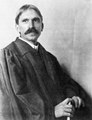
View image | gettyimages.com John Dewey by Deborah McCallum Deborah McCallum Copyright, 2015
Deborah McCallum
.
Blog
.
<span class='date ' tip=''><i class='icon-time'></i> Jul 20, 2015 07:27am</span>
|
|
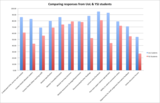
So as people who read my blog will know, at Liverpool we've spent some time looking to implement a VLE baseline, and I've personally done some work to find out what our students want to be included in said baseline.I know this is an area of interest across the sector and I've had conversations about my work with quite a few people over the past year or so. The guys over at the TEL team at York St. John, spearheaded by that +Philip Vincent of course, are building on some of my work and have recently posted another great post considering what their students want. Interestingly they've built on my main survey question, which offered students a list of 'criteria' and asked them to select those that they think should be included.Of course the difficulty in interpreting questions like this is that some students will automatically just select everything, but thankfully my data (and I think that of YSJ) shows this isn't the case for everyone.Anyway, the point of this post is to draw attention to the great work over at YSJ, but also to show a little comparison between survey responses. Sample sizes differ a little (UoL n=840: YSJ n=100) but the data is still very valid! The YSJ question offers some additional options and have worded a couple slightly different to mine, but I've done my best to align what I could. I'd still recommend you head over and see the full post from YSJ though.It looks like my UoL students are a bit more demanding than the YSJ respondents. Could this be based on expectations of a Russell Group perhaps? Could it be a discipline difference, as my respondents all came from my Faculty, which includes Dentistry, Medicine, Vet Science, Life Science, Health Sciences and Psychology? Beyond all that, it just can be difficult comparing across two very different institutions. As I've postulated elsewhere, I wonder if most of these criteria are more related to preventing dissatisfaction rather than actually leading to satisfaction - yes, they're different!It would be really great if other institutions could form similar research and build on the basics of my options. That way we could get some broad data to get a better picture of what our students are really asking for!Enough for now - I'm on leave! Go read that YSJ piece!Peter@ReedyreedlesThe Reed Diaries by Peter Reed is licensed under a Creative Commons Attribution-NonCommercial 3.0 Unported License
Peter Reed
.
Blog
.
<span class='date ' tip=''><i class='icon-time'></i> Jul 20, 2015 07:27am</span>
|
|
Patterning and Algebra.
Deborah McCallum
.
Blog
.
<span class='date ' tip=''><i class='icon-time'></i> Jul 20, 2015 07:26am</span>
|
|
Flickr Photo CC BY by DaveFayramI've blogged a few times recently about the focus of my PhD - social networking in UG Medical Education.Many philosophers have considered actions a result of society. Durkheim's classical work suggests suicide is a social, rather than personal, 'phenomenon'. Further when we think of things like the Toxteth Riots here in Liverpool, the Occupy movement or indeed the London Riots a few years back, they are certainly social movements (with reports that social networking sites were used to coordinate elements of the latter).If so much of the world, including a seemingly personal action such as suicide, is actually a result of society, to what extent is education and 'achievement' (without wanting to philosophise over what achievement actually is or should be)? We see a lot of espoused theories in education towards social constructivist pedagogy, and plenty of mentions of Communities of Practice, but do we really think about how social relationships affect learning?It's early stages in my PhD but I've come across a couple of really interesting articles that I wanted to put some words against.The concept of homophily refers to the 'tendency of individuals to associate and bond with similar others', and research into how students (in these cases UG Med students) form social networks (outwith the technology) demonstrates some interesting and significant patterns. Homophily impacts academic achievement - we're more likely to behave, and perform, similar to those people we are close with. Studies of social networking generally find clustering by race and ethnicity (and I presume religious groups too). This is homophily in action:"A student may use ethnicity as a surrogate for beliefs and attitudes, presuming - possibly erroneously - that because someone is a member of their own ethnic group, they hold similar values to themselves, and also presuming that people from a different ethnic group hold different values. (Woolf, et al; 2012, p584)."When medical students include certain types of people in the personal learning networks, they perform better in summative assessments e.g. academic staff; students from subsequent years of study; or those professionals who they might meet whilst on placement (junior doctors, consultants, etc).You would automatically think forming tight knit groups are a good thing for undergraduate students, but in the learning context, the information an individual node might come across is limited by the nodes they connect with, and with the concept of homophily, they may already have access to that information anyway. It is those people that 'bridge' these tight networks that perform better. This is Granovetter's concept of 'strength of weak ties', as these nodes can help information flow between networks. Ultimately they have access to a broader range of information to learn from and apply - without them there wouldn't be a complete network as the tight groups would be limited to themselves. Social Capital is similar here - the more people that connect with me, is related to the amount of information I am open to.So considering that, I've got a few questions:If there are such definite links between engaging in social networks and better performance, shouldn't we be encouraging 'social' a bit more? Shouldn't we encourage the breaking down of tight knit networks in favour of being a bit more open? This might even help issues of racism by encouraging integration in academic life (although I have no data to hand which suggests racism is active or otherwise in university life).We know the potential of technology to support social networking, so why aren't we doing more to encourage students to take advantage of it? Least of all, how can there possibly by antipathy towards the use of social networks?Of course with encouraging the use of social networking sites, we must also educate students as to how to conduct themselves appropriately; how to safeguard; and how to develop a lasting professional identity. This happens in pockets across the sector. We need to do more.There's lots more with this came from...Peter@ReedyreedlesReferencesGranovetter, M. (1973). The Strength of Weak Ties. American Journal of Sociology, 78(6), 1360-1380.Woolf, K., Potts, H. W. W., Patel, S., & McManus, I. C. (2012). The hidden medical school: a longitudinal study of how social networks form, and how they relate to academic performance. Medical Teacher, 34(7), 577-86. http://doi.org/10.3109/0142159X.2012.669082Vaughan, S., Sanders, T., Crossley, N., O’Neill, P., & Wass, V. (2015). Bridging the gap: the roles of social capital and ethnicity in medical student achievement. Medical Education, 49(1), 114-23. http://doi.org/10.1111/medu.12597The Reed Diaries by Peter Reed is licensed under a Creative Commons Attribution-NonCommercial 3.0 Unported License
Peter Reed
.
Blog
.
<span class='date ' tip=''><i class='icon-time'></i> Jul 20, 2015 07:26am</span>
|
|
https://www.smore.com/mf60t-growth-mindsets-and-math?embed=1
Deborah McCallum
.
Blog
.
<span class='date ' tip=''><i class='icon-time'></i> Jul 20, 2015 07:26am</span>
|
|
As I've blogged a few times recently, I'm looking into how students form social networks, the roles they adopt, and how these impact achievement in medical school. But this is only the first step in the research. I also want to gain some understanding of how technology is used to support and mediate these relations in an ethnographic approach.Wikipedia suggests ethnography is the systematic study of people and their experiences, from the subject's perspective. Silverman (2013) makes an important point about the methodological issues , suggesting interview responses only provide a narrative of experience opposed to direct access to that experience. He reinforces the anthropological perspective that to 'understand a group of people, one must engage in an extended period of observation' (p49).However there is an obvious problem with many of the text books on research methods - the changing face of ethnography to reflect the increasing pervasiveness of digital technologies. Where traditionally ethnographers work in the 'field', be it in the physical boundaries of the university library, the cafeteria or even the local park; researchers are becoming (have become?) interested in how and where and why people use and engage with technologies. Since the 'field' is difficult to quantify in the digital sense, I'm wondering about how ethnography might work. Some of Michael Wesch's Digital Cultures work springs to mind.Flickr photo by Banalities: Creative CC BY licenseOne of the things I've recently been thinking about is to track Internet access amongst students. When students (or staff for that matter) connect to the University wifi (eduroam at Liverpool), they do so through a connection to a data access point - a bit like your router at home. Similar to your router at home, you have to be within proximity for the signal to carry, and the further away you are from the router, the weaker the signal. So in large organisations such as Universities, there are many of these data access points, and as we move about campus we are seamlessly passed from one access point to another.I think it would be interesting to map these data access points against an actual map of the campus, then visualise the locations students (or staff) are accessing wifi. A further stage to this could be to identify the websites by IP address.Another idea that came out of a meeting with Chris Jones and Helen O'Sullivan (my PhD supervisors) was to look at directly tracking what (volunteer) students were doing on their computers. Rescue Time is interesting. Once installed, it tracks/monitors the websites and applications you are using, produces reports, and includes goals, etc. This is probably not so tightly related to my aims for the research, but it's another example of how researchers can engage in ethnographic practices where the field is digital.So these are some of my early thoughts about digital ethnography without really engaging in much literature, so if there are any particularly good references you can point me towards, I'd love to see them in the comments!Peter@ReedyreedlesThe Reed Diaries by Peter Reed is licensed under a Creative Commons Attribution-NonCommercial 3.0 Unported License
Peter Reed
.
Blog
.
<span class='date ' tip=''><i class='icon-time'></i> Jul 20, 2015 07:26am</span>
|
|
There are a lot of myths surrounding the type of pedagogy and instructional strategies that promote knowledge building and higher order thinking in the classroom. In an engaging classroom, learning is messy. Students are engaged in inquiry processes that are meaningful to them, and socially constructing new knowledge bases that are also culturally relevant. This […]
Deborah McCallum
.
Blog
.
<span class='date ' tip=''><i class='icon-time'></i> Jul 20, 2015 07:26am</span>
|
|
I watched Cable Green's #OER15 keynote with great interest last week, and it brought me back to what I've been thinking about open textbooks for a few years now.When I've spoken with (or read) American educators, I've always got the feeling that 'open' and 'OER' relate more to textbooks than other resources, whereas over here in the UK the balance is more heavily distributed towards content and activities. That may not be the intention, or this may not even be 100% accurate, it's just the feeling I've got from being somewhat engaged (or on the fringes) in 'the open movement'.Opensourceway | CC BY:SAI read Martin Weller's post this morning which relates back to another of Cable Green's recent presentations where he tells a similar story to that at #OER15. The basic premise is that Washington State have been spending a ridiculous amount of money in buying textbooks, and because of the cost, they can only afford to buy a couple each year. Furthermore the students (K12 I think) don't own the books as they have to be passed on to the next intake. [Yeah crazy isn't it?]. So instead the idea is that rather than paying for those textbooks, the money can be used to fund the writing of new, current and open text books. These can be easily updated, and suspect they can be printed reasonably cheaply [that ebook master @hopkinsdavid used CreateSpace for the #edtechBook I contributed to]. This means all students can have their own copy, and the impact of this can spread beyond the Washington State area. Public funds = open textbooks = huge potential impact. Easy right?So why haven't we done this in the UK?I'm warmed that Liverpool have started to investigate producing ebooks as a result of some Jisc funding (@andcarebarker knows more about this). Surely this has to be the way forward. In a research-intensive university like Liverpool, we certainly have the expertise in a range of subjects - we just need to overcome the challenges, mainly financial I presume, in achieving this. Hopefully this project can help pave the way, but from my perspective we shouldn't be requiring students to purchase expensive books (sometimes into the hundreds of pounds), especially in a time when departments are increasingly buying into expensive deals with the likes of McGraw Hill and Pearson (who are trying desperately to provide added value through online platforms and quiz banks, etc). Add into the mix the £9k fees and surely there is a case - redirect funding so we can produce relevant and up-to-date textbooks!Peter@ReedyreedlesThe Reed Diaries by Peter Reed is licensed under a Creative Commons Attribution-NonCommercial 3.0 Unported License
Peter Reed
.
Blog
.
<span class='date ' tip=''><i class='icon-time'></i> Jul 20, 2015 07:25am</span>
|