Blogs
|
Math Resources
Deborah McCallum
.
Blog
.
<span class='date ' tip=''><i class='icon-time'></i> Jul 20, 2015 07:25am</span>
|
|
I was surprised to be asked last week to contribute to an interview with ACI about this blog (and the actor of blogging). They're a 'leading aggregator of editorially selected and curated social media publications', and well, it was just nice to see others paying tribute to the scholarship of blogging!!!I was impressed with the questions they asked - they really showed that they had actually read my posts :-) The questions they asked were as follows:You're a PhD candidate at the University of Liverpool. Can you tell us what discipline(s) your PhD studies are in? What interests made you decide on that area for your doctoral studies?You're also a Lecturer in Learning Technology there. Do the classes you teach allow you to focus or touch upon any of your primary research interests?Your posts have touched upon some really fascinating topics, like digital research, digital ethnography, interpreting the language of feedback, and even what students want to experience more of in the classroom (your VLE baseline work). How did your interest in these areas come about? One recent post mentions your interest in how social media activity might impact med students' achievement in medical school. Can you tell us a little more about that?In your post entitled "Leveraging Value from (Social) Networks and Communities", you bring up a number of topics that would interest scholars from a wide range of fields - educators (in any discipline), those whose research revolves around education as a field, sociologists studying patterns and correlations in social media use, academic UX engineers trying to find out what causes students to engage in various pedagogical technologies. Have you found that your blogging and social media activities allow you to take better advantage of the multi-disciplinary interests coming from those in fields other than your own? It also seems that would open up to more collaboration possibilities as well, whether with scholars in other disciplines or scholars in the same disciplines but in other institutions or environments. Even in the absence of collaboration in actual research, it seems those insights collectively might be fodder for further study or expanding your own interests. Have you found this to be true?As a PhD candidate who's also actively lecturing and active in social media and networking, how do you find the time to blog about your research and academic notes of interest? Any advice for others in academia who want to blog more about their topics but find the time-balance factor a little overwhelming?You can head over and read my answers to the interview here!Peter@ReedyreedlesThe Reed Diaries by Peter Reed is licensed under a Creative Commons Attribution-NonCommercial 3.0 Unported License
Peter Reed
.
Blog
.
<span class='date ' tip=''><i class='icon-time'></i> Jul 20, 2015 07:25am</span>
|
|
What is the Purpose of Education? We all have our own beliefs about what education is for ultimately. However, I want to you take a moment and consider the extent to which you believe that the following are myths, or realities in education: The following are myths about education according to Ornstein & Hunkins (2013). […]
Deborah McCallum
.
Blog
.
<span class='date ' tip=''><i class='icon-time'></i> Jul 20, 2015 07:25am</span>
|
|
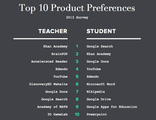
I've been thinking about the kinds of tools and technologies students want and need, and I came across a site from the Bill and Melinda Gates Foundation, called Teachers Know Best (via this article at Daily Genius).There are some interesting tidbits on there, but I wanted to pick up on this Top 10 Product Preferences list, where there are some interesting differences....To me this looks reasonably obvious - Teachers are looking to the different sites to create exciting new content and challenges, whilst students are, on the whole, much more practical in their preferences. No surprise that Google Search is at the top! Most of the tools there are about Productivity - about getting their work done. The only one that surprises me there is Edmodo, but I'm guessing this is US based where it might be bigger than over here. Also surprised by the lack of any social media tools (other than YouTube).Of course, I've done some work at Liverpool over the past couple of years looking at staff and student attitudes towards TEL, and I've harped on lots about Minimum Standards. But it's relevant here I think. I gave students a list of things that they might want in every VLE area, and the suggestions where all very practical, and geared around getting the job done e.g. assessment strategies, contact details for tutors, etc. Even when I asked about innovation and mobile use, the data didn't tell us anything revolutionary, with emphasis placed on lecture capture (well, audio sync'd slides).. So for me, this list from B&MGF does more than just tell us what tools students are using. I think it helps tell us that students don't actually really know the benefits of educational technology and what's good for them. They're about getting the job done rather than looking at innovation. So whilst one of our biggest challenges is convincing academic staff about TEL, perhaps we also need to think about convincing students...Peter@ReedyreedlesThe Reed Diaries by Peter Reed is licensed under a Creative Commons Attribution-NonCommercial 3.0 Unported License
Peter Reed
.
Blog
.
<span class='date ' tip=''><i class='icon-time'></i> Jul 20, 2015 07:24am</span>
|
|
How to Use Google Forms Resources: https://docs.google.com/document/d/1xqSZdyGCPfZgJH6O-lfZxQOakEzTI9qSQ7DE0r4m6tE/edit?usp=sharing Google in Education: Flipboard Magazine View my Flipboard Magazine for Google in Education Sample Forms for Assessment and Learning: Virtual Book Club Sign Up Book Selection Criteria Evidence of Learning with Edtech eLearning Questionnaire Retell, Relate, Reflect Reading Response Questionnaire SAMR: Tech Integration in the Classroom Digital Citizenship: School […]
Deborah McCallum
.
Blog
.
<span class='date ' tip=''><i class='icon-time'></i> Jul 20, 2015 07:24am</span>
|
|
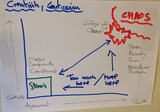
So this week I spent two days in Birmingham with some fine folk, such as +Sheila MacNeill , +Simon Thomson (Digisim) , +Dave White and +Eric Stoller . We were tasked by +Lawrie Phipps with being creative and innovative. Now there are two types of innovation - there's progressive innovation (where we take an idea/process/product/etc and make it better), and there's radical innovation (where we create something completely new, dynamic and transformative). Our task was to be radically innovative - we could let go of the everyday struggles that we have in institutions up and down the country, and try to really reimagine what things *could* be like.But that's not so easy...It's incredibly difficult to be 'radically innovative' - partly because we're so close to the systems we work with, so many of the conversations we were having on our tables centred on improving certain systems/processes. But that's incremental. Progressive. Not radical. There's the famous Einstein (?) quote about not being able to solve tomorrow's problems with today's thinking (or something like that), and I think on the whole, that's what we were up against.As we approached lunchtime on Day 1, I couldn't help but think that in order to really get to grips with being radically innovative, we had to strip away the constructs and confines of the University. We had to reimagine what the University could be like, and one of the guys on our table drew the 'creativity continuum' - you have 'certainty' on the Y axis (decreasing, I think) and 'Agreement' on the X. In that top right corner you have 'Chaos'.Now this probably isn't true, but stick with me.... I get the feeling that as formal teaching became popular, institutions created all kinds of supporting services such as admin teams, quality assurance procedures and marketing teams. But somewhere along the line, these supporting and enabling services have somehow become restrictive to teaching. The tables have turned. We can't do X because of Y. I'm sure everyone has these stories in their institutions, so we need to start to rethink how these services can return to being supportive again.I began to think about the typical degree programme, and those increasingly common analogies of the factory model of education. I'm not sure I buy into all of these suggestions completely, but something I do buy into is the obvious problem in that we continue to group people by age throughout education. Even in HE, we have distinct years of study and treat people pretty similarly.But what if HE was more flexible? What if students could come to University and had a flexible programme ahead of them. Yes they might still need to obtain a certain amount of credits, but the portfolio of modules could be open. 1st years might study the same module as some 2nd and 3rd years. They could return to what might have been, the first module, and study that in year 2. Hell, maybe we don't even have 'years'. They could join a module where they already know much of the content, and can literally join for a couple of weeks and do the assessment (which could also be re-thought. There was some good talk about new project based semesters). Perhaps they could do as few, or as many, modules as they wanted at any one time. Maybe they could do a degree over 18 months, or 5 years. This would be much more personal and individual.One of the other conversations we had was titled 'The Real University'. The University home page could feature harvested social media content from different services - Twitter, Instagram, etc, to really show what students were saying. We might geo-fence the tweets, or perhaps introduce hashtags, etc. This discussion moved on to 'handing the keys over' to students, enabling them to take control of key institutional accounts. I think this is a great idea, and have already run the idea by @libraryemma and @andcarebarker. We already manage a really great Twitter account - @LivUniLibrary, and I'm hoping we can hand over the library twitter account and have A Day in the Life of....How much more authentic would this voice be? And it could set the tone for other such opportunities across the University.Anyway, I'm sure Lawrie be reflecting on his own blog so it will be nice to see what he wanted (and got) from the day. In the meantime, think about (and maybe comment) on how radical we could be. Maybe introduce the hashtag #RadicalHE...Peter@ReedyreedlesThe Reed Diaries by Peter Reed is licensed under a Creative Commons Attribution-NonCommercial 3.0 Unported License
Peter Reed
.
Blog
.
<span class='date ' tip=''><i class='icon-time'></i> Jul 20, 2015 07:24am</span>
|
|
Originally posted on Mrs. McCallum's Grade 4's:We teach with, and about, many different forms of media in our classrooms - including social media. But Art is also an important form of media that we use in our classrooms. Art is a form of media that helps students to express meaning, viewpoints and creativity.…
Deborah McCallum
.
Blog
.
<span class='date ' tip=''><i class='icon-time'></i> Jul 20, 2015 07:24am</span>
|
|
I've been doing plenty of reading as part of my PhD in Social Networking, and I'm realising that there is much more to learning theory and the progression from one theory to the next, than I've previously thought. Notably, the theories don't quite 'progress' from one to the next at all...Something that I've often thought about over the past 10 years is dominant theories, and how Social Constructivism has become *everyone's* espoused theory (but interestingly, not what they might practice). I also think about the demonising of Behaviourism - I say demonising because in sports and skill acquisition behaviourism is still valid, as it might be in other areas too.All of this is making me question what it means to be learning in a networked world, from a pedagogic perspective. There are arguments that learning is purely social, or perhaps purely cognitive, but in reality I think there's probably a middle ground. I don't see how anyone can deny the significance of social influences on learning, but equally being social does not equate to learning in and of itself. There must be something that happens by, or in, the learner, in order to enhance knowledge/skills/understanding.In my earlier post: "Shouldn't we be encouraging social more" I summarised some Social Networking literature as follows:When medical students include certain types of people in the personal learning networks, they perform better in summative assessments e.g. academic staff; students from subsequent years of study; or those professionals who they might meet whilst on placement (junior doctors, consultants, etc).You would automatically think forming tight knit groups are a good thing for undergraduate students, but in the learning context, the information an individual node might come across is limited by the nodes they connect with, and with the concept of homophily, they may already have access to that information anyway. It is those people that 'bridge' these tight networks that perform better. This is Granovetter's concept of 'strength of weak ties', as these nodes can help information flow between networks. Ultimately they have access to a broader range of information to learn from and apply - without them there wouldn't be a complete network as the tight groups would be limited to themselves. I think these two points really hit what I'm getting at here. The importance of information flow in a network is critical (the second point), but just having the ideal make up of a network (first point) in terms of more experienced colleagues, in and of itself, doesn't lead to better exam performance. There has to be some kind of processing and internalisation of information/experience.So ultimately, there are many paths to learning and we need to be aware to capitalise on them. How we use technology to achieve this offers us so many opportunities to be creative in this process. So what are we waiting for?Peter@ReedyreedlesThe Reed Diaries by Peter Reed is licensed under a Creative Commons Attribution-NonCommercial 3.0 Unported License
Peter Reed
.
Blog
.
<span class='date ' tip=''><i class='icon-time'></i> Jul 20, 2015 07:24am</span>
|
|
Curriculum Design is often based on constructivist approaches. When looking at constructivism, I would say that it takes a very talented teacher, and an ideal situation to make it work. Yet, there is often a large gap between the theory and actual practice of active and social learning. Not all students or teachers are equally […]
Deborah McCallum
.
Blog
.
<span class='date ' tip=''><i class='icon-time'></i> Jul 20, 2015 07:24am</span>
|
|
Last week I came across a video which was based on Cialdini's 'Yes, 50 Scientifically Proven Ways to be Persuasive' book. How is the 'science' of persuasion important to our roles in higher education and learning technology?As I thought about the content, my initial thoughts focussed around the ethics and honesty surrounding employing particular actions just to influence and persuade people. But... as it progressed I came to the conclusion that working in learning technologist roles, we are trying to influence and persuade people every day and as such, perhaps the content was relevant and important to our roles.Researchers have been researching why we say 'yes' to people, and there is a science behind it - according to Cialdini there are 6 key 'shortcuts' that guide human behaviour and persuasion:Reciprocity: people are obliged to give back. Studies show that when waiters bring mints/fortune cookies when you're paying your bill, and importantly how they do so, is related to the amount of tip customers leave. In the context of persuasion, you should be the first to give.Scarcity: when British Airways reduced the number of Concorde flights, bookings went through the roof! Nothing else changed. People want what they can't have.Authority: studies show patients listen to physiotherapists more if their diplomas are on the wall. Authority influences our actions. If we introduce a colleague by mentioning their vast experience in a particular area, they're more likely to be listened to. Consistency: If people show some interest in a particular area, they are more likely to be susceptible to modifying their behaviour in that direction. Liking: People préfère to say yes to people they like. We like people who are similar to us, who pay us complements, and who cooperate with us in shared goals. Before we begin negotiating, we should find some common ground or shared interest first, so we can build that repertoire. Consensus: People look to the actions and behaviours of others to influence their own. I've only quickly summarised these 6 points but I'd definitely recommend you watch the video below. As you're watching, think about how we can use these principles in higher education, either in persuading students to learn or perhaps convincing academics to amend their actions in the uptake of learning technologies (or indeed in any other aspect of education). Surely these techniques, albeit slightly devious/conceited, can help us influence people. Peter@ReedyreedlesThe Reed Diaries by Peter Reed is licensed under a Creative Commons Attribution-NonCommercial 3.0 Unported License
Peter Reed
.
Blog
.
<span class='date ' tip=''><i class='icon-time'></i> Jul 20, 2015 07:24am</span>
|