Blogs
|
I start this post with the recognised regret that I wanted this to be a weekly theme, but for the time being it's every few weeks or so. Still, better than nothing I suppose!Been doing quite a few different things of late really:Ploughing on with an online module for acute oncology. This has involved working with the new Director for CPD and a Consultant Oncologist from Clatterbridge. The module will be delivered in India as well as the UK, and we've just rewritten the module spec so everything is a bit more organised and flows better.Continuing work on investigating VLE Minimum Standards, and trying to develop a theoretical/conceptual framework from Herzberg's Two-Factor Theory of motivation. This is also relevant to my role in the University TEL Implementation Working Group for minimum standards. Thinking about the above as a research paper for publication.Submitted a couple of conference abstracts, and a few more to come over the next couple of weeks.Organised and run a couple of student drop in sessions with a focus on mobile device support. Pretty low turnout despite lots of students reporting problems with email, wifi, mobile library, etc., etc. Picked up a couple of staff development sessions to try and engage our academic staff with technology enhanced learning.I'm now also playing a role in the University TEL Implementation Working Group for developing digital literacies. So I read @dajbelshaw 's recent post for references, with great interest. More here soon.Online module I'm running (Transferable skills) is ticking over. Thinking about how I can engage students (Foundation doctors) in forums a bit more.Looking to develop a cross Faculty Research Methods module for masters level. It will largely be an OER (or constituting OER) so it can be reused/repurposed for the different modules in each of our schools. Interesting little project. I'm sure there are loads of other things bubbling along but I don't want this post to drag too much! Peter@reedyreedlesThe Reed Diaries by Peter Reed is licensed under a Creative Commons Attribution-NonCommercial 3.0 Unported License
Peter Reed
.
Blog
.
<span class='date ' tip=''><i class='icon-time'></i> Jul 20, 2015 08:15am</span>
|
|
Вчера мы получили большой отзыв от одного из наших давних пользователей, которым мы решили поделиться со всеми нашими читателями. Представленный текст написан Еленой Кузьминой, методистом по информационным технологиям московского педагогического колледжа "Пресня". Мы работаем в области дополнительного профессионального образования взрослых. Недавно … Continue reading →
Eliademy
.
Blog
.
<span class='date ' tip=''><i class='icon-time'></i> Jul 20, 2015 08:15am</span>
|
|
When a learner is in an environment that is relevant to what's being learnt, the likelihood for effective engagement is high. Learning by doing is supposed to be one of the most successful ways to learn.Both these factors - the relevant environment and the doing - are thought to provide jointly the greatest incentive for a learner to take interest in what is to be learnt. They form the basis for what is referred to as authentic learning.For as difficult as such situations are to establish and sustain in face-to-face situations, elearning environments can present major barriers to authentic learning that are almost impossible to overcome unless the elearning vehicles are in situ.Typical examples of these are online tutors for word processing, graphics applications or other computer functions where the learner is involved in using mouse and keyboard to operate a tutorial directly relevant to the application.I cite the Southern Hemisphere planisphere with a built-in tutorial as one example of an in situ learning vehicle in a junior Science elearning resource.The examples given above are all very well, but unless a considerable component of what is learnt is transferable to other purposes, the learning acquired by the learner has limited use elsewhere. One of the characteristics of authentic learning is the transferability of the learning to other situations or disciplines.Two examples where generic and transferable skills can be learnt are online instruction in touch-typing, and the use of a flight simulator as part of training to become an aircraft pilot.Kallan and Tuxedo presenting a session in building in SLRecently I was privileged to share in the facilitation of a session sponsored by ISTE, teaching people online to manipulate and assemble prims, the building blocks of Second Life (SL).As well, part of the duties I perform as an ISTE docent in SL involves assisting and teaching newcomers to that environment by the use of text and voice chat. The learning facilitated in these situations is authentic.People who come into SL need to acquire new skills. Most who stay to use that environment want to learn skills that can only be acquired online. But other than exercising skills in associated disciplines such as art and design, the skills I teach to newcomers are only useful in Second Life. And here is the conundrum associated with authentic elearning.Apart from learning that is directly associated with the elearning application or platform, how is authentic learning achieved online?
Ken Allan
.
Blog
.
<span class='date ' tip=''><i class='icon-time'></i> Jul 20, 2015 08:15am</span>
|
|
The A-GAMES Project is a collaboration between the University of Michigan and New York University. The research was funded by the Bill & Melinda Gates Foundation. The A-GAMES project (Analyzing Games for Assessment in Math, ELA/ Social Studies, and Science) studied how teachers actually use digital games in their teaching to support formative assessment. The study... Read More ›
Classroom Aid
.
Blog
.
<span class='date ' tip=''><i class='icon-time'></i> Jul 20, 2015 08:15am</span>
|
|
Eliademy is used by more and more people every day to teach and learn easily. If you are interested in knowing more about the story of our user-friendly e-learning platform, take a look at the cool infographic below! Want to … Continue reading →
Eliademy
.
Blog
.
<span class='date ' tip=''><i class='icon-time'></i> Jul 20, 2015 08:14am</span>
|
|
As part of the newly formed North West OER Network, we'll be facilitating an open online course (I'm not using the word MOOC), during Open Education Week 2014 (10th-15th March).We'll be using the 'Intro to Openness' course developed by David Wiley as the foundations for this course, and we will be facilitating a number of synchronous and asynchronous platforms, including Tweet Chats, Facebook Group discussions and Google+ forums and Hangouts. There'll be a few of us facilitating the course that you're probably familiar with already - the likes of @chrissinerantzi, @suebecks, @alexgspiers, @annehole, @kshjensen and @lenandlar . Take a peek at the course site within p2pu, the Facebook community for the course, and the Google plus community for the NWOER Network.You can also start following @northwestoer (and me if you already dont!). We will be using the Twitter hashtag #nwOER so don't forget to use that in your tweets/posts/etc.Hope to see some of you getting involved!Peter@reedyreedlesThe Reed Diaries by Peter Reed is licensed under a Creative Commons Attribution-NonCommercial 3.0 Unported License
Peter Reed
.
Blog
.
<span class='date ' tip=''><i class='icon-time'></i> Jul 20, 2015 08:14am</span>
|
|
Yes. I know. It's been over a month now. I have been immersed in resource development and other things - overseeing bathroom and kitchen refurbishments at home, while catching up with my family who have been on leave recently.This week I am, once again, privileged to be hosting Kevin's Day In A Sentence. Kevin Hodgson (aka Dogtrax) has kindly let me host this week's DIAS.Just to put you in the picture, Kevin is an energetic, community minded teacher who is forever creating new ideas to involve people in people activities. One of his most successful ventures in this direction is his weekly Day In A Sentence. People are invited to summarise in one sentence a day out of their week.There's been a lot in the news lately about Earth's, now famous, gastronomic eruption in Iceland, Eyjafjallajökull. This amazing phenomenon stirred again most recently, a clash of the Earth's hottest and coldest elements, to bring about a truly global effect.This week's theme for Day In A Sentence is to summarise in one sentence the extremes of your day. So sock it to us, hot and cold, wet and dry, happy and sad, whatever . . .. . . just give it all to us in a sentence by clicking here, or by leaving your sentence in a comment at the foot of this post.
Ken Allan
.
Blog
.
<span class='date ' tip=''><i class='icon-time'></i> Jul 20, 2015 08:14am</span>
|
|
Meaningful games create powerful impacts on players, fostering a positive learning culture that enables expression and the ability to learn from failure. GlassLab’s Game Design Handbook serves as a living, quick, and actionable resource for learning game design for developers (though every person is a game designer at heart!). A good resource!! We especially love... Read More ›
Classroom Aid
.
Blog
.
<span class='date ' tip=''><i class='icon-time'></i> Jul 20, 2015 08:14am</span>
|
|
We all have something to share. A project, a passion, an idea, or the knowledge and expertise we’ve gathered with the years. Nowadays, in the digital era, it is easier than ever to spread our ideas and share them with … Continue reading →
Eliademy
.
Blog
.
<span class='date ' tip=''><i class='icon-time'></i> Jul 20, 2015 08:14am</span>
|
|
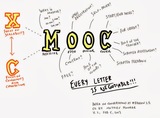
Negotiable Letter CC BY Flickr user MathplourdeSo this week is Open Education Week, and as I’ve previously posted, the North West OER Network are facilitating an open course. We’re encouraging people to engage with David Wiley’s Intro to Openness course on p2pu, and we’ll be hosting a number of synchronous and asynchronous discussions, such as tweet chats, Facebook group chats and google+ community stuff, etc. In preparing for this, I have been thinking about the title, which we’ve tentatively labelled as a MOOC, but I think all of the team recognise the ‘iffyness' of the term, as well as recognising that all the letters are negotiable. Now I’m not one for all of the derivations of the MOOC term (Like DOOC, POOC, FOOC or whatever they are), but I've been thinking about what it is that we’re actually offering. And it came to me, somewhat tongue-in-cheek, but somewhat serious! We’re offering truly flexible, open, online, learning situations.FlexibleOpenOnlineLearningSituationsFOOLS. We’re fools offering FOOLS. Have to say, this made me chuckle a bit, but does any of this matter. No matter what we call these initiatives, we're doing stuff in the open, and whilst there are huge drop out rates, etc, etc, it's still positive. The data suggests people are accessing MOOCs to fit their needs, dipping in and out as they see fit. This might be at odds with the way we traditionally view courses, but perhaps it's time we start to look at things slightly differently and look for the positives....I'll be blogging about the Intro to Openness 'thing' we're doing this week, but in the meantime, let's try and move past the name. After all, it's just a name...'Tis but thy name that is my enemy;Thou art thyself, though not a Montague.What's Montague? it is nor hand, nor foot,Nor arm, nor face, nor any other partBelonging to a man. O, be some other name!What's in a name? that which we call a roseBy any other name would smell as sweet;So Romeo would, were he not Romeo call'd,Retain that dear perfection which he owesWithout that title. Romeo, doff thy name,And for that name which is no part of theeTake all myself.Peter@reedyreedlesThe Reed Diaries by Peter Reed is licensed under a Creative Commons Attribution-NonCommercial 3.0 Unported License
Peter Reed
.
Blog
.
<span class='date ' tip=''><i class='icon-time'></i> Jul 20, 2015 08:14am</span>
|