Blogs
|
Teleport Star at the Ivory Tower Library of PrimitivesIn September last year, I ventured into Second Life (SL) to explore.My purpose was similar to that of most educators whom I have welcomed in the short time I have been a SL ISTE docent. I wanted to find out what SL could offer as an elearning environment.I now have a clearer idea of its worth and potential.University of West England - SLThe near-reality of much of the 3D simulation offered by SL is a valuable element - it is a key quality of this elearning platform. However, its aesthetic charm may dull even an educator’s appreciation of the true value of what SL can hold for a learner.I enjoy the fantasy aspect which is so often present when I’m in SL. The huge variety of costume, and the opportunity available for disguise, make it splendid for roleplay. This aspect of SL has great potential to extend the imagination of the participant.There are a number of features that identify SL's genuineness as an authentic elearning environment:The peopleSecond Life is an environment that embraces people. This quality alone brings authenticity.There is a wide range of ways of recognising the presence of people, wherever the participant happens to be in SL. Channels to engage in communication between those who are online are easy to use. They can be facilitated in many different ways and at different levels. They are certainly not limited to simple txt or voice chat.Even body language can play its part in exchanges between people.ISTE HQ, ISTE Island - SLThe sharing cultureThere is a culture of sharing that is clearly evident among people in SL. This has possibly arisen through recognition of the need for assistance, sharing and collaborating when people first come into SL.The cultural practice of sharing tends to be passed on. And it is accomplished at different levels, from a brief offer of situational help between two strangers at meeting, to organised sessions where experienced trainers can volunteer skills to others who are less competent.The musicSL presents music to its participants through various pathways, either live, pre-recorded or streamed directly from international radio stations. YouTube plays its part in all this, bringing music, new and old, as well as videos on many other themes to the eyes and ears of participants who have full control over audio levels within a full range of different sound channels.The mediumWithin the first few weeks as a visitor, I was able to engage in the construction of the digital stuff that is the fabric of SL. I don’t think there is another elearning environment where participants can so freely make use of the componentry and structure that comprise the environment they are in.Many of its cultural environments provide support for this engagement, through classes provided voluntarily by experienced exponents of the craft.Two main techniques that contribute to this are building and scripting. They go hand in hand, employed in the construction of the simplest thing such as an item of jewellery, to the most complicated assemblage of the foundation of the environment itself.The Particle Laboratory, TealFor the motivated learner, there is a copious amount of well-laid-out tutorial material to be found in centres throughout the environment. Splendid examples of these are the Particle Laboratory Learning Centre and the Ivory Tower Library of Primitives, where a learner can acquire knowledge and skills on the fundamentals of building and scripting.The Particle Laboratory, TealIt is at centres like these that both beginner and experienced developer can visit and gather pearls of 21st century wisdom on the construction of the digital fabric of Second Life.
Ken Allan
.
Blog
.
<span class='date ' tip=''><i class='icon-time'></i> Jul 20, 2015 08:18am</span>
|
|
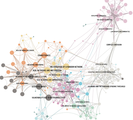
Network Science by Albert-László Barabási Network Science, a textbook for network science, is freely available under the Creative Commons licence. Follow its development on Facebook, Twitter or by signining up to our mailing list, so that we can notify you of new chapters and developments. The book is the result of a collaboration between a number... Read More ›
Classroom Aid
.
Blog
.
<span class='date ' tip=''><i class='icon-time'></i> Jul 20, 2015 08:18am</span>
|
|
This week’s update brings one of the long awaited features of "invitation tracking". Eliademy uses commercial service to ensure 100% deliverability, but it is still sometimes useful to see exact status of your invitations. Also, we have fixed few other … Continue reading →
Eliademy
.
Blog
.
<span class='date ' tip=''><i class='icon-time'></i> Jul 20, 2015 08:18am</span>
|
|
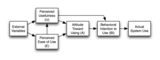
During my time in higher education I've worked on many programme/module developments. One of the things I've seen a lot, is this apparent subscription to the age old clichè that 'if we build it they will come'. Of course colleagues don't say it directly, but actions speak louder than words.One of the most common areas in which I see this, is through the introduction of online discussion forums in the VLE. So many times I've seen a forum plonked in a course with no direction; barely a 'spark' to encourage discussion/debate; and seldom any meaningful reflection. Are our students really expected to engage with that?But it's not just everyday academic staff that do this with discussion forums. Some of my own work has seen this too. For example;After discussions at the last Blackboard Medical Education Special Interest Group, we collectively thought it would be a good idea to create an online environment through Google+. So I created the community, but we only have a dozen participants, with no engagement as yet. Similarly, the ALT NW SIG community only has 21 members. My research around the introduction of Twitter also indicated this lack of engagement. Although 100% of students who used Twitter to support their studies found it useful, only a small number actually engaged.So there is plenty of evidence, anecdotal or otherwise, to suggest 'they' will not flock to your digital space simply because it's there. Human relationships are more complex than that, and our online engagement more bewildering yet!The Technology Acceptance Model has been around for years, and suggests the 'perceived usefulness', 'perceived ease of use' and 'attitude' dictate the behavioural intention and actual use of a system. We need to focus more on the external factors that influence those variables if we want users to engage, because as it stands, the reality is that most people have reasonably well defined digital spaces. We have routines; a flow; and established practices.Only a small proportion of my students were using Twitter. The motivation to engage, for some, was provided through opportunity to discuss content, access new links, because they perceived I'd respond to them quicker than email, and partially, because they liked me and wanted to talk football. But seemingly, this was not enough to engage the masses.'Build it and they will come'? On the contrary!Some other thoughts I have - Perhaps we need to go to where they are! But what if that place is Facebook? Or perhaps the space is irrelevant, and it's all about the motivation....What do you think? Do you have experiences like this yourself? Have you found something that works?Peter@reedyreedlesThe Reed Diaries by Peter Reed is licensed under a Creative Commons Attribution-NonCommercial 3.0 Unported License
Peter Reed
.
Blog
.
<span class='date ' tip=''><i class='icon-time'></i> Jul 20, 2015 08:18am</span>
|
|
Southern Georgia teaching an intermediate session to ISTE members in Second LifeIsn’t it strange that we read, hear, and see a lot about elearning, but we so rarely read, hear and see as much about eteaching?Pedagogy?I keep coming back to this topic. It is so vital to everything to do with teaching. The term, and all that it implies, also embraces elearning.Elearning?By implication, the focus is on the learner, and this is fine up to a point. But it is as if what goes on in the teaching is silently implied in the word elearning. The teacher has become the silent participant.Well I’m going to stick my neck out here and say that there is a need for a change in emphasis so that elearning also implies an appropriate involvement by a teacher.I’m not campaigning for teacher centred learning - not at all.I’m agitating for pedagogy to return to its rightful place where a teacher is involved in the learning, which includes elearning.Digital indicatorA simple examination of my blog’s statistics shows that the posts on pedagogy are considerably less popular than posts on learning. Yet they were written with the same passion, care and attention I give to posts on other topics.My hunch is that for some reason not yet too clear to me, there is less interest in the part played by the teacher than the technology when it comes to elearning.Interesting, isn’t it?
Ken Allan
.
Blog
.
<span class='date ' tip=''><i class='icon-time'></i> Jul 20, 2015 08:18am</span>
|
|
This month we want to review for you 3 free outstanding courses that can help you develop your business and language skills. They are all available on our Public Catalog for free. As we started crowdsourcing courses under CC license … Continue reading →
Eliademy
.
Blog
.
<span class='date ' tip=''><i class='icon-time'></i> Jul 20, 2015 08:18am</span>
|
|
The Particle Laboratory, TealThis week I submitted my plans for three Science learning resources that I will be writing this year. The expectation is that the drafts will have an online component.I say drafts, for when the resources are built and accessible to the learner, the intention is to amend and refine them, as part of an ongoing process, dependent on analysed feedback from the learner.Each resource set will provide teaching and learning material for a learner to achieve an associated NCEA Level 1 Science standard.There will be no formal question-and-answer written tests for these.All of them include reporting of a sort - a way that learners can show their communication skills - as well as demonstrating their knowledge and understanding of the various aspects of Level 1 Science.Learning and assessmentI was heartened by Britt Watwood’s response to my last post on elearning and pedagogy.He kindly included a link to the Virginia Commonwealth University Online Teaching and Learning Resources Guide, which I read. It was a joy to see the inclusion of the terms formative assessment and summative assessment, with appropriate links given so that their use is unequivocal.Summative assessment will take the form of teacher assessment, driven according to assessment schemes written against the NCEA Level 1 Science standards. But the formative assessment that has to occur before that will consist of an assortment of methods including:self-marked booklet studycomputer assessed interactive activitiesteacher feedbackcreating and maintaining learner engagement.For those who are unfamiliar with the term, formative assessment is a means used by a learner to reflect on what’s been learnt and understood. A course of action may be followed to do further learning if required.Formative assessment can involve a teacher who provides feedback to the learner. It takes the form of automatic computer feedback in interactive elearning resources. Or it can be a checklist of answers or explained processes to supplementary examples given in a printed resource book.A rudimentary example of formative assessment is a list of answers to clues in a crossword puzzle.Down to EarthOne of the standards involves investigating an astronomical or Earth science event. When writing my draft resource for this standard, I will be pulling on all appropriate techniques in elearning that are available to me and my cohort of learners:keeping a balanced approach to what is e-offered to the studentkeeping in mind the fundamental principles of creating and maintaining elearning engagementelearning pedagogy (Oops! Did I really use that description?)use of existing resources appropriate to the teaching, such as the learning resource on drawing scientific graphs - this resource provides computer created formative feedbackuse of existing internet resources such as the wealth of specific webcam portals - these resources can be incorporated as a series of possible internet linksuse of possible internet resources filtered through the use of specific, teacher created criterion focused internet searches.I will keep in mind the usefulness of games-based learning and will try to remember all that’s considered to be elearning myth.
Ken Allan
.
Blog
.
<span class='date ' tip=''><i class='icon-time'></i> Jul 20, 2015 08:17am</span>
|
|
Cherie Enns Consulting is a consultancy organization which specializes on building lasting communities all over the world. Founded in 2011 by Cherie Enns, it is currently running different programs on child-friendly development, age-friendly design, affordable housing and education. Its projects are based on … Continue reading →
Eliademy
.
Blog
.
<span class='date ' tip=''><i class='icon-time'></i> Jul 20, 2015 08:17am</span>
|
|
My time in academia has featured many nitty gritty conversations about symantics; terminology; choosing appropriate words, etc.In honesty, part of me thinks it's all a bit of nonsense and we should just get on with stuff rather than wasting time. The other side of me recognises that actually, the words we use are important because they portray meanings to different people, and as such, engagement can rely on this understanding.A few years back, the term 'Technology Enhanced Learning' came into power after HEFCE (2009) suggested its predecessor ‘e-learning’ can "sometimes be too narrowly defined to describe fully the widespread use of learning technology in institutions".Is 'Technology Enhanced Learning' any different?For as much as we love the innovation taking place, I believe academic managers are more interested in the implementations that address significant (e.g. Faculty-wide) processes and problems, as I said when attempting to debunk the Horizon reports and provide a realistic view of the coming years in TEL.With this in mind, things like addressing minimum standards doesn't really fit into the TEL terminology - it's not really 'enhancing learning' per sé. The same could arguably be said for lecture capture - these, two of the biggest areas of discussion across UK HE EdTech at the moment! Even when we think particular innovations do fit into the term TEL, does the technology actually enhance learning? Or is it the processes i.e. reflection, communication, collaboration; that are facilitated by technology?<Edited in>@Lawrie was kind enough to share the reflections from the 52Group, which quotes Douglas Adams:"We are stuck with technology when what we really want is just stuff that works"Their thoughts in preparing for the postdigital era suggest that, just as the Digital Clock is now seen simply as a clock, we are coming to an era whereby 'learning' is simply seen as learning. I've skimmed the short document but would recommend you have a look for yourself, but does the focus on technology (like separate TEL strategies, etc) actually hinder the implementation?< / Edited>So what do you think? Does it matter? Shall we just get on with it? Do we need to rethink the terminology we use yet again? I've come across various documents from other HEIs that seem to avoid TEL in favour of other terms....Peter@reedyreedlesThe Reed Diaries by Peter Reed is licensed under a Creative Commons Attribution-NonCommercial 3.0 Unported License
Peter Reed
.
Blog
.
<span class='date ' tip=''><i class='icon-time'></i> Jul 20, 2015 08:17am</span>
|
|
The Faculty of Dentistry of the University of Buenos Aires (UBA), Argentina, recently joined the thousands of public academic institutions using Eliademy as a learning management system where teachers create, manage and share courses with their students. The Faculty will use Eliademy … Continue reading →
Eliademy
.
Blog
.
<span class='date ' tip=''><i class='icon-time'></i> Jul 20, 2015 08:17am</span>
|