Blogs
|
Continued from Linked Data for Open and Distance Learning - Part 1 Linked Data Applications in Open and Distance Learning The previous section presents a general overview of the principles of linked data, with the idea that it can help sharing and connecting information across the global network of the web. However, to truly understand the... Read More ›
Classroom Aid
.
Blog
.
<span class='date ' tip=''><i class='icon-time'></i> Jul 20, 2015 08:19am</span>
|
|
If I'm honest, I had looked briefly at the BYOD4L Website a few weeks ago, but as the start approached, I didn't engage. Would it be just another MOOC - I've dropped out of enough of those over the last couple of years. Could I actually be bothered? What would I get out of it?Well I managed to get involved in this course/get-together on Wednesday and Thursday. Possibly because my Twitter timeline was bursting with #byod4lchat. I was a bit surprised for a number of reasons really, but mainly....I had looked at the website tasks for the topic at hand. Take for example, topic 4: collaborating. Watch a few scenario videos (<1m), then reflect, share thoughts, etc. Create a response and identify a development/collaborative opportunity. The COOL FISh approach is certainly something I like (Collaborative Open Online Learning / Focus - Investigate - Share).To be honest, I watched the clips but didn't do much relating to the other tasks. When I joined in the Twitter discussions, the questions didn't really need me to have completed those tasks (thankfully!), and what resulted was some excellent and thought provoking discussions. For example I had some great discussion with @chrissinerantzi about the processes and requirements for collaboration, how we can encourage it and potential barriers - all things which got me thinking. However, it needed Chrissi's skills and experience of facilitation and of probing into questions for that to happen.So what of BYOD4L?Well I'd recommend people to engage in such things (I'm not quite sure if it's a course or community of practice). I did question what I'd learn, and I'm not sure I actually did 'learn' anything per sè, but I did reflect and think about a few things.I wondered if my pre-conceived views on the BYOD movement might affect my participation, but in the end I'm not sure the discussions went in that direction all that much. Certainly my timeline was more generic conversation around the twitter-based questions and didn't touch on the smart devices, etc, mentioned on the site. Having said that, I do like the idea of the 'sparks' (as Gilly Salmon might say) that were available and I wonder how these could be integrated into the actual questions/discussion more.A ProblemPartly tied into something I said above really.... Many of the participants I connected with were like-minded (although I think somebody got their students involved, but it passed me by). We were all interested in these things with our own views and experiences. That's all very valid, and whilst I think the eLearning community in general is amazing (think SIGs, Mailing Lists, and Conferences), there is also a lot of 'preaching to the converted'. There wasn't many challenges (as such), but I'd like it to move past the recommendations for apps, etc, that dominated large parts of the activities.What I'd like to see, is these discussions moving beyond the 'preaching to the converted' into strategies and approaches to help us implement these good practices in our own settings.So what next?I think the idea of such a 'tweet up' is something I'd like to organise - I think it could work with a few predefined topics around other issues that we're discussing at the moment - things like VLE minimum standards (reflected by a discussion on the ALT members list); Openness in education and what constitutes 'open'; and MOOCs and where they're going. Could that form some type of loose 'curriculum' to structure discussions? Would you get involeved (as a facilitator or participant)?Anyway, a big shout out to the guys running BYOD4L - those that I engaged with are/were excellent. Chrissi, Sue, David, Andrew, Alex & Chris - good work!Peter@reedyreedlesThe Reed Diaries by Peter Reed is licensed under a Creative Commons Attribution-NonCommercial 3.0 Unported License
Peter Reed
.
Blog
.
<span class='date ' tip=''><i class='icon-time'></i> Jul 20, 2015 08:19am</span>
|
|
The Band Shell - ISTE IslandIn 1972 I took my first permanent teaching job in an elite Edinburgh secondary school. Just the year before, it had been a private school. James Gillespie’s High School (JGHS) always prided itself on its high standard of education.A maximum class size was among many standards that JGHS maintained. It strove to have no more than 25 learners per class. The belief was that a finer relationship between teacher and learner could be attained. Through this practice, significantly better educational successes were achieved.The number of scholars who left JGHS to take up business careers, or went on to higher education, was proof enough of this accomplishment.It was a fantastic start for me as a teacher to be with classes of this size. But it was certainly no preparation for the learning environments that confronted me in teaching positions I took up after that time.In 1974, I had a form class of 36 learners in a school that maintained an average class size of 35.An elearning counterpartAlmost 30 years later, research into educational achievement through elearning methods suggested that there was an optimum size for elearning groups led by a teacher.In any group of elearners, there will always be those who can be considered ‘active’ - others who learn despite their apparent inactivity in engagement with a teacher or facilitator - and those who are neither active nor engaged significantly in learning. Time has to be distributed fairly in attending to the needs and wants of each these groups.An e-teacher who has more than 15 to 20 ‘active’ learners in a group is always extremely busy. When the number of active learners increases much above 20, strategies have to be developed and practiced to cope with the constant learner-teacher activity that inevitably occurs in those environments.Symptoms of stress and exhaustion are inevitable in any teacher who succeeds in engaging enough learners so that the active group comprises much above 25. My own experiences of this have been confirmed by those of my colleagues teaching in e-environments similar to my own.A recent experienceThe Band Shell - ISTE IslandRecently, I’ve been actively engaging in discourse with groups of people in Second Life (SL). In the months that I’ve assiduously studied in this networking environment, the number of ‘friends’ in my Friends List has slowly increased. The size of my list is now well over 60.Within that group is a sub-group of 15 to 20 friends who actively use instant messaging (IM) to contact me whenever I am online. It is a great experience to network with people in this way. Not all of this is done locally - that is to say, my avatar is not necessarily appearing on the same screen as the avatars of those who are IMing me.Of late, I have found it difficult to be online while following any intended single pursuit. Two weeks ago, I became an ISTE docent, as avatar Kallan. In adhering to the expected commitment that comes with this office, I discovered that my group of ‘active’ friends caused me significant concern when attending to docent duties on campus.At first, I was torn between being seen to be ignoring my friends, while attending to a duty which I enjoyed. Even sending messages of apology to IMing friends was an activity that I found distracting while attending to docent duties.I’ve since learnt from other colleagues in similar SL situations that they often simply ignore the incoming IMs during the time that they are occupied with more immediate activities. Obviously they too have difficulty reading and responding to incoming IMs when engaged in other cerebral activity.Elearning environmentIn translating this to the elearning environment, I can see clearly how a teacher can become stressed and overworked. There is the part that is played by commitment. There is also the aspect of prioritisation.Who gets priority from the teacher in a learning environment?When a teacher is actively assisting several learners together, how does she cope when a learner puts forward, out of the blue, a desperate plea for help?What strategies can she employ to ensure that this learner, who may well be one who has never before communicated directly with her, gets the necessary immediate support?What provisions must administration provide in a school to ensure that the number of active learners in a teacher’s group is kept to a manageable level?How can administration ensure that teachers are not forced to adopt strategies to disengage themselves from needy learners in order to protect their own stress levels?
Ken Allan
.
Blog
.
<span class='date ' tip=''><i class='icon-time'></i> Jul 20, 2015 08:19am</span>
|
|
Continued from Linked Data for Open and Distance Learning - Part 2 The State of Linked Data in (Open) Education There is a growing base of open educational content being made available online, both in educationspecific resource repositories and in general information sources of relevance to learning and teaching. Having such content accessible and discoverable on the... Read More ›
Classroom Aid
.
Blog
.
<span class='date ' tip=''><i class='icon-time'></i> Jul 20, 2015 08:19am</span>
|
|
Элиадеми это бесплатная платформа для онлайн обучения, поторая позволяет вам не только создавать онлайн курсы для ваших студентов или клиентов, но также и зарабатывать на них. Посмотрите запись вебинара на русском языке чтобы узнать: Основные возможности редактора курсов Советы по … Continue reading →
Eliademy
.
Blog
.
<span class='date ' tip=''><i class='icon-time'></i> Jul 20, 2015 08:19am</span>
|
|
Citation Needed Image CC BY Flickr User Dan4thOk, so I'm reasonably new to educational research. I've been around the field for about 10 years, but I've only published a handful of papers. I think people's primary aim when researching (or at least mine), is to hopefully make a contribution to knowledge in an area and for that to be of interest to others working in that field. However, I'd be lying if I said that I didn't want my papers to be cited in other people's publications. It's for the same reasons I keep an eye on visits to the blog I guess. Some kind of recognition.In September, Research in Learning Technology published my article: Hashtags & Retweets: Using Twitter to aid Community, Communication and Casual (informal) Learning - work I carried out during my teaching at Manchester Met. As with the nature of the journal, the article was made available online before the actual edition was complete. The volume was complete (last week), and emails were sent by the journal to people on their mailing list. The metrics on my article suggest it was already very popular, and then Steve Wheeler kindly tweeted a link to it on Friday and my Twitter timeline practically surrendered to the favouriting and RTing of his tweet (he's a bit of a Twelebrity don't you know).Number Crunching Well, my article has had over 14,000 views (Steve's Tweet probably added the last 700 or so and I swear me and my family only accounted for about 8000 ;-) ). That does seems high, so I wondered how many views other articles get, and got a bit carried away.In Volume 21 (the current volume), there are 15 original research articles (not including ALT-C proceedings or supplements). 2 articles were extremely popular - mine with 14250; and Lauricella and Kay's exploration into text and instant messaging in HE with 17420.The mean viewing numbers for articles in this Volume is 2966. However it's possibly fair to say the above two articles are anomalies. Removing the two articles from the count returns a mean of 986.In Volume 20, I looked at another 15 original research articles. There were 0 articles that we might treat as anomalies (as above), with a mean of 874 views.So where is this going?So, I'm thinking it would be natural to presume such relative huge viewing figures for the two articles in the current volume will lead to a large number of citations. I done a quick google scholar search of a few articles in Vol 20, to find some haven't been cited at all, and some have 1, 3 and 6 citations, etc.My article in Vol 21 hasn't yet been cited, and Lauricella and Kay's has been cited twice. Of course there is a natural time-lag from publication to citations (dependent on the often lengthy research-review-publication schedules), but I would have thought these numbers would be greater given they were both published online in early September 13').I was sure I read that social media popularity is linked to citations, so I went off and found this paper by Gunther Eysenbach - Can Tweets Predict Citations. Eysenbach reports statistically significant data with correlation coefficients ranging from .42 to .72 for the log-transformed Google Scholar citations. Highly tweeted articles were 11 times more likely to be highly cited than less-tweeted articlesSo, my question is this... Where are my bloody citations????:-)Peter@reedyreedlesThe Reed Diaries by Peter Reed is licensed under a Creative Commons Attribution-NonCommercial 3.0 Unported License
Peter Reed
.
Blog
.
<span class='date ' tip=''><i class='icon-time'></i> Jul 20, 2015 08:19am</span>
|
|
It looks like John Hattie’s words of wisdom may well have been said in vain. Implementation of the New Zealand National Standards for primary and intermediate school pupils starts today.School boards and principals are not convinced that there is much to be gained by applying the standards. They have numerous reasons for their beliefs. Many school boards are planning to boycott their use, which would be illegal.Nevertheless, government approval has been given for the campaign to persuade communities and school boards of the usefulness of the standards, at an estimated cost of $26,000,000NZ.The pros and consI listen to the arguments that abound in the national news, buzzing with the debate between the parties in favour of using standards and those against. Some politicians who were originally in favour of the standards are now arguing against them. I’m amused at what I hear.Here’s an example. There is argument of dismay expressed about the 25% of children in New Zealand who are well below average in literacy abilities, an average which was no doubt considered when setting the literacy standards in the first place. The argument is that the introduction of standards will help those in that well-below-average group.I wonder if some of the contributors to that argument can understand what a distribution is, and the significance of an average based on that same distribution. Misguided use of statistics, even by authorities, is not unknown in disciplines other than education.People statisticsIn the late eighties, the Plunket movement was very enthusiastic, as it is today. Mothers with newborn children can choose to be visited by a Plunket nurse who administers advice when needed and who makes regular checks to record the development of children under their care.I knew a young family back then. Murray and Pauline who is a nurse, had a beautiful bouncing baby daughter. Both Pauline and her husband were petite people of delicate build and stature. At birth, Elizabeth was a small baby. The presiding doctors agreed she was normal for her birth weight. She was a healthy child who developed well in all respects.One day I walked round to see the family only to find Pauline quite upset. She’d just had a visit from the Plunket nurse who’d said that Elizabeth was well below average in both size and weight. Pauline had been told that she should ensure Elizabeth was given the food required to lift her weight into the ‘normal’ range.Pauline felt insulted and annoyed. Her reasoning was implicit. A petite newborn from parents of small stature would be expected to grow into a petite child, and subsequently mature to a petite adult. Over the years we found that was exactly what happened.Furthermore, Elizabeth’s potential to maintain this has been with her since birth. It comes down to the difference between body size and body development. These measurable quantities are not the same.The Plunket movement in New Zealand do a deal of good work in monitoring and caring for the health and welfare of the very young from birth. But the interpretation of the growth chart by the nurse indicated that Elizabeth’s data was being clearly misunderstood.Academic parallelThere is a parallel in the academic progress of children who are developing normally. That’s not to say that a child who is below what’s considered ‘average’ at an early age won’t continue to develop to have useful and perhaps even above average abilities in the future.But there is always going to be 25% of children who are well below average in literacy ability. Any standard based on what is expected of an ‘average’ child will indicate this when applied to a fair and random sampling from a nation’s children.I applaud the arguments that are saying let’s improve the nation’s academic achievement through good teaching. Forget about assessment of the child at early stages as a comparison with what’s considered ‘average’. Let’s look towards progress and development in the child.My hunch is that the introduction of standards will not bring about an understanding of what is good to look for in child development in literacy, numeracy or any other ability. Instead, it is likely to serve as a measuring stick for a whole range of things unrelated to child development.
Ken Allan
.
Blog
.
<span class='date ' tip=''><i class='icon-time'></i> Jul 20, 2015 08:18am</span>
|
|
Continued from Linked Data for Open and Distance Learning - Part 3 Adopting Linked Data: Technologies and Tools The goal here is not to give a complete guide to these technologies (books such as Heath and Bizer, 2011 can be used for this), but to give an overview of the types of tools and formats that one... Read More ›
Classroom Aid
.
Blog
.
<span class='date ' tip=''><i class='icon-time'></i> Jul 20, 2015 08:18am</span>
|
|
Eliademy
.
Blog
.
<span class='date ' tip=''><i class='icon-time'></i> Jul 20, 2015 08:18am</span>
|
|
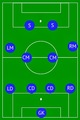
I've been doing a bit of thinking about the future of Technology Enhanced Learning over the coming years - say, the next five years. And I'm increasingly frustrated with NMC's annual Horizon report. I haven't even read this year's but just from looking at the contents page I'm questioning it. Again.Flipped Classroom - been happening for years but is certainly nowhere near mainstream adoption.Learning Analytics - is, and will be of interest to central departments, but I fear as a means to justify expenditure on systems e.g. we've had x number of students log in from x locations at all hours of the day. Using that to influence learning and teaching is something entirely different. Cath Ellis has presented a few times (at ALT-C and ELESIG) on her assessment analytics which I think has great potential, but relies on those who are engaged, not the masses. [It makes me sad to say that because I actually really like this area and can see the potential].The Quantified Self? Please...The Horizon Reports have used the term 'mainstream adoption' in recent years, but we really need to think about what we (or it) mean by 'mainstream'. By definition (whichever source you choose), 'mainstream' requires the thoughts/actions of most people. I'm pretty sure that 'most' lecturers will not be flipping their classroom, despite how good we may think that approach is. Why? Simply because of the huge teaching loads on many staff. Flipping requires time and effort.Instead, the next 5 years in TEL will be mainly driven, perhaps underwhelmingly so, by the key issues that are important across Schools, Faculties and Institutions as larger entities, not by the (few[er]) innovators. But this might not be such a bad thing - working towards and achieving these key goals will enable capacity building in the various innovations taking place. But it's a slow process.I'm sitting here thinking about a way to put this next bit, and like most things, I refer back to football (or soccer if you're from the US). Many good football teams rely on what is known as a 'Spine'; that is, strong and reliable players down the centre of the pitch. So this includes a Goalkeeper, a Central Defender, a Central Midfielder and a Striker. These are often the key priorities for teams to get sorted and the other positions can drop into place, or maybe even experiment with.So from an Institutional perspective, the TEL spine will tackle large scale issues that will receive investment if needed, and can have an impact across the board - on entire programmes, etc. On that basis, here's my TEL Team Sheet for the coming years:Goalkeeper: VLE Minimum StandardsMinimum standards are coming into focus across a number of institutions lately because of reported inconsistencies in the student experience across modules/programmes. Some HEIs have had them in place for a while, but many are only just getting on board - like us at Liverpool. Minimum standards (or baselines) can help achieve some consistency (but not in a one-size-fits-all approach), and will have to be mobile friendly.Central Defender: Online Assessment & FeedbackPretty much of a no-brainer, but a huge deal considering A&F is consistently the lowest scoring area in the NSS across the country. This will probably focus mostly on online submission, marking and feedback given the difficulties (and lack of trust) in moderating online exams for large numbers. Still, with the ongoing problems with one plagiarism detection service over the last 4 years, it's quite surprising there is still no perfect solution to support and enhance processes, despite the promise.Central Midfielder: Lecture CaptureThe recording of lectures is again something that our students want. Certainly at Liverpool and apparently so at other Russell Group Unis, as well as other pre & post 92s. Students want access to recordings; many staff think it will drive down attendance (despite contrary evidence); and although the benefits are more about convenience than pedagogy, management will invest. Still, whilst many HEIs are investing in expensive all-singing solutions, some research (inc. some I've done internally) suggest students only really want/need audio recordings synchronised with Powerpoints (screencasts).Regardless, lecture capture will only reach mainstream if the solutions are as simple as a tap of the button to record and publish. And they're going that way!Striker: ePortfoliosI'm torn for this position but portfolios are such a big deal in so many courses now. Whether that's to showcase student's best work (as in Art or Graphic Design); to evidence professional standards (as in Education and many healthcare disciplines); or as a a general means to bring student work/artefacts together to support transition and progression.Again, there's no perfect solution to meet each of the different needs I've mentioned above. PebblePad does appear strong in aligning to professional standards though, and something of particular interest in our Medical and Management Schools.Other PositionsThis is where we can flirt with innovation as well as tackle some fundamental problems. Monitoring student attendance and engagement in a standard way across Institutions is still something not really managed as well as you'd imagine. It was on the agenda whilst I was at MMU but was on teh back burner (I think there may be progress with their Data farm), which would enable a traffic light system monitoring student activity with the library, coursework receipting, VLE access, etc. We can also look at novel ways to present content (multimedia, augmented reality); mobile access (more so than 'mobile learning'); engage learners in communities (social media); simply improve communication (text messaging); and look at widening participation and brand identity (MOOCs and Open Ed?).This is where exciting stuff might be happening and I'm only scratching the surface, but it can only happen if technology starts to achieve the promises it's been making for so long. And on a large scale. We hate acknowledging that students are increasingly referred to as 'customers', but as such, Institutions are/will focus more as 'businesses'. And wanting some big wins in return for the increasing investment is par for the course.I read a paper on predicting edtech by Nick Rushby recently, and love his opening paragraph: "Prophesy is dangerous—especially when it concerns the future" and"It was not so very long ago that those who claimed to be able to see into the future were given a show trial and then burned at the stake" (Rushby, 2013)Good job my predictions aren't so revolutionary!Do you agree? Disagree?[I feel like I should apologise for such a bleak post ;-( ]Peter@reedyreedlesReferencesRushby, N. (2013). The Future of Learning Technology: Some Tentative Predictions. Educational Technology & Society, 16 (2), 52-58.The Reed Diaries by Peter Reed is licensed under a Creative Commons Attribution-NonCommercial 3.0 Unported License
Peter Reed
.
Blog
.
<span class='date ' tip=''><i class='icon-time'></i> Jul 20, 2015 08:18am</span>
|