Blogs
|
The Institute of Play has released a white paper called "Psychometric Considerations in Game-Based Assessment", it is a work of multidisciplinary scholarship. It’s also the first publication of multidisciplinary collaboration. GlassLab brings together game designers, learning scientists, and psychometricians from Institute of Play, the Entertainment Software Association, Electronic Arts, Educational Testing Service, Pearson’s Center for Digital... Read More ›
Classroom Aid
.
Blog
.
<span class='date ' tip=''><i class='icon-time'></i> Jul 20, 2015 08:14am</span>
|
|
What a wonderful cornucopia of extremes in a day! I am delighted to report a baker’s dozen of contributors and their extreme creations:Cheryl enjoyed . . .I spent the day shivering in a snowy storm, skiing trails that went from powdery snow in fog, to cream cheese snowy views across the valley where there was sun.Gail Poulin busied . . .I spent a busy day with my husband as we worked like soldier ants lowering stumps, covering the area in wood chips, transplanting bushes, and finally relaxing peacefully on the deck with a beverage and watching nesting birds at the feeders.Virginia completed . . .I started the day with an empty calendar for the month of May and now every day is filled with at least one thing and many times two.Mr Wood experienced . . .The day began cold and grey, then became hot and sticky, and just after it got wet and sticky, it became sunny and warm.Kabod facilitated . . .I delicately discussed "Stirrings" in The Giver over and over today with silly, pubescent Seventh-and-three-quarters Graders.Ken waxed . . .In 24 hours, our bathroom was transformed from a functional facility and possible retreat to an empty wooden box with holes in all sides that the wind whistled through.Anonymous sighed . . .Yesterday morning I got to play with my granddaughter in the morning and had to kiss her good by in the evening. I wouldn't get a chance to see her in person again till June.Gail Desler expressed . . .I spent the day with 6 dedicated, innovative, caring 5th grade teachers, 5 of whom received "pink slips" this month (where in the heck did the expression "pink slip" come from - and what's the terminology in your district?). Difficult times in California.Bonnie extemporised . . .Could there be anything more extreme? We left on a plane from Tel Aviv, Israel on Monday night at midnight and arrived at Newark airport, New Jersey at 5AM and there's a 7 hour time difference. So getting back to normal, well what's normal anyway?Elona announced . . .My students were working away quietly at the begining of the class and then the fire alarm went off.Tracy activated . . .A flurry of activity to get parent permission for 25 students in 15 minutes for a last-minute opportunity to attend a day-long literary festival, after which I stayed at the school in the quiet of my classroom for the day :)Kevin initiated . . .Between coaching youth baseball, writing a grant proposal, composing daily poetry, working on some educational pieces for a website and watching my three boys run-run-run, the week of school vacation has been anything other than restful.Cynthia ebulliated . . .The air was already oppressively humid at 7:15 a.m., and then the rain began; however, the seniors were able to have their crawfish boil at 1:00. Yum!
Ken Allan
.
Blog
.
<span class='date ' tip=''><i class='icon-time'></i> Jul 20, 2015 08:13am</span>
|
|
Creating a great online course: art or science? At first, creating an online course may seem difficult but with some experience you understand that you just need to know a few good practices and above all to adapt to your … Continue reading →
Eliademy
.
Blog
.
<span class='date ' tip=''><i class='icon-time'></i> Jul 20, 2015 08:13am</span>
|
|
The Contingent Pedagogies project team at SRI International has been working to help teachers assess their students’ understanding of key science concepts and adapt their instruction accordingly. Students often bring problematic ideas to the classroom, and it is important to surface and address them in instruction to promote learning (National Research Council 1999). Working with... Read More ›
Classroom Aid
.
Blog
.
<span class='date ' tip=''><i class='icon-time'></i> Jul 20, 2015 08:12am</span>
|
|
I have heard it said that teachers are assessors and that assessment is part of the teaching and learning process. I often wonder if the meaning of the word ‘assessment’ is sometimes stretched and perhaps misused in contexts to do with learning.Standard assessmentAt the moment, NCEA standards are of two types. There are Unit Standards, awarded to learners who meet all component criteria for a particular standard. There are also Achievement Standards, awarded as Achieved (just a pass), Merit and Excellence.Re-assessmentA learner, who does not meet the criteria for a unit standard or for an award in an achievement standard, can choose to be re-assessed after a period of re-teaching and further study.My thinking has never been aligned with the philosophy of teaching to a standard. I don’t believe that’s what ‘education’ is about. However, as a teacher, I have no choice but to accept the assessment system that is now intimately bound with secondary education in New Zealand.At least re-assessment permits the learner to revisit the learning and allows the teacher to do some more teaching.Re-submissionNZQA is reviewing, again, the process of assessing learners for NCEA standards in New Zealand. The specific issue that I bring to this post is the matter of what’s called a re-submission. I’ll explain.When a learner completes and submits a standard assessment test, and it is not clear to the assessor whether the learner has actually met the standard, the test script can be returned to the learner for amendments to be made. These are performed by the learner under test conditions before re-submitting the test script for the assessment to proceed. This process is called re-submission.Furthermore, during re-submission the learner is not permitted to study on the topic, nor receive any teaching, coaching or advice associated with the standard, before revisiting assessment tasks they performed in the test script. They are only permitted to consider their answers and perhaps amend them.There have been many debates by teachers about what constitutes a case for re-submission. Performing a re-submission is quite different from entering into a phase of re-teaching followed by re-assessment. Teachers like things to be cut and dry. So many discussions at the moment centre on the criteria for re-submission.A disservice to learningAs a teacher who is more interested in what learners learn and how they learn, than what they achieve in a standard test, I am often in a bind over the issue of re-submission.I feel that I’m doing learning a disservice if I do not permit (and cannot permit) learners to revisit the learning. This is precisely what happens, and must happen according to the rules for standard assessment, when re-submissions are permitted for learners who are very close to meeting criteria for a particular standard.In such instances, I start wondering what my role is as a teacher and educator. I also wonder if I am doing learners a disservice by permitting them to re-submit their test evidence without any further teaching and learning taking place.I feel that if learners are in need of more teaching and learning, then they should be given the opportunity to receive just that. This opportunity is denied learners who gain a standard on re-submission.What are teachers for?
Ken Allan
.
Blog
.
<span class='date ' tip=''><i class='icon-time'></i> Jul 20, 2015 08:12am</span>
|
|
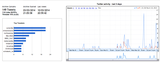
So Open Ed week has started and my timeline has been filled with tweets and links to sites, blogposts, etc.Of course, our facilitation of the Intro to Openness course has also started, and we've kicked it off with a Google Hangout led by Paul Booth. There were some technical issues but things got going ok. There'll also be more hangouts later this week, as well as the Tweet chats over the coming days.Thanks to Martin Hawksey's work with the TAGS explorer, I've managed to create an archive of all tweets mentioning #nwoer or #nwoerchat. This gives us some pretty interesting data - I'm just wishing I stuck with that Social Network Analysis MOOC a few months back ;-)Anyway, as you can see from the data, the Tweets are just starting to pick up - hopefully this will increase further over the course of the week.(Click to expand)And below is an interactive version of the different people tweeting in the network. As you can see, there are a couple of key nodes in this network and again, it will be interesting to see how this develops. I'll look at how we can make more meaning from this data throughout the course of the week.Peter@reedyreedlesThe Reed Diaries by Peter Reed is licensed under a Creative Commons Attribution-NonCommercial 3.0 Unported License
Peter Reed
.
Blog
.
<span class='date ' tip=''><i class='icon-time'></i> Jul 20, 2015 08:12am</span>
|
|
The online corporate training market is growing by 13% per year and is expected to keep this pace until 2017 [1]. According to the 2014 Training Industry Report, 44% of US companies are planning to purchase online learning tools and … Continue reading →
Eliademy
.
Blog
.
<span class='date ' tip=''><i class='icon-time'></i> Jul 20, 2015 08:12am</span>
|
|
I finished writing a print-based learning resource a few weeks ago. I say finished - it was really only a draft before I passed it on to the editors.I put a copy of it on the Science database and was grateful for feedback received from our now huge Science teaching cohort. It was good to get comment from colleagues who, like me, had been plunged into the sweat of writing learning resources to deadlines.Storyline an interestAmong many aspects of the draft discussed was its storyline. This attracted interest from my colleagues as it was seen as an effective teaching feature. It also made me think more deeply about strategies I’d used in creating the storyline in the first place. I realised that I hadn’t really planned it.It became clear with more thought and discussion that a storyline in a learning resource should not be a starting point for writing. My past experience has shown me that building necessary learning around a plot can be difficult. It’s a manufactured process that has the potential to limit severely pathways the writing may follow.A different approachAdhering to a storyline can stymie other useful teaching ideas that may otherwise emerge. It can lead to contrived resource components that do not satisfactorily contribute to effective learning.The storyline that seemed to work so well in this resource was created using an entirely different approach. Here’s how it came together for a NCEA Level 1 generic learning resource on writing a scientific report.Staid and boring stuffI started on the second chapter simply because it was the one I had in mind when I put my fingers to the keypad. My plan was for Peter to write a report of something he did during his holidays and hand it in for his Science teacher to assess at the start of term.I had practically finished that chapter when I'd already decided that it was boring, principally because it involved doing homework for a teacher. Undaunted, I continued with chapter 3, then drafted chapter 1 and was half way through chapter 4 when I really couldn’t pursue my ideas any more. The resource was becoming all too staid and boring.Change tacticsI went back to chapter 2, stripped it down and rewrote it introducing a friend, Mahi, an intelligent Māori girl who could write good scientific reports.It was she, not the teacher, who read Peter’s brief report of his visit to a museum exhibition on colossal squid. It was she, not the teacher, who desperately wanted to see the exhibition after reading Peter’s report.And it was she who tried to follow the deficient instructions in the report. As a result of these shortcomings, Mahi missed out on her planned visit to the exhibition - all good material to use for teaching about informative report writing.I switched back to rewrite parts of chapter 1, simply introducing the characters Peter and Mahi. I then flicked to the other draft chapters incorporating the growing relationship between Peter and Mahi as friends who supported each other with their interest in Science.Here’s how chapter 1 begins:Reading magazines Peter found a magazine page that had an article about a car that ran on water instead of petrol.Activity 1A Read Peter’s magazine page shown below. 1 What is the name of the magazine that this page came from?__________________________________________________________________2 Explain two things you see on the magazine page that might suggest that the information about the car is not true. __________________________________________________________________ __________________________________________________________________ __________________________________________________________________ Peter wanted to find out more about the car, so he went to a car showroom and spoke with a salesman. The salesman laughed at Peter and did not believe that a car like that could be made. Peter still wasn’t sure if the information in the magazine was true. 3 Explain two other things Peter might do to find out if the story in the magazine is true. __________________________________________________________________ __________________________________________________________________ __________________________________________________________________ __________________________________________________________________ Check the answer guideProof of the puddingThe rest of the resource fell into place using the theme of collaborative learning between two school chums. Peter followed up Mahi’s library research into giant squids and colossal squids. He then asked her for help when drawing a graph for the report he was writing.Instead of Peter handing in his report for a teacher to mark, he chose Mahi to help him improve it. This permitted a chummy dialogue between two friends that was not only fitting and appropriate, but had the potential to enhance learner interest.All this was laid over a framework of teaching and learning. I got a real kick out of how easy it was to incorporate a story line in a learning resource, and from the supportive feedback I received from colleagues.The proof of the pudding will be when I examine feedback from learners!
Ken Allan
.
Blog
.
<span class='date ' tip=''><i class='icon-time'></i> Jul 20, 2015 08:11am</span>
|
|
Looking at MOOCs Rapid Growth Through the Lens of Video-Based Learning Research http://dx.doi.org/10.3991/ijet.v9i1.3349 Michail N. Giannakos, Letizia Jaccheri and John Krogstie Norwegian University of Science and Technology (NTNU), Trondheim, Norway Abstract—Video learning is becoming an increasingly important part of contemporary education. In the decade there has been an increase of many and diverse forms of... Read More ›
Classroom Aid
.
Blog
.
<span class='date ' tip=''><i class='icon-time'></i> Jul 20, 2015 08:11am</span>
|
|
"Open Educational Resources (OER) provide a strategic opportunity to improve the quality of education as well as facilitate policy dialogue, knowledge sharing and capacity building." (UNESCO, [1]) Eliademy recently started crowdsourcing OER (Open Educational Resources) online courses in order … Continue reading →
Eliademy
.
Blog
.
<span class='date ' tip=''><i class='icon-time'></i> Jul 20, 2015 08:11am</span>
|