Blogs
|
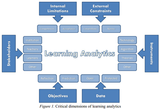
"Learning Analytics is the measurement, collection, analysis and reporting of data about learners and their contexts, for purposes of understanding and optimizing learning and the environments in which it occurs." — from SOLAR (Society for Learning Analytics Research) There are several reading materials recommended here, they help frame this topic, and define terms and concepts.... Read More ›
Classroom Aid
.
Blog
.
<span class='date ' tip=''><i class='icon-time'></i> Jul 20, 2015 09:18am</span>
|
|
Many of you have been asking how you can embed a Google Form to your Eliademy course. Here you have some simple step for step explanation on how you embed a form to your course. Create a Google Form and … Continue reading →
Eliademy
.
Blog
.
<span class='date ' tip=''><i class='icon-time'></i> Jul 20, 2015 09:18am</span>
|
|
(The Learning Circuits Blog is moving. Please add this bookmark to keep up-to-date on all of our new posts: http://www.astd.org/Publications/Blogs/Learning-Technologies-Blog.aspx)One of the best things about being an instructional designer right now is that now more than ever we feel that our field is in the zeitgeist of what's happening in the media and technology worlds. What we do (rather, how we do it) is influenced greatly by technologies that support more flexible means of communication and collaboration. Social media and mobile technologies have turned the spotlight on social learning concepts, which in turn have made more of us think about the large, ill-charted dark matter of culture: informal learning.Of course, our response to this turn of events should be elation - finally, Charles Jennings can stop talking about 70-20-10! We can explain communities of practice without once using the phrase "well, no, that's not really an example of what i'm talking about..."! (bonus: we can avoid awkward tittering by wholly avoiding the name 'Wenger' in a classroom setting). Everyone in the Internet Time Alliance can retire to tropical islands. Their work here is done, because everyone in your care now understands the value of social and informal learning.Except maybe they don't. Maybe you're having trouble convincing your boss that her task force is not a community of practice. Maybe your top-down Yammer implementation has yielded more tumbleweeds than users. Perhaps it's because, in fact, no one is making the connection between the breakthroughs in networking that they can plainly see and whatever it is that you do. Maybe you should brag about your personal learning network.In this new world, those in our care probably find it harder - not easier - to square the existence of this wikiHow entry and your job as conductor of whatever they've been led to think formalized training is. Do you exemplify the benefits of social and informal learning in your own work life? Do you document successes of social learning? Are you watching and listening to the concerns of your co-workers, providing the right nudge when needed, and openly sourcing your information? Are you connecting your peers with relatable thought leadership or community resources that you've found valuable? How about using technology to make spaces for serendipitous learning - loosely organized, de-escalated learning, free from expectations but endowed with purpose?As I've said before, I love our kind of people, and not just for their unfailingly sparkling personalities. Every day, they are useful to me in my work, and every day I make it known that I am bringing fire to those in my care because of my associations. In design meetings, I nip errant learning styles talk in the bud. I stay up-to-date on the development of Project Tin Can and use what I know to rethink learning management systems. I experiment with Google Hangouts. I make it easy for myself to be a node in the network and I make sure that people know that part of my value is being as connected as I am.While I probably spend more time talking about #lrnchat than I do participating in it these days, I've been known by more than one boss as 'the Twitter guy.' I'm proud that I eventually stopped being 'the Twitter guy' - that is, I stopped being just a tolerated, quirky evangelist for the platform when I stopped telling people how valuable Twitter is and started using it very publicly to inform my discourse in the workplace. (As Jane Bozarth says, "Google gets you links. Twitter gets you answers.") As a result, the questions that I get around social media are less of the "what good is Twitter?" variety and more about how to use social learning tools to their best effect.As I rely on a large, diverse learning network to help me be competent and prescient, I hope to show (not tell) that I am here to solve problems, not simply build courses or teach classes. I can suggest and employ social and informal learning strategies in part because they're already working: social media tools, content curation, collaboration, and networked learning are making me better at what I do.Craig Wiggins has been helping people create and manage learning experiences for the last 10 years. He is the eLearning Instructional Design Strategist for the Corporate Executive Board's Corporate Leadership Council, where he manages the creation of meaningful distance learning and performance solutions. Craig holds a B.A. in anthropology and an M.Ed. in curriculum development, and spends a lot of time thinking about how to sneak usability, accessibility, and proper task analysis into the mix. In his natural habitat, he is usually storyboarding on wall-sized whiteboards or pontificating on Google+.
The Learning Circuits Blog
.
Blog
.
<span class='date ' tip=''><i class='icon-time'></i> Jul 20, 2015 09:18am</span>
|
|
Tony Karrer’s Big Question for July has a syntax that’s almost rhetorical: New Skills and Knowledge for Learning Professionals?Does he suggest that, perhaps, there is nothing new in that field?Or is he genuinely asking for innovative ideas on what skills learning professionals should have?I couldn’t help thinking how taken aback I was at Tony’s reaction to one of my last month’s posts. I’d rattled it off almost like an email reply. When he said he had to walk through it and take notes, he got me thinking about what I’d written. I went back and read it through to check that he was talking about the same post. The first bullet in the closing list on attaining proficiency read:identify the required base-knowledge/skills, foster strategies for these to be recognised as key, and provide avenues for their appropriate acquisition and practiceThat’s all very simply put in a bullet. It’s the unpacking of what’s bulletised that I think Tony’s after when he asks his Big Question.In thinking of the complexity of what is embraced in that bullet, a plethora of other lists, schemes and recent and not-so-recent ideas came to mind.I often take a backward look at Bloom’s Taxonomy, for instance.New skills?If the above heirarchy of thinking skills is of any use to the young learner, it must surely be useful in some form to a professional who is still learning. Aren’t we all supposed to be lifelong learners? Isn’t that what our glorious learning journeys are all meant to be about?Just because the so-called lower-order-thinking-skills are fundamental to the others in the list does not mean that they’re to be neglected once the higher skills are attained. You may as well forget about tyre maintenance and just see to the fine tuning of a car engine before setting off on a long drive. When it comes to traction and treads, there are always new developments in the marketplace. So it is with knowledge in the professional arena.The fundamentals of learning, understanding and application of knowledge don’t mutate simply because someone has learnt a lot. Why relegate Bloom’s Taxonomy to the classroom? There’s a deal of wisdom there that can be applied to everyday learning in the workplace.Timely remindersOften the skilled and knowledgeable person needs to be reminded of some of the strategies that are at their disposal. Knowing what to do, and having the skills to be able to do it, are only part of what a professional needs in order to exercise initiative. The other and most important element is recognising where and when these knowledge and skills can be and should be applied. This takes practice and there’s seldom much time to do this in day-to-day routines.How people think, and what that thinking is associated with, varies widely from person to person. It’s the context that’s often so important for specific thinking to occur if it's to happen at all. Innovators and naturally creative people rarely need tuition in the elements of how to be innovative or creative. Others new to these skills need relevant and appropriate contexts in order to flex their creativity and innovation.Whether it is learning to touch-type, finding out how to embed a YouTube video in an announcements page of an LMS, or constructing a new strategy from peer feedback on a project, there needs to be a focus that includes:the learner,the relevant application of what’s to be learnt,the available resources for use by the learner, andthe time allocated specifically for that up-skilling to happen.Follow through is essential: that the learner has immediate, relevant and appropriate opportunity to practice what’s been learnt.Relevant references:Andrew Churches - Bloom’s (Digital) Taxonomyhttp://edorigami.wikispaces.com/file/view/bloom%27s+Digital+taxonomy+v3.01.pdfUNESCO - Task Force on Education for the Twenty-first Centuryhttp://www.unesco.org/delors/index.htmlhttp://www.unesco.org/delors/fourpil.htmhttp://www.unesco.org/delors/delors_e.pdf
Ken Allan
.
Blog
.
<span class='date ' tip=''><i class='icon-time'></i> Jul 20, 2015 09:18am</span>
|
|
Check it out: http://blogs.sitepoint.com/thinking-web-voices-of-the-community/Preface - Sarah Hawk (Community Manager)Chapter 1 - Anatomy of a Website by Ralph MasonRalph's chapter looks at the building blocks of a website, from hosting through to favicons, with everything in between. If you are new to the world of web, then this is the article for you.Chapter 2 - Designing in the Dark by Alex DawsonAlex examines the ideas of web accessibility and talks you through the process of identifying your audience and ensuring that your sites meet their needs and expectations.Chapter 3 - Everything Must Go by Alex DawsonAlex is back, this time discussing the concepts of web accessibility in more detail. If you want some practical advice to ensure that your sites work for everyone, then this is a must read.Chapter 4 - Going Freelance by John BordaYou might be the best web developer in the world, but if no one knows that then it's of very little use to you. John looks at some of the things that a freelancer can do in order to make a successful career in the cutthroat world of web development.Chapter 5 - Successful PSD to HTML Freelancing by Paul O'BrienIn this chapter, CSS expert Paul talks about the intricacies of quoting on and carrying out a PSD to HTML conversion job. He points out some of the pitfalls and explains how to avoid them.Chapter 6 - Write Email Markup That Doesn't Explode in the Inbox by Coyote HolmbergIf writing electronic newsletters is something that is on your radar then this article by Coyote will be invaluable. In it she discusses the dos and don'ts of writing HTML emails from the design stage right through to the sending.Chapter 7 - Make Your Website Stand Out from the Crowd by Ursula ComeauSocial media has become so commonplace that it can't be ignored if you want your business to succeed and Ursula explains how important social media and blogging can be to your website and your online marketing strategy.Chapter 8 - Information Organization and the Web by Sherry CurryYou might have the most valuable information on the planet on your website, but if it is hard to navigate then the chances of people giving up before they ever get to it are great. Sherry talks about good strategies for organising and labeling your information so that it is accessible and easy to find.Chapter 9 - Using Vector Graphics to Build a Noughts & Crosses Game by Clive WickhamIn this tutorial, Clive outlines how you can easily build a simple game of Noughts & Crosses using interactive vector graphics and explores two ways of presenting it, via SVG and HTML5 Canvas.Chapter 10 - Efficient Actionscript by Christian SnodgrassChristian examines a selection of some of the more useful Actionscript tips, tricks and techniques for use in mid-to-large projects.Chapter 11 - Databases : The Basic Concepts by Nuria ZuazoDatabases are a must for any dynamic site and some basic knowledge is necessary to make the most of your database. In this article, Nuria looks at some of the intricacies of the modern day database and how you can harness its power in your own sites.Chapter 12 - The Iceberg of TCP/IP by Robert WellockRobert skims the surface of the massive subject that is TCP/IP and looks at a selection of protocols focusing on what is most relevant toweb design or general home computing.
Debbie Richards
.
Blog
.
<span class='date ' tip=''><i class='icon-time'></i> Jul 20, 2015 09:18am</span>
|
|
There is a vast area of research to be explored related to seamless learning in MOOC. A paper authored by Inge de Waard et al. reviews researches in the related field, because they believe seamless learning can perfectly complement what ‘s lack in MOOC setting. Exploring Future Seamless Learning Research Strands for Massive Open Online courses Inge de Waard, The Open University, United... Read More ›
Classroom Aid
.
Blog
.
<span class='date ' tip=''><i class='icon-time'></i> Jul 20, 2015 09:18am</span>
|
|
So...this whole week I was pretty excited about the idea of riding the interest from my last two blogposts. I was all set to mount a rousing defense of Google+ as a social media tool worth greater interest from learning folks of all kinds. I really was. Maybe one day you'll get to read that blog post, replete with breathy exhortations and compelling infographics....and then, I got distracted by something shiny and buzzy. A colleague of mine who is headed to business school sent me this article, in which Robert F. Bruner, Dean of UVA's Darden School of Business, meditates on the hurdles that online education will have to surmount in higher education. I'm going to admit that my first impulse as an e-learning instructional designer after reading perusing hastily skimming the article was to fall into a bit of defensive confusion, especially with passages like this:But it’s possible that what iTunes did for music and Netflix did for films will be what online education will do to traditional colleges and universities—not a pretty prospect.(Is what iTunes and Netflix did for music and movies bad? What was that, again? Are they the same thing? Can media forms like music and movies be equated with institutions? While we're at it, has iTunes U not been a successful venture? I have questions.)After a re-read, I realized that Bruner isn't so much pooh-poohing the coming digital transformation of the traditional college experience so much as he is scoping out the roadblocks that donors might throw up when called to empty their wallets for their alma maters. Fair enough, but I'm still not convinced that the investments necessary for improving the quality an accessibility of education are getting a fair shake.Still, as an educator who has never worked in higher education, I think I may be missing something here. To explain my disconnect, I've matched Bruner's five points of potential investor balk with what I hear and think when I read them.I read: Learning platform experimentation will "require ongoing investments through time," and obsolescence is a constant danger.I hear: Educational technology is evolving, and such evolution will be expensive and full of dead ends.I think: Dot matrix printers still print. Haven't seen one in a campus library in ages.I read: While online courses may result in more effective learning experiences for students, they may not result in greater productivity for professors.I hear: Our professors may have to spend more time developing their curricula, not less. If so, what's the point?I think: This kind of thinking seems to fall into the familiar trap of trading cost for quality. It also calls into question what a given university might see as the primary role of professors.I read: Economies of scale may allow one professor to reach thousands of students. While cost effective, this sort of mass dissemination is antithetical to the 'high touch' personal attention that is the hallmark of liberal arts universities.I hear: We're afraid of separating the content and delivery from the institution itself.I think: Is the synchronous, traditional higher education classroom consistently living up to its 'high touch' potential? Is 'high touch' a thing that all higher ed institutions actually value? Also, would not innovations such as the flipped classroom allow for professor time to be further partitioned into virtual office hours? Again, this is more work for the professors, but I believe it might allow for better experiences for the students.I read: A "'star system' of well-known instructors" will "amplify the arms race for talent that already exists among colleges and universities."I hear: We'd like to state again that we're really not comfortable with the idea of separating the content and delivery from the institution itself.I think: The only way that I see online course education exacerbating this 'arms race' (!) is by removing more physical barriers to hosting 'celebrity' professors. Is a university's only argument against dumping their physics professors' sets for a series of live events with Neil de Grasse Tyson that it's hard to get him down to Charlottesville?I read: Traditional university teaching structures require a certain number of people and things, and the need for these things and people might change if we change the way that universities teach.I hear: We have made considerable investments, and are calling on our donors to continue making investments in time-honored methods. Changing our methods threatens both current and future investments.I think: Yes, yes it does.I obviously think that using technology to mix synchronous and asynchronous sessions can only help universities by increasing the depth of student engagement. Still, Bruner has a point -- someone has to pay for all of this. His meditation brings up a number of other issues that I'm not qualified to answer:How do traditional universities update their methods and structures without breaking the bank and/or alienating nostalgic investors? How can they bring alumni donors around to supporting ways of teaching that are outside of their experience and (possibly) removed from the confines of the campus itself?Even if it proves possible, is such a feat desirable?Is the value of online instruction greater at the undergraduate level than in graduate courses (or vice versa)?I'm going to go out on a limb here and say that anyone reading this has had experience with a higher ed institution as a student or as an employee. What do you think? Is this a watershed moment for colleges and universities, or soon to be a minor speed bump in the history of our higher ed institutions? Is it possible for higher ed to wait this movement out and invest in an eventual learning platform 'winner'?--Craig Wiggins has been helping people create and manage learning experiences for the last 10 years. He is the eLearning Instructional Design Strategist for the Corporate Executive Board's Corporate Leadership Council, where he manages the creation of meaningful distance learning and performance solutions. Craig holds a B.A. in anthropology and an M.Ed. in curriculum development, and spends a lot of time thinking about how to sneak usability, accessibility, and proper task analysis into the mix. In his natural habitat, he is usually storyboarding on wall-sized whiteboards or pontificating on Google+.
The Learning Circuits Blog
.
Blog
.
<span class='date ' tip=''><i class='icon-time'></i> Jul 20, 2015 09:18am</span>
|
|
First of all we would like to congratulate you with 1st of September, the first day of school. To celebrate it, we are releasing a brand new Dashboard experience. Better course organization From today we are sorting courses according to … Continue reading →
Eliademy
.
Blog
.
<span class='date ' tip=''><i class='icon-time'></i> Jul 20, 2015 09:18am</span>
|
|
Last term I overheard a teacher conversation on pedagogy:"It’s all about learning. You don’t talk about teaching anymore."I wondered about this. I thought, ‘what am I doing if I’m not teaching?’It didn’t take me long to sort out the conundrum. It was to do with the perception of a teacher ‘filling jugs’ with learning. I’d never accepted this metaphor. I’d always believed that teaching was closer to learning than the metaphor suggested.The conversation progressed and centred on the teacher:courtesy Make Beliefs ComixThere was an involved discussion before some resolution was found on the difference between knowing when something was taught, and recognising if something had been learnt.Learning is explicitly to do with the learner. Isn’t teaching to do with the learner? Is there a difference between what’s taught and what’s learnt?This post is about these two related spheres: teaching and learning.How do you find out what’s already been learnt?A good teacher asks questions. In introducing a new topic, searching questions are put to the learner to see what resident knowledge and skills abound. In doing this, the teacher may well find out what, if anything, is required to be taught.It could be that parts have already been learnt. In which case, this exploratory conversation can serve as useful revision. It may also serve as an appropriate introduction to the next part of a lesson.So it is (and should be) with elearning. By embracing the function of asking questions during an introductory part of a topic, the learner is permitted to establish where competency lies. Opportunity to tackle any associated learning deficiencies can be offered at this stage. Once a compatible group of competencies has been recognised, a learner should then be able to progress swiftly to the next sphere of learning.How do you know when something's been taught?The direct presentation of raw information in text or other visual data is so often confused with teaching. Coloured pictures, animations or videos, however well designed and accompanied by notes or other instruction, do not constitute teaching when displayed on their own.So much more is needed to engage the learner, and to satisfy a learning objective through this engagement. The key to engagement is to ask questions or otherwise provide opportunities for the learner to participate.There should be a pedagogical progression, interposed by strategic and appropriate occasions for the learner to take part in dialogue about what’s gone before. Exemplary answers are given if and when they’re needed. This so-called formative assessment achieves a number of things relevant to learning:assists the learner to think about the topic in contextprovides additional teaching for a learner who may not yet have grasped all of an idea or conceptcan confirm, and give the learner confidence, that learning is happeningSo often in an elearning environment, less confident learners can be on track, yet be unaware of their own capabilities. Formative assessment can assist the able learner by providing assurance that what they have assimilated is aligned with the learning objective.Through questions and associated dialogue a teacher can affirm that something has been taught; it must not be confused with what is learnt.How do you know what’s taught has been learnt?In the classroom, a series of questions making up a summative test, together with associated perfunctory aural questioning, can be used to establish the extent of knowledge and skill uptake.Assessing some skills may require learners to demonstrate visibly the extent of their expertise. This may not be easily achieved in a written test. Assessment of practical skills requires learners to manipulate equipment or make observations from these or to do both.In elearning, summative assessment can be just as involved. The use of video streaming or video recording, so that learners can demonstrate a skill, such as playing a musical instrument or speaking a language, can be part of summative assessment. Where appropriate, these are incorporated into NCEA assessments of distance learners in New Zealand.There is an art in designing elearning resources, as there is in teaching.Learning and good teaching are in balance with one another.When the student is ready, the master appears - Zen proverb ( 12 ) << - related posts - >> ( 10 ) ( 9 ) ( 8 ) ( 7 ) ( 6 ) ( 5 ) ( 4 ) ( 3 ) ( 2 ) ( 1 )
Ken Allan
.
Blog
.
<span class='date ' tip=''><i class='icon-time'></i> Jul 20, 2015 09:18am</span>
|
|
OnGuardOnline.govprovides practical tips from the federal government and the technology industryto help you be on guard against internet fraud, secure your computer, andprotect your personal information. The websitehas lots of great games that can be downloaded and included in your training -the download includes both published and source files!The Internet Education Foundation, through GetNetWise.org, has contributed videotutorials for OnGuardOnline.gov. These video tutorials show you step-by-stephow to change the preferences in your internet software to enhance privacy,safety, and security.Check itout: http://www.onguardonline.gov
Debbie Richards
.
Blog
.
<span class='date ' tip=''><i class='icon-time'></i> Jul 20, 2015 09:17am</span>
|