Blogs
|
I admit it. I love when people seek my opinion. That happened a lot in Denver, at ASTD 2012:I am entering the field. What do I do to make a success of it? Let’s pretend that somebody asked me to deliver a commencement speech in response to that question, preferably on a lush, ivy covered campus, near amiable watering holes. Thank you for inviting me to share this wonderful occasion with the workforce learning graduates of 2012....Let me begin by congratulating you on your career choice. I am sure you and your family are delighted—after all you could have chosen to go to law school. After years of clamoring for a seat at the table, C-levels are increasingly intrigued by what we can do for them. Pressure for growth, technology, and a competitive landscape create abundance and opportunity for workplace learning people. Every sector, from higher ed to pharma, is seeking candidates whose heads are screwed on right. What do I mean by right? I am talking about heads with an unrelenting focus on performance and results.Everything I say then is from the vantage point of celebration. I think this is a bountiful time to be in our field. I think you can get in the door. That's not the primary challenge. What's difficult is to make the most of it once you are in place.My advice to you as you commence this tasty career…. · It’s not about how. It’s about why. Several years ago, I served on a committee to review submissions for awards at an international conference. We considered a four-day course for engineers soon to be tasked with serving as instructors. The course devoted itself to teaching them Instructional Design 101, with half of the first day spent writing letter-perfect, four-part objectives. And so on and so forth. My eyes glazed over. The engineers’ eyes would close entirely. Wrong stuff. A more recent example came from online compliance training I was dragooned into taking. The topic was information security. Screen 3 listed the objectives. Only three of the eight had anything to do with my work and life. How would I endure the next 73 screens? Even animated pandas could not make this e-learning successful. Wrong stuff. In our business, we begin with the end in mind. Heaven help us when those ends are wrong-headed. · It’s not about us. It’s about them. Sounds obvious, I know. But I can’t tell you how often I hear people say they want to put the program in the classroom because they themselves like to learn in the classroom. Or they are going to try out avatars because they are engaging. (Are they?)One twenty-something told me that she intended to do coaching for supervisors and managers. I asked why. She said she thought she would be good at it and that coaching was a good way to help people. While eloquent about her preferences and capabilities, she never mentioned evidence. Would coaching work in this case? Shouldn’t she review the literature on that matter? And what of her lack of experience as a supervisor and manager? The fact that she likes people is good but by no means sufficient.It isn’t what you want to do. It’s what the work, worker and workplace demand. There’s the challenge and the opportunity. · It’s not any one thing. It’s many things, aligned, in systems.Forget shiny pennies. Mobile learning is an example of just such a penny. ASTD’s chief Tony Bingham loves it. I love it too. I’ve written about it. I see ample potential. But it is no slam dunk in and of itself. No single solution, not mobile or webinarsor games or even gamification, is the answer. The value of each emerges within systems. Our goal is strategic benefit, such as making information available on demand, tracking performance, reminding of expectations, enabling tons of practice, or helping new customer service reps communicate with peers or coaches.Take the job of retirement specialist. Consider the stress the topic provokes in customers. Think about how much there is to know to do this job, and then extend your vision to the attention that regulators pay to it. If you are tasked with developing and supporting these professionals, best not throw a single solution at it, no matter how nifty that solution is. Your program must involve intense and graduated lessons, lots of practice with diverse cases, coaching and feedback, assessments and self-assessment—and that’s the development part of it. Surely you would want to provide human and automated resources available on demand to deal with infrequent questions, lengthy procedures and updates.Mobile? Games? Perhaps. Why not? What’s for sure is that there must be a concerted system. There’s the challenge and the opportunity. · The soft stuff is the hard stuff. A few weeks ago I visited Deloitte University with 75 learning leaders. Our focus was leader development. Eric Paul from Dell said to nods all around, "The soft stuff is the hard stuff." And not just for leader development. The retirement specialist can’t just know about retirement, she must want to help. Same for the USPS. My postal deliverers know their job and then they do it with gusto. They stop back, wait a moment or two to get a signature, or brighten my day with a howdy. It’s knowing and doing and caring to exert effort. How do we influence that through training and development?How will you systematize the development of minds AND hearts and bellies? There’s the challenge and the opportunity. · No matter how much you know today, success depends on your ability to learn continuously, forever. In the opening keynote at ASTD 2012, Jim Collins reminded us of the importance of humility. Now, as you launch your career, it’s time to weigh the value of humility. If you are humble, you know that you do not know it all. Your humility opens you up to lessons, messages, ideas and surprises. You seek them. Don’t just nod at me, graduates. What are you going to do to systematically assess and develop? How will you push yourself beyond your comfort zone? For starters, let me suggest that you join a local professional association, and an international too. ASTD is a great choice, but not the only one. Consider ISPI and eLearning Guild. Find one I don’t know about.Take advantage of the idea of a personal learning network. Tour regularly in domains with which you are not familiar, where you will encounter approaches that are not old hat to you. I did it yesterday. This morning I contemplated allthat went into the development and mobile support that enabled a British tree surgeon to save a tiny finch. As you refresh your skills and perspectives, you will also inoculate yourself against burn out. There’s the challenge and the opportunity. I think commencement addresses are supposed to conclude with an inspirational quote from someone like John Kennedy or Martin Luther King. Instead, I’ll turn to baseball. First, Pete Rose: "You owe it to yourself to be the best you can possible be—in baseball and in life." Then there’s the speedy Lou Brock: "No one wants to hear about the labor pains, they just want to see the baby." And finally, Yogi Berra, "I wish I had an answer to that because I'm tired of answering that question." Actually, I’m glad I got to answer a question about advice for new grads-- and I hope my thoughts will also be useful for the old grads who stumble upon these words. That’s what I hope you will be in your career—useful. Just a word, and within it is both the challenge and the opportunity.Allison Rossett blogs at allisonrossett.com. She taught at San Diego State University for more than three decades and now consults and speaks on matters relating to learning, performance and technology. You can reach her at arossett@cox.netand follow her on twitter: @arossett
The Learning Circuits Blog
.
Blog
.
<span class='date ' tip=''><i class='icon-time'></i> Jul 20, 2015 09:24am</span>
|
|
Becoming great at something comes from studying and preparing yourself academically for the competitive and challenging professional world. However, you can teach, inspire and change people’s lives based on your personal experience. For this reason, the Eliademy team did not want … Continue reading →
Eliademy
.
Blog
.
<span class='date ' tip=''><i class='icon-time'></i> Jul 20, 2015 09:24am</span>
|
|
Today is the shortest day.Despite the post date, the time of publishing is Sunday 21 June 2009, New Zealand.This time of year, some creatures hibernate. Many travel to the equator. Others consume what they’d hoarded in time of abundance. The last reserves begin to fade, like dying embers in a cooling fireplace.My thoughts move to a phase of reflection. Hibernation becomes more understandable. Resourcefulness is a priority.My skin puckers in a light wind. I begin to look out warm thoughts with the thick socks and woolly singlets.Memories of spring mature with age. I look for jonquils in the scrub.A few nod for me to accept their friendly arrival and shake out their piquant scent.I write haiku, and chide myself for still thinking of winter.The chill that's winterblows a hole in the wood-pileI stacked in summer.Ah! Summer! Do you think the birds will come when it’s here?They’re silent now. Will the sweet blackbird sing for us again?Will grey warblers warble at noon? Will fantails twitter at sunset?Radiating possibility. That’s it.Perish a notion of winter.Cherish warm thought till spring.Of all the pleasure gardens bring,The handsome pied Red AdmiralMust touch the zenith of the springWith form and grace ephemeral;To see these patterned wings full spreadIn all but a fleeting glance,Fine lace veil in feathered thread,Enraptured eyes in tranceWill follow with a languid gazeThe soft hypnotic flutter,Through the soporific haze,Near honey scented bower,Gliding with a liquid easeAbove the blood-red wallflower.Countdown. Nearly two months to go.
Ken Allan
.
Blog
.
<span class='date ' tip=''><i class='icon-time'></i> Jul 20, 2015 09:24am</span>
|
|
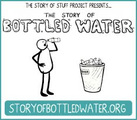
The Story of Bottled Water, released March 22, 2010 on storyofbottledwater.org, employs the Story of Stuff style to tell the story of manufactured demand—how you get Americans to buy more than half a billion bottles of water every week when it already flows from the tap. Over seven minutes, the film explores the bottled water industry’s attacks on tap water and its use of seductive, environmental-themed advertising to cover up the mountains of plastic waste it produces. The film concludes with a call to ‘take back the tap,’ not only by making a personal commitment to avoid bottled water, but by supporting investments in clean, available tap water for all.Check it out: http://storyofstuff.org/bottledwater/
Debbie Richards
.
Blog
.
<span class='date ' tip=''><i class='icon-time'></i> Jul 20, 2015 09:23am</span>
|
|
Very possibly you have heard of Minecraft, or have children who are passionate about it! Search Youtube with "Minecraft" you will get about 84,000,000 results. Minecraft is a sandbox game similar to Lego that allows the user to create a world using blocks, which means it can be shaped or modified to almost any purpose the user... Read More ›
Classroom Aid
.
Blog
.
<span class='date ' tip=''><i class='icon-time'></i> Jul 20, 2015 09:23am</span>
|
|
Eliademy got it’s usual portion of improvements Now you can be guru, sensei or anybody else on your course by customizing your title on Profile page. Course progress is always calculated correctly, even if you delete and add lots of tasks … Continue reading →
Eliademy
.
Blog
.
<span class='date ' tip=''><i class='icon-time'></i> Jul 20, 2015 09:23am</span>
|
|
A series of posts has recently nudged my interest in language and thinking. George Siemens, in his short post Tool making and language, drew our attention to Edmund Blair Bolles' post, The Idea of Language.In it, Bolles posited that "the ingredients of speaking and toolmaking are similar. Both require a brain capable of complex imitation and a community that wants to share information. Toolmaking also requires hands capable of shaping tools, while speech requires a throat capable of vocalization."Different than chimpsLike the capability of making tools, the ability to use speech is an acquisition most humans own from birth. Peter Turney, in his post Meditation, Language, and Evolution, broached the idea that meditation "seems to involve stopping or altering the internal monologue that usually fills our consciousness." He posited that "this constant flow of language, is the main thing that distinguishes us from our nearest living relatives, the chimps."Peter thinks of the "human mind metaphorically as a chimp mind with language processing bolted on top." But in the evolutionary history of humans, there must have been a time when language was a lesser part of our thinking and communicating. Even without language, our ancestors still had to think.In order to think about complicated or complex ideas, humans today find a need to have the vocabulary of these in order to think about them and relate to one another. I believe that our ancestors must have been experts at thinking abstractly. They would not have had a ready vocabulary to help them with their thinking. Think vocabHigher order thinking skills need vocabulary. But our ancestors, at the evolutionary stage I refer to, would not have had that vocabulary, nor even perhaps the language ability, but they still had to think.Trying to think without vocabulary is difficult to do. But in a creative artistic pursuit, such as in music, or fine art, or even in poetry when thinking on the lines of J K Baxter’s matrix of a poem - not the words and form - the mind thinks abstractly and is facile in that mode. Language gets in the way of this facile thinking.Many who are adept at this mode of thinking simply curtail the use of vocabulary. What Peter refers to as ‘language processing’ is simply shut down. He sees advantages to "moderating the language layer" and suggests that "humans are in the middle of an ongoing evolutionary process; that language has not yet been fully integrated with our chimp cores."Language may obstructI believe that language can get in the way of some modes of abstract thinking. Even the most highly skilled in the use of language have complained about the words getting in the way of what they wanted to express. William Wordsworth did and many poets have met this same impediment. Chicken-and-eggish though it may seem, it is understandable if you ascribe to the idea that words and language actually limit, rather than extend, some if not all forms of creative thinking.Music extemporisation is a mode of thinking I’m familiar with. It is not unlike meditating. It has a similar calming and relaxing effect that is also prolonged, bringing about a feeling of at-one-ness most often met in playing jazz music, a genre based on extemporisation.It’s curious that musicians who are site-readers and who are skilled in the notations and language of music, can often find it inordinately difficult to extemporise. I cite an example of this in Yehudi Menuhin, who had to admit that he could not improvise while he was dueting with Stephane Grappelli. That mode of thinking was beyond him, despite his undoubted superb skill with the violin.
Ken Allan
.
Blog
.
<span class='date ' tip=''><i class='icon-time'></i> Jul 20, 2015 09:22am</span>
|
|
TalkingVillageManagement is a free community allowing managers to learn from each other. Youcan join for free and post any content related to management education. Have aproblem to solve? Just ask the community. Do you have a solution or an idea?Just post it for everyone to see! Check it out: http://mgmt.talkingvillage.com or http://www.youtube.com/watch?v=Qu0NE8UsUqI
Debbie Richards
.
Blog
.
<span class='date ' tip=''><i class='icon-time'></i> Jul 20, 2015 09:22am</span>
|
|
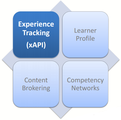
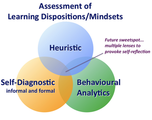
When we start exploring Experience API, xAPI, one of our interest is self-reporting. We talked about the reason in this post "Tell Your Own Learning Story through #xAPI". Of course this topic is very controversy. But the basic idea is xAPI data can form a great feedback to learners and help learners improve their learning... Read More ›
Classroom Aid
.
Blog
.
<span class='date ' tip=''><i class='icon-time'></i> Jul 20, 2015 09:22am</span>
|
|
E-learning is becoming a popular solution for internal training in corporations. It saves time, money and encourages learning together. As a manager you might be asking: How do I create an e-learning strategy? What should I take into account? We … Continue reading →
Eliademy
.
Blog
.
<span class='date ' tip=''><i class='icon-time'></i> Jul 20, 2015 09:22am</span>
|