Blogs
|
Get a free ebook copy of the book written by Andrea White (former Houston mayor Bill White's wife).WINDOWS ON THE WORLD is science fiction set in a post-apocalyptic world in which an orphan girl, Shama Katooee, is summoned to an elite military academy in order to travel back in time to New York City on September 11, 2001, to save the future. http://www.namelos.com/blog.php
Debbie Richards
.
Blog
.
<span class='date ' tip=''><i class='icon-time'></i> Jul 20, 2015 09:21am</span>
|
|
This keeps happening to me. My RSS Reader gets filled up in no time so that I have hundreds of unread posts. I have to have a read-in to clear them all. It’s not as if I don’t read posts, but it just keeps happening if I miss a day or so. I find it a pain to catch up.Part of my problem is that I have an eclectic taste for topics - just check out my index and you’ll see what I write about.500 blogs a day!Just over a year ago I read about Kevin Hodgson and his amazing use of the RSS Reader - skimming 500 blogs a day. I even posted about it! At the time, I thought that this was something I might aspire to.Not any more. I have 156 subscriptions in my reader at the moment.Over the year I’ve been blogging, many bloggers have posted with disdain about their RSS Reader getting clogged up with unread posts. It’s often because they’ve been busy with a project, or been on vacation for a while. I’ve even been daft enough to try to give advice to some who may have requested it - but I was sticking my neck out - I’m certainly no expert at this. Here’s some of the things I (tried to) do:Try to get realI just get real and cull. But where to start is always the difficult decision. I recall Sue Waters commenting on how often a blogger should post. She wasn’t so much giving advice on the frequency of posting, more reporting on what she’d learnt about teachers and what they preferred when it came to a blogger’s rate of output - all useful information. Sue spoke of "readers in the edublogger community who unsubscribe if a blogger posts too frequently".She made me think immediately of a few bloggers whose sites I’d already subscribed to and who thump out more posts in a day than I could possibly publish in a week! No names mentioned here, but some of these sites are owned by ace bloggers. Their stuff is worthwhile reading, and I just do not want to remove subscriptions to their sites.I’m always reluctant to cull blogs just because they happen to be on the list and haven’t posted in ages. Providing their stuff is good, I don’t mind the subscriptions staying where they are - no problem.Syndicate sites I subscribe to a number of syndicate sites and I also subscribe to the contributing sites. I could unsubscribe these individual sites, but I often find the individual subscriptions useful. Anyway, they are really just nuisance value, for if I’ve read the posts from one subscription it’s easy to mark as read on the other.So what do I do? Develop some whiz routine for culling subscriptions? Ignore the counter on the RSS Reader and continue reading as normal?What do you do to keep the subscriptions in your RSS under wraps?
Ken Allan
.
Blog
.
<span class='date ' tip=''><i class='icon-time'></i> Jul 20, 2015 09:21am</span>
|
|
Source: BestComputerScienceSchools.net On the original Star Trek TV series from the 1960s, they had their fictional replicator technology that materialized food, drink and non-edible objects. Well…now 3D printing is turning fiction into fact. There’s even a 3D printer by MakerBot Industries called the Replicator. Okay, we’re not quite at the Star Trek level yet, but... Read More ›
Classroom Aid
.
Blog
.
<span class='date ' tip=''><i class='icon-time'></i> Jul 20, 2015 09:21am</span>
|
|
You may have noticed that our forums have a fresh new look. This is just the beginning. We’ll be releasing major updates with you through August and September, as we continue to make the Eliademy experience the best we possibly … Continue reading →
Eliademy
.
Blog
.
<span class='date ' tip=''><i class='icon-time'></i> Jul 20, 2015 09:20am</span>
|
|
Once upon a time, I worked at a small company. Because I knew the business and had helped design our software package, and because I was pretty good in front of a crowd, I ended up doing the training. One thing led to another and a couple of years later, I got hired at a small multi-media production company that developed corporate training programs delivered on CD ROMs. My new job title: "instructional designer." I’d never even heard the term, but here I was—off to the races—in what’s turned into a rather healthy career in elearning. 16 years later I’m still at it, designing elearning programs for the (mostly) corporate market. It’s what I do - and, hopefully, what I do well. But I got here pretty much by accident.What about you? How did you find your way into this role? How did you end up designing elearning programs? Is this what you wanted to be when you grew up?Me? I had visions of becoming a high school English teacher or a writer of fine American novels. And while elearning design isn’t all that, it’s sometimes a whole lot more. In my role, I teach, I write, I schmooze, I share, I design, I create, and I learn.Because although I’m here completely by accident, I’ve tried to invest myself in this business with passion and spirit. I walked into this field not knowing how to spell instructional design. And while I’ve never taken a formal class or gotten a fancy graduate degree in instructional design, I have spent a LOT of time learning the basics and honing my craft. Maybe it’s some deep rooted inferiority complex, but my desire is to do my job to the best of my abilities.Here are three things I regularly do to learn more about this profession and keep my passion for what I do at a gentle boil:Read, read, readI get geeky and read instructional design textbooks. I learn about learning. I read up on visual design and design in general. I read books about business and consulting. And I also read novels and poetry and non-industry stuff to make sure I’m continuing to fill my creative cup. Over the years I’ve created a reading list for Instructional Designers. What about you? Are you reading about this stuff in your spare time? What books or resources have you learned the most from?Conferences I speak at a lot of conferences. As a speaker, I need to know my stuff, otherwise the crowd starts throwing tomatoes at me. Speaking keeps me on my game. And while I’m at these conferences, I get to go learn myself. Good stuff. And not just at sessions, but while connecting with peers and colleagues over coffee or late night karaoke. Elearning people tend to be pretty passionate. Find your people and learn from them!ASTD’s TechKnowledge (coming up January 30-February 1, 2013 in San Jose) is a great place to learn more about elearning and connect with other learning geeks. Are you going? If it’s not in your plan yet, make it happen! Speaking proposals are being accepted until June 10. Make this be your inaugural year! http://old.astd.org/content/conferences/techknowledge/RFPtk/CommunitySpeaking of people, there’s a lot to learn from each other even when we’re not in the same room together. When I was first getting my ID passion on, it was all about the blogging community and man-oh-man did I connect to a lot of great people through blogging. It’s been a great place to document and process my own learning journey, and a fabulous way to connect with other elearning professionals.These days, a lot of the community activity is on Twitter, where you can be up close and personal with great learning minds like Jane Bozarth (@janebozarth), Clark Quinn (@quinnovator) and Karl Kapp (@kkapp). For blogs of interest, be sure to check out the eLearning Learning blog feed aggregator (http://www.eLearninglearning.com/). Jane Hart’s lists tweeters in the learning and development space. (http://c4lpt.co.uk/social-learning-handbook/workplace-learning-professionals-who-blog-andor-tweet/).Who do you learn from? Do you have a mentor you can bounce ideas off of or who can gently steer you into new areas of learning? Who are you connecting with and learning from online?What’s in your personal learning plan?So what’s your game plan for getting better at what you do? Do you take classes? Go to free online webinars? Write books? Look at lots and lots of elearning programs for inspiration? What helps you create and sustain passion for this work? Would love to hear your ideas and inspirations in the comments here—and/or find me on Twitter! @cammybean. -------------------Cammy Bean is the VP of Learning Design for Kineo US (www.kineo.com) and has been accidentally doing elearning since the mid-90s. A frequent conference speaker and active blogger, Cammy served as the ASTD TK12 Planning Committee Chairperson and will be a featured speaker at this year’s ASTD LearnNow conferences in Boston (July 25-26). You can find Cammy’s blog at http://cammybean.kineo.com/.
The Learning Circuits Blog
.
Blog
.
<span class='date ' tip=''><i class='icon-time'></i> Jul 20, 2015 09:20am</span>
|
|
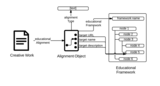
The primary purpose of the Learning Resource Metadata Initiative (LRMI) is supporting end-user search and discovery of educational resources. The focus is on human discovery using search engines, not machine discovery. The project will create a metadata extension that builds on the work of Schema.org, the recently-announced Bing/Google/Yahoo! project to develop and encourage use of metadata vocabularies that... Read More ›
Classroom Aid
.
Blog
.
<span class='date ' tip=''><i class='icon-time'></i> Jul 20, 2015 09:20am</span>
|
|
In recent months, there has been discussion in the blogosphere over the attributes and cognitive powers of the brain. This month, Clive Shepherd has completed a splendid series of posts on John Medina’s Brain Rules, documenting clearly his own interpretations of the book.I have not yet read Brain Rules, but I’m grateful to Clive for his explicit summaries and interpretations. Whichever way you look on it, plainly, the brain is a wonderful organ.My late comment on Clive’s post speculates that the aspects he analysed and reported from Medina’s book did not include an important feature of the brain, that being it’s power to believe. In this post I put forward some thoughts around the idea that the faculty of presumption, in the contexts of observation, perception and reason, is a feature of the brain that can shape the way we learn and also affect the way we think.What is belief?Beliefs are formed through our experiences from the moment of birth. Wikipedia describes ‘belief’ as, "the psychological state in which an individual holds a proposition or premise to be true." It further explains that "mainstream psychology and related disciplines have traditionally treated belief as if it were the simplest form of mental representation and therefore one of the building blocks of conscious thought".Philosophies to do with belief are complex and varied. Some might even argue that belief is one of the cornerstones of philosophy. Many of the features that are associated with belief can also be attributed to, or have close counterparts in the strange and capricious emotion of trust.AuthorityThe weight of authority can be a useful lever in forging belief but it can also be flawed. For as much as it may be argued that authority can be an influencing factor in learning, it is the action of the brain of the learner that permits an authoritative influence to be successful or otherwise.History is strewn with examples of recalcitrant learners who earned the displeasure of their authoritative teachers. Yet authority has also fashioned and propagated belief, and learning through that belief, in the intelligent minds of many scholars. This has gone on for hundreds of years - some of it quite fallacious.Misconception and erroneous beliefTeachers hope for learner minds that are pliable and mobile. In many disciplines, tutors select their students from young children, it being well known that suppleness of mind prevails in the young.As a teacher, I’ve often been guilty of using a strategy that I call unteaching. Execution of this mode of persuasion entails dismantling possible misconception and seemingly erroneous belief in the mind of the learner.A way to achieving this is brought about by revealing tactfully to the learner those aspects of their knowledge or beliefs that may be wanting or mistaken in some important detail. Once the major parts of the assumed learning obstacles are removed, the remnants are eradicated through the application of appropriate pedagogy.Such action is nevertheless presumptive on the part of the teacher:that the original belief in the mind of the learner is flawed:that belief in the mind of the teacher is legitimate and authentic.The presumption can take on an authoritative tone. Some look on it as imposed dogma rather than useful and principled guidance.Whatever the interpretation, it’s the belief formed and held in the mind of the learner that has a powerful bearing on what is learnt and how that learning develops. This applies as much to a young child as to an experienced and mature employee in the workplace. The part that confidence plays in supporting belief is useful to learner and teacher.Belief directs learningIf the learner’s belief is congruent to what's being taught, the teacher may have no problem. But if that belief is not aligned to what is taught a number of scenarios can arise:- revelation by the learner in a new understanding- active discussion about aspects of the learner's belief(related to what's being learned)- enlightenment of both learner and teacher through discussion(sometimes the teacher learns more than the learner)- no significant change in what the learner knows- hardening of the learner's original belief.Human perceptual psychology - believing is seeingClive reviews Medina’s Rule 10: Vision trumps all other senses.He quotes, "We do not see with our eyes. We see with our brains.We actually experience our visual environment as a fully analysed opinion about what the brain thinks is out there."In short, our opinion of what exists is what we believe we see.It relies on expectation, related to processes that occur in the higher levels of the brain. The perceptual experience initiated by what is observed is resolved by a complex series of processes in the peripheral and central nervous system.The final interpretation is of a meaningful representation of observed events. Otherwise referred to as cognition, it involves memory and schema - a complex network of abstract mental structures that represent an understanding of what is perceived to exist.Many so-called optical illusions draw on this aspect of perception. What is seen, interpreted and recognised through perception is believed.The Ames Trapezoid, for instance is such an illusion in 3 dimensions. Another, in 2 dimensions, is the Fraser spiral shown below.For as much as our perception tells us that we see a spiral, it takes a careful tracing of the loops with a finger to prove that the diagram is really a series of concentric circles - no spiral exists.Even then, we may not be convinced, and perhaps try the finger tracing test several times before conceding that what we think we see is just an illusion. Test it for yourself.What do you think about belief as an aspect of the human brain?What part does it play in learning?Do you go through life testing your own beliefs?Or do you accept the authoritative viewpoint of others?
Ken Allan
.
Blog
.
<span class='date ' tip=''><i class='icon-time'></i> Jul 20, 2015 09:19am</span>
|
|
Today we would like to introduce you to a very special Eliademy teacher, Ms. Aubrey Esmeralda. Aubrey is a certified English and Filipino/Tagalog teacher from the Province of Antique in Philippines. A teacher of 14 years of experience, Aubrey has … Continue reading →
Eliademy
.
Blog
.
<span class='date ' tip=''><i class='icon-time'></i> Jul 20, 2015 09:19am</span>
|
|
Receive a constant stream of free business and technology related resources such as eBooks, white papers, downloads, magazines, and analyst reports. All are absolutely free!Check it out: http://www.tradepub.com/?p=main&page=mobile
Debbie Richards
.
Blog
.
<span class='date ' tip=''><i class='icon-time'></i> Jul 20, 2015 09:19am</span>
|
|
I met for coffee this past week with someone who’s looking to break into the elearning industry. She wanted to know where she should be looking and what the hot topics out there are. I was giving her my 12,000 foot lay of the land, this is what I see going on kind of a thing. It was so interesting to step by and take stock of what’s happening. Here’s where I see elearning going down these days:Corporate Training and Performance ImprovementInternal L&D departments and vendors designing and developing online learning programs for use within corporate organizations. This is 90% of what I do and I imagine the case for a lot of you people reading this post.Leadership Training for Corporate:You look at the ASTD ICE expo list and it’s filled with loads of leadership consulting and training companies. The Franklin Coveys, Ken Blanchards, etc. This is it’s whole behemoth sector in the market - it includes a lot of classroom training and increasingly elearning programs as part of those solutions.K-12:Lots of elearning happening in the school sector. Although, I haven’t seen much of great quality. My son has to do some of his math homework online: really basic games. He says, "I’m not learning, I’m just getting bored!" Hopefully there’s a lot more than that going on. Higher Ed:Want a master’s degree or a BA? Chances are these days you can take some, if not all of your degree program, online. And of course there’s the latest MIT/Harvard online education initiative EdX. eLearning design for semester long courses is a different beast than your corporate training elearning design where you’re creating a 30 minute course on the latest policy. I suspect making a jump from higher ed to the corporate world and vice versa would be a big change -- and quite possibly a completely different skill set.For Profit:We’re starting to see the for-profit universities offering their curriculums up to the corporate market. At Corporate University Week, I heard the story of the Verizon degree program for store managers being offered in partnership with Bellevue University (here’s my blog post on the Verizon/Bellevue story from last November). The Consumer Market:Just bought a fancy new camera? Maybe that company has some fancy elearning to help you learn how to use it. More and more we’ll be seeing companies striving to increase their market share by creating value added programs like online learning to help people use their products better. Because the better pictures you take with that fancy camera, the greater your loyalty AND the more you’ll get out there and evangelize about that camera. Health Care/Mental Health:I think this is a niche area that’s only going to continue to grow. It’s getting specific resources, information and strategies out to the general public - either through an insurance company as part of their overall benefits offerings, or as programs individuals can purchase online with a credit card. I’ve been involved in two such programs in the past two years and I think it’s a really interesting space. Want to help people and make a difference in the lives of individuals? Start poking around here.I just pulled this list out of my head. I’m sure I’ve missed a lot of big buckets and welcome your additions in the comments.The bottom line is that elearning/online interactive ‘stuff’ is increasingly accepted. Who hasn’t searched on YouTube to figure out how to stop a leaking toilet? It’s just what we do. And while more and more of the content out there is user generated (power to the people!), organizations are paying attention.Organizations in all sectors are figuring out how to create a valuable presence online that will meet the needs of their audience (consumers, students, employees, human beings). Elearning is happening everywhere - even if that’s not what it’s called.If you’re trying to break into "the field" - just remember that it’s a huge field. Figure out where you want to shine and make your difference.
The Learning Circuits Blog
.
Blog
.
<span class='date ' tip=''><i class='icon-time'></i> Jul 20, 2015 09:19am</span>
|