Blogs
|
"Learning Analytics is the measurement, collection, analysis and reporting of data about learners and their contexts, for purposes of understanding and optimizing learning and the environments in which it occurs." — from SoLAR (Society for Learning Analytics Research, www.solaresearch.org) Open Learning Analytics, an integrated & modularized platform, was proposed by SoLAR to build an open platform... Read More ›
Classroom Aid
.
Blog
.
<span class='date ' tip=''><i class='icon-time'></i> Jul 20, 2015 09:19am</span>
|
|
Without frugality, none can be rich,and with it very few would be poor.- Samuel Johnson -Last week the New Zealand Lotteries Commission handed out over $36,000,000 to the winning ticket held by a syndicate of four people. Before the draw, there was speculation in discussion on radio and television, on the Internet and elsewhere as to what the winners might do with the money during the rest of their lives.Evidence on the life and history of past multimillion winners suggested that an amazingly large proportion of them managed to spend the lot within less than two years. The adage, "penny wise, pound foolish", seems to ring true.Frugal return?I was brought up in the 50s and 60s. In those years I acquired education enough to understand what was meant by the ‘use-once-throw-away society’. I was a bit of a handyman in my teens. My mother called me Tinkerer. I took apart broken appliances that people had discarded, primarily to see how they’d worked and to establish why they didn’t.If I managed to fix something, and curiously that happened on occasion, I usually gave it back to its previous owner. There were two reasons for this. One was that my mother disliked me hoarding ‘stuff’. The other was that often I got some small reward for my effort. I still possess an oddly hand-painted vase given to me 50 years ago by a grateful neighbour whose clock I'd mended.Planned obsolescence?There came a time when fixing things was more difficult. Clusters of individual components of manufactured goods were gradually replaced with sealed ‘black boxes’ hard to dismantle, difficult to repair and even more challenging to reassemble. They were key to the functionality of the contraption to which they belonged. Apparently they were selected to malfunction one after the other, with perhaps only a few weeks between each carefully planned event.Replacing a ‘black box’ was unbelievably costly. Most faulty ‘black boxes’ ended up in the landfill still intimately connected to their associated appliances. When considering repair, buying a brand-new version of the appliance was often an attractive option in view of the expense-free term of use guaranteed to the owner.As more of the componentry in gadgets became modularised, the day-to-day maintenance of the material world I lived in continued to become costlier. There came a need for greater incomes at a time of plenty, when meeting that need was moderately easy to achieve.Environment of plenty?Variety became a feature of the available range of manufactured goods. It was essential to meet the demand of every whim of fashion, style, functionality, design and cost. Just take a look at any stretch of motorway during the rush hour. Notice the plethora of brand, shape, size and colour of cars, burning their slow petroleum trails to their destinations.Society has inherited a legacy - a way of life that’s going to be difficult to maintain. And there’s more. The discarded products of the bygone boom-times are already impinging on the environment of plenty, so the experts say. Embedded in that legacy-way-of-life are philosophies and cultures that are seemingly reflected in what we see on the Internet.Where did efficiency go?I tinkered around with computers in the early 80s. One of the golden rules I learnt while writing computer programs in basic, was to do with brevity and efficient use of code. A computer with a random access memory of 640 kilobytes was a luxurious acquisition in those days - and it wasn’t cheap.Today I upload optimised pix of about 4 Mb each from my digital camera, to an app in the clouds that I didn’t pay for, at least not directly.We have hand-held devices that boast hundreds of gigabyte memory capacity accessed with a stroke of a finger. We’re told of the coming Graphene chip that promises 100 to 1000 times the speed and capacity of present-day microchips.The last time I scoured cyberspace for data on the abundance of (free) web2.0 applications, I gathered handfuls of sites. Each of them boasted several dozen to a hundred links to web2.0 applications. Most recently, in my fevered attempt to find a single alternative to PhotoShop, I found dozens of free download offers for applications that claimed most if not all of the functionality I needed.Time of plenty?People everywhere celebrate a time of plenty. Most of us find comfort in abundance. In particular, we feel that limited choice is too restrictive,a way of thinking that, for some, has been tuned by MS apps providing numerous different routes and methods to do exactly the same thing. The principle seems to be, ‘why offer a hundred ways to do something when you can offer it in a hundred and one?’I wonder about this aspect of the culture that exists in western society. We know that we cannot continue to pursue the abundance that’s invariably presented, recognised, consumed and discarded. We know that continuing to do this returns a series of unwelcome consequences, some of which are perhaps yet to be revealed.Maybe we should give more thought to frugality?A Green Pen Society contributionrelated posts - >> ( 2 ) ( 1 )
Ken Allan
.
Blog
.
<span class='date ' tip=''><i class='icon-time'></i> Jul 20, 2015 09:19am</span>
|
|
When we think of online courses, oftentimes we think of videos, text, slideshow, quizzes and all the other elements that come with an traditional, educational offering. But, what if you don’t have the time to sit down and fix your … Continue reading →
Eliademy
.
Blog
.
<span class='date ' tip=''><i class='icon-time'></i> Jul 20, 2015 09:19am</span>
|
|
"The U.S. Department of Health and Human Services (HHS) Office of the Assistant Secretary for Health released Partnering to Heal: Teaming Up Against Healthcare-Associated Infections, an interactive computer-based video-simulation training program. Healthcare-associated infections harm many patients, causing injury and raising costs. On average, 1 in 3 patients admitted to a hospital suffers a medical error or adverse event and at any given time about 1 in every 20 patients is affected by an infection related to hospital care. On average, 1 in 7 Medicare beneficiaries is harmed in the course of care, costing the government an estimated $4.4 billion every year. To help address this public health challenge, the HHS Office of the Assistant Secretary for Health developed Partnering to Heal. This training program permits viewers to "become" one of five characters who can make decisions that impact health risks, and then view the results of those decisions and learn from the outcomes. It is designed to be used by students in the health professions, early-career clinicians, and other healthcare personnel, as well as patients and families to help prevent infections acquired in hospitals and other healthcare settings. Available online at no cost, Partnering to Heal promotes a team-based approach to reducing preventable infections and deaths in the United States."Check it out: http://www.hhs.gov/ash/initiatives/hai/training/
Debbie Richards
.
Blog
.
<span class='date ' tip=''><i class='icon-time'></i> Jul 20, 2015 09:19am</span>
|
|
Last winter, I was on a cub scout camping trip with my son. Me and a bunch of dads. The inevitable "what do you do for a living conversation" came up over pancakes. I hadn’t gotten too far into the "I design corporate training programs that people take online" description before one of the dads started hissing at me. Literally. He formed his fingers into a cross and said, "You’re the CBT Lady!" Visions of a hair-netted lunch lady serving up sloppy joes. Is that what I am?He went on to describe the true horrors he had suffered while forced to complete hour after endless hour of boring, locked down elearning programs: "They make us sit through this long audio and you can’t click next until it’s over and then you get to the end of the quiz and you have to take all twenty questions over again because you got one question wrong!"I attempted to defend myself and our profession. "We try to do it better than that! That’s not what we’re about!" I protested. My words fell on deaf ears. This man had suffered and would hear nothing more.Weeks later he introduced me to his wife and I got the exact same treatment. She works in the pharmaceutical industry and had similar tales of woe and suffering at the hands of elearning. "Honey, she’s the CBT Lady!"The point is, this is what a lot of people think of this profession and the work that elearning designers and developers put out there in the name of training. Is this what you want your name on? Is this how you want to be known? So before you go out and spend another minute planning your next learning initiative, go out and find out just how what you’re already doing is being perceived. Do you know how the people in your organization currently view your formal learning offerings? Is classroom training seen as punishment for poor performance or a careless slip of the tongue? Or is it a breezy day or two out of the office with free lunch? What about elearning? Is it a task to be endured while otherwise multitasking? Conduct surveys or get an informal feet-on-the-street view of what’s really happening. You may want to walk around and check out the kitchens or break rooms. Are the answers to the latest compliance elearning assessment posted on the fridge for all to share? The message here is that this elearning is just a box to tick rather than an activity with any actual value—or any connection to improving any one’s performance. Ask people what they think. If they’re really being honest, you might get responses that will take your breath away: "You’re the CBT Lady!" While you’re on this fact finding mission, find out what people really value in a learning experience and find out if your organization is providing that. If not, how? Ask people how they like to learn on their own time. Ask people what you could offer them to help them do their jobs better.Find ways to provide support and tools that give people what they need and when they need it. Can you embed performance support tools and job aids into the work flow? Can you use social business tools to connect people directly to the experts in your organization or provide a platform for asking questions and sharing knowledge, information and best practices?Look at your data and see what you can uncover. I heard a story of an organization that developed an award winning elearning program with game-like features and goal-based scenarios. They got lots of hits and uptake from their European and Asian audiences—an unexpected outcome—while the intended American audience stayed away in droves. Why was that? And then why was this organization now designing a very similar program for their American audience? Do we ever learn?I’m raising questions here and not providing a lot of solutions, I realize. But the point is to live the questions first. Find out what people really think of all of the effort you and your team create. Then ask the question, "is that the kind of work you want to stand by?" Stop being the CBT Lady, I beg you. And then let’s all go out and find better ways together.
The Learning Circuits Blog
.
Blog
.
<span class='date ' tip=''><i class='icon-time'></i> Jul 20, 2015 09:19am</span>
|
|
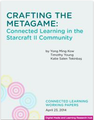
StarCraft, a real-time strategy game developed by Blizzard Entertainment, has been labeled by many of its participants as the chess of the twenty-first century. A report published by the Digital Media and Learning Research Hub has interesting findings about this addictive game. By examining the StarCraft II community from both player and developer perspectives, the understanding of the... Read More ›
Classroom Aid
.
Blog
.
<span class='date ' tip=''><i class='icon-time'></i> Jul 20, 2015 09:19am</span>
|
|
There are all kinds of emergencies out there that we can prepare for. Take a zombie apocalypse for example. That’s right, I said z-o-m-b-i-e a-p-o-c-a-l-y-p-s-e. You may laugh now, but when it happens you’ll be happy you read this, and hey, maybe you’ll even learn a thing or two about how to prepare for a real emergency.To learn more about what CDC does to prepare for and respond to emergencies of all kinds, visit:http://emergency.cdc.gov/cdc/orgs_progs.aspTo learn more about how you can prepare for and stay safe during an emergency visit:http://emergency.cdc.gov/
Debbie Richards
.
Blog
.
<span class='date ' tip=''><i class='icon-time'></i> Jul 20, 2015 09:19am</span>
|
|
Second part of our summer update is a brand new courses calendar for educators and students that will help to keep track of your busy schedule during new study year. Performance and Accessibility Improvements It is completely rebuild from ground up … Continue reading →
Eliademy
.
Blog
.
<span class='date ' tip=''><i class='icon-time'></i> Jul 20, 2015 09:19am</span>
|
|
photo courtesy Jack AllanPaul C's GPS theme for July is simple: "reflect upon a time when nature provided you with comfort, beauty, or inspiration."In the centre of North Island, New Zealand, rests one of the world’s largest extinct volcanoes. About 26,500 years ago, the volcano erupted, ejecting over 1,170 cubic kilometres of material.Over time, a series of smaller eruptions occurred, including the Hatepe eruption in the year 180. It was the most violent eruption of any volcano in recorded history. What remained after that cataclysm was a caldera that filled with water to become what we now know as Lake Taupo.I visited Lake Taupo with my family in April 2004. We were privileged to stay at my wife’s aunt’s cottage on the northern shore of the lake, literally a stone’s throw from the waterside.One afternoon, while returning from a walk along the lake shore,I scribbled a dozen or so lines of verse. Here, after some minor tinkering, is the essence of what I wrote:TaupoThe land was green once more before the lakeWas deep, its contours filled too well to markA place by: layer upon layer of ash-cake.No bird looped near the waves that scoured the darkAnd sintered shore-line. Fire had signed its willAnd held its peace. And but for some releaseAt vents and fumaroles, the land was still,With Earth and Sky well set to take their ease.A crystal lake in a crystalline setting;A billion waves; a billion inheritors.No way is it a seeing and forgetting;Truly, it’s a beauty fit for royalty.Its enriched and well privileged visitorsStand in awe of Taupo, and bow in fealty!video and photos courtesy Jack AllanA Green Pen Society contribution
Ken Allan
.
Blog
.
<span class='date ' tip=''><i class='icon-time'></i> Jul 20, 2015 09:19am</span>
|
|
(Please bear with me. This has been percolating for a bit, and i'm airing it on a larger stage than I had originally intended.)I have been a few things in my life, but I really, really like being an instructional designer. I love the idea and practice of helping people learn better - to do better. This is pretty fortunate, as people are willing to pay me to make this happen. However, I've come across a problem with my feelings about instructional design: I find myself in quiet moments thinking that instructional design is the domain of a 'certain kind of person.'If you're reading this, I think you know who I'm talking about: the autodidact's handmaiden, the unapologetically pedantic, the learning architect. Those who love to to think about learning knowledge transfer performance support so much that they put books like Design for How People Learn and 100 Things Every Designer Needs to Know About People on their pleasure reading lists. Those who get into internet arguments about Alton Brown's instructional method. Those who will cut you at the mention of 'learning styles'. You know, our kind of people.I love our kind of people. I love meeting them at conferences and online. Perhaps more than anything, I love meeting novice instructional designers who seem to have more sense than I did at their stage in the game. The idea that more of us can be made intentionally (rather than "accidentally", even if it seems that's how most of us got here) is really appealing.Which leads me back to my problem. In the last few years, the responsibility for helping budding intentional designers has crept up on me - an direct report here, a correspondence mentorship there. Pretty soon I really started thinking about what it means to have an ordered introduction to our industry. I also quickly found out that maybe not everyone who is serious about learning knowledge transfer performance support name drops Vygotsky. Maybe they just want to get things done and not meditate so much on the deep roots. (Also, it's possible that they just don't care that much about Alton Brown.) I'm learning that intentional designers like to worry about sensible things, like what tools they should learn to use and what learning theories are most applicable, or how they should really feel about ADDIE. This is bemusing for someone who didn't even know the term instructional design until after he had created two elearning courses for actual money. I started to think that maybe my real problem is that my idea of what an instructional designer should want might not have a lot to do with what an instructional designer has to do.So it is with this mental about-face that I started listening more closely to some voices who have been talking about a particular problem related to the creation of our kind of people - we don't have good ways to talk about what it is that we're supposed to be doing. Our kind of people are they way they are because they had to figure it all out and create tools and guides and strategies from scratch without the benefit of routines. The fact that they relished doing so...well, that's how you knew. But in the service of being intentional, maybe we can say that there's simply more romance than virtue in reinventing the wheel. This is where people like Susan Devlin and Julie Dirksen and Steve Flowers are advocating the most sensible way for us to help intentional designers: to put our experience and solutions into patterns of instructional design so that it's less of an educated guess as to which interventions to employ. Maybe we I need to spend more time leaning the ladder against the wall to scale the problem than worrying about making the kinds of people who would build their own ladders.I'm really excited about the idea of helping to create an instructional design pattern library. I think you should be, too. How do we get started? [Steve and Julie, this is your cue :) ]Craig Wiggins has been helping people create and manage learning experiences for the last 10 years. He is the eLearning Instructional Design Strategist for the Corporate Executive Board's Corporate Leadership Council, where he manages the creation of meaningful distance learning and performance solutions. Wiggins holds a B.A. in anthropology and an M.Ed. in curriculum development, and spends a lot of time thinking about how to sneak usability, accessibility, and proper task analysis into the mix. In his natural habitat, he is usually storyboarding on wall-sized whiteboards or pontificating on Google+.
The Learning Circuits Blog
.
Blog
.
<span class='date ' tip=''><i class='icon-time'></i> Jul 20, 2015 09:18am</span>
|