Blogs
|
Um vídeo que relata o lançamento da NeXT, de Steve Jobs, a empresa que criou após sair da Apple em 1984. O vídeo (de meados/finais da década de 198) mostra alguns pormenores sobre o que esteve por trás do novo computador criado pela NeXT, desde o logótipo até às questões operacionais e dificuldades antes de lançar o produto no mercado.
O vídeo tem particular interesse pelo ênfase que Steve Jobs coloca no papel que a sua nova máquina poderá ter na educação dados o seu preço e capacidade de processamento ("We decided we want to start a company that had a lot to do with education"). Jobs foca em particular o papel que os NeXT poderão ter no desenvolvimento de simulações (simulated learning environments).
(o vídeo foi inicialmente partilhado aqui).
Education & eLearning Blog
.
Blog
.
<span class='date ' tip=''><i class='icon-time'></i> Jul 20, 2015 01:24pm</span>
|
|
Clowning Around is an action game. The objective of this game is to stack clowns on a unicycle one after the other and maintain balance till the performance is over. When the game begins there is one clown who is on the unicycle. The clowns take jumps one after the other and all that you need to do make sure that each clown sits on the shoulder of the subsequent clown and balance on the unicycle. All that you have to do is use the arrows buttons in your keyboard and move the unicycle and position it properly so that the clowns sit on each others shoulder.
I am not sure if you can play this game for a long time. When you play for the first time and for a short duration, it is very enjoyable.
Here is a visual of the game:
What I liked About The Game
The realistic setting
The animated clowns
The background music
I liked the use of a simple interactivity model and a fun theme and setting in this game. I also appreciate the graphic designers’ job in creating such realistic clowns. The actions of the clowns such as running, jumping, falling, sitting and cycling are just too realistic. I really find this game very creative and original
Enjoy this game now!
Please let me know your views too.
Rupa Rajagopalan
.
Blog
.
<span class='date ' tip=''><i class='icon-time'></i> Jul 20, 2015 01:22pm</span>
|
|
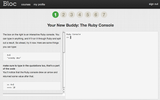
Têm surgido recentemente várias startups com projetos na área do ensino da programação de computadores que de alguma forma usam Gamification. Para além do codeacademy, centrado em Javascript e já referido aqui, acrescentam-se mais os seguintes:Bloc, centrado no ensino da linguagem Ruby. A plataforma apresenta um tutorial com exemplos e uma consola para o utilizador introduzir e testar esses exemplos. Estão previstas outras linguagens como Phyton ou Javascript.
Programr, uma plataforma que permite programar e executar programas on-line e em várias linguagens (Java, C#, C++, etc). A plataforma apresenta ainda pequenos desafios ("code challenges") e outras competições ("coding contests"). Estes desafios permitem que o utilizador vá acumulando pontos. Os projetos de programação desenvolvidos podem ser partilhados na plataforma.
Squad, um editor colaborativo on-line com suporte de várias linguagens.
Treehouse, uma plataforma on-line que desenvolve competências na área do web design, web development e desenvolvimento de apps para iOS (ou seja, aplicações para correrem em iPhones e iPads. Ao ultrapassar os desafios propostos o utilizador é premiado com badges.
Todos estes projetos aparentam ter um grande potencial pedagógico no ensino da programação, uma disciplina que está a entrar em declínio na geração dos "nativos digitais". Isso deve-se possivelmente ao facto de serem mais consumidores e produtores de trivialidades do que utilizadores capazes de tirar partido do que se pode fazer com toda a tecnologia que, usando um chavão, está cada vez mais ao alcance de um clique. Certamente que muitos dos atuais programadores seniores, quando se iniciaram na programação, gostariam de ter tido acesso a ferramentas como as que são apresentadas acima.
Education & eLearning Blog
.
Blog
.
<span class='date ' tip=''><i class='icon-time'></i> Jul 20, 2015 01:19pm</span>
|
|
Hello all,
As mentioned earlier there is going to be a meetup for Instructional Designers and anyone related to the e-learning industry tomorrow, April18th.
Location: Adayar Anand Bhavan, next to BP petrol pump, BTM layout, Bangalore
Bus Stop: BTM Water Tank
Time: 10:30 am
Entry: Free
Looking forward to meeting you all there.
regards
Rupa
Rupa Rajagopalan
.
Blog
.
<span class='date ' tip=''><i class='icon-time'></i> Jul 20, 2015 01:19pm</span>
|
|
The Instructional Designers Meetup that happened on April 18th was a huge success. We got together in Adayar Ananda Bhavan in BTM Layout, discussed and debated for over an hour.
We decided that we will conduct information rollout sessions, expert talks and webinars as part of the activities of the Instructional Designers Community.
Here is a picture from the Instructional Designers Meetup that happened on April 18th 2009.
Participants from left : Ram, Vijeesh, Dhiraj, Nilanjana, David, Hareesh , Rupa and Shameer.
On behalf of the Instructional Designers Community, I call out to all Instructional Designers and anyone related to the e-learning industry to join us.
Are you interested? What do you want to do?
You want to be a part of the Instructional Designers Community?
You have any suggestions or ideas on the rollout sessions?
You want to conduct a workshop or want to give a talk?
Please feel free to get in touch with me or leave your thoughts in the comments section.
Watch out this blog for more updates on the Instructional Designers Community.
Rupa Rajagopalan
.
Blog
.
<span class='date ' tip=''><i class='icon-time'></i> Jul 20, 2015 01:19pm</span>
|
|
by ruparajgo | Create your own Cartoon at www.toondoo.com
Recently one of my blog readers asked me a very interesting question:
Could you please elaborate on the questions/ information an ID should look for from the client/ the Project manager when he/she is the lone ID handling a project?
All of us are used to collaborative effort when it comes to creating an e-learning course. Typically in companies, you have senior Instructional Designers who gather requirements for the course and initiate work for junior Instructional Designers. When you collaborate you share ideas, you discuss things with fellow Instructional Designers, get opinions and improve.
However there are cases when you are the only Instructional Designer working independently on a project. In such a situation, what should you do? What are the things to keep in mind?
So let me try and list some tips on things that you need to pay attention to before you start work on an e-learning project, especially if you are the only Instructional Designer working on it.
Here goes the list:
Request a project briefing session
If you haven’t got a project briefing, request the Project Manager to give you one. Make sure you ask him about the client and his/her requirements. Try to understand what the Project Manager has in his his/her mind, especially what he/she is planning.
Do not agree with anything at the first instant. Request the Project Manager for some time. You might not be able to change anything. However never explicitly agree to anything without probing. Remember that you are going to do most of the work.
Also request the Project Manager to introduce you to the client.
Always start with the subject matter
Read the content given by the client. Internalize the information. When you read it, think in terms of using the content to teach someone. Take sometime to analyze and research the subject matter.
Only when you look at the content closely, you will get an idea about the amount and kind of work you have to do.
Ideally you must not rush into scheduling delivery dates before analyzing the content. However if the schedule is fixed, you will atleast know what amount of work you have to do within the deadline.
Make sure you understand the requirements of the target audience
Talk to the client and understand why he/she needs the course. Try to understand about the target audience. Ask the client if there is already training in place. If there is a training, then ask the client why the current training program is not working. If there is no training then ask the client why they want to have training for the subject.
It is very important to learn a lot about the target audience before you decide on the Instructional Strategy for the course. A good understanding about the target audience will help you choose the right kind of information and create appropriate Instructional Design for your e-learning course.
Build a rapport with the SME
Incase you have a SME for your e-learning course, make sure you build a good relationship with him/her. Do not expect the SME to give you all the information. Always research and try to find some answers. When you talk to the SME, you must assure him that you are also learning and trying to get a grip of the subject. This way you will get more support.
Always demand SME support. Incase the project demands you to be the SME, demand more time and think of ways to validate information.
Take time to fix the course outline and course flow
How you structure information is critical to an e-learning course. Even if you have structured content from the client, take time to study the way information has been structured. Think and analyze if the existing structure meets the learner requirements.
Always fix the course outline and course flow before you move on to designing the Instructional Strategy. However do not completely ignore the Instructional Strategy when you create the content outline. You should keep all aspects of Instructional Designing in your mind.
Make sure you validate the content outline and course flow with the client. Without approval do not proceed further.
Research and discuss while designing the Instructional Strategy
If you do not have any other Instructional Designer to talk to, the best thing you can do is research and find out what others are doing.
One other thing you can do is seek external help. Talk to your friends or mail people you think are experts and discuss your ideas. You can frame questions in such a way that it does not seem project specific.
Never ask anyone for a solution. Never reveal project details to people who are not involved in the project.
Educate other people in the team on the project
You might not have an Instructional Designer in your team. However you have other people like Graphic Designers, Programmers etc who are also working on the project.
Take some time to explain and discuss what you are actually doing. Involve the Graphic Designers and Programmers in every phase of elearning development.
Do not use technical language or jargons in case you get to know that you teammates have no clue about Instructional Designing. Create informal channels of communication. Yet be professional.
Keep the Project Manager in the loop
Always keep the Project Manager informed of the work you are doing. Do not wait for him to ask. Involve him in every meeting you have with the client. If the Project Manager is busy and cannot attend the meeting, make sure you give him the details later.
Do not try to deal with tough situations on your own. Make sure you take decisions with the Project Managers consent.
If something is not working raise an alarm. Get the Project Managers help. Never hide anything.
Create a prototype and do pilot testing
If you want to quickly check if you are on the right track, use a prototype to check if your idea works or not. A prototype can do a lot more good than written documents because it will give the client an idea about what the end product will look like.
If possible also do a pilot testing by giving the prototype to a group of people whose profile matches with your target audience.
You can improve and change a lot after pilot testing.
Well, I have just listed a handful of tips.
Please feel free to add more
Rupa Rajagopalan
.
Blog
.
<span class='date ' tip=''><i class='icon-time'></i> Jul 20, 2015 01:19pm</span>
|
|
A Vivo (sedeada em Londres) é uma plataforma on-line (Vivo Miles) que se pode considerar uma aplicação de gamification nas escolas. Esta plataforma gere um sistema de recompensas (a atribuição de Vivo's, "pontos" eletrónicos) no qual os professores podem premiar os seus alunos. Os pontos obtidos podem depois ser trocados por objetos físicos (desde telemóveis a bilhetes para o cinema) ou mesmo ser convertidos em donativos a instituições de caridade. Podem igualmente ser trocados por vouchers especiais que permitem, por exemplo, não ter de esperar na fila da cantina e ser imediatamente atendido.
A plataforma assenta num triângulo constituído pela escola, pelos alunos e pelos pais. A escola define as atividades que conferem pontos, a quantidade de pontos a atribuir a cada atividade e quais os itens que podem ser trocados por esses pontos. Os alunos, que possuem um cartão que regista os seus pontos para além da informação que está na plataforma, obtêm pontos por desenvolverem as atividades e demonstrarem os comportamentos que a escola decidiu recompensar. Os pais, através da plataforma podem consultar os pontos que os filhos obtêm e saber exatamente o que esses pontos estão a recompensar. Os pais poderão ainda, futuramente, a ligar a "mesada" que dão aos filhos a pontos Vivo.
Na interface da plataforma estão presentes diversas "mecânicas de jogos" como barras de progresso, leaderboards, etc.
A Vivo tem como objetivos motivar os alunos, facilitar aos professores a atribuição de recompensas assim como envolver e informar os pais. No entanto, do ponto de vista dos alunos, favorece sobretudo a motivação extrínseca, ou seja, o aluno pratica determinados comportamentos ou executa uma atividade motivado pela obtenção do prémio no final. Como já aqui foi referido, desenvolver a motivação extrínseca, embora tenha méritos, pode ter o efeito oposto no caso de alunos que estejam já naturalmente motivados para a tarefa que está a ser premiada. E o que acontecerá à motivação dos alunos, na ausência de prémios no caso da escola desistir da plataforma?
A componente social também parece estar ausente no Vivo. Aparentemente, não existe interação entre os alunos. Não é claro se um aluno pode ver os pontos obtidos por outro, em que atividade os conseguiu ou se é possível doar pontos aos colegas ou ainda obter pontos pela realização de uma tarefa em conjunto. Também, pela navegação no site não se percebe de que forma podem ser obtidos os pontos: apenas quando o aluno realiza a tarefa com sucesso ou se existe também a possibilidade de atribuir pontos pela tentativa de realizar a tarefa (procurando que o aluno, mesmo falhando, tenha incentivos para continuar a tentar). A este propósito ver o que foi publicado no post anterior. A participação dos pais afigura-se como passiva: apenas têm acesso a informação sobre o progresso dos filhos. A plataforma prevê a ligação à plataforma da "mesada" que os pais atribuem aos filhos mas não parecem existir outros tipos de incentivos sociais (p.e. algo equivalente ao "Like" do Facebook) ou os próprios pais também poderem autonomamente atribuir pontos. O que existe parece pouco tendo em conta que se pretende incentivar o envolvimento dos pais.
Assim, a Vivo aparenta ser apenas uma plataforma de gestão de motivadores extrínsecos (e já não será nada mau, desde que usados criteriosamente). Como efeito lateral, a plataforma procura ainda desenvolver nos alunos hábitos de poupança e de gestão de finanças pessoais.
Education & eLearning Blog
.
Blog
.
<span class='date ' tip=''><i class='icon-time'></i> Jul 20, 2015 01:19pm</span>
|
|
A relação entre a aplicação de gamification e a sua relação com a motivação já foi abordada aqui em vários posts (ver, por exemplo, Life is a Game or Gamification of Life?). Um dos objetivos da gamification é precisamente o aumento da motivação e do envolvimento dos utilizadores de um serviço ou de uma aplicação. No que toca à motivação, é habitual fazer-se a distinção entre a motivação intrínseca e a motivação extrínseca. Uma boa referência para perceber o que as distingue é o livro Drive de Daniel Pink (também já antes comentado aqui).
No final do livro é apresentado um resumo, capítulo a capítulo, e um resumo para o Twitter (condensar o que é abordado com um máximo de 140 caracteres):
"As cenouras e os chicotes são coisas do passado. Drive diz que precisamos é de autonomia, mestria e sentido."
As "cenouras" e os "chicotes" correspondem à motivação extrínseca: recompensas e castigos em função de comportamentos que se pretendem promover ou comportamentos que se pretendem inibir.
A autonomia, a mestria e o sentido são, por outro lado, os pilares da motivação intrínseca. A autonomia consiste no desejo de controlarmos as nossas vidas, a mestria é o desejo de melhorarmos cada vez mais a execução de algo que consideramos importante e o sentido é o desejo de que aquilo que fazemos tenha um sentido superior aos nossos interesses pessoais.
Daniel Pink faz uma analogia entre os sistemas operativos dos computadores e o funcionamento das sociedades. Assim, as sociedades começaram por se organizar em função de uma primeira versão desse sistema operativo social, a Motivação 1.0. Esta versão consistia num funcionamento que tinha como objetivo a sobrevivência. Com a evolução das sociedades passou-se para a Motivação 2.0, baseada em motivadores extrínsecos e punições. A tese de Pink é que as sociedades atuais precisam da Motivação 3.0, assente já em mecanismos de motivação intrínseca.
Os comportamentos das pessoas são ainda divididos em comportamentos do tipo X (baseados na motivação extrínseca) e em comportamentos do tipo I (baseados na motivação intrínseca). O livro fornece um link para um teste para determinar qual o nosso comportamento mais determinante.
A última parte do livro apresenta um guia para promover os comportamentos do tipo I em diversas áreas. Uma delas é a área da educação, sugerindo algumas estratégias para pais e professores. No que diz respeito, por exemplo, aos trabalhos de casa, Daniel Pink sugere que, antes de de serem propostos aos alunos, se faça uma avaliação dos objetivos dos trabalhos tendo em conta os três pilares da motivação intrínseca (autonomia, mestria e sentido). Outro assunto abordado é a atribuição de mesadas e a atribuição de tarefas domésticas por parte dos pais. Pink defendo que devem ser atribuídas mas não relacionadas uma com a outra. A mesada permite que os filhos aprendam a fazer a gestão das suas finanças sociais e as tarefas domésticas fomentam a cooperação entre todos os elementos da família. Associar ambos faz com que a execução das tarefas domésticas fique dependente de uma recompensa. Na ausência desta deixa de fazer sentido executar a tarefa o que é um comportamento que certamente não se pretende promover.
A startup HighScore House (ver Life is a Game or Gamification of Life?) corre esse risco com o serviço que promove, apesar de procurar criar um ambiente mais motivador e promover o lado lúdico que pode existir na realização das tarefas domésticas. Fica no entanto a dúvida:o que acontecerá nas famílias que, depois de usarem este serviço, por alguma razão o abandonem ou mesmo se o próprio serviço deixar de existir? Como manter a motivação desaparecendo a recompensa?
Voltando ao livro e no que diz respeito à educação, são dadas também sugestões sobre a forma dos pais e educadores elogiarem o desempenho das crianças e jovens e de fornecer feedback. São ainda apresentadas algumas escolas do tipo I e discutidas as vantagens da aprendizagem em casa (os próprios pais substituem a escola educando os filhos em casa, uma tendência com muitos adeptos nos EUA) e discute-se a possibilidade de colocar os alunos a ensinar os seus pares (partindo do princípio de que uma das formas de se saber se temos domínio sobre um assunto é tentar ensiná-lo a outros).
Daniel Pinks's TED Talk
Education & eLearning Blog
.
Blog
.
<span class='date ' tip=''><i class='icon-time'></i> Jul 20, 2015 01:18pm</span>
|
|
Hello all,
If you are interested in being a part of the Instructional Designers Community of India, please join this group in linkedin.
Watch out for discussions, news and updates about the Instructional Designers Community of India in the group in Linkedin.
If you do not have an account in Linkedin, please create one.
Watch out this blog for information on the Instructional Designers Community of India and its goals.
Cheers,
Rupa
Rupa Rajagopalan
.
Blog
.
<span class='date ' tip=''><i class='icon-time'></i> Jul 20, 2015 01:18pm</span>
|
|
One Man Band is a short game about creating music. All that you have to do is drag and drop the instruments in the centre of the stage, set the pace of the music using the numbers given and then play. The challenge of the game is to create good music using a combination of instruments. To end the music, you click on the Finish button and the final note happens.
Here is a snapshot of my one man band:
What I like about this game
You create something new using existing stuff
You learn to create good music through trial and error
There is no evaluation. If the music is good to your ears, you have succeeded
The amazing end note
The setting is simple and appealing
The interactivity model used is very simple
Try playing One Man Band now!
One Man Band
Build your very own one man band!
Play this free game now!!
Rupa Rajagopalan
.
Blog
.
<span class='date ' tip=''><i class='icon-time'></i> Jul 20, 2015 01:18pm</span>
|