Blogs
|
Mindset is an often ignored yet crucial factor in learning. Here are three well established aspects of mindset in learning, and each is supported with tips for learning designers to make the most of them.
Check out our infographic, or view the text here:
1. YOU CAN PRIME YOUR BRAIN
"You’ll spend decades oblivious to babies, prams and child care centers… But when you or your partner become pregnant, you’ll suddenly see them everywhere."
Consciously or not, we make continuous decisions about how we direct our attention. Priming with questions, concepts or incentives helps focus and deepen our experiences.
TIP FOR LEARNING DESIGNERS: Prime a learning experience with open-ended scenarios and/or introductory videos.
2. INTEREST DRIVES LEARNING
"Learning can only happen when a child is interested. If he’s not interested, it’s like throwing marshmallows at his head and calling it eating." ~ Katrina Gutleben
It’s not just children, interest drives our attention, makes us work harder, persist longer, and boosts our learning as a result.
TIP FOR LEARNING DESIGNERS: Adopt a marketing approach to learning and spell out the benefits/ WIIFM for the learner.
3. A GROWTH MINDSET MATTERS
"You’re in charge of your mind. You can help it grow by using it in the right way." ~ Carol Dweck
Stanford Uni’s Carol Dweck defines a growth mindset as one where someone believes their talents and abilities can develop through effort and persistence. Her team has documented the huge positive impact such a mindset has on learning.
TIP FOR LEARNING DESIGNERS: Show learners how they can learn to learn, and provide safe, supportive environments for them to fail and learn.
YourIncredibleBrain Blog
.
Blog
.
<span class='date ' tip=''><i class='icon-time'></i> Jul 23, 2015 12:12pm</span>
|
|
Our story begins in an Austrian café.
It was in that café that Bluma Zeigarnik, a young Lithuanian psychology student, met with her professor. And it was there that one of them noticed something unusual about the waiters.
These waiters memorised their customers’ orders rather than writing them down. The funny thing was that the waiters forgot the orders as soon as a customer paid their bill. It was like the information was wiped from their memory by a simple transaction.
Zeigarnik theorised that, because our brains are so goal focused, unfinished tasks would remain in our memory more than finished ones. It was a simple theory and one easy to test…. and Zeigarnik was not one to shy away from a challenge.
She gathered research subjects who had to complete a range of tasks from solving puzzles to stringing beads. Participants were generally told the point was to complete tasks as fast as possible.
In reality Zeigarnik was testing their ability to remember the tasks, with one group being subjected to interruptions.
The results were clear. Students were twice as likely to remember the interrupted tasks than the completed ones.
HOW TO USE IT
We’ve seen others use this effect all the time. The classic TV cliff hanger sets up a tension and an unfinished element in our mind, keeping us coming back for more.
But we can also use this in learning & performance:
- You know that job you’re avoiding? Find a simple entry point to get started… the Zeigarnik Effect will help you cut through procrastination because once started, the project will be calling your brain until its complete
- If you want to remember something, don’t finish that book/article/elearning module… take a break in an unusual or frustrating spot and let your brain percolate on it (this also ties in with using spaced repetition rather than than trying to learn in one hit)
- For learning designers, pose unanswered questions at the end of sessions or learning events so the topic remains ‘open’ in the learner’s brain
- The reverse works also: if you don’t want to remember something try to complete it or find some natural end point. That way you can put it behind you and focus on other things (not doing this might eventually make your head ‘feel full’)
As you can see interruptions and not finishing things can be used to your advantage. But, whatever you do, don’t forget the most essential, and the most powerful part of applying the Zeigarnik effect which is to…
YourIncredibleBrain Blog
.
Blog
.
<span class='date ' tip=''><i class='icon-time'></i> Jul 23, 2015 12:11pm</span>
|
|
There seems to be a revival of interest about informal learning. I suppose the definitions range from information gleaned from informal sources—everything from Wikipedia to People Magazine to storytelling, to disruptive media like tablets and smartphones. Some suggest it’s content discovered while looking for something else. Kind of like an accidental scavenger, a web surfer. No matter how the information is presented, gathered or used it appears the single best notion is that it was unintentional and/or secondary to the main thrust of what is or was to be learned.
Let me suggest we might think of informal learning as ‘Ad Hoc.’ This is not to say passive though it could be serendipitous - just because you ‘come across’ something worth spending time with doesn’t mean it won’t support formal content. If learning is as brain scientists tell us, empowered by the relationships of ideas, the gymnastics of making connections provides meaning and quite often enrichment; then hurrah for informal learning.
Here’s an example of, at least for me, the best kind of informal learning. My wife and I recently saw Woody Allen’s terrific film, "Midnight in Paris." Aside from the story and plotline, the director paints the cityscape with a loving hand and inhabits it with characters from the Parisian heyday of the early to mid nineteen twenties. We get to meet Picasso and Dali, Gertrude Stein, the Fitzgeralds and Ernest Hemingway among others. And they are brought to life with dialogue they might have, and in some cases actually spoke. This is particularly true of actor Corey Stoll’s portrayal of Hemingway. Spurred on by his characterization I decided to read ‘A Moveable Feast’ the author’s description of his life in Paris as a young and struggling writer. Then too, the soundtrack with familiar tunes in some cases—and quite arguably—performed as in the case of Cole Porter just as he might at an evening soiree, that made the movie even more potent. So I purchased the soundtrack as well.
Let’s add up the ‘learning’ from a movie I intended to watch for entertainment only.
A study of Parisian architecture from photographic angles and perspectives not seen in guidebooks, documentaries or even after a couple of visits.
Information about art and artists, music and musicians, writers and their works.
How the relationships all of these young and vibrant talents thrown together, that made what Stein coined the ‘lost generation’ such a roiling pot of creativity.
Finally, the effect of this environment and people on the protagonist with whom we as an audience bond transported in a personal way.
Anyway, we went to see a movie for pleasure. However, I was encouraged to study the writing and music of the time and received enrichment and delight.
Is this informal learning? In a sense yes because the information I sought afterward was assembled organically and from curiosity. So is that a bad thing? Is the learning less important or salient? No, if you want to learn what you want to learn. When there is great enjoyment, the endorphins kick in and there is potential for exponential personal growth. Everything will have meaning to the learner.
Tablets and smartphones have made made information more readily available; time and space mean even less. If you’re intrigued about a topic then follow a thread until you are sated by a sense of completion or as has been known to happen, sensory overload.
Once we formalize the process of learning and form expectations, objectives, outcomes, KPIs, and other performance measures two things happen. The core information is delivered in a linear and focused way so it can be measured and the the opportunity to ‘drift,’ that is find casual connections is diminished. One might be told to look elsewhere for examples and so on, but nonetheless it’s scripted. There’s no denying we have to learn things we might not find particularly entertaining or mind expanding. There’s no adrenaline rush from studying topics of minimal interest even when they have career importance and possibly tied to an extrinsic reward. Nevertheless it must be done. Even if there is useful information on the periphery learners are not encouraged to seek it out.
In the field of education, one of the latest trends is that of open courses, called MOOCs (Massively Open Online Courses). Such courses are based on the theory of connectivism and on a network where a lot of people are doing independent but interrelated work. It’s collaboration on a global scale. Generally, everyone is working to assemble knowledge and learn about a particular topic but individuals are free to come at it from any angle. In this way, the subject is examined from multiples of different approaches. The content is infused and enriched. I wonder if MOOCs are the beginning of a hybrid of formal and informal learning.
Could this be a model for schools?
In most secondary schools, separate classes and courses compartmentalize instruction. Students have no one place to put their learning’s together to make a cogent whole. The relationship of one course’s content to another’s goes unexplored—there is neither opportunity nor invitation for reflection. Instead of individual courses we might allow for the type of learning…based on discovery… that will resonate with students, inform them factually and humanistically. Just like "Midnight in Paris," was a nucleus from which students set off on explorations of culture, history, literature, art, and architecture, each strand could then be explored in depth, individually. In fact, what made Paris the center of creativity in the twenties was in some part the result of the First World War, so there’s another even more potent theme just waiting to be revealed. Of course, this mean school needs to be reinvented and there really is no interest in a meaningful reconstitution of education. But let’s not get into that.
The Corporate Venue
This might be tougher, especially if the topic is narrow, technical, and the skills learned must be applied in a direct and rigid way. In addition, this is often necessary. Learning to run an application, program a website, or design a manufacturing process to take costs from production offers few opportunities for exploration of happenstance. And yet, ask anyone who programs in code how they get into a zone and become fabulously productive for a given and fixed period of time. What sets this the ball in motion? Creativity is spurred on, we know, when there is a deep emotional response or a rich intellectual insight within the grasp of an individual. Could it be the distillation of informal and passive explorations can provide this jump-start? Moreover, if so, how will corporate educators adjust for that kind of opportunity, the kind that seeks to spur on creativity on a wholesale basis? I don’t think anyone would be surprised to learn the greatest creators in the past few decades have emerged not from formalized training programs in education settings but rather from the fringes of experience earned by ‘messing around’ with ‘stuff’ that captivated and later drove them to explore more formally ways to capitalize on their ideas.
And so…
I’m afraid I’ve raised more questions than provided answers. I suppose that keeps in the spirit of informal learning though. We do know that both formal and informal education is important and each has utility. If I pose any argument it’s that in our rush to inject learners with information we leave out experiences that will not only make the learning more colorful and retentive but we perpetuate the perception that there are two kinds of learning; formal for school and work and informal for pleasure and personal growth. And that’s just unfortunate.
Wonderful Brain
.
Blog
.
<span class='date ' tip=''><i class='icon-time'></i> Jul 23, 2015 12:10pm</span>
|
|
In the modern era, the textbook is still the spine from which teachers deliver information. Despite the ubiquity of Wikipedia and the web, most teachers rely on a single source to reference the bulk of instructional material for knowledge transfer to their charges. Some texts are terrific; contemporary information well researched, written and compelling with story-based content attractive to the mass of students. However along with soaring prices, how up-to-date can they be—and how often will new editions replace dated volumes?
Textbooks are generally written by more than one primary author and reviewed by committees of content experts, practitioners in that field, and university educators. They are often generated as often by changes in information in the field as by publishers whose teams of researchers not only scan for the latest information but for the need to sell books.
Which text is selected is as much political as pedagogical; sometimes by fiat resulting from state or national tests to which the textual content must align, or on the local level by committees of educators who select from a narrow range of choices that must satisfy the same requirements. Texts compel teachers adhere to the proscribed curriculum so a higher percentage of students will pass their state’s test. Text selections can, unfortunately become an expression of political or cultural orientation. When school boards—think Texas or Kansas here—demand textbooks align to standardized or ‘high stakes’ tests that themselves are replete with prejudicial, politicized and questionable information the truth dies in the false rhetoric among the vehement and vocal critics of modernism . Darwin, the barometer of scientific objectivism and generally accepted fact, like climate change, Reagonomics, the Civil War, the canon of literature and other hot issues—might be revealed in a realistic and balanced manner in some texts, but meet fierce opposition in these municipalities. In such places you can be sure publishers will accede to the wishes of the textbook purchasers—customers—and modify their product to sell. Put succinctly, in some states, school districts and schools, dinosaurs died and became oil, yet in those same oil-producing states, dinosaurs were domesticated as transportation.
Into the fray steps the software, Apple’s iBooks Author:
"So, the big story is really about how this effects the billion(s) dollar industry of textbook publishing. Apples iBooks will sell for no more than $14.99. So, if the publishers are looking to keep their profits at current levels that most likely means someone is going to get cut out of the deal. It’s obvious that someone is the author. But the good news is that with a free authoring tool and the iTunes/iBook marketplace, I think the authors may end up getting the better end of this deal.
I’ve been it for several years now but I’ll say it again, "Teachers will be the next millionaires." (Emphasis by the author) With today’s technologies, and the new technologies just around the corner, there is no reason why a great teacher couldn’t produce content for sale, and mentor students for a fee, and make a very good living." ("Apple Announces Textbook Revolution." www.elearndev.blogspot.com, 19 January 2012)
At first blush, this seems fantastic. Taken from a purely instructional perspective, the ability to create a multimedia text that will surely fascinate this generation of learners and incorporate disruptive technologies is profound. Kids live in this world every minute. Finally school catches up to real life. Wow! Couple this with online sharing and collaborative ventures and we are in reach of best in class teaching and reference materials. Note the author quoted above (Brent Schlenker in this case, a very sharp educator and aware blogger) grows misty over ‘great teachers’ producing ‘great textbooks.’ This presumes only great teachers will master the tools and build terrific texts-up to the minute, media rich and iconic.
What about the mediocre teacher who also has the technical chops to produce a compelling volume? Even if their books are clearly viewed as insipid, who is to say they won’t be adopted somewhere? The contrarian in me (a former teacher, administrator, university professor and state consultant—and textbook author) worries that we may be launching a confabulation of substandard information produced by competent software manipulators with substandard or politicized content. And where will teachers get the energy and time to organize and design and develop unique interactive texts. Even with the relative simplicity of the tools. It’s possible they’ll default to the lowest common denominator amongst content to push out material viz, rapid elearning, to speak to students in their ‘umwelt’ and that looks close to entertainment or at best edutainment.
Schools of education are totally in the Stone Age here so don’t expect teachers to experience development techniques to help them become instructional designers. Not all teachers are good writers, nor have they been trained in the profundities and nuances of graphic and interactive design. Besides the very real daily issues of keeping groups of students on task and in line are still job one in most classrooms.
Here’s a rubric that I believe tosses into the ring a way in which to examine what teacher-built texts could be.
It’s certainly not comprehensive, rather a point of departure. I’d like to start some dialogues here, look forward to a debate about the realities that will eventually present themselves as the tools roll out, and teachers commit to self-authoring. So I’ve drawn my line in the sand. I hope great teachers can not only master the technology but gain the time to produce first-rate contemporary texts—ones that can change as real facts become known. And students will be the real beneficiaries to the extant they can respond in kind by building their own materials questioning and inventing other realities. But it’s all too likely that without standards that had better evolve quickly, there’s an equal chance given the history of school progressivism, teacher built texts can be equal to the worst produced by publishers.
Wonderful Brain
.
Blog
.
<span class='date ' tip=''><i class='icon-time'></i> Jul 23, 2015 12:09pm</span>
|
|
Mulling over branding and applying logic to emotion has become more meaningful to me on a professional and personal basis. In some engagements, I’m compelled to live within the ecology of a company’s personality that is expressed in many ways through its brand. And on a personal level, who has not been bombarded into submission in to formulate a noteworthy and memorable—not to say powerful and compelling brand: can’t communicate your value instantaneously without being commoditized. Let’s face it; anyone who has read Walter Isaacson’s Steve Jobs bio, or had prior knowledge of SJs commitment to establishing, protecting, and defending the vision and personality of Apple learned what an oath of fealty to branding means.
This whole scenario brings back the idea of corporate culture.
The fundamental concept is a company has a belief system and a vision as the basis from which a brand is established. We accept a brand as the vocal, linguistic, and visual embodiment of what the company claims and promises. Far too often organizations for too many reasons compromise their brand when their products fail to live up to the brand promise—or the brand overstates what the company is capable of producing. In either case the disconnect leads to distrust of the company and its products. So if your outfit claims it backs its products with outstanding customer service, any encounter that is less than 110% remarkable means the customer has lost faith in the product and all your branding goes out the window. Remember that branding carries the emotional promise of taking care of the customer at all stages of the life cycle of the product. Relate this to corporate culture where inside the organization says it stands for X but carries out its internal affairs with its employees as minus X. Then the culture devolves to what it really is, not what management claims it to be.
Branding has two major components
One, company claims and values as they appear in advertising and public relations and the other being the product that should express claims the company makes as the physical manifestation or promise of performance of its values. Most companies spend big telling you who they are and what they believe. Look at the logos and tag lines, advertising and websites of the Fortune 100, and even those of your neighborhood dentist. Striving to be known for something to differentiate from competitors. The question is can the company deliver and is the dentist painless like he claims.
When Jobs claimed, "Simplicity is the ultimate sophistication" and ensured that ‘Think Different" was not "Think Differently, " he was defining branding as the core attitude pervasive at Apple. By manically guarding every aspect of design and production, Jobs ensured that simplicity would lead to products (that were and are) sensuous and easy to use. Apple is first encountered through bright white ads and web sites that set the stage for the products, to the intuitively understandable and pleasurable—from the anticipation of opening the box to the touch and feel of every product including the Apple stores. Jobs branded Apple a total immersion experience. Not many companies have a CEO who can be that hands-on let alone fanatic. But the point is, stating what the company is and producing products must be in sync at the atomic level.
An interesting business challenge arises when an existing company desires to change its brand. Moreover, it is a difficult challenge; it’s going in to the DNA of any enterprise and rearranging its genetic structure and then nurturing, announcing and bringing this new version of itself to the public. However, many companies take a hard look and must re-brand; not to do so would be organizational complacency and that can lead to early death.
Moreover, there is a conundrum.
When is good enough brand not good enough anymore? What are the metrics and key performance indicators that say, ‘change now’ to convince bean counters of the necessity of the expenses accrued by such change? There’s a lot of brand thought that relies on intuition, a pill not easily swallowed by many business folks. Whether the brand change is evolutionary or revolutionary, it can’t be just aesthetics whether you make products or render services. Once again it’s worth noting Apple built great products not just because it had a good design universe held by the gravitational force of Steve Jobs; to think this way makes you only half-right. It’s what Jobs and his select team believed design should do and be that molded blobs of plastic in to iPods. To be clear we’re NOT just talking about the logo—I’m referring to the entire backbone of a company vision. How these are expressed through a multitude of verbal, visual, and written modalities…and in some cases products, are the medium communicating the message.
After a bit of noodling around and research as well, here’s a list that might help clarify when the time is right to address your brand. This is in no way comprehensive nor highly nuanced. Nevertheless, if it sparks ideas there’s plenty of information out there to put a fine point on things.
Address your brand when:
1. Your reputation is diminishing prospect or customer activity
2. The scope of the business changes
3. There is a lack of internal or external understanding or clarity of what the business does or what its products promise
4. The company or products require repositioning
5. There has been meaningful innovation in the product line
6. The competition has caught up, is about to or has surpassed you
7. You want to attract a new segment of buyers and need them to listen
8. Company values are, or have shifted; new ownership or management need to assert a shift in the business
9. The value exchange principle is askew: does the product deliver value in excess of its price or must the firm deliver products at a price in excess of their cost. If the latter, branding might be a primary way of introducing the ‘new’ company values and therefore its commercial model
10. The brand—and its visual appearance has gone bland and dated so no matter how new or innovative your products, customers have to overcome the ‘hurdle of history’ before they’ll trust the new products or service
10.1 Finally, when your efforts have determined the essence of your vision and mission and there is a disconnect between what you believe you are and what your outward facing information communicates, bring in objective experts to untangle the gibberish.
At too many enterprises, the desire to simply change advertising and collateral forestalling a brand renaissance hobbles what could be a life-saving adjustment. Case in point: Consider a firm that enjoys a modest commercial success. One competitor with a brilliant branding strategy—from language to design—but not necessarily a better solution—has better sales results. As we know all too often the perception of a company’s products is compared to the competition’s even before the products are viewed side by side. Even if unspoken the perception has taken hold in the buyer’s mind about which is the better product. In real terms, this means objections must be overcome even before selling begins. Prospects require re-education before solutions can stand on equal ground. Think of the cost in terms of effort and maybe lost opportunities.
Companies often cannot see an immediate payoff from a reconstituted brand. There is no direct bottom line profit to be measured in a relatively short period. However, over time, a rebranded enterprise has more clarity about who they are, and perhaps, what and how they should be making. However, armed with fresh attitudes, language, visuals, and all the other tools needed to gain tactical marketplace advantages prospects have a different understanding of the enterprise. The company’s sunk costs fade and expenditures for routine changes in every area from business cards to training costs demand less time, energy, resources, and money. The tendency will be your client facing associates can step in front of prospects knowing their company is forward thinking and carry on with pride. It’s worth noting while a company might be strictly cognitive, the selling process and sales people are emotional, and a new brand will serve them well at the point of attack. On that basis alone, branding renovation might be worth the effort and capital.
Wonderful Brain
.
Blog
.
<span class='date ' tip=''><i class='icon-time'></i> Jul 23, 2015 12:09pm</span>
|
|
Contrary to many articles published lately, scenarios are not written questions with a supposition or proposition followed by questions. They are micro dramas that bring learners onto the screen and compel interaction. Once in, learner needs to work his way out.
One my mantras I have consistency followed is that elearning is an analogue to a television drama. Using this core belief, the components that make up a show can be modified to enhance, if not totally structure an online course experience. Too often, I visit learning that is frankly weak even if it has all the requisite objectives, structure, and guiding scaffold, e.g. ADDIE by example. Whether in Captivate, Articulate, or a full-blown Flash/HTML course too many learning experiences are dry to the mind, dull to the eye and dead to the ear. If this indicative of a general lack of imagination on the part of learning designers, ID’s or constraints place by clients it matters not. The results are courses that are outwardly pushed at learners rather than trying to entice learners and pull them in to the story.
In many examples of courseware, scenarios are one component of a learning experience. While there are many interpretations of the word, there are very few differences in how, as a learning technique, it has been applied. So let me tell you what I think a scenario isn’t:
Not a series of questions with multiple answers that try to engender thinking
Not a brief explanation of a situation and then questions that demonstrate the learner will know what to do
Not a grouping of pictures that ask the learner to choose which is the right answer, whether process, action or straight knowledge
A scenario is part of a longer story enriching the experience for learners by placing them inside the course as a full participant. It would be similar to jumping into a movie while it’s being shown and working your way out again by uttering a magic word. Only in the case of learning, it would mean meeting a challenge as a role player and by actions, words, and deeds, demonstrating competence in order to move ahead in the course. When used at its full strength, which I’ll explain next, it is almost in the realm of gamification; the hot thing in learning now.
The Elements of a Real Scenario
Let’s begin where we always should and that’s with the outcomes we are seeking; not just for the course, but for each scenario. It’s imperative to establish very specific outcomes and their key performance indicators (KPIs) in the design brief. The latter are necessary for evaluating variables like degree of success, number of attempts, quality of corrections and other metrics that will determine whether the actor can go on to the next scene or stay on for take 21.
Based on these outcomes we can now get creative by spinning a situation or state of being into which the learner will be placed. We will need a setting and/or space and the other actors in this little drama.
By example, we might start like this:
Establishing a locale, setting or space
Providing a visualization of a realistic environment is essential. This is the stage where the action takes place. In fact, consider more than one virtual space; activities amongst actors, like in a film rely on multiple sets to help tell and sell the story. Place your emphasis on detail. If you watch ‘Mad Men’ you’ll know the efforts Matthew Weiner goes to establish a real feel for the era by inhabiting a set that goes to the smallest detail; a stapler, pencils, clothes hooks…nothing is too small so the place rings true. You may not need to be that fanatic, but it’s a point to remember. Whether you use static images or illustrations, Flash or movies strive for reality.
The actors in this drama must be typical so they can be instantly recognized as a ‘type’. No need to take this to extremes—not every CFO wears neither a three-piece suit nor every creative thick nerd glasses. But try to stick to type. And this goes for their speaking (VO or audio) which should use appropriate technical or professional speak…with some exceptions. When selling learning for example, resist putting abbreviations in a person’s mouth before it’s made clear. For instance, say ‘instructor led training’ before saying ILT.
The action is moved by dialogue but it starts a problem that needs to be addressed. The best prologues have a sense of urgency and can be spoken by one or more persons. And be specific about stage directions as well. If you don’t know how to direct a camera or the proper terms than learn them. You are, remember writing a drama, and even if the budget won’t allow complete customization the many details can be established in less costly ways.
(CFO, Stephen, in his office speaking to his marketing manager) (CU - close up on his face)
"Bob, we need to get our numbers up to meet projections and our sale people are not closing. I’ve spoke to Rona and she is meeting with her account execs today. What do you think about bringing in some training, live, virtual, or online? We have less than 60 days to turn this around."
(MS - medium shot where we see Bob gesturing towards Stephen)
I agree we can’t let this slide. I’m actually sitting in on the meeting and I’ll drive the conversation in that direction. Frankly, I don’t know if our people are saying the right things about our products or their not selling right. But I’ll get back to you ASAP.
4. Making it real often depends on the media and budget. Another consideration is real estate; how many screens can be appropriated without intruding on time constraints.Here is the hierarchy of scenario media by cost:
Low Cost:
Stock images with voice over. To make this work look for stock images that feature the same people in multiple poses. Moreover, make sure you use a variety of voices as well. All too often, a scenario becomes a simple narration of a scene. If the content would benefit from a narrator, ensure that voice is different from all the others. Also, you can drop actors into different backgrounds (settings, like above) using Photoshop to create a transparent background. Having a good ID with top-notch skills makes this a quick operation. Now you can place actors in the best possible office, or warehouse or field site and approximate reality. Lastly use special effects by moving people across the screen; even if it looks phony, it works
Medium Cost. Using an illustrator allows you to design any setting and any look for your actors. While pricier your work can begin to establish a branded look and feel and with voice over’s adding the final touch you can create a unique scenario
High Cost. There are stock video places where you might find enough content to tell a real story. However, this technique works best when combined with either of the other forms. Multiple media heightens interest and it compels learners to stay focused on the action.
Custom video. Clearly the most expensive but usually the most effective form of scenario building. Actually, you’d be making a small movie only interrupted by questions or other actions. You would design stops in the action and perhaps bring in a narrator, on screen, to describe the action to come or review what has just taken place. The learner relates to the narrator and welcomes him as a guide.
Multimedia. Mixing forms of media is very effective. Illustration that fades into actual images of the actors is very powerful, just as static images can turn into live action video. Any numbers of combinations are possible; just remember the objectives set forth in the design brief are the target—with apologies to Marshall McLuhan, the medium in not the message.
5. The basic rules of instructional design should include how to use images in scenarios. There are infinite options about how to place objects and people on the screen. Too often scenarios look like home movies with all the action taking place at the same distance from the screen. Everything is in the middle distance. How boring. Add vitality and interest by pushing faces right into the screen dominating the entire frame while other people or the background appears tiny behind the giant face. On the other hand, start a voice speaking before the person enters the picture; and bring an actor from way back into the foreground while talking to someone who is already in the picture. I can’t possibly go in to all the options but I’m sure you get the idea. Variety with a purpose should by your focus.
Bringing In the Learner
While scenarios are interesting and often entertaining, they are not passive. The best results are obtained through interactive elements. Most often, this works by stopping the action until the learner causes it to start again that results from their completion of specific actions.
Here’s a sample of actions:
Selecting a physical action for the virtual you; go to this office; enter the shipping center, load the truck, inspect the device and ensure it is functioning
Choosing the appropriate phrase, selling point, technical language or procedure
Answering direct questions; correcting an erroneous response
Participating in a discussion and offering a suggestion that brings consensus
Completing a form or using an application correctly
Following the next step in process
Scenarios are essentially rehearsals for real events and offer the practice needed to begin forming good habits. It follows that if the responses are correct, the scenario can move ahead. If wrong, the scenario can branch into a remedial loop where the concept(s) are explained using other examples or rationale. NOTE: If there are multiple correct responses, a scenario can have branches that extend the scenario along different paths too, like a game model.
Finally, the scenario continues until the objectives have been met. Managers depend on the structure of the scenario to know competence has been achieved when either multiple correct responses during the scenario have been achieved, or there is a final, summative problem the learner correctly completes. It is imperative learners take away the knowledge, skills and behaviors they need to be more effective in the workplace.
Too many volumes and guides teaching instructional design relegate scenarios to just another technique to be trotted out in a few circumstances. In actuality, the more dynamic and exciting the scenarios, and the more kinds offered, the more television-like the courseware becomes. And because this is two-way, participatory television it has all the components of good story telling with the participation of the learner as a primary actor. We know when learners interact in multiple ways their immediate understanding is high and the application of what was learned is used successfully on the job. That leads to performance improvement…and that is the ultimate goal of any learning system.
Wonderful Brain
.
Blog
.
<span class='date ' tip=''><i class='icon-time'></i> Jul 23, 2015 12:09pm</span>
|
|
For the past two months or so, I’ve been writing high profile video scripts and storyboarding in a group whose company is synonymous with the 2008 economic collapse. That they made a recovery and paid back most of their bailout money is a testament to leadership and perseverance. But I wish those same qualities extended to training, for here, little was produced that could be considered responsible online education. Like most subjective or creative ventures, it comes down to choices. Beginning with objectives for what learners should take away and then demonstrates in their performance, to the design process and finally the software used to build courseware always determine the instructional yield at the end. When you desire higher order learning; that is information that actually teaches beyond mere recall, then how you design and what software you select for development define your expectations most clearly. If you’re happy to live and feed at the bottom—and by this I mean the lowest end of the taxonomy, providing simple information transfer or at best skills and recall that ask little of the learner you can default to what is easiest. You know, and accept training not education as your outcome. Reminds me of Lewis Grizzard’s humorous tome "Shoot Low Boys, They’re Riding Shetland Ponies." And for training, the contemporary tool of choice is Articulate.
Low-Level Learning Cheats the Learner
What I call ‘low-level’ elearning is the product of 3 conditions; the desire to move content to delivery as fast as possible, using the most basic software tools from which this can be accomplished, and lastly if something important is being tee’d up online but the development tool isn’t up to the task, the organization puts up fierce resistance to deliver learning in a different medium.
I harbor a patent dislike for packaged authoring tools like Articulate. Popular to the point of ubiquity, one can quickly see why since with very little instruction a learning designer can become a learning developer. Them that invents can own the means of production. It’s highly seductive, relatively cheap in price and learning overhead. Nothing wrong with that except for three insurmountable issues: The first being Articulate and other analogues, encourages anyone to believe they know how to create learning. This attitude diminishes expectations of what learning could be to what the tool will allow it to be. Not to get too deep in the weeds here but learning and instructional design is a discipline that requires significant education to get it right and be of some use. From my vantage point, training managers effective at face-to-face instruction believed they knew how to translate that form into online instruction. Furthermore, having no grasp of how to build let alone interpret a storyboard never held back their opinion about how a screen (which they continued to call slides after that infamous program that serves as an anchor for Articulate) should be populated. The comparison might be a dentist who decides to attempt heart surgery. I mean they are both doctors, right? So the tool invites simplistic, often poorly constructed, and wrongly paced learning as a composite of (I’ll call them by their right name) template screens that the ill prepared but titled deign as adequate. That’s how you get training, not education.
Armor Plated Articulate
Let’s keep I mind there is a learning-industrial complex surrounding Articulate. Thus sycophants, add-ons, templates, coaches, workshops, companies offer training that ensure it has become and maintains its self-righteous place as the default program for delivering low-end elearning. This is one moat you cannot easily cross. It’s well insulated from attack, whether from learning or economic exigencies.
Articulate provides very limited options in terms of interfaces, screen designs, and interactivities (there are 10 out of the box - like drag and drops and the like) that cause developers to suspend inventive screen design to push material out on tight schedules. I observed talented developers, who knew all the nuances and ‘tricks’ to fool Articulate into executing pretty neat operations for which it was not designed curse the heaven’s when a day’s worth of work crashed. At one point I ordered up a truly engaging interactive and the developer with whom I worked finally resorted to a mash up of Flash squeezed into an Articulate shell to create the most creative piece to come out of the that shop. Perhaps this is why Storyline is starting to gain traction. It is not linked to that (as yet unnamed) Microsoft Office program but it does offer the option to forsake templates and move towards more free form development. Plus it migrates to either Flash or HTML5. Of course, companies have beaucoup dollars invested in Articulate and the people to run it so this will be a bottom up migration. A revolution of the learning proletariat perhaps.
Managers Who Say ‘Good Enough’
Finally, management claiming to be realistic about scheduling and resources insisted what came out of that workgroup was good enough—better than anything the company had ever seen to that point. I refer you to the Grizzard quote. Understanding the limits of the tool, and recognizing that trying to re-educate internal executive clients was a losing proposition both politically and temporally, as the group manager let the learning product slither out the cubicle. Yet every single piece of courseware was—long after the storyboard had been approved and the course firmly digital, was picked over and redesigned. Now I ask anyone who knows anything about elearning if that is not a severe contraindication to all that good production means. And I blame this partially on Articulate; if clients think a course can be knocked together with such ease then what’s the big deal about modifying whole chunks of screens. It’s the inmates running the asylum.
Overall, results were measured by the number of courses that made it from a facilitators guide to the LMS at the lowest possible costs measured against production hours, stock photography purchases and additional matter—music or more robust narration for example. No accounting for redevelopment that, by most metrics costs ten times the amount to modify if quality assurance in the storyboard stage were respected. But the concept was foreign—it was let the client see it in its finished form and then we can negotiate changes. Duh?
The Ubiquity of Easy
Perhaps I thought this whole situation was an anomaly and that most other large firms including learning vendors reserved their higher concepts and critical thinking demands for courseware using Flash and HTML5. Not so. I asked former clients and employers how they were building projects and more than 60% said when necessary, they had assigned junior level designers and developers, or instructional designers who had expertise with Articulate—or, to be fair other templatized programs to produce complete courses. When I dove a bit deeper and asked what types of content and at what level of cognitive learning were they building with PowerPoint based tools (there, I said it) they admitted these were - to use one phrase - quick and dirty but they could at least turn a small profit and churn dollars through the company.
In the final result we have a process that insists good enough is, well… good enough, a tool that allows that attitude to flourish even when it the process demonstrates it is inefficient and a disregard for any other options that could improve results even if Articulate remained the developer tool of choice. This is a systematic failure. But for all that, plus missed deadlines and costs incurred by backwards facing repair work, the organization was impressed enough with the visual look and the rolling out of low-level content to be satisfied. There was never any attempt to examine how much or what was ever learned—no one knows (though I suspect) these courses simply replaced stand up training and there singular benefit was only one of scale. You know, less trainers, more viewers in multiple geos, But I’ll bet my reputation the conversion of ILT to this form of online instruction will be revealed as the equivalent of the emperor with no clothes. There’s no learning there, only screens of information; a low-level target for sure.
The Third Way
Let me close this distressing topic by referencing Edward Tufte. I can recall reading his famous treatise, "The Cognitive Style of PowerPoint" where he advocated this idea: Instead of spewing out bulleted slides, especially for complex information, it would be better to produce a high end print piece which would delve into the nuances of a topic and—my insert here—distribute it the same way courseware takes wing—online and accessed from an LMS or Portal. True there might not be any interactivities but—and this is a biggie—with the groundswell acceptance of infographics and the ability of people to ‘get it’ visually without a ton of text, perhaps we have a third way of delivering information. Add to that the capacity of infographics when designed with interactive components (using the newer Adobe program suite) there’s a better model now available. Moreover, combining a good written treatise with high-end infographics seems to me a much better way to offer meaningful information than the kerplunk I hear every time someone tells me they are fluent in Articulate. That, to me, telegraphs all I need to know about the depth and quality of the learning. Better to design a Word doc with good graphics then obey the regal law imposed by rules bound tools like Articulate.
Regem ut mortuum esse.
Wonderful Brain
.
Blog
.
<span class='date ' tip=''><i class='icon-time'></i> Jul 23, 2015 12:09pm</span>
|
|
It can’t be a secret that stereotypes are often well proven by personal experience. And in my many years building learning, whether facilitated instruction or elearning it’s a cardinal rule that instructional designers need to know many aspects of their target learner’s personality traits. One, and maybe the most important metric, is their profession. The notion this alone determines both the techniques and design elements you should employ suggests the challenges you’ll face when the precepts of good learning are antagonistic to the personality characteristics of your audience. I don’t believe there is a more difficult group (I don’t mean they’re not nice people mind you) of learners—but whose typology seriously conflicts with story-based instruction than engineers.
If we’re going to create quality knowledge transfer, skills building and behavioral changes in our engineer audience then it pays to peel back their character traits that research and experience seem to bear out: Engineers are:
problem solvers
perfectionists
appreciate intelligence in others
creative within their field
argumentative when supporting their point of view
dogmatic
risk averse
emotionally detached
impersonal and reserved
not particularly diplomatic
uncomfortable with ambiguity and vagueness
Naturally, we can characterize any group of homogeneous learners who were drawn to their profession because these traits were naturally occurring. Also within any profession, practitioners lean into the traits most prevalent in the group and therefore further prove the stereotype. To be fair not every engineer exhibits all these traits, and the degree to which they are demonstrated or expressed vary considerably.
Regardless, given these traits engineers (it’s no stretch to hypothesize) prefer training or education delivered in a very practical way. It is an exhibition of their personalities. In other words:
Goals that are clearly presented
Results that are measurable/quantifiable
Material that is focused directly on achieving stated results
Visual elements included only if they directly illustrate a critical concept
Information presented in logical sequence and in order
Direct, to the point, facts with proofs
Concrete examples presented with no ambiguity; delete anything not directly aligned to training objectives
So what would a learning solution look like if it were built to an engineer’s specifications?
Clear unambiguous, quantifiable outcomes
Screens with material presented in logical order, point by point—like bullets for example
Literal, temporal and sequential presentation of information
Few if any checks for understanding (the assumption that if the material is correctly presented they’ll get it right; a certainty among engineers)
All facts, no emotive content need apply such as scenarios/stories
Tell, show, do; period
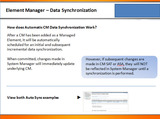
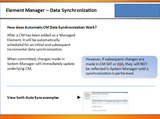
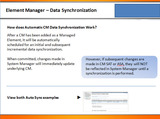
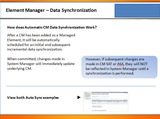
Many engineers would be just fine with a PowerPoint presentation or its equivalent with the addition of examples if necessary. The sample below is a screen from a course designed by engineers with no input from a learning designer.
Huh? As you can tell this even violates their preferred modalities.
Even an engineer would have problems understanding what this is trying to communication let alone teach.
Finally, let’s look at the considerations an instructional designer might regard as quality learning strategies, techniques and methods when building learning.
Content would have:
Objectives achieved through both cognitive learning and intuitive understandings
Preview and review experiences
Provisions for options, decision making risk taking
Employ checks for understanding, feedback and remediation
Images that both illustrate learning points, used to generate time, place, emotional content or as another modality for retention; and infographics that explain concepts visually w/o narrative content
Offer examples as scenarios/simulations and especially stories
Use emotions to help cement retention
By now you can tell I am arguing that the disconnect between the way engineers prefer their information delivered and the best practices in learning are estranged if not divorced from each other. That said; as the learning master how can you reconcile these differences. If your goal is to present information that yields a higher degree of knowledge transfer, what roads are open that will improve learning uptake and therefore performance while enticing engineers to see the learning design as interesting but compelling.
Two Methods for Designing Learning Engineers will Appreciate
Leverage their primary mental framework and traits while chunking and organizing information with enrichment materials to enhance learning retention.
Let’s take the information in the sample screen and deconstruct it.
The objective seems to be an explanation of how automatic data synchronization takes place.
In the current screen learners are told after CM has been added as a Managed Element it is cued up for synchronization. This is followed by two qualifying conditions; one positive the other negative. To monitor the process, the learner is offered a navigation string to access software that illustrates a screen where the process is made evident. While this seems to have logic and order, it is a mashup of too many ideas in one space. Engineers, though we didn’t mention this earlier, really don’t like to waste space so they jam in as much content in one place as possible. This has a double negative effect; there is too much information to digest and it is often confusing and overwhelming, particularly in the screen above since there are two disparate operations.
Now look at this example. Without changing he content—there’s only one element chunked differently—the actual application moved to another screen—there’s much more clarity. There is a logical flow of information and the two options are more distinctive and differentiated. A screen like this meets more of the engineers’ preferences; even though the former seems to be more chocked full of information—it really is jammed up and more difficult to absorb. No doubt when the screen is composed with adequate white space, learners have a better visual experience.
More importantly on the next screen, using a tool like Captivate, the learner could manipulate the data and work through a ‘Show Me, Tell Me, Let Me Try’ option to enhance participation, add interest, and show proofs of fact.
So screen design, which is a function of the instructional design process leads to more clarity and more information presented in a direct and functional manner meeting the engineer’s preferences for ordered delivery of content.
2. Organize courses to take advantage of engineers drive away from ambiguity
It’s too easy being deceived into building courseware that relies on one set of online screens to sustain the entire learning program. Often, engineers need to learn applications, new hardware, and software and apply their learning to initiate a new method of processing information or bringing new equipment online. When this type of knowledge AND skills must be transferred a blended approach works best.
Recently I designed a learning protocol that required engineers to work with an application in a lab setting with opportunities to use software to program hardware to work to specification. However, they needed to have fundamental information before the lab experience. Initially the client believed that once on site in the lab the facilitator could deliver the content and then lead the lab experiences. This would have proven to be overwhelming for both instructor and learner. The time on learning would stretch to five or more days. Lecturing from the platform while walking engineers through the content and then transitioning to the software application training was a model this company had used before. No wonder their ability to fill seats in the training facility was regularly less than 30%.
The solution was to develop an initial introduction to the course material online followed by a synopsis of each unit of learning into a guide distributed well ahead of the onsite lab experience. After each ‘chapter’ in the Learner’s Guide, a short check for understanding would be completed and forwarded to the facilitator. He would then review the responses, see the areas where there was most confusion, and later start the lab session with remediation of those areas. Only then would he begin to deliver the lab (software application) experiences.
The Instructor’s Manual would provide all the labs, screens, teaching scripts and software application directions. Each individual operation would be shared with the engineers in sequence after an explanation of where this experience aligned with content in the Learner’s Guide. Application operations would be selected to include those that posed the most challenges; others would be worked up by engineers on their own time, during or post training with an open invitation to query other participants or the facilitator. In total the amount of lab time would be reduced, learners would have all their deficits resolved during the remediation period and the need to explore over 700 potential individual application operations in the lab unnecessary.
Using pre-instruction, passing responsibility to learners to be ready for the lab, allowing the facilitator to quickly resolve areas of confusion and finally engage learners in the lab with the most critical and challenging aspects of the application made better use of time and left engineers with a sense of community and competence.
Going back and reviewing the way engineers prefer to learn you can see that in online or facilitated instructional design, awareness of their particular personality traits can be mitigated. Better yet—if you are able to design learning with their considerations in mind, engineers, though always a tough crowd, can be reached and taught in an effective way and one where their opinion of the education experience will more than likely be positive.
Wonderful Brain
.
Blog
.
<span class='date ' tip=''><i class='icon-time'></i> Jul 23, 2015 12:09pm</span>
|
|
In this article I want to explore 3 connected ideas. The first is about big data, the phenomenon that now makes available enormous, staggering, volumes of information almost instantaneously. The second is a condition that says information already known to us can limit how big data can be used because there are other types of knowing to expand thinking. And the third idea is the sum of the first two: that the intersection of big data and a different way of seeing information means a model must be designed to utilize large amounts of validated information in a reasonable way.
So the era of big data is here. Imagine Niagara Falls and the millions of gallons of water that shoot over the precipice virtually every minute. That’s the scale of information we envision when thinking of the amount of data we can reach out and grab—or in some cases is pushed to us—everyday. It would be impossible to know it all. But one benefit of massive volume is, when looked at through a certain lens, we have an opportunity to connect seemingly unrelated bits of data and discover trends, make predictions, even pre-position products and services long before we click, point or touch. It’s the compilation of colossal amounts of data that presents a challenge. How do we pluck just the right information we need from this torrent of bits? This is the difficulty with information management in the era of big data; it’s like trying to take a sip from a fire hose. Our need is not to get information it’s how to get just the right content to help us work with more accurate and insightful facts and, smarter and faster?
Clearly then we see how working out a process to employ big data and make quality business decisions is difficult. Furthermore consider this context, our second condition:
"There are known knowns" began an answer to a question at a US Department of Defense News Briefing made by Donald Rumsfeld while serving as United States Secretary of Defense in February 2002. Actually, here’s the whole tortured phrase… "there are known knowns; there are things we know that we know. There are known unknowns; that is to say, there are things that we now know we don’t know. But there are also unknown unknowns - there are things we do not know we don’t know." Though it may seem convoluted it is a "brilliant distillation of a quite complex matter," said Mark Steyn, a Canadian columnist and echoed by many others, even legions of his detractors.
While good information on its own is valuable its utility when combined with other data to discover other, perhaps new data and still newer meanings is really profound. Sometimes the information is known and we need to fasten it in context, other times we don’t know there is… and what is… trustworthy information but have to discover it; and more abstract yet, as unknowns the potential of useful but opaque information demands we peer into the future and ask ‘what if’ and proceed to manufacture information on (hopefully intelligent and intuitively perceptive) speculation.
If you’re in the business of solving problems—and who isn’t really—you’ll need an information life cycle model to regard big data and the ‘knowns issue’ to manage a collection of information for maximum use. And beware; too much data without vetting and affirmation, means you might miss the really important stuff, an effect that keeps security services awake at night. And therein lies the third concern of massive information management.
By summary then, we face three elements in our quest to make big data work for organizations:
Gathering information factoring the effect gained when combinations of content reveal even newer more, newer, meaningful data
Respecting knowns and unknowns as fact and as potential ‘black swans’ (an unpredictable or unforeseen event, typically one with extreme consequences) that can and will skew results if not discovered prior or during information capture or application
Culling the really useful information or data—those bits directly related to the problem at hand—from the gargantuan amount of information flying about making it accessible, contextual and changeable.
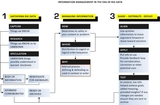
Here’s a model than might help us slow down a bit, turn down the faucet and cull out know information and potentially new content when big data offers additional tonnage of content.
The flow chart illustrates how information would be categorically organized; a model for the standardization of an information life cycle in big data world.
Ultimately culling useful information from an almost limitless stream comes down to energy, resourcefulness and commitment. When building a learning course for example, your subject matter experts deliver very specific information as they must do. However, is there other data in text, as visuals, in video that might provide a different way to see the information? Clarifying content by shifting the context just a little bit can often shine a light into corners formerly unseen. Whether one has the time or inclination to make the effort to go shopping for more information is dependent on time and budget, yes, however, when looking to make learning better and richer, drinking from the stream is often a task worth enduring. Creating metaphors mined from a combination of newly discovered information can improve the user experience—and enjoyment—like spinning a kaleidoscope and seeing new patterns. Using a model such as the one proposed might make such an effort more reasonable.
Wonderful Brain
.
Blog
.
<span class='date ' tip=''><i class='icon-time'></i> Jul 23, 2015 12:09pm</span>
|
|
During an interview about a week back I asked the project manager about the audience for which the training courseware would be designed. The strongest criteria, emphatically made, was the consultants ability to work out a curriculum for 24 to 70 year olds. She added, by the way, some of them ‘don’t play well with others’ or didn’t want to take the training…and were clearly hostile. I know the second part is actually more enticing to discuss than the first but we’ll save that for a sequel.
It’s far from the first time any educator has faced this situation but it did get me wondering. A good place to start in preparing for such a project would recognize the characteristics of learners in each of the 4 major generational groups in today’s workplace. From that point discover, categorize and develop with some confidence the types of learning each would be most comfortable with then craft an overall rubric to be used when designing courseware for multi-age audiences. Looking around I did find an article where this conundrum was voiced. That solution was to conduct a needs assessment, offer basic training particularly in the technologies for those unfamiliar with online learning, and then take out an ‘insurance policy’ by creating what really was a back up curriculum in case of mass lethargy or a pedagogical mutiny. This answer seemed too superficial and really doesn’t get to the heart of the problem.
The Generations
Although these descriptions may seem a bit broad there is agreement the characteristics of each generation are accepted as real and true.
Baby Boomers (Post WW II, 47-65 years old)
Like steady work and climbing the corporate ladder, consider their coworkers to be their main social network
They put work at the center of their life and focus on building the company
Viewed as ‘seasoned’, thought leaders, or subject matter experts, has a stronghold on experience
If you want something done, pick up the phone instead of waiting on an email or text response
Generation X (Born between 1963-1980, early 30s to mid 40s)
Often labeled ‘slackers’, but are the best educated generation
Display a casual disdain for authority and structured work hours, dislike being micro-managed, skeptical and embrace a hands-off management philosophy
Will put in the hours while maintaining a reasonable work-life balance
Incorporate social media seamlessly into their personal and professional lives
Generation Y (Also called Echo Boomers or Millennials, born between 1981-1994, early 20s to early 30s)
Will make up 46% of the US workforce by 2020
Expect near universal positive reinforcement from authority figures while seeking job satisfaction
Incredibly technology savvy, immune to most traditional marketing and sales pitches
Rely heavily on blogs, instant messages, tweets, text messages
Demand work-life balance, flexible hours, work-from-home options, and mobile technology
Generation Z (Soon to enter the workforce, born between 1995-2009)
First generation never to have experienced the pre-internet world. Already technology-focused
Where the Problem Begins
Let’s just back up a bit. School is the common denominator amongst all generations. But the problems that continue to arise in public education are magnified when boomer type instructional modalities are used to pitch information at millennial students. Teachers, the curriculum, methods and even the spaces for instruction are evidence of a generational disconnect. There are many superior older instructors who have made the technological and sociological leap to align content with context to educate their charges. But, in general this divide is not uncommon and where that happens, little learning goes on. Unfortunately many youngsters get patterned and adapt attitudes that, even as adults carry a distaste for learning not in their preferred mode. However these students are now our employees and need to be convinced by example learning can be made meaningful respecting the ways they want to, and best can learn. The question to consider? Are employees of a generation too rigid or overly reflexive in their rejection of training? Put another way, how malleable and adjustable are employees willing to be?
Where is Alignment in the Organization?
In corporate training we expect all generations to make adjustments so courses, training and instruction can be cast from a single or a few uniform models. After all this is the workplace. But that no longer cements an employee’s commitment nor guarantees willing participation. If we don’t honor the fundamental attitudes and proclivities of each generation we risk losing learners at the outset. Often staff, having endured training delivered in essentially a mode akin to a foreign language, have attitudes about training harden into instant negativity every time a required learning experience comes around. The problem that begs a solution is how best to design learning for all generations.
Organizational Intolerance
Corporate leaders are skeptical about the costs associated with learning and training believing there is not a high enough dividend in performance change to drive up profits. They would be extremely unlikely to embrace multiple course types to engage each generation in their learning ‘sweet spot.’ Instead corporate education needs to innovate, devising learning experiences to lure employees by offering a variety of ways to interact with information, absorb and most importantly use what they learned to be better at what they do—for themselves and the organization. Enough quality experiences and the fear, inertia or rejection displayed by generations will dissipate replaced by a more optimistic attitude about training at work.
A Way to Look at Instruction with Generational Regard
The goal is to reach every generation in their preferred learning style suggested by their social description. How? Develop learning elements, experiences, and technologies integrated into the content of courseware or training that speaks to each generation. This balanced methodology will engage all learners—not all the time nor in every instance—but enough so each group can sense an invitation to learn has been extended to them. Such an experience might offer elements (scenarios, interactivities, video, animation) techniques (direct instruction and gamification) experiences (role playing and decisions making strategies), assessing for competence (tests, role plays, scenarios, games) and media where learning might be best delivered (live, virtual, online, mobile, mixed), so that every generation can find relevance. Content will be carried forward in multiple modalities; formal, informal, social, participatory, for collaborative teams and individuals. Text, visuals, audio and interactivities will drive information respecting the sensibility of generational familiarity.
And while many employees are archetypes of each generation there are enough who just marginally typify the description of that generation. Of course this does not mean they are outliers, they simply fall into some other generational category. I believe we can make some reasonable assumptions about the elements that once incorporated into instructional programs will reach every generation in their preferred learning style leaving no one outside the scope of education.
So what would a multi-generational learning plan look like? That’s going to need a well crafted visual. Stay tuned for Part II.
Wonderful Brain
.
Blog
.
<span class='date ' tip=''><i class='icon-time'></i> Jul 23, 2015 12:09pm</span>
|