Blogs
|
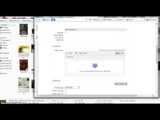
Here’s a quick tutorial on how to import an image to netSchool and then link it to something else.
Filed under: In The Classroom
Thrasymakos
.
Blog
.
<span class='date ' tip=''><i class='icon-time'></i> Jul 23, 2015 12:07pm</span>
|
|
Filed under: In The Classroom, Technology
Thrasymakos
.
Blog
.
<span class='date ' tip=''><i class='icon-time'></i> Jul 23, 2015 12:06pm</span>
|
|
Aurasma 2-ways (or 3!)
Register Here For The Region XI Presenation
When a chef says, "shrimp 2-ways," my heart goes pitter patter. Having options is always awesome! Quite simply, when we invest choice in nearly anything, it makes that thing better. Think about it: Neapolitan ice cream, Chinese buffets, betting on red or black, Republicans or Democrats (just kidding), or, more recently, iPhone 5c/5s.
You get the idea! Life is better with choice. Aurasma is a wonderful app that stands on its own (pitter), but it’s so versatile that you can add choice to it to make it even better (patter)! We would like to introduce the idea of Aurasma 2-ways. In the classroom, those additional options allow for differentiation and learning at high cognitive levels with Bloom’s.
In ALL cases you will be using the Aurasma app to view the images, videos, resources, lessons, etc. We have layered over the following jpegs. This is "Layered Learning" at its best. This is the ARevolution! (Don’t forget that Aurasma works like Twitter: Tap the magnifying icon at the bottom of the screen, search for & follow the Thrasymachus, Compher Social Sciences, and Northwest HS Channels to view all of our "Auras").
As an aside, enjoy #ARevolution the magazine on Flipboard at http://flip.it/PdnzK
Tourist and France 2-ways
1 way: Use a map of France to immerse your students in a 3D Sphere/TourWrist visual of France. This is at the Knowledge level for Bloom’s. Check out the original 1 way France post here http://thrasymakos.wordpress.com/2013/06/07/combining-aurasma-and-tourwrist/.
2 ways: Add a link within the Sphere/TourWrist visual to extend learning.
How would the scene just viewed be relevant to the Revolutionary war?
How would this scene be a direct contract to the time period of the French Revolution?
Write a narrative describing the type of person who would live in the place you just visited digitally. Make sure to take into account the history lessons of the last week and explain how you justify your character with relevant academic vocabulary.
There could also be questions that link the reading for the day to the augmented visual to model after the STARR in English and Social Studies.
Imagine how helpful this could be for a new English Learner in your classroom. You have now arrived at the application or creation level of Bloom’s. BAM!
Solar System 3-ways
1 way: This one has over 24 layered placed on it. Each planet can either be single tapped or double tapped to send students to different videos or resources. Tap the bottom left hand corner for our contact information. Tap the black areas for special surprises!!!
Check out the original post here http://thrasymakos.wordpress.com/2013/06/21/a-little-ignite13-extra/ Bloom’s = Knowledge
Wow factor=HUGE
2 ways: Student Centered Learning / Project Based Learning
Divide the class into groups. Have each group research each planet (body systems, biomes, states). The team will create a webpage visual with their acquired knowledge. NISD teachers have access to this within NetSchool (Moodle). Bloom’s = CREATE!
3 ways: Students can write questions on their task. A third link (layer) can be added to the webpage that leads to a check for understanding. The questions can be placed in adaptive mode in Moodle for inclusion students. Bloom’s = CREATE!
Register Here For The PresentationFiled under: In The Classroom
Thrasymakos
.
Blog
.
<span class='date ' tip=''><i class='icon-time'></i> Jul 23, 2015 12:05pm</span>
|
|
I’ve just attended the ICT education conference in Thurles, Ireland, affectionately known by the locals as the ‘Trip to Tipp’. I ran a one-day Learning Design workshop on Friday, with about 16 participants. There was lots of interaction and great discussions. The conference was held on Saturday with teachers from across Ireland attending. There were three keynotes - me, Catherine Cronon and Martha. The rest of the day was taken up by four parellel sessions. The junior minister for Training and Skills Cairon Connon gave an excellent talk at the beginning of the conference. It was clear that he had a passion for education and saw technologies as potentially having an transformative impact. It is a shame that more ministers and policy makers don’t attend these kind of conferences. I was particularly impressed that he stayed for a significant amount of the conference.
Catherine Cronin’s keynote resonated well with the conference theme, she explored the concept of student voice and experience. She posed the question ‘How can we use ICT to facilitate a paradigm shift and enable learners to be creative users of technology?’ She traced the latter back to the work of J. Kozol in the early nineties, in terms of student voice: sound, presence, participation, power and agency. She showed a wonderful video created by a young student in Kinvara, with students talking about their preferred ways of learning (active, collaborative, group-based, inquiry-based. etc.) and what they didn’t like about school. It made me realise yet again how important the student voice is, and that we really need to rethink current restrictive educational practices and focus more on making learning engaging and meaningful. She also referenced Bonnie Stewart and Howard Reingold’s work on digital identity.
It was great to meet Joe Dale who I follow on Twitter and as is often the case I felt as if I had known him for years. The highlight of the conference for me was probably his session on audio tools and Apps. He gave us a whistle stop tour demonstrating how to record and play back audio; lots of great things to explore. After the session I recorded him giving a summary of the session, using one of the tools he mentioned, Audioboo. Tools he demonstrated included: vacoroo, audioboo, qr code, croak.it, cue prompter tele script, audacity and soundcloud. More details are available at: Joedale.typepad.com.
The conference had a Youth Media Team, who did a series of sessions with presenters. They live blogged these, along with pictures and their impressions of the conference. In the closing session, they reported back on their experience and showed a short visual presentation representing the conference. I was very impressed with them and it was lovely to hear their feedback. What particularly struck me was one of them saying that there was probably an App for anything you could find in a book!
So overall an excellent conference and a great bunch of people. Thanks to Pam O’Brien for the invitation!
e4Innovation
.
Blog
.
<span class='date ' tip=''><i class='icon-time'></i> Jul 23, 2015 12:04pm</span>
|
|
In this LMScast Joshua Millage and Christopher Badgett discuss how the LifterLMS WordPress learning management system plugin stacks up against the competition in online WordPress LMS reviews. If you are in the market for course development software, you will want to take notes on this LMScast to help you in evaluating your choices.
The main focus of the LifterLMS development team is to know what our customers want by studying reviews and gathering direct feedback. We watch for trends in what people are looking for in a course design platform and build those elements into our frequent upgrades.
A primary interest for course developers is ease of use and a minimal investment of time required for course creation. Online reviews indicate that users find the LifterLMS Course Builder interface extremely quick and easy for building their courses. They also like the overall visual and navigational design of the tool.
When you choose your LMS, you want to make a good decision so that you won’t have to reconstruct your courses in a new tool if your first choice doesn’t work out. One of the best ways to make the right choice is to find a tool developed by capable, responsive people who are passionate about education, and are also diverse in their knowledge and experience, like the LifterLMS team. We sponsor a forum for users and monitor it consistently for feedback on new options our users want, and then build those capabilities into the platform upgrades.
Another important consideration is scalability. You may only be interested in offering free courses at first, and most LMS platforms are fine for that. But what if your free courses do well, and you want to offer paid courses? Before you make a decision based on cost or immediate usability, think about what you might want to do with your online courses 6 months to a year from now. Make sure you choose a LMS platform that you can grow with and that is constantly evolving.
User reviews also show that people love the LifterLMS eCommerce system, because it is easy for course developers to set up. More importantly, it is quick, simple, and seamless for students to purchase courses with its minimal interface. Ease of purchasing significantly boosts conversion rates.
The LifterLMS platform also includes an abundance of options for customizing and integration that course developers enjoy, because they can create and expand on a variety of lessons, quizzes, certificates, media, and other elements that are unique, relevant, accessible, and attractive. You aren’t locked into fixed templates or bundled plugins with limited options, like you could be with other development software.
The LifterLMS team encourages course creators to compare all other LMS development software to ours, because we are certain you will find LifterLMS to be the best course building tool on the market. You can read a variety of LifterLMS reviews in our recent blog post.
We also offer a 30-day money-back guarantee if you buy the software and decide you don’t love it. You can try a demo of LifterLMS for free and see for yourself what it can do for you.
Remember that you can post comments and subscribe to our newsletter for updates, developments, and future episodes of LMScast. Also, another thing is if you want to engage with us at a deeper level, you can go check out our Facebook group LMScast Confidential. Thank you for joining us.
Joshua: Hello, Everyone. Welcome back with another episode of LMScast. I’m Joshua Millage, and I’m joined today with Christopher Badgett. Today we’re talking about WordPress LMS reviews. Chris, it’s on you, Man. My head is so into Lifter, I don’t even know what else is available.
Chris: We’re starting to get a lot of WordPress LMS reviews for LifterLMS from people in the WordPress community, the WP community, and other bloggers and such. It got me thinking, because we try to really get inside the mind of our ideal customer, the person who wants a WordPress-powered learning management system. When I look at these reviews that other people are writing about our product or other WordPress LMS plugins and WordPress LMS themes, I’m just looking at what people are looking at, because a learning management system has a lot of pieces to it. What are these WordPress LMS reviews focusing on? And I’ve noticed some trends.
One thing that people really like is our WordPress LMS system course builder. We have a video on YouTube about how to build an online course in 3 minutes. I can see people are really focusing in on how quick, easy, and painless it is to build an online course with our course-builder interface. I find that fascinating. That that’s kind of what people gravitate to first, it’s the actual course creation, maybe even more than the powerful eCommerce cart system. I just find it interesting, and other people, thing that people like is just the design. People are doing a lot of screenshots of the user interface. There’s a lot of different angles of looking at your student, at your course, at your lesson, at your quiz. People are taking a lot of screenshots and talking about that, with LifterLMS and other with WordPress learning management solutions. I just find it interesting in how people focus in WordPress LMS reviews.
Joshua: That is very interesting to me. I understand why though. Because once you start down the path with a WordPress LMS system, it’s difficult to change. You don’t want to take the time to re-input content or anything like that, so you want to make a good decision on the front end. I would say there’s two things. I’m completely biased, and I’m not ashamed of it, but you want to work with a team that’s passionate about education, who’s pushing the limits of what WordPress can do. That’s us in a nutshell. Just look at our product offering versus the other options out there.
The other thing I would say is that you want to look at where you’re headed in six months, where you’re headed in a year. Maybe you only want to do free courses, but what happens when you want to do paid courses? How easy is it to implement a paid course versus a free course? If you’re looking at free courses, I think the beauty of Lifter is little bit less, because you can accomplish things with other plugins if you’re just doing a free course. However, what do you want to do after that? What do you want to do next?
Actually, I kind of take that back, because I’ve gotten so many emails this week about people saying, "I’ve tried Zippy Courses, or I’ve tried WP Courseware, or I’ve tried LearnDash, or I’ve tried Sensei, and your course-builder is by far the easiest to use and implement and structure. I created my course so quickly. It’s amazing. Thank you for creating it." They’re right, because it is the most awesome course builder ever. It’s interesting, even at the free level. I think people can really benefit from that. When you’re looking, and you’re reviewing yourself for a plugin, Chris, what are those things that you really look for?
Chris: I think that’s a good point you bring up about the team. Another thing behind the plugin, and there’s a lot of great people behind the other WordPress learning management system solutions. One of the things that I really value and appreciate about our team at LifterLMS is how diversified we are. We’re not just one or two people. We’re a bunch of people with a bunch of different skill sets. They have to converge on solving this problem of building online courses and selling them and making them engaging. The team is really important, like you mentioned.
The other thing is the rate of change in iteration. For example, I saw a WordPress LMS review go up the other day that someone had taken screenshots before our course-builder was in place. I was like, "Oh, they’re not showing the latest part of our course builder, but you know what? That’s okay. That’s our issue for just changing so fast. We’re just evolving the product based on customer feedback. I think that’s something that’s important to look at is how quickly are people iterating. Are they listening to customers? We have a whole forum dedicated specifically to feature requests. We can’t do every single thing that comes in, but we’re there looking for trends of like what do our customers want? Let’s build that. That is another part.
Another part is the eCommerce system. If you want to sell online courses, it’s really important to make that user experience of purchasing a course or a membership that contains a collection of courses very easy. I love it. We were doing a demo of LifterLMS yesterday with somebody, and I was just proud when the eCommerce screen came up. We had the Stripe integration in the demo, and there was this simple little credit card box. I love WooCommerce, but there’s all these fields when you’re trying to check out. When in our demo when we were buying that course, it was just credit card number, the 3-digit code, the expiration date, done. If you’re into optimizing conversion and having a seamless, easy, user experience, I think it’s important to look at that sort of thing when you’re evaluating a learning management system.
That carries over not just from eCommerce, but also to the lessons, to the quizzes, to all the LMS elements with certificates. How easy is it to use, but at the same time, in the WordPress learning management system ecosystem, people want customization. Everybody wants to do things differently. For example, in certificates, we make it so you can switch out your certificate background. You can put video in your questions in your quizzes. You can create your own badges. You’re not locked in. We built our own quiz system which can be further developed upon, whereas some other learning management systems out there, they just bundle in WP-Pro-Quiz plugin in it, so now you’re locked, and there’s a dependency. We have our own non-dependent system that’s clean and extendable without dependency. It’s all those types of things, and of course we’re biased towards LifterLMS. We encourage you to check out all the other options.
Joshua: One thing I want to say is we’ve got a 30-day guarantee, money-back guarantee. If you come try it out, if you don’t like it, just send us an email, and we’ll refund your money. We refund as soon as we get a request, we refund it within 24 hours, unless it’s a weekend, and it might be 48 hours, but very quickly is my point. We’re not trying to keep money away, but we really want people to come and check it out and encourage you to really take it for a spin.
Chris: Yeah. Do a Google search for WordPressLMS reviews and see what’s out there. Like Josh said, if you want to be really detailed and take things for a test drive, you’ve got to buy some stuff and set them up. Buy the different solutions. Try them out and see what you think.
Joshua: Absolutely. Cool. This has been a fun episode, Chris. I just want to let everyone know they can check this episode out along with all the others at LMScast.com and we’d love to hear your feedback on this episode. It’ll be on the Home page. You can just click on it. Leave us a comment. Also, another thing is if you want to engage with us at a deeper level, you can go check out our Facebook group which I believe is LMScast Confidential.
Chris: That’s right.
Joshua: Cool. We have some fun discussions over there. Thank you Everyone for listening, and we’ll see you next week.
The post WordPress LMS Reviews and LifterLMS appeared first on LMScast.
Joshua Millage & Chris Badgett
.
Blog
.
<span class='date ' tip=''><i class='icon-time'></i> Jul 23, 2015 12:04pm</span>
|
|
#Facebook Experiments With Disappearing Posts http://t.co/wiK0JENSTM #digcit #esafety #edchat #socialmedia #techblog
— ICTPHMS (@ICTPHMS) September 12, 2014
Mr Kirsch's ICT Class Blog
.
Blog
.
<span class='date ' tip=''><i class='icon-time'></i> Jul 23, 2015 12:04pm</span>
|
|
CampTech Meeting at Region XI (Ft. Worth, Tx).
Teachers are all about resources. We know our discipline and most of us know how to engage students in our discipline at high cognitive levels…now, give us resources to be even better instructors!
Once a PLC/PLN cynic, I wholeheartedly see the necessity of trading ideas with other professionals. Even if those teachers challenge my approach to education (which is uncomfortable, but does induce self questioning and growth), the exchange of ideas with other serious thinkers produces a fertile firmament for units and lessons to grow out of. Via Twitter, workshops, conferences, and brief conversations our school’s hallways I look forward to exchanges. It’s fun, believe it or not!
Recently, our IT team visited Ft. Worth, Texas for a "Camp Tech" put together by Region XI.
We had a great time, met new people, and were introduced to innovated ways to do old things as well as some of the latest apps, websites, and approaches for ed-tech integration.
Here’s what we got…
http://www.esc11.net/site/Default.aspx?PageID=4719Filed under: In The Classroom Tagged: Ft. Worth, Region XI
Thrasymakos
.
Blog
.
<span class='date ' tip=''><i class='icon-time'></i> Jul 23, 2015 12:03pm</span>
|
|
http://tinyurl.com/nde72pc
EFQUEL are currently running a twelve-week series of blog posts on MOOCs,[1] I am due to write a post in a couple of week’s time, this blog post is a draft, comments welcome! This post argues that the current discourse around the concept of xMOOCs (primarily based around interaction with content and essentially adopting a behaviourist learning approach), and cMOOCs (which focus on harnessing the power of social media and interaction with peers, adopting a connectivist learning approach), is an inadequate way of describing the variety of MOOCs and the ways in which learners engage with them. It will introduce an alternative means of categorising MOOCs, based on their key characteristics. It will describe how this can be used as part of the 7Cs of Learning Design framework (Conole 2013), to design more pedagogically informed MOOCs, which enhances the learner experience and ensure quality assurance.
There are a number of general teaching and learning national quality agencies. Specifically, in relation to quality and e-learning, EFQUEL[2] is Europe’s professional body for quality in e-learning. EFQUEL’s mission ‘to promote excellence and innovation in education in order to achieve qualitative learning opportunities in Europe and beyond’.[3]
A fundamental aspect of ensuring a good learner experience is the quality of the course. It is important to distinguish between three main aspects of quality: quality audit, quality assurance and quality enhancement.
In general quality can be defined as ‘the standard of something as measured against other things of a similar kind; the degree of excellence of something: quality of life’.[4] Therefore arguably quality in e-learning is the degree to which it measure up to ‘good learning’ (although that might be construed as a somewhat contentious statement). It certainly points to the notion of excellence and worth.
Quality assurance mechanisms are now requirements in most formal educational institutions and indeed many countries have a requirement for institutions to undergo externally reviewed quality audits on a regular basis. Institutional quality audit aims ‘to contribute, in conjunction with other mechanisms, to the promotion and enhancement of high-quality in teaching and learning’.[5]
The Quality Assurance Agency in the UK describes quality assurance as ‘the means through which an institution ensures and confirms that the conditions are in place for students to achieve the standards set by it or by another awarding body’ (QAA 2004), and quality enhancement as ‘the process of taking deliberate steps at institutional level to improve the quality of learning opportunities…. Quality enhancement is therefore seen as an aspect of institutional quality management that is designed to secure, in the context of the constraints within which individual institutions operate, steady, reliable and demonstrable improvements in the quality of learning opportunities’ (QAA 2006).
Ehlers et al. (Ehlers, Ossiannilsson et al. 2013) argue that quality is very much the condition which determines how effective and successful learning can take place.
They go on to pose the following questions in relation to the quality of MOOCs:
What are MOOCs actually aiming at?
Can the quality of MOOCs be assessed in the same way as any defined university course with traditional degree awarding processes? Or do we have to take into account a different type of objective with MOOC learners?
Are the learners mostly interested in only small sequences of learning, tailored to their own individual purpose, and then sign off and move to other MOOCs because their own learning objective was fulfilled?
Discussing MOOCs and quality, Downes argues that:
When we are evaluating a tool, we evaluate it against its design specifications; mathematics and deduction tell us from there that it will produce its intended outcome. It is only when we evaluate the use of a tool that we evaluate against the actual outcome. So measuring drop-out rates, counting test scores, and adding up student satisfaction scores will not tell us whether a MOOC was successful, only whether this particular application of this particular MOOC was successful in this particular instance (Downes 2013).
Therefore quality is a fundamental facet that needs to be considered in relation to both the design and delivery of MOOCs. We need to develop better metrics to understand the way in which learners are interacting with MOOCs and hence their experience of them.
Whilst mechanisms to ensure quality are well established in formal education institutions, such mechanisms are not in place, certainly not in any formal sense, for MOOCs. And arguably this is a key issue that needs to be address if MOOCs are going to valuable and viable learning experiences and be sustainable in the longer term.
As mentioned earlier, to date, MOOCs have been classified as either xMOOCs or cMOOCs. I want to argue that such a classification is too simplistic and in this section put forward an alternative mechanism for describing the nature of MOOCs.
I want to suggest that a better classification of MOOCs is in terms of a set of twelve dimensions: the degree of openness, the scale of participation (massification), the amount of use of multimedia, the amount of communication, the extent to which collaboration is included, the type of learner pathway (from learner centred to teacher-centred and highly structured), the level of quality assurance, the extent to which reflection is encouraged, the level of assessment, how informal or formal it is, autonomy, and diversity. The last two are taken from Downes (2010). MOOCs can then be measured against these twelve dimensions (Table 1). The following MOOCs are shown to illustrate how different MOOCs map to these twelve dimensions:
1. Connectivism and Connective Learning 2011 (CCK).[6] The course took part over twelve weeks. The course uses a variety of technologies, for example, blogs, Second Life, RSS Readers, UStream, etc. Course resources were provided using gRSShopper and online seminars delivered using Elluminate. Participants were encouraged to use a variety of social media and to connect with peer learners, creating their own Personal Learning Environment and network of co-learners.
2. Introduction to Artificial Intelligence (AI) 2011 (CS221).[7] The course ran over three months and included feedback and a statement of accomplishment. A small percentage of participants enrolled registered for the campus-based Stanford course. The course was primarily based around interactive multimedia resources. The course is now based on the Audacity platform.
3. OLDS (Learning Design) (OLDS) 2013.[8] The course ran over eight weeks, with a ninth reflection week. It was delivered using Google Apps, the main course site being built in Google Drive, Google forums and Hangouts were also used. Cloudworks[9] was used as a space for participants to share and discuss their course artefacts and to claim credit for badges against course achievements.
4. Openness and innovation in elearning (H817).[10] The course is part of the Masters in Open and Distance Education offered by the Open University UK. H817 runs between February and October 2013 months, however the MOOC component of the course consists of 100 learning hours spread over seven weeks from March 2013 and is open to a wider audience than those registered on the OU course. The course adopts an ‘activity-based’ pedagogy. There is an emphasis on communication through blog postings and the forum. Participants have the opportunity to acquire badges for accomplishments.
5. Introduction to Openness in Education (OE).[11] The course tutor advocates that "learning occurs through construction, annotation and maintenance of learning artifacts," which is the philosophy that underpins the design of the course. Participant could acquire badges for various accomplishments.
Table 1: Mapping 5 courses to the twelve dimensions of MOOCs
Dimension
Low
Medium
High
Open
H817, OE, AI
CCK, OLDS
Massive
OLDS, H817, OE
CCK
AI
Use of multimedia
CCK, OLDS, H817, OE
AI
Degree of communication
AI
OLDS, H817, OE
CCK
Degree of collaboration
AI
CCK, OLDS, OE
H817
Learning pathway
CCK
OLDS, H817, OE
AI
Quality Assurance
CCK
AI, OLDS, OE
H817
Amount of reflection
AI
OLDS, OE
CCK
Certification
CCK[12]
OLDS, AI
OE
Formal learning
AI, CCK
OLDS
H817, OE
Autonomy
H817, OE
CCK, OLDS, AI
Diversity
H817, AI, OLDS
CCK, OE
The table demonstrates that, in terms of the twelve dimensions, the five MOOCs illustrate examples of low, medium and high degrees of each. I would argue that at a glance this classification framework gives a far better indication of the nature of each MOOC than the simple classification as xMOOCs and cMOOCs.
The MOOC criteria described in this blog fits under the Conceptualise C of the 7Cs of Learning Design framework. It can be use to plan the design of the MOOC against these twelve criteria. Table 2 shows how these criteria can be used to characterise a Continuing Professional Development course for Medics. The course is informal and is aimed at Medics in a local authority in the UK.
Table 2: Example of using the MOOC criteria in the design of a course
Dimension
Degree of evidence
Open
High - The course is built using open source tools and participants are encouraged to share their learning outputs using the creative commons license.
Massive
Low - The course is designed for Continuing Professional Development for Medics in a local authority.
Use of multimedia
High - The course uses a range of multimedia and interactive media, along with an extensive range of medical OER.
Degree of communication
Medium - The participants are encourage to contribute to a number of key debates on the discussion forum, as well as keeping a reflective blog of how the course relates to their professional practice.
Degree of collaboration
Low - The course is designed for busy working professionals, collaboration is kept to a minimum.
Learning pathway
Medium - There are two structured routes through the course - an advanced and a lite version.
Quality Assurance
Medium - The course is peer-reviewed prior to delivery.
Amount of reflection
High - Participants are asked to reflect continually during the course, their personal blogs are particularly important in this respect.
Certification
Medium - Participants can obtain a number of badges on completion of different aspects of the course and receive a certificate of attendance.
Formal learning
Low - The course is informal and optional.
Autonomy
High - Participants are expected to work individually and take control of their learning, there is little in the way of tutor support.
Diversity
Low - The course is specialised for UK medics in one local authority.
The 7Cs framework can be used both to design and evaluate MOOCs. The tools and resources associated with each of the Cs enable the designer to make more informed design decisions. The evaluation rubric under the Consolidate C enables them to ensure that the design is fit for purpose, hence ensuring the quality of the MOOCs and the ultimate learner experience.
It is evident that there are a number of drivers impacting on education. Firstly, universities are increasingly looking to expand their online offerings and make more effective use of technologies. Secondly, there is increasing demand from higher student numbers and greater diversity. Thirdly, there is a need to shift from knowledge recall to development of skills to find and use information effectively. In this respect, there is a need to enable learners to develop 21st Century digital literacy skills (Jenkins 2009) to equip them for an increasingly complex and changing societal context. Finally, given the proliferation of new competitors, there is a need for traditional institutions to tackle new competitive niches and business models.[13] MOOCs represent a sign of the times; they instantiate an example of how technologies can disrupt the status quo of education and are a forewarning of further changes to come. Whether or not MOOCs will reach the potential hype currently being discussed is a mote point, what is clear is that we need to take them seriously. More importantly, for both MOOCs and traditional educational offerings we need to make more informed design decisions that are pedagogically effective, leading to an enhanced learner experience and ensuring quality assurance.
Finally, the key value of MOOCs for me is that they are challenging traditional educational institutions and having to make them think about what they are offering, how it is distinctive and what the unique learner experience will be at their institution. As Cormier states:
When we use the MOOC as a lense to examine Higher Education, some interesting things come to light. The question of the ‘reason’ for education comes into focus (Cormier 2013).
Furthermore, UNESCO estimate that more than 100 million children can’t afford formal education,[14] MOOCs provide them with a real lifeline to get above the poverty line. This, and the fact that MOOCs provide access to millions. As Creelman notes:
Whatever you think of them they are opening up new learning opportunities for millions of people and that is really the main point of it all (Creelman 2013).
So for me the value of MOOCs to promote social inclusion, coupled with them making traditional institutions look harder at what they are providing their students, signifies their importance as a disruptive technology. For me therefore, whether they survive or not, if they result in an opening up of education and a better quality of the learner experience that has got to be for the good.
References
Conole, G. (2013). Current thinking on the 7Cs of Learning Design. e4innovation.com.
Cormier, D. (2013). Week 3 - Forget the learners, how do I measure a MOOC quality experience for ME! By Dave Cormier. MOOC Quality Project.
Creelman, A. (2013). Make hay whilt the sunshines. The corridor of uncertainty.
Downes, S. (2010). Fairness and equity in education. Huff Post Education.
Downes, S. (2013). Week 2: The Quality of Massive Open Online Courses by Stephen Downes. MOOC Quality Project: perspectives on quality of MOOC-based education.
Ehlers, U. D., E. Ossiannilsson, et al. (2013). Week 1: MOOCs and Quality - Where are we - where do we go from here …? MOOC Quality Project.
Jenkins, H. (2009). Confronting the challenges of participatory culture: Media education for the 21st century, Mit Pr.
[1] http://mooc.efquel.org/
[2] http://efquel.org
[3] http://efquel.org/aboutus/vision-mission/
[4] https://www.google.co.uk/search?q=quality+definition+elearning&aq=f&oq=quality+definition&aqs=chrome.0.59j57j0l2j60j62.4758j0&sourceid=chrome&ie=UTF-8#sclient=psy-ab&q=quality+definition+&oq=quality+definition+&gs_l=serp.3..0l4.2269.2269.0.2481.1.1.0.0.0.0.107.107.0j1.1.0…0.0…1c.1.14.psy-ab.oVQgVsASSAQ&pbx=1&bav=on.2,or.r_cp.r_qf.&bvm=bv.46751780,d.d2k&fp=13e85b7e7d899dc&biw=853&bih=343
[5] http://www.qaa.ac.uk/Publications/InformationAndGuidance/Documents/eLearning.pdf
[6] http://cck11.mooc.ca/
[7] https://www.udacity.com/course/cs271
[8] http://www.olds.ac.uk/
[9] http://cloudworks.ac.uk
[10] http://www.open.edu/openlearn/education/open-education/content-section-0
[11] https://learn.canvas.net/courses/4
[12] Although it was possible to obtain certification from the University of Manitoba for completion of the course
[13] As a recent article states MOOCs are challenging traditional institutional business models http://www.universityworldnews.com/article.php?story=20120831103842302
[14] http://enikki.mitsubishi.or.jp/e/event/index6.html
e4Innovation
.
Blog
.
<span class='date ' tip=''><i class='icon-time'></i> Jul 23, 2015 12:03pm</span>
|
|
Mr Kirsch's ICT Class Blog
.
Blog
.
<span class='date ' tip=''><i class='icon-time'></i> Jul 23, 2015 12:02pm</span>
|
|
Do you dream of making a living from home? You can be a digital nomad like Tim Ferriss describes in his book The 4-Hour Workweek. In today’s LMScast Joshua Millage and Christopher Badgett outline from their own experience how to start a location independent business with online courses.
You run a location independent business from wherever you are - at home, on the beach, or while traveling the world. The key word here is "business," because you must provide value that people will pay for to generate income. Fear of failure keeps most people from doing it. What kind of business could you successfully build?
One option is to create and sell online courses using an eLearning development tool like LifterLMS. Your greatest hands-on involvement is in putting the courses and system together. After that is done, you automate maintenance, marketing, and sales through the software. Then you can be minimally involved while your courses generate passive income.
There is work, time, and a lot of hustle involved. These activities can seem daunting, but the 4-hour workweek is undeniably a compelling idea. The impetus is the realization that you can do everything differently.
The first step is to form relationships and build an email list of people who share the same interests as you. After enough interaction with those people, you will be able to create courses they want to take and are willing to pay for.
Next, learn all you can about business, eCommerce, and website design. The more you learn, the more you can do yourself. You shouldn’t have to pay someone else for the services you need until your business really starts to expand. Once you have all that down, you can start creating your first course.
Pre-selling your course is a great way to get started with customers ready to buy. A proven method is to offer a pilot course at a discounted price to a select group of interested students. The fact that you are only accepting a limited few will generate interest. Your benefit is that you will learn from that test group how to build a better course and work out the rough spots before you present a fully developed course. They in turn will have your attentive focus.
Starting out this way you can realize $1,000 to $2,000 profit each month. Maybe not enough to quit your day job yet, but your earning potential will increase as your email list grows. The first course you complete successfully also builds your proof of concept, as well as your confidence.
Being clear on why you are doing this is crucial. What do you want to accomplish in your life that your current work situation prevents you from doing? What would your daily life look like if you had a more flexible schedule working from home, or from any other place you might rather be? Having that mental picture is highly motivational.
If you are having trouble deciding on the kind of course you want to create, look at courses that are already working at sites like Udemy. You will find lists of topics ranging from general to niche subjects. In fact, offering a niche interest course can be the best way to start.
The most important part of establishing your location independent business is finding something that excites you enough that you are eager to share it with others. Our LifterLMS course development platform is designed to help you build your courses quickly and intuitively so that you can focus on your students and your subject. You can try a demo of LifterLMS and see for yourself what it can do for you.
Remember that you can post comments and also subscribe to our newsletter for updates, developments, and future episodes of LMScast. Thank you for joining us.
Joshua: Hello everyone, we’re back with another episode of LMScast. I’m Joshua Millage, and I’m joined today with Christopher Badgett, and today we’re talking about how to start a location independent digital nomad business with online courses. Chris, you are quite the digital nomad. Let’s kick it off for us. How do you do this?
Christopher: Well, I think it’s important to define like what the terminology means, and they’re kind of related. Location independent business just means you can run it from anywhere.
Joshua: Right.
Christopher: Digital nomad is kind of taking into another level where you are like traveling around your country or the world while you run your business, so that’s the digital nomad part.
I’ve done that before, it was like web agency work. It really doesn’t matter where I am. I spent last winter in Costa Rica. I was working with you for a while when you were in Thailand last year. That’s like the location independent part and nomadic while traveling, that sort of thing. When I was in Costa Rica, I didn’t stay in one place. I was in the rain forest, and then I was on the beach.
The important part of this terminology here is also the word business. It’s one thing to like travel and be on tourism and that kind of thing and vacation, but business is where you’re still adding value and creating income for yourself and your company while you roll around. That’s what it’s all about. Online courses is a great way to create a business that is location independent, that does allow you to be a digital nomad and travel the world.
Joshua: Yeah. I think like the cool thing about my life, and I’ve kind of reached the location independent digital nomad status, but I’ve done it with a web agency, and the challenge there is that it’s not as hands off as online courses, and I don’t want to say that online courses are hands-off or even …
Christopher: They can be. They can be.
Joshua: They can be. That’s more what I want to allude to is that you don’t have to engage at the level that I will engage when I start to do some of my courses, but you can. I think it’s really interesting to me to think about doing more and more courses. I have one project which is around Paleo cooking and food, and I really want to go and dive deep into that, and then I have another one that’s just more personal branding that I haven’t even really started, but talking about fear and entrepreneurship, and it all starts with building a community of people and then creating something that they want to purchase.
There is a whole methodology. I mean I think the first thing if I would break it down for people would be, first things first would be take the time to really build relationships and build that email list. I mean even if you can get a 100 people on an email list, the success when you launch a course is like 10X of what it would be if you just launched it without anything, because you have the people that you’ve engaged with, but that takes time. That takes a lot of hustle, and I think a lot of people who want to live the kind of suitcase entrepreneur lifestyle or vagabond lifestyle, they don’t understand the work involved in that. Like I don’t know why, I think there are lot of people who read The 4-Hour Workweek, and they don’t see any work in that whole entire book.
For those of you who don’t know, it was a fundamental just changing, life changing book for me. It kind of like pulled the scales off my eyes in terms of I was on the typical conveyor belt progression of life, like get the undergrad degree, get the master’s degree, find the wife, have kids, buy the house, buy the car, get the dog, pay for their education, and so forth and kind of move up the scale. That book said, ah you could do things differently, and so I did.
Dramatically I jumped out and went to China, worked in manufacturing for a while, wound up sick, and I didn’t really have much of an option and had to figure out something to live, and so on my parents’ couch, I started my consulting company, and it started first things first educating myself with online courses. Second, started building relationships. I think if I could do it all over, I would actually flip that. I’d start with building relationships. Once you have the relationships, and you have some sort of education about how to execute a business and build certain things like a website and what not, and all that stuff is available for free online. You don’t need to go pay anyone to do the basics. To be honest with you, the pay should come at the more advanced levels. Then you can start thinking about building a course, and I think one of the most powerful things that you can do is go through this progression that I learned, and I’ve executed a million different ways, not a million, a handful of different ways, and it’s always worked, and that is pre-sell your course.
Lot of people have a mental block with this, like how do I sell something that doesn’t exist? That doesn’t seem right, it doesn’t make sense to me. It does take a lot of grit because you can walk an unethical line. Like if you pre-sell something, and you don’t let everyone know that you’re pre-selling, I do think you can get into some pretty shady things, but the way I do it is, I say, hey, I’ve had a lot of requests for people who want me to build a course on X,Y, and Z subject matter, and I’ve been resistant to it, so I’m playing kind of the reluctant hero.
I say what I’m going to do is I’m going to offer a four coaching spots, and I’m going to coach four people for a month, and out of that I’m going to build a course from what I’ve learned from working with these four people. What I do is I actually for the people who sign up to be coached, they’re getting a lot of special attention for one, and you’re playing on a lot of different triggers. You’re playing on scarcity, only four people or ten people, whatever you want to do. Only certain amount of people are allowed in, and there’s like this early investor narrative, which a lot of people know, especially if you’re in the United States. There’s this idea if I get in early, it’s going to be better for me.
If I invest in the company early, it’s better for me. If I buy a certain type of car earlier, generally I’m going to get a better deal. Like for instance, I bought a Scion tC the first year it came out, and I got a way better warranty. Then like three years later, the Scions were probably a little bit better cars, they worked their kinks out, but the warranty wasn’t as good. That is just like this like underlying things like as an idea that if I can get in early, I will benefit. Our LifterLMS VIPs, they have not paid for anything outside of their license for LifterLMS. I mean they’ve gotten everything for free, and we’re rewarding them for taking action early.
You reward this group for taking action early by giving them focused attention. You give them the course that you create when it’s created afterwards, and you have kind of a laboratory to create your course. Then once you create your course, you just launch it to your list. This is like the abbreviated version, but you take this progression to heart. I’m breezing through it in 10 minutes here, but you can create a business that average estimations of income, I mean you could at least start out with something that’s allows you to have at least the 1,000 or 2,000 dollars extra cash per month, and that will start you on a pretty good progression. Then, you’re at a point of scaling, which really comes back to creating more relationships. Yeah, sorry for the ramble Chris, but that’s …
Christopher: That’s good stuff.
Joshua: It’s been the way that things have worked for me, and so I want to make sure I share that with people.
Christopher: That’s awesome. Well just to give you guys a couple of tips on how to start a location independent business and become a digital nomad with online courses, there’s a couple things just to keep in mind. One is like Josh said, an extra 1,000 or 2,000 dollars a month can be a good goal. You don’t have to like flip a switch and immediately quit your job or do drastic change. Like try to get some traction and get the confidence, and then you can focus on scaling and maybe if you want to do exclusively online courses for your income, but I recommend not just like quitting your job and being like I’m going to go and create a online course or membership or a BuddyPress course for a social network.
Take your time, get some proof of concept like Josh said, pre-selling is good. You can ease into it basically. The other thing is to get really clear on your "why." For some people, it might mean sitting on a beach somewhere with passive income landing in their bank account. For other people, it might just be being able to work from home with your kids. It’s not like just because you become location independent or a digital nomad, it doesn’t mean you have to travel the world and create courses while you fly around the world, although that’s terribly possible, but for some people your "why" is really important. Maybe you just want to be able to have the flexibility. Let’s say your parents are getting old, to be able to be have that location flexibility to move around and be with the people you care about. So get in touch with your "why."
The other is the lot of resistance people have is like, what kind of course can I make? I think one of the best places to go to get ideas is actually like one of the big course market places like Udemy. Just go there and browse around. You’ll see some major topics like introduction to entrepreneurship, but you’ll also see some really niche courses about like, I’m just making this up, but like jewelry making for Turquoise, or something like super specific. I would encourage you to actually start with something really niche specific. Yeah, those are just some three tips to help you get going to start building your location independent business, and it gets you excited about the opportunity to becoming a digital nomad with online courses.
Joshua: Yeah, that’s great. That’s great. Well until next time, we’ll talk to you then.
The post How to Start a Location Independent Digital Nomad Business with Online Courses appeared first on LMScast.
Joshua Millage & Chris Badgett
.
Blog
.
<span class='date ' tip=''><i class='icon-time'></i> Jul 23, 2015 12:02pm</span>
|