Blogs
|
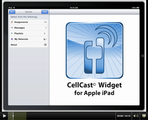
It's officially iPad Launch Day and we're pleased to announce our CellCast Widget for iPad was included in the inaugural 1,000 applications shipped in support of Apple's revolutionary new tablet computing device. Better yet, we're the only sanctioned iPad application listed whenever a iTunes user searches on "mobile learning" or "m-learning" in the iTune App Store -- a situation that's certainly going to change in the coming days though as others jump on board the new device train.I just spent the week over in Texas previewing our new iPad application (along with the rest of our CellCast Solution platform) to several different partners, customers and prospects who all anticipate the positive market reaction the iPad will have on the mlearning market. Everyone concurs these iPad devices should slot into the mobile learning device market quite nicely and, as one of the mobile device market analysts stated earlier this week, should only cannibalize market share from Apple's existing iPod touch media player while replacing those sales with higher price/higher margin iPad sales!If you're lucky enough to already have your new iPad, we invite you to go to the App Store and download a free copy of our Widget and try it out. Send me an email to rgadd @onpointlearning.com and I'll even setup a private account for you and assign several more content examples for you to play around with too.In my next post, I'll provide a guided video walk through of our iPad application and the many features we're excited about.
Robert Gadd
.
Blog
.
<span class='date ' tip=''><i class='icon-time'></i> Jul 29, 2015 10:26am</span>
|
|
I took the opportunity to do a live screen capture of our new CellCast Widget for Apple iPad today to better illustrate the key features and functionality we've included in our first release supporting Apple's revolutionary new tablet device. This presentation, captured using Camtasia for Mac and converted to an MP4/Flash format for easier web viewing, demonstrates a series of the core features that allow our customers and partners to plan, create, deploy and track a variety of learning content and performance support materials to their mobile workforce using the widest array of mobile devices possible.In the video, we demonstrate how a combination of iPad-compatible M4V videos, MP3 podcasts, animated PowerPoint presentations and other mobile friendly web content are pushed down to a secure learning framework and enriched with tracked assessments, targeted messaging/notifications and mobile-accessible social networking platforms. All user interactions including who/what/when/where/how long are fully tracked and managed in a centralized database which can also be fully integrated with an organization's Learning Management System or Sales Force Automation system as needed.If you've already got an iPad and you're interested in evaluating the new Widget yourself, please drop me a line at rgadd @ onpointlearning.com and we'll set you up with a demo account to play with all the new features and functionality.CLICK HERE to launch the demonstration video.
Robert Gadd
.
Blog
.
<span class='date ' tip=''><i class='icon-time'></i> Jul 29, 2015 10:25am</span>
|
|
We were pleased to learn yesterday that OnPoint's CellCast Solution won the Gold Award from Brandon Hall for 2009 in the "Best Advance in Technology for Mobile Learning Authoring" category. Congratulations to our entire team for all their continuing efforts and outstanding achievements and kudos to all of the other winners across every competed category; we all work/exist in an industry where innovation is alive and well! Click HERE to see the entire list of 2009 Excellence in Learning Technology winners and their awarded prizes.
Robert Gadd
.
Blog
.
<span class='date ' tip=''><i class='icon-time'></i> Jul 29, 2015 10:24am</span>
|
|
Our team just returned from a full week down in Orlando, Florida participating in Research in Motion’s 2010 Worldwide Enterprise Summit ("WES") Conference which proved once again to be a spectacular event and learning experience for all in attendance. Plenty of attention was paid to the fields of mobile Learning and mobilized content delivery to the ubiquitous BlackBerry - or as RIM refers to it - the "preferred smartphone for business" and this year’s event once again set the gold standard for "Best Conference Experience/Value" in what’s been an otherwise tepid tradeshow circuit these past few years. Participation at WES is open to anyone interested in "The World of BlackBerry" though this year’s attendees (6,000+ and up 20% from 2009!) tend to fit one of four profiles including: (1) business or IT teams from larger enterprise accounts, (2) technical or channel resources from global carriers/wireless providers, (3) application developers and enterprise solution architects, or (4) market analysts, bloggers and techno freaks interested in experiencing what’s hot in BlackBerry. Virtually everyone we encountered throughout the four-day conference seemed to have either a mission to learn or a budget to invest (many had both!) and opportunities abounded! Who’s not in attendance at WES? Thankfully, RIM’s international event wasn’t filled with casual tire kickers or non-practitioners just wasting time or trolling for free giveaways. In fact, more than half the attendees flew in from outside North America (with heavy participation from Europe and Asia Pacific) and they were there to really gain some advantage after enduring 10 to 20-hour flights! Sessions of InterestWhile there were no huge (unanticipated) product announcements from RIM, the highlights of the show included two new BlackBerry devices (the CDMA BlackBerry Bold 9650 and the BlackBerry Pearl 3G/9100) that are both highly polished and ultra fast. And we’ll all soon put that speed to good use as RIM announced the upcoming availability of their BBOS version 6.0 platform coming sometime in Q3 2010. BBOS6 will provide a raft of new (and some long overdue) enhancements to the interface and web browsing experience and also serve to support new features like Flash Player 10.1 also slated for delivery later this year. For mobile learning developers and users alike, these advances and the new devices that will run them will help to ensure the BlackBerry remains a leading device in the smartphone arsenal for mobile learning delivery.The discipline of Mobile Learning was spotlighted in several of the main sessions including a well attended session titled "WB-11 Developing and Distributing Media-Rich Content for Mobile Workers" in which I was a featured panelist along with Keith O’Loughlin from Intuition. Chalk Media, formally a direct competitor and now a subsidiary of RIM, also presented a few sessions on mobile content creation and delivery to both general audiences and channel partners and a short series of Chalk Pushcasts were deployed to WES attendees via their BlackBerry smartphones helping to make syndicated content delivery a front-of-mind experience for all interested parties.The Solutions ShowcaseThe official Exhibit Hall for WES 2010 was the Solutions Showcase area and a record number of sponsors signed up this year and manned their "popsicle stands" to meet interested parties from the RIM ecosystem. The OnPoint team was able to meet and talk with a great number of current customers, partners and prospects and demonstrate why mobile learning in general and our CellCast Solution in particular are gaining in market acceptance and popularity. We were especially pleased with the interest from MVNOs/carriers and VARs we visited with and their expressed commitment to begin leveraging mobile learning to train their own employees and partners: interest seemed to come equally from North America, LATAM, EMEA and APAC alike as the global market heats up from mLearning. We look forward to the opportunities that mature in the coming weeks and months from our active participation in the Solutions Showcase. Martin Brown, our MD from Sydney, Australia, was certainly glad to made the trip over too! Exceptional Value & Production QualityEven though RIM brought in US$10M or more from the sponsorships and paid registrations from the 6K attendees, they spared NO expense making the event special and inspiring for everyone. Everything from the keynotes to the sessions to the exhibition hall to the catered meals (breakfast, lunch, snacks and evening entertainment) was top notch and greatly appreciated. Speaking of the keynotes and sessions, there were 4 full days of scheduled presentations from RIM’s top brass, technical leadership, top customers and strategic partners. Evening entertainment included on Tuesday included British song siren Joss Stone as well as Will.i.am from the Blackeyed Peas and a few others with plenty of fun and games and drinks to lubricate conversation. And no lack of bootleg video and audio recordings from the BlackBerry device virtually everyone was carrying with them 24x7. Not to be outdone, a few of the tier one carriers sponsored their own on or off-site shindigs too - we got to attend the ATT Private Party at the Hard Rock Café which featured San Fran band Train singing their popular catalog for the 300 lucky invitees.Final AnalysisThe 2010 event was my third WES as an attendee but our first as a company/sponsor and we were certainly not disappointed. The crowds were bigger and seemed more interested in finding ways to leverage their current investment in RIM/BlackBerry and smartphones in general for improved business communications and training. With the continuing flood of new technologies and fully capable devices, the months and years ahead all bode well for mobile learning to finally take flight and soar in the enterprise.
Robert Gadd
.
Blog
.
<span class='date ' tip=''><i class='icon-time'></i> Jul 29, 2015 10:23am</span>
|
|
We're pleased to report the adoption and use of mobile learning by enterprise customers has been accelerating throughout first half of 2010 -- yeah!!; And as with any measurable change in market direction, this new-found momentum comes with advantages and challenges alike. The bigger the customer and/or engagement, the more revenue that deal can contribute and the easier it is for us to expand operations and assemble an even stronger team. But the bigger the enterprise, the more apt these customers are to want (even demand) more sophisticated features and service offerings to ensure their mobile initiatives are scalable, secure and standards-based. As a result, our design and development teams have spent the first half of the year improving our core applications, device experiences and the underlying platform our customer and partners need to make mobile learning a reality for their own employees and customers. And somehow we've completed three years worth of effort in a six month time frame (once again!) to stay ahead of current demands and stated requirements. The tangible results are myriad and amazing. A high level summary of what comprises makes our CellCast Solution version 3.x offering would include: Improved Delivery Methods Advanced Mobile + Social FeaturesHighly Scalable ArchitectureNew Content Authoring Capabilities (incl Flash) Support for Learning Standards (SCORM)Enhanced Enterprise Security FeaturesExpanded Localization/Language SupportIn the days leading up to the mLearnCon Conference in San Diego, California (held mid-June 2010) and the weeks to follow, we plan to provide more detailed background and previews on each of these advances and highlight why we're proud and our customers/partners are happy with all these positive results. For now, here's a short summary of what our blog follows can look forward to learning about in future posts.Improved Delivery Methods. One of the true value propositions of the CellCast Solution platform is the broad reach achieved from basic feature phones on one extreme to advanced smartphone devices on the other. CellCast can deliver 18 different kinds of mobile learning content ensuring there are reliable and cost effective ways to reach virtually everyone in an organization's extended ecosystem in one way or another (likely several) from just one integrated platform. Authors use "write once/publish to many" methods and tools to create content for delivery via text messaging, voice, mobile web or native app, and can leverage support for every major mobile device used in business. Our next blog post will highlight some of the new CellCast Widget improvements and devices we now support. Advanced Mobile + Social Features. Not doubt about it, social content and informal learning are playing a larger role in enterprise education and the blended learning experience. To assist customers wishing to leverage these market trends, CellCast now provides an array of both Social Media ("SoMe") and Social Networking ("SoNe") features that promote the creation and distribution of user-generated content as well as providing AND MANAGING access to internal/private social networks (e.g., blogs/microblogs/wikis) and external/public social networks and feeds the establishment of managed private networks (e.g., Twitter, Yammer, Jive, RSS feeds). Access is permission-based and easily controlled/monitored as well as measurable to ensure proper use and conduct using company-owned devices and personnel respectively. Highly Scalable Architecture. Mobile learning pilots may may only span a limited audience but enterprise deployments can likely expand to thousands, tens of thousands or even hundreds of thousands of mobile learners. Our updated CellCast Solution platform now scales to meet these ever-increasing demands using the industry's most efficient methods for content compression, distribution and synchronization.New Authoring Capabilities & Functionality. It seems that every engagement we undertake includes 80% "situations we've seen and mastered" and the other 20% seems to be the "here's something that's never been attempted before - can you do it?" sort of situation. As such, our customers and partners have helped to continue to push the envelope in the ways and means that mobile learning content is designed and delivered. Recent experiences with HTML5, branching logic in PowerPoints, Flash-based mobile content (today only on Froyo-based Android and newer Windows Mobile devices), even conversions of desktop bound content created in tools like Articulate Presenter/Engage/Quizmaker, Adobe Captivate and Dreamweaver and Trivantis Lectora Publisher have helped shape the way we deal with new and existing content and make it as mobile friendly as possible. Support for Learning Standards (SCORM). The bigger the customer/engagement, the more sensitive they are about support for training industry standards too. Take SCORM for example; what we thought impractical a few recent months has now proven to be both possible and even compelling! Our new CellCast Widgets now provide full SCO-level tracking and reporting for SCORM v1.2 and 2004 content packages played on mobile devices in BOTH online AND offline modes using our new CellCast mSCORM Player. Its simply fascinating to witness a SCORM package built for the desktop/online delivery running on a BlackBerry, iPhone, Android or Windows Mobile device even while on an airplane or out of wireless coverage areas. Enhanced Enterprise Security Features. The requirements for ensuring the security and integrity of enterprise content has become a common theme in recent months as business accelerates its adoption and use of mobile learning. CellCast now provides enhanced end-to-end security features covering every supported mobile device and the myriad of available security options now includes content encryption features (even on iPhones and Android devices) as well as other IT-friendly services like federated authentication/single sign-on integration, remote device wipe capabilities, and even time-based access restrictions. Expanded Localization/Language Support. The farther the CellCast Solution travels (via multinational customers and global partners/resellers), the greater the need to provide support for languages and localization. User-facing interfaces are now available in 12 different languages (including character-based like Russian, Japanese, traditional and simplified Chinese) both via the mobile web and within the CellCast Widget; sorry, we can't help with the automatic conversion of your content though - that's your responsibility! You can see we've been busy. And we look forward to showcasing many of the features in the coming days in support of the mLearnCon Conference and over the summer. Its an exciting and interesting time to be in the mobile learning business indeed!
Robert Gadd
.
Blog
.
<span class='date ' tip=''><i class='icon-time'></i> Jul 29, 2015 10:22am</span>
|
|
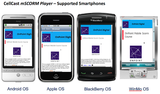
We're pleased to announce the availability of the CellCast mSCORM Player, the latest extension to our CellCast Solution platform for enterprise mobile learning delivery. This new functionality allows mobile workers to access learning content deployed as standard SCORM v1.2 and v2004 SCORM packages (as generated by a variety of 3rd party authoring tools) and allows for full content playback and tracking in both online AND offline settings. We launch with support added to most of our core CellCast Widgets including all Android-based devices, Apple iPhones, iPad and iPod touch media players, BlackBerry devices (running BBOS 4.5 and higher) and smartphones running Windows Mobile v6.1 and v6.5. We also expect to add support for Symbian/S60 later this summer.We have to admit we weren't the first ISV to jump onto the "SCORM + Mobile" bandwagon; after all, the very nature of the current SCORM v1.2 and SCORM v2004 specifications suggest a mobile learner needs to be "online" whenever they launch a SCORM assignment to ensure connection between their mobile device and the content source/server running a SCORM API. Given OnPoint's dual strategy of supporting content consumption via mobile web AND native app (preferred!!) delivery models, the priority to add "SCORM support" slipped several times due to the technical complexities imposed by the web browsers of most mobile devices. But our larger enterprise customers and prospects kept begging the question: "What's the deal with SCORM on mobile?" so we set off in earnest to devise a workable strategy. Deep thought and hard work yielded an elegant cross-platform solution in the form of a new mobile content player that met all of our requirements and integrated nicely with our core platform and tools. And for those select mobile devices that support Flash-based content, playback of mobile SCOs produced with tools like Articulate Presenter and Engage now works as well although the experience isn't ideal just yet due to the screen size limitations on most mobile devices plus memory allocation issues and slower-than-desktop processing speeds which hamper rendering. Special thanks goes out to Mike Palmer, our resident SCORM guru and the architect of our innovative CellCast mSCORM Player, who discovered a viable way to design a cross platform player that overcomes the myriad security restrictions virtually all mobile browsers impose on the operating environment of smartphone devices. Once perfected, Mike's player was integrated into all of other CellCast Widgets in a matter of a few days expanding our range of mobile SCORM support quickly and easily. Our efforts along the way have also been greatly assisted by Jason Haag and Judy Brown over at Advanced Distributed Learning ("ADL") who offered insights and advice as to where SCORM + Mobile is today and listened to our list of aspirations for where we hope it evolves in the future.Click the link below to view a short 3-minute demonstration of the new CellCast mSCORM Player on a Windows Mobile device; the clip was prepared by Mr. Palmer from "down under" in New Zealand who delights us with his Kiwi accent. CLICK HERE FOR VIDEO
Robert Gadd
.
Blog
.
<span class='date ' tip=''><i class='icon-time'></i> Jul 29, 2015 10:21am</span>
|
|
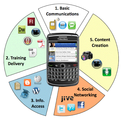
It has certainly been a "month of Sundays" since I last posted to this blog and I offer apologies for not sharing more throughout what has proved to be a very busy and productive summer and fall season. I thought it would be good to offer a series of new posts around some of the messaging we'll be sharing with the gathered mobile learning community at DevLearn 2010 in San Francisco, California which starts later this week. To kick off this series of updated posts, we thought we'd start out with an overview of the wide and varied feature sets we've witnessed our customers and partners addressing in the so called "mobile learning space." As discussed recently with Judy Brown, ADL's mobile learning expert and industry Mobile Maven, the concepts underlying mobile learning run wide and deep. In our experience, enterprise customers serving the exact same markets will often select and apply vastly different feature sets to achieve their own stated mlearning goals and objectives.The Feature Sets - A Range of Possibility The variety of available mobile devices enables a myriad of potential uses for the preparation, delivery and tracking of learning for mobile workers; and the more capable the mobile device, the wider the array of possible content delivery methods. As shown in Figure 1 below, we classify these possibilities into the five different classes of learning content and focus much of our R&D efforts into how we can help our customers and partners to leverage each type to broaden the learning experiences for their targeted mobile audiences. Figure 11. Basic Communications. Basic voice and messaging communications represent the primary reason and easiest cost justification for enterprise mobile device purchases. For most organizations, the ability to contact a person either through a phone call, an email or a text message remains the principal use case for equipping a manager, salesperson or field technician with a company-supplied device. Everyone knows how to use their issued device without much (or any) training and these devices facilitate the completion of typical knowledge worker tasks just about anywhere. And as highlighted in previous posts to this blog, the basic communications features found on virtually every phone can be used to distribute a variety of mobile learning content types that enable anytime/anywhere learning for enterprise workers. 2. Training Delivery. Indeed, knowledge workers can learn new things and acquire new skills leveraging properly designed and formatted content on a supported mobile device. Common learning experiences include learning a new skill, refreshing a recent training or reclaiming forgotten knowledge. Just like desktop learning methods, the variety of content types possible in the mobile realm - especially with more capable smartphone devices - are broad and varied and include videos, podcasts, mobile versions of traditional "page turner" courseware/modules, animated slide presentations and more. All required and optional assignments can be accompanied by integrated tests/quizzes/surveys to measure learner assimilation or opinions. Most mobile learning content tends to be packaged in shorter, bite-sized deliverables for easier and more frequent consumption. 3. Information Access. In many cases, learning while mobile may not be about assigned content at all and be much more about providing just-in-time access to a variety of on-demand resources and reference materials which can be read and mined for relevant information at the time of need. Examples of on-demand content span access to appropriate (and compatible) web sites and RSS feeds, mobile-friendly publications in traditional Adobe Acrobat/PDF format and long-form materials in more contemporary eBook and ePub formats. 4. Social Networking. Sometimes the best way to learn is for a learner to connect directly with an actual expert or an entire extended learning community. The growing popularity and acceptance of social networking in support of enterprise learning is driving organizations to identify and implement effective ways to build and manage these communities to harvest institutional knowledge and extend the reach of the best ideas and people out to others wherever they are and whenever they need it. The real trick is to harness the power and potential of the popular social network methods and sites (e.g., Twitter, LinkedIn, Facebook, Yammer) but channel all relevant social interactions into a private monitored and managed network that properly vets and leverages organizational value. Mobile devices -- especially smartphones - are well suited to package, deliver and manage these social interactions as part of the overall fabric of a blended learning environment. 5. Content Creation. Finally, easy-to-use features are available on both basic feature phones and advanced smartphones that can enable an organization’s content consumers to actually become content creators using their own mobile devices. User-generated content can be authored in many different formats using recorded voice for audio podcasts such as a customer testimonial, camera snapshots for visual imagery of a competitor’s product capture "in the wild" or a short video of a subject matter expert detailing a practical process or procedure they’ve mastered that can benefit others across their learning community.As you can see, there are many possibilities and potential feature sets to leverage across any organization seeking to broaden the range of mobile learning services and solutions they wish to deliver to their target audience. Thankfully, there's no one-size-fits-all answer to which of these feature sets work best or should be implemented first -- each team just needs to pick what's right for them and addresses their own objectives.
Robert Gadd
.
Blog
.
<span class='date ' tip=''><i class='icon-time'></i> Jul 29, 2015 10:20am</span>
|
|
We're pleased to officially announce two awards for OnPoint's CellCast Solution gained from our recent participation in DemoFest 2010 held in conjunction with The eLearning Guild's annual DevLearn 2010 Conference in San Francisco. The awards were given in support of our entry titled "mLearning: Learning on the Go" in the Sales Training category that OnPoint jointly submitted for consideration with CellCast customer Verizon Wireless. Our winning entry in the Sales Training category also was recognized as "Best in Show - Vendor" for the entire event. The annual DemoFest contest is a "people’s choice" style competition where participants vote for the courses or applications they consider the most innovative solutions or approaches to various e-Learning challenges. Participants see a wide variety of demonstrations and have a chance to talk to the designers and developers about the tools, technologies, and processes they used to meet their project’s goals and objectives.OnPoint worked with Verizon Wireless on a project designed to provide their outbound sales teams with greater and easier access to regular sales practices, production/solution previews, and updated business communications; the solution utilized OnPoint’s CellCast® mobile learning platform to make that content available via a variety of company-issued smartphones. By making content available beyond the standard classroom or desktop-delivered experience, Verizon Wireless was able to provide enhanced access to just-in-time training in a shortened time frame via the customized mobile application on users’ smartphones, including Android ®, BlackBerry® wireless handhelds and Windows Mobile ® devices. The end-to-end mobile solution provided by OnPoint compliments Verizon Wireless’ existing enterprise LMS platform and extends their blended learning environment to their ever-mobile sales professionals. Key objectives of the project included the ability to create and deliver a broad array of content types to a variety of mobile device platforms, along with full integration between OnPoint’s CellCast platform and Verizon Wireless’ enterprise LMS—all while meeting strict security guidelines mandated by Verizon’s IT and Learning/Development management teams.And while it is certainly wonderful to gain recognition for our efforts and technologies from the learning community at large, the real "icing on the cake" was the fact we won and share this recognition in conjunction with the outstanding team we've worked with at Verizon Wireless. Without the commitment and forward-looking vision of great customers, our efforts to create great tools or technologies would have a hard time finding tangible meaning or purpose. VZW helped us "up our game" considerably on so many fronts and helped to "raise the bar" on what's possible -- and soon to be expected -- in enterprise mobile learning!!And final kudos to the entire OnPoint Digital team of designers, developers, engagement managers, sales and marketing staff for their daily contributions that make this sort of recognition something we can all share. Here's a link to the official press release containing all the details: http://bit.ly/e7Q8Bo
Robert Gadd
.
Blog
.
<span class='date ' tip=''><i class='icon-time'></i> Jul 29, 2015 10:19am</span>
|
|
A.K.A. How our January 2010 Predictions Played Out! As we reach the first anniversary of this blog’s introduction, we thought we’d take stock and figure out how things are going by revisiting our list of predictions for enterprise mobile learning in 2010. On balance, it was an interesting year and there were far more expected outcomes than there were actual surprises. That said, the degree with which some of our past predictions came to pass proved quite varied whereas some truths were validated akin to a "base hit" in the game of baseball whereas others were "doubles" or "triples" and even a "home run" and "strikeout" or two! So here are the predictions from 12 months ago and the tally (score) for "runs batted in" -- or at least attempted -- during the 2010 mLearning season:Traditional "e"-learning vendors will all jump into the "m"-learning and social networking spaces with "first generation" offerings they believe will address the mobile requirements of their customers and prospects; these early efforts will prove largely ineffective as evidenced by their many iterative and incremental updates, retries and course corrections.Validated ("Double"). Indeed, many traditional eLearning vendors ventured into the market though not in the volume or with the fanfare we had postulated twelve months ago. In fact, each of the "Four Horsemen" who rule the enterprise - namely SumTotal, Saba, Plateau & Geolearning - gave it a go in some way although no one outside their immediate customers or PR agencies seemed to notice. Several more of the Tier 2/Tier 3 LMS vendors also "tossed their hat in the ring" (or towards it anyway) announcing some way of publishing content so it could appear via a mobile browser on the iPhones, iPads and Android device trying to capture a few of their most "loyal fans" in learning land. ---------------Rather than getting easier, the mlearning landscape will actually grow wider/deeper and far more complex as enterprises are forced to include/support several disparate mobile devices and changing end user demands; this scenario will drive further demand for enterprise-grade content authoring and delivery platforms for mobile learning.Validated ("Triple"). From our own experience, enterprise mLearning engagements were more complex and multi-faceted given the fact the average deployment was bigger, more varied in terms of content and devices supported, and customer/partner expectations were far higher. As predicted, the methods and tools needed for mobile content authoring and delivery also matured a generation or two over the "season" and a few new use cases for mobile learning appeared too. Along the way, OnPoint was asked by one of our wireless carrier customers to provide the first enterprise mobile authoring environment supporting completely separate staging/QA and production servers but allowing for content syncing to a single, secure mobile application instance on one device - a feat tantamount to hitting one over Fenway’s Green Monster but soon realized after some cleaver programming.-------------- Mobile learning will meld with social networking on every learner's mobile device making the two technologies a fully integrated experience; support for these two technologies will be an essential part of every mlearning vendor's core offerings.Validated ("Single"). Mobile Learning and Social Networking each attained much higher hype levels across the Training & Development during the 2010 "season" and both concepts were featured topics in articles and conference sessions alike. While 2010 was certainly the year that Facebook assumed its place atop the infotech mantel and the social context of just about everything training action was contemplated, the ways and means to leverage the popular and very PUBLIC social networking and social media applications like Facebook, Twitter, Linkedin, YouTube and others seemed less than adequate for more security conscious enterprise organizations. OnPoint stepped up to plate here - to satiate pent-up demand in some and spark new interest in others - by introducing an integrated set of social features that blend "formal with informal" with support for PRIVATE mobile discussion forums, access to blogs and wikis, and support for mobile captured/user-generated content. Admittedly, most customers are still trying to wrap their minds around the myriad possibilities for mobile/social but many of the emerging use cases are proving to be both fascinating and rewarding. ----------- Tablet-based content delivery of mlearning will win our "hearts & minds" over netbook-based content delivery thanks largely to the arrival of Apple's much rumored "iSlate" tablet offering. Others vendors will quickly follow/respond.Validated ("Grand Slam Homer"). The industry finally witnessed the arrival of Apple’s highly anticipated tablet onto the field in Q1 and upon shipment somewhere around "opening day", the appropriately named "iPad" set a standard by defining a new device category and capturing 95% of that market with 14+ million units sold in less than nine months. Reaction from Apple’s competition has predictable at the marketing level ("Yeah, we’ve got one of those too!") but generally tepid on the delivery front ("Coming soon!" or "Wait until you see the next version!"). From a content perspective, these new tablets take smartphone-oriented mobile learning and give it a better user experience plus they enable new and compelling long-form content types like readable PDFs as well as far more flexible ePUBs/eBook-style documents. From an enterprise developer’s point of view, the iPad proved easy to support as we quickly re-factored our CellCast Widget for the iPhone to support new user interface standards/suggestions and it all just worked! We have been pleasantly surprised at the way this new device not only captured the hearts and minds of the business and learning communities with the many new affordances it brings but also in the way organizations have simply gone and purchased 50 or 250 or even 500 iPads for execs or field workers without any plan as to how they’ll use them (or communicate with or secure them); in short, the iPad is busting down IT’s door and forcing enterprise organizations to support mobile devices beyond just the BlackBerry. The iPad isn’t the only game in town though as Android-based devices like Samsung’s popular Galaxy Tab and RIM’s upcoming PlayBook provide alternatives that fill in some of the iPad’s perceived gaps (e.g., lack of Flash support). There will certainly be 30+ tablet devices to choose from by mid 2011 and all will help to grow the market and a select few will actually succeed as products. The recent release of our CellCast Widget for Android Tablets has been well received by customers especially with the inclusion of a new Flash Player template we produced that transforms Articulate Presenter content into something that sizes and plays well on Android mobiles. And while the upcoming RIM PlayBook shows potential for mobile learning delivery, we’re disappointed that the many years of development work needed to produce our BlackBerry apps yielded nothing as be began to build new Playbook apps. Sometimes the "fresh sheet of paper approach" is a good thing but here it proved quite frustrating given the fact our moves to support iOS and Android-based tablets didn’t require us to start from scratch resulting in a "swing and miss" the first time at bat.-----------------The acceptance and adoption of "cloud computing" resources for mobile learning will become commonplace as IT budgets remain strained and the complexity of mobile authoring and delivery continues to increase - especially in larger, more complex environments.Validated ("Triple"). This one plays on the current trend and seems to be gaining slow but steady momentum to claim the pennant. Our experience in 2010 found ALL of our new customers and partners went "hosted" instead of installing enterprise ("behind the firewall"). Given OnPoint’s hosting center is SAS70/Type II certified and we’ve proven we can keep an organization’s data safe and highly available, the many concerns IT/InfoSec harbored in past seasons no longer seem to be causing rain delays. More significantly, our growing hosted customer base now includes financial services, pharma/healthcare, government and many of the world’s leading carriers and tech OEMs who are now confident to outsource their mlearning services "into our cloud" even though they often support 1,000s to 100K+ servers of their own. ---------------- Mobile learners will begin to expect (and demand!) the ability to seamlessly manage and synchronize assignment access, delivery, review and completion between their desktop PC and their mobile device(s).Not Validated ("Pop Fly Single" - but Caught!). The impact here is yet to be measured or realized due to the fact that most enterprise organizations haven’t implemented let alone identified their mobile learning strategies yet. As such, the need to seamlessly manage the interaction between mobile and online learning delivery is only something that’s perceived as a challenge (or necessity) to the early adopter crowd and requires their mobile learning efforts to be fully integrated with their backend LMS platform; those select few enterprise customers entering large scale deployments are realizing the gains from true anytime, anywhere learning.----------------- Mobile learning projects delivered in established and emerging global markets will outnumber those delivered in North America (USA/Canada) due to greater interest, faster uptake and willingness to leverage mlearning on both basic feature phones as well as advanced smartphones.Not Validated ("Strikeout"). Time has proven us wrong on this prediction as it relates to OnPoint’s direct and channel business efforts around the world. Up until 2010, the market for smartphones globally - especially those addressable for enterprise mobile learning efforts - seemed to be maturing much faster outside of North America with carrier interest and prospecting activity levels in Asia Pac, South America and EMEA leading the interest shown here. Sure, we had interest from enterprise training teams wishing to do their inaugural mobile learning pilots coming in from everywhere but the projects that seemed to go faster and grow larger were mostly here in North America and spanned industries as well as devices. We attribute these outcomes to two facts: (1) North American carriers were selling (and subsidizing) more smartphones and tablets devices as logical replacements to their subscribers’ aging feature phones and (2) the lack of any measurable interest in Nokia/Symbian-based devices across North American meant the "app craze" focused on those devices made on "this side of the pond" (e.g., Apple iOS, Android, BlackBerry, Windows Mo/Pho). -------------------- In the smartphone realm, mobile web-delivered content will prove to be a less compelling mlearning experience as compared to mobile application-delivered.Validated ("Home Run"). The mobile learning "app" has won the day in the race for mobile device content delivery over the less interesting mobile web for a variety of reasons and we feel we’re qualified to weigh in with our opinion here given we’re one of a select few vendors who actually provides support for content delivery in either method through one unified platform. Indeed, mobile apps are harder to create and to support but the value derived from an installed app proves far more beneficial and powerful for the typical enterprise customer, especially those looking to support their own defined users rather than their more macro vendor/customer/partner ecosystems. True, accessing mobile learning content via a device’s embedded web browser is an effective and useful delivery modality but the experience is generally watered down to what works at the lowest common denominator level. Conversely, the mobile app experience provides better and more varied content, is FAR more secure, works anywhere the learner needs it (including when there’s no communications signal) and can integrate better into the way learners think about and use their mobile devices. In our opinion, those vendors touting the virtues of the mobile web over the mobile app have yet to figure out how to build and support mobile apps especially in multi-device deployment scenarios so buyer beware. We agree the mobile web experience is improving and so are our own offerings in the corner of the field - we just don’t think the mobile web experience can "hit against" the mobile app experience and win the game.-------------------- Security will become a MUCH bigger issue for mlearning deployments and all vendors will need to step up their game to ensure content/IP protection and integrity while making access easier.Validated ("Home Run"). This is played out to have just about as big an impact on mobile learning as the app-based tablet did (above). Securing not only the content and the whole end-to-end experience for the mobile learner became a mission critical dynamic for virtually every enterprise mobile learning engagement this year and rightly so. The very nature of a mobile device - meaning it travels everywhere with the learner in their pocket or purse - means anything staged for delivery at the moment of need is also living far outside the physical confines of the enterprise security gates imposed by the organization. Whereas an online course accessed via a portal can be launched most any time too, that same sensitive or proprietary content never finds itself in a position to be casually viewed by a learner late into the evening at a party pr by an unintended audience if their device was accidently misplaced, stolen or even innocently shared (e.g., "Yeah, check out this new product we’re selling next month!"). Security proved to be a primary development and delivery focus throughout 2010 - both on device and on the server - and we can confidently state the mobile learning experience is now actually MORE secure than the desktop learning experience much to the pleasure and comfort of the IT department. -------------------- The arrival of Adobe's Flash Player v10.1 for (most) smartphones will prove far less significant of an event due to the fact content navigation and onscreen interactions will prove difficult on most of the currently deployed enterprise smartphones. Validated ("Triple"). The hype surrounding mobile Flash reached fever pitch in 2010 although little tangible effect was felt on the field of play. The controversy swirling around the lack of Flash support on the new iPad and the existing iPhone/iPod touch devices certainly drove greater awareness of the classic mobile learning content paradox - that Flash content created for the desktop doesn’t work on most smartphones. Those just arriving at the mlearning party in 2010 for the first time seemed to find this situation especially annoying given the fact these new tablet devices had such nice screens and Internet services all ready to be tapped. And much of the promise of Adobe’s Flasher Player v10.1 seemed to fall short of the mark as Android was really the only mobile device OS to ship with a fully functional version of that player in 2010. RIM stated in late 2009 their support was likely to appear in BBOS6 but that didn’t happen. Microsoft focused its energies on ways to leverage its own Silverlight support within the new Windows Phone 7 environment before it adds Flash Player support. And Apple’s public feud with Adobe promoting the coming HTML5 specification over Flash on all iOS devices was much covered too. (NOTE: The lack of Symbian-based smartphones in the North American market meant that while Flash content on Nokia devices was possible, it just wasn’t happening much).In those cases where Flash content actually is supported on a mobile device, not all learning content proved to be appropriate or work as expected. In our experience, sending a single "SWF" file provided strong results but attempting to push out (or access over-the-air) a Flash-based learning module on a device didn’t impress many learners (or content authors) without some basic rethinking of the content produced. The full gamut of popular rapid development tools likes Articulate Presenter, Adobe Captivate, Techsmith Camtasia Studio and many others produce content as multi-file/multi-folder outputs that tend to run sluggishly on even the most advanced mobile devices and currently offer no alternative mobile-friendly templates with skins/buttons optimized for the mobile learning experience. As stated above, we needed to create our own specialized templates that bridge the gap between publishing for the online world and the mobile world and found solid success supporting environments with newer Android devices.-------------------- By year end, HTML5 will make rich media playback on mobile devices more practical and compelling too making Flash-based content on mobile less of a need.Not Validated ("Stikeout"). Here’s another prediction that didn't play out as we thought it would. Indeed, HTML5 does hold great long-term promise but the specification is still very much a work in progress (due to be ratified in 2013) and only a reasonable few (read: newer, more expensive) mobile devices fully support the spec as written in today’s program. Adobe was the first to add (relent) HTML5 publication support to their Creative Suite 5 offiering and other tool vendors are starting to follow suit like Trivantis with the latest Lectora Publisher but don’t expect those tools to output learning content that works on the legacy smartphone devices you have across your enterprise. We expect more tools will provide publication to HTML5 support in the coming weeks and months of 2011. ------------------- The first several "sizable" enterprise mlearning projects using Apple iPhones and Android-based smartphones will be delivered into the marketplace as mitigated security concerns make way for a superior on-device experience versus today's standard corporate-centric BlackBerry, WinMo and Symbian (Nokia) interfaces.Validated ("Triple"). This surely happened and several of our largest enterprise pilots and subsequent deployments were based on either iOS devices, Android devices or some combination of both. In fact, many cases where existing customers mandated BlackBerry-only deployments relented and started allowing iOS and Android-based devices into their mix. The current is moving strong and deep towards multi-device environments now that security and content transcoding ("write once/deploy anywhere") tasks have been largely mitigated or eliminated altogether. And the trend towards "bring your own device" is also driving the multi-device mobile learning culture as workers are allowed to select and use whatever device they prefer at work to suit their tastes and carrier preferences. ------------------- Augmented reality applications for mobile learning will begin to appear but because solution development is expensive, technically challenging, and device dependent, AR will capture more headlines than actual budgets.Validated ("Triple"). We continue to read a lot about it but haven’t witnessed any practical use cases deployed out in a production learning environment for training-centric Augmented Reality. Maybe next year.Well, that’s how the game played out in our minds for 2010. Keep an eye out for an upcoming blog post containing predictions for 2011 already shaping up to be a tournament kind of year with lots of new technologies, companies and services stepping to the plate. Batter up!!
Robert Gadd
.
Blog
.
<span class='date ' tip=''><i class='icon-time'></i> Jul 29, 2015 10:19am</span>
|
|
It is time once again to ponder the research, extrapolate on recent experience, and attempt to read the tea leaves so we can predict the future of enterprise mobile learning in 2011. After such an exciting and rewarding 2010, my predictions for the coming year seem broader and more varied given the fast changing dynamics of the marketplace and accelerated adoption of mobile learning by organizations of all sizes.1. mLearning Engagements Expand. If 2010 was the year of the pilot, then 2011 will be the year of the deployment. As I stated in the previous post assessing my 2010 predictions, the size and complexity of mobile learning projects/programs will continue to expand across all geographical and line-of-business boundaries. I think case studies from enterprise organizations on the leading edge will abound by year’s end for successful mobile learning initiatives by thus providing the "I want to do what they did!" examples the industry has waited for over the past many years. Case studies featuring accelerated ROI with tens of thousands of learners (or more!) using different types of devices in multitudes of languages across diverse geographies are sure to drive awareness in mobile learning and generate interest from organizations of all sizes seeking to achieve their own successes and become more innovative in the way the train and support their ever-mobile learning communities.2. Device Diversity is the "New Normal". After years of BlackBerry dominance in the pockets and purses of enterprise personnel, iOS (Apple) and Android-based mobile phones and tablet devices will supplant RIM-supplied smartphones as the primary desired (and likely used) smart devices for mobile learning - at least in North America. This shift will be driven by a combination of factors including learner (and executive) demand, IT acceptance and infosec approval plus a movement towards the adoption of "bring your own device" use policies within the enterprise. Sure, companies may still provided workers with an old BlackBerry (on a 2-year contract), but increasingly more people will opt to use their own iPhones/iPads or Android handsets or tablets once their devices can be secured and supported within their organizations. 3. Mobile Apps Become Essential to Enterprise mLearning. As stated in our previous post, the mobile learning "app" has proved its superiority over less compelling mobile web-delivered training materials. True, mobile apps are harder to create and to support but the value derived from an installed app proves far more beneficial and powerful for the typical enterprise customer, especially those looking to support their own defined workforces versus a broad general audience. I will agree that accessing mobile learning content via a device’s embedded web browser can be an effective and useful delivery modality (and is improving every year) but the overall experience is generally watered down and less effective and engaging. Conversely, mobile learning apps provides better and more varied content, are FAR more secure, work anywhere the learner needs to learn and can integrate better into the way learners think about and use their mobile devices. Remember, there’s a reason we all use an app on our smartphones to access email, check our calendar, search our contacts and watch media clips instead of trying to log into a server somewhere to accomplish those same tasks. 4. Pad/Tablet Use Explodes! The emerging pad/tablet market will gain further momentum and an increasing number of enterprise organizations will start to support/provide the larger form factored devices to their field sales, technical and professional staff. Given the fact these devices slot into our device lineup somewhere between the typical smartphone and a laptop in terms of size and capabilities, many organizations will start to drop the laptop and supply BOTH a tablet and a smartphone for every mobile worker/learner - and don’t be surprised if these are supplied by different vendors too like having a BlackBerry (or similar) handheld AND an iPad (or similar) tablet. The challenge for T&D and IT departments becomes how they will support the use of multiple devices for each worker with issues ranging from "single sourcing" content production (write once/deploy anywhere) to content distribution to security to cross-platform tracking and synchronization (think: completion of an assignment on a learner’s BB device must then be reflected on their iPad device ASAHP). I speculate RIM’s first generation PlayBook tablet will also ship to mixed fanfare for enterprise mobile learning customers due to the lack of available applications supporting off-grid learning. After almost 18 months, RIM’s AppWorld site has only grown to around 15K "apps" for BlackBerry wireless handhelds and none of these current apps work on the upcoming PlayBook tablet meaning a whole new series of apps must be written - the classic "chicken & egg" problem. Meanwhile, next generation iPads and Android 3.x devices - each with tens of thousands of available apps - will help fuel continued adoption of Apple and Google-designed tablets in the learning space. 5. Authoring Tools Will Evolve. Flash will still not be supported on iOS devices in 2011 but this fact will matter far less over time. Apple’s insistence on never wanting to support Flash content on iOS devices will drive innovation across the authoring tool market that is sure to benefit everyone in the Training & Development field. I feel the time is just around the corner than "Publish to HTML5" options appear within the leading content authoring tools making it easier to design, generate and support compelling interactions and animations without needing a Flash Player on-board the device. On balance, the downside to this means we will actually need more tools to create content that spans all the mobile devices we are targeting for training delivery given most older enterprise mobile devices support neither Flash nor HTML5 due to their very dated browsers. If we lived in a world where everyone had brand new (and updated) devices, mobile learning would be easy but they don’t so it isn’t. 6. Private Social Networks Win Over Public. It was no surprise to many of us that Facebook was the most heavily trafficked web site in 2010 and displaced Google for the first time in many years. There’s no denying the power and reach of social networking in the technology space but we remain convinced that PUBLIC SOCIAL sites like Facebook, Linkedin, Twitter, Flickr and YouTube all have diminished value as part of an enterprise learning community when compared with the various PRIVATE SOCIAL sites and applications now available. We strongly agree having anytime/anywhere access to our business social network can provide great value, that having tools to share information like pictures and videos and podcasts generated by users instead of business functions can bridge learning divides, and that weaving informal into formal makes us all better equipped and informed. We believe that public sites like Facebook and Twitter (amongst others) will not end up becoming the hubs where the learning organization wants their community to gather and share insights due to the lack of security, privacy, oversight and control that are relevant today and even more essential tomorrow. As such, most business-centric social interactions must to seamlessly integrated into the enterprise learning environment and at every mobile access point too.7. Market Consolidations Will Occur. Some form of consolidation will come to the mobile device/handset sector as a few of the key but descending players -namely Nokia, Microsoft, HP and RIM - aligning themselves together to try and overcome the momentum of the two ascending players - namely Apple and Google. We wouldn't be shocked to find Microsoft’s new Windows Phone 7 OS appearing on upcoming Nokia handsets or tablet devices, or RIM getting acquired by Microsoft or another tech titan like IBM Global Services in a deal akin to HP acquiring Palm in 2010.8. Here Come the Experts! The growth of mobile learning in 2011 will beget a slew of newly-minted mobile learning and mobile content experts, boutique consultancies, mobile development shops and "me too" vendors all claiming they possess the knowledge, expertise and experience we all need to make us successful in mobile; take most such claims with a grain of salt. The stark reality is the practice of mobile learning is vastly different than what online learning has been to this industry for 15+ years and just owning a few iPhones or Android tablets or RIM PlayBooks and surfing the web for a few days doesn’t yield any tangible experience when looking to help someone plan, structure, build, deploy, support and integrate a new mobility strategy into an overall enterprise learning program. Expertise using just one authoring tool, or design method, or supporting one kind of mobile device translates poorly for replicating an inaugural success into different work environments. Whenever you're encountering/considering tools from mobile vendors, remember the adage anything labeled "version 1.0" is probably more akin to "version 0.82 (beta)" and the proven iteration you'd bet your business on is probably "version 2.0" or higher. Buyer, beware!9. New Features and New Possibilities. One of the greatest joys and challenges of being in the mobility space is keeping up with the constant pace of change and innovation. In our experience, learners within and teams supporting enterprise mobile learning environments are all interested in finding ways to derive the benefit of new features and functionality offered on better and faster devices. Our own development roadmap is expanding with the many possibilities afforded through upcoming advances like (a) geo-location, (b) near field communications ("NFC") that may help contextualize learning at a specific location or assist in the bi-directional exchange of pertinent data, (c) augmented reality delivering just-in-time learning opportunities via interactive overlays, (d) the use of gaming scenarios integrated within a structured mobile learning experience, and (e) tighter integration between learning and a devices universal in-box function. And along the way we plan continue to innovate and iterate on "mil-spec" mobile security, authentication/single sign-on, cross-platform integration tools, and interface customization features that will benefit all our customers and partners.So now it’s time to sit back and watch it all play out for the next twelve months. We look forward to the many opportunities to will come our way this coming year and to overcoming the myriad challenges that pop up in our path as we help make mobile learning a positive reality and measurable benefit for all the customers, vendors and institutions out there looking to leverage mobile learning in 2011.
Robert Gadd
.
Blog
.
<span class='date ' tip=''><i class='icon-time'></i> Jul 29, 2015 10:19am</span>
|