Blogs
|
People tend to see stress as a negative aspect of their lives, but as Benjamin Bonetti states in How to Stress Less, stress can actually have a positive influence. Many people, including athletes, choose to use stress as a motivator. Understanding the effects of stress and how it can be managed is crucial to helping people overcome its negative effects.
According to Bonetti:
Stress does not have to be accepted as a fact of life. It can be managed through a series of choices, including the choice to view negative situations in a positive light, exercise, and eat proper foods.
Foregoing rest and recovery after a stressful event intensifies a person’s stress reaction. Taking time to rest and recover will help an individual get out of a panic state.
Negative people tend to find acceptance with other negative people, but choosing to focus on the positive is an important factor in overcoming the effects of stress.
A positive self-image is necessary for generating a positive outlook on life. Negative self-talk can be particularly detrimental to one’s self-image. It is important for people to recognize when negative self-talk is occurring so they can stop the practice.
Stress triggers are based on past experiences and observations. Changing those triggers is an essential part of stress management. People should ask themselves if they are thinking in a manner that creates the best representation of the current situation.
Medications can mask the symptoms of stress, but they do not address the root cause of the stress itself. People should manage their stress through positive choices, such as exercise and proper eating. Exercise, in particular, boosts people’s moods, which in turn creates more motivation to exercise and make other healthy choices.
To learn more, please visit www.bizsum.com
Jerry Eonta
.
Blog
.
<span class='date ' tip=''><i class='icon-time'></i> Jul 29, 2015 10:39am</span>
|
|
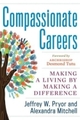
Members of today’s young Millennial generation strive to become part of something bigger than themselves. Despite the social stigmas, family objections, and financial concerns that have typically deterred people from cause-driven work, many young people today are seeking compassionate careers in cause-focused organizations. By following the nine-step framework detailed by Jeffrey W. Pryor and Alexandra Mitchell in Compassionate Careers, young people can discover what they truly care about, explore their opportunities, build their connections, and get started in their pursuits of compassionate careers. The framework can be applied to navigate young people toward the paths that will bring meaning into both their work and personal lives.
According to the authors, young people should do the following when trying to decide on a career path:
Find a path with a heart. Young people want to make a difference in the world, and opportunities abound across the globe. Between nonprofits, foundations, corporate social responsibility firms, and social enterprise organizations, young people have many opportunities to find compassionate careers.
Overcome social stigma. Some young people have hesitations about working in cause-focused organizations. The most common hesitations revolve around professional status, family support, integrity and trust, compensation, and prospects for diversity.
Begin change with a spark. Young people are typically inspired by role models, their communities, or epiphanies. Once inspired, they must decide which causes matter most to them.
Turn angst to action. Many young people are inspired by life’s challenges. When this happens, they must reassess their priorities and advocate for their causes.
Explore the options. When considering compassionate careers, young people must think about their personal preferences, stress levels, culture fits, and brands. Once they have identified the types of organizations they want to work for, they should develop their educational backgrounds and professional networks.
Navigate by choice. Young people should be aware of organizations that do nothing to invest in their future. They must know what they want to achieve and develop their own paths forward.
Consider jobs without borders. International opportunities are plentiful, but before going global, young people must consider if they have a spirit of adventure. If they do, they must also consider their families and interdependence issues before deciding to go abroad.
Become the River Keepers. Young people in compassionate careers must be grateful to the River Keepers, the people who came before them and paved the way. As they become River Keepers themselves, young people must work hard to contribute to the character and quality of others’ lives.
Get started. To get started on the path toward compassionate careers, young people must identify their values, overcome their concerns, explore their resources and opportunities, and navigate toward making money while also making a difference.
To learn more, please visit http://www.bizsum.com
Jerry Eonta
.
Blog
.
<span class='date ' tip=''><i class='icon-time'></i> Jul 29, 2015 10:39am</span>
|
|
The professional world is characterized by high levels of stress, discontentment, and burnout. Individuals spend their entire lives laboring in their chosen professions, and the joyless attitudes that define much of the modern approach to work produces palpably unpleasant results. Spurred by the prevalence of mindless misery in the workplace, Dr. Stephen McKenzie pennedMindfulness at Work in an attempt to introduce the meditative discipline of mindfulness to today’s modern professionals. By offering helpful tips on integrating mindfulness practices into people’s everyday jobs, Dr. McKenzie explores how forging meaningful connections results in positive health benefits, increased job satisfaction, and improved performance.
According to the authors:
Leadership is highly valued in the workplace, but a precise definition can be difficult to identify. Mindful leadership is characterized by true engagement with others and the realization of collective goals rather than self-interest and power-centric objectives.
Individuals generally pick professions and stick to them for their entire working lives. This can often seem like a prison sentence, but by incorporating mindfulness principles into their professional activities, individuals can transform their outlooks and increase their personal satisfaction.
Professional relationships can be hard to manage; therefore, leaders must place relational perspectives around mindful principles to find common ground and work for a common good.
Creativity is a frequently used buzzword in the workplace, but it is often seen as elusive and difficult to capture within the parameters of a job description. Mindful professionals can heighten their creative output by simply letting go of whatever is stopping them.
Many job-related tasks can seem monotonous and frustrating, but by engaging with the tasks at hand and shedding previous notions of their characteristics, mindful professionals can find deep enjoyment in even the most mundane chores.
All industries can benefit from a healthy dose of mindfulness, but some professions in particular can see very specific results, including those in healthcare, law, education, sales, and the arts.
To learn more, please visit http://www.bizsum.com
Jerry Eonta
.
Blog
.
<span class='date ' tip=''><i class='icon-time'></i> Jul 29, 2015 10:39am</span>
|
|
As the demands of work and home life continue to escalate, people are feeling more overextended, overwhelmed, and overstressed than ever before. However, at the same time, people want to be more meaningfully productive and live personally fulfilling lives. In The 5 Choices, Kory Kogon, Adam Merrill, and Leena Rinne explain how extraordinary productivity and personal fulfillment is attainable for everyone—it just requires making the right choices when it comes to managing decisions, attention, and energy. The authors present a matrixed and logical process for choosing, on an ongoing basis, how and where to best spend one’s time and attention in order to create a productive and fulfilled life.
According to the authors:
Anyone can do extraordinary work. Every person has unique gifts, skills, and talents he or she brings to the table. By making the right decisions about which activities to focus attention on and ensuring energy is expended and replenished appropriately, those gifts, skills, and talents can be maximized for extraordinary results.
Being extraordinarily productive is both easier and harder than ever before. In the high-tech information age, individuals have more opportunities than ever to make significant contributions in their work lives. However, the information age also brings with it a constant barrage of demands that can distract them from getting the most important work done.
Do more by doing less. Being busy is often confused with being productive. By focusing efforts on the truly important things, individuals can do less overall while ultimately achieving more.
People can change their brains. The brain is capable of both reactive (automatic) decision making and proactive(thought-based) decision making. By becoming more conscious and less automatic in decision making, people can change their brains to be more thoughtful on an ongoing basis, which leads to better choices in the long term.
Do not just think-do! Thinking about making life changes is well and good, but without a developed plan for executing these changes, they are nothing more than wishful thinking. Extraordinary productivity requires a plan, a schedule, and follow-through.
Technology is both a blessing and a curse. Technology has the capability to make life much easier by streamlining processes, enhancing communication, and creating new opportunities. However, it can also be distracting, intrusive, and a time waster if not used properly. The goal is to rule technology rather than be ruled by it.
Manage energy, not time. There are myriad time management systems to help people make better use of their time. The problem is that time is finite. It makes better sense to manage energy by continually using it and replenishing it to get the right things done in the time available.
Extraordinary productivity is a choice. People must choose between operating on "autopilot" and giving in to the lure of time-wasting activities or consciously taking charge of decisions regarding how to spend their time.
To learn more, please visit http://www.bizsum.com
Jerry Eonta
.
Blog
.
<span class='date ' tip=''><i class='icon-time'></i> Jul 29, 2015 10:39am</span>
|
|
We are happy to announce that Business Book Summaries now offers a selection of book summaries in French, German, and Spanish. We currently offer 50 book summaries in each language and will continue to grow this selection. To access our foreign language summaries, just click on the desired language in the categories section. Happy reading!
Jerry Eonta
.
Blog
.
<span class='date ' tip=''><i class='icon-time'></i> Jul 29, 2015 10:39am</span>
|
|
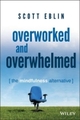
Most professionals do not realize that mindfulness, or the balance of awareness and intention, is the antidote to extreme stress. While mindfulness may initially seem like a complicated and elusive goal, leadership coach Scott Eblin demonstrates in his book, Overworked and Overwhelmed, that there actually is a straightforward methodology to achieving it. To this end, Eblin provides readers with an in-depth guide to the nature of mindfulness, as well as a set of mindful routines they can implement to curb feelings of burnout and be happier and more productive in both their work and home lives.
Eblin advises readers to:
Combine awareness with intention. Mindfulness requires professionals to cultivate an awareness of what is happening in the present moment and then take intentional steps to reduce the feelings of being overworked and overwhelmed.
Breathe. By practicing mindful, meditative breathing, professionals can control both their bodies’ fight or flight stress responses and the harmful effects on their health and cognitive abilities.
Identify best performance qualities. In order for professionals to identify the best routines to achieve mindfulness, they must first understand what their best performances look like. This way they have a reference point as to how they want to "show up" in their personal and professional lives.
Develop routines to reinforce mindfulness. Routines enable professionals to reduce the amount of time they spend making decisions. Mindful routines also provide a positive foundation for professionals to consistently show up at their best.
Strengthen body, mind, relationships, and spirit. In order to achieve mindfulness, professionals must adopt physical routines to stay healthy, mental routines to keep their minds free of clutter, relational routines to maintain their humanity, and spiritual routines to reinforce their sense of purpose.
Take measures to stay on track. To ensure that they stick to their mindful routines, professionals must work to mitigate their self-doubt, make themselves accountable to others, and practice time management.
Determine desired outcomes in the three important areas of life. In order for professionals to take mindful actions, they must first understand what outcomes they want to achieve in the domains of their home lives, work lives, and communities.
To learn more, please visit http://www.bizsum.com
Jerry Eonta
.
Blog
.
<span class='date ' tip=''><i class='icon-time'></i> Jul 29, 2015 10:39am</span>
|
|
Inspiring and motivating people are key aspects of leadership that are as critical as they are elusive. Leaders struggle to find ways to keep their people engaged and performing at their best, and this is largely because they misunderstand the nature of motivation. In an effort to push people to achieve results, many leaders employ counterproductive strategies. In Why Motivating People Doesn’t Work . . . and What Does, Susan Fowler reveals why traditional "carrot and stick" approaches to motivation will always fail to sustain results and explains the science behind what truly determines people’s attitudes and behaviors.
According to Fowler:
Motivation falls along a spectrum of six outlooks: disinterested, external, imposed, aligned, integrated, and inherent.
The disinterested, external, and imposed outlooks are suboptimal motivational outlooks; they yield only short-term or no benefits and do not lead to a positive sense of well-being. The aligned, integrated, and inherent outlooks are optimal motivational outlooks; they yield long-term benefits, sustained energy, and a positive sense of well-being.
People have deep psychological needs for autonomy, relatedness, and competence, collectively referred to as ARC. The more a person’s needs for ARC are being met, the more optimal his or her motivational outlook will be.
Meeting their needs for ARC is the end that people seek, consciously or not, and the means to that end is self-regulation. Three techniques support high-quality self-regulation: mindfulness, values, and purpose. The greater a person’s quality of self-regulation, the more optimal his or her motivational outlook will be.
Leaders cannot make others shift to more optimal motivational outlooks, but they can facilitate a shift by conducting motivational outlook conversations. They can teach others these three skills of motivation after they have learned to apply them personally: identify the current motivational outlook, shift to (or maintain) an optimal motivational outlook, and reflect.
To learn more, please visit http://www.bizsum.com
Jerry Eonta
.
Blog
.
<span class='date ' tip=''><i class='icon-time'></i> Jul 29, 2015 10:39am</span>
|
|
After many years of sitting on the sidelines and reading the postings of others, I've decided to enter 2010 with this new mLearning Trends blog where I can post my own scattered thoughts and musing about all things "mobile learning" and begin sharing my own experiences in the design, development, deployment and support of mlearning solutions for the enterprise. While I'm quite familiar with where mobile has come in the educational space, and our experiences have some nice overlap, the reality is our "world view" is very focused on how businesses seek to leverage mobile technologies to educate, inform and connect their workers, partners and extended business ecosystems. In short, we think about what managers and management need to do, not what teachers and administrators are trying to accomplish. So, these pages and all future posts will likely stay in that vein.After 6+ years of experience working on more than 100 different projects, pilots and proof-of-concept efforts in the mlearning space, we've got insights aplenty to offer here and I'm convinced the benefits to sharing these experiences will easily be reciprocated through a continuing and open exchange of ideas, tips and strategies for all. I'll start things off by offerings my own list of mobile learning-related predictions for 2010. As we reflect on the "ups & downs" of the year just passed and catch our breath before beginning anew, some interesting trends seem to await us in this New Year and their immediate and lasting affects are likely soon to be realized.By virtually anyone's take, 2009 was a challenging year for all and especially so wherever new technologies and IT budgets/spending were concerned. And mobile learning is still in its infancy where both mass market acceptance and adoption are concerned. After years of false starts and miscues, market acceptance for enterprise mobile learning in 2009 was largely stymied through slashed corporate spending and canceled next generation (or hopefully just postponed) projects. Thankfully, our company experienced an uptake in interest during the 4th quarter that actually led to several forward-looking companies deciding that waiting on the sidelines for a full year might prove a strategic blunder when preparing to catch the first waves that will front the anticipated market recovery we're all hopeful for.Moreover, cross-market trends in mobile applications, content, devices, web access and general awareness are now unstoppable and every organization must now move beyond the "pondering stage" and into the "action stage".Knock, Knock!! Who's there? Mobile. Mobile Who?MOBILE EVERYTHING!! So, where to start with this year's predictions? As with all things tech-related, we can anticipate several important events and introductions that will shape the next 12 months and consider them self-evident and thus there's no need to list them including strong technical advances from all of the top mobile device OEMs which will all spur innovation, broaden reach and ensure continued market adoption for mobile learning. We can all expect advances in next generation devices and capabilities from Apple, Google/Android, RIM/BlackBerry, Microsoft, Palm, Nokia and others. It is also easy to anticipate that informal/self-service learning will begin to trump formal/assigned learning in terms of "monthly seat time" as mobile learning begins to facilitate learning and contributing anywhere at any time.So, without further ado and in no particular order, I offer my early January predictions for mlearning in 2010. It will be interesting to see what transpires over the coming months and where things stand at year end. I'm also very interested in hearing any reactions as well as any and all contrarian opinions the blogosphere has to offer. Traditional "e"-learning vendors will all jump into the "m"-learning and social networking spaces with "first generation" offerings they believe will address the mobile requirements of their customers and prospects; these early efforts will prove largely ineffective as evidenced by their many iterative and incremental updates, retrys and course corrections.Rather than getting easier, the mlearning landscape will actually grow wider/deeper and far more complex as enterprises are forced to include/support several disparate mobile devices and changing end user demands; this scenario will drive further demand for enterprise-grade content authoring and delivery platforms for mobile learning.Mobile learning will meld with social networking on every learner's mobile device making the two technologies a fully integrated experience; support for these two technologies will be an essential part of every mlearning vendor's core offerings.Tablet-based content delivery of mlearning will win our "hearts & minds" over netbook-based content delivery thanks largely to the arrival of Apple's much rumored "iSlate" tablet offering. Others vendors will quickly follow/respond.The acceptance and adoption of "cloud computing" resources for mobile learning will become commonplace as IT budgets remain strained and the complexity of mobile authoring and delivery continues to increase - especially in larger, more complex environments.Mobile learners will begin to expect (and demand!) the ability to seamlessly manage and synchronize assignment access, delivery, review and completion between their desktop PC and their mobile device(s).Mobile learning projects delivered in established and emerging global markets will outnumber those delivered in North America (USA/Canada) due to greater interest, faster uptake and willingness to leverage mlearning on both basic feature phones as well as advanced smartphones.In the smartphone realm, mobile web-delivered content will prove to be a less compelling mlearning experience as compared to mobile application-delivered content (at least through 2010).Security will become a MUCH bigger issue for mlearning deployments and all vendors will need to step up their game to ensure content/IP protection and integrity while making access easier.The arrival of Adobe's Flash Player v10.1 for (most) smartphones will prove far less significant of an event due to the fact content navigation and onscreen interactions will prove difficult on most of the currently deployed enterprise smartphones. For instance, completing a "drag and drop" exercise originally designed for desktop delivery on a BlackBerry Curve/8310 will prove impossible.By year end, HTML5 will make rich media playback on mobile devices more practical and compelling too making Flash-based content on mobile less of a need.The first several "sizable" enterprise mlearning projects using Apple iPhones and Android-based smartphones will be delivered into the marketplace as mitigated security concerns make way for a superior on-device experience versus today's standard corporate-centric BlackBerry, WinMo and Symbian (Nokia) interfaces.Augmented reality applications for mobile learning will begin to appear but because solution development is expensive, technically challenging, and device dependent, AR will capture more headlines than actual budgets.So, that's my 2010 Predictions list and inaugural posting for the mLearning Trends blog. I am looking forward to seeing how it all plays out and excited about sharing the coming weeks and months with others in active discussion and creative deconstruction.Happy New Year to all.
Robert Gadd
.
Blog
.
<span class='date ' tip=''><i class='icon-time'></i> Jul 29, 2015 10:38am</span>
|
|
A RT from Tim Martin at the Elearning Guild brought my attention to a blog posting by Wesley Fryer at Stormchasers about his use of Google Presentation -- part of the free cloud-based Google Docs service -- as a means of distributing mobile learning content to his ecosystem. Having used Google Docs for various business purposes in the past, I thought I'd give this use case another look and confirm for myself what others seemed so interesting in retweeting to the rest of the #mlearning followers. The tweet I reviewed follows below:Google Presentations are Mobile Phone Ready http://bit.ly/5LdsiSIndeed, Google's free presentation package does make it easy to produce and deploy a simple interactive presentation to mobile workers but there are several drawbacks to anyone considering using this functionality to send content out to enterprise mobile learners. My quick experience and observations are as follows:The Pros:Google Docs Presentations are easy to create and the most basic presentations can be created and deployed in a matter of minutes (provided you have a Google account -- and who doesn't these days!). Once you've defined your slides, you can publish and distribute to your audience -- both to online users as well as (select) mobile users -- by simply distributing the URL for your presentation. Playback of the content and rending of the images works perfectly fine.After completing a presentation, mobile users have the option of going back into Google Docs for further collaboration options as well. The Cons:Google Doc presentations are limited to a select number of features and content types. In general, you can create slides with text and simple images but there's no support for any sort of animations, transitions or slide builds (popular in enterprise mlearning).Google Doc presentations can't include any sort of embedded media files though embedded links are supported. But until HTML5 gets out there and grows popular, linking people to rich media files and expecting acceptable cross-device performance is not a reality.You can't include any tests or quizzes after the mlearner completes the content as is preferred for most mlearning assignments.There's no tracking of who accessed the content and when.And, while Google Docs presentations work well on an iPhone or Android-based device, playback on virtually any BlackBerry - the current market leader for most enterprise mlearning deployments - WinMo or Symbian-based smartphone is not a workable experience at all. [NOTE: While I didn't test it on a Palm Pre, I'd expect it works better there (similar to an Android device)].If you'd like to view the simple, sample presentation I created on your own mobile device, click or send yourself the following URL: http://docs.google.com/present/view?id=dghmntmx_1c52g9tcd&autoStart=true
Robert Gadd
.
Blog
.
<span class='date ' tip=''><i class='icon-time'></i> Jul 29, 2015 10:37am</span>
|
|
Everyone involved in mlearning -- from the learners themselves to the good folks designing and creating the content -- is set to benefit from the flood of positive news and announcements this week coming from both device OEMs and the wireless carriers. The net result: faster, cheaper and more capable devices as more easily adopted by mobile learners and enterprise workers and, when so equipped, they will help drive demand for more and better mobile learning.Here are a few of the key announcements this week and my take on the overall impact we might expect:Google's Nexus One Device Smartphone Announced. The Android movement takes another step leap! down the path with the introduction of a top shelf smartphone designed by and sold direct to market (at US$529 unlocked). Yes, you can still get a carrier subsidized device if you want (T-Mobile offers it now with Verizon and Vodafone slated to come onboard this Spring), but these mobile powerhouses are designed to work with any carrier network and boast an impressive array of features including a super fast 1GHz processor, the best display yet on a phone (480x800), and voice-enabled access to virtually ever device feature (including email, twitter, etc.). Running Android v2.1 (no cute baked good name this time around like "Cupcake" or "Donut" or "Eclarie" this time), these new devices will soon sport the new Adobe 10.1 Flash Player as well adding another viable mlearning content type to the mix for these well-equipped learners. If you want to read a nice summary about the device, here's a link to a Tim O'Reilly posting I received today (courtesy of Tom Stone over at ElementK) that highlights the cool features and compares/contrasts the latest round of Android versus iPhone. AT&T Adds Android & WebOS Devices. AT&T is set to expand their smartphone stable by announcing the coming availability of new Android and Palm WebOS-based devices later this Spring. In the case of Android, they are planning to release devices from Motorola, HTC and Dell (rolling out their first non-Chinese smartphone). We can only assume the Palm devices will be the Pre and Pixi or some as yet unannounced varient. With these additions in place, "Ma Bell" will now have support for virtually every major smartphone device under one roof and key enterprise accounts may start to move to diversify their mobile device portfolios meaning the days of "BlackBerry Only" for mobile workers is nigh.Apple's Tablet Emminent Debut. Finally, many of us sit in rapt anticipation for Apple's upcomg iSlate/Tablet announcement later this month, rumored to not only have built-in Wi-Fi but possibily having wireless data capabilities too. Several vendors at this week's CES in Las Vegas have already announced or previewed their own tablet offerings and virtually any of these devices will prove compelling mobile learning platforms in the right environments. Given we're only six days into the New Year and new decade, I think we're about to reach a Tipping Point (thanks Malcolm Gladwell) in the enterprise mlearning space as highly capable, affordable and compelling hardware running on virtually any network gets combined with heightened levels of market demand, learner interest along with a proven set of flexible and capable authoring tools and platforms. And after 6+ years of playing in the space, I'm pleased to finally witness the sea change too.
Robert Gadd
.
Blog
.
<span class='date ' tip=''><i class='icon-time'></i> Jul 29, 2015 10:37am</span>
|