Blogs
|
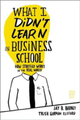
Many of the widely accepted strategy tools taught in business schools do not apply in the real world. In What I Didn’t Learn in Business School, Jay B. Barney and Trish Gorman Clifford relate the fictional story of Justin Campbell, a recent MBA graduate. Through the story, the authors show that traditional strategy tools do not work because they do not take into account the ways that human interactions and individual goals interfere in the workplace.
According to the authors:
Many strategy tools taught in business school do not take into account how human interactions and office politics interfere with decision-making processes.
Assumptions may work in the classroom for demonstration purposes, but they will not be adequate in the real world. Different assumptions lead to vastly different outcomes in real-world scenarios.
One of the hardest skills to learn is how to remain objective and base decisions on facts and research. Sometimes it is easy to take what others say at face value, but all information should be verified and questioned.
When attempting to get buy-in from leadership, it is important to identify those on the executive team who oppose the idea. Most effort should be spent convincing these individuals.
To download three free summaries, please visit our site.
Jerry Eonta
.
Blog
.
<span class='date ' tip=''><i class='icon-time'></i> Jul 29, 2015 10:40am</span>
|
|
The Internet has enabled creators—musicians, film producers, artists, journalists, authors, and others—to reach a wider audience than ever before. It has also made it harder than ever for them to be compensated for their work. In contrast, technology companies, which rely on the work of creators and the media business to thrive, have received the greatest financial benefit from their work. In Free Ride, Robert Levine takes an in-depth journey through the systemic struggle of media companies and artists who cannot collect enough of the revenue that their work is generating while those who distribute and aggregate their content, legally and illegally, are experiencing exponential growth.
According to Levine:
Music has become so easy to copy and distribute-legally or otherwise-that people forget how much effort is involved in making it. Digital music takes away the cost of making plastic discs and shipping them to stores, but otherwise has not made the cost of producing music any less expensive.
Journalism can no longer rely on advertising revenue to support as much of its business as it once did. Major news aggregation websites, like theHuffington Post, generate money with far lower reporting costs. This sets up a disincentive to create original stories and ultimately rewards behavior that hurts the industry as a whole.
Roughly 40 percent of the revenue cable companies receive is divided among channels as "carriage fees" that smaller channels rely on to produce high quality, scripted shows. As more people look to the Internet to fulfill their demand for television, legally or illegally, the cable model, and consequently television’s overall quality, is under threat.
Movie studios are not in the business of selling tickets to movies as much as they are in the business of selling various rights to show them later. Piracy undertaken via online locker services, or file-hosting services, presents the greatest threat to the industry.
Technology companies are primarily interested in cheap and accessible books as a means to another end. Consumers must remember that while the cost of distributing e-books is less, the task and high costs of writing, editing, publishing, and marketing have not changed.
To download three free summaries, please visit our site.
Jerry Eonta
.
Blog
.
<span class='date ' tip=''><i class='icon-time'></i> Jul 29, 2015 10:40am</span>
|
|
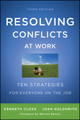
In Resolving Conflicts at Work, Kenneth Cloke and Joan Goldsmith help readers understand the underlying causes of conflict and how to approach it in new ways. Conflicts at work arise because companies are made up of diverse group of people with different communication styles and differing expectations. Few people have been trained to resolve conflict in a healthy manner, which is why conflict is common in every workplace. Transformation does not occur until people first resolve how they became stuck in conflict and take time to develop new strategies. When an organization operates with a culture where conflicts are avoided, honesty and creativity is lost in the process. People need to take time to look inward and understand what conflict means to them and how their perceptions impact the way they respond to these situations.
According to the authors:
All conflict is influenced by an individual’s background and learned responses. When people understand this, they can work to uncover the hidden meanings behind any conflict.
When people listen to opponents with an open mind, their opponents will do the same for them.
The language used to describe a conflict reflects attitudes and assumptions. It can reveal the interests, emotions, and histories that are behind the surface-level issue.
Difficult behaviors are present in every workplace and, in some cases, are inadvertently encouraged through reward systems. When these behaviors are discussed in the open, there is opportunity to improve on all sides and develop perseverance.
Resistance is often the result of an underlying need, such as improved communication or greater involvement in decision making. When the reasons for resistance are explored, it becomes easier to collaborate and negotiate for a solution.
To prevent the same conflicts in the future, systems can be developed within an organization. This prevents conflicts and sets the standard for how they are to be managed when they do occur.
To download three free summaries, please visit our site.
Jerry Eonta
.
Blog
.
<span class='date ' tip=''><i class='icon-time'></i> Jul 29, 2015 10:40am</span>
|
|
According to author, consultant, and entrepreneur Chris Brogan, there has never been such a promising time for "freaks" to succeed in business. These innovative, independent thinkers are perfectly positioned to take advantage of opportunities that others lack the vision or passion to pursue. At the same time, entrepreneurial success still depends on discipline, structure, and productivity. In The Freaks Shall Inherit the Earth, Brogan provides readers with specific guidance for how they can harness the power of out-of-the-box ideas, overcome their fears of failure, and build lives that they love.
According to Brogan:
Today’s business world is far more open than in the past to entrepreneurs who cannot or will not conform to corporate structures and expectations. However, even the most creative and hard-working nonconformists still need clear plans and to understand fundamental business skills.
A freak is someone who does not fit in with conventional businesspeople, dislikes settling or compromise, and seeks ways to make these characteristics an asset. Freaks can make a profit by finding and serving communities made up of like-minded people.
To succeed in business, freaks need to determine not only what makes them unique, but also how to sell to and build relationships with their customers. This involves building discipline, overcoming fear, and learning from experience.
Mastery of certain skills is critical to every business. These include basic legal contract skills, finance skills, marketing skills, and sales skills.
Some freaks can be successful as employeepreneurs, or people who work for companies but do their jobs like entrepreneurs. They take ownership of available resources and find better ways to get things done.
Freaks use media outlets to tell stories that people can relate to and choose to consume. This type of storytelling helps build communities that can then become markets for different products and services.
When things go wrong, making excuses or shifting blame never helps. The most effective way for people to deal with their problems is to define what went wrong, reassess their goals, and take action. If others have been hurt, they must give meaningful apologies.
To download three free summaries, please visit our site.
Jerry Eonta
.
Blog
.
<span class='date ' tip=''><i class='icon-time'></i> Jul 29, 2015 10:40am</span>
|
|
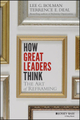
The distinction between a great leader and one who suffers through a difficult, short tenure has much to do with how the person sees both the world and his or her organization. In How Great Leaders Think, Lee G. Bolman and Terrence E. Deal provide tales of successful leaders—including Lou Gerstner of IBM, Anne Mulcahy of Xerox, and Howard Schultz of Starbucks—to show how they brought new views to the organizations they led and were able to navigate the structure, people, politics, and culture of their companies. Great leaders use a variety of viewpoints, based on their personal histories, worldviews, and experiences, to see their organizations for what they really are and understand how they need to get to the next stage.
According to the authors:
Good leadership requires reframing. New leaders who step in with a narrow mind will not go far in their new roles. They need to be able to step back and see the organization from a variety of perspectives.
Adaptability is a common thread of great leaders. Executives who insist on their way or the highway, who do not adapt to the organization they are leading with all its quirks and cultural differences from places they have previously worked, will have short tenures.
The structure of an organization deserves significant attention. The social architecture of a business is a critical component and should be given its due.
Great leaders have self-awareness. Weak managers do not realize how they are perceived. They get caught in hypocrisy and believe no one is listening to them. If they were more aware of how they came across, they could adjust how they communicate and make more progress with those around them.
To be heard, leaders need to listen. By reaching out to employees and customers and hearing what they have to say, leaders can connect with the realities that are unique to the company and come up with helpful, practical recommendations.
Politics is not a bad thing. Building relationships and networking are critical activities for leaders who need to navigate their way around a company. They need allies to get projects done and to carry through strategies.
Employees look to their leaders for magic. Great leaders are able to tap into the core of the company culture and pull out surprises that appear like magic, although they actually are based on the leaders’ years of experience and well-crafted worldview.
Reframing takes practice. Leaders need to see the world they live in through various lenses, but that is something that takes time to learn and may require the help of others who can provide different perspectives.
To download three free summaries, please visit our site.
Jerry Eonta
.
Blog
.
<span class='date ' tip=''><i class='icon-time'></i> Jul 29, 2015 10:40am</span>
|
|
In Creativity at Work, Ros Taylor shares the results of 100 interviews and a formal poll of 1,000 working people in the UK. Taylor sought to discover what happens every day as customers and markets change and how that relates to the role of creativity in a successful workplace. The results uncover myths about the type of people who are creative and help explain how creativity can be used in any work environment. Organizations that want to be viewed as innovative must make room for creative ideas because the two concepts go together. When a business understands the value of creativity at work, it must also recognize that everyone has the capacity to be creative.
Taylor provides the following tips concerning creativity in the workplace:
There are misconceptions about what it means to be creative at work. Many people falsely believe that creativity is something found only in certain professions and is not necessarily available to those in more traditional office roles. On the contrary, creativity can be used and is valuable in any work environment.
People can train their brains to learn new ways to make decisions, and there are different theories about how these processes work. The way one thinks and forms ideas can be changed with practical exercises that are applicable to the workplace.
A culture of creativity is something that can be fostered, even in companies that have not been creative in the past. Companies that view creativity as important can change their cultures as managers lead the way and employees follow.
Creativity is not something that only happens at certain times and to certain types of people. It is something people can learn how to use more frequently, and techniques can help make creativity part of one’s everyday process.
To download three free summaries, please visit our site.
Jerry Eonta
.
Blog
.
<span class='date ' tip=''><i class='icon-time'></i> Jul 29, 2015 10:40am</span>
|
|
It’s My Company Too! is based on interviews and research into eight companies that have transformed their businesses through engaged employees. Kenneth R. Thompson, Ramon L. Benedetto, Thomas J. Walter, and Molly Meyer reveal how these companies learned that employees who take responsibility for their actions and share company values help them outperform the competition. The companies profiled did not create their cultures overnight, but invested a significant amount of time into this process and chose to trust employees to do the right thing.
According to the authors:
Leaders who get great results from their employees are able to find the balance between transactional and transformational leadership when they instill responsibility in their employees.
Ethical organizations have clear values and make the effort to operate in ways that support those values.
When employees are engaged in a visionary plan, they eliminate silo thinking and seek to grow the organization as a whole.
Processes that can help organizations grow work best when they are measurable. Leaders must consciously define the metrics that are vital to their companies’ growth.
Employees who feel valued through recognition and rewards will perform better in their roles.
When employee action is the expected norm, employees become entangled in the organization and are motivated to find solutions to problems even though it does not affect their roles directly.
Failure should be viewed as an opportunity to improve rather than something that merits punitive action.
To download three free summaries, please visit our site.
Jerry Eonta
.
Blog
.
<span class='date ' tip=''><i class='icon-time'></i> Jul 29, 2015 10:40am</span>
|
|
In How to Be Happy, Liggy Webb explores the meaning of happiness and provides a toolkit of approaches and techniques to build confidence and resilience in order to become a healthier and happier person. Her comprehensive treatment explains the key elements leading to happiness, including the importance of a positive attitude, being the best that you can be, maintaining physical and mental fitness, handling stress, managing change, developing resiliency, engaging in lifelong learning, nurturing positive relationships, appreciating life and its gifts, cultivating kindness, and loving and serving others.
According to Webb:
Happiness is a journey, not a destination. You can make the decision to be happier, if you really want it. Achieving happiness takes practice and the ability to work out your own plan for accomplishing it.
In defining happiness, it is important to appreciate what you have. Do not let a constant, undefined search divert you from that. "How can I become happier?" is probably a better question than "Am I happy?"
Developing and sustaining a positive mental attitude is the key to health and happiness. When faced with a problem, view it as an opportunity and seek out possibilities and solutions.
Be open and positive toward change, occasionally stepping out of your comfort zone. Understand the emotions that change can bring and learn to deal with them. Challenge your own limiting beliefs, develop your self-confidence, and believe in yourself.
Investing in good health is essential. Exercise every day, drink lots of water, and eat a healthy diet.
Learn to limit and manage stress. Be assertive in your communications and dealings, seek the benefits in change, and avoid imposing stress on yourself. Become resilient by turning problems into opportunities.
Constant learning promotes mental health and happiness. Learn in multiple ways, improve memory skills, teach others what you have learned, and put what you have learned into practice.
Cultivate positive, nurturing relationships. Accept and celebrate differences, develop your communications skills, be more understanding and empathetic, and treat others as you would have them treat you.
Sustainable happiness requires finding your own work-home balance. Be sure to establish priorities and manage your time more effectively.
Gratitude is an indispensable aspect of health, wholeness, and well-being. Decide to be grateful and wake up with that attitude. Focus on giving and cultivate the habit of saying "thank you."
*The key to a happy life is identifying and pursuing your own purpose, with the intent of making the world a better place. Lead by example, respect and value others, commit random acts of kindness, and support charities.
To download three free summaries, please visit our site.
Jerry Eonta
.
Blog
.
<span class='date ' tip=''><i class='icon-time'></i> Jul 29, 2015 10:39am</span>
|
|
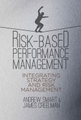
After the credit crisis of 2008, the business world changed dramatically. Senior leadership in most organizations faced more risk than ever and needed an effective way to manage it. In Risk-Based Performance Management, Andrew Smart and James Creelman have created a framework that helps senior management understand, manage, and control the risks facing their organizations while still gaining a competitive advantage. This guide gives executive teams the specific framework needed to align their risk-taking to strategy, enabling them to achieve success while still operating within their established risk appetites. The risk-based performance management (RBPM) approach and methodology serve as a modern and effective alternative to the past risk management strategies that proved to be less than ideal.
RBPM encompasses the following:
Appetite: Organizations that deploy the RBPM approach develop a deep understanding and appreciation of the risk associated with the strategic choices that they decide to take. They also are able to continue operating within their risk appetites while working toward their strategic goals.
Indicators: RBPM is designed to work with key performance indicators (KPIs), key risk indicators (KRIs), and key control indicators (KCIs). Indicators can be deployed as effective decision-support tools through the RBPM framework.
Performance management: Objectives and their KPIs are continually monitored, root causes of underperformance are identified, and necessary adjustments are made.
Risk management: RBPM describes this as understanding and exploiting opportunities and threats.
Strategy and risk alignment: Through appetite, an organization can align risk-taking with strategy.
Governance, culture, and communication: If an organization fails in these "soft" disciplines, it will disregard risk appetite and cause the risk management strategy to fail.
To download three free summaries, please visit our site.
Jerry Eonta
.
Blog
.
<span class='date ' tip=''><i class='icon-time'></i> Jul 29, 2015 10:39am</span>
|
|
With the rapid rise of China’s economy has come a new class of "super consumers" who are ready to assert themselves the way American consumers have over the last century. Already there are more than 500 million online shoppers in China and some 1.5 million millionaires in a country of over 1.2 billion people. This huge population—four times the size of the United States—presents an enormous opportunity for foreign companies, but the long history of China and a language and culture so different from those in Western nations present many pitfalls as well. As Savio Chan and Michael Zakkour explain in China’s Super Consumers, newcomers to the market must take the time to understand Chinese history and culture and the special challenges of doing business in China.
The authors provide the following tips on doing business in China:
Companies that want to succeed in China need to understand its historical culture. Group harmony matters more than individual liberty. Networks of trusted family and friends are so important that Chinese spend a good deal of energy maintaining these networks. Relationships are more complex and agreements more contingent than in the West. Even the language favors nuance and ambiguity over directness.
In the last decade, the Chinese consumer has been on a meteoric rise with rapid urbanization and growing disposable incomes. This new wealth, together with the sheer size of the country, has made the Chinese consumer a global force. In addition to the mainland Chinese market, there is a huge demand for the products, services, and experiences Chinese overseas travelers want to buy.
Retail channels, supply chains, and marketing in China differ somewhat from those in the West, even when they appear outwardly similar. However, China’s distribution infrastructure does not yet match that in the West. Retail channels tend to be single brand and can be expensive to sustain. Therefore, e-commerce is highly attractive and a low-risk path to entry. For luxury goods, Chinese buyers expect to see flagship stores.
China is not really a single market-it is an amalgamation of markets that are defined both geographically and by customer type. Businesses must understand the need to customize their offerings and approaches to serving each of these markets differently.
To learn more, please visit http://www.bizsum.com
Jerry Eonta
.
Blog
.
<span class='date ' tip=''><i class='icon-time'></i> Jul 29, 2015 10:39am</span>
|