Blogs
|
While increasing numbers of organizations are investing in social media technology, few are successfully using it to create value through mass collaboration. In The Social Organization, social media experts Anthony Bradley and Mark McDonald explain how firms can leverage these tools to innovate and solve problems faster and better than traditional companies. The authors provide frameworks and proven techniques that any manager can apply to rally people around a collective purpose; launch an effective collaborative environment; guide collaboration toward meaningful goals; and adapt internal culture and systems to support collaboration as it evolves and helps the organization outperform the competition.
Social media can be used by any organization to enable mass collaboration. But "social organizations" are ahead of all others in ensuring that collaboration delivers value and creates a competitive edge. Becoming a social organization involves the following actions and priorities:
At the heart of a social organization is not social media technology itself but the mass collaboration it enables. Mass collaborative efforts succeed by enlisting the interests, knowledge, talent, and experience of all stakeholders in pursuing shared goals and creating value.
Social media efforts rarely succeed without management guidance and support. Too much management involvement can stifle collaboration, but too little creates significant risk that the initiative will lose its focus and its alignment with organizational strategy.
Becoming a social organization begins with a vision statement. A vision statement serves two purposes: it articulates leadership’s belief in the value of collaboration, and it identifies specific opportunities where collaboration can add value to the firm.
Organizations need a community collaboration strategy to guide their social media priorities and investment decisions. A strategy should identify which collaborative communities the organization sanctions, when and how it will support them, what behaviors will be encouraged, and what benefits the organization expects to receive from the collaboration effort.
In addition to planning and supporting collaborative efforts in general, organizations need to cultivate the individual communities that make up their collaboration portfolios. Cultivating a community requires specification of its purpose and a business justification that identifies its benefits and costs.
While too much interference from above can stifle collaboration, appropriate management guidance is essential to creating a sustainable social organization. Managers must ensure that collaboration works productively, that participants stay focused on its purpose, and that the organization’s broader systems and functions support the collaborative effort.
Effective managers guide the collaborative community based on its purpose, progress, and direction. To provide appropriate guidance, managers should view the community as a group, track progress toward its purpose, continually assess the value of its purpose to the organization, and seek new, high-potential purposes.
By adapting processes and power structures to the needs of the collaborative community, managers make the organization safe for mass collaboration. A social organization is safe for collaboration when all stakeholders recognize its value and potential and all functions are aligned to support it.
To download three free summaries, please visit our site.
Jerry Eonta
.
Blog
.
<span class='date ' tip=''><i class='icon-time'></i> Jul 29, 2015 10:44am</span>
|
|
In The Next Gen Leader, Robert C. McMillan argues that everyone is a leader and should be recognized as such if organizations are to succeed and excel in today’s dynamic, competitive marketplace. Acting as a leadership coach, McMillan provides a complete 6G Leadership System to enable emerging, aspiring, and executive leaders to maximize their potential and become transformational leaders. He identifies six generations of leadership and discusses the attitudes and states of mind that are required to operate successfully at each leadership level.
McMillan offers readers the following advice:
Despite different experiences and different career journeys, everyone can be a leader. The 6G Leadership System provides a tracking system to identify where people are and offers a pathway forward to enable people to become transformational leaders.
Leadership is a choice, not a position. Individuals should choose to lead, regardless of their positions in the hierarchy, and organizations should create environments where everyone is encouraged to lead.
To truly maximize leadership potential, people must first have universal balance in their lives. They can evaluate this balance and improve it by exploring six life applications, which assess faith, moral purpose, intellect, self-awareness, relationships, and wealth (financial and health).
Every aspiring leader needs to understand the Six Senses of Leadership (seeing, hearing, tasting, smelling, touching, and kinesthetic) are critical in order to become a leader of significance. These senses yield awareness that one is a leader, regardless of position, pay, or power.
To download three free summaries, please visit our site.
Jerry Eonta
.
Blog
.
<span class='date ' tip=''><i class='icon-time'></i> Jul 29, 2015 10:44am</span>
|
|
Time is a precious asset that cannot be reclaimed. Once it is used, it is gone forever. These days, many people find themselves stressed and feeling out of control from never having enough time to do what they should and want to do. Author Brian Tracy claims it is not a lack of time but rather the mismanagement of time that causes these issues. In Time Management, Tracy provides insights about the consequences of mismanaging time as well as practical techniques that anyone can learn and master in order to gain control over their time and achieve both professional and personal success.
Successful time management is based on the following principles:
Time is a precious asset. Time is an asset that cannot be replaced. Once used, it is gone forever. Therefore, making the most of time becomes increasingly important.
Time management is all about confidence and control. Individuals who have high self-esteem have the confidence to set parameters on how their time is used. Those who feel out of control and as if they never have enough time are letting others determine their fate and will benefit from using techniques to develop a more positive self-image and a decisive attitude.
Effectively managing time depends on having a clear vision, values, and goals. If people do not know where they are going and why, they are wasting their time. A strong sense of individual purpose that aligns with daily activities drives time management practices that lead to achieving goals.
Good time management is plan-based. Effective time management does not just happen. It requires thoughtful planning and a series of written activities-such as checklists, project plans, and prioritization systems-that can be repeatedly referenced and adjusted as circumstances change.
The most important work should be allotted the largest amount of time. Much of people’s time is wasted on the easy-to-do and less important tasks. Often this means never devoting enough time to the really important activities-those that lead to professional success and personal fulfillment. People should always do the important work first. They should give these tasks the most attention.
Focus and clarity are paramount. Multi-tasking, distractions, and interruptions are all big time wasters. To be effective, individuals must focus on one task at a time and take control over factors that interrupt focus or distract from clear thinking.
Anyone can learn to more effectively manage their time. People can learn time management skills. They should practice these skills repeatedly. Developing good habits control how people spend their time.
To download three free summaries, please visit our site.
Jerry Eonta
.
Blog
.
<span class='date ' tip=''><i class='icon-time'></i> Jul 29, 2015 10:44am</span>
|
|
In Fascinate, world-renowned brand consultant Sally Hogshead introduces readers to the seven universal fascination triggers: lust, mystique, alarm, prestige, power, vice, and trust. Exploring research from behavioral and social studies, historical precedents, neurobiology, evolutionary anthropology, and feedback from thousands of consumers, Hogshead explains what fascinates people and why and shows marketers how to apply this valuable knowledge to their own brand campaigns. By knowing how to use the right fascination triggers in the right ways, companies can more effectively achieve their desired results.
Marketing professionals can use the seven universal fascination triggers to more effectively influence consumer decision making. As they put the triggers to use, however, they must consider several concepts:
There are several factors to consider when determining how fascinating a message already is. Marketers must think about how much consumers gravitate toward their messages, how much interest they generate, what kind of response they elicit, and how they prompt people to think.
The lust trigger uses the anticipation of pleasure to seduce a consumer. Marketers can use lust to create an experiential attachment by getting consumers to stop thinking and start feeling, making the ordinary more emotional, using all five senses, and teasing and flirting.
The mystique trigger intrigues consumers with unanswered questions. Marketers can use mystique by sparking curiosity, withholding information, building mythology, and limiting access.
The alarm trigger causes consumers to take action under the threat of negative consequences. Marketers can trigger alarm by defining consequences, creating deadlines, increasing perceived danger, focusing on the most feared crises, and using distress to steer positive action.
The prestige trigger causes consumers to focus on symbols of rank and respect. Marketers can enhance prestige by developing emblems, setting new standards, limiting availability, and making consumers earn it.
The power trigger forces consumers to focus on the people and things that control them. Marketers can use the power trigger to dominate, control the environment, and reward and punish.
To download three free summaries, please visit our site.
Jerry Eonta
.
Blog
.
<span class='date ' tip=''><i class='icon-time'></i> Jul 29, 2015 10:43am</span>
|
|
Stuck behind a large generation of Boomer leaders, challenged by an eager generation of Millennial whiz kids, and facing the tough mid-career years, Generation X faces a multitude of challenges in the workplace. In What’s Next, Gen X?, award-winning author and organizational demographics expert Tamara Erickson explains what has shaped the members of Generation X and how they can successfully apply their unique traits to get what they want in the next phases of their personal and professional lives. The book takes an in-depth look at the past events that have influenced Generation X, examines today’s evolving workplace, and offers insight into future leadership possibilities.
As Generation X employees work hard to keep up with other generations and move ahead into more fulfilling careers, they must:
Understand what shaped Generation X. Born between 1965 and 1979, members of Generation X experienced social change and uncertainty in their formative teen years. From a stagnant economy to technological innovation and the rise of alternative rock, Generation X teenagers learned to distrust corporate life, value their friends over their families, and develop global empathy.
Figure out where Generation X stands today. Members of Generation X face risky financial positions as they continue to raise small children, care for aging parents, and pay off college debts and home mortgages.
Know what the other four generations are thinking. Generation X shares the workplace with four other generations: Traditionalists, Boomers, Millennials, and the Re-Generation. Each group thinks and behaves differently, and to be successful, Generation X employees must know how to interact with colleagues from every cohort.
Reset life and work priorities. Members of Generation X have many shared desires, including control, affluence, balance, and to be good parents.
Look at the changing workplace. The nature and availability of work is changing for Generation X. With the advancement of technology, Generation X can work from anywhere and at any time. As Generation X expects more flexibility in work arrangements, the employee-employer power balance will be forced to shift.
Make organizations work for them. Most Generation X employees work within organizations. To be successful at work, they must maximize their effectiveness, leverage what they do, expand their options for greater long-term career sustainability, and balance the demands of their organizations with the other priorities in their lives.
Find alternative workplaces. Generation X employees are more likely to work independently, establish entrepreneurial ventures, join small firms, and juggle multiple jobs than employees of other generations.
Become next generation leaders. Generation X will need to create work environments that support innovation. To do this, leaders will need to increase collaborative capacity, ask compelling questions, embrace complexity, shape organizational identity, and appreciate diversity.
To download three free summaries, please visit our site.
Jerry Eonta
.
Blog
.
<span class='date ' tip=''><i class='icon-time'></i> Jul 29, 2015 10:42am</span>
|
|
Topic: The Risk-Driven Business Model
Who: Karan Girotra, author, professor of technology and operations management at INSEAD, and founder of Terrapass, Inc.
When: Tuesday, September 16, 2014
Time: 1:00 pm Eastern Standard Time
Most companies think of innovation as being about new technology or developing new products— but the most disruptive organizations of the 21st century have innovated much more than their products or technology. From Ford Motors to Toyota to Uber the automotive industry among many others has been continually disrupted by companies that change the way they "did things," or their business model.
This WebEx will explore the following questions:
How new business models can be an even more disruptive force than new technology?
Where the biggest business model innovation opportunities lie?
How to create an organization that identifies these game-changing opportunities
Based on Karan Girotra’s co-authored book The Risk-Driven Business Model. Coming Soon to BizSum.com.
Jerry Eonta
.
Blog
.
<span class='date ' tip=''><i class='icon-time'></i> Jul 29, 2015 10:42am</span>
|
|
Contrary to popular belief, it is possible for people to have enjoyable careers and work with like-minded people who share their interests. In Do Cool Sh*t, Miki Agrawal, a young, successful entrepreneur, shares her journey of finding work she loves rather than working only to make money. For her, making money is not how she defines success. Rather, success is about doing the absolute best with the capabilities a person has rather than putting in hours in exchange for a paycheck and a boring existence. Her belief is that people truly can have it all.
According to Agrawal:
People who step outside their existing social networks to make new connections may find it difficult at first, but it could create opportunities to meet potential investors for new business ventures. Without taking chances, these connections will never be made.
Before asking for something, it is important for individuals to first understand exactly what they want. Clear proposals will make recipients more accepting of the "ask."
Although there is a place for passion, entrepreneurs also need to stop and identify what they are good at. It is difficult to be successful in a venture without the skill set to back it up.
Opportunities do not have to be strictly entrepreneurial-there is also an "intrapreneurial" approach where people expand their reach with their existing employers by growing their internal programs. This can only happen in work environments where creative thinking is encouraged.
Part of the journey to success includes creating a list of admirable people. Entrepreneurs must connect personally with the people they admire in order find mentors who can help them launch their businesses.
Teams are vital to success. Not investing the time to hire the right people can result in constantly re-hiring and training new people.
If people are not willing to change the way they do business, they will never get the chance to experience new things. New experiences are vital for achieving success.
The type of communities people spend time with strongly influence the types of people they become. Part of creating new lifestyles and mindsets involves finding new people with whom to spend time.
To download three free summaries, please visit our site.
Jerry Eonta
.
Blog
.
<span class='date ' tip=''><i class='icon-time'></i> Jul 29, 2015 10:41am</span>
|
|
Everyone has flaws, but many people fail to realize how their flaws are impeding their career progress. For people to reach their potential, they need to recognize and manage their "BUTs," the shortcomings that hold them back. When colleagues, managers, and senior leaders talk about others, they almost always discuss their weaknesses in the same way. They may say something like, "She works hard, but she takes on too many projects and cannot prioritize." Or, they may say, "He is extremely intelligent, but he fails to connect with others." The biggest problem with BUTs is that the people in possession of them cannot see them. Everyone has at least one BUT, so everyone needs a strategy for recognizing and overcoming them. Kiss Your But Goodbye by Joe Azelby and Bob Azelby provides a humorous guide to doing so.
There are ways for people to overcome their shortcomings, or at least reduce their impact. This process includes understanding the following:
Recognize that everyone has at least one "BUT" that needs to be addressed. These are the weaknesses that people talk about when assessing others. For example, people may say that John has great marketing skills but cannot close a sale. He needs to overcome that BUT in order to advance in his career.
People need help to find their BUTs, and that help needs to come from honest, straightforward colleagues and managers who will not sugarcoat their assessments. BUTs result from aptitude, personality, and behavior, and those elements provide both a way to identify BUTs and a way to overcome them.
Many people avoid dealing with their BUTs because they prefer to avoid pain and change. However, they are suffering now as a result of their BUTs, and the effort expended on the change will be returned when the benefits of a reduced BUT are realized.
People reduce the size of their BUTs through increased self-awareness and sincere effort to change their behaviors. These efforts need to be clear to colleagues so they can help in the BUT-reduction process.
One very effective way to reduce the impact of a BUT is to partner with someone who has a complementing strength. For example, people who are good strategic thinkers but lack detailed planning skills can partner with people who love to plan everything.
During reviews, managers may avoid telling employees about their BUTs. For small BUTs, managers are more likely to say something because they believe the flaws can be reduced. For large BUTs, however, managers often avoid saying anything, and employees fail to progress. Therefore, it is vitally important for people who want to advance in their careers to proactively identify their own BUTs with the help of trusted advisers.
Managers have BUTs too, which can make their employees miserable. They may micromanage or have blind spots. Employees can increase their own value by acting to counteract their managers’ BUTs.
Instituting a workplace culture that encourages frank discussion of everyone’s BUTs can make the organization a better place to work. It can also make the company more productive and profitable.
To download three free summaries, please visit our site.
Jerry Eonta
.
Blog
.
<span class='date ' tip=''><i class='icon-time'></i> Jul 29, 2015 10:41am</span>
|
|
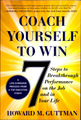
People have the ability to change many of the behaviors that hinder their success at work and in their personal lives. But self-improvement takes self-scrutiny, honesty, and effort. Additionally, it requires a knowledgeable, objective guide and a circle of supporters. In Coach Yourself to Win, leadership development expert Howard M. Guttman explains the most effective self-coaching techniques and how to find the most promising helpers. Importantly, he also offers proven strategies that will help readers rebound from setbacks and adjust their goals in order to maintain a lifetime commitment to positive, observable change.
According to Guttman:
Successful self-coaching begins with the firm belief that a positive outcome is achievable and worth a significant effort. This belief is rooted in an awareness of one’s current, observable behavior; the ability, readiness, and willingness to change; and the commitment to making the change permanent.
Setting intention is the first step toward bringing about a desired behavior change. Intentions provide focus, galvanize energy, and prompt individuals to take action.
No one should undertake self-coaching alone. Self-coachers need guides, or mentors, to help them stay on track, as well as circles of supporters to provide additional help, advice, and feedback.
Feedback, a vital part of the self-coaching process, is verbal or nonverbal communication that provides information about how the recipient’s behavior affects others. Framing questions appropriately and asking them during personal interviews will help ensure that the feedback is useful and facilitates a constructive response.
Self-coachers must be able to analyze feedback objectively and rationally. Receiving negative feedback can be hurtful and difficult, but good self-coachers learn to respond in positive ways without defensiveness.
The proof of a strong intention is a workable plan. In addition to being focused on intentions, good plans are realistic and simple. They build in contingencies, set time lines, and cover all the bases involved in implementation.
Barriers to the successful achievement of intention can occur at any time in the self-coaching process. The best way for people to deal with unexpected obstacles is to continually reassess their progress and, if necessary, rethink their original plans and intentions.
To download three free summaries, please visit our site.
Jerry Eonta
.
Blog
.
<span class='date ' tip=''><i class='icon-time'></i> Jul 29, 2015 10:40am</span>
|
|
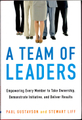
In today’s business world it is challenging for companies to both deal with problems and changes internally and at the same time be productive and competitive in the marketplace. In A Team of Leaders, Paul Gustavson and Stewart Liff show readers how to create an environment where everyone is a leader. The lives of team leaders or supervisors can be fraught with frustration, as pressure is exerted on them from both the top and the bottom, as well as from the public who use their companies’ products or services. Some companies seek to lessen this stress by adopting team environments, which can be helpful but still puts leaders at the top of these teams. Building teams of leaders, however, replaces the supervisor-employee relationship with teams that eventually manage themselves.
The authors provide the following advice to readers:
The amount of involvement and interest a work force generally projects is relevant to how leader-focused that group is designed to be. Companies need to evaluate where their teams are. Teams possess a greater sense of ownership when all members have input and are equally informed about what is going on.
Different designs create different teams. The way teams are designed will predict the way they look and behave. Companies’ structures and management systems should be closely aligned with their overall strategies to begin with, which makes it easier for teams to have common visions and purposes.
Within teams, the goal is for everyone to be leaders. Each employee should have an individual development plan and recognition for accomplishments, and in this way all employees will be able to foresee future actions and promotions within the teams.
Leaders want to be contributors. Leadership is encouraged when each member of the team knows exactly what his or her contribution is to the overall mission. Regular feedback about the progress the team is making and how it is contributing to the overall goals of the company is extremely helpful.
Knowledge management is important and multi-faceted. Teams need to have data and information, but also knowledge about procedures, policies and other organizational materials, in addition to working knowledge of the values and beliefs of their companies. Each member should master the skills needed to perform his or her own functions and have a general idea of what others do to contribute.
To download three free summaries, please visit our site.
Jerry Eonta
.
Blog
.
<span class='date ' tip=''><i class='icon-time'></i> Jul 29, 2015 10:40am</span>
|