Blogs
|
What’s the future hold? No matter what the answer to that question, active lifelong learners will be the ones best prepared to handle it.
That’s just one of the perspectives that emerges in a recent interview I did with futurist David Houle on the Learning Revolution podcast. David is the author Entering the Shift Age, a new book that discusses the major trends that are pushing humanity into a whole new era and provides a detailed vision of the future. He also happens to be the son of Cy Houle, one of the pioneering figures in adult lifelong learning, and he shares his father’s conviction that lifelong learning will be the central concept of education going forward.
You can listen to the interview here or subscribe on Tunes , but I also encourage you to check out the show notes and links on the Learning Revolution site.
Listen to the Podcast
Podcast: Play in new window | Download | Subscribe on Tunes | Stitcher Radio
Other Great Interviews and Tools
If you are interested in creating podcasts and other Web-based learning experiences, be sure to check out the Learning Revolutionary’s Toolbox section on the Learning Revolution site. Also, here are some other podcast interviews that may be of interest:
Easily Publish and Sell Online Courses - An Interview with Pathwright’s Paul Johnson
How to Build a Passionate Community of Learners - A Conversation with Leo Babauta (Zen Habits)
Are you ready to MOOC? A conversation with George Siemens
Exploring How We Learn with Monisha Pasupathi (Teaching Company)
Telling Ain’t Training with Harold Stolovitch
Enjoy!
Jeff
Looking for the perfect holiday gift for the lifelong learners in your life? Be sure to also check out 10 Ways to Be a Better Learner from Mission to Learn founder Jeff Cobb. The post Are you ready to enter the Shift Age? appeared first on Mission to Learn - Lifelong Learning Blog.
Jeff Cobb
.
Blog
.
<span class='date ' tip=''><i class='icon-time'></i> Aug 19, 2015 01:26am</span>
|
|
A quick post to note that this is Adult Learner’s Week in Canada. To help celebrate the occasion, I’m keynoting the Community Learning Network‘s Forever Learning Luncheon. I also thought it would be a good time to offer a free download of the Kindle version of 10 Ways to Be a Better Learner. Just click the link to get to the download page. It will be available until 12PM Pacific time on April 10.
Keep in mind that you don’t actually have to own a Kindle to read the Kindle version of a book: there are a variety of options for using Kindle software.
Here’s that link again: 10 Ways to Be a Better Learner - be sure to share it with other before midnight tomorrow.
Looking for the perfect holiday gift for the lifelong learners in your life? Be sure to also check out 10 Ways to Be a Better Learner from Mission to Learn founder Jeff Cobb. The post Adult Learner’s Week - Free Download of 10 Ways to Be a Better Learner appeared first on Mission to Learn - Lifelong Learning Blog.
Related posts:
10 Ways to Be a Better Learner - Free Kindle Version This Week
Free Download of 10 Ways to Be a Better Learner
Free Kindle Version of 10 Ways to Be a Better Learner
Jeff Cobb
.
Blog
.
<span class='date ' tip=''><i class='icon-time'></i> Aug 19, 2015 01:26am</span>
|
|
Do you have knowledge and expertise you want to share with the world - and possibly generate some income while doing it?
Do you want to create online courses, educational audio and video, or other types of learning content?
Then The Learning Revolutionary’s Toolbox is for you.
This free eBook and accompanying Web pages are intended as a companion to Leading the Learning Revolution: The Expert’s Guide to Capitalizing on the Exploding Lifelong Education Market. I originally published the Toolbox as an incentive for signing up for my e-mail list, but now I’ve taken down that gate. You can simply download the eBook - no money or e-mail address required.
Download the Learning Revolutionary’s Toolbox
I also highly recommend visiting the accompanying Web pages to get links to tools to help you create online courses and other types of educational content.
Enjoy - and let me know what you think.
Jeff
Looking for the perfect holiday gift for the lifelong learners in your life? Be sure to also check out 10 Ways to Be a Better Learner from Mission to Learn founder Jeff Cobb. The post Download the Learning Revolutionary’s Toolbox for Free appeared first on Mission to Learn - Lifelong Learning Blog.
Jeff Cobb
.
Blog
.
<span class='date ' tip=''><i class='icon-time'></i> Aug 19, 2015 01:25am</span>
|
|
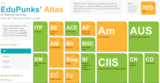
The EduPunks’ Atlas of Lifelong Learning is a pretty interesting resource that lays out a variety of free options for lifelong learning. Some of these I mentioned long ago on Mission to Learn - e.g., School of Everything, Flat World Knowledge, Zero Tuition College.
Others are newer or haven’t received much attention here - e.g., Clarity, Udemy, Quora.
I also like that the collection includes tools like Twitter, LinkedIn, and blogs - platforms that I consider essential to lifelong learning (though, notably, an RSS reader is not mentioned in the sparse "R" section.)
The list is hardly exhaustive. I’m sure readers here will notice quite a few big omissions. And it will need to be updated frequently if it is to stay really useful. Krypton Community College, for example, would be a good new addition.
All in all, though, a useful resource to browse. You are bound to find a number of resources here you did not know about before.
Jeff
Looking for the perfect holiday gift for the lifelong learners in your life? Be sure to also check out 10 Ways to Be a Better Learner from Mission to Learn founder Jeff Cobb. The post EduPunk Lifelong Learning Resources appeared first on Mission to Learn - Lifelong Learning Blog.
Jeff Cobb
.
Blog
.
<span class='date ' tip=''><i class='icon-time'></i> Aug 19, 2015 01:25am</span>
|
|
I’m on a little bit more of a resource kick than usual lately. (See my previous post on EduPunk lifelong learning resources.) That will likely taper off soon, but in the meantime, I’m surprised I hadn’t noticed this one a lot sooner.
Degreed describes itself as a free service that scores and validates your lifelong education from both accredited (i.e. Harvard) and non-accredited (i.e. iTunesU, Lynda.com, Khan Academy, etc.) sources. In addition to this service, the company’s site provides some nice resources, like like an organized listing of more than 500 free learning sources.
Scroll down the home page and you will see that lifelong learners are one of the specific audiences the company aims to serve. If you happen to have signed-up or have heard anything good or bad about the service, please comment and share. (And, of course, comments 0n the overall concept or anything else are also welcome.
Jeff
P.S. - You may also want to check out the company’s blog: Think Massively. See, for example, a recent post on Introductory Courses to MBAs: Getting Credit for MOOCs.
Looking for the perfect holiday gift for the lifelong learners in your life? Be sure to also check out 10 Ways to Be a Better Learner from Mission to Learn founder Jeff Cobb. The post Are You Degreed in Lifelong Learning? appeared first on Mission to Learn - Lifelong Learning Blog.
Jeff Cobb
.
Blog
.
<span class='date ' tip=''><i class='icon-time'></i> Aug 19, 2015 01:24am</span>
|
|
The "why" of self-directed learning is survival—your own survival as an individual, and also the survival of the human race. Clearly, we are not talking here about something that would be nice or desirable….We are talking about a basic human competence—the ability to learn on one’s own—that has suddenly become a prerequisite for living in this new world. - Malcom Knowles, 1975
While lifelong learning and self-directed learning are not equivalent, they overlap substantially. I think the following points apply equally to both. The successful lifelong learner is someone who:
1. Takes initiative
This first one is core to the entire concept of "self-directed." The successful self-directed learner does not wait for someone else to say "you must learn this."
2. Is comfortable with independence
Self-directed learners do not always act autonomously or independently. Indeed, increasingly they must cultivate their networks to learn effectively. Nonetheless, successful self-directed learners know how to be self-reliant.
3. Is persistent
Learning takes time, it takes repetition, it takes practice. Successful self-directed learners stick to it.
4. Accepts responsibility
The successful self-directed learner embraces responsibility for doing the work of learning and doing it well
5. Views problems as challenges, not obstacles
The successful self-directed learner embraces a growth mindset and is not easily thwarted when the going gets tough.
6. Is capable of self-discipline
Even when learning is enjoyable (which, for the successful self-directed learner, it usually is), it often requires discipline. The self-directed learner knows (or learns!) how to develop and maintain discipline.
7. Has a high degree of curiosity
Successful self-directed learners have a high propensity for asking why - and lots of other questions.
8. Has a strong desire to learn or change
The successful self-directed learner is intrinsically motivated. She has a will to learn and sees learning as a positive path forward.
9. Is self-confident
Successful self-directed learners have a solid sense of "self-efficacy" - the belief that one is capable of performing in a certain manner to attain certain goals
10. Is able to use basic study skills
As I have said here before, skills like taking notes effectively are useful for a lifetime. The self-directed learner knows this.
11. Organizes his or her time
While self-directed learning does not require the obsession with productivity that seems to be everywhere on the Interweb, the successful self-directed learner nonetheless knows how to find and manage time effectively to allow for learning.
12. Sets an appropriate pace for learning
The successful self-directed learner recognizes that learning is as much (if not more) about the process than the outcome and doesn’t try to do too much too fast.
13. Develops a plan for completing work
Setting a plan is part of setting the pace and ultimately reaching the destination. The successful self-directed learner recognizes this.
14. Has a tendency to be goal-oriented
While not all self-directed learners consciously set goals, they nonetheless tend to have an end in mind when they start down the learning path.
15. Enjoys learning
The proverbial bottom line: the successful self-directed learner simply likes to learn.
**
How well do these points describe you as a learner?
How effectively are you cultivating these ways in those you teach (your children, you members, you employees, your students - you name it.)
Please comment and share. I also encourage you to follow me and share your thoughts on Twitter.
Jeff
P.S. - These "ways" have been extracted from a description in a 1977 survey that ultimately led to development of the Self-Directed Learning Readiness Scale, which was subsequently renamed the Learning Preferences Assessment. In the post above, I have expanded upon the characteristics highlighted in the description with my own comments.
A highly self-directed learner, based on the survey results, is one who exhibits initiative, independence, and persistence in learning; one who accepts responsibility for his or her own learning and views problems as challenges, not obstacles; one who is capable of self-discipline and has a high degree of curiosity; one who has a strong desire to learn or change and is self-confident; one who is able to use basic study skills, organize his or her time and set an appropriate pace for learning, and to develop a plan for completing work; one who enjoys learning and has a tendency to be goal-oriented. (Guglielmino, 1977/78, p.73)
Looking for the perfect holiday gift for the lifelong learners in your life? Be sure to also check out 10 Ways to Be a Better Learner from Mission to Learn founder Jeff Cobb. The post 15 Ways of the Successful Self-Directed Learner appeared first on Mission to Learn - Lifelong Learning Blog.
Jeff Cobb
.
Blog
.
<span class='date ' tip=''><i class='icon-time'></i> Aug 19, 2015 01:24am</span>
|
|
How deeply do you appreciate - and take advantage of - the freedom you have to learn and grow continually?
This post was written for Blog Action Day, an annual event in which bloggers around the world unite to post about a specific issue. The focus for 2013 was on human rights. It struck me as a good prompt for stepping back and reflecting on learning as a right.
I’m not sure that the human will to learn can ever be fully extinguished, even in the worst of circumstances, but certainly it can be thwarted and damaged deeply. And certainly many of us are fortunate to live free from such worries, in conditions that provide an abundance of opportunities for learning and growth.
I know I, for one, do not always fully appreciate that fact. Maybe you feel the same.
I believe a significant part of preserving and strengthening rights is for those who have them to exercise them to the fullest extent possible. So, in that spirit, here are 10 brief suggestions for exercising your human right to learn.
1. Be conscious
Don’t just let life and learning happen to you. We learn a great deal unconsciously, but truly exercising your right to learn - and to live life with intention and purpose - begins with making learning a conscious part of your daily life.
2. Make time for focused learning
We can’t help but learn continuously - it’s how we are wired - but real growth also requires focused time for learning and - as part of that process - reflection.
3. Be curious
It’s easy to slide into apathy. Don’t let it happen. Cultivate curiosity. Ask questions. For that matter, ask better questions.
4. Take a risk or two
It’s very hard to learn effectively without sticking your neck out every now and again. Make prudent risk-taking a part of your life.
5. Develop your learning habits
Don’t let the good habits you were taught (I hope) long ago slip away. Even simple habits like taking notes and reviewing them go a long way.
6. Act on your learning
Don’t let learning be just a theoretical exercise. Take a page from Benjamin Franklin and embrace the concept of "useful knowledge." Put your learning to work.
7. Be an example
Don’t keep your devotion to learning a secret. Be a learning geek - especially for the kids around you. Learning is a right and a responsibility. Embrace it and show it off.
8. Connect with others
Humans are social learners. We like to connect, share, and learn with others. There are countless opportunities for connecting with other learners - in your community, on social networks, in new initiatives like Krypton Community College.
9. Take care of yourself
There really is no separation between mind and body. If you want to learn well, you need to eat well, sleep well, and exercise regularly.
10. Teach others
We’ve all hear it - and it’s true: one of the best way to learn something well is to teach it. And in teaching, you help others exercise their right to learn. The ‘ol "win-win."
Happy Blog Action Day. What would you add?
Jeff
P.S. - I encourage you to read (or re-read) the Universal Declaration of Human Rights and share the link to it with others. Here are a couple of parts of it that stood out for me in relation to the topic of learning:
19. the right to freedom of opinion and expression; this right includes freedom to hold opinions without interference and to seek, receive and impart information and ideas through any media and regardless of frontiers.
26. Education shall be directed to the full development of the human personality and to the strengthening of respect for human rights and fundamental freedoms. It shall promote understanding, tolerance and friendship among all nations, racial or religious groups…
Looking for the perfect holiday gift for the lifelong learners in your life? Be sure to also check out 10 Ways to Be a Better Learner from Mission to Learn founder Jeff Cobb. The post 10 Ways to Exercise Your Human Right to Learn appeared first on Mission to Learn - Lifelong Learning Blog.
Jeff Cobb
.
Blog
.
<span class='date ' tip=''><i class='icon-time'></i> Aug 19, 2015 01:24am</span>
|
|
If you are reading this blog post, there is a good chance you are someone who likes to learn. Probably even someone who is hungry to learn and would like to learn more than you ever seem to be able to manage.
But what can you do about that?
Is there really any way to speed up your learning while not damaging the possibilities for retaining what you learn?
Well, yes and no.
Most learning of any substance involves at least some level of repeated exposure to whatever it is you are trying to learn. Whether this takes the form of practice, immersion in the right environment, testing yourself, or other techniques, it takes time. There’s just no way around it.
But, you can certainly stack the deck in your favor. Here are a few key practices:
1. Sleep On It
First, sleep well both before and after your learning experiences. With a well-rested brain, you are better able to focus and process new information.
And during sleep following a learning experience your brain solidifies connections it formed while learning. Activity in the brain during sleep actually mirrors activity during learning - particularly learning of new motor skills. In other words, you pretty much practice in your sleep!
Finally, sleeping between sessions of learning helps to space the learning out. Even if you are bent on learning fast, spaced learning ultimately helps to ensure better and faster learning.
If you want to make maximum use of sleep as a learning habit, you may want to check out this Lifehacker post and infographic on How Long to Nap for the Biggest Brain Benefits.
2. Connect the Dots
Make the effort to draw connections between what you are learning and other things. In learning-theory speak this is know as elaborative encoding.
The use of mnemonics, is one strategy you may already be familiar with for making encoding easier. Like many musicians, for example, I used the phrase "Every Good Boy Does Fine" to help me learn the lined notes on the treble clef (E-G-B-D-F).
Similarly, if I am taught about a new concept and then spend time reflecting upon and visualizing how I might apply it in my day-to-day work, this also is a form of encoding. In this case, I connect new information to knowledge I already have (prior knowledge), and in the process strengthen my grasp on both the new and the old.
3. Test Yourself
If you want to move something into long-term memory, few methods are more straightforward and effective than testing yourself regularly as part of the learning process.
Occasionally, for example, I like to memorize poems. When I am trying to memorize a new poem, I read it through a few times, set it aside, and a little while later make myself try to repeat as much of it as possible from memory. Repeated attempts at retrieving what I have learned help to cement it in my memory. (I also tend to do this before going to bed in the evening - so I get extra boost of sleep as well.)
(If you would like a more in-depth, research-based discussion of testing as learning strategy, I recommend Using Testing to Improve Learning and Memory.)
4. Immerse Yourself
As much as possible, immerse yourself in the environments where your learning will ultimately apply.
This is a well-known approach for language learning - living in a country or visiting it for an extended period of time can provide a big boost for learning its language - but it also works well in many other learning situations. Putting your learning efforts as much in context as possible can provide for a powerful combination of application and unconscious exposure to supplement your conscious efforts.
These days, putting yourself in context may not even require leaving your house - role-playing games and other technology-enhanced learning experiences can bring immersive environments right to your living room. (For more on the power of games, check out Jane McGonigal’s TED Talk.)
5. Don’t Stuff Your Brain
Okay, this may qualify as an "anti-tip," but be sure to resist cramming - especially when learning anything complex.
While cramming may get you through an exam, if that is your goal, it doesn’t help much with real mastery and long-term retention. You do, of course, need to repeat, review, and test yourself, but try to do this at spaced intervals. Study or practice for a bit, stop, and come back to it later (perhaps, as suggested above, with some sleep in between).
Yes, this takes time, but learning fast isn’t of much value if you don’t retain what you learn, eh?
***
So, those are my suggestions. In spite of what numerous self help gurus may claim, I don’t think there are any miracle approaches to accelerated learning - at least not for learning that really sticks. Nonetheless, I know from my own experiences (in addition to having reviewed a great deal of research) that the techniques covered here can make a significant difference.
What about you? What approaches have you found effective for effective accelerated learning? Please comment and share.
Jeff
Update, November 2013 - I just came across this interactive infographic Your Brain Map: 84 Strategies for Accelerated Learning. You will have to draw some of your own conclusions about what the actual "strategies" are, but it is a very interesting tool all the same.
An interactive infographic by Open Colleges
Looking for the perfect holiday gift for the lifelong learners in your life? Be sure to also check out 10 Ways to Be a Better Learner from Mission to Learn founder Jeff Cobb. The post 5 Practices to Prime Accelerated Learning appeared first on Mission to Learn - Lifelong Learning Blog.
Jeff Cobb
.
Blog
.
<span class='date ' tip=''><i class='icon-time'></i> Aug 19, 2015 01:23am</span>
|
|
"Learning begins by emptying your cup, so that you can fill it with what you find."
Leo Babauta, Zen Habits
from My Pursuit of the Art of Living
Leo has inspired me on many occasions. (He is one of the entrepreneurs, for example, who I interviewed for Leading the Learning Revolution.) This weekend he inspired me to start collecting and posting perspectives on what learning is and how it works.
I don’t know how consistent I will be about this. I’m setting out without any particular goal in mind (Leo again). I hope I will be a little more consistent about it than my "Found Wisdom" series (which I hope to get back to).
But, no promises.
Jeff
P.S. - Related to this series, you may also want to check out my definition of learning.
Looking for the perfect holiday gift for the lifelong learners in your life? Be sure to also check out 10 Ways to Be a Better Learner from Mission to Learn founder Jeff Cobb. The post What learning is … (#1) appeared first on Mission to Learn - Lifelong Learning Blog.
Jeff Cobb
.
Blog
.
<span class='date ' tip=''><i class='icon-time'></i> Aug 19, 2015 01:23am</span>
|
|
The world of lifelong learning has changed quite dramatically over the course of the last several years - and, almost entirely for the better, in my opinion. So, with Thanksgiving upon us here in the U.S., I thought it would be good to take a few minutes and jot down thoughts on some of the really big trends I have been grateful to see emerge. In no particular order:
1. Rapidly expanding access to learning opportunities
Wow. Even as recently as the year 2000, who would have thought that top universities around the world would start putting courses online for free (e.g., EdX, Coursera, Open Courseware Consortium)? Or that something like Khan Academy would exist?
Or that you could easily download any number of podcasts and videos onto a mobile phone or tablet (which, of course, didn’t even exist then) for free? Or that the major encyclopedia used around the world would be free and online? Or that you would be able easily to search and find high quality information on pretty much anything from any Web-enabled device?
That’s just scratching the surface, of course. I can’t possibly name all of the great sources for educational content, or all the places to connect with and learn from experts and other learners. It’s mind-boggling. Breathtaking. I’ll simply say, to all involved, thanks!
2. Amazing technologies to support learning
This one is related to the first point above, but I think it is worth calling out separately the incredible toolset now available to learners. I wrote this post in Evernote, which has become indispensable to me for all forms of writing and information management. I published it to WordPress, a platform that has empowered millions globally to create and share content at a level never possible before.
I use Feedly to track and manage great content created by others. I share - and receive - valuable links shared by others on Twitter, LinkedIn, and other social platforms. I could go on and on and on, but you get the point. And I’m sure you have a huge number of tools you use yourself as part of your ongoing learning activities. To all you tool tech innovators out there, thanks!
3. Vastly better understanding of how learning works
One of the by-products of the previous two points is that things have gotten pretty chaotic out there. The standard teacher-in-front-of-a-classroom model now has more competition than ever. Fortunately, we are coming to understand that the old "sage on the stage" model is not always the best one. In fact, most of our learning happens in much less formal ways and is fueled by the array of social connections we all maintain. (See Jay Cross’s excellent Informal Learning if you want to did deeper on that.)
Over the past couple of decades, we seen a lot more investigation not only into social and informal learning but also into how the human mind works. Brain science and learning psychology have made big leaps forward. I think it is not much of an an exaggeration to say that we have learned more about how we learn in the past few decades than we did in the entire history of humanity before that.
Of course, it will be a long while before all that new knowledge makes its way effectively into everyday teaching and learning practices, but we’re on our way. And I, for one, am grateful.
4. Incredible generosity of other learners
It is more true than ever that everyone is a learner and everyone is a teacher. A huge part of what makes all of the new learning opportunities possible is that ordinary people - along with some extraordinary ones - from all around the world are contributing their time, content, and insights.
I’ll keep this one short: thanks, everyone!
5. Massive potential for diversity
Finally, everything above points to a benefit that I think often gets overlooked. As I wrote in Leading the Learning Revolution:
An often-overlooked silver lining in the chaotic "cloud" of the Internet is the potential for embracing the diversity that it offers. In no previous time has it been possible for people to connect so rapidly, so easily, and so intimately across the globe—or even, for that matter, across town. We now have the opportunity to listen to, interact with, and learn from a much more diverse range of people and ideas than we might ever have encountered had we lived in other times
The opportunity is one of cultural diversity, but also of cognitive diversity, both of which can be significant factors in sparking the innovative thinking we need to tackle the many tough problems we now face.
Of course, there is also the possibility of squandering this opportunity. Of moving not toward greater mutual understanding and innovation, but rather toward isolation and dogmatism. Many of the same technologies that make it possible to increase diversity also make it possible for us to connect only with those who are exactly like us. I am grateful for those who choose to expand their horizons.
***
So, those are my big five. How have these impacted you, and what other trends are you thankful for?
Jeff
Looking for the perfect holiday gift for the lifelong learners in your life? Be sure to also check out 10 Ways to Be a Better Learner from Mission to Learn founder Jeff Cobb. The post 5 Learning Mega Trends to Be Thankful For appeared first on Mission to Learn - Lifelong Learning Blog.
Jeff Cobb
.
Blog
.
<span class='date ' tip=''><i class='icon-time'></i> Aug 19, 2015 01:23am</span>
|