Blogs
|
Back in the heyday of buzz about "the learning organization" as a concept, David Garvin wrote about the Army’s practice of After Action Reviews (AARs). The practice is deceptively simple, but powerful when done properly, and I think there is a lot of value in it for the individual lifelong learner.
So what’s an After Action Review?
Fundamentally, it’s an approach to reflecting actively on recent events and learning as much as you can from them. It’s driven by four core questions:
What did I set out to do?
What actually happened?
Why is there a difference between the first two?
What should I continue and what should I change?
An After Action Review can apply to just about anything at anytime. If you have just completed a project, closed (or lost) a sale, taken a test, weighed yourself, or done anything else in which you care about the results and may want to replicate or improve them going forward, the time is probably right for an AAR.
One of the keys to making the review successful is to start asking the questions above as soon after the learning event as possible, so that your memory is clear. (And, of course, there is an argument here for for asking questions and taking notes while you are engaged in whatever activity you plan to review.)
In asking and reflecting upon the questions, you should spend roughly 25 percent on the first two, 25 percent on the third, and 50 percent on the fourth.
What did I set out to do and what actually happened?
Even though they should take up the smallest slice of your review time, it is critical not to skip these first two questions. Garvin notes that organizations tend to jump to the third question - which involves diagnosis and judgement - without establishing an objective view of the facts on which everyone involved can agree. I’d argue most individuals do this as well. We tend to start with "what could I have done differently" or "what went wrong," while holding - consciously or unconsciously - a distorted view of our original aims and the events that occurred.
Remember: whether you are talking about a mirror or your mind, reflection is a product of what is actually reflected upon.
Take the time to clarify, and withhold judgement as you do. I recommend actually writing down what you set out to do and then what actually occurred. Indeed, this is one of the reasons I advocate both goal setting (prior to a learning experience) and effective note taking (during a learning experience) - these practices help set the stage for higher value reflection.
Why is there a difference between the first two?
It’s with this question that you become more analytical and start looking at cause and effect. However, because you have taken the time to ask the first two questions, you are much more objective than might ordinarily be the case. If there is a difference between what happened and what you had expected or hoped to happen, what seem to be some of the key reasons? Do some seem more important that others? If you closed your last sale, or past your last test with flying colors, but weren’t as successful this time, what changed?
As you can see, this is an exercise in problem solving. Sometimes the solution are quite simple. If the scale shows an increase of five pounds, the half dozen donuts you ate last week are probably the smoking gun. In other cases though, the problems may be much more complex and require some creative o0r conceptual blockbusting to solve.
There is also an element of accountability and responsibility here. You have to willing to own up to and accept whatever weaknesses the process reveals. But take heart in the fact that you will almost certainly find strengths along the way as well.
What should we continue and what should we change?
This question is where the proverbial rubber hits the road. What are you actually going to do as a result of this reflective process? As Garvin suggests, you have to be careful at this point to focus on what you can actually fix. If you failed on a sales call, for example, and price was a key factor, you can’t magically give your prospect a larger budget, but you can shift your targeting to prospects that are much more likely to have the necessary funds. Similarly, you don’t have any control over what the questions will be on a test, but you can control the steps you take to prepare for a variety of different questions.
Also, make sure you identify what needs to be "sustained"going forward. That is, what contributed to your success, to the extent that you were successful - you will most likely want to make sure you repeat these actions or behaviors in future situations.
Preconditions for Successful After Action Reviews
As Garvin suggests, successful AAR’s don’t just happen: you have to be prepared to make them happen. Some of the key factors are:
Consciousness and commitment: In the first place, you have to be aware of your experiences as potential learning activities and choose to engage with them as such. Sounds easy enough, but we routinely experience things and then move on without making any real effort to reflect.
Open Mindedness and Candor: You have to be willing to lay aside your assumptions and biases and accept criticism from yourself and possibly others who you involve in the process.
Constructive Orientation: AAR’s aren’t about beating yourself up for making mistakes. Nor, for that matter, are they about inflating your ego because you did something particularly well. They are about building off of experiences in ways that will enhance your life going forward.
Coherence: One of the reasons the four questions are so important is because the provide a structure for the process. The questions, along with the recommended time allocations for them, give you a simple, but effective framework for reflection. You should cap the questions off by always writing down what you have actually learned and what you will do as a result of having answered them.
Collaboration: While we don’t generally think of reflection as involving the input of others, getting the perspectives of others can be an important factor in the "proactive" approach of an AAR often. This may mean discussions with others involved in the experience, or it may mean sharing details of the experience with a friend or mentor and getting their perspectives.
Consistency: Finally, to achieve the highest impact, don’t think of an After Action Review as something that occurs only on special occasions or after major events. Garvin notes that the Army - unlike many other organizations - has been so successful with AAR’s because it has woven them into the everyday culture. Soldiers and commanders routinely break for quick AAR sessions in the midst of major projects or initiatives. As Garvin writes "Quick feedback led to quick implementation, sharply increasing the rate of learning."
There you have it. Make After Action Reviews a regular part of your learning habits, and put yourself on the path to ninja status when it comes to effective, high-impact-reflection.
Jeff
P.S. - You can access the chapter on After Action Reviews from Garvin’s book Learning in Action at http://ebookbrowse.com/garvin-aar-excerpt-pdf-d289563185
Looking for the perfect holiday gift for the lifelong learners in your life? Be sure to also check out 10 Ways to Be a Better Learner from Mission to Learn founder Jeff Cobb. The post How to Become a Reflection Ninja: After Action Reviews appeared first on Mission to Learn - Lifelong Learning Blog.
No related posts.
Jeff Cobb
.
Blog
.
<span class='date ' tip=''><i class='icon-time'></i> Aug 19, 2015 01:29am</span>
|
|
Over on the Learning Revolution site, I’m in the process of launching a new book. This one has more to do with the business side of lifelong learning - as in how to launch or grow an education/training business. My perspective is - get this - helping actual learning to take place is an important part of running a successful education business.
To that end, Dr. Monisha Pasupathi, a psychology professor at the University of Utah and star of the Teaching Company course How We Learn, was one of the people I interviewed as part of writing the book. I’m now turning my interviews into podcasts, and I thought this one would be of particular interest to Mission to Learn readers.
In our conversation we cover some common myths about learning, talk about how well prepared we are (or aren’t) to deal with a hyper-connected, information-flooded world, and consider the role of the lecture as a form of learning delivery. Have a listen, and be sure to comment and share your thoughts. (I’ve also posted show notes over on the Learning Revolution site.)
Listen to the Podcast
Podcast: Play in new window | Download | iTunes
P.S. - Leading the Learning Revolution: The Expert’s Guide to Capitalizing on the Exploding Market for Lifelong Education is available for purchase on Amazon. You can find out more about it at http://www.learningrevolution.net/book.
Looking for the perfect holiday gift for the lifelong learners in your life? Be sure to also check out 10 Ways to Be a Better Learner from Mission to Learn founder Jeff Cobb. The post How We Learn - A Conversation with Monisha Pasupathi appeared first on Mission to Learn - Lifelong Learning Blog.
Related posts:
The Start-Up of You - A Conversation Worth Catching
Jeff Cobb
.
Blog
.
<span class='date ' tip=''><i class='icon-time'></i> Aug 19, 2015 01:28am</span>
|
|
With the holidays approaching I’m guessing there are a few readers out there like me looking for gifts with some educational value to them. While there are plenty of options out there for kids, you may find that coming up with educational gifts for the adults in your life is a bit tougher. So,here are some gifts you may want to consider for the adult lifelong learners in your life. Most of them are digital, so you don’t have to worry about fighting traffic or getting them shipped some place on time.
1. The Classic: A Book
Yes, that’s right. The good ‘ol book is still one of the greatest gifts there is. An excellent one to consider this year is Tim Ferriss’ recently-released The 4-Hour Chef: The Simple Path to Cooking Like a Pro, Learning Anything, and Living the Good Life. It’s hard to beat learning how to cook better and learning how to learn better in one shot. Of course, I am also partial to the much briefer 10 Ways to Be a Better Learner. Personally, I prefer an actual physical book when it comes to gift giving, but giving a digital version is easy enough. Indeed, with the basic Kindle now starting at $69, you may want to consider giving not only a digital book but the e-reader as well.
2. The Gift of Belonging
Sign a learner in your life up for a meaningful membership. This might mean an annual museum or zoo membership. (I’m lucky to live not too far from the North Carolina Zoo and we also have fantastic museums in our area.) Or, maybe it means a membership in an association or society of some sort. Don’t just think in terms of vocation: also consider avocation. In North Carolina, for example, there is a great poetry society. Or, nationally, there are groups like the National Gardening Association. Let your imagination - and Google - run wild, and you will come up with some great options.
3. Powerful Note-taking
Readers here know I am an advocate of taking and reviewing notes, and I’m a huge fan of Evernote, the note-taking application that syncs your notes across the Web, your desktop, your iPad, and your mobile phone. For US $5 a month, or $45 a year, you can snag a premium subscription that offers some great extra features (and a T-Shirt) for the avid learners in your life.
4. A Chance to Experiment
The array of gadgets, gizmos, and kits that the amateur scientist now has access to is really quite astounding. Check out the wide selection at Edmunds Scientific.
5. Lectures to Go
Anybody who says the lecture is dead hasn’t experienced the great content available from the Teaching Company or LearnOutLoud. I’d call it brain candy, but it is far too nutritious for that metaphor. A couple of my favorite Teaching Company courses include Robert Greenberg’s How to Listen to and Understand Great Music and Monisha Pasupathi’s How We Learn, but there are selections to cover all interests available from both sites. Pick a topic, and grab a gift certificate.
6. APPlied Learning Experiences
My iPhone and my iPad have become two of my key learning devices. While a lot of the available apps for these devices are free, some come with a small price tag - and 99 cents many times over adds up! Help the lifelong learner in your life stay on budget by giving an iTunes gift certificate. This will cover not only apps, but also anything else available from the iTunes store. And be sure to point your recipient to 10 Excellent iPad Apps for the Lifelong Learner. (Note: you can also get Android app gift cards at Amazon.com)
7. Training for the Brain
Lifelong learners are always looking for ways to beef up the ‘ol gray matter. Give the learner in your life a boost with Lumosity Brain Games or have a look around at Marbles: The Brain Store.
8. Breaking the Language Barrier
Ah, a mainstay of New Year’s resolutions: "This year I am going to learn to speak ___________." Help the learner in your life keep that resolution with some great language learning options like those from Transparent.com, Visual Spanish, or Rosetta Stone.
9. Giving to Learn
There are so many ways in which nonprofits support our learning and the learning of others, but they can’t do their work without adequate funding. You can hardly go wrong in choosing an organization to contribute to, but if you are looking for ideas, one of my favorites is Heifer International. Aside from the great work Heifer does, the organizations sends a monthly magazine which is actually well worth reading.
10. Learn to Save the World $25 at a Time
Kiva is a nonprofit that facilitates micro-lending to entrepreneurs across the world. By lending as little as US $25, you can help a shop owner in Ghana increase her inventory or a small farmer in Costa Rica build a greenhouse. (Examples of projects I have helped fund through my Kiva account.) Naturally, you can’t help but learn something along the way. US $25 gets you a downloadable Kiva gift card to fund a friend or family member’s account.
Got other ideas? Please share them in the comments.
Happy Holidays,
Jeff
P.S. - I’d be truly grateful for the gift of you subscribing to Mission to Learn if you have not already!
Looking for the perfect holiday gift for the lifelong learners in your life? Be sure to also check out 10 Ways to Be a Better Learner from Mission to Learn founder Jeff Cobb. The post 10 Educational Gift Ideas for the Lifelong Learners in Your Life appeared first on Mission to Learn - Lifelong Learning Blog.
Related posts:
10 Gift Ideas for the Lifelong Learners in Your Life
5 Power Tips for Serious Lifelong Learners
A Dozen Favorite Technology Tools for Lifelong Learning
Jeff Cobb
.
Blog
.
<span class='date ' tip=''><i class='icon-time'></i> Aug 19, 2015 01:28am</span>
|
|
In commemoration of December 17, the anniversary of the Wright Brother’s first flight.
I have a particular affection for that event for a number of reasons. It took place at Kitty Hawk, on the Outer Banks of my home state of North Carolina. Kitty Hawk also happens to be where my wife and I got engaged. And, of course, if you know anything about the Wright Brothers, you know that flight marks the high point in a very intense mission to learn.
At the time, there was not a lot of reason to suspect that two brothers from Ohio would be the first ones to achieve motored flight. "At first glance, this would seem an absurd idea," writes Robert Greene in his recent book Mastery,
The men in the field were all experts with incredible technical knowledge, some with impressive college degrees. They had an enormous head start over the Wright Brothers. Designing and building a flying machine was an expensive venture that could total thousands of dollars and lead to yet another crash.
There had, in fact, been many crashes before the brothers took on the challenge. And they were mere bike shop owners, neither of whom had earned even a high school diploma, much less a college degree. How could they expect to beat out contenders like the very well funded Samuel Langley, the secretary of the Smithsonian Institute?
By learning rapidly and effectively, that’s how.
By all of the accounts I have read, the Wright Brothers were insatiably curious. They had an intense will to learn. And they were not afraid to experiment and take risks. Indeed, they seemed to live for experimenting and taking risks.
It was their willingness - and given their financial circumstances, their necessity - to try things and then adjust based on what they learned that made it possible to overcome the barriers that had prevented others from achieving success. As Greene writes,
Instead of beginning with a grandiose device to test out their ideas, they would have to slowly evolve the perfect design, just as they had done with the printing press and the bicycle.
They decided to begin as modestly as possible. They designed various kites to help them determine the perfect overall shape for a test glider. Then, based on what they learned, they fashioned the glider itself. They wanted to teach themselves how to fly.
Obviously, they succeeded.
So, how will you teach yourself to fly in the coming year?
There are at least three key lessons to be taken from the Wright Brothers (and I encourage you to add others in the comments):
Small steps count - the key is to take the time to learn from your results
Curiosity and motivation often trump money and other resources
You have to be willing to take a few risks along the way
I will stop with those three, because I think if you focus on just those in your own learning efforts you will be sure to take flight in 2013. But what do you think? What other lessons can we take from the Wright Brothers and others like them as we continue the mission to learn in the new year?
- Jeff
Update: Here’s one of the ways I’ve learned to fly so far: 7 Things I Learned from My Flying Trapeze Lesson.
Looking for the perfect holiday gift for the lifelong learners in your life? Be sure to also check out 10 Ways to Be a Better Learner from Mission to Learn founder Jeff Cobb. The post How will you teach yourself to fly in 2013? appeared first on Mission to Learn - Lifelong Learning Blog.
No related posts.
Jeff Cobb
.
Blog
.
<span class='date ' tip=''><i class='icon-time'></i> Aug 19, 2015 01:28am</span>
|
|
Note: The free download is no longer available.
Because of the way that Kindle Direct Publishing works, this was a limited time offer. I will continue to offer 10 Ways to Be a Better Learner for free as Amazon’s terms allow. The best way to know when I do this is to subscribe to Mission to Learn for free. I’m also checking into whether I can just start making it free as a PDF download - stay tuned.
Looking for the perfect holiday gift for the lifelong learners in your life? Be sure to also check out 10 Ways to Be a Better Learner from Mission to Learn founder Jeff Cobb. The post Free Download of 10 Ways to Be a Better Learner appeared first on Mission to Learn - Lifelong Learning Blog.
Related posts:
10 Ways to Be a Better Learner - Free Kindle Version This Week
Free Kindle Version of 10 Ways to Be a Better Learner
Jeff Cobb
.
Blog
.
<span class='date ' tip=''><i class='icon-time'></i> Aug 19, 2015 01:27am</span>
|
|
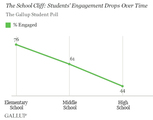
Is our desire to be engaged, effective lifelong learners beaten down, if not killed outright by the time we leave high school? That may be too bleak a conclusion to draw, but the findings of a recent Gallup survey are disturbing nonetheless.
Gallup surveyed nearly 500,000 students in grades five through 12 from more than 1,700 public schools in 37 states in 2012 and found that by the time students get to high school only about 4 in 10 qualify as engaged.
As the writer of the Gallup blog post on the poll argues, you would hope these numbers would be exactly the opposite - that students would become more engaged as they go through school.
Larry Ferlazzo rightly points out that this is not a statistically valid survey: there was no random sampling involved; schools and students participated on a volunteer basis. Still, a sample of half a million is hard to ignore.
You could also debate whether the best possible questions were used to measure "engagement." Here’s the set of questions (again, thanks to Larry for digging these up):
8. I have a best friend at school.
9. I feel safe in this school.
10. My teachers make me feel my schoolwork is important.
11. At this school, I have the opportunity to do what I do best every day.
12. In the last seven days, I have received recognition or praise for doing good schoolwork.
13. My school is committed to building the strengths of each student.
14. In the last month, I volunteered my time to help others.
I’m sure your average committee could debate these forever, but my main concern in administering this kind of survey would be that the same questions are asked in the same way across the group of participants - which does appear to be the case.
In the end, you can only rely so much on this or any other survey, but the results do reinforce the need for diligence in at least a couple of areas.
First, every lifelong learner - or budding lifelong learner - needs to be as conscious as possible of the forces that may dampen motivation and engagement. School is not the only place we encounter these of course - a significant amount of data suggests that engagement levels at work are often as bad or worse than what the Gallup poll shows for school. It’s worth asking yourself questions similar to those in the Gallup survey and see how you fare.
Second, parents - as always - need to be highly aware of the impact Education (with a capital "E") as an institution can end up having on intrinsic motivation to learn. None of us want disengagement to be the result, of course, and I have no doubt that the average teacher works hard to keep students engaged. Still, when you move so many people through a large system, a certain amount of disengagement seems inevitable. Parental engagement in maintaining engagement and cultivating lifelong learning is essential.
What do you think? How much weight do you give to the Gallup poll results, and how concerned should we be about the current state of student engagement as a foundation for lifelong learning?
Jeff
Looking for the perfect holiday gift for the lifelong learners in your life? Be sure to also check out 10 Ways to Be a Better Learner from Mission to Learn founder Jeff Cobb. The post A Bad Start to Lifelong Learning? appeared first on Mission to Learn - Lifelong Learning Blog.
Related posts:
The Start-Up of You - A Conversation Worth Catching
What does it mean to be a lifelong learner?
5 Key Benefits of Lifelong Learning
Jeff Cobb
.
Blog
.
<span class='date ' tip=''><i class='icon-time'></i> Aug 19, 2015 01:27am</span>
|
|
Are you a free range learner? If you are reading this post, then chances are pretty high that you are.
You probably like to read. You are probably constantly consuming content from a variety of devices - your computer, your phone, your iPad, good old-fashioned print books. And from a variety of sources - blogs, videos, podcasts, magazines and journal, social networks.
But, as Maria Andersen points out in this video, having lots of content available to consume is not the same as actually learning. I stumbled across her TEDx talk as I was doing a little free range learning of my own and I thought it was worth highlighting here.
I’ve included some notes I took below (You know how much I believe in taking notes!) These are intended both to help the time-starved and also to add a bit to the thoughts in the video by linking to related resources here on Mission to Learn. Naturally, I also encourage you to take notes of your own.
Notes
Video at: http://youtu.be/mWdSz2nHQNY
@3:09 - The Internet is great for finding information, but information alone is not enough for really learning. If you want to master something relatively complex on your own - e.g., "How to be a good cook" - how do you do that? @3:50 We’re all familiar with scenarios like saying to ourselves "I am going to learn learn X language and then never really going anywhere with it. You might buy software, sign up for a Web site, but then never really use it, etc.
@4:25 - Most humans have an optimism bias: we tend to overestimate what we can actually accomplish. I suspect (and Maria seems to imply) that the easy availability of information on the Internet may actually inflate optimism bias.
@4:55 - The talk moves towards what it really takes to synthesize information, apply it, and "innovate on that information." Just "consuming information is not the same thing as wisdom, understanding, and knowledge." The elements of the "recipe" follow:
Ingredients
@5:40 While not sufficient, well-vetted, timely information is essential for learning. Free information equals "ingredients" in abundance on the Internet, but having information - even high quality information - is a bit like having flour and sugar with no instructions on how to use them to bake a cake. You also have to have directions.
Directions
These include:
@6:30 Part of the direction we need when dealing with information is how to filter our and absorb the truly useful stuff so that we don’t get overwhelmed and experience decision fatigue - basically the problem of having so much information that we are paralyzed, unable to act.
Note: To continue with the "recipe" metaphor, I think this would have been a good place to discuss "sifting, paring," and other ways of "prepping" information so that we can be sure it is useful to us before making the effort to move it into long-term memory. Finding could curators, checking sources, using algorithm based applications like Zite are all potential approaches here. While Maria indicates early that we need to focus in on high quality information, I think the talk would benefit from a bit more guidance on how to do that before discussing how to move information into long-term memory.
Re-engagment (@07:10). Discussion of Ebbinghaus‘ research and the need for repeatedly re-engaging with information over time to help prevent forgetting. Some level of memorization is necessary for truly learning. "Just Google it" is not an answer because you have to know enough to know what to Google in the first place - not to mention to know how to assess and use what you find.
@08:20 - To really learn, you need to re-engage with old ideas in new contexts - i.e., with the new information and experiences you have accumulated - to "innovate" with it, to have those "a-ha!" moments.
Reflection (@08:35). Writing is one of the great, time-honored way to engage in reflection. Blogging is a an excellent option. Writing about it enables us to synthesize information. Maria notes that this often leads to you discovering your own stuff and re-reading. Other ways: Taking a shower! Swimming laps, etc. Peaceful moments of relaxation. Free your brain to wander.
Adding Spices (@10:30). Basically, social learning. Things like book groups, a weekly dinner date - actual physical community. Or, Twitter. Facebook, and other social. Places to get "social cues" that encourage us, directly or indirectly, to re-engage and that also give us new resources. Of course, for these activities to be truly effective, you have to cultivate the right connections.
Cook Time
(@12:45). Discussion of the 10,000 hours concept. Maria notes that a college degree requires between 2,500 and 4,500 hours of study, and this time is not all specific to one topic - most students only get around 1,000 - 3,000 hours on a specific topic - which highlights the importance of continued learning after college, and even well beyond grad school.
@13:30 -Discussion of the process of writing a dissertation as a sort of "ultimate free range learning experience." But only 30-60% of PhD students complete their dissertation within 7 years. These are people who have demonstrated they are good learners, and yet are unable to complete a free range learning project. Certainly the prospects for less accomplished learners don’t look good!
@14:40 - Maria notes that, in writing her own dissertation, she took the approach of always "focusing on the next hour." She leveraged her social network to tweet about what she was learning, basically a play-by-play way to hold herself accountable through interaction with her social network.
@15:10 - One way to ensure that learning goals are met is to set a challenge for yourself that is hard to postpone. (To extend the "recipe" metaphor a bit, this would be like knowing you have guests arriving at 6:00 for dinner.) Provide just enough pressure to "cook" your ideas, but not enough to be negatively stressful and counter-productive. This TEDx talk was a challenge for her, she notes. Another example might be buying a non-refundable ticket to Spain if you want to learn Spanish.
Without the pressure and structure of an educational system, you must provide that pressure for yourself.
@ 17:05 "Free range does not mean free ride. Learning is hard. It is hard inside of school and it is hard outside of school. There is nothing that is going to make learning painless."
But having recipe helps. Maria makes a final plea to not throw away the educational system just yet and suggests that if potential PhD students are not able to successfully engage in free range learning then maybe most of us are not ready to be effective free range learners. We need the support of educational structures. (Though I would argue that those educational structures need to do a much better job of empowering students to become free range learners. This is a point I’ve made in various places - like in this interview about Preparing Adults for Lifelong Learning with The EvoLLLution.)
Jeff
P.S. - If you enjoyed this post and video, you might also enjoy:
What’s Involved in Being a Successful Self-Directed Learner
15 Ways of the Successful Self-Directed Learner
Finally, you may also want to check out 10 Ways to Be a Better Learner.
Looking for the perfect holiday gift for the lifelong learners in your life? Be sure to also check out 10 Ways to Be a Better Learner from Mission to Learn founder Jeff Cobb. The post What’s It Take to Be an Effective Free Range Learner? appeared first on Mission to Learn - Lifelong Learning Blog.
Related posts:
Free Kindle Version of 10 Ways to Be a Better Learner
10 Ways to Be a Better Learner - Free Kindle Version This Week
Jeff Cobb
.
Blog
.
<span class='date ' tip=''><i class='icon-time'></i> Aug 19, 2015 01:27am</span>
|
|
Note: Registrations for this free online course close on Friday, February 8 - so sign up now!
I noticed a post on this free MIT course, Learning Creative Learning, over on Lifehacker. It looks like it could be of interest to a significant slice of Mission to Learn readers, so I wanted to go ahead and throw up a quick post about it.
You can find out more and sign up over on the the MIT Learning Creative Learning site.
JTC
Looking for the perfect holiday gift for the lifelong learners in your life? Be sure to also check out 10 Ways to Be a Better Learner from Mission to Learn founder Jeff Cobb. The post Free Online Course: Learning Creative Learning appeared first on Mission to Learn - Lifelong Learning Blog.
Related posts:
Get creative and solve problems by busting these 6 perceptual blocks
Free Kindle Version of 10 Ways to Be a Better Learner
10 Ways to Be a Better Learner - Free Kindle Version This Week
Jeff Cobb
.
Blog
.
<span class='date ' tip=''><i class='icon-time'></i> Aug 19, 2015 01:27am</span>
|
|
When I read Jeff’s "How will you teach yourself to fly in 2013?" post, I didn’t know I would actually learn to fly in 2013.
But flying—what trapeze artists call what they do—is exactly what I did this past weekend.
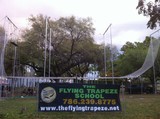
On a trip to Miami, I passed a sign for the Flying Trapeze School in Bayfront Park on a morning walk. When I got back to my hotel, I looked up the Web site (http://www.theflyingtrapeze.net) and signed up for a class. (Please take note of the top-level domain. School staff are also fond of using "catch you later" whenever they can. I appreciate such attention to detail—and good puns.)
Three days later, I was back in the park, watching yachts on the glinting waters and jets growling in low over the skyscrapers. From a platform about 25 feet off the ground.
There was a net beneath me, and I was in double-line safety spotting harness. But climbing the shaky aluminum ladder and standing toes over the edge of the platform still got my adrenalin going.
In two hours, I learned how to do a knee hang, a back-flip dismount into the net, and be caught. To know exactly what I’m talking about, view the video below of my first attempt at the sequence that puts the knee hang together with the catch.
But I learned more than some basic trapeze tricks because the trapeze class also reinforced what I know about learning in general but sometimes fail to fully appreciate.
1. Learners Like to Be Competent
Poets John Ciardi and Miller Williams write in How Does a Poem Mean? that games (and they count poetry as a game) are things made hard for the fun of it. I consider games a specialized kind of learning—learning that is just hard enough to be fun and not so hard as to make one feel incompetent.
Jeff has cited psychologist Edward Deci on competence before: "The feeling of competence results when a person takes on and, in his or her own view, meets optimal challenges." I left the trapeze class feeling competent—I’d met a challenge I’d set for myself, and I got the good, intrinsic rewards that came along with that accomplishment.
A big reason why I could walk away feeling competent was because the instructors scaffolded our learning—one of the instructors told us when to do everything, so we just had to listen. Timing is critical in flying, and if I’d had to master timing on my own in the first class, I’m sure I wouldn’t have nailed that first catch.
2. Repetition and Application Are Important to Learning
The staff were good instructors and adhered to basic teaching principles:
Breaking processes down into components
We worked on the knee hang multiple times to make sure we could complete on it the first swing, before we attempted the catch.
Repeating the key information
Of the four rules announced at the beginning of class, #1 and #2 both were "Don’t walk under the net."
Having us apply what we learn
It doesn’t get more hands-on than putting both hands on that flying bar.
Equally important, the instructors made the environment safe (remember that harness and net), which gave us students the comfort (and courage) to try without excessive fear of what failure would bring.
3. Personalization and Customization Aid Learning
There were six students in my class and four staff. The staff learned and used all our names—something I especially appreciated, as my first name gets bungled so often.
But using our names also has a psychological benefit—a lot of what we were doing involved trust, and knowing the catcher and the spotter knew my name helped relax me.
Staff were also really good at reading our abilities and adapting as needed. One student had trouble getting his legs through his arms for the knee hang—he did it, but it was a struggle. On the next go-round, the instructors had him kick his legs up and around the outside edges of the bar rather than going between his hands—the student did it much more easily.
4. Teacher and Student Are Mutually Dependent
Teachers cannot exist without students, nor can students exist without teachers—the one implies the other, just as a flyer needs a catcher and vice-versa. Both parties have to do their part to achieve the goal—whether that’s learning or a double somersault.
5. Leave ’Em Wanting More
The best learning experiences leave me hungry. I’ve been in learning situations where I’ve hit saturation point, and I can’t take in any more—I at least need a break, and, at worst, the experience leaves me with a negative association with the topic. The two-hour class was just right—I left tired and satisfied and ready to come back again.
The instructor who took my paperwork at the beginning of class, noticing my last name, asked me if I knew Tony Steele. I did not. Tony Steele turns out to be a trapeze great. He left home to join the circus at 15, was the first to complete three-and-half somersaults to a legs catch (which earned him a place in the Guinness Book of World Records, a record he held for 20 years) and still flies at age 76.
In a 2001 interview, Tony Steele says, "You form a mental block, and I took [those who suggested I do four somersaults to a catcher] to be crazy and stupid, you know. People put a limit on their goals, and who knows how high you can fly if you really go after it?" That language, read literally, is just what you’d expect from trapeze artist—and a perfect metaphor for all us lifelong learners who need to remember the biggest barrier to learning and accomplishment is often of our own making.
This guest post is by lifelong learner and poet Celisa Steele. You can find out more about her and her poetry at www.celisasteele.com.
P.S. - You can read Jeff’s version of the experience at 7 Things I Learned from My Flying Trapeze Lesson.
Looking for the perfect holiday gift for the lifelong learners in your life? Be sure to also check out 10 Ways to Be a Better Learner from Mission to Learn founder Jeff Cobb. The post Learning How High Can You Fly appeared first on Mission to Learn - Lifelong Learning Blog.
No related posts.
Jeff Cobb
.
Blog
.
<span class='date ' tip=''><i class='icon-time'></i> Aug 19, 2015 01:26am</span>
|
|
Looking for a way to find free online courses and track your progress in them? OnlineCourses.com may be just the ticket. The site provides a searchable online data base that aggregates open courseware offerings from the evolving "big brand" sector of open education. Here’s how the site describes itself:
OnlineCourses.com aggregates the best free and open courseware for students and professionals, all in a conveniently searchable online courseware platform. Search, track, and share progress on over 500 university and college level classes globally. Formerly known as LectureFox.com, we continue to carefully select and share with you new courses every week. Our passion for developing and sustaining OCW projects drives us to curate the best. From biology to accounting, foreign languages to science, OnlineCourse.com ensures you get a world-class education from the world’s top schools and scholars anytime, anywhere.
If online courses are your thing, definitely looks worth a spin.
Jeff
P.S. LectureFox, the former version of OnlineCourses, was also mentioned here way back yonder in 2009 in 25 Free Online Resources and Web Apps for Lifelong Learners.
Looking for the perfect holiday gift for the lifelong learners in your life? Be sure to also check out 10 Ways to Be a Better Learner from Mission to Learn founder Jeff Cobb. The post Free online courses keep getting easier to find and manage appeared first on Mission to Learn - Lifelong Learning Blog.
Related posts:
Want some community to go with those great courses?
Free Online Course: Learning Creative Learning
Jeff Cobb
.
Blog
.
<span class='date ' tip=''><i class='icon-time'></i> Aug 19, 2015 01:26am</span>
|