Blogs
|
I’m about to head off to one of a handful of conferences I attend each year. Given that the cost of registration, transportation, and hotel will be north of $1,000, I decided it was well worth jotting down some thoughts on how to get the most of a conference from a learning perspective. I’m looking for a return on investment!
Here’s what I’ve got so far. Please comment and share your thoughts about these as well as any additional tips you may have.
1. Attend with purpose
I generally register for conferences well ahead of time, and by the time the actual date rolls around, I often find myself sitting on a plane with little more than a vague sense of what I hope to get out of the days ahead. This time around I’ll be writing down 3 to 4 high level objectives I hope to achieve and paying attention to whether I am making progress towards them throughout the event.
2. Review education sessions ahead of time
Related to the point above, I’ve already spent some time looking at the various session that will be available at the conference and determining which ones it makes most sense for me to attend. I’ll be putting the times and places into my Google calendar before I go. I also plan to jot down some concrete objectives I hope to achieve in each session along with questions I may want to ask. Overkill? Maybe - but given the money and time involved, I want to get a good return.
3. Take notes
Regular readers here know my feelings about taking notes (a topic I also cover in 10 Ways to Be a Better Learner). Writing things down is a simple, straightforward approach to enhancing your learning, but we tend to slack off on it once we exit the world of formal schooling and grades. I’ll have my moleskin notebook handy. On my iPad I’ll also be using Evernote and one of my other favorite note taking tools - Twitter
4. Share your thoughts
Speaking of Twitter - I find it a great tool for capturing quick notes that I can also share with others who are tuned into the conference - whether they are actually there physically or not. (I use Hootsuite for Twitter because this makes it possible for me to easily access my own tweets and other tweets to the conference hashtag later.) I also aim to write at least one or two blog posts (probably over on the Tagoras blog) to help me think through and cement key things I learn.
5. Cultivate your network
Networking is one of the main reasons people cite for going to conferences, in my experience, but were often pretty haphazard in our networking efforts. I welcome the serendipitous hallway conversation, but I’ll also be spending some time figuring out which old friends might be there as well as new people I may want to meet. And, as the previous point suggests, I hope to make many new connections online and share my learning with current connections.
6. Take advantage of the exhibits
I think the exhibit hall - which will be a significant part of this conference - is a great, often overlooked learning resource. In any given field or profession, vendors are usually one of best sources for practical advice and insight into emerging trends. I’ll be spending a good bit of time wandering the floor, getting a general sense of new developments, and tracking down specific vendors to ask questions.
7. Conduct audio and/or video interviews
One of the things I like to do on the exhibit floor is conduct interviews with vendors using a simple digital audio recorder, a Flip camera, or my iPhone. The process of coming up with interview questions and then getting the answers is a great learning experience that simultaneously provides me with some excellent content to share on blog posts and/ or YouTube. And, of course, I can easily do the same with speakers in sessions I attend or experts I find wandering the hallways.
8. Mind your body
It’s easy to slip into eating too much of the wrong things at a conference - a cookie here, a bag of chips there - and exercise often falls by the wayside. Knowing how important both food and physical activity are for learning, though, I’ll be doing my best to stay on top of both. I’ll also do my best to get a decent amount of sleep, both to make sure I am prepared to learn and to help me consolidate my learning.
9. Review, review, review
I’ll say it once again: repetition is the mother of learning. I plan to spend some time during the conference - each morning or evening - looking back over my notes, reflecting on what I’ve learned, and trying to connect it with what I already know. I’ll also make sure to spend some time in the weeks and months following the conference to revisit my notes. (These are all habits of the serious lifelong learner.)
10. Enjoy - and learn from - wherever you are
I was at a conference in Las Vegas a while back and I realized, when I was catching a cab back to the airport, that I had not actually left the MGM Grand in three days. That, I suppose, is part of the Vegas experience, but for this conference, I’m hoping I might actually be able to get out and do at least one interesting thing in the Dallas area. Anyone have suggestions?
Please comment and share your tips for getting the most out of conferences as learning events. And, if you happen to be heading to the ASAE conference in Dallas, let me know!
Jeff
P.S. - Regular readers will notice that a lot of what I cover above draws on 10 Ways to Be a Better Learner, a great resource for any conference attendee IMHO.
P.S.S. - I’ll be tweeting on @tagoras at the ASAE Annual Meeting (#asae12). I hope to connect with you on Twitter, in person, or both!
No related posts.
Jeff Cobb
.
Blog
.
<span class='date ' tip=''><i class='icon-time'></i> Aug 19, 2015 01:33am</span>
|
|
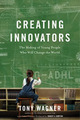
In case you haven’t noticed, "innovation" is all the rage these days. Indeed, it may have edged out "creativity," though it’s a close call. I don’t know about you, but for my part, I am not sure that either are the magic bullets they get made out to be - there is still an awful lot to be said, in most cases, for focusing on the good ‘ol boring blocking and tackling of getting things done. Nonetheless, I think there is great value in all of us cultivating some of the perspectives and habits that tend to go along with innovation. It was with this mindset that I recently read Tony Wagner’s Creating Innovators: The Making of Young People Who Will Change the World.
I don’t tend to do book reviews in the usual sense on Mission to Learn. Rather, I use the blog as a way to write about - and thereby better learn - key concepts that I find interesting in a book. From a traditional review perspective, I’ll say that Wagner’s book is provocative, full of good stories about young innovators, and well worth the read. What follows, though, is my take on seven key aspects of innovation Wagner emphasizes that, for me, resonate with themes I tend to cover on Mission to Learn:
1. Curiosity
Innovation starts with curiosity, and curiosity starts with questions. How does this work? Why has no one ever done that? What if? At it’s best, in my opinion, this curiosity is complemented by a will to learn, a sincere commitment to finding the answers.
The tendency for curiosity to atrophy as we age is perhaps the reason why innovation becomes less common. So, be sure to keep asking questions, and maybe embrace the learning habits of your average toddler.
2. Passion
Even with curiosity and a will to learn, efforts at innovation can be hard to sustain if you don’t have a real love for what you are doing, if you don’t experience a depth of emotion that helps fuel your curiosity. And aside from providing fuel, passion breeds resilience and faith in the face of inevitable failures.
Unfortunately, while systematized, formulaic approaches to education do offer certain advantages, one major disadvantage is that they are not necessarily a great path for finding your passion. Blake Boles makes this point in his recent Better Than College. Wagner rightly emphasizes the role that parent can - indeed, must - play to help compensate for what school usually does not provide.
3. Purpose
Effective innovation must be directed towards an end that, even if you can’t quite clearly see it yet, you know is important.
In early May, I finished up a manuscript for a new book in which I discuss, among other topics, member-based learning communities as a business model. In my experience, the communities that succeed - like, for example, the A-List Blogger Club - tend to support a blend of passion and purpose (P²). Purpose and passion together breed focus, and they also tend to spawn a great deal of innovative thinking in the "P²" learning communities I’ve experienced.
4. Fun
Playfulness. A sense of humor. An ability to take time off. Each of these is these is essential for cultivating and maintaining the ability to innovate. As is the case with both curiosity and passion, so much about traditional approaches to education tends to interfere with having fun - particularly as we age up through the hierarchy of educational institutions. The most successful innovators - and learners - manage to hang onto fun even in the midst of serious work.
5. Collaboration
Wagner stresses the value in collaborating effectively with others to generate and develop ideas. It’s hard to disagree that collaboration is a useful concept for would-be innovators to embrace, but I think I may prefer the term "connection." Collaboration is a direct form of connection, but we also leverage so many indirect direct ways of accessing, adding to, and building upon the ideas of others. Indeed, this blog post is an example (even if not a particularly impressive one!) of connecting with and "riffing" on Wagner’s ideas, though I suspect most people wouldn’t say we are "collaborating."
6. Integrated thinking
I view integrated thinking as the ability to combine asking questions and drawing connections in ways that frame problems in a new light and lead to novel solutions. This process is at the root of breaking down perceptual blocks and solving problems. I think reflection is also essential to establishing integrated thinking as a habit. By taking the time to review, more fully process, and reflect upon recent experiences we are much more likely to see points of integration where we had not previously seen them.
7. Action bias
My wife and I have been reading the fabulous Magic Treehouse books to our five-year old, and in a recent one, Jack and Annie meet four famous innovators: Alexander Graham Bell, Gustave Eiffel, Louis Pasteur, and Thomas Edison. Edison shares with them his famous dictum that creativity is "1 percent inspiration and 99 percent perspiration." As good as your ideas may be, in other words, you have to do the work if you expect them to go anywhere.
I think one of the dangers of our information-rich world is that it is easier and easier to get a whiff of innovation without every tasting the real thing. Who knows how many ideas briefly spark to life and then die between clicks each day on the Internet. Turn innovators do the work to turn their ideas into reality.
***
Those are my brief thoughts on some of the most essential aspects of of innovation identified by Wagner. One important aspect of innovation I have not listed separately - and which is certainly covered by Wagner in the book - is a willingness to take risks. From my perspective, risk-taking is inherent in all of the points above. If you are doing these things, you will naturally take risks, you will fail, and you will keep going. At the same time, engaging in each of these practices consistently over time tends to mitigate risk. In other words, innovation becomes a habit rather than a sudden, frightening leap (even if it looks, and sometimes feel like that at critical turning points).
Again, I recommend Wagner’s book. If you have read it - or even if you haven’t - let me know your thoughts on the points above and any others that you think are an essential part of innovation.
Jeff
P.S. - I should note that Tony was also very kind to provide a segment for Shift Ed: A Call to Action for Transforming K-12 Education (Corwin 2011), which I published with my futurist friend and colleague David Houle.
Related posts:
3 keys to letting curiosity drive your learning
Jeff Cobb
.
Blog
.
<span class='date ' tip=''><i class='icon-time'></i> Aug 19, 2015 01:33am</span>
|
|
It’s a tragic fact that most of us know only how to be taught;
we haven’t learned how to learn.
- Malcolm Knowles
I’ve been writing about various aspects of self-directed learning for years here on Mission to Learn, but I’ve noticed recently there seems to be a bit more of a general "buzz" around the topic. That got me thinking that I should offer up some perspectives on what is actually involved in being an effective self-directed learner.
A key source for such perspectives is Malcolm Knowles, considered by many to be the seminal figure in the field of adult learning. In this post, I "riff" on five essential aspects of self-directed learning that Knowles discusses in his 1975 book Self-Directed Learning: A Guide for Learners and Teachers.
1. Establishing a climate of trust
Knowles starts Self-Directed Learning with the idea of "setting a climate" for learning. This is a deceptively simple but critical step. To learn effectively, we must trust ourselves. We must develop a mindset conducive to being an effective learner and embrace a "degree of responsibility." We must also develop practices that enable us to gauge the authenticity and trustworthiness of our teachers and other sources of learning. Without this foundation, the pursuit of self-directed learning is very difficult, and I suspect it is because a "climate of trust" is never established that so many efforts at self-directed learning fail or never get started in the first place.
2. Understanding the "why" of self-directed learning
We are always learning, whether consciously or unconsciously, but the "directed" aspect of self-directed learning suggests a motivation, a purpose, a sense of "why." The effective self-directed learner actively seeks to understand her own motivations and purposes. As Leo Babauta (Zen Habits) has argued effectively in a number of places, motivation trumps discipline when it comes to learning habits. For Knowles, the motivations for self-directed learning run very deep, and extend beyond the individual learner. As he puts it:
the "why" of self-directed learning is survival (emphasis added) - your own survival as an individual, and also the survival of the human race. Clearly we are not talking here about something that would be nice or desirable; neither are we talking about some new educational fad. We are talking about a basic human competence - the ability to learn on one’s own - that has become a prerequisite for living in this new world [16-17]
I make essentially the same point in 10 Ways to Be a Better Learner, but it is worth noting that the prescient Knowles wrote these words more than 30 years ago.
3. Understanding the "what" of self directed learning
If the "why" of self-directed learning is focused on the "directed" part of the equation, the "what" is focused on "self." There is a tendency to view self-directed learning as something that happens in isolation; as something in opposition to "teacher-directed" learning. This is a false opposition.
Even as self-directed learners, we are reliant on our networks, on our connections with others. And, as Knowles stresses, there are plenty of instances in which we can benefit from formal, teacher-directed learning. Effective self-directed learners recognize when the assistance of a teacher will be of value, but - and this is an essential point - "they will enter into "those taught-learning situations in a searching, probing frame of mind and will exploit them as resources for learning without losing their self-directedness." [21] In other words, they retain their sense of "self" as well as their underlying motivation and purpose for learning.
4. Developing the necessary competencies
This is the area of self-directed learning to which I dedicate most of 10 Ways to Be a Better Learner. As with most pursuits in life, being a successful self-directed learner requires a certain degree of conscious effort and practice. We must learn to be good learners.
For our most focused efforts, this includes understanding things like how to develop appropriate, measurable learning objectives for ourselves, how to identify strategies for achieving these objectives, and how to interact with others effectively to learn and help them learn. I believe it also involves developing knowledge in less obvious areas like sleep, diet, and exercise as well as in the practice of reflection as a habit. In any case, we need to shed the notion that we emerge from our formal systems of schooling with no need to further develop ourselves as learners. In a world that changes as rapidly as ours does, there is no way we could expect this to be the case. We must continually, consciously develop our abilities to learn.
5. Creating a "learning contract"
This last one could be characterized as the "when the rubber hits the road" aspect of Knowles’ perspective on lifelong learning. He advocates creating a "binding agreement" with yourself - an actual document that articulates a clear goal, objectives, and measures and to which you will hold yourself accountable. I’d argue that this level of formal structure is not required for all - or even most learning - but remember that here we are dealing specifically with learning that is directed, even if you are doing the directing. Setting clear goals, objectives, and measures is essential if you truly want to reach - and know you have reached - the destination toward which you have directed yourself.
***
So, how are you doing on those five points? What else do you think is involved in being an effective self-directed learner? Please comment and share your thoughts.
Jeff
Looking for the perfect holiday gift for the lifelong learners in your life? Be sure to also check out 10 Ways to Be a Better Learner from Mission to Learn founder Jeff Cobb. The post What’s involved in being a successful self-directed learner? appeared first on Mission to Learn - Lifelong Learning Blog.Related posts:
15 Ways of the Successful Self-Directed Learner
4 Essential Attitudes for Successful Lifelong Learners
Jeff Cobb
.
Blog
.
<span class='date ' tip=''><i class='icon-time'></i> Aug 19, 2015 01:33am</span>
|
|
This is a guest post by Christopher Hutton of Liter8 Ideas (http://liter8.net)
I’m a curious fellow. I like odd topics, and I love discovering new ideas in their natural habitat. There’s always that one more thing that we can go out and find.
But how curious are you? If you feel like maybe your level of curiosity isn’t what it used to be, here are three tips to help give it a lift:
1. Stop downplaying your curiosity
As Westerners, we too often downplay curiosity as a driver for our education. For too many of us, curiosity is something we encourage in young children, or perhaps, scientists, but tend to deemphasize for everyone else. Many of us perceive curiosity like a toy, something we amuse ourselves with, but rarely use to create real impact or change.
But why? Too often it is a mindset that comes about because of age. As we grow older we choose to accept certain ideas as absolute. Nothing ever really changes, and so, little by little, we stop caring, we no longer find joy in the potentially interesting or in the everyday. We’ve "done it all," so to speak.
But this notion that our aptitude for curiosity declines with age is a self-imposed myth. There is no neuroscience or psychology to support it. In fact, many of our most esteemed elders have gone out of their way to refute it and assert, as Samuel Johnson did that curiosity is "necessary for a rigorous intellect".
But if age doesn’t stop us from being curious, then what does?
2. Actively choose to learn
The problem is within us. We CHOOSE not to learn. We choose to not want to know more, and eventually…we don’t. The desire to know more disappears like an ember smothered by a boot.
The great thing about an ember, though, is that there’s always residual heat there, often enough to start another fire.
3. Seek out inspiration anywhere you can find it
How, then, do we rekindle this behavior, this desire to burn and learn? It only takes a step in the right direction: We must seek it out by (for example):
Finding and connecting with people who are passionate about whatever topic has caught our interest
Taking the risk of jumping right into the middle of a topic we want to master, even if we are mere novices
Accepting criticism as a learning opportunity and fuel for our curiosity
Curiosity fluctuates with our will to learn - and vice versa. Protecting and maintaining a sense of curiosity is essential for every dedicated lifelong learner. Indeed, it is the very fuel that lifelong learners run on.
Christopher Hutton is the Curiosity Curator at Liter8 Ideas (http://liter8.net). He writes on the topic of Intentional Curiosity, where he helps the everyday man kick-start his curiosity and gets more out of life. You can follow Chris on Twitter as @liter8media.
Looking for the perfect holiday gift for the lifelong learners in your life? Be sure to also check out 10 Ways to Be a Better Learner from Mission to Learn founder Jeff Cobb. The post 3 keys to letting curiosity drive your learning appeared first on Mission to Learn - Lifelong Learning Blog.Related posts:
7 Keys to Being an Innovative Thinker and Learner
Jeff Cobb
.
Blog
.
<span class='date ' tip=''><i class='icon-time'></i> Aug 19, 2015 01:32am</span>
|
|
I’ve had the experience before in life - as I am sure you have - of becoming absorbed in a new skill or topic, learning a tremendous amount, but then hitting a plateau at some point and never really advancing much further.
For example, I’ve had this happen with studying a foreign language. I could speak Russian quite well at one point, after a couple of years of very concentrated practice, but I never really advanced past the initial level I achieved. Indeed, not only have I not advanced, but my proficiency in Russian has now steadily declined over the course of a decade.
Maybe you have experienced something similar with learning a language, or a musical instrument, or with pursuing the advanced skills and thinking that could propel your career forward.
In any of these scenarios - and countless others - we may be sufficiently motivated to engage in deliberate practice, and by doing so, achieve a significant level of competence. But eventually, the gains in learning that we get from our practice start to flatten out. We practice, we study, we go through the motions, but we don’t really get better. In the case of my experience with Russian, my motivation began to wane and my pursuit of higher levels of competence - and ultimately, mastery - faded along with it.
Recently I discovered recently that Whitney Johnson and Juan Carlos Méndez-García have developed a model that elegantly captures this sort of experience - and the remedy.
Johnson and Mendez-Garcia view learning and development as occurring along an "S-Curve" that starts slowly, accelerates for a period, and then flattens out. As Johnson puts in an recent HBR Blog post:
As we look to develop competence within a new domain of expertise, moving up a personal learning curve, initially progress is slow. But through deliberate practice, we gain traction, entering into a virtuous cycle that propels us into a sweet spot of accelerating competence and confidence. Then, as we approach mastery, the vicious cycle commences: the more habitual what we are doing becomes, the less we enjoy the "feel good" effects of learning: these two cycles constitute the S-curve.
Here’s the S-Curve as it applies to learning:
Reproduced with permission.
While I have encountered similar "S-Curve" explanations of personal learning and growth before, I feel Johnson and Mendez-Garcia have done a particularly good job of capturing and illustrating the concept. More importantly, they suggest an approach to breaking through the barriers that may inhibit our learning. By being conscious of our learning cycles - and regular readers here know how much I emphasize consciousness in learning - we position ourselves to jump to a new curve as results on our current learning curve begin to plateau.
Reproduced with permission
In the case of learning Russian, it is clear in retrospect that I had reached a point where I really needed to jump to a new learning curve if I was going to attain new levels of learning. This may have meant living in Russia for an extended period of time, or finding a job that required me to use Russian daily to earn my living. Whatever the case, I didn’t make the leap.
As it happens, that’s fine with me: I went down other roads and have never looked back (other than in this blog post, of course . Even so, I think there is a great deal to be said for approaching life and learning a bit more strategically, for having a better sense of when it might be time to shake things up, take some risks, and make a leap. As Johnson puts it:
The S-curve mental model makes a compelling case for personal disruption. We may be quite adept at doing the math around our future when things are linear, but neither business nor life is linear, and ultimately what our brain needs, even requires, is the dopamine of the unpredictable.
So, what curve are you navigating right now, and how soon do you think you may need to make a leap?
Jeff
P.S. - I am grateful to Whitney Johnson and Juan Mendez-Garcia for granting permission to use the images included in this post. You can find Whitney’s HBR Blog Network post where I originally encountered them at http://blogs.hbr.org/johnson/2012/09/throw-your-life-a-curve.html. I also encourage you to check out a fascinating post in which Juan discusses the S-curve model for Facebook and Dropbox user adoption
Looking for the perfect holiday gift for the lifelong learners in your life? Be sure to also check out 10 Ways to Be a Better Learner from Mission to Learn founder Jeff Cobb. The post Ready to jump the curve on your lifelong learning journey? appeared first on Mission to Learn - Lifelong Learning Blog.Related posts:
Are You Ready for Digital Civilization?
Jeff Cobb
.
Blog
.
<span class='date ' tip=''><i class='icon-time'></i> Aug 19, 2015 01:32am</span>
|
|
The Woods Near Anderson Park, Carrboro, NC
A few years ago I unwittingly found myself engaged in one of the best habits of my life: the learning walk.
It was born out of pure practicality. Initially, I needed exercise, and I also needed to occupy my baby son - and then, after a while, my baby daughter. So, I decided to incorporate a stroller into my sporadic jogging habit. It didn’t take long before I discovered that, with a stroller and child in front of me, I greatly preferred walking. Then, given that the child could not yet talk, an iPod seemed like a good addition.
Roll forward a few years, and the stroller is all but gone - though my daughter is still young enough that we set out together some days. The iPod has been replaced by my iPhone, and I carry a small moleskin notebook with me for good measure. Equipped in this way, I set out from my home, office, or hotel room damn near every morning for a 20 to 30 minute stroll. As I have walked, day in and day out, I have learned a tremendous amount.
There are three aspects to these walks that I think make them so powerful.
Content
The first and most obvious is the content involved. I’ve written in the past about my love of podcasts. It takes some effort to find good ones, but once you do, they are truly an amazing thing. I’ve identified a handful over the years that I find very helpful, and listening to these has become a regular part of my walks.
As I have also mentioned before, I am a fan of the courses from the Teaching Company. These, too, lend themselves well to listening on my learning walks. Most of the lectures run between 20 and 30 minutes, so the timing is perfect.
I should probably note that I don’t walk and listen with the idea that I will somehow magically absorb all of the content that makes its way through my ear buds. I keep the notebook handy so that I can jot down important points or ideas that I want to revisit later. Also, I regularly cycle back through a lot of the content I cover - particularly the Teaching Company lectures. Repetition, as they say, is the mother of learning. Finally, the learning walks are only one part of my approach to covering most of this content. I also read to complement and supplement my listening, and much of what I listen is to related directly to my work or everyday life, so I am constantly putting what I hear and read into practice.
Reflection
In addition to the content involved, I think the context of walking is very powerful. Walking gets me away from my desk. It gets me outside. It puts me in a better position for reflecting on various aspects of life and work. Indeed, what I find most powerful about the content I tap into during my walks is that it so often sparks reflection. "How does what I am hearing relate to my life and work?" is the question that runs - so to speak - throughout my walks.
As I suggest in 10 Ways to Be a Better Learner, regular reflection is an essential part of establishing and maintaining the lifelong learning mindset. My learning walks are not the only approach I take to reflection - just as they are not the only approach I take to content - but I find them to be one of the most powerful approaches I have for combining content and reflection in a highly productive way. At the same time, the walks offer plenty of opportunities for reflection that is closer to content-free meditation. Whenever possible, I walk the fields and woods near my house (see the photo at the beginning of this post). I find the woods, in particular, to be a place where "peace comes dropping slow" and where it is possible to regain a sense of perspective.
If a man walks in the woods for love of them half of each day, he is in danger of being regarded as a loafer. But if he spends his days as a speculator, shearing off those woods and making the earth bald before her time, he is deemed an industrious and enterprising citizen. - Henry David Thoreau
Movement
The third aspect of the learning walk that I think is so powerful is simply that it puts me in motion. It gets the blood flowing and it provides me with a daily dose of physical exercise.
I’ve touched on the importance of exercise for cognitive fitness in a number of places, including in the last edition of the Learning Monitor (look for a new edition soon). Based on the research I’ve done, I feel certain that my learning walks contribute to my overall brain health - not to mention my more general health. This alone is reason enough for me to keep at it.
I have also found, however, that being in motion seems to spark innovation. I get many ideas - indeed, many of my best ones - as I am strolling along, and this is the most important reason that I have my small notebook in tow. I don’t know whether this is a matter of increased blood flow to my brain, the fact that I have established the walks as a context for idea generation, or some combination of these and other factors, but I also don’t care. All I know is that it works, and being in motion seems to be a very important part of the formula.
***
So, that’s a quick rundown on my learning walks. If you don’t currently have a habit similar to this, I highly encourage it. If you do have something like a learning walk as part of your regular routine, I’d lve to hear how you approach it. Please comment and share your thoughts.
Jeff
Looking for the perfect holiday gift for the lifelong learners in your life? Be sure to also check out 10 Ways to Be a Better Learner from Mission to Learn founder Jeff Cobb. The post The Learning Walk: A Primer appeared first on Mission to Learn - Lifelong Learning Blog.No related posts.
Jeff Cobb
.
Blog
.
<span class='date ' tip=''><i class='icon-time'></i> Aug 19, 2015 01:32am</span>
|
|
If you are like me, you probably take it for granted that consciously engaging in lifelong learning is worth it, well, just because. You are intrinsically motivated to learn and therefore don’t need a list of potential benefits. Learning is its own reward.
Fair enough. But I think it is still worth being clear with ourselves about why we engage in lifelong learning. (You know how much I like asking "why?") Knowing the reasons can help with clarifying our learning goals and planning; it can help keep us focused at those times when maybe learning does not seem like its own reward, when we need discipline; and, finally, it can arm us with some arguments to bring others into the global community of lifelong learners.
So, with those goals in mind, here are five key areas in which I think lifelong learning provides tremendous benefits:
1. Economic
Let’s start with an obvious one that might win over those less inclined to put the required effort into lifelong learning. I’ve made the point numerous times here on the blog as well as in 10 Ways to Be a Better Learner that we now live in a learning economy. Jobs that require relatively static knowledge - from assembly line work to book keeping - continue to shift to machines. (As Wired co-founder Kevin Kelly put it, "Productivity is for machines. If you can measure it, robots should do it." )
Most of us will end up switching jobs numerous times. Many of us will switch careers at least once. And even those of us fortunate (or unfortunate) enough to stay in the same job over a long period of time will almost certainly see the nature of the work we do shift rapidly. To thrive economically, you simply have to keep learning.
I’d argue, too, that this learning is more than a matter of building skills and knowledge within the narrow scope of a profession. It will be increasingly important to be well-rounded, to have a sense of perspective, and to be able to leverage a variety of learning experiences into generating new ideas and ways of doing things. Harsh as it may sound, the ability to do this (at least for now) is what separates the average human from the average machine, at least when it comes to raw economic productivity.
Which leads to my next major benefit area…
2. Intellectual
I use the term "intellectual" broadly. It doesn’t mean that you need to be a bearded professor with elbow patches and a pipe or a turtleneck-wearing, cigarette smoking French poet. (Funny how smoking - not such a smart thing to do - and being an intellectual have traditionally gone together.) Rather, I mean that lifelong learning increases your knowledge and - just as importantly - your ability to use that knowledge in diverse and meaningful ways.
Lifelong learning opens up and enhances your mind.
It fuels creativity and innovation.
At the same time, lifelong learning is an approach to living life consciously and deliberately, rather than being guided purely by instinct, emotion, and the desires of others. It is nothing less, I’d argue, than personal philosophy in action.
3. Cognitive
As the venerable Wikipedia states it, cognition is "a group of mental processes that includes attention, memory, producing and understanding language, solving problems, and making decisions." There is a wealth of both scientific and anecdotal evidence at this point that actively continuing to learn throughout life is beneficial for all of these processes. My own belief is that if you combine active learning with exercise, good diet, and adequate sleep, your mind will perform like a finely-tuned engine in a Grand Prix racer (though feel free to pick your own metaphor).
Bottom line: the process of lifelong learning helps to keep your brain working well, and as we continue to live longer and longer, this is a benefit that is hard to ignore.
4. Social
Think of it: a huge percentage of what you know came from watching and listening to your parents, experimenting with and testing out new ideas or skills on friends, family, colleagues, and strangers, failing or succeeding in front of others, gauging reactions, adjusting and adapting. All of this is part of the process of lifelong learning, and it is - and always has been - highly social (yes, even before blogs, Twitter, and Facebook).
Learning sparks social engagement - we often connect with others because we want to learn from them and with them - and it is also an outcome of social engagement, often without our even realizing it.
There are numerous personal benefits to all of this socializing.There is evidence, for example, that people with strong social connections tend to be happier and live longer. There are also organizational and societal benefits. Organizations that learn and adapt are moire sustainable over time. The same goes for societies. And, as John Dewey and others argued long ago, lifelong learning is particular important as an element of democratic societies. Your learning efforts, in other words, support the greater good.
5. Spiritual
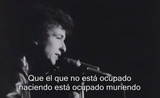
As with the term "intellectual," I use the term spiritual in a broad sense. Learning, I believe, feeds the spirit. It gives us purpose, it gives us focus, it fuels our sense of fulfillment. Bob Dylan famously wrote "He not busy being born Is busy dying" (from "It’s Alright, Ma (I’m Only Bleeding)") You could easily substitute "learning" for "being born" in this line (though, of course, it wouldn’t make for as good a song). Philosophers since well before Dylan have felt the same. (What, after all, is a philosopher up to if not lifelong learning?)
This last one brings me back around to the point I made at the beginning: most of you who read this blog, and particularly those of you who have read this far in this post, embrace lifelong learning simply because it feels right. It is part of who you are. It helps give your life meaning. It is its own reward. The other benefits are important but secondary.
I’m with you.
Jeff
P.S. - Please comment and share your thoughts.
Looking for the perfect holiday gift for the lifelong learners in your life? Be sure to also check out 10 Ways to Be a Better Learner from Mission to Learn founder Jeff Cobb. The post 5 Key Benefits of Lifelong Learning appeared first on Mission to Learn - Lifelong Learning Blog.No related posts.
Jeff Cobb
.
Blog
.
<span class='date ' tip=''><i class='icon-time'></i> Aug 19, 2015 01:31am</span>
|
|
I don’t know yet how consistent I will be about this, but I have started to document bits of wisdom wherever I find them as I am out and about. Seems like a good thing to share here on Fridays.
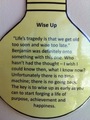
This first one is quote from Benjamin Franklin, "Life’s tragedy is that we get old too soon and wise too late." I found this posted outside a conference room at a client’s offices. Thanks to good ol’ Google, I’ve been able to establish that the additional commentary is from an excellent post on Dumb Little Man titled "14 Action-Inducing Lessons from Benjamin Franklin."
Benjamin Franklin is, of course, practically the poster child for lifelong learning. Few have done it better or longer. Enjoy this quote. Reflect on it. And have a great weekend.
Jeff
P.S. - If you come across "found wisdom" like this in your travels, snap a photo and send it my way with your thoughts (jcobb at missiontolearn.com). I may post it - with credit to you - or ask if you would like to highlight it in a guest post here.
Looking for the perfect holiday gift for the lifelong learners in your life? Be sure to also check out 10 Ways to Be a Better Learner from Mission to Learn founder Jeff Cobb. The post Found Wisdom #1 - Old too soon, wise too late appeared first on Mission to Learn - Lifelong Learning Blog.
Related posts:
Found Wisdom #2 - Cow Leash
Jeff Cobb
.
Blog
.
<span class='date ' tip=''><i class='icon-time'></i> Aug 19, 2015 01:29am</span>
|
|
Through Friday of this week the Kindle version of 10 Ways to Be a Better Learner is available again for free download. Please grab it and spread the word:
10 Ways to Be a Better Learner (Kindle Version)
Note: You don’t have to actually own a Kindle to read the Kindle version. There are a variety of options for using Kindle software.
In case you don’t already know, 10 Ways to Be a Better Learner is meant to be a quick read that offers solid, practical advice to avid or aspiring lifelong learners. My perspective in writing it was that lifelong learning is more important now than ever, but most of us don’t tend to give a lot of thought to how to be better learners. And most of us have not been all that well prepared by traditional schooling to meet the challenges and opportunities of our hyper-connected, information-overloaded world.
So, I hope you will give it a spin and spread the word to others (for example, use the Tweet or Like buttons over to the left.) Also, I’ll be delivering a free Webinar about the book this Friday in collaboration with BlueSky Broadcast. Just click the following link to register:
10 Ways to Be a Better Learner Webinar
Jeff
P.S. - If you do download the book and like it - or if you have downloaded it before - I’d be truly grateful if you would write a short review on Amazon.com. Or, at the very least, give it a "like" on the Amazon.com page for the book. Thanks! - JTC
P.S.S. - 10 Ways to Be a Better Learner press release
Looking for the perfect holiday gift for the lifelong learners in your life? Be sure to also check out 10 Ways to Be a Better Learner from Mission to Learn founder Jeff Cobb. The post Free Kindle Version of 10 Ways to Be a Better Learner appeared first on Mission to Learn - Lifelong Learning Blog.
Related posts:
10 Ways to Be a Better Learner - Free Kindle Version This Week
Free Download of 10 Ways to Be a Better Learner
10 Ways to Be a Better Learner: No. 10 - Embrace Responsibility
Jeff Cobb
.
Blog
.
<span class='date ' tip=''><i class='icon-time'></i> Aug 19, 2015 01:29am</span>
|
|
A shot from travels in Thailand long ago. Perhaps just the thing for the aspiring backyard rancher. - Jeff
P.S. - This is part of my Found Wisdom series. If you come across "found wisdom" like this in your travels, snap a photo and send it my way with your thoughts (jcobb at missiontolearn.com). I may post it - with credit to you - or ask if you would like to highlight it in a guest post here.
Looking for the perfect holiday gift for the lifelong learners in your life? Be sure to also check out 10 Ways to Be a Better Learner from Mission to Learn founder Jeff Cobb. The post Found Wisdom #2 - Cow Leash appeared first on Mission to Learn - Lifelong Learning Blog.
Related posts:
Found Wisdom #1 - Old too soon, wise too late
Jeff Cobb
.
Blog
.
<span class='date ' tip=''><i class='icon-time'></i> Aug 19, 2015 01:29am</span>
|