Blogs
|
David Kelly is a training director and internal learning and performance consultant. I first met David through Twitter. I was unable to attend last year’s mLearnCon, so I took to following the hashtag on Twitter. I quickly noticed that one person (@LnDDave) was compiling a lot of the information coming out of the conference. David was pulling so much information together that I thought he was at the event. Only later did I realize he was monitoring everything from afar, grabbing information from Twitter, the conference website, and blogs.That’s how I came to know David Kelly and his love of backchannel learning. If you don’t know David or are unfamiliar with backchannel learning, I suggest you check out his curated backchannels page, right now. David is doing something unique—for conferences he compiles all of the available content from a conference, including slides, presentations materials, relevant tweets, blog posts, pictures, and more and puts it all in one place. David is not only able to accurately live tweet the session he is in but also able to quickly scan and retweet other relevant tweets. If you’ve ever tried to do this, you know it’s a unique talent. If you’re unable to attend an event, combing through his backchannel material is the next best thing. I share his belief that this type of content curation is only going to become more and more important for learning professionals to understand and participate in.Over the next few weeks, David will be talking about Twitter and content curation—so please jump into the discussion.You can learn more about David over on his new, slick-looking website or by following him on Twitter @LnDDave.
The Learning Circuits Blog
.
Blog
.
<span class='date ' tip=''><i class='icon-time'></i> Aug 19, 2015 02:52am</span>
|
|
Last week during a discussion about design, Jeanette Campos asked me a fairly is simple question: What are the three artifacts that have shaped you most as a designer of creative learning solutions to complex problems?Immediately one word came to mind: Twitter. It isn't the tool itself that has been so impact full for me; it's the world to which Twitter opened up to me.I started my career as a learning and performance professional much the same way many in our field do: without any training or education on what it means to work in this field. It's a challenge for individuals and for the industry as a whole. It leads to a "We do what we do because it's what's always been done in this organization" approach to training. It's also a big part of why much of what we commonly define as training is nothing more than information communicated by those with expertise.I recall those early years well. I read a number of books and took classes to educate myself on how "Training" was supposed to be done. Still, I felt that there was something missing that I just couldn't put my finger on. It was like looking at a puzzle that was missing pieces, just enough so that you could not determine what the whole picture was supposed to be.Then I discovered Twitter. From that moment on, I have never looked at 'Training' the same, and each day the interactions I have on Twitter continue to shape me as a professional.To be fair, it was social media in general that enabled me to extend beyond the walls of my organization and connect with others externally in the field. I am active on all the major social media channels, and they each have their strength and weaknesses. I find that Twitter has the audience and usage that best provides professional development support for those in our field. Connecting with the community of learning and performance professionals on Twitter exposed me to new ideas and possibilities that enabled growth that wasn't possible before, simply because I was unaware of the possibilities that existed.I connected with a few individuals at first. Over time, that number slowly grew, and I started to become aware of a new type of network that has rapidly become one of the most important things in my life: my Personal Learning Network, or PLN.Wikipedia defines Personal Learning Networks as:A personal learning network is an informal learning network that consists of the people a learner interacts with and derives knowledge from in a personal learning environment. In a PLN, a person makes a connection with another person with the specific intent that some type of learning will occur because of that connection.An important part of this concept is the theory of connectivism developed by George Siemens and Stephen Downes. Learners create connections and develop a network that contributes to their professional development and knowledge. The learner does not have to know these people personally or ever meet them in person.Every learning and performance professional should have a PLN. These networks are, in my opinion, the single greatest source of professional development and support available. They expose us to new ideas and ways of thinking, they provide us with more targeted and qualified results than a search engine query, and they enable us to connect and share with peers and experts. As the expression goes... None of us are as smart as all of us. Personal learning networks powered by social media networks like Twitter allow us to tap into this collective knowledge in ways that simply wasn't possible before. A well-cultivated PLN can also be your most powerful search engine, surpassing Google or Yahoo. When I am researching a learning and performance topic, my PLN is my primary research tool. Instead of a Google search, I send a question out to my network, and quickly receive answers to my query that come from the minds and experience of individuals I have chosen to connect with. In almost all cases, the resources shared by my PLN are better than those I am able to find from a standard Google search.So how does one build a personal learning network? In a word - participation.Search out people and topics that interest you and participate in discussions. Ask and answer questions. One of my favorite ways to introduce newcomers to PLNs is to invite them to participate in one of the Twitter Chats for Learning And Performance Professionals. There are a number of other great ways to build your personal learning networks. For more suggestions, check out Nuts and Bolts: Building a Personal Learning Network (PLN) by Jane Bozarth and Build a powerful PLN by Steve Wheeler.The digital age has provided learning professionals with an amazing opportunity via personal learning networks; and as with most opportunities, this one comes with a risk. PLNs aren't just for learning professionals; it's representative of a fundamental shift in the way people learn. People all around the world are forming PLNs, most without even realizing it yet. It's a natural evolution of our increasingly connected world. Put another way... It's the future of how the individuals whose performance we are responsible for supporting will learn. As such, our roles will need to adapt to accommodate this shift.Over the next three weeks, I look forward to visiting this future with you, and exploring the new skills - like filtering and curating - that learning and performance professionals will need to add to their skill sets. Thanks for joining me for the ride.David Kelly is the director of training at Carver Federal Savings Bank and Member of the ASTD National Advisors for Chapters. He is also the author of the blog Misadventures in Learning, where he discusses the future of the learning field and curates the backchannel of learning conferences
The Learning Circuits Blog
.
Blog
.
<span class='date ' tip=''><i class='icon-time'></i> Aug 19, 2015 02:51am</span>
|
|
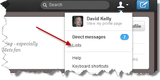
In last week’s Learning Circuits, I explored how I use Twitter as a professional development tool, and explained how doing so has helped me build a personal learning network. Personal Learning Networks (PLN) are, in many ways, both the past and the future of how people will learn.Training and formal education are important, but people have always learned more from sharing with each other informally. Technology has finally reached a point where it is no longer a barrier to this sharing, and can actually amplify it. The concept of a PLN is the natural evolution of this, enabling us to connect, share, and learn with others that historically were out of our reach. It enables us to reach across the globe as easily as we historically have peeked over the cubicle wall.But with the new technologies are new challenges. I often tell people about the value of PLNs, and share tips on how to get started. I notice a number of them taking the first steps towards building a PLN, but shortly thereafter abandoning the task. In almost all of the cases, the reasoning follows a common theme: being overwhelmed.It’s not so much that the technical mechanics of a tool like Twitter are challenging; it’s the world that Twitter opens up that can be overwhelming. The common metaphor for new Twitter users is that it’s like 'trying to take a drink from a fire hose'. There is so much information that trying to take it all in is impossible.This isn’t just a problem related to Twitter. In today’s digital world where anyone can be a content creator, the amount of information that is available can be staggering. Various studies estimate that the amount of digital data that is stored doubles every 18 to 24 months. Which begs the question: In a world of ever-increasing data, how do people find what they are looking for? How can all of the ‘noise’ be blocked out? Returning to the Twitter example, how can I find people to connect with in an endless sea of unrelated tweets?It all comes down to a single word, a word that is a critical skill in the digital world: Filtering.Looking through random data to find the information you need is time consuming and inefficient. Individuals need to develop filtering skills to block out the noise of everything so that they only see the information they are looking for.Many applications have tools that can help with this. Let’s revisit personal learning networks and Twitter as an example.Thankfully, Twitter self-filters. When you log into Twitter, your main feed will only show the tweets of those people you choose to follow. However, that really isn’t enough. As the list of people you follow increases, and the reasons for following individuals varies, your main feed may quickly become disjointed.That’s where lists come in.If you access your profile from the Twitter home page, you’ll see an option for lists. Creating lists is an excellent way to filter the tweet stream. In the example below, I created a list called TwitterTips. Once the list is created, I can easily add individuals to the list via their profile. That way, if I am interested in reading tweets from people talking about Twitter tips, I can go to the list I created and the feed will filter down to just the accounts I added to that list.Another filtering option is to search for hashtags. A hashtag is created when an individual adds a number sign before a word or series of characters. Twitter does not yet have a system where you can tag or categorize message. When a user adds a hashtag, they are essentially adding some sort of category to a tweet.ASTD is a great example. If I search Twitter for the ‘ASTD’, I will see tweets related to employee learning. However, I will also see tweets from people using ‘ASTD’ as an abbreviation for the word ‘assorted’ (a common practice on EBay). By placing the number sign in front (#ASTD), I am essentially searching on the category of ASTD. Many learning and performance professionals (including me) will add the #ASTD hashtag to tweets about our field because they know that people in the field are following the hashtag.Lists and hashtags used together are a great way to build your personal learning network. Following hashtags like #ASTD (or #lrnchat, another popular hashtag in the field) will get you exposed to other individuals you may want to follow and add to lists. This will filter the Twitter feed down to the information you find most valuable, and help you build a strong PLN.My first two Learning Circuits posts have focused primarily on building a personal learning network via Twitter. However, the underlying concepts of this discussion apply to the work we do as learning professionals as well.People learn most from sharing informally with each other. Social media tools like Twitter enable us to take the informal learning that traditionally took place only face-to-face and amplify it to a global scale. We are constantly learning from one another informally, and the pace is only increasing via social media.In a world where most learning is taking place informally, shared via social media tools that reside outside of LMS platforms, and are not tracked… what role does the learning and performance professional play?My next post focuses on that question, and introduces what I believe is the next core competency for learning and performance professionals: Curation.Thanks for reading - see you next week.David Kelly is the director of training at Carver Federal Savings Bank and Member of the ASTD National Advisors for Chapters. He is also the author of the blog Misadventures in Learning, where he discusses the future of the learning field and curates the backchannel of learning conferences
The Learning Circuits Blog
.
Blog
.
<span class='date ' tip=''><i class='icon-time'></i> Aug 19, 2015 02:50am</span>
|
|
As my recent post on reflection as a daily habit may suggest, I’ve been in a bit of a reflective mood lately, and one of the things on my mind is how I have tended to make the biggest learning "leaps" in my life. In so many cases they have had little to do with conventional education practices like sitting in a classroom or preparing for a test.
So far, I have come up with six that seem to have impacted me most or that I know others who are passionate about learning have used. Here they are. One big caveat, though - all of these require you to be mindful and reflect if you really expect to get a lot out of them.
1. Leave
One of the biggest barriers to learning and growing is simply staying in the same place for too long - whether that means the same office, the same relationship, the same job, or the same country. I don’t advocate disloyalty or irresponsible quitting, but sometimes you just have to move on. For me, choosing to leave my first job and travel the world, and later to leave a high-paying job and start my first company were the beginnings of some of the most valuable learning experiences in my life. I think you see this strategy being pursued with vengeance through blogs like The Art of Nonconformity and Illuminated Mind.
2. Dare
We rarely do anything to shake things up in our day-to-day life. That’s usually fine - no one wants to live in a state of constant disruption - but sometimes you have to push boundaries, go to extremes if you want to learn. You can do this in remarkably simple ways. For example, I love Tim Ferriss’ challenge in The 4-Hour Work Week to "eye gaze," or practice maintaining direct eye contact with everyone you meet. It’s amazing how uncomfortable an experience this can be, but it offers some great lessons in human nature.
3. Sit
Of course, learning doesn’t have to be about radical change or disruption. As my previous post on making reflection a habit suggests, learning also comes to those who sit quietly. I have always been fascinated by the Zen practice of zazen, which involves concentration, introspection, but above all just sitting, often for very long periods of time. This can seem purposeless, and yet the practice of emptying the mind can bring great insight into the many ways we struggle and strive to fill it.
4. Switch
Changing up some of your normal habits or environments can help reinvigorate your learning or create new learning experiences. And this doesn’t have to involve a great deal of effort. It might be as simple as leaving the office or classroom and getting outside. Or, try an experiment like doing everything left-handed for a day (assuming you are right-handed). Aside from it being incredibly awkward, you will also begin to notice just how biased the world is to right-handedness. At a much more involved level, my life will forever be changed by the first time I really had to use a language other than English to get by on a day-to-day basis. (Rostov-on-the-Don, Russia. Summer 1993.) A switch that fundamental forces you to take notice of any number of things you otherwise take for granted.
5. Divest
The Web is packed full of advice on how to declutter, streamline, and simplify your life. What most of this advice does not mention, though, is how much you can learn in the process. I chose the word "divest" for this one - as opposed to discard, or dispose, or cut, for example - because it is the opposite of invest. When you start to remove things from your life, you have to put thought into what you really are or are not invested in. You may be surprised by what you learn.
6. Imagine
I heard Elizabeth Strout, author of the Pulitzer-prize winning Olive Kitteredge, speak recently and I was struck by her comments on a scene in the book in which the main character, Olive, ends up stealing her future daughter-in-law’s bra. Strout didn’t know ahead of time that this is how the scene would play out. She got there through imagining herself as Olive and developing an understanding of what Olive would do given the circumstances. Gifted fiction writers seem to use imagination in this way as a matter of course. So do kids up to a certain age. For the rest of us, this ability tends to weaken in adulthood or disappear altogether, but it can be a powerful tool for developing better understanding of a situation, empathizing, and problem solving.
***
So, that’s what I have so far. How much do these resonate with you, and what other "under appreciated" strategies do you find helpful? Please comment and share your thoughts!
Jeff
P.S. - If you enjoy what you find here on Mission to Learn, I’d really appreciate it is you would subscribe by RSS feed or by e-mail. Thanks for visiting!
Related posts:5 Powerful Reasons to Make Reflection a Daily Learning Habit, and How to Do It
Jeff Cobb
.
Blog
.
<span class='date ' tip=''><i class='icon-time'></i> Aug 19, 2015 02:49am</span>
|
|
The Twitter Tools plugin I use for generating these assorted edutweets posts has been acting kind of flaky lately. In fact, it hasn’t worked at all the past couple of weeks, so I was surprised when it suddenly generated this list. The list got auto-published before I could catch it, so I am going to go ahead an let it go. It’s a little shorter than usual, but there are some good things here.
Learning in General
RT @cashcat1969: What an excellent article on lifelong learning, Go Shaq! http://bit.ly/3LlvYT #
RT @nytimeskristof: My latest column is up: http://tinyurl.com/r8xs7e : How to keep an open mind. (A skill every learner needs!) #
Checking out World Lecture Project http://www.world-lecture-project.org #
Language Learning
RT @MireilleJansma: Wanted to list open ed resources for language learning … Wonderful resource! http://tinyurl.com/mkbr6u #languages #
Free Online Courses
Free courses at LatitudeU: http://bit.ly/10szc2 #
RT @RobbDrury: Dotnet Thread: Check Out Ramp Up - a Free Online Learning Program http://bit.ly/VYyUl #
Learning Games
See also 36 Learning Games to Change the World: http://bit.ly/8wof1 #
RT @zaidlearn: 88 FREE EduGames & The Ultimate Post-Saving Puzzle! http://bit.ly/J1v8W #
rebecca’s pocket summer reading list first installment: http://bit.ly/4pOoZ #
New Free Learning Monitor goes out tomorrow. Subscribe today to get the previous edition. http://www.missiontolearn.com/newsletter/ #
Update to Learning Games for Change list. Now up to 36 (and counting) http://bit.ly/15nld0 #G4C #
Conversations
RT @siavogel: @MireilleJansma thanks for @missiontolearn. Following him now. Thanks so much, Sia! #
@MireilleJansma Thanks so much for the #followfriday Mireille! in reply to MireilleJansma #
Jeff Cobb
Mission to Learn
Powered by Twitter Tools.
Jeff Cobb
.
Blog
.
<span class='date ' tip=''><i class='icon-time'></i> Aug 19, 2015 02:48am</span>
|
|
Over the weekend I sent out the May edition of the Free Learning Monitor, Mission to Learn’s monthly digest of free and low-cost online learning opportunities. In my opinion, if you can’t find something in this edition that interests you, you need to check your pulse.
To get the Monitor, visit the subscription page or use the form below (if you see it - it may not show up for e-mail and RSS subscribers). If you are not clear on what it’s all about, I encourage you to visit the archives. Bottom line, though, is that it is chock full of a wide range of free online learning experiences covering all sorts of topics.
Please note: In order to comply with anti-spam regulations, the registration process requires two steps. After submitting this form, you will receive an e-mail confirmation. You must click the link in the e-mail to complete your subscription.
Rest assured that I take your privacy very seriously. See the M2L Privacy Policy for full details, but the short of it is that I simply will not reveal your name and e-mail to anyone outside of Mission to Learn, and I myself will not use your name and e-mail for any other reason than sending this newsletter. So, please give the Free Learning Monitor a spin and let me know what you think.
Many thanks!
Jeff
P.S. - The Monitor is a great vehicle for promoting Webinars, Webcasts, courses, learning communities, podcasts, educational blogs … you name it. If you have developed a learning experience that you feel should be mentioned in the Monitor, please contact Mission to Learn. I won’t guarantee that I will cover it in the Monitor, but then again I might (and usually do).
Jeff Cobb
.
Blog
.
<span class='date ' tip=''><i class='icon-time'></i> Aug 19, 2015 02:48am</span>
|
|
I’ve come across several bits of learning and leadership wisdom lately through Harvard channels, and I think they are worth sharing. These are from the world of business, but the lessons in them are highly applicable at the personal level for the lifelong learner.
Check Your Ego
The first is a blog post by John Baldoni, Never Let Your Ego Stop You from Learning, in which Baldoni argues that we must each understand how we best learn and use that understanding to drive our ongoing personal growth and development.
Doing this requires a certain amount of courage. The courage to venture into the unknown and ask questions. As Baldoni puts it, "the best leaders are those that are never afraid to ask questions. Rather than a question being a sign of ignorance; it is admission ticket to learning as well as a good way to build rapport and trust with colleagues." (See also my recent Where Leaders Go to Learn.)
Be prepared to fail - and learn
In a Harvard Business IdeaCast, Use Failure to Grow Your Business, Rita McGrath discusses discovery-driven growth (from her book of the same name), an approach applicable in any environment where uncertainty is high and where assumptions about the course to take outweigh actual knowledge. Most businesses - and, I’d add, most human beings - are not wired very well to approach growth in this fashion. As McGrath puts it, we tend to put a premium on being right and meeting goals rather than taking chances. Instead, she says, we should borrow the old Silicon Valley line and learn to fail fast, fail "cheap," and learn greatly from the experience. Again, she has organizations in mind, but the same idea applies on a personal level.
Here’s the podcast. It’s about 10 minutes long.
The opposite of practice makes perfect
In another Harvard Business IdeaCast, Re-thinking the MBA, McGill professor Henry Mintzberg adds to his longstanding criticism of traditional MBA programs.
The core of Mintzberg’s argument is simply that becoming a good manager and a good leader requires experience and an understanding of context. Most students in MBA programs arrive with relatively little experience and are taught a set of skills - primarily analytical in nature - with the idea that they will then be prepared to manage and lead in pretty much any context. That doesn’t work, says Mintzberg, and it can even be harmful because it creates a false sense of confidence. (See also my recent post on Learning in Context.)
One highlight of this interview is Mintzberg’s indictment of the case study method (made famous, of course, by Harvard Business School itself). In Mintzberg’s opinion, case studies are a highly superficial approach that often lead to decisions based on little real understanding of context. As one glaring example, he points to well-known MBA George Bush as a practitioner of the case study approach: "Give me a twenty-page case and I’ll give you a war."
I’ll leave you with the podcast to hear more about how Mintzberg feels management education should be approached, but the core idea here is that the mastery - if that is even the right word - of complex activities like management and leadership requires a great deal of practice and experience. There is not a list or curriculum of "best practices" that can substitute for actual practice. There are no short cuts.
Again, while the podcast is focused on the world of business, the lessons it offers about learning are much more broadly applicable.
Here is the podcast. It is about 12 minutes long.
As always, I welcome comments.
Jeff Cobb
Mission to Learn
P.S. If you enjoy what you read here on Mission to Learn, I encourage you to subscribe to the RSS feed or use the e-mail subscription form at the top right side of this page.
Jeff Cobb
.
Blog
.
<span class='date ' tip=''><i class='icon-time'></i> Aug 19, 2015 02:48am</span>
|
|
If you are on a Mission to Learn, chances are pretty good that you are a philosopher in the truest sense - someone who loves knowledge. But maybe you haven’t thought about yourself that way or spent much time studying Philosophy with a capital "P." If not, I recommend checking out The Philosophy Podcast from LearnOutLoud.com, and in particular, Discovering the Philosopher in You, a freebie from the Modern Scholar audio library featured in the latest episode of The Philosophy Podcast. Here’s the rundown:
In this lecture, Professor Colin McGinn deciphers what we mean when we say we ‘know’ something to be true. He traces the history of philosophical skepticism, giving the listener several historical arguments for the theory of knowledge, touching on arguments made by the likes of Plato, Descartes and other important philosophers.
Download File - 16.1 MB
Listen To This Podcast (Streaming Audio)
The The Philosophy Podcast, which has been a standard selection on my iPod for some time now, also offers audio excerpts from a range of major philosophical works. And LearnOutLoud’s free directory offers more than 2000 free audio and video titles for the lifelong learner.Check it out today.
Jeff Cobb
Mission to Learn
Jeff Cobb
.
Blog
.
<span class='date ' tip=''><i class='icon-time'></i> Aug 19, 2015 02:47am</span>
|
|
I sent out a tweet on this one, but Clark Aldrich’s brief post on Four Intellectual Traps for Understanding Learning merits a blog post as well, IMHO. In it, Clark calls out the following as not (wholly) useful for learning:
1. School
2. Books, magazines, and movies
3. Professional (or other highly structured) sports
4. Computer games
I refer you to the post itself for more detail - and the promise of more to come.
Jeff Cobb
Mission to Learn
Jeff Cobb
.
Blog
.
<span class='date ' tip=''><i class='icon-time'></i> Aug 19, 2015 02:46am</span>
|
|
I watched the excellent Century of the Self series some time ago (I think at the suggestion of Maki), but recent ponderings and events have brought it back to mind (more on those at a later time).
If you aren’t familiar with it, Century of the Self is a fascinating four-part documentary series that explores the influence of Sigmund Freud and his nephew, Edward Bernays, on modern life, particularly in the areas of public relations, advertising, and politics. Really, it is a must see if you want to have a better grasp of the types of influence at play in all parts of our lives. And yes, that certainly includes learning!
Below is the first installment of the series. And here are the links to all four parts:
Century of the Self, Part I, Happiness Machines
Century of the Self, Part II, The Engineering of Consent
Century of the Self, Part III, There is a Policeman Inside All Our Heads: He Must Be Destroyed
Century of the Self, Part IV, Eight People Sipping Wine in Kettering
It’s a bit of a time commitment to watch all of these, but I think you will find it is time well spent. Trust me
Jeff Cobb
Mission to Learn
P.S. - If you enjoy what you read here on Mission to Learn, I encourage you to subscribe to the RSS feed or use the e-mail subscription form at the top right side of this page.
Jeff Cobb
.
Blog
.
<span class='date ' tip=''><i class='icon-time'></i> Aug 19, 2015 02:44am</span>
|