Blogs
|
TechKnowledge is less than a month away, and I can’t wait!This is going to sound a little doe-eyed, but last year’s event was no less than transformative for me; I presented at a major industry conference for the first time and met a slew of incredible people who have continued to be amazing resources over the past year. Some of that happened through serving on the planning committee for the 2012 event. We’ve worked hard over the past year to bring you a conference that serves a wide range of audiences and needs. Look at the schedule and you’ll see some sessions that go well beyond the basics, such as Reuben Tozman’s session on ID for a semantic web and Tim Martin’s session on the next generation of SCORM, as well as a wide variety of foundational sessions.I’m also thrilled that in addition to the less-formal panels called TK Chats that were pioneered last year, there will be a Tech Kafe: a space for people to meet and chill when they want to keep discussions going--hopefully through Twitter as well as in person--even when they’re not up for a formal session. (More on that later.) And I’m excited that there will be a keynote, several concurrent sessions, and a TK Chat devoted to gaming/gamification/gamefulness; with so many opportunities to learn and discuss, I hope attendees are going to be able to figure out how much is hype and how much is relevant to their own organizations.Finally, you’re going to see more integration with social media, both leading up to the conference and during, with efforts like the TechKnowledge 2012 Blog, the Twitter-based Tech + Knowledge scavenger hunt, and Tech Kafe. (And Brian Dusablon and I even contributed to the conference previews in a highly unofficial capacity by drinking and talking with Julie Dirksen and Diane Elkins, TK12 speakers on usability and accessibility, on The ToolBar podcast this month.) Whether you’re at the conference or not, stay up-to-date with all the TK happenings by following the hashtag: #astdTK12.I’ve asked other members of the planning committee to share what they’re looking forward to most, as well. Here’s what they have to say:As much excitement as I have for all of the great concurrent sessions at this year’s TK, I’m even MORE excited about TK Chat and Tech Kafe (new this year). Chats are informal talk-show-style conversations with deep thinkers on key topics -- we’ll have a little stage and a cozy couch and roaming microphones to get everyone involved. Right next to the TK Chat area is the Tech Kafe, a chill-out space where you can continue those deep conversations and connect with other conference attendees and speakers. I plan on hanging out in these two spaces as much as I possibly can. So come on down and join the fun!- Cammy Bean, aka @cammybean Events like TechKnowledge 2012 are opportunities for me to dwell together with friends and colleagues from across the learning and training community. I enjoy the opportunities for us to sit together and explore what we’re each doing. I’m always seeking to adopt new patterns into my craft, as well as have my assumptions challenged. My favorite thing that happens at events like TechKnowledge: the discovery of someone bright and wonderful who happens to share some huge ideas that I didn’t know I needed to know. It happened to me at TK11 and I’m really looking forward to lightning striking twice this year, too.- Aaron E. Silvers, aka @aaronesilversIt’s always fantastic to join together at TechKnowledge with like-minded learning professionals, and friends new and old, and this year will be no different. We will come together from around the globe to share best practices and encourage one another to take the next step in our learning journeys. I am also looking forward to hearing from the keynote speakers: Jane McGonigal, Stuart Crabb, and Lisa Doyle. Each one is sure to share cutting edge thinking and best practices about learning. They will challenge me to try new things and see new possibilities. I can’t wait!- Cindy Huggett, aka @cindyhuggConferences like TechKnowledge provide the opportunity for individuals in the learning community to get together and share ideas and concepts about how our craft can be improved. As much as I enjoy the concurrent sessions, I think my favorite part of these events is actually getting to meet many of the folks that I interact with on a daily basis over services like Twitter. While learning communities online are pretty fantastic, nothing beats the face to face interactions that can be found at these conferences. These opportunities to meet new people and converse without the limits of 140 characters are really what makes TechKnowledge such a great event.- Kris Rockwell, aka @krisrockwellThere are so many good reasons to join us in Las Vegas in January. And when you do, don’t be afraid to ask questions, answer someone’s tweets, start up conversations in any way you can. The most important lesson I learned last year is that conferences are like soylent green: They’re made of people. And TK12 will have plenty of people worth getting to know. See you there!Judy Unrein designs learning solutions at Artisan E-Learning, blogs at E-Learning Uncovered and onehundredfortywords, and tweets at @jkunrein.
The Learning Circuits Blog
.
Blog
.
<span class='date ' tip=''><i class='icon-time'></i> Aug 19, 2015 02:56am</span>
|
|
Happy New Year!A big thanks to Judy Unrein for blogging last month. If you didn't get a chance to read it, you should go back and catch up on her thoughts on HTML5 and our fortcoming TechKnowledge Conference.I'm really pleased to have Karl Kapp take the blogging reins for the month of January.I first saw Karl Kapp speak at last year’s Innovations in E-Learning event. Karl often speaks at ASTD's TechKnowledge conference and other similar events, but I’d never had a chance to hear him. I’m glad I was able to catch up with him last year. Karl’s session was on 3D, games, and simulations and why they matter for learning. The session was enthralling. Never before had I seen someone approach the topic with the amount of research and case examples that Karl did. It was a great session.If you’re not familiar with Karl’s background, he is a leading consultant, scholar, and expert on the convergence of learning, technology, and business operations. He is a professor of instructional technology in Bloomsburg University’s Instructional Technology Department, and is the assistant director of the Institute for Interactive Technologies (IIT). Two of his more recent books are Learning in 3D, which he wrote with Tony O’Driscoll, and Gadgets, Games and Gizmos for Learning. His forthcoming book is titled The Gamification of Learning and Instruction: Game-Base Methods and Strategies for Training and Education.Karl already has a very active blog in Kapp Notes, but he was nice enough to take on blogging duties here for the month of January. He’ll be talking about games, simulations, and ARGs--and ranting a bit about how to better engage learners.
The Learning Circuits Blog
.
Blog
.
<span class='date ' tip=''><i class='icon-time'></i> Aug 19, 2015 02:56am</span>
|
|
No one wants to watch a movie in which the director yells "Lights, Camera…Multiple Choice Question" We are more excited with movies directed with the words "Lights, Camera, Action." Multiple choice questions don’t reflect reality. In real-life we are seldom confronted with a multiple choice question, we are confronted with problems, decisions, and the need to be innovative. Not the need to choose the best answer out of four choices. Action is what we want, it is what motivates humans. Kids can’t sit still, they need to move. We want to watch sports with activity and movement. Our jobs demand active thinking, complex decision making, and activity. Why should our learning design be inactive? Why should our online courses start with something as boring and pedantic as a learning objective? Why do we commonly create instruction with the page-of-text, page-of-text, page-of-text, multiple-choice-question format? For the month of January as the New Year kicks off, I want learning and development professionals to think about action, activity, and innovation. I want us to make a conscious effort to force learners to do something. ..anything to get them mentally or even physically moving. Challenge your learners to interact with the e-learning and classroom instruction that you create. Here are three tips to help you get started; some are borrowed from the field of video games which is an awesome place to look for inspiration for learning and development professionals. A term I like to use (while some others don’t) is gamification. We need to add gamification to our learning—more about that in a subsequent post. So here is the list:FirstStart your learning with a challenge instead of a list of objectives or a lecture. Rather than state, "there are three things you should know about fraudulent claims"—start the training with, the statement "A potentially fraudulent claim has just been filed, you have 20 screens and 30 minutes to learn what to do. Proceed with caution." As the challenge unfolds and you provide information to the learner, you should be providing more and more learning opportunities, introduce the fraud detection worksheet. Incorporate policy points into the feedback you provide the learner, add in exceptions. Too many courses are too easy. Yes, I said it…too easy. Humans don’t like or respect tasks that are too easy. Yet too many learning courses are built to the lowest common denominator. Create courses that challenger learners, they’ll learn more, remember more and, as a result, be able to do more.SecondCreate training where more than one answer is possible, feasible, and acceptable. Rarely in life are answers cut and dried. There are typically shades of gray that must be dealt with and reconciled. In most e-learning, there are absolutely right and absolutely wrong answers. How does that prepare a learner for what she will encounter on the job? Present a situation where the customer is half-right and half-wrong…what do you do? Or an ethical situation which is filled with gray. Training needs to be more nuanced than its current form. Provide alternative endings, provide different levels of "correct" …don’t keep giving one right answer. Thir ThirdForce the learners to perform the activity they are learning about. Make them enter a customer order, make them calm down an irate customer, make them close out an account. Make them operate the machinery. If you want someone to learn to do something, they must practice doing it! We can’t tell them about being a good leader and then hope they’ll be a good leader, they have to practice being a good leader, or sales person or accountant. Practice is needed to improve performance. Athletes don’t just read about competition, they practice, work on fundamentals, play scrimmages, and then perform. In training situations, the learner reads about negotiation skills, takes a multiple choice test about negotiation skills, and then is asked to go negotiate with a customer. That’s it--no practice, no scrimmage. Immediately they go to the real thing. This is not good.So, as the New Year starts, think about what you, as a learning and development professional, can do to engage the people for whom you are building instruction. Don’t passively hand them content, instead make them do something in 2012. Your action item from this post is to create at least one challenge or action oriented activities for your learners in the next 3 months.
The Learning Circuits Blog
.
Blog
.
<span class='date ' tip=''><i class='icon-time'></i> Aug 19, 2015 02:56am</span>
|
|
In addition to discussing Gamification, I also wanted to take one of my January blog postings and talk about ARG.The term ARG is batted around from time to time as a method of conducting training programs but there is a lot of confusion around the term.Let's look at the terms, to help define the terms, I asked Koreen Olbrish who is a self-described--opinionated and snarky entrepreneur, instructional designer, learner and mom who has experience developing ARGs and who blogs at Learning in Tandem for her expert input.She contributed an entire chapter to my upcoming book explaining the two terms and has created ARGs and implement them successfully. Here is what Koreen wrote in the chapter:Alternate reality games (ARGs), also sometimes called pervasive games or transmedia storytelling, are designed to combine real life and digital game play elements. So that you are playing the game in the real world but doing behaviors that are linked to the game. (my addition.)Typically, Alternate Reality Gamess are "tracked" online but the actual game play consists of real life activities. There are many entertainment-based examples such as the games, I love bees, The Lost Experience,Numb3rs Chain Factor and examples of ARGs for social issues such as Urgent Evoke, World without Oil. Here is a video explaining "I Love Bees"There continues to be a lot of confusion in the term ARG--some people use "alternate reality games" and "augmented reality games" interchangeably. For a point of clarification, alternate reality games refer to game play that integrates real life and online game play through a storyline that seeks to engage learners in an experience that seems real. While augmented reality enhances reality or adds something to it. For example the yellow first down line superimposed on the football field is augmented reality. Often smartphones are used with Augmented Reality Games. Here is an example of an augmented reality game.The really confusing part comes in when augmented reality is used as part of an alternate reality game. To keep them straight, think about the meaning of the words; "alternate reality" seeks to create a different reality for game play purposes. "Augmented reality" adds additional information to real life environments and objects. Here is a great video from BMW that shows the potential of augmented reality in the realm of training:Here is one done for the military. Notice all the heavy and bulky equipment...remember, cell phones used to be heavy and bulky as well. The technology is shrinking and will soon be in a training center near you. So yes, you should begin to care about ARG, they have the potential to be powerful instructional tools that can allow a true performance support system. I think the BMW example clearly shows how to mix training with on the job actions. The military example could be used for teaching such skills as negotiations in a highly sophisticated branching simulation or for teaching people how to insert artificial hips or even how to deal with upset customers. Technology is driving a number of interesting advances in learning environments. The important thing for learning and development professionals to realize is that the basic understanding of how people learn and what it means to motivate learners does not change with technology. Now more than ever we need to know and put into practice evidence-based guidelines for developing instruction.
The Learning Circuits Blog
.
Blog
.
<span class='date ' tip=''><i class='icon-time'></i> Aug 19, 2015 02:54am</span>
|
|
Well, my time blogging here at The Learning Circuits Blog is quickly coming to an end. It’s been a great time with some awesome discussions. So, I hope to meet a number of readers, commentors and lurkers in person at TechKnolwedge 2012 at the end of this week. If you are going to TechKnowledge 2012, stop by and say hello, I will be doing a number of different events and I love meeting new people as well as past, present, or future students. TechKnowledge 2012 Twitter GameFor the first part of the conference, I have co-created a game that is designed to increase conference learning and give attendees the opportunity to network with peers or play solo.In the game, you’ll hunt for answers to questions supplied by speakers by attending sessions and viewing session slides online and on the mobile app. The game card of questions can be found online www.tk12.astd.org/materials and on the mobile app under session number Game 1. Answers to the questions will be found in the session slides identified by a special icon. If you’d like to partner with others, use Twitter hashtag #TKgame at the conference.A debrief of the game as a learning experience will be held in the Tech Kafé on Thursday from 5:15-6:00 p.m.My TechKnowledge 2012 PresentationHere is a description of my session. It will be held on Wednesday, 1/25 11:00a.m.-12:15 p.m., Room Miranda 7/8. Please stop by and say "hello."What Research Tells Us About 3D Avatars, Storytelling and Serious Games for Learning and Behavior ChangeThis decidedly unacademic presentation provides a broad, scientific overview of what we know from research about the effectiveness of today’s technology for changing learner behaviors. We will discuss the use of 3D avatars to change learner behaviors; we will consider how playing a video game changes a person’s behavior and how storytelling helps learners memorize facts. We’ll answer questions like: Are two avatars better in an e-learning module than one? Does the appearance of an avatar impact the person when they’ve finished working with the avatar? Do serious games have to be entertaining to be educational? This exciting session shows you how to use the existing research literature in your own design and delivery of online learning. You will be provided with tips and techniques for matching research findings to your own e-learning design. We’ll move the concepts from research to practice. The presentation ends with a practical case study outlining how the research tips, techniques, and practices can be applied in a real-life online learning situation. Discover how research-based practices really fit in with today's fast-paced need for quick, effective online instruction.TechKnowledge 2012 Chats I am participation two TK Chats. One is about Gamification on Wednesday, 1/25 from 2:00-2:45 p.m. It will be a lively discussion with Rick Raymer, Koreen Olbrish,Kris Rockwell, and myself facilitated by Judy Unrein. This will be a fun and thought-provoking discussion. Join us for the controversy.The second might not be as controversial (or will it)? The topic is Instructional Design, which is as critical to what we do as professionals as you can get! With thought leaders like Ellen Wagner, Allison Rossett, and Steve Villachica and faciliated by Cammy Bean, it’s bound to be an engaging and thought-provoking review of the field and where it needs to go.
The Learning Circuits Blog
.
Blog
.
<span class='date ' tip=''><i class='icon-time'></i> Aug 19, 2015 02:54am</span>
|
|
Well, finally getting back into the swing of things after a great conference in Las Vegas. The TechKnowledge 2012 was fun, educational and a great time.It started with me being on the same plane as Stevie Rocco who, among other things presented a creation station called Yippee! It's Free! Low- and No-Cost Tools for Training and Development. We had a great chat and discussion waiting for a cab...then she got in one cab, I got into another with a couple of other conference attendees and I never saw Stevie again at the conference, the irony is that we only live about an hour from each other and we had to travel clear to Las Vegas to see each other...ah the nature of conferences.Then I had some conference calls and went down to eat dinner by myself and ran into an alum of the program, Andy Shean who works at Success Factors. We had a great dinner and caught up with Bloomsburg happenings. The next day I caught up with all the great ASTD folks who run such an effective conference. Always a pleasure speaking at a conference where they take such good care of you!!!Then I did a presentation, you can obtain all the links at my TechKnowledge 2012 Presentation Resources post.Next, I had my book signing, THANKS CURT for stopping by...very much appreciated. Then off to my TK Chat on Gamification. Here I am on the panel with Kris Rockwell, Koreen Olbrish, Rick Raymer and myself. Then I was on a panel with some great ID professors, we didn't have many attendees but we had a lively and fun discussion. We had talked about holding the session in the bar, maybe next time.Here are Steve Villachica, Allison Rossett, me and Ellen Wagner acting a little stir crazy with all visions of ID dancing in our heads. Later I joined a couple of folks from Adobe including fellow professor Allen Partridge and Connie Malamed of The eLearning Coach and elearning Brother Andrew of eLearning Brothers, plus Beverly Roberts from Virginia Commonwealth University and author and owner of Artisan E-Learning Diane Elkins, Marcia Mendonca Lima Wright join us as well as Charles Welsh.Well this also concludes my blogging at Learning Circuits Blog, I had a great time and really enjoyed blogging here. Take care and keep on learning and designing great instruction with just the right amount of "gamification":)
The Learning Circuits Blog
.
Blog
.
<span class='date ' tip=''><i class='icon-time'></i> Aug 19, 2015 02:54am</span>
|
|
Much thanks to Karl for guest blogging in January. He not only offered some insightful posts about how "gamification" is affecting the world of learning, he kept us abreast of happenings at ASTD TechKnowledge 2012.In February, the LC Blog invites Connie Malamed to take the helm. Connie is a frequent contributor to Learning Circuits, and has spoken at several ASTD events about the fields of online learning, information design, and visual communication. She is also the author of Visual Language for Designers, which presents visual design principles that are based on cognitive science. In other words, it explains how to design for the human mind—something that’s very important in e-learning.However, Connie is probably most well-known for The eLearning Coach (http://theelearningcoach.com), which is her own blog where she shares actionable strategies, practical content, product reviews, and resources to help practitioners design, develop, and understand online learning. Indeed, with degrees in Instructional Design and Art Education, she energetically pursues ways to improve instructional and information graphics.Following Karl’s lead, Connie promises to pass along to readers what she learned at ASTD TechKnowledge, as well as lend her thoughts on visual design and discuss current trends in our field.
The Learning Circuits Blog
.
Blog
.
<span class='date ' tip=''><i class='icon-time'></i> Aug 19, 2015 02:53am</span>
|
|
When it comes to conferences, a better slogan would be, "What happens in Vegas should NOT stay in Vegas." If you're one of the fortunate people from your organization to attend a professional conference, how can you bring it back to the workplace so everyone can benefit?During sessions, keynotes, hallway conversations and after-hours discussions, many great ideas are tossed around. Don't let them stay in Vegas! Share them when you get back.Sharing what you've learned will not only benefit others in your workplace, it may help you take better notes and stay more organized during the conference. The pressure of knowing that you'll need to convey the best of the conference tends to help a person plan ahead.If you're ready to hone your leadership skills, here are ten ideas for how you can bring the conference back to work to share the knowledge gained with others.1. BLOG LIVE FROM THE CONFERENCEDo you enjoy being hunched over your keyboard and typing furiously? Then this approach is for you. Every so often, you'll see a session participant madly taking notes to capture the essence of a session. Often, this person is Cammy Bean, the Queen of Live Blogging. Check out her live blogging notes from TechKnowledge 2012 (scroll down to see all of her notes).2. GIVE BROWN BAG SEMINARSIf you work in a small organization, throw a series of brown bag seminars over the lunch hour to present and discuss some of your favorite sessions. Break down the silos and invite people from outside your department who might have an interest in a particular topic.3. OFFER A WEBINARIf your organization is large and geographically dispersed, consider presenting key teachings from the conference during one or more live webinars. Allow for questions and answers as well as discussion. If you don't currently own or subscribe to a webinar platform, this is the perfect time to try one out. There are usually 30-day free trials.4. SHARE THE BACKCHANNELThe backchannel typically refers to audience members using Twitter to share session points and to comment in real time. Backchannel curation refers to researching and gathering all the documentation regarding an event. It provides a way for people to attend a conference virtually, to catch up on missed sessions and to continue to learn after the event ends.You can curate the conference backchannel for interested people in your organization. Or you can rely on the King of Backchannel Curation, David Kelly, to do an excellent job. Here is his curated backchannel of TechKnowledge 2012.5. TRY POST-EVENT BLOGGINGNot interested in live blogging? Take judicious notes and then blog about what you've learned after the conference is over. If your organization doesn't have an internal blogging platform, consider a light blogging platform like Tumblr. It's very easy to get started. Then be sure to share posts with your peers.6. START SMALL GROUP CHATS Gather employees with common interests together and chat about issues and trends discussed at the conference. Let the conference topics be a starting point or stimulus for taking things further. Are employees spread around the world? Use Google+ Hangouts, which allows for free video chats of up to 10 people.7. SLIDESHARE ITUse SlideShare, Prezi or another online presentation tool to create a self-paced review of the best of the conference. This is a good way to reach out to employees around the world and to allow busy people to learn on their own schedule.8. SCHEDULE VENDOR DEMOSDid you connect with vendors who have products that could meet the needs of your organization? Most vendors provide in-person or virtual demonstrations. Schedule a few product demonstrations and invite experienced designers and developers to evaluate the products.9. ARRANGE Q&A WITH PRESENTERSMost presenters I know are passionate about their topics. That's one of the reasons they enjoy presenting. You might be able to arrange a webinar or teleseminar question and answer session with a presenter to go more deeply into their areas of expertise.Although an unscripted question and answer session is exciting, it's probably wise to gather some questions from your community ahead of time. Pass these on to the speaker so he or she can be well-prepared. This will allow the speaker to better understand the audience's main areas of interest. Then allow some time for impromptu questions and comments as well.10. START A BOOK CLUBMany speakers have written books or often suggest books for further reading during their presentations. They will also be able to recommend books in their area of expertise if asked to do so.A great way to bring a conference back to work and to continue learning is to gather a group of peers with similar goals and interests to read and discuss one book a month related to a presentation topic. Discussions can be face-to-face or online. Imagine how much you would learn in one year!Any other ideas?How do you bring the essence of a conference back to your workplace? Or if you're unable to attend a conference, how would you like others to share what they've learned?Connie Malamed (@elearningcoach) publishes The eLearning Coach, a website with articles, resources, reviews and tips for learning professionals. She is the author of Visual Language for Designers and the Instructional Design Guru iPhone app.
The Learning Circuits Blog
.
Blog
.
<span class='date ' tip=''><i class='icon-time'></i> Aug 19, 2015 02:53am</span>
|
|
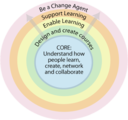
After TechKnowledge 2012, I was inspired to think again about the role that learning and development professionals can look forward to in the future. For those who remain flexible and partake in continuous learning, I think the 21st century will be filled with exciting opportunities.With cultural shifts slipping into the workplace, technologies changing at rapid speed, and an improved understanding of how adults learn, it's not surprising that many in our field are wondering what their training-related job might look like in the future.One thing seems nearly certain—as time passes, the role of the training professional and instructional designer will be transformed. This is why various titles for our new role are being suggested, such as "Learning Experience Designer" and "Learning Architect" (see review of Clive Shepherd's book, The New Learning Architect).There are many ways to imagine what will happen based on what is occurring today. One way to organize our thoughts about the future of the training and development professional is to think in terms of four roles that are based on how people learn, create, network, and collaborate. It seems feasible that all future roles could be based on this type of understanding, as represented in the diagram below.Possible future roles of the Learning and Development professional.Start with the core and work outward.Each role defined here moves progressively further away from the traditional course design role. Perhaps the individual Learning and Development (L & D) professional will fulfill several of these roles simultaneously.Design and Create Courses: This is currently the most well-used role in the L&D repertoire. It involves using a systematic process to design and develop (and sometimes teach) courses and supplementary materials, such as performance support tools, for a specific workforce. The range of methodologies for doing should continue to expand. Using anything from the ADDIE model and it's many adaptations, to Thiagi's Four Door Model to Rapid eLearning development, there are many organizations who will continue to require courses for compliance, new hire and other types of structured training.Enable Learning: In this role, the L&D professional provides opportunities for a motivated workforce to learn and grow. These opportunities may be structured or unstructured, but they need not be tracked and have a certain informality and free flow to them. For example, setting up communities of practice, putting on special events with experts and teaching interested employees about enterprise collaboration tools are all ways to enable learning.Support Learning: In this more learner-centric approach, employees choose how and when they need to learn, dependent on their job tasks and interests. They may use the L&D professional as a resource for getting the on-demand information and training to meet their personal needs. For example, an L&D professional could moderate an online community, work with IT to design a social network or ensure there are no obstacles in the way of employee's creating their own Personal Learning Environments.Be a Change Agent for Development: In this role, the L&D professional envisions and champions critical transformations that are necessary for an organization to move forward. Savvy L&D professionals will be able to see where obstacles exist and provide insight and leadership for implementing innovative solutions, particularly as they affect professional development.What do you think the future role of the training professional will be?Connie Malamed (@elearningcoach) publishes The eLearning Coach, a website with articles, resources, reviews and tips for learning professionals. She is the author of Visual Language for Designers and the Instructional Design Guru iPhone app.
The Learning Circuits Blog
.
Blog
.
<span class='date ' tip=''><i class='icon-time'></i> Aug 19, 2015 02:53am</span>
|
|
eLearning and slide presentations are highly visual mediums. The visual clarity of screens and slides can have a big impact on learning. If you're unsure what to do and how to go about designing the visuals for a training environment, here are some quick tips that might help.1. Visual Design is Problem SolvingYou solve problems all day long and you're probably pretty good at it. Coming up with a visual design is no different than other problems you must solve. First, define the visual problem (identify the goal and constraints); get ideas by brainstorming, sketching and researching what others have done; make decisions (ideally with input from others); and find a way to execute your solution.2. The Screen or Slide is a CanvasYou're the painter. Think of the screen as a blank canvas. Don't let it be defined by an existing template. Start fresh by throwing away the standard approach with the title at the top and the content below. You might need it at times, but it will limit your potential solutions if you hang on to that approach at first.3. Try One Typeface with Varied StylesWithout studying typography, it's difficult to know what typeface to use for an eLearning course or a slide deck. You can simplify this decision by using only ONE typeface in a course. A typeface that has several styles. Certainly bold and italic are necessities, but also heavy and condensed styles add more options. Then consistently vary this one typeface, as appropriate, using different sizes, weights and colors for different purposes. Some of my favorites: Myriad Pro, Helvetica, Franklin Gothic, Garamond, Gill Sans, Futura and Times. 4. Use Proximity to Indicate RelationshipsWe organize our perceptions according to certain brain rules. One of these is the Law of Proximity. When elements are placed close together, we assume there is a relationship between the elements. Use proximity to indicate which elements are related to each other so learners will know they are part of a group. Avoid using proximity when elements are not related, so you don't give learners the wrong idea. 5. Personalize Your Design One way to give a design personality is to use a paper background for text or images. Don't overdo it, of course. For example, if you want to add a touch of informality, you might display text on a little note with masking tape or a paper with fold lines, as shown below. If you're going formal, perhaps a finely textured linen paper would work. Stock photo sites sell paper backgrounds or you can digitize one yourself. 6. Space is an Object TooThink of visual space as an element of design, similar to image and text. Space and form are the yin and yang of visual design; without one, you can't have the other. White space or negative space refers to the area between and around elements and between elements and the edge of the screen. Use white space to provide balance and clarity to your design. This makes it easier for learners to process the visual information.7. Let Characters Speak for YoueLearning courses tend to drone on. When it makes sense, switch it up and let characters (photos or avatar-types) do the talking. You can use speech bubbles or just a connecting line to the text. When characters speak, it transforms the content into a micro-story. Dialogue between two people, first-person statements or internal thoughts are usually better approaches to presenting information than didactic bullet points. (See Alternatives to Bullet Points for more on this.)8. Crop Photographs for FocusYour photographs will have more impact if you crop them to show only what's important. Most photos have extraneous visual information that may detract from your purpose. Examine each photo you use and identify where you want the viewer to focus. Then crop the photo so the focal point becomes predominant.9. Simplify Your Color PaletteThere's almost never a reason to go crazy with colors (I can't think of one, but I'm sure somebody will). Generally, using too many colors will confuse your learners, making it harder for them to focus on what's important. Simplify your palette to a few subdued and compatible colors. Then add one or two contrasting colors for accent and emphasis. 10. Repeat Elements to Unify a DesignA sense of unity will make your visual design feel like one integrated composition. One way to create this sense of integration is to repeat certain design elements. If you use some of the techniques in this article, repeat them in a consistent way. This creates a connection between the elements. The trick is to use visual repetition without getting boring.Keep practicing!Connie Malamed (@elearningcoach) publishes The eLearning Coach, a website with articles, resources, reviews and tips for learning professionals. She is the author of Visual Language for Designers and the Instructional Design Guru iPhone app.
The Learning Circuits Blog
.
Blog
.
<span class='date ' tip=''><i class='icon-time'></i> Aug 19, 2015 02:52am</span>
|