Blogs
|
We talked about racism this week. We have been building up to this moment, waiting until students had been exposed to the struggles and successes of the Civil Rights Movement. I went into class with a plan. We started off by looking at the frisking of Forest Whitaker by The Good, Racist People. We then talked about racism in our society. I was building up for a discussion on topics such as Trayvon Martin and whether or not affirmative action is still needed.
But that is not where students took the discussion. My plan got sidetracked. They started sharing personal stories of discrimination. We heard from students with mixed races in their families and how their own family members treated then differently. We heard from students who themselves had been discriminated against by strangers. Students were vulnerable and shared private personal things.
One girl had a boy break up with her when he found out she was Jewish. Another student shared how his deaf parents were called "retarded" just because they can not speak clearly. Other students shared the struggles of siblings with Downs Syndrome being treated as stupid and called names. One boy shared his struggles with ADHD and how he has been picked on for being immature because of things that he can not control. One student shared how she was kicked out of her church youth group when they found out she was LGBT. She had to find a new church to go to that would accept her.
We never got to the topics that I had planned. It was the best class ever.
Students felt safe enough to share some of the most painful moments in their life and not be judged. I felt blessed just to listen as I walked around the room handing the microphone from one student to another.
Things didn’t go as I had planned; they went way better.
I am thankful for students who will talk about the real stuff in their life. I am thankful to be part of a school that supports them.
Discrimination may never end in this country but I feel confident that these students will lead us into a better future where we will see it continually decrease.
Mike Kaechele
.
Blog
.
<span class='date ' tip=''><i class='icon-time'></i> Aug 26, 2015 04:16pm</span>
|
|
Lifted from http://www.danbirlew.com/wp-content/uploads/2010/03/ender1.jpg
An edited conversation between the Queen Hive of the Buggers and the Fathertrees of the piggies about how humans are different from them in Xenocide, the third book in the Ender’s Game series.
<They’re so hungry for answers, these humans. They have so many questions….They want to know why, why, why. Or how. …> (Queen Hive)
<They like to understand everything. But so do we, you know.> (Fathertrees)
<Yes, you’d like to think you’re just like the humans, wouldn’t you? But you’re not like Ender. Not like the humans. He has to know the cause of everything, he has to make a story about everything and we don’t know any stories. We know memories…We don’t even care why, the way these humans do. We find out as much as we need to know to accomplish something, but they always want to know more than they need to know. After they get something to work, they’re still hungry to know why it works and why the cause of its working works.> (Queen Hive)
…<We know about their dreaming.> (Fathertrees)
<They’re practicing. They’re doing it all the time. Coming up with stories. Making connections. Making sense out of nonsense.> (Queen Hive)
<What good is it, when it means nothing.> (Fathertrees)
<That’s just it. They have a hunger we know nothing about. The hunger for answers. The hunger for making sense. The hunger for stories.> (Queen Hive)
<We have stories.> (Fathertrees)
<You remember deeds. They make up deeds. They change what their stories mean. They transform things so that the same memory can mean a thousand different things. Even from their dreams, sometimes they make up out of that randomness something that illuminates everything. Not one human being has anything like the kind of mind you have. The kind we have. Nothing as powerful. And their lives are so short, they die so fast. but in their century or so they come up with ten thousand meanings for every one that we discover…
But in Ender’s mind, madness. Thousands of competing contradictory impossible visions that make no sense at all because they can’t all fit together but they do fit together, he makes them fit together, this way today, that way tomorrow, as they’re needed. As if he can make a new idea-machine inside his head for every new problem he faces. As if he conceives of a new universe to live in, every hour a new one, often hopelessly wrong and he ends up making mistakes and bad judgments, but sometimes so perfectly right that it opens things up like a miracle and I look through his eyes and see the world his new way and it changes everything. Madness and then illumination We knew everything there was to know before we met these humans, before we built our connection with Ender’s mind. Now we discover that there are so many ways of knowing the same things that we’ll never find them all.> (Queen Hive)
I think this is a pretty good explanation of what it means to be human. In these lines I see learning through trial and error, curiosity, questioning, exploring, longing for purpose and meaning, and the importance of stories.
Are stories a part of your students’ lives? Your classroom? Does your class resemble this at all?
Mike Kaechele
.
Blog
.
<span class='date ' tip=''><i class='icon-time'></i> Aug 26, 2015 04:16pm</span>
|
|
I am having some cognitive dissonance when I watch Glen Beck
If you don’t want to watch it all Glen Beck has three problems with the Common Core
Poor curriculum
Loss of states’ rights
Data mining
By the way the video is full of misrepresentations and I am not going to try and point them all out. I think he definitely misrepresents the curriculum of the CC and how it is "forced on homeschoolers." I also have no problem with the alternate math methods he shows. But while I disagree with many of his points and feel that he is not pointing an accurate picture of the CC, I find myself equally against the CC but for these three reasons.
Narrow curriculum
Loss of district/school/community/students’ rights
Conflict of interests of the powers behind it.
What I don’t like about any national curriculum is that it takes away the choice from teachers and students to study what they choose to study. I find it to be too sterile and prescriptive for what individual students need in their lives. I believe it is arrogant for anyone to determine here is what "every student needs to learn to be successful." So really my first two items are the same complaint that education should be negotiated locally between the community and schools including room for individual student passions.
Strange Bedfellows http://blogs.r.ftdata.co.uk/beyond-brics/files/2012/06/bedfellows.jpg
I know that the CC is not the same as standardized testing, but since the testing will be driven by the CC and all school funding based off from agreeing to this I believe that it is impossible to separate the two. Funding is the real power that the federal government is using to manipulate states into agreeing to CC and the testing that goes with it. The fact that there are testing companies all mixed up in this is a major problem for me. I actually agree with Glenn Beck about the involvement of the Gates Foundation and the danger of data mining.
So while I don’t agree with the rhetoric of the #stopcommoncore movement on how terrible the CC curriculum is (I don’t think it is perfect either), I do find myself agreeing with them that I think CC is a continued part of the federal government standardizing schools and hindering passionate, personalized learning. So does that make us allies?
PS: For more detailed deconstruction of problems of the CC check out Paul Bogush’s blog.
Mike Kaechele
.
Blog
.
<span class='date ' tip=''><i class='icon-time'></i> Aug 26, 2015 04:15pm</span>
|
|
Derek is a clerk at the gas station closest to my house. I patronize it for gas and food items weekly. I am not a patient person and going to the store is an errand that needs to be accomplished as quickly as possible. The experience should be efficient and routine:
I walk in grab a gallon of milk checking to make sure it has the best date on it. Set in on the counter and grab my card.
"Do you have a rewards card?"
"No," as I slide my card through the reader.
"Debit or credit?"
"Credit" as I wait for the transaction to go through.
"Do you want a receipt?"
"No."
"Have a nice day." or some other meaningless greeting as I am already heading toward the door in less than two minutes from the time I entered. When I get in my car if the same song is still on the radio I know that it was the perfect experience for the task driven person that I am.
The first time Derek ran my transaction was different. While I waited for the card to go through he said
"Free high five?" while holding up his hand.
I declined.
He continued undeterred, "fist bump?" pointing his fist toward me.
"No thanks," smiling but still too uncomfortable making contact with a stranger.
"Elbows?" as he held out his arm towards me. I politely refused, but left feeling happy and truly appreciating his enthusiasm in what most people consider a boring job.
Every time I buy milk I find myself hoping Derek is working. I am still in a hurry, but I do give him "knuckles" now. I also have noticed that some of the other clerks are friendlier and seems like his enthusiasm has rubbed off on them. How many people look forward to seeing a store clerk?
I have a student who gives me high fives sometimes. She asks for them. Just for fun and it is her way of being cheerful. I have started giving them out to other students. It is a simple act, but they like it.
As the year winds down I find myself nagging some students to stay on task or finish work that they need to get done to earn credit. It is for their own good I tell myself, but it is not effective. It makes interactions with me unpleasant. This week I am going to give more high fives and encourage students to get stuff done in a positive way.
Like me, some students might say "no thanks" the first time, but I will keep it up to encourage them to finish strong and bring a smile to their face.
This video also influenced me in regards to this post. It is worth ten minutes of your time if you haven’t seen it.
THIS IS WATER - By David Foster Wallace from The Glossary on Vimeo.
Mike Kaechele
.
Blog
.
<span class='date ' tip=''><i class='icon-time'></i> Aug 26, 2015 04:14pm</span>
|
|
Changing the world is good for those who want their names in books. But being happy, that is for those who write their names in the lives of others, and hold the hearts of others as the treasure most dear.
Orson Scott Card in Children of the Mind p.354
Really enjoying the end of the year with this group of students who I have looped with for a second year. There is something very powerful in that.
Today we gave the students silly topics to practice mini-debates so they could get the hang of debating and see how difficult it is. One group did not like the topic of "Monster vs. Red Bull" that we gave them and instead wanted to do "Kaechele vs. Holly" (my teaching partner). It ended up being pretty hilarious and is just one example of the relationships we both have with them.
It’s not part of the common core, but I bet more students will remember that debate than the ones that they do on immigration next week.
I will take happy over famous any day.
Mike Kaechele
.
Blog
.
<span class='date ' tip=''><i class='icon-time'></i> Aug 26, 2015 04:14pm</span>
|
|
Dan Meyer put together the slides and talk from Uri Treisman at NCTM 2013. This is a very detailed critique of education bashing (particularly math) in this country that shows poverty and place are major factors in test results. I highly, highly recommend viewing it. Go watch it and come back
photo credit: _Untitled-1 via photopin cc
I am left struggling with a few thoughts.
He convincingly shows that the United States is a leader in the world in math when looking at upper and middle class students.
Poor students lag behind depending on their location in the United States.
Poor and minority students still have too large of achievement gap to the wealthy but have made large gains in the past twenty years. What has caused these gains? What are we doing right?
He does not explain why Texas and Massachusetts are more successful than states such as Alabama? What are they doing right?
Do the testing gains that he demonstrates mean an increase in mathematical knowledge in the U.S. or better test prep strategies being taught to students?
Agreeing that education in the U.S. is not as bad as portrayed by ed reformers and the media, but also questioning what parts need to be improved especially in lower socio-economic schools?
How to reconcile the belief that schools need to teach more mathematical thinking than just algorithms with the test score gains?
With the Campbell’s Law example, Treisman warns of the negative effects of high stakes testing on teachers and students. Is that inconsistent with using the data from these tests to make his points about math levels in the U.S.?
My biggest ethical/moral/logical question for myself is am I being a hypocrite by criticizing national, high stakes testing on the one hand; while on the other hand using testing data such as presented here to show that U.S. is not universally behind the world.
In other words, is it logically flawed to point out based on testing data that the major education issue is disparity based on parent income, while at the same time rejecting these tests as inaccurate, one day snapshots that do not accurately represent students’ abilities/
These are some of the thoughts rattling around in my brain right now. Anyone got some answers for me?
Mike Kaechele
.
Blog
.
<span class='date ' tip=''><i class='icon-time'></i> Aug 26, 2015 04:14pm</span>
|
|
Ending the year is a challenge at our school because our students come from 20 local districts who have their own schedules of exams and end on different days. So this past week we have sporadic attendance due to lack of busing and some of the students starting summer vacation early. We try to plan fun events to get students to attend. On Tuesday we visited a local college and Wednesday we had Hobby Day. Each teacher brought in stuff for something that they like to do in their spare time.
If you know me then of course I brought in concrete supplies and had students mix and make their own concrete candle holders with tea light candles embedded into the concrete. Other things students did included jewelry, scrap booking, Frisbee golf, making ginger ale, and wood turning.
My students think my obsession with concrete is hilarious and this is important. I am weird and it matters. My weirdness about concrete communicates to students that it is ok to be their weird selves about their passions. We are a community of weirdness that respects the different weirdnesses of each other.
Yesterday was the last day of school for students. In a twist I wasn’t there because I took a personal day to attend my son’s 5th grade graduation. But we had a potluck last night where all students and their families are invited. It is fun to hang out and say goodbye to them all. Especially powerful was talking to a couple of students who I dragged to the passing side of my class so they can avoid summer school.
Before the night ended a group of students forced my co-teacher and I to give them "speeches" where we individually said something about each of them. It was fun and felt like giving each of them encouragement and a blessing going forward. I have had most of these students for two years and it will definitely be "weird" not to have them in class next year. I definitely end the year with feelings of appreciating my students and the relationships that I have with them. I look forward to watching them continue to grow in the future.
Mike Kaechele
.
Blog
.
<span class='date ' tip=''><i class='icon-time'></i> Aug 26, 2015 04:13pm</span>
|
|
I had the opportunity to lead a three day workshop with a colleague at a middle school this week. It was waaaaaaaaay better than doing a keynote speech at a conference.
Actually I’ve never done a keynote so I can’t honestly say that, but it was way better than all of the presentations that I have done at my school for PD or at conferences.
Photo Credit: Kalexanderson via Compfight cc
The honest truth is that one hour sessions at a conference bring about very little, if any change in educator’s practice after attending. Sometimes they are an emotional pick-me-up which is needed but rarely do they lead to substantive change. The three day workshop format of this PD allowed for us to get deep into the PBL framework AND give teachers work time to actually develop their first project.
Highlights for me included watching teachers transformed from fear and anxiety on the first day to excitement about implementing a PBL project by the end. Many teachers were struggling in an honest way with the challenges of giving up control of curriculum and content in their classroom. As they learned the complete process and how to gradually release students into it they became more comfortable.
The other thing that was fascinating to be a part of was watching the principal give permission to his staff to make decisions. He was a true example of servant leadership. After an intense but healthy debate on grading practices, the principal asked people to move to two sides of the room based on what they supported. To everyone’s surprise, all of the teachers went to the same side of the room in consensus. It was a powerful, unifying moment for this staff.
All in all we had a great week that I and the teachers enjoyed. I know that this school is on a great path of changing from traditional classrooms to a PBL framework. It was exciting to have a part in making a real difference in a school, rather than being a drive-by keynote. I definitely hope to have more opportunities to lead workshops in the future!
Mike Kaechele
.
Blog
.
<span class='date ' tip=''><i class='icon-time'></i> Aug 26, 2015 04:13pm</span>
|
|
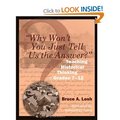
I finished Bruce Lesh’s Why Won’t You Just Tell Us the Answers a week or so ago and would recommend it. He does not use PBL per say in his classroom, but his method is very compatible with it. He does spend a bit too much time at the beginning and the end (to be honest I quit reading after Chapter 8) justifying his methods vs. traditional history class which I find unnecessary. If you need to be convinced that reading from a history book, listening to lectures, copying answers to the questions at the end of the chapter are not good teaching methods than I have little hope for you.
His core method is to have students look at the text, context, and subtext of historical sources both primary and secondary. He presents historical questions (like DQ’s) to his students and then supplies them with historical artifacts to have them struggle with historical interpretation just like historians do. He really outlines some nice lessons in the meat of the book and even lists the primary sources that he uses.
I thought it would be easy to locate them online since most are old and must be in the public domain, but I have struggled so far. So I want to ask fellow social studies teachers, have you found his resources? Do you have your own that you use? Do you have a go-to place to find resources? Any help or suggestions would be greatly appreciated.
This also had me thinking that a good history book would simply be a list of driving questions for each part of history and then a bunch of student-friendly excerpts from primary and secondary sources.
Mike Kaechele
.
Blog
.
<span class='date ' tip=''><i class='icon-time'></i> Aug 26, 2015 04:13pm</span>
|
|
This week is the ISTE conference in San Antonio. It is the largest ed tech conference in the country (or the world?). It has thousands of people attending, big names, great sessions, huge vendor hall (someone has to pay for it) and everything else an event of that size can offer.
I will not be attending but this is not a bitter post about that. ISTE is great I’m sure and would enjoy being there. But today I want to talk about my school’s conference, NovaNow. It is the opposite of ISTE in many ways. It will be small, intimate, vendor free, conversational, and actually located in a school. NovaNow is about conversations with great educational minds in the MidWest. There will be no "sage on the stage" (we don’t have a stage actually). Attendees are a vital part of the conference because they ARE the conversations.
I want to highlight a couple of conversation leaders coming from outside of Michigan to join our conversations that you will get the opportunity to hang out with:
Shelly Blake-Plock is a former social studies teacher who started the blog TeachPaperless. He is currently building @AnEstuary, a new way of professional development for teachers. He also helped launch @DHFBaltimore, an after school tech program for inner city Baltimore students. Shelly is interested in merging digital/physical space, human-centered tech, and poetry.
John Spencer is a middle school teacher in Phoenix, Arizona. He actively blogs and sketches at Education Rethink about education and life. John has authored five books, including: Pencil Me In, an allegory for educational technology; Teaching Unmasked, about the impact of paradox; Sages and Lunatics, a memoir and critique on factory education; and A Sustainable Start, a realistic look at the first year of teaching.
Theresa Shafer is the Online Community Manager for New Tech Network. If you have ever interacted with New Tech Network online you were talking to her! She is the energy behind all of the social media resources and an expert on connecting people. Theresa also started and hosts #PBLchat weekly. Theresa blogs at ThereresaShafer.blogspot.com.
Brian Bennett is Customer Solutions for Education for TechSmith. He is a former high school science teacher who "flipped" his classroom. Brian created the #flipped chat and is passionate about student learning. He blogs at brianbennett.org.
The full lineup can be found on the Conversation page of the NovaNow website. I hope you will join us! This will be a weekend that you won’t want to miss!
Mike Kaechele
.
Blog
.
<span class='date ' tip=''><i class='icon-time'></i> Aug 26, 2015 04:12pm</span>
|