Blogs
|
Teacher entrepreneurship is [fill in the blank]. This is a challenge that Steve Hargadon, a brilliant education entrepreneur himself, recently posed to a few dozen educators who have created ventured into the business […]
The post What does it mean to be a teacher entrepreneur? appeared first on Angela Maiers.
Angela Maiers
.
Blog
.
<span class='date ' tip=''><i class='icon-time'></i> Aug 26, 2015 04:26pm</span>
|
|
It’s been a busy but exciting summer. We are excited to announce our collaboration with Atomic Learning. It will offer access to our new e-book on teaching web research skills; to "Parents Matter," our parent engagement […]
The post Announcing My Publishing Partnership With Atomic Learning; Webinar on 8/27 appeared first on Angela Maiers.
Angela Maiers
.
Blog
.
<span class='date ' tip=''><i class='icon-time'></i> Aug 26, 2015 04:25pm</span>
|
|
by meehanf
I have been thinking about food alot lately. You could blame it on Thanksgiving but it has been on my mind for much longer. We started a family garden a couple of years ago and that started a shift toward paying more attention to what we eat. Right now I am reading Fast Food Nation which although slightly dated is a really interesting take on how American eating patterns have influenced our culture. Then to top it off my pastor preached about the concept of the table today and immediately after much of the same things were said by Michael Doyle on his blog (to summarize them both, every living thing depends on the death of other living things to survive).
But what has been going through my mind lately is how enjoyable food and eating is. Steak, mashed potatoes, apple cider, dark chocolate, fresh fruit, I could go on and on. We have to eat or we would die, but it doesn’t have to be such a great experience. Food could be like gas in our cars and have no flavor or worse taste bad. But no we have tons of choices of foods and flavors. Breathing is necessary too, but we rarely even notice it. Mostly only when the air is bad or we are out of breath. Breathing is not usually enjoyable. But food is enjoyable. It is required at parties, celebrations, and holidays around the world. Each culture has specific foods for certain seasons and celebrations.
So I know from my viewpoint that it is no accident that the body function of re-fueling is such an important part of being human. So I am thankful for my Creator making such simple daily rituals to be so pleasing. I will leave you with a link to Perhaps the World Ends Here by Joy Harjo which says better than I how much of life revolves around food.
Mike Kaechele
.
Blog
.
<span class='date ' tip=''><i class='icon-time'></i> Aug 26, 2015 04:24pm</span>
|
|
I lost a war this past week. My partner and I designed a PBL unit around the driving question "…cuz MD?" for a unit on the Spanish American War. We plan on having students each tell small parts of the war by creating short Common Craft style videos. At first students were hooked trying to figure out what "MD" was. But after they did our project seemed "destined" to failure.
We have found that when students have a good basic background on a topic such as WWII or 9/11 that they do a good job on inquiry. When the topic is more difficult students tend to focus on basic "what" questions instead of deeper "how" or "why." On top of that they can not even ask good "what" questions unless we lead them to the topics. This is logical when they lack background knowledge, so we end up creating fairly structured activities to "guide" them. In the past if we do not do this they miss many important concepts on their own.
So this past week we created a number of structured assignments to "help" students. We created an activity where they compared Howard Zinn’s description of the Spanish American War with a more traditional approach from the Library of Congress. They were supposed to make a Venn Diagram comparing the similarities and differences of the texts. Students struggled with the reading level and with how Zinn’s writing was not structured like a normal textbook. They had not read Zinn before and could not recognize the "big story" that he was telling of the struggle of women, labor, and minorities as a counter to big business and government. This was the first time we have asked them to compare texts like this. Our selections were too long, too unfamiliar, and the task was too unstructured for the first time attempting it.
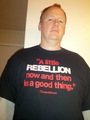
The next day we had students analyze the poem "White Man’s Burden" (not an easy read). Again this was the first time that we have looked at poetry this year and we mostly asked them to do it on their own. Students were not curious or engaged. They were bored. We were looking at primary sources that were not easy reads and students gave up because they had no buy in in the project. They called us out on it on Friday. (The irony was I was proudly wearing my new shirt for the first time.) They called it irrelevant, "busy work," and "worksheets." They called it "vomiting up information." They said they saw no point in what we were doing. They were struggling and frustrated. It hurt because it was true.
One student reminded me of promises I had made in the past not to teach like this and gave examples of better learning that we had done in the past. Once students find their voice you can’t take it away from them. I listened and did not immediately respond. That alone is really difficult for me. I processed and talked to my partner. We recognized mistakes we made in not showing students the relationship between the assignments and the essential questions. We apologized and explained the connections to the class. We went through the essential questions with the class and checked off the ones that we had addressed. It was also clear that students have a good understanding of the key concept of Manifest Destiny after the week’s activities.
We communicated the objectives more clearly to them and it ended on a good note. Students left feeling less frustrated. Problem solved.
But it hasn’t really resolved for me. I was boring. I sucked. I have to do better. This represents my deepest struggle with teaching to the standards. I am not happy with this project and never have been. I am teaching it because I have to for the standards. I recognize the lack of relevance to students but was unable to come up with a way to make it matter to them. We have no authentic audience for the videos and choose them because we thought they would be fun for the students around this boring topic to them.
This tension between what I have to teach and what students want to learn has been the biggest internal struggle for me this year. To be continued…
Mike Kaechele
.
Blog
.
<span class='date ' tip=''><i class='icon-time'></i> Aug 26, 2015 04:24pm</span>
|
|
Last week I lost a war. This week I was determined to do better. The first thing I did this weekend was to actually complete the Venn Diagram assignment myself. I realized many weaknesses of it including poor design and poor choice of texts. I should have created structure before the assignment to help them understand the texts before asking them to compare them. The Library of Congress also did not really address the topics in the way that I wanted. So Monday morning I apologized again for the assignment and told students I was not grading it. I explained my intentions and goals of what I had hoped to accomplish and acknowledged how the assignment failed in its execution. I introduced a new challenging read related to the essential questions, but in this task did not ask them to do anything extra with the text, just understand it.The rest of the week students chose a part of the story of the Spanish American War to tell and started developing materials for their videos. Students like this better, but it would be a stretch to say that very many of them are excited about the project.
Your Choice from marfis75
My larger solution is coming at the end of the project. We are planning the next project on the Cold War. I created a Project Briefcase with the standards and the topics of emphasis: McCarthyism Cuban Missile Crisis and Vietnam. My temporary Driving Question is "How do you all want to study this?"
I have not planned how we will do this project, the audience, or what our final product will be. There will be no fancy entry event. Students are going to help design this project from day one on what they want it to be. I have given lip-service to this idea before but it is time to put my money where my mouth is: student designed projects. #winning
The one thing that we are planning for this project is a detailed simulation of the Cuban Missile Crisis. We feel this is worthwhile because the students have asked us multiple times including last week to do more simulations. Also it is taking a ton of time to research and set up on our part so there is no way that we can wait to start putting it together.
We are looking at this next project as a pilot for turning over our entire curriculum to the students. We have some concerns but it is time for students to take control of their own learning.
Mike Kaechele
.
Blog
.
<span class='date ' tip=''><i class='icon-time'></i> Aug 26, 2015 04:24pm</span>
|
|
One of my students, Torreyion, was so excited about his chemistry project that he asked me to post it on my blog. So here is a pic of some models that he made and the cool effects of the camera that he got:
Mike Kaechele
.
Blog
.
<span class='date ' tip=''><i class='icon-time'></i> Aug 26, 2015 04:23pm</span>
|
|
I have been thinking alot about the conversation I am leading at Educon, #standardizethat and got involved in an expanded discussion on Twitter about standards and curriculum. I was asked what open curriculum would look like. I have borrowed my ideas from too many places to mention including unschooling, Postman, my own students, and my own children. So here goes my version of what a school with an open curriculum might look like.
At the crossroads by Timtom.ch
First of all, the schedule would change. There would be no grades, sorting by age groups, bells, or set schedule. Students would work in a large room with different adult content experts in the room. The ratio of students to teachers should not exceed 25:1. Students would choose the topics and projects that they want to explore and would sign up to at least one adult to report their progress to. Projects would be encouraged to be cross-curricular and deep. Most projects would center on social studies and science as a general topic with ELA and math skills being addressed as they "naturally come up."
Students would research their topics and teachers would help develop their search skills and expose them to multiple forms of literature and multi-media to learn from. Students would publish their results in many different formats addressing writing and media skills. Students would work in groups and present their learning to each other improving their collaboration and communication skills.
Students would not be entirely left up to their own as far as what they study. Teachers would play an essential role by exposing students to interesting topics in ways such as field trips (which could be as simple as a walk outside to observe nature), experiments, museum like exhibits of interesting objects, compelling art including primary source photos, and interesting problems to solve. Current events would also drive curriculum. News events would be talked about and lead to explorations by students. Students would choose which of these demonstrations to partake in and which of them to pursue deeper.
The other essential role of teachers would be to help students make connections of their passions to new areas of curriculum. As content experts teachers would use student interests to guide students both to cross-subject area connections and to connections within subject areas. An important continuation of what good teachers already do is knowing their students. Teachers would spend lots of time getting to know students as individuals so that they can share relevant learning ideas with them.
Students would not be without structure or requirements. Ideally students themselves would build the structure and requirements themselves. One essential theme of the school would be that you must be learning at all times. Learning would be defined with the students but would be very open-ended. Students would also be required to make and accomplish their own goals about what they learn. Students would also be required to present their learning. This could take many forms but would include both written and verbal forms. This also means that students will be sharing with each other their passionate learning so that they are constantly being exposed to new ideas outside of their personal interests.
Aloe by Genista
For example I have a couple of students who are very interested in botany. They are bright, but literally do as little as possible in every class except science, because they find no relevance in it. In an open curriculum they would be free to study biology at a college level. As social studies expert, I would expand their interests by tying invasive species to the Columbian Exchange. Regulations around plants would lead to many government topics (legalizing marijuana, etc). Statistics would come up all of the time. They could also study the history of plants and medicine, especially Native Americans (one of these students is building his own wigwam at home in his free time). This would lead to topics such as western expansion, Manifest Destiny, racism, genocide, etc. The social studies topics we would address would be abundant, but we might not "hit every state standard." The difference is that the students would care about the curriculum because it is theirs and would engage and remember it.
This example is just one pair of students. Imagine how diverse the curriculum would be when you add in all of the students’ interests. Without even trying topics that my current students are very passionate about include: immigration, gay rights, genetics, computer programming, art, poetry, women’s rights, depression, mental illness, and theater. I am sure that the other content teachers see even more interests that I miss.
I am not saying that open curriculum will fix every education problem or that it would reach every child. But I do think it would be superior to most schools today. I am also sure that it would have to change and adapt over time and be different in different communities. Also I think students would have to be trained into it. Students who have been in traditional schools would drowned if just dumped into it. They would need to be gradually released to wean themselves from teacher dependence to independence. I also fully admit that some kids would waste time and choose not to learn. But doesn’t that happen already all the time? I believe this would encourage the most learning from the most students and that the passion of authentic learning would spread to include reluctant students.
What’s missing from this vision of a school? (Oh, don’t say assessment and grades because those are missing on purpose. I am interested in learning, not comparing students)
Mike Kaechele
.
Blog
.
<span class='date ' tip=''><i class='icon-time'></i> Aug 26, 2015 04:23pm</span>
|
|
by steven n fettig
I want to play devil’s advocate to my own post about open curriculum. So a short story from my younger days. In college I was required to take a basic philosophy class. Most students took it freshman year. I knew that it was going to be a "pie in the sky" class that I would hate. So I avoided it and saved it until my last year. I finally signed up for a once a week three hour class that I knew would be so painful.
The class started and I loved it. I have always loved math, logic, and arguing deep questions. In other words everything that the class was about. I seriously considered getting a minor in philosophy but I was too close to being done and did not want to stay in school any longer (later I considered going to grad school in philosophy).
So hopefully my point is clear. If I had never been forced to study philosophy I may never have been exposed to a great field that I find very interesting. (on the other hand I was forced to take a music appreciation course of classical music that I hated. The reason may very well have been the skill of the teacher).
So my question is should learning every be forced on a learner? If so when? What content is so important that learners should be coerced to learn it.
If not, how do we ensure that learners in an open system are exposed to varied and critical content for being a successful citizen?
Mike Kaechele
.
Blog
.
<span class='date ' tip=''><i class='icon-time'></i> Aug 26, 2015 04:23pm</span>
|
|
Today was supposed to be the launch of our school’s greatest project ever including field trips to local factories. Unfortunately weather got involved and we had massive closings (our school buses in students from 20 different local districts) and our busing canceled the trip on us. We ended up with about 25% of our student body showing up so what should we do? Well when you are given lemons you make…bubble wrap!
On the way to work I heard that today is national bubble wrap appreciation day. So we took the protocols learned from Chad Sansing’s Flying Schools Educon session and adapted them to this "special" day. Students went through the design process creating new applications for bubble wrap.
They made boats that really float
Clothing
Bow ties are cool!
Animal Clothing
Gun target with paint in it that "pops" out when it is hit.
A steering wheel that you can pop when you are stressed.
If you didn’t catch the reference this came from The Reichenbach Fall.
All in all it turned into a good introduction to design thinking. We have a long ways to go in particular in the area of improving on our original ideas but it was a good first step and I look forward to implementing this kind of thinking into future projects.
Mike Kaechele
.
Blog
.
<span class='date ' tip=''><i class='icon-time'></i> Aug 26, 2015 04:22pm</span>
|
|
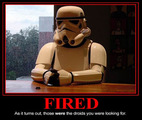
My favorite session at Educon was session 5. You won’t find this title in program, but this is a snapshot of a great conversation that I had with Rob Grecko. He asked me: "What are you willing to get fired for? Poor test scores vs. refusing to teach scripted curriculum?"
Photo Credit: muffytyrone via Compfight cc
We all make compromises and do things that we may philosophically disagree with at times to work in a system called a school, district, or whatever. If we are always backtracking to obey district mandates it is a slippery slope. Where do we draw the line? When is enough, enough?
But I also have an addiction to food, clothing, and shelter (hat tip to Ron Houtman) that my wife and children share. I need my job to live and I was raised to respect and obey authority figures. I think a not so subtle belief of my religious upbringing was that they have all of the answered figured out and everyone else is wrong, which very quickly leads to listen to their authoritative voice and don’t question it.
If you know me, you know that I have shed the "don’t ask questions part" but in truth I am a complicated mixture of rule follower and rebel and don’t even know how to classify myself.
So the driving question haunts me because the truth is I am not willing to lose my family income for what I believe is the best for students. The truth is also though that I am not in a position where I have to make that choice.
But let’s try an experiment in empathy. What if you WERE met by your administrator tomorrow and handed a scripted test prep curriculum and told that you had to use it the rest of the year and that your students had to reach a certain level on the state test or you would be fired.
Which risk would you choose? Teach the test prep curriculum and hope you don’t get fired from low scores or ignore the scripted curriculum in favor of meaningful student-based inquiry and risk getting fired for disobeying orders. Which risk has the better payoff? Which risk helps students?
What are YOU willing to get fired for?
Mike Kaechele
.
Blog
.
<span class='date ' tip=''><i class='icon-time'></i> Aug 26, 2015 04:22pm</span>
|