Blogs
|
Join me for a free, fun, high energy 30-minute online learning experience! Friday, June 11th9am PST/ 11am CST/ 12pm EST Follow these steps: 1. Register here: http://facultyecommons.org/event/animoto/2. All registrants will receive the webinar link 24 hours prior to the event via email.You will learn how to use Animoto.com to create brief, engaging videos using still images and 10-second video clips. Animoto is great for creating a warm introduction video for your online class, introducing a new module with pizzazz, or to recognize outstanding student achievements. What other ideas do you have for using Animoto to support student engagement and learning? Share them with us. You will also learn how to get your free Animoto educator account!Not sure? Click here to learn more about Animoto.
Michelle Pacansky-Brock
.
Blog
.
<span class='date ' tip=''><i class='icon-time'></i> Aug 26, 2015 04:29pm</span>
|
|
Last week's free "Learn with Michelle" webinar, Animoto for Creating Engaging Videos, was fun and energetic! Thanks to all who participated. A special thanks to +Michael Kieley for the great ideas he contributed during the webinar and the fabulous course promotion video he added to the "bag" and to +Ludmila Smirnova for also sharing a link to her course promo video in the webinar resource "bag." The full archive (video, "bag" of resources, and slides) is now available here:Animoto for Creating Engaging Videoshttp://facultyecommons.org/learn-with-michelle-webinar-animoto-for-creating-engaging-videos/Share your great teaching ideas in the Google+ Learn with Michelle Community. https://plus.google.com/u/0/communities/101282894995851206911
Michelle Pacansky-Brock
.
Blog
.
<span class='date ' tip=''><i class='icon-time'></i> Aug 26, 2015 04:29pm</span>
|
|
Friday, June 219:00-9:30am PST/ 11:00-11:30am CSTAdvanced Registration Required: http://facultyecommons.org/event/dropbox/ After you register, you will receive the webinar link via email 24-hours prior to the event. Increase your teaching efficiency for the Fall term! When you teach your classes you may often find yourself logging in from more than one device and wanting access to files that are not always available to you. Flash drives used to be a solution to this challenge. Today, Dropbox offers a free (and premium), cloud-based solution for managing your content from any device with an internet connection. You can also share anything in your Dropbox folder with anyone quickly and easily with a simple link or set up folders and share their contents with groups of users to foster collaboration at a distance. This webinar will:Provide an overview of how to use Dropbox to access and share content from any device with an internet connection.Encourage existing Dropbox users to share additional experiences, tips, and strategies. More support for your online teaching needs from the Faculty eCommons:Get more info about the "Learn with Michelle" series. Sign up for the Faculty eCommons Newsletter to receive updates about future events.View archives of past events.
Michelle Pacansky-Brock
.
Blog
.
<span class='date ' tip=''><i class='icon-time'></i> Aug 26, 2015 04:28pm</span>
|
|
Here is the link to the archive of last week's Learn with Michelle webinar: Dropbox -- Freedom from Flashdrives!In this 30-minute "Learn with Michelle" webinar, you will learn: How to get started with Dropbox, a free, cloud-based storage serviceHow to save a file to Dropbox, access it from any device, and share it with a linkHow to create shared folders and restore previous versions of filesHow to use the Dropbox mobile app (webinar includes a live demo of the iPad app)Click here to go to the archive page:http://facultyecommons.org/learn-with-michelle-webinar-freedom-from-flash-drives-with-dropbox/
Michelle Pacansky-Brock
.
Blog
.
<span class='date ' tip=''><i class='icon-time'></i> Aug 26, 2015 04:28pm</span>
|
|
Hangout On Air!Using Twitter & Facebook to Improve Critical Thinking in an Online Graduate Nursing ClassWednesday, July 10th9am-9:30am PST/ 11-11:30am CSTno registration requiredView Live at: http://facultyecommons.org/learn-with-michelle-hangouts-on-air/Tweet questions during the Hangout with hashtag #learnwmpbIn this Hangout on Air, I will interview Dr. Sabita Persaud, of the Notre Dame of Maryland University School of Nursing who will discuss how and why she facilitated a 7-week nursing case study by dawning a fictitious patient identity.Throughout the online course, students followed and responded to Facebook updates and Tweets from the patient, "Cee Veeay," who shared evolvingly complex symptoms and reached out for advice through social media exchanges. Students actively engaged in lengthy discussions with "Ms. Veeay," offering her advice about her symptoms, leading to greater student engagement, critical thinking, and increasing the relevancy of their learning experience. These interactions prepared students for their exams. Dr. Persaud will also share how this teaching approach refreshed her own engagement as a college instructor! I am so excited to speak with Dr. Persaud about this inventive teaching approach and I hope you will listen in and ask questions via the Twitter backchannel!
Michelle Pacansky-Brock
.
Blog
.
<span class='date ' tip=''><i class='icon-time'></i> Aug 26, 2015 04:28pm</span>
|
|
I have been hard at work on this project for many months and I am very excited to share that my new eBook has been published. How to Humanize Your Online Class with VoiceThread an eBookby Michelle Pacansky-BrockAvailable for download from Smashwords in html, ePub, Kindle, PDF, RTF, LRF, PDB. http://www.smashwords.com/books/view/333499Kindle version also available on Amazon.#humanizevt @brocansky The eBook is a pedagogical resource for any educator seeking a more human connection in their online classes. The contents are a compilation of years of my teaching practices and research from using VoiceThread in my own online classes. For me, my experiences using VoiceThread have brought me closer to my students and taught me many valuable lessons about inclusive instructional design and the importance of providing students with options to express themselves through voice or video. These are some of the lessons I reflect on in the book. While this eBook is offered as a professional development resource for educators, it's also a reflection of my own (continuing) journey as a lifelong learner as a teacher. Improving Pedagogical Support Resources for Emerging TechnologiesThe eBook is intended to fill an important gap by serving as a pedagogical support resource to faculty who may understand how to use VoiceThread, yet feel challenged about how to use it to effectively support the learning needs of diverse students. This issue underscores a growing problem in education today. There is an increasing demand to provide pedagogical resources for faculty to teach effectively with emerging technologies. This is a problem that affects students, faculty, institutions, and the emerging start up companies themselves who are striving to cater to the educational marketplace.New approaches to providing pedagogical support resources are needed. Creating resources to support effective teaching with emerging tools through institutional faculty development programs is not only redundant but unsustainable in our dire budgetary times. This problem demands a community-powered solution. And I believe faculty authored, self-published eBooks (like this one) could be a pretty exciting solution. An Overview of the eBookThe eBook includes an introduction (which you may read for free), four chapters, and a "Final Thoughts" conclusion. Throughout the eBook, the reader finds "Dig Deeper" sections that offer more than 20 links to video excerpts from my own VoiceThreads and sample VoiceThreads. These links serve as illustrations of practices in action to help illustrate the concepts described in the text. While the book is not a resource about how to use VoiceThread, there are links interspersed in the text that direct the reader to the VoiceThread site to learn how to perform basic function with VoiceThread (creating, commenting, groups/sharing, etc.).Chapter One: Maximizing Human PresenceThis chapter includes an examination of the topic of social presence and the significant value it brings to both community building and improving learning in online classes. The chapter looks at recent research that validates the benefits of asynchronous voice and video in fostering social presence. The chapter also examines the use of VoiceThread as an effective tool for applying principles of Universal Design for Learning (UDL) in online course design and demystifies some of the confusing misconceptions about accessibility and 508 compliance by pointing out what needs to be captioned or transcribed in a VoiceThread (and explains how to do it, including how to add closed captions to videos you upload into a VoiceThread). The chapter ends with an overview of a proven strategy from one of my own research studies that demonstrates how I increased my online students' voluntary voice or video comments from 25% to 75%.Chapter Two: Rethinking Learning This chapter recontextualizes learning from our formalized academic framework into everyday language, which is an important step for instructors who want to improve their teaching skills. We look at concepts like scaffolding and flow and apply them to Bloom's taxonomy. I share specific examples of how I used VoiceThread as a formative assessment tool to scaffold learning in a flipped classroom and share the student survey results from this experiment. Chapter 2 also examines the importance of encouraging 21st century students to become content creators, rather than consumers of information and examines how VoiceThread is effective for fostering this skill, as well. To lead students towards this skill, I suggest scaffolding students' own VoiceThread skills by developing them from beginners using the commenting feature to editors of VoiceThreads and then creators of their VoiceThreads. To demonstrate this process, I carefully explain in detail the steps of a student-edited VoiceThread project and a student-created VoiceThread project from my own class with links to examples includes and my own instructor reflections.Chapter 3: Eight Elements of an Effective Designed VoiceThreadThis is a chapter that discusses the nuts n' bolts of how to put together a solid VoiceThread activity that communicates clear expectations, grading criteria, fosters consistent norms, directs students appropriately to where they should comment (when, how many times). I include further tips, illustrations of sample slides, and a video tutorial of a sample VoiceThread. Chapter 4: Facilitating Learning with FeedbackOne of the most valuable and important components of a learner's growth and development comes from the feedback she receives from a teacher. When a student is learning online and the feedback is delivered in a timely manner through warm voice or video, the results are greatly improved from text-based feedback. Students respond more favorably to voice/video feedback (this is tied back to the research in chapter one), as the nuance of the human voice results in less hurt feelings and the context of the message is better understood. This chapter guides you through some important mechanics about how to facilitate feedback effectively with VoiceThread using a system I have developed using VoiceThread's Identities and special "feedback" avatars plus the comment re-ordering featuring. I also discuss different approaches to leaving feedback for students, how to model norms through feedback, how to deliver micro-lectures through feedback, and more. All of these examples are illustrated with video excerpts to enhance your learning.I hope you find this book valuable. I hope it improves your ability to use VoiceThread as a valuable tool in your online classes and I hope your students find VoiceThread as empowering as mine have.I welcome your reviews on Smashwords! Please spread the word! :)
Michelle Pacansky-Brock
.
Blog
.
<span class='date ' tip=''><i class='icon-time'></i> Aug 26, 2015 04:27pm</span>
|
|
"We must support both sides of the chasm." -Phil HillAs online and blended learning reshapes the landscape of teaching and learning in higher education, the need to encourage and support faculty to move from delivering passive, teacher-centered experiences to designing active, student-centered learning increases. Our new social era is rich with simple, free to low-cost emerging technologies that are increasing experimentation and discovery in the scholarship of teaching and learning. While the literature about Web 2.0 tools are impacting teaching and learning is increasing, there is a lack of knowledge about how the adoption of these technologies is impacting the support needs of higher education faculty. This knowledge is essential to develop new, sustainable faculty support solutions.Driven by my own experiences as a full-time and part-time faculty and early adopter of VoiceThread -- a Web 2.0 tool that fosters asynchronous voice, video, and text conversations around media -- I designed my dissertation research study to investigate the how the use of Web 2.0 tools is impacting the support needs of higher education faculty. I performed this action research study in collaboration with the VoiceThread organization with the purpose of improving the support needs of their higher education users.The study's sample included 50 higher education faculty members, comprised of a mix of part-time and full-time faculty from 2-year and 4-year institutions in the United States with a VoiceThread account (free, an individual Higher Ed account, or a site license). The interview and reflection data revealed unique support needs of faculty who teach with emerging technologies, a growing demographic. These include: Just-in-time resources. Faculty support programs comprised of face-to-face workshops and consultations will not meet the needs of faculty. The issues underlying this finding are related to the significant changes in the demographics of faculty. Today, most classes are taught by part-time faculty and many of these individuals also have a full-time job and teach at multiple institutions. Online resources that can be accessed from anywhere at anytime from multiple devices are essential to supporting innovations in teaching and learning.Non-linear PD experiences. Faculty who adopt new technologies desire non-linear professional development experiences to support the integration of technology into their classes. Faculty noted that accessing an eBook to learn new strategies to teach with VoiceThread was "less risky" than spending the time in a workshop, as the eBook provided non-linear pathways, allowing a faculty member to engage with the topics that align best with her/his needs.Community. The adoption of emerging technologies by faculty is resulting in pockets of innovation on campus. As a result, faculty who integrate emerging technologies into their teaching feel isolated from their peers. Professional learning networks designed to connect faculty and promote sharing of practices and ideas will be key to supporting faculty. Social technologies like Twitter, Hangouts on Air, and Google+ Communities will continue to play important roles in connecting faculty innovators across campuses. Funding for accounts. The freemium model employed by most edtech companies provides faculty with a low-barrier entrance and encourages experimentation. However, as the adoption cycle for Web 2.0 tools matures, many faculty are finding themselves paying out of pocket for the premium version(s) of their tool(s) of choice. While will need to consider new funding approaches for supporting faculty within these pockets of innovation. LMS integration. Learning Management Systems (LMSs) remain the most pervasively used technology in higher education. Learning Technologies Interoperability (LTI) is an industry standard that provides a simple way for web-based technologies to integrate with major LMSs. offering streamlined teaching experiences that may eliminate the need for students to create accounts and provide the ability to grade the activity inside the LMS. Faculty see LTI integration as an opportunity to save them time and promote more adoption across campus. However, faculty have the perception that administration want to see strong adoption rates prior to considering an LMS integration. This tension is evidence that faculty use of web-based tools is reshaping the teaching and learning landscape.Faculty support must be understood as a dynamic process that needs to adapt to the changing needs of instructors. Colleges, universities, and edtech companies exist within a new edtech ecosystem. Organizations within this ecosystem have a shared interest in supporting faculty who teach with emerging technologies. In my next post, I will discuss the potential that co-created faculty support resources hold for providing continuous support for faculty, as well as empowering instructors to be leaders in teaching and learning innovations.
Michelle Pacansky-Brock
.
Blog
.
<span class='date ' tip=''><i class='icon-time'></i> Aug 26, 2015 04:27pm</span>
|
|
In 2007, I began integrating web-based technologies into my online and face-to-face classes. In the years that followed, I discovered new ways to engage my students, learned how technology can support more diverse groups of learners, and grew into a passionate supporter of online and blended learning. Along the way, I've learned a lot and have shared many of my experiences with other faculty. These experiences have led me to several observations about the value of faculty support in higher education at this time of momentous change and the need to transform how we think about and develop faculty support.Like too many faculty, when I began using web-based technologies in my teaching, I did not have access to faculty support. Those who do commonly have services provided to them through face-to-face workshops and consultations. This boutique model of faculty support relies upon an institution to employ individuals who are capable of and have the time to develop resources to support the needs of all faculty. As faculty needs diversify and the demographics of faculty change (more part-time and remote instructors with less access to campus), this model becomes less effective. The boutique model is a remnant of industrial-age thinking and is no longer sustainable in today's social era. The recent increase in the integration of technology into learning, growth in online and blended course enrollments, and shifts in faculty demographics are increasing the need to transform the boutique model of faculty support.A New Higher Ed EcosystemThis is not a new problem; however, little change has occurred since the conversation began more than a decade ago (Walkowiak, 2003; Hartman, Dziuban & Brophy-Ellison 2007). Consequently, the composition of the higher education ecosystem has experienced striking changes. As more faculty integrate web-based tools into their teaching, the educational technology companies developing these tools co-exist alongside colleges and universities in an ecosystem. This idea triggers skepticism and tension for many within higher education. Critical dialogue is important. The recent boom in venture funding for startups has resulted in steep competition in the startup space, as well as a higher risk for failure, and more companies out to make a buck. Through grassroots leadership, faculty will determine which tools are effective and worthy of growth and traction.Co-Created Faculty Support ResourcesTeaching with technology can be a catalyst for change in a faculty member's career, as it was for me. But for many faculty, integrating technology into a classroom can surface concern, fear, frustration, and require subject matter experts to step into a very vulnerable situation. This is where support comes in. To inspire new approaches in teaching and learning, the culture of an organization must support risk-taking and build community for faculty innovators. Services and resources are central to supporting faculty, but supporting the social and emotional experiences involved with change are too.As we move forward into the future of higher education, institutional leaders will need to focus more on cultivating a culture of innovation and find more sustainable solutions for developing resources and services. Co-creation is a model that has grown out of the collaborative nature of our social era and may hold potential for transforming how faculty support resources are developed. In co-creation, individuals from different groups come together -- for example, a company and its customers -- to identify solutions to a problem that members of all groups have a shared interest in improving. Innovations in teaching and learning are at the center of improving higher education and, as such, colleges, universities, and edtech companies share an interest in providing support resources and services to faculty who teach with technology.To inspire co-creation, edtech companies must cultivate relationships with their early adopter faculty users and faculty must acknowledge how valuable their input is to improving the technologies they use. These relationships act as formative feedback loops to ensure their experiences are understood and valued within the product development life cycle. In these interactions, the value of the product will be defined and examples of how to effectively teach with the tool will be discovered. These practices must be showcased and shared with educators across institutional boundaries -- and, yes, faculty should be compensated for the value they provide.From 2012-2013, I negotiated a consultancy with VoiceThread, an educational technology company, that resulted in the development of co-created faculty support resources. This position provided me with the opportunity to host a monthly higher ed webinar series. The live webinars (which are available in archived form) consisted of demonstrations of my own VoiceThread teaching practices and those of other faculty around the nation, who I located through my social networks. After a year, I self-published an eBook that contextualized the use of VoiceThread in learning theory, discussed instructional design strategies, and detailed specific teaching activities from my classes. The eBook incorporated links to brief videos, illustrating the practices discussed in textual form, as well as screenshots of examples.The webinar series and eBook were mutually beneficial to myself (providing me with income and the opportunity to share my ideas and those of other faculty) and the VoiceThread organization (whose product was demonstrated to be effective by a credible source). In turn, faculty across the nation and beyond have accessed these co-created faculty support resources and learned from them. If you are an innovative faculty using emerging technologies, think like an entrepreneur. Share your stuff, preferably with a Creative Commons license to encourage re-sharing. Develop relationships with the edtech organizations that develop the tools you use. Provide feedback -- honest feedback -- about how the product could be improved. As these relationships mature, propose to develop sustainable faculty support resources that showcase your work, the products you use, and support faculty across institutions.In my next post, I will discuss the potential of co-created eBooks to support faculty. Drawing upon findings from my recent study, the post will provide a list of features to include in eBooks intended to support faculty who teach with emerging technologies.ReferencesHartman, J. H., Dziuban, C., & Brophy-Ellison, J. (2007). Faculty 2.0. EDUCAUSE Review. 42(5) 62-76.Walkowiak, S. (2003). Training Busy Faculty; Developing Scalable Training Solutions. In D. Lassner & C. McNaught (Eds.), Proceedings of EdMedia: World Conference on Educational Media and Technology 2003 (pp. 2057-2059). Association for the Advancement of Computing in Education (AACE). Retrieved July 30, 2015 from http://www.editlib.org/p/14144.
Michelle Pacansky-Brock
.
Blog
.
<span class='date ' tip=''><i class='icon-time'></i> Aug 26, 2015 04:27pm</span>
|
|
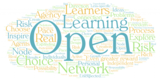
Eight Qualities of Open Pedagogy, a word cloud created with Tagul.comThis post was originally published on Teaching and Learning Innovations @CI.Chances are, you are familiar with the concept of "open content," but "open pedagogy" has not yet made its way into mainstream conversations about teaching and learning. Open content, of course, refers to digital resources that have been shared online with a license that both permits and encourages re-use and sharing within the limits of the license's specifications. Many open resources are shared today with a Creative-Commons license.Open pedagogy, on the other hand, describes the experiences of learners who engage in an experience through the open web. The non-linear, dynamic, and networked characteristics of the open web fully inform the qualities of open pedagogy. Take a close look at the word cloud above -- it is comprised of words from the Eight Qualities of Open Pedagogy, a helpful description that was collaboratively written by Rob Reynolds, Laura Gibbs, and Stacy Zemke (as a result of a Twitter exchange). (If you would like to comment on or contribute to the "Eight Qualities of Open Pedagogy," visit this post on Google+.)One of the factors that prevents open pedagogy from becoming more prevalent in higher education is the mainstream adoption of Learning Management Systems (Blackboard, Moodle, Canvas, Desire 2 Learn, etc.) by colleges and universities. An LMS is a closed environment that creates a walled-off space for instructors to select and share content with students, student to interact with other students, and where content that gets created by students is withheld from the world's eyes and comments. The qualities of learning in an LMS, are informed this environment. Agency, risk, creativity, unpredictability, empowerment -- these are characteristics of open pedagogy that are much tougher to cultivate in an LMS. I began teaching online about eleven years ago and this semester will be my first time teaching in the public web. While I have integrated web-based tools into my LMS for many years, I have sought out technologies that provide a secure space for my students -- spaces that mimic the environment created by an LMS (but with improved functionality and ease of use).In the past five years, my own professional and personal life have been impacted enormously by my own active participation in the open web. I have cultivated a professional learning network comprised of educators from around the world whom I learn with continuously. I have participated in conversations with strangers that have left me pondering deeply about issues for weeks. I have deep, meaningful professional relationships with people I have never met face-to-face. Perhaps the most special experiences that emerge from my participation in the open web are the beautiful, precious messages I receive upon occasion from people I don't know who write just to let me know how much they have learned from me.At last, this semester, I am embarking upon my first journey into open pedagogy. I will be co-teaching a course at CI on Digital Citizenship (UNIV 349) with my colleague, Jill Leafstedt. Over the summer, we worked together to develop our course site, which was built with WordPress on CI Keys. This site was inspired by the work of our former colleague, Jaimie Hoffman, who dove into open courses a year ago. The students in our class will also be creating their own sites on CI Keys and engaging with their peers and the public in an open conversation about the challenges upon which they will embark this term.Most of the dialogue I have engaged with about open pedagogy has focused on the student experience. Today, as I prepare for the start of the semester, I am thinking deeply about the impact of open pedagogy on teachers. First, I know in my heart that I would not be making this leap if I did not believe that participation is the best way to prepare oneself for personal and professional fulfillment in a social, mobile society. I am excited to be part of this experience with my students, watch them find their own networks, develop their own voices, and experience the impact their voice can have on the world. Secondly, I recognize that I would not be embarking upon open pedagogy if it were not for the willingness of so many other educators who have placed themselves in vulnerable positions to take risks, experiment, and share their practices. And, third, the support for innovation that is woven into the culture at CSU Channel Islands is a critical factor that continues to inspire me to try new things that are in the best interests of students.I hope more educators at institutions around the world will be encouraged and supported to jump.
Michelle Pacansky-Brock
.
Blog
.
<span class='date ' tip=''><i class='icon-time'></i> Aug 26, 2015 04:26pm</span>
|
|
I had the honor of speaking at #NCSA15 in Kearney, NE today. Below you will find the resources I shared and ways to keep abreast of developments from me and from Choose2Matter. I look forward to continuing […]
The post Presentation and Resources from #NCSAAdmin15 appeared first on Angela Maiers.
Angela Maiers
.
Blog
.
<span class='date ' tip=''><i class='icon-time'></i> Aug 26, 2015 04:26pm</span>
|