eBooks, Guides, Templates and White Papers
|
Starting a career in instructional design can be exciting, yet challenging. To help you get up and running, we've collected all of the guides, checklists, resources, and tips you'll need in your new profession. And we made all of them interactive, so your first steps in eLearning will be not only enlightening but fun!
|
|
You may have heard the adage, "Employees don’t quit jobs - they quit managers." DDI, a leadership research firm, conducted a study finding that there’s truth to that claim, with 57% of former employees citing that they left their position due to poor management. BizLibrary is dedicated to helping your organization avoid this issue by giving your new managers the skills and resources they need to be successful from day one!
Download our infographic for a step-by-step guide on how to develop a New Manager Training program!
|
|
With the world of work rapidly shifting to a skills-focused lens, you need to evolve your approach to developing workforce capabilities before necessity does it for you. Transforming into a skills-based organization (SBO) is a complicated, emerging process, but with the right tools and strategies, a little guidance, and a future-focused mindset, your business will reap the benefits.
In this 15-minute introduction, you’ll get prepped for the SBO journey with answers to your initial burning questions, including:
What are the benefits of an SBO?
How do you become one?
What can you do today to start your transformation?
|
|
What a wild time it is in Learning and Development right now! Just like in nearly every other industry, L&D has undergone a profound transformation due to recent significant events such as the pandemic, the surge in remote work (and gradual return to the workplace), heightened expectations of the employee experience, and the overwhelming interest in artificial intelligence (AI).
Amidst the whirlwind of these events, there are four key trends that seem to capture the attention of learning leaders: a stubbornly uncertain economy, the next wave of inclusion, blended learning delivered more efficiently, and the "headless" LMS. Through these emerging trends, it is evident that if learning leaders wish to find continued success in their L&D programs, they must remain committed to placing personalized experiences at the forefront. Now is the time to make learning even more personalized, relevant, and accessible. Download this free eBook to find out how.
In this eBook, we focus on significant trends driving change in L&D. Topics include:
How Generative AI plays a role in L&D
Ongoing challenges in an uncertain economy
How DEI&B is evolving
Taking a blended learning approach
How LMS companies are going "headless"
|
|
How well is your organization managing today’s rapid, unabated rate of change? According to employees, 41% don’t believe they have what they need to develop their skills, while 59% are on the lookout for more career guidance. So, it has never been more important for HR leaders to stay current with the latest trends and understand what they mean for their people and organization. Yet, more than 60% of organizations aren’t leveraging AI technology to optimize their talent programs.
To help strengthen your organization’s talent management program, Cornerstone has gathered the latest intelligence on HR trends for 2024 and beyond.
Read our new eBook, Remaking Work for a New World: 2024 HR Predictions, to learn:
How leaders are using AI to map existing skills to content and improve instructional design
How maturing practices in hybrid work will drive better collaboration
Why companies are transforming the business into a skills marketplace for stronger workforce planning
Why organizations are moving away from annual performance reviews
How your organization can use predictive analytics to anticipate future business needs
|
|
In 2022, the global pharmaceutical market was valued at 1.48 trillion U.S. dollars. Let’s just say this market has experienced significant growth (and change) over the years and will continue to do so. To keep up with this pace, changes must be implemented to create effective learning experiences that improve understanding, knowledge retention and proficiency, while mitigating risk and protecting investments. This will empower employees and supercharge performance in the high-stakes pharmaceutical industry.
One of the most pressing challenges is to find and implement an efficient and effective way to constantly upskill and reskill the entire workforce. This paper will explore the role training teams play in preparing employees to support the growth and change within the pharmaceutical industry.
|
|
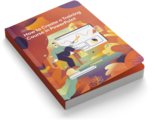
Some people think PPT presentations are always boring. But think of a hammer, for instance. Does the fact that a hammer is a simple tool and everyone can use it make it any less useful? Like a hammer, PowerPoint is a tool. Whether your course will be useful depends not only on the software you use, but the degree to which your content is thought out and relevant to your learners.
Download our in-depth guide to discover:
5 steps to create an effective training course in PowerPoint
Tips and tricks
A collection of course authoring guides and checklists
PPT shortcuts and useful resources
|
|
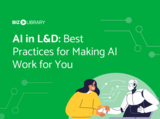
Has your organization fully embraced AI or do they feel held back? Even though it’s one of the top topics of the working world, integrating AI into your daily strategies can seem easier said than done.
L&D professionals can use AI to:
• create personalized training resources
• generate course outlines
• close skill gaps through seamless skill-building recommendations
• translate and repurpose existing training content
Using AI at work can lead to increased efficiency, improved retention due to a more balanced workload, and more! There are lots of reasons why your organization should jump on the AI train today, but if you're curious about how to make that happen, check out our infographic!
|
|
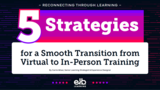
As companies from Alphabet to Zoom enforce "return to the office" policies, many L&D managers are being asked to adjust their training strategy. Sometimes, this involves reducing self-paced or virtual instructor-led training (VILT) in favor of more on-site instructor-led training (ILT) events.
Unfortunately, not all workers are eager to return to in-person training.
How can you overcome resistance and encourage people to come to training with an open mind and willingness to learn? Download this eBook for 5 guidelines that will help you develop a better on-site learning experience.
|
|
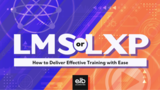
The rapid evolution of technology and the increase in remote work has transformed the educational landscape, offering innovative platforms for learning and development. Among these, LMSs and LXPs stand out as robust solutions. While both aim to facilitate learning, they differ significantly in their approach, features, and focus.
Download this ebook to delve into the key features, benefits, and differences between these two platforms. From personalized learning paths to content creation, we illustrate how these platforms can transform your training initiatives and help you choose the right platform for your business objectives.
|