Blogs
|
Every fortnight I curate some of the observations and insights that were shared on social media. I call these Friday’s Finds.
"To change with change is the changeless state. - Bruce Lee" via @janhoglund
Nick Milton: "Internal competition is like a late frost that kills all your green shoots"
@dhinchcliffe: The Underlying Laws of Cloud & Social
Count on nearly everything in the ecosystem to eventually drop to effectively zero cost. Do not build your digital business along the commoditization axis. Only the underlying properties, like network effects, are exempted from this rule and this is a potent realization. We will eventually get the cost of nearly all technology to nothing, making replication and competition both easy and rampant. This isn’t where most businesses would like to be. However, network relationships like communities, total aggregate API integrations of partners, total daily users contributing value, these cannot never be copied whole cloth on an increasingly low cost scale. When people are involved, commoditization is not possible, and real, meaningful human relationships then become the strategic coin of the digital realm.
@fred_laloux: Why I can’t get myself to write an article on employee well-being
I’ve come to see how demeaning - however well intentioned - most engagement programs are. We all feel this intuitively, I think, and that’s why so few of us believe the posters any longer. You can’t buy happiness. Happiness and fulfilment are always the by-product of feeling ‘in the zone’, or feeling that we can bring in all of who we are, in service of something noble and important.
@mintzberg141: If you can’t measure it, you better manage it
Measuring as a replacement for managing has done enormous damage—undermining the souls of so many of our institutions … Think of how much education has been killed by assuming that we can measure what a child learns in a classroom. (I defy anyone to measure learning. You are reading this…: please measure what you are learning.) Must we always deflect teaching from engaging students to examining them?
@simongterry: How to chair a conference
A good chair will help create a great experience for the speakers and the participants at the event. Not everything will go to plan. Nothing will go to time. The role of chair to to help smooth the experience and also to help the participants to weave it together into one learning and collaborative experience.
Stay in Contact with Everyone: Everyone means everyone: the organisers, the AV team, the next speaker, future speakers and audience members. Check-in at breaks and use what you learn to think ahead. Check everyone’s understanding. Get feedback. Make sure everyone is on the same page as to what is happening next. Over communicate. When I had issues with the experience, it was because I didn’t follow this simple rule.
Image: Shannon Tipton
@gleonard: Technology vs Humanity:
Harold Jarche
.
Blog
.
<span class='date ' tip=''><i class='icon-time'></i> Dec 04, 2015 09:22pm</span>
|
|
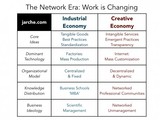
We are arriving at a break-point with the existing economy, one dominated by markets, as we enter the network era. A creative economy is emerging and our existing institutions and markets cannot deal with it. Tim O’Reilly calls this The WTF Economy, and is bringing people together to understand and deal with it.
What is the future when more and more work can be done by intelligent machines instead of people, or only done by people in partnership with those machines? What happens to workers, and what happens to the companies that depend on their purchasing power? What’s the future of business when technology-enabled networks and marketplaces are better at deploying talent than traditional companies? What’s the future of education when on-demand learning outperforms traditional universities in keeping skills up to date?
The network era is changing how we think about work, from the technologies we use to the business ideologies behind them, what I call networked unmanagement.
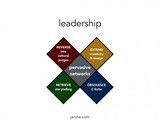
Using the media tetrad, explained by Derrick de Kerkchove, co-author of McLuhan for Managers - every technology has four effects.
1. extends a human property (the car extends the foot);
2. obsolesces the previous medium by turning it into a sport or a form of art (the automobile turns horses and carriages into sports);
3. retrieves a much older medium that was obsolesced before (the automobile brings back the shining armour of the knight);
4. flips or reverses its properties into the opposite effect when pushed to its limits (automobiles, when there are too many of them, create grid lock)
Looking at management in an era of pervasive networks - individual influence is extended, business schools (and the MBA) become obsolete (reserved for the rich), communities, like guilds of old, are retrieved, but fickle networks could result in management being nothing more than theatre in service to big data. This of course, is only one way of looking at the future of management in an age of perpetual beta.
More posts on management.
Harold Jarche
.
Blog
.
<span class='date ' tip=''><i class='icon-time'></i> Dec 04, 2015 09:22pm</span>
|
|
We believe technology is changing culture everywhere in the world, leading to the emergence of a new model of leadership.
Employees are now more confident, more mobile, more demanding, more idealistic in some cases, and less willing to be company people. Employees, more than ever, are individualists.
Leaders, in response, are learning to be less the visionary, less the sage, less the objective-setter, and more the shaper, the connector, the questioner. And yet at times, they also need to intervene, to insist, to control. It’s a fluid role, its shape not yet clear.
What is clear, as leaders forge their own new models, is that the old ways no longer work. CEOs can’t fall back on best practice. They have to be original. Leadership, more than ever, needs creativity. And achieving the impossible needs the most radical kind of creativity. - Wolff Olins Report 2015
Leadership in networks is exercised through reputation, not positional authority. Having influence in multiple networks, not just the organization, makes a leader even more effective. The ability to span networks becomes important as organizational lifespans decrease and worker mobility increases. To remain connected to the changes in their networks, good leaders are curious and promote experimentation, but do not need to control it. Leadership in networks is helping the network make better decisions, and this requires a focus on the best organizational design to meet the changing situations. Strong networks, combined with temporary and negotiated hierarchies to get work done, become the simple building blocks for an organization in a state of perpetual beta.
As with management in perpetual beta, leadership can be examined from the perspective of the media tetrad. Looking at leadership in an age of pervasive networks, creativity and design are extended while command and control mechanisms like the executive suite are made obsolete. The art of storytelling as a leadership skill is retrieved from the past. But this form of leadership, when pushed too far, can reverse into cultural purges that attack anyone in disagreement with the cult of the new.
Einstein’s wonderful counsel that no problem is ever solved by the same thinking that created it defines what we must do. We must understand the behavior of networks in this densely interconnected world. We must understand human motivation and our astonishing capacity to self-organize when we care about something. We must understand that we lose capacity and in fact create more chaos when we insist on hierarchy, roles, and command and control leadership. - Margaret Wheatley: The Real World
More posts on leadership.
Harold Jarche
.
Blog
.
<span class='date ' tip=''><i class='icon-time'></i> Dec 04, 2015 09:22pm</span>
|
|
Organizations are alive when people can exert their autonomy in ethical practice. This aligns with self-determination theory, which puts forward three basic needs for people: competence, autonomy, and relatedness. Even progressive organizations often miss out on the latter, described by the authors as an, "inherent tendency toward growth development and integrated functioning". It takes more than a simple organizational structure to afford this relatedness. The organization also must be alive.
So in what way are human organisations alive? Fritjof [Capra] answers this question by saying that a human organisation is only alive when it contains networks of communication. These informal networks of communication he refers to as communities of practice and in larger organisations there are clusters of communities of practice. Therefore for Fritjof "the aliveness of an organisation resides in its communities of practice, flexibility, creativity and learning potential". - Transition Consciousness
Staying focused on work, even if workers are autonomous and competent, is not enough for human, and organizational growth. There must be continuous communication that promotes relatedness. This happens in communities of practice and social networks. Supporting communities of practice should be the primary focus of HR departments, as this is where ‘human capital’ really can develop. In addition, individuals need to connect outside the organizational walls. Even an Enterprise Social Network will not help with this. But if an organization is to be truly alive, it must be connected, through its people, to the ecosystem in which it lives. No organization is an island.
No Man is an Island
No man is an island entire of itself; every man
is a piece of the continent, a part of the main;
if a clod be washed away by the sea, Europe
is the less, as well as if a promontory were, as
well as any manner of thy friends or of thine
own were; any man’s death diminishes me,
because I am involved in mankind.
And therefore never send to know for whom
the bell tolls; it tolls for thee.
- John Donne, Meditation XVII (modern English)
Harold Jarche
.
Blog
.
<span class='date ' tip=''><i class='icon-time'></i> Dec 04, 2015 09:21pm</span>
|
|
Every fortnight I curate some of the observations and insights that were shared on social media. I call these Friday’s Finds.
@tom_peters - "Want someone to think you are brilliant? Have a 10 minute conversation and let them do all the talking."
@rogerschank - Reading is no way to learn
When you have someone to ask, you ask. Reading is what you do when you have no one to ask.
Research suggests cooperative behaviour is not instinctive, but learned - via @hrheingold
The human ability to cooperate with strangers is an evolutionary puzzle. In most animal species, cooperation is only observed among kin or in very small groups where future interactions are likely. To explore the nature of cooperative behaviour, the researchers compared decision-making in economic games between high-trust and low-trust societies.
What Is RSS: A Guide To Really Simple Syndication Benefits, Best Uses And Applications
RSS is a powerful but simple way to gather content from all over the web, making it easy for you to follow the latest updates from all of your favorite websites without having to visit them all individually. - @RobinGood
It’s No Myth: Robots and Artificial Intelligence Will Erase Jobs in Nearly Every Industry - via @petervan
If we can develop the economic structures necessary to distribute the prosperity we are creating, most people will no longer have to work to sustain themselves. They will be free to pursue other creative endeavors. The problem, however, is that without jobs, they will not have the dignity, social engagement, and sense of fulfillment that comes from work. The life, liberty and pursuit of happiness that the constitution entitles us to won’t be through labor, it will have to be through other means.
@marshallk - Automation of knowledge work
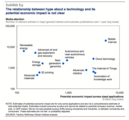
That’s right, automation of knowledge work is expected to have one of the very highest economic impacts of all these disruptive technologies - but is the very-least discussed among general interest and business publications. What does that mean? I think it means "get in now," for one thing. High potential, low hype sounds like an opportunity for arbitrage against the future.
Source: McKinsey
Harold Jarche
.
Blog
.
<span class='date ' tip=''><i class='icon-time'></i> Dec 04, 2015 09:21pm</span>
|
|
Business value increases with transparency.
‘In 2006, restauranteur Jay Porter banned tipping in his San Diego restaurant, the Linkery. Instead, he implemented a service charge, and split it—transparently—amongst staff. Porter also ran a second restaurant that still allowed tipping, and this made for a useful comparison.
"Once established, the tipless/service charge model made us more successful in every dimension," he said. The staff worked as a team, instead of selfishly trying to maximize their own tips. Servers and chefs enjoyed equal status, and staffed turnover dropped. The policy was so successful, says Porter, that it "gave us a huge competitive advantage in the marketplace; this in turn allowed us to serve a much higher quality of food and take lower margins on it."‘ - FastCoExist
Businesses that are open, transparent, and cooperative are more resilient because they rely on people, not processes. In the second example above, people worked together because the remuneration was transparent. There was no way to game the system as an individual. This type of business model focuses on long-term value, not short-term profit. It can also foster innovation, as diverse ideas come to the fore when people openly share their ideas. The workers became a social network, cooperating in order to make the whole restaurant better.
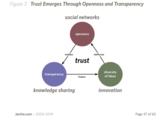
Knowledge networks are similar. They function well when they are 1) based on openness, which 2) enables transparency, and 3) in turn fosters diversity - all of which reinforce the basic principle of openness. In such a transparent workplace, the role of management is to give workers a job worth doing, the tools to do it, recognition of a job well done and then let them manage themselves.
A socially networked business that enables open conversations around work can make better and faster decisions. This is the business value of social networks. But it is all based on trust, for without trust, there is no sharing. Transparency sets the stage for trust to develop.
Image: seeking perpetual beta
Harold Jarche
.
Blog
.
<span class='date ' tip=''><i class='icon-time'></i> Dec 04, 2015 09:21pm</span>
|
|
I have written over 250 posts classified as Friday’s Finds. These are compilations of what has passed by me on social media over the past week or two. Originally these were posted once a week and now once per fortnight. With a critical mass of posts I now have an additional resource to mine for insight. For instance, I regularly search my blog for posts I have written so that I can recall my thoughts. I call it my outboard brain. With Friday’s Finds, I can search the posts of others to see what they have to say on a certain topic. For example, I can search to see what others have to say on leadership.
When we start on a process like blogging we do not see the results until long after. With my Friday’s Finds, I now have a treasure trove of insights to review as needed. So without further ado …
Every fortnight I curate some of the observations and insights that were shared on social media. I call these Friday’s Finds. [#251].
"The first method for estimating the intelligence of a ruler is to look at the men he has around him." - Machiavelli - via @AfricaDean
"No such thing as ‘non-leader.’ Every day offers every one of us scads of leadership opportunities." - @tom_peters
The Table Napkin Test by @snowded - via @SimonGTerry
One of the golden rules of sense-making is that any framework or model that can’t be drawn on a table napkin from memory has little utility. The reason for this is pretty clear, if people can use something without the need for prompts or guides then there are more likely to use it and as importantly adapt it. Models with multiple aspects, more than five aspects (its a memory limit guys live with it) or which require esoteric knowledge are inherently dependency models. They are designed to create a dependency on the model creator.
How Much Do We Know? by @pevansgreenwood
Expertise, and being an expert, implies having the hard-won knowledge and skills that make you a reliable judge of what is best or wisest to do. It’s an inherently backwards-looking concept, ascribing value to individuals based on their ability to accumulate experience and then generalise from it, taking generic solutions that have worked in the past and applying them to specific problems encountered today.
Collaboration & Cooperation - by @AmyBurvall
Image by Amy Burvall
Harold Jarche
.
Blog
.
<span class='date ' tip=''><i class='icon-time'></i> Dec 04, 2015 09:20pm</span>
|
|
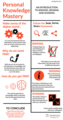
A key part of the Seek > Sense > Share framework for PKM is to find new ways to explain things, or add value to existing information. Metaphors help us understand new concepts, as do visuals. When the folks at Venngage asked if they could create an infographic on PKM I saw it as another opportunity to make sense of the framework. I also like the fact that someone else made it, so that it was not just my perspective or priorities.
Don’t forget that the last online PKM workshop for 2015 starts on 7 September.
Create free infographics with Venngage
Harold Jarche
.
Blog
.
<span class='date ' tip=''><i class='icon-time'></i> Dec 04, 2015 09:20pm</span>
|
|
A recent posting for a six-week knowledge management contract was posted by the UNDP. When it comes to requests for proposals, if you ask for something, you will definitely get offers to produce it. But is this what they need?
"Conduct initial research on industry standards for KM measurement to inform the design of UNDP’s KM performance measurement, and develop tailored metrics for monitoring and measuring UNDP performance;
Identify and recommend suitable tools and mechanisms to collect the data necessary for KM monitoring;
Formulate standard operating procedures for data collection and monitoring and analysis of KM metrics." - UNDP
The RFP is for a measurement framework that reflects current industry standards. But what if those standards are useless cookie cutters? Is KM about collecting data or is it really about sense-making on an organizational level? The only way to enable the latter is to get everyone involved in knowledge sharing and then harvest what emerges. It is messier, and it is the opposite of what most of KM has been about.
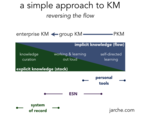
Here is a simple guide on how to enable organizational sense-making, not the mere management of data and metrics.
1. Establish methods that enable tacit knowledge to flow. People need to have better and deeper conversations around issues that matter. Training on better communication and meeting techniques can be offered. Examples of knowledge-sharing need to be made by decision-makers. People need to select their own tools, develop their own PKM practices, and be allowed to experiment. This takes time and a safe place to share. Monitoring is done while immersed in this complex adaptive system of people learning and sharing knowledge in multiple ways.
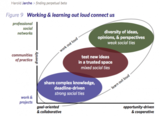
2. Establish places for groups and teams to work out loud. An enterprise social network is one such environment. However, these groups will only share their knowledge if individuals have the abilities and aptitudes to do so. You may have to go back to step one.
3. Finally, once people are conversing, sharing, learning, and experimenting in the open can the organization start to harvest insights from community managers and through good curation practice. This explicit knowledge becomes the stock on which to build the system of record, and such things as lessons recorded, and perhaps even learned. of course, there has to be something to curate, and that is only available when most people in the organization freely share.
The foundation for KM should be active sense-making and a solid practice of adding value through engaged learning, within a structure that encourages open sharing. I doubt that any of this will ever appear in an RFP in the near future, or that PKM, with an emphasis on personal methods, would be an acceptable framework for those obsessed with measurement. It’s just too simple.
Harold Jarche
.
Blog
.
<span class='date ' tip=''><i class='icon-time'></i> Dec 04, 2015 09:20pm</span>
|
|
Even five years ago it was not the norm to work at a distance. Employers wanted to keep workers on-site when it made no sense. Some asked for people to do virtual work, but still required they be on-site. Virtual work is no longer limited to mostly free-agents, as many salaried employees today work at least part-time off-site. It is becoming the norm and bringing change with it.
When people work at a distance, in time or space, an implicit shift occurs. They have to be trusted to get the work done. Management also shifts from measuring time to measuring results. A new culture emerges. It becomes more trusting. Trust is the glue that holds creative organizations together, not rules and regulations.
Culture is an emergent property of people working together. Leadership is an emergent property of people working together. It is not delivered, in a top-down fashion, by a select individual. One example of emergent leadership was the Apache nation that had only situational leaders, Nantans, who were in charge as long as warriors were willing to follow them. Because of this decentralization, they were able to fight the Spanish for over two hundred years, regrouping as necessary. A similar approach can be developed for today’s networked organizations.
Tomorrow’s leaders will be found among the aggressively intelligent citizenry, using technology to augment their senses. These people will need access to their own ideas. Open information and access to our common knowledge assets will be a required part of any new leadership model. There is no other way to deal with complex systems and problems.
We are now at the stage where we have some new models for work and many new communication and collaboration technologies. The next step in this evolution is for new organizational models. Some of these are being tested in venues around the world, such as democratic workplaces, eliminating bosses, reducing hierarchies, and self-managing teams.
"Ideas lead technology. Technology leads organizations. Organizations lead institutions. Then ideology brings up the rear, lagging all the rest — that’s when things really get set in concrete." — Charles H. Greene
Source: adapting to perpetual beta
So basically, ideas are enabled by new technology around which new organizations are created. Only then do new institutions get built in order to support the new dominant ideology. The American scholar, Warren Bennis, said that hierarchy is a prosthesis for trust. With open systems, trust emerges. It takes different leadership to do the important work in complex work environments, part of which is to increase cooperation and support social learning in the workplace. Leadership is an emergent property of a network in balance. In this post-information era, organizations need to really understand networks, manage for complexity, and work on building trust.
Trust reduces the need for rules. Principles are better than rules in dealing with complex situations. Adding more control processes (compliance training, for example) fails to build resilience into the organization. Every time the organization deals with an exception using a standard method, and fails to account for the unique situation of the employee or customer, it erodes trust.
Let people do work worth doing, the tools to do it, and recognition of a job well done. In a transparent, diverse, and open organization, management can then get out of the way. This is how organizations can remain relevant in the network era.
The great work of our time is to design, build, and test new organizational models that reflect democratic values and can function in an interconnected world. Leadership today is more of an architectural task, or one of setting up the right systems.
—
Excerpt from my e-book: Adapting to Perpetual Beta
Posted on LinkedIn 18 August 2015
Harold Jarche
.
Blog
.
<span class='date ' tip=''><i class='icon-time'></i> Dec 04, 2015 09:19pm</span>
|