Blogs
|
If you’ve been following the GE saga on our blog, you’ll already know about our huge success at the E-Learning Awards last week (be sure to subscribe to our blog so that you don’t miss out on such earth-shattering news in future!). In case you missed it, we, together with GAME Retail (The UK’s largest high street video game retailer), scooped the gold award for the Best Learning Management System Implementation.
We invited Craig Mills, GAME Learning Manager, along to GEHQ to chat to us all about how GAME Learning Zone (GLZ) has revolutionised the way they train their staff.
Why choose eLearning?
The retail sector is ever-changing, and this is especially true for the video game industry. With new blockbusters coming out every week, the publishers need to ensure that all of the salespeople know what they need in order to deliver a level of expertise and customer service which can’t be found with online retailers.
Before launching GLZ, GAME had made some use of eLearning, but without the success it wanted. These attempts tended to start well but the learners soon found it became stale. Research revealed that what the programme really needed was a constant stream of fresh content and an engaging platform.
The start of a beautiful friendship…
In the beginning, GAME knew they wanted an eLearning solution, but they were unsure about which one to choose. It was down to Craig to pick the perfect platform and when he saw our Academy LMS with all of its gamified elements, he knew he’d found the ideal match!
"The biggest thing for me was the Levels, Leaderboards and Badges - all of the gamification elements that came along with the platform. You were doing it head and shoulders above everyone else in the market"
Craig Mills,
GAME Learning Manager
A unified solution
GAME previously relied on each publisher’s individual training platform to deliver the product-training content. This meant that every learner needed to remember a whole list of web addresses, user names and passwords. Not only that, GAME had no actionable reporting available past branch-level.
With GLZ, we provided a Single Sign-On solution that let the learners access content from all of these different places on one platform.
Building anticipation
After a hugely successful month-long pilot launch, GAME rolled out a teaser campaign to generate interest and build curiosity around the platform. This consisted of a series of posters displayed in all branches.
Launching the Game Learning Zone
The actual launch was staggered across three main departments - retail, head office and distribution. Every learner was sent an invitation containing their login details and once they arrived on GLZ, the level system directed them along their learning journey.
The Results
Within the first week, GLZ saw a much larger uptake than anticipated. Aside from gobbling up the content and hungrily pursuing badges, the learners posted lots of positive feedback on the social feed and it wasn’t long before they’d formed a bona fide online learning community.
Today, after only 8 months, this massive engagement has only increased to the point where the platform is seeing almost 12,000 logins per month!
GLZ STATS
(December 2015)
6385
Users Active
11522
Average Logins P/M
87231
Modules completed
80
Modules Live
Everybody wants a piece of the pie
It didn’t take long before other parties started to see the benefit of GLZ. Using the languages function and the customisable themes, GAME staged site takeovers on their platform.
For example, to generate engagement over a new Star Wars release, the entire platform was rebranded. Here, ‘learners’ became ‘Jedis’, special Star Wars badges were created and the whole look and feel of the platform was changed to look like something from a long time ago in a galaxy far, far away!
We spend most of our time here at GEHQ working hard to make awesome online learning solutions, so it’s a real treat to hear how they are actually changing the lives of so many learners. It’s great to see the gamification features used to their full potential and Craig has used the power of the Academy in ways we couldn’t even have imagined!
If you want to hear more about how to build an award-winning online learning platform, you can download the case study here.
The post How to build an award-winning gamified LMS appeared first on Growth Engineering.
Growth Engineering Blog
.
Blog
.
<span class='date ' tip=''><i class='icon-time'></i> Dec 05, 2015 02:06pm</span>
|
|
So you’ve heard all of the buzz about gamification and you’re wondering where to start. Wonder no more, kind reader! At Growth Engineering, we eat, sleep and breathe gamification. We incorporate it into everything we do and that’s why we’re the world’s top provider of gamified online learning solutions.
On top of all that, we’re kind and generous philanthropists and we thought we’d help you out with a barrage of handy tips! With these pointers, you’ll be able to use game mechanics to engage your learners all the way to the top of the leaderboard!
1. Know what your goal is
You know you want gamification, but do you know why you want it? It might be the hot ticket, but will it work for your learners? Don’t jump aboard the game train until you’re clear about how gamification works and what it can do for online learning.
Read our white paper all about the impact that gamification can have on your ROI.
2. Design your game mechanics to drive positive behavioural changes
The crux of gamification is that it exploits basic human nature to encourage the actions and behaviours that you want. With enough time and imagination, you could create a very entertaining game, but unless it’s designed to make your learners behave the way you need them too, it won’t be effective enough.
3. Create a buzz around the launch
Leverage the power of anticipation in your gamified LMS roll-out. Use emails and real-world posters to make sure everybody knows what’s coming and how excited they should be about it!
4. Welcome with a badge
When your learners first arrive on the platform, you need to set the tone right away! Welcome your learners with their first badge and seed the collecting-bug at an early stage!
5. Keep it fun
Games are meant to be fun. If your messages don’t reflect this, there’s a good chance that your learners will forget that they are supposed to be enjoying a fully gamified learning experience. Crank your enthusiasm up to 11, inject some humour wherever you can and don’t forget to use the word ‘awesome’ as often as possible!
6. Keep it simple
Don’t let ambition cloud your judgement. However you decide to use your game mechanics, don’t overcomplicate them. Link every action to an outcome and ensure that both are obvious to the learner, otherwise they won’t know whether they’ve succeeded or not and won’t be as likely to return.
7. Let learners create avatars
In any game, the player assumes a role - the character they will move throughout the game. On a learning management system, the virtual self that they progress through the training material can’t just be a faceless dummy. Make sure your learners can upload an avatar, or profile image of their choice to make the experience as personalised as possible.
8. Make progress obvious
Use progress indicators to show the learners how far along they are in each task. This can be anything from a progress bar, to a simple percentage completion indicator. Simply by seeing that they don’t have far to go, they’ll be more likely to put in a little extra time just to mark the task ‘completed’.
9. Make alerts obvious
When your learners earn awards or badges, you need to give them a fanfare worthy of the effort they put in. Alerts let them know in real time whenever they’ve achieved something.
10. Use Levels to define a learning journey
The learner has to complete their current level before unlocking extra content in higher levels. In this way, levels are the perfect vehicle for building a training curriculum.
11. Start with easier, shorter levels
Simple introductory concepts can be introduced in the lower levels and more complex learning content is only unlocked once the learner is proficient enough.
12. Make it clear what needs to be done to progress
When your learner accesses their level summary, they should be able to see which tasks they’ve completed, which ones they have yet to complete and how far they are from their goal.
13. Weight your points accordingly
When you’re assigning points, be it to content or actions within the platform, always be mindful that the points are supposed to mean something. If you award 100 points for posting a comment on the social feed, and only 10 for completing a piece of compliance eLearning, you will undermine the importance of the training.
14. Give more rewards to users who are less active
It sounds counter-intuitive, but you can secure your learners’ buy-in by showering them with rewards at an early stage. This is something to consider when you’re planning your level structure. As they progress, they won’t receive as many rewards - but that’s all part of the game!
15. Use intrinsic rewards to spark behavioural change
Intrinsic rewards include intangible things like the sense of accomplishment or the feeling that progress is being made. These are the most powerful drivers when it comes to changing learner behaviour.
16. Let learners exchange points for prizes
If you can build a reward centre into your learning platform, your learners will have the chance to exchange their hard-earned points for real prizes. This can be anything from a half-day token to an online voucher.
17. Use Extrinsic rewards sparingly
Don’t rely on extrinsic rewards to fuel your learners’ journey for knowledge. If your learners focus on their rewards, they might lose sight of their development and perform tasks simply to earn enough points.
18. Let the learner become an expert
Prestige is a powerful element when it comes to engaging users on any system. Create a solution that lets you highlight the learners who go above and beyond in their field. Once you know who they are, make sure everyone else does - this gives the expert the recognition they deserve and gives everyone else access to their knowledge.
19. Tie learner goals to larger company goals
Make sure your learners’ goals are aligned with those of the larger company. By doing this, you’re not just ensuring that the overall mission is driving forward, you’re also encouraging the kinds of behaviours that put the company first.
20. Create an area for community
Playing a game just isn’t as much fun if there’s nobody around to see how well you’re doing! A gamified solution isn’t nearly as powerful if it doesn’t also include a social aspect. Make sure your learning platform has an area where the whole community can get together and share their experiences.
21. Create discussion groups
If you already have a social feed, consider creating individual discussion groups. Here, specialists can go to learn about the topics that mean the most to them.
22. Integrate with social media
Add a viral aspect to your learning platform by integrating with other social media sites. Give your learners the opportunity to share their hard-earned badges outside of the platform (and don’t forget to award points for doing this!)
23. Make sure it looks good
Even if you’ve nailed the gamification aspects of your online learning, it won’t mean anything if your platform is ugly. Get your best UI minds together and create something as beautiful as it is fun!
24. Make sure it’s on brand
While you’re tending to the UI, ensure that your training reflects your brand. This provides consistency but it also reinforces the overall values behind your company.
25. Cater for every type of gamer
The Bartle Test defines people according to how they approach a game. Gamers are classified into 4 areas depending on how they prefer to play - Achievers, Explorers, Socializers, and Killers. Your gamification solution should satisfy everyone.
26. Test!
How are you going to know how effective your game is if you don’t play it for yourself!? Test everything before the big launch and once you’ve done that, test it again just to be sure!
27. Analyse
Once your gamified LMS is up and running, you’ll need to carefully analyse how your learners are approaching it. Are they completing all of the content? Is everybody engaging with the system? If not, a good reporting suite will let you identify who’s lagging behind.
28. Ask for feedback
Your learners know what they like and what works for them. Give them the opportunity to leave feedback - you might find that this is where some of your most successful ideas will come from!
29. Keep content fresh & regular
You don’t want your learners’ experience to become stale and boring. Make sure you regularly update your content so that your learners always have something new to discover.
30. You can never have enough badges!
When it comes to badges, there is no upper limit! The human urge to collect is more powerful than you probably realise and will drive your learners to consume content.
31. Group badges in sets
Got a series of Health and Safety eLearning units? Create a set of badges to go along with them. Again, you’ll tap into that compulsion to complete the set and ensure that your learners persevere through the whole series.
32. Use limited edition badges
If you want to generate interest and excitement around an important topic, create a special badge that can only be earned within a specific time window. The sense of urgency will spur your learners on and boost engagement even further!
33. Generate envy
As an extra incentive, why not run a competition on your platform? Invite everyone to participate and give the winner a special site banner as a prize. As soon as everyone else sees it, they’ll be more inclined to try harder next time!
34. Encourage Competition
A little competition is healthy! It encourages people to try a little harder and it also highlights the sense of community. Use leaderboards on your online learning platform to show who has the most badges or points and let your learners filter it by department. This lets your learners see who is performing and what they need to do to knock them off of the top spot!
These tips will help you create a learning environment that uses gamification to make the experience a little more fun and improve learner engagement.
If you’re looking for a learning management system that incorporates all of these points (and a whole lot more), click the image to sign up for a tour of the Academy LMS, the world’s #1 gamified learning management system!
The post 34 Top Tips for using Gamification in Online Learning appeared first on Growth Engineering.
Growth Engineering Blog
.
Blog
.
<span class='date ' tip=''><i class='icon-time'></i> Dec 05, 2015 02:05pm</span>
|
|
Understanding the distinction between formal and informal learning has never been more important. Whilst formal training experiences are easy to understand and embrace from an organisational perfective, they also only account for 10% of your workforce’s overall knowledge intake. Informal learning experiences make up the remaining 90%, but they’re often untameable beasts that organisations struggle to capture and control.
Formal learning experiences are like a glass of water. They’re small, refreshing and crystal clear. They have a starting point and a finishing line. Informal learning experiences, on the other hand, are like a vast ocean. They’re all-encompassing, immensely powerful and somewhat difficult to comprehend. Who knows what awe-inspiring creatures and creeping-things lie in the depths of informal learning?
To help you understand what informal learning is and how it works, we’ve created the following check-list. If your current learning process checks off all six boxes below, then you’re smack-bang in the middle of an informal learning experience. Congratulations!
1. It’s curricula free
Traditional learning experiences are mercilessly prescriptive. You’re told what you’re going to learn and you follow pre-set curricula and guidelines until you reach the predefined end point. You’re on a single-track instructional journey. You’re drip-fed nuggets of information that you need to know, not the stuff you want to know.
You’ll probably hear about things like learning objectives, learning goals, guided learning hours and the like. But with informal learning, these concepts are tossed casually out the window. Informal learning is able to break free of formal learning’s fetters to embrace a gloriously unorganised, off-the-cuff learning approach.
2. It happens outside of traditional learning environments
Formal learning experiences typically happen within designated learning environments. These may include schools, colleges, universities, classrooms, online learning platforms and the like. They’re grounded in a physical or virtual location of some kind. Informal learning experiences, on the other hand, aren’t rooted in place. They can happen anywhere. You could be in the middle of the ocean. You might be tucked up in bed. You could be down the pub, chatting away with your chums. If there’s a chance to learn from observation, experience or social transfer, there’s a chance for informal learning.
3. It can happen at any time
Because formal learning happens in fixed locations, it also happens at a pre-set time. You might be told to head to Room 101 at 9am to learn how to conquer your biggest fear. Informal learning opens the door to a more flexible approach. With an informal learning strategy, you’re ready to learn anywhere and at any time. It’s learning without restraint. You’re free to learn whenever you want, not when you’re told to.
4. It never ends
You’ve probably heard the phrase, ‘you never stop learning’, or ‘you learn a new thing every day’. These soundbites sum up the continuous nature of informal learning. These experiences have no predefined start points and they have no pre-set end points. They’re immortal. You could (if you wanted to), engage in a learning experience that never ended.
That may sound intimidating to some. But instead of peering into a Nietzschean pit of despair, your learners should be overjoyed. No matter what they do, they know that there are plenty more learning experiences under the sun and that there’s always room for further professional development. It’s up to the learner to draw a line underneath their experience and move onto a different topic or activity. This openness provides the opportunity for learners to engage in deep information dives that formal training experiences just aren’t able to cater for.
5. There are usually no pre-assigned subjects, tests or assignments
Informal learning experiences are (by their very nature) unorganised and unregulated, so they’re also difficult to quantify. To some extent, these experiences happen outside of anybody’s control. How could you possibly test that? What reports are you going to produce to demonstrate how effective your informal learning strategy is? Asking somebody to tell you the return-on-investment of their social learning strategy is a bit like asking them to tell you which of their kids they love the most.
This is an issue that plagues informal learning. Still, given that it accounts for a whopping 90% of all learning experiences, it’s important that we search for the answers, rather than relying on traditional training approaches to produce the goods.
6. It’s self-led
Schools have teachers. Universities have lecturers. Organisational learning initiatives are led by instructors or trainers. Informal learning experiences, on the other hand, are led by the individual who is undertaking them.
Think about the last time you got lost in a Wikipedia wormhole. There was nobody standing over your shoulder, telling you which links to follow and what to read. You simply studied the bits that you were most interested in and went on a voyage of discovery that was completely driven by you. That’s what made it an informal learning experience.
To put this all in perspective, think about how you learned to ride a bike. You didn’t follow a pre-set curriculum. The learning experience didn’t happen in a classroom. There were no tests. You knew you were able to ride your bike because you were able to get from point A to point B without flipping over your handle-bars.
But your learning experience hasn’t stopped yet. Each time you hop on a bike you become incrementally more adept. You learn to ride in various conditions, inclinations and environments. There’s always something new to learn and it’s up to you to drive that experience. That’s the gift of informal learning.
So that’s the ‘what’. Next up, the ‘why’. Click here to see 11 reasons why you NEED to embrace an informal learning strategy.
Ready to embrace an informal learning strategy but not sure where to start? Then speak to the social learning experts at Growth Engineering! Our social Learning Management System, the Academy LMS is custom-built to run kick-ass informal learning programmes and improve the ROI of your training spend. Click here to find out more and sign up for a free tour!
The post SIX Sure-fire Signs You’ve Created an Informal Learning Strategy appeared first on Growth Engineering.
Growth Engineering Blog
.
Blog
.
<span class='date ' tip=''><i class='icon-time'></i> Dec 05, 2015 02:04pm</span>
|
|
Yesterday evening, we gathered around our monitors to tune in to the 2015 Brandon Hall Technology Awards.
The Brandon Hall Awards are handed out every year to the best and brightest in the world of learning technology. This year, we had our eye on one category in particular: the award for Best Advance in Content Authoring Technology.
We launched Genie, our game-based content authoring tool, early this year and it has already made quite a splash in the learning technology world.
Here’s what eLearning expert, Craig Weiss, had to say about it:
Genie is now out of the bottle and what it offers could change the authoring tool space in a good way!
Craig Weiss,
eLearning expert
We were all over the moon when Genie was shortlisted, but with stiff competition in the category, it was too early to celebrate.
As the announcement of the winners drew nearer, we could barely contain our excitement.
We are suited and booted for tonight’s #BHGAwards for #Technology! pic.twitter.com/qnG8AYNP4D
— Growth Engineering (@growthengineer) December 3, 2015
We’d barely gotten comfortable in our chairs before we got the news we’d been waiting for - we’d scooped the Bronze Award for Best Advance in Content Authoring Technology!!
@growthengineer Congratulations to Growth Engineering for their Bronze Award Win in Best Advance Content Authoring Technology #BHGtechawards — Brandon Hall Group (@BrandonHallGrp) December 3, 2015
It’s a great achievement, particularly for such a new product and we hope to add many more trophies to Genie’s cabinet in the future!
What makes Genie a winner?
Genie’s not like your average authoring tool. It’s designed to unlock the power of gamification in eLearning production; much like our Academy LMS does for online learning platforms. The game-based tool lets anybody create learning games in no time at all without the need for any coding skill.
With regular weekly upgrades, Genie just keeps getting better and better, and with this award under our belts, we’re even more determined to build the best content authoring experience that any eLearning designer could hope to have!
You can try Genie out for yourself by signing up for our free 30-day demo. There’s loads of really useful tutorial videos to get you started and a wide variety of games to choose from, including our special festive themes!
Pop on over to unleashthegenie.com now and find out what makes an award-winning authoring tool!
The post Awards success for the Genie game-based authoring tool appeared first on Growth Engineering.
Growth Engineering Blog
.
Blog
.
<span class='date ' tip=''><i class='icon-time'></i> Dec 05, 2015 02:03pm</span>
|
|
See on Scoop.it - EdTech 2.0 5 infographics and free templates that will teach you how to easily create professional-looking infographics in PowerPoint. See on blog.hubspot.com
The post 5 Infographics to Teach You How to Easily Create Infographics in PowerPoint [+ TEMPLATES] appeared first on Patric Lougheed.
Patric Lougheed
.
Blog
.
<span class='date ' tip=''><i class='icon-time'></i> Dec 05, 2015 02:03pm</span>
|
|
How schools respond to the growth of mobile devices will affect generations of students and their readiness for college and the workforce. It will also impact how well teachers, administrators, and staff do their jobs. We must all do our best to ensure that accessibility and quality remain top priorities as technology develops.
Cited From: http://www.opencolleges.edu.au/informed/features/how-educators-are-practicing-mobile-learning/#ixzz388FDxZoI
Source: www.opencolleges.edu.au
The post How Educators Around The World Are Implementing Mobile Learning (And What You Can Learn From Them) appeared first on Patric Lougheed.
Patric Lougheed
.
Blog
.
<span class='date ' tip=''><i class='icon-time'></i> Dec 05, 2015 02:03pm</span>
|
|
Gamification has serious implications for college students—and perhaps it’s time higher education got serious about implementing game design. Source: www.ecampusnews.com See on Scoop.it - Blended Learning Lab
The post Why you should care about gamification in higher education appeared first on Patric Lougheed.
Patric Lougheed
.
Blog
.
<span class='date ' tip=''><i class='icon-time'></i> Dec 05, 2015 02:03pm</span>
|
|
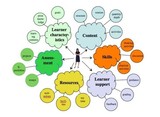
Here I want to discuss one key component of a learning environment, learner characteristics, and in particular focus on the characteristics of learners that are particularly relevant for designing teaching and learning in a digital age. Probably nothing more reflects changes to teaching in a digital age than the change in learner characteristics. Source: www.tonybates.ca See on [...]
The post Key characteristics of learners in a digital age and their influence on the design of teaching and learning appeared first on Patric Lougheed.
Patric Lougheed
.
Blog
.
<span class='date ' tip=''><i class='icon-time'></i> Dec 05, 2015 02:02pm</span>
|
|
Education, like so many other aspects of our society, has been undergoing a digital transformation. Accepting this reality is inevitable. Embracing it would be wise. But my district has chosen to go a step beyond that as we strive to lead the transformation. Digital transformation in Vancouver Public Schools (VPS) began with our second-generation strategic planning [...]
The post Leading and Learning for a Successful Digital Transformation appeared first on Patric Lougheed.
Patric Lougheed
.
Blog
.
<span class='date ' tip=''><i class='icon-time'></i> Dec 05, 2015 02:02pm</span>
|
|
Are students really embracing the benefits of blended learning? When’s the last time a student told you how much they love their textbooks? Source: blog.aeseducation.com See on Scoop.it - Blended Learning Lab
The post Benefits of Blended Learning: Student Perspectives appeared first on Patric Lougheed.
Patric Lougheed
.
Blog
.
<span class='date ' tip=''><i class='icon-time'></i> Dec 05, 2015 02:02pm</span>
|