Blogs
|
This morning, NASA released the first photos New Horizons was able to capture of Pluto's surface. The post New Horizons Returns First-Ever Photo of Pluto’s Surface appeared first on WIRED.
Wired Magazine
.
Blog
.
<span class='date ' tip=''><i class='icon-time'></i> Jul 14, 2015 11:08am</span>
|
|
If you’ve been looking for a formal hands-on training course to learn how to use Adobe Captivate and Adobe Presenter, but can’t find a suitable classroom training for it, enroll for these live online courses organized by Guild Academy. Here are the details: Adobe Captivate 7 Basic This hands-on virtual training course will help you […]
Pooja Jaisingh
.
Blog
.
<span class='date ' tip=''><i class='icon-time'></i> Jul 14, 2015 11:08am</span>
|
|
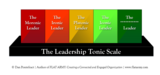
The Leadership Tonic Scale identifies and defines five types of leadership styles found in today’s organization. This is the fourth of those five types. Come back and visit each day during the week of June 3, 2013 to find out the next leadership type as depicted in the Leadership Tonic Scale.
[divider]
The Iconic Leader
The Iconic Leader is a gem, and one notch away from our final leader definition on the Leadership Tonic Scale. What is an icon? In this case we’re not referring to religious paintings as it was first defined. Typically in our modern day we think of icons as those who have demonstrated excellence over a period of time. There are sporting icons, author icons, acting icons … and of course there are leadership icons. Thus, if we want to achieve the final stage of the Leadership Tonic Scale, we must assess what makes leadership icons iconic.
Iconic leadership is not about perfection. As Winston Churchill once said (an example of Iconic Leadership) "To improve is to change; to be perfect is to change often." It is about the repeatable and demonstrable act of delivering on your actions such that we mere mortals can learn from the consistent behaviour they have maintained. The aforementioned Churchill taught us about resiliency, Gandhi taught us compassion, Mother Theresa demonstrated humility, Steve Jobs was uber innovative (despite other flaws mentioned earlier) and Hillary Clinton was and is both patient and a tireless negotiator.
What More to Know:
Don’t set your sights on becoming an Iconic Leader - that’s something a Moronic Leader would do
Start reading autobiographies and glean what you can from those that have changed the world but don’t limit yourself to a singular genre
Cherry pick some of the traits, skills and behaviours that are suitable to your situation and career path and try to embed into your own leadership style over time
An icon that changed the game of authoring — and in particular educating her audience, young children, to think differently — was Astrid Lindgren. Pippi Longstocking, the character she brought to life in 1945 with equal parts untidiness, cleverness, noisiness, independence and creativity encouraged children to think differently, to explore and to seek out adventure and freedom. Back in the day it was radical. But that’s what we should be drawing upon as we analyze (and mentally ingest) the characteristics of an Iconic Leader.
[divider]
NB: the Leadership Tonic Scale does get better from here. What’s the next stage? Although I didn’t include the Leadership Tonic Scale in my book Flat Army: Creating a Connected and Engaged Organization, you may be interested in Chapters 4-6 (The Connected Leader) and Chapter 7 (The Participative Leader Framework) in particular as they help to depict what I believe are the key ingredients to 21st century leadership. The entire Leadership Tonic Scale will be released on June 10th as a free downloadable paper.
UPDATE: The Leadership Tonic Scale downloadable PDF is now available.
1,497 total views, 5 views today
Dan's Related Posts:The Moronic Leader: Stage 1 of 5 in the Leadership Tonic ScaleThe Platonic Leader: Stage 3 of 5 in the Leadership Tonic ScaleThe Ironic Leader: Stage 2 of 5 in the Leadership Tonic ScaleThe Leadership Tonic Scale - Free PDF DownloadThe Harmonic Leader: Stage 5 of 5 in the Leadership Tonic Scale
Dan Pontefract
.
Blog
.
<span class='date ' tip=''><i class='icon-time'></i> Jul 14, 2015 11:08am</span>
|
|
Facebook’s new data center will run entirely on wind power. This means three of the five massive computing facilities that will drive the company’s worldwide social network in the years to come will run use only renewable energy. But Peter Freed, who helps oversee renewable energy efforts at Facebook, isn’t entirely pleased. Buying clean energy, […] The post Facebook Wants More Green Energy. But Red Tape Is in the Way appeared first on WIRED.
Wired Magazine
.
Blog
.
<span class='date ' tip=''><i class='icon-time'></i> Jul 14, 2015 11:08am</span>
|
|
Topic: Is it Possible to Predict & Enhance Learning with Big Data Date and time: Wednesday, 4th December, 2013 10:00 AM to 11:00 AM US/Pacific Description: Learner Intervention in Adobe Presenter 9 extends the social collaboration experience and integrates the traditional quiz outcomes to create a modern and powerful solution for analyzing the student learning […]
Pooja Jaisingh
.
Blog
.
<span class='date ' tip=''><i class='icon-time'></i> Jul 14, 2015 11:08am</span>
|
|
The Leadership Tonic Scale identifies and defines five types of leadership styles found in today’s organization. This is the fifth of those five types.
[divider]
The Harmonic Leader
In my book Flat Army: Creating a Connected and Engaged Organization I highlight a scenario I call "Crossing the Leadership Chasm" where a leader must successfully open herself up to the team/organization and the team/organization has to open themselves up to the leader. If this occurs — where both sides are operating in an open and thus harmonious manner — we can define her as a Harmonic Leader. That is, there is harmony between all players.
In the Spring of 2013 something very interesting occurred. After a four-year absence (and retirement) A.G. Lafley returned to the post of CEO and Chairperson of Procter & Gamble — a post he held between 2000 and 2009 — to reinvigorate what can only be described as a negatively spiraling future at the 175 year-old company.
I find A.G. Lafley to be the perfect definition of a Harmonic Leader. I’m not surprised at all he has resurfaced.
As I detailed in Flat Army:
Through his decade at the ultimate leadership helm he helped to double total sales, quadrupled profits while increasing P&G’s market value by over $100 billion dollars. Furthermore he helped grow the number of billion-dollar brands at P&G - such as Gillette, Pampers, and Tide - from 10 to 24. How’d he do it? In his book, "The Game Changer: How Every Leader Can Drive Everyday Innovation (Profile Books, 2008) co-written with thought leader Ram Charan, Lafley refers to the unique combination of openness and ideas.
They write:
"Open architecture is the organizing principle that enables a business and its people to open themselves up to get ideas from anywhere at anytime. P&G collaborates with anybody, anywhere, anytime. P&G likes unusual suspects. It will even compete with a company on one side of the street, and cooperate with it on the other. In an open innovation system, anything out there is fair game, even if competitors are sitting on it. And that’s fine with both partners because it works."
At P&G, Lafley opened up everything. He wanted his leaders to be more open and equally important he wanted his employees to be open. When that occurred, magic happened. He branded this open architecture at P&G "Connect and Develop" or C&D for short. It was an open leadership framework that ran across all employees, regardless of title, and it not only drove revenue and profitability, it grew employee engagement.
Lafley and Charan further opine:
The single characteristic of C&D is the willingness of all people at P&G to be psychologically open and to seriously consider new ideas, whatever the source, thus building a truly open, truly global innovation network that can link up—and be first in line—with the most interesting thinkers and the best products to "reapply with pride."
To be a Harmonic Leader both the team and the leader need to be open, trusting and collaborative. The leader must be eager to listen to the people of the organization in order to drive the business forward. When a crisis occurs, command and control ruling isn’t immaturely inserted into the leader’s bag of behaviour tricks. She remains open, trusting and collaborative.
What More to Know:
What more is there to know? This is the ideal leadership style, one you want to be aligned to and one you want to embrace yourself.
It’s form before function, and behaviour before technology; the Harmonic Leader knows it’s about an open, trusting and collaborative behaviour before anything else including fancy social technologies.
Read Flat Army … it’s packed with details that directly align to the concept of the Harmonic Leader.
My suspicion is A.G. Lafley was brought back to P&G not only for his business acumen … but to reinstate a sense of openness and connectedness that might have diminished since his departure. I am very curious to see how this next chapter of P&G — and A.G. Lafley — plays out over the coming months and quarters. I’m very interested to see if A.G. continues to be the Harmonic Leader in the current state of crisis at P&G.
I’m very interested to see every leader become a Harmonic Leader in today’s organizations.
[divider]
NB: although I didn’t include the Leadership Tonic Scale in my book Flat Army: Creating a Connected and Engaged Organization, you may be interested in Chapters 4-6 (The Connected Leader) and Chapter 7 (The Participative Leader Framework) in particular as they help to depict what I believe are the key ingredients to 21st century leadership. The entire Leadership Tonic Scale will be released on June 10th as a free downloadable paper.
UPDATE: The Leadership Tonic Scale downloadable PDF is now available.
2,489 total views, no views today
Dan's Related Posts:Future Of Work: A Flat Army Of Open Leadership via A.G. LafleyThe Iconic Leader: Stage 4 of 5 in the Leadership Tonic ScaleThe Moronic Leader: Stage 1 of 5 in the Leadership Tonic ScaleThe Platonic Leader: Stage 3 of 5 in the Leadership Tonic ScaleThe Ironic Leader: Stage 2 of 5 in the Leadership Tonic Scale
Dan Pontefract
.
Blog
.
<span class='date ' tip=''><i class='icon-time'></i> Jul 14, 2015 11:07am</span>
|
|
The National Building Museum's great hall has been transformed into a synthetic, stark-white beach. The post Architects Make an Ocean Out of a Million Plastic Balls appeared first on WIRED.
Wired Magazine
.
Blog
.
<span class='date ' tip=''><i class='icon-time'></i> Jul 14, 2015 11:07am</span>
|
|
The Beginner Adobe Captivate training course will quickly have you creating eLearning and mLearning lessons that include software simulations, demonstrations and soft-skills (compliance training). You will learn how to make your lessons engaging and interactive by creating quizzes, adding text captions, animations, videos, rollovers, clickable areas (buttons and click boxes), typing areas, voiceover audio and sound […]
Pooja Jaisingh
.
Blog
.
<span class='date ' tip=''><i class='icon-time'></i> Jul 14, 2015 11:07am</span>
|
|
During the week of June 3, I wrote five posts in five days centered on "The Leadership Tonic Scale".
I defined five types of leadership styles found in organizations today:
The Moronic Leader
The Ironic Leader
The Platonic Leader
The Iconic Leader
The Harmonic Leader
You can download the entire series as a singular PDF document.
Download PDF Version of The Leadership Tonic Scale
Thanks for visiting, downloading and/or reading.
cheers
dp
The Leadership Tonic Scale by Dan Pontefract
3,579 total views, 1 views today
Dan's Related Posts:The Iconic Leader: Stage 4 of 5 in the Leadership Tonic ScaleThe Ironic Leader: Stage 2 of 5 in the Leadership Tonic ScaleThe Platonic Leader: Stage 3 of 5 in the Leadership Tonic ScaleThe Moronic Leader: Stage 1 of 5 in the Leadership Tonic ScaleThe Harmonic Leader: Stage 5 of 5 in the Leadership Tonic Scale
Dan Pontefract
.
Blog
.
<span class='date ' tip=''><i class='icon-time'></i> Jul 14, 2015 11:07am</span>
|
|
Cheese making used to belong to artisanal masters of the craft. Today, your camembert is more likely to bear the imprint of a microbiologist. The post Microbiologists Hold the Secrets to Making Perfect Cheese appeared first on WIRED.
Wired Magazine
.
Blog
.
<span class='date ' tip=''><i class='icon-time'></i> Jul 14, 2015 11:06am</span>
|