Blogs
|
It's obvious these people have spent months preparing for Comic-Con, obsessively planning every detail of their outfits. The post The Best Cosplay at Comic-Con, From Spock to Furiosa appeared first on WIRED.
Wired Magazine
.
Blog
.
<span class='date ' tip=''><i class='icon-time'></i> Jul 14, 2015 11:12am</span>
|
|
Early on in my career I took my first business trip to North Carolina where I participated in a ‘higher education’ conference. No, the conference wasn’t on the airplane although we were ‘higher’.
Because it was North Carolina there was even a pig roast. Sadly, I couldn’t find an apple.
To get from Vancouver to Winston-Salem, I took planes interconnected by the Star Alliance family - Air Canada and United Airlines - and since that trip I very rarely diverge from the family.
I’m a loyal customer racking up (according to a recent personalized infographic sent to me by Air Canada’s loyalty program) over 2 million miles of business. Suffice to say that I’ve had a few apples in various lounges unlike Miss Piggy in North Carolina from above.
I fly a lot with Air Canada, a little bit with United Airlines and when Europe or Asia beckons I hitch on to the Star Alliance family. That’s another way of saying I am well versed with the boarding drill as well. When it comes to Air Canada I have memorized (in both official languages) the recorded message that plays before boarding the plane. It’s no badge of honour; ask the goats.
But this past week I clued into something that alarms me on several levels.
Whilst getting ready to board a flight, standing at the front of the queue as I always do waiting for Air Canada Elite members to be called, I noticed a gal in a wheelchair to the right of the desk. She was inching her way to the agent’s desk desparately trying to part the sea of able bodied humans in her quest to board the plane.
As I waited — watching the situation unfold — the Air Canada attendant summoned me to the desk so I could present my boarding pass and passport.
"Elites, let’s go," he said motioning towards me and the queue of 20 odd people behind me.
Now, what normally happens on an Air Canada flight is a call out for those needing assistance — like our wheelchair friend, parents with kids, other requirements — before the ‘Elites’ parade down the boardwalk.
I wasn’t paying attention to the message that had just finished playing. I’d heard it a thousand times before.
I responded to the Air Canada agent rather foolishly and asked, "What about the woman in the wheelchair over there," pointing to her as she approached the desk to his left.
"They changed everything a month ago," remarked our clearly disengaged agent. "Elites now go first, then assisted help and then everyone else," he concluded.
I was stunned.
Mostly because I would never put myself ahead of anyone needing assistance but in the moment curiosity got the best of me.
"Were you consulted on the decision," I asked while fumbling (on purpose) with my passport and boarding pass.
"Do you think ‘they‘ would ask us first?" replied our now agitated agent. "We would never have suggested such a change."
"We should let her through," I retorted. "You clearly believe she should have that right — as do I — so let’s defy management’s orders."
"Sir," our agent said rather morosely, "I just can’t do it. It’s not my call."
So, I had to submit my passport and boarding pass and enter the plane. As the ‘Elites’ planted themselves in the first 12 rows of the plane … only then did our wheelchair friend board.
Of course it took another agent to literally carry (you might call it dragging) this woman to her seat. The process took about 5 minutes.
As she passed me I said, "Sorry you weren’t able to board first."
Perking up with a smile that stretched from seat A to seat F she said, "Thanks, but it’s not a big deal. At least we’re on time."
What character.
Why does this scenario irk me so?
I obviously only have one piece of evidence; the agent’s assertion that Air Canada management made a decision without the involvement of frontline customer facing employees. Perhaps there is more to the story. But if it’s true, it’s another classic example of fiefdom based management decision making without the input, ideas and innovation of its most important asset … its people.
I don’t mind the privileges that come with being an Elite member of the Star Alliance family but boarding a plane before those that need assistance is deplorable. It reeks of hierarchy and elitism and it’s plain wrong.
Dear Air Canada, how about you start collaborating as a unified team and avoid culture crushing and employee disengagement acts (not to mention public relations nightmares) like the one depicted above?
At a minimum, go back to the previous boarding announcements and boarding process.
Next time I fly with you I’ll even offer to be the announcer.
PS. I published this at 35,000 feet while on one of your competitors aircraft.
2,354 total views, 11 views today
Dan's Related Posts:Omni Hotels & Resorts in Dallas Demonstrate Great Customer ServiceAn Infographic Depicting Learning & Collaboration in ActionDid I Just Spam My Entire LinkedIn Network?Here’s to the Crazy OnesWhy Don’t We Tip Flight Attendants?
Dan Pontefract
.
Blog
.
<span class='date ' tip=''><i class='icon-time'></i> Jul 14, 2015 11:11am</span>
|
|
It took three years and 350 lighters to construct a single photo depicting the garbage on the shores of Hong Kong. The post It Took 350 Lighters and Three Years to Make This Photo appeared first on WIRED.
Wired Magazine
.
Blog
.
<span class='date ' tip=''><i class='icon-time'></i> Jul 14, 2015 11:11am</span>
|
|
I used to be one of those educators.
There was a time when I wanted singular focus — an unadulterated fixation on my scintillating sermon — from every set of eyeballs when I was on stage in the classroom.
I was raised to believe the educator was the ‘sage on the stage’.
Maybe you were too?
Maybe you still are?
If I were a high school teacher or a higher education professor today though, I’d be thinking twice about that philosophy. If I were a corporate trainer (I really do hate that term) or a Chief Learning Officer (wait a minute) I’d also be thinking if my approach might need to be altered.
Do educators of any stripe really believe learning solely happens through the lecture? Sure, there are times where said ‘sage’ should be pontificating from the pulpit to the pupils, but this doesn’t have to be the sole means of instruction.
But, let’s keep calm and carry on with the lecture in the classroom for a moment.
I don’t believe the lecture should be completely abandoned — and I do think we still need to tear down the walls of the classroom — but I do believe there is one issue that needs to be remedied once and for all.
Teachers, principals, professors, trainers, facilitators and lecturers alike … let’s N-Screen the classroom once and for all.
There was a time not too long ago when you might have attended a corporate training event and the facilitator made you drop off your mobile device at the back of the room. There was a non-descriptive box found at the back table and there may even have been a sign that read, "Park Cell Phones Here Please". That same facilitator explained she needed your undivided attention because the forbidden fruit of your cell phone was ultimately going to cause you to perform a sin so you might as well separate yourself from the temptation. Unless of course there was a priest in your class, but that’s just a weird anomaly.
You know it’s true.
What about the various (and many) school boards who continue to ban cell phones, tablets or laptops from the classroom by students who are simply trying to enact their own BYOD — bring your own device — policy for themselves? Picture the following. Jasmin and Kuldeep show up on their first day at the new school. At the old school in a different part of the country they were able to bring their iPad’s into the classroom because their (then) forward thinking teacher and administration said it complemented their ‘pervasive learning‘ strategy. What happened on day one of the new school? Both Jasmin and Kuldeep were informed by the school principal that they need not bring in their iPad’s because "computer class happens every Day 3 on the schedule."
You know it’s true.
Teachers, principals, professors, trainers, facilitators and lecturers alike … let’s N-Screen the classroom once and for all.
Let’s first acknowledge that although you may be a subject matter expert in your domain — whatever the domain — you still don’t know everything in your sphere of competence. Get over it. So, if you agree that you don’t know everything, why not let your students ‘plug in’ to complement what you’re saying or to reinforce the exercises or discussions you’ve put on the docket. Let your students use a device that is connected to the internet to not only help their own acumen but yours and the rest of the group.
That’s an example of N-Screen.
The group will undoubtedly be listening to you while you’re speaking and dancing around with your flipcharts and slides, but you will create a classroom environment that is both fluid and connected. It’s not a distraction, it’s simply another tentacle. It’s a reinforcement.
Second, as a teacher, principal, professor, trainer, facilitator or lecturer, perhaps you can begin utilizing the N-Screen directly into your material. When I’m at a conference — whether as a speaker or an attendee — I love when there is an opportunity to engage through polling/quiz devices. That makes me feel a part of the process whether I’m the speaker or a bum in a seat.
If I’m actually teaching, I might alter my delivery to incorporate said mobile devices … presuming there is internet connectivity. Online scavenger hunt? Why not. A race to find three additional facts about the content you’re currently plowing through? Sure. The use of the web to complement an in-session group activity? You better believe it. Free surf time on the lecture at hand? Is it any different from allowing a smoke break and people talking about the class or content?
When I’m speaking, I’ve been known to tweet from the stage — while speaking — or give away free copies of Flat Army to those that have used a device to connect with others through the event hashtag. I scan the stream before I go on and head out into the audience at some point during my talk to drop off the book to the unsuspecting Twitter handle/peep.
These are examples of an N-Screen in the classroom.
To my brethren in the overarching teaching space; the digital device train has left the station long ago. No, not everyone has a device, but we’re getting close. And yes, etiquette, exemplary practice along do’s and don’ts might have to be taught and/or communicated. The question that remains is whether you are prepared to not only incorporate an N-Screen into your classroom but whether you are also going to modify the way you actually teach.
Are you ready to N-Screen the classroom?
2,243 total views, 8 views today
Dan's Related Posts:"Since the way we run universities now is such a train wreck, what’s a better way?"ABC - The 21st Century Learning ModelThe Wolf Pack and LearningLearning by OsmosisI Have Never Worn a Watch
Dan Pontefract
.
Blog
.
<span class='date ' tip=''><i class='icon-time'></i> Jul 14, 2015 11:10am</span>
|
|
UPDATE: The update for Adobe Captivate 7 is now available. As we shared in late October, Adobe Captivate 7 is not yet compatible with the OS X Mavericks update to the Mac operating system. We are actively testing an update for Captivate 7 that will fix compatibility issues with the new Mavericks Operating System. The […]
Pooja Jaisingh
.
Blog
.
<span class='date ' tip=''><i class='icon-time'></i> Jul 14, 2015 11:10am</span>
|
|
NASA said it was giving Instagram an hour-long head start on the first image, posting it to the social media service before officially releasing it on its public website. The post NASA Teams Up with Instagram To Debut Pluto Surface Photo appeared first on WIRED.
Wired Magazine
.
Blog
.
<span class='date ' tip=''><i class='icon-time'></i> Jul 14, 2015 11:10am</span>
|
|
I’m not entirely certain what to make of this.
I got wind of a news report from Channel NewsAsia entitled, "MBA for Children" where three to six-year olds are enrolling into a pseudo MBA program for toddlers. Over 100,000 children have graduated from this program in Shanghai alone at a cost of roughly $590 USD per student. Watch the clip below:
Early on in the clip, a 6 year-old says, "I like to spend money when I was younger. Now I don’t."
Wow.
What to make of this?
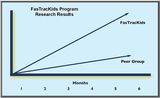
It seems this MBA for Children program in Shanghai is a derivative of a company based in Colorado, USA called FasTracKids who claim "that a significant number of three to six-year-old children enrolled in FasTracKids improved their vocabulary and social skills at a rate 100% to 150% times faster than their peers not enrolled in the program."
They might need help on their use of graphs as their Y Axis looks a wee bit bare. See below.
That aside, I was personally shocked to view the clip above. 100,000 young Chinese toddlers are being (allegedly) fast-tracked towards the components of an MBA? It seems criminal.
And what of this parent company in Colorado? I’m sure Nancy Faunce, President and CEO of FasTracKids International knows what she is doing but I’m always a wee bit leery when I hear of programs (whether Nancy has a part in this or not) that are promoting the fast-tracking of young toddlers into MBA-like objectives.
It’s just so wrong on so many levels.
What do you think?
2,444 total views, 16 views today
Dan's Related Posts:The Flat Army Interview with Dan Pontefract’s Three Young ChildrenThe Star Wars Mentoring ProgramOur Three Young Children Blog … Here’s WhyABC - The 21st Century Learning ModelWhose Your Brian Reid?
Dan Pontefract
.
Blog
.
<span class='date ' tip=''><i class='icon-time'></i> Jul 14, 2015 11:09am</span>
|
|
Guest Blog Post by By Shawn Scivally (eLearning Brothers) Brother Shawn is the co-founder of eLearning Brothers. Along with my brother Andrew, we create awesome eLearning stuff. Specializing in eLearning Templates, games, page layouts, cutout people pictures, interactions, quizzes and much more. Having much success, and now being a trusted brand in the eLearning industry—we […]
Pooja Jaisingh
.
Blog
.
<span class='date ' tip=''><i class='icon-time'></i> Jul 14, 2015 11:09am</span>
|
|
Photo courtesy of Forbes / Steve Denning
Steve Denning — one of those I look up to — was kind enough to include my book Flat Army: Creating a Connected and Engaged Organization as an example of recent literature that is helping to redefine leadership and management in the organization in his Forbes piece entitled, "The Management Revolution That’s Already Happening".
Alongside 17 other books, Steve deftly explains the management revolution is underway, and that the Creative Economy is becoming a reality. (at least for some organizations) As he says, "<a> coherent constellation of fundamentally different principles in leadership and management has emerged." Well, at least some of us are writing about it.
Flat Army contains a set of five frameworks for leaders AND the organization and when used in conjunction it’s my (biased) belief they can enable "an unobstructed flow of corporate commonality." It’s shifting from a ‘culture of fears’ to a ‘culture of peers’.
One of the best paragraphs from Steve’s article (and review) is as follows:
The books are inspired by the idea that management must embody truth, both in what is said and how it is said. Clichés about the manipulation of systems and efficiency and incremental fixes will not do. The truth of our organizations, bitter and disheartening as it is, must be faced with honesty and imagination. These books do so with a force and a clarity that have not often been heard in management before.
I hope you have the chance to read the entire piece by Steve.
The books he is sourcing — including Flat Army — are as follows:
Fixing the Game (Roger Martin), What Matters Now (Gary Hamel), Reorganize for Resilience (Ranjay Gulati), The Power of Pull (John Hagel, John Seely Brown, Lang Davison), The Innovator’s Prescription (Clayton Christensen et al), The Leader’s Guide To Radical Management (Stephen Denning), The Leader’s Dilemma (Franz Röösli et al), Conscious Capitalism (John Mackey and Raj Sikodia), Peak (Chip Conley), The Lean Startup (Eric Ries), The Ultimate Question 2.0 (Fred Reichheld et al) and Leadership in a Wiki World (Rod Collins), The Elastic Organization (2012) by Nicholas Vitalari and Haydn Shaughnessy; The End of Competitive Advantage (2013) by Rita McGrath; Flat Army (2013) by Dan Pontefract: The Connected Organization (2013) by Dave Gray; Enterprise Software Delivery (2013) by Alan Brown and Reinventing Giants (2013) Bill Fischer et al.
7,260 total views, 19 views today
Dan's Related Posts:Future of Work: Add Open Leadership, Enterprise 2.0, Connected Learning and MixIt’s Time to Revolutionize Corporate Learning10 Free Copies of Flat Army … Participate to WinAnnouncing the Full Book Cover Jacket of Flat ArmyWHY I Wrote Flat Army: The Flat Army Golden Circle
Dan Pontefract
.
Blog
.
<span class='date ' tip=''><i class='icon-time'></i> Jul 14, 2015 11:09am</span>
|
|
Lightyear.fm simulates what you'd hear if tuning into terrestrial radio from different parts of the cosmos. The post Stunning Sim Shows How Far Hit Songs Have Traveled in Space appeared first on WIRED.
Wired Magazine
.
Blog
.
<span class='date ' tip=''><i class='icon-time'></i> Jul 14, 2015 11:09am</span>
|