Blogs
|
Interaction design involves more than just clicking or tapping on an object. One must consider the context and environment, emotional appeal of the design, the goal and behaviors of the user, the user’s affect, the microcopy for instructions, the responses or states resulting from every action and so on. As our tools and devices allow […]Post from: The eLearning Coach10 Interaction Design Books
Connie Malamed
.
Blog
.
<span class='date ' tip=''><i class='icon-time'></i> Jul 15, 2015 05:58am</span>
|
|
Take a live, in-depth look at the Docebo E-Learning Platform and applications in L&D. October 21st will mark the second in a series of webcasts devoted to L&D topics, this one on Compliance.
Handling compliance management using an LMS provides for better risk management, decreased costs, increased productivity, and a more effective way to ensure employee compliance with corporate policies.
In this webinar you will see the Docebo product in action and learn how Docebo helps address compliance training.
Register now
#DoceboLive are monthly training management webinars hosted by Docebo’s North American Solutions Consulting team. Each interactive hour will provide an overview of Docebo’s comprehensive SaaS solution for training management, including a bird’s-eye view of new apps and features pre-release. We’ll take ten minutes of each session to outline the new features and highlights - and then focus on an in-depth application.
If you’re interested in checking out other upcoming webinars in the #DoceboLive series, see what we have coming up in the table below:
Date
Webinar Title
America
Europe
October 21st
Compliance training with Docebo
EDT: 11am
PDT: 8am
CET: 5pm
November 11th
Social and Gamification mode: ON
EDT: 11am
PDT: 8am
CET: 5pm
December 9th
Mobile delivery is here
EDT: 11am
PDT: 8am
CET: 5pm
The post Join #DoceboLive webcast on 21/10 to learn about Compliance training appeared first on Docebo.
Docebo e-Learning Blog
.
Blog
.
<span class='date ' tip=''><i class='icon-time'></i> Jul 15, 2015 05:58am</span>
|
|
As I write this post, Claudio Erba, CEO of Docebo, and Josh Squires, COO of Docebo EMEA, are attending the HR Summit & Expo in Dubai to showcase the latest version of the Docebo Learning Management System: Docebo 6.4.
The HR Summit & Expo is the most important HR event in the region. It includes some of the most widely recognized and awarded companies, and well-known speakers in the global Human Resources scenario such as Marshall Goldsmith, Dave Ulrich, Liz Wiseman and Rasmus Ankersen.
Each region has its own peculiarities that shape the needs and challenges that companies must face, and the Middle East is certainly no exception. By looking at the main sessions and speeches held at the HR Summit & Expo we could highlight a few trends in the HR sector for the Middle East:
Lack of talent: despite the amazing growth, cities like Dubai and Abu Dhabi can be considered fairly "young" cities. The entire region has developed a wide range of strategies to attract talent from abroad (mainly US and Europe), investing at the same time in advanced education systems, but it’s not enough - not yet. In fact the Middle East is often considered a temporary stop for most of expatriates, making talent retention a nightmare for most HR departments.
Lack of adequate HR technology: as through the entire region, technology is evolving at a very fast rate. In order to stay competitive and grow, companies need to be up to date on the most recent advancements in HR softwares such as mobile learning, talent management and resource planning softwares.
Bureaucracy: with great power comes great responsibility (that was originally Voltaire, not Spiderman). Thanks to its great wealth and a unique taxation system (no taxation), the Middle East has been attracting a lot of companies and job seekers. Therefore strict regulation has been enforced to control the influx. Unfortunately this axe has two blades: although the bureaucracy prevents a loss of control, it also slows down companies looking to achieve some serious business in the area.
Middle East elearning market trends and forecasts
Earlier this year Docebo released a paper entitled "E-learning market: trends and forecast 2014-2016". It is particularly interesting to highlight the growth of elearning usage in the Middle East region - in fact the market is growing at a 8.2% growth rate with over $560 revenues forecasted for 2016.
To get a more indepth analysis of the ME elearning market click here to download the "E-learning market: trends and forecast 2014-2016" paper, or, if you’re based in Dubai come visit us at the HR Summit & Expo, International Convention Center stand E29!
The post HR trends in the Middle East: reflections on HR Summit & Expo 2014 appeared first on Docebo.
Docebo e-Learning Blog
.
Blog
.
<span class='date ' tip=''><i class='icon-time'></i> Jul 15, 2015 05:57am</span>
|
|
Claudio Erba, Docebo’s CEO, will be among the speakers at the HR Directors’ Forum, being held at the Park Inn, in Zurich, Switzerland, on November 3.
Organized by Orchid Associates in collaboration with the Józefa Fawcett International (JFI) Store, the HR Directors’ Forum allows HR professionals, drawn from around Europe as well as further afield, to discuss a diverse range of relevant topics with their peers.
If in Zurich it’s a good opportunity to hear Claudio Erba speak about the elearning market and trends in the next 4 years, and if you drop by our booth you can see our latest product update, Docebo 6.4, in action! Hope to see you there!
For more info, and to see who will be presenting at the event visit the event official page
[banner-bottom-eng]
The post Docebo @ HR Directors’ Forum in Zurich Nov 3 appeared first on Docebo.
Docebo e-Learning Blog
.
Blog
.
<span class='date ' tip=''><i class='icon-time'></i> Jul 15, 2015 05:57am</span>
|
|
The objective of training is to acquire and learn new skills that will allow employees to achieve greater efficiency and productivity in the workplace.
With new technological advances, training is being transformed into more personalized and customized learning. Not only is it time and cost saving but it has proven more effective in helping employees learn and retain information and skills. With constant access and use of the internet, an increase of learning agility allows employees to take information from a wide variety of sources and convert them into knowledge and wisdom.
Do & Perform:
According to research, 94% of professionals seek to speed up the learning process in the workplace however only 23% are successful. This just goes to show that to implement a successful and effective training program, it is important to have practical applications in place to verify employee knowledge retention and offer hands-on experience. Recently, e-learning initiatives use gamification to increase knowledge retention. In 2014, 80% of organizations use gamification in their business practice to change behavior, develop skills and enable innovation. In addition, with improved social media platforms and customer recognition, more potential for innovative training exists. The creation of new training content should be customized to each individual business and employee. This provides your staff with the feeling that not only are their needs being met but that the company cares about them on an individual level. There are several ways to accomplish this. One way of accomplishing this is through a mentoring program where the transition into new positions is eases, and an outlet has been created for new employees to seek advice and information about their duties.
Short & Memorable:
"Chunked Learning" is the process of breaking down information into smaller pieces for the brain to retain easier. This technique is being used to help employees learn and retain information better and faster. In the USA seven digit phone numbers are usually divided into two chunks as in the number 765-1074. This process of separating information into larger blocks makes it easier to learn and retain. In 2014, 90% of content providers said they were going to use this technique extensively. With that in mind, personalized learning is also more efficient in helping employees learn quickly and efficiently. Personalized learning can be conducted through customized online courses, articles, books, videos and online practice groups. These resources can be personalized to the learning needs of each employee.
Watch & Learn:
Yankee Groups Anywhere Unified Communications FastView Survey participants found that employees learn 200% more when information is presented in a video, absorbs information 40% faster and retains 38% more information than audio. Traditional classroom based mass instruction is becoming a secondary source of help for employees to develop the knowledge and skills they need to be successful. New technological innovations such as the tablet or the smart phone expedites the process of learning where a manager can help a direct report learn about the new safety standards through a video send. Laptops, tablets and smart phones are making learning possible anytime, anywhere and with any one. 40% of businesses are using mobile learning as part of their recruitment and training initiatives. However, successful incorporation of mobile technology must incorporate user needs, appropriate platforms, intuitive design and corporate standards to be effective.
The future of training programs will become more interactive than ever before. Companies are now looking for a more online unified learning experience as this can realize many cost and time savings. It is important to commit your organization training initiatives to more practical hands-on applications, memorable learning and video-bound training. There are many companies that offer Learning management and training solutions. For example Docebo’s LMS is an elearning platform that provides a full set of features - the system can be scaled to any sized business and customized to user needs. LearnUpon is an industry leader in providing training to training companies. Another company WalkMe offers a contextual guidance and engagement platform that can help train employees by guiding them through their tasks.
About the author
Jason Silberman is Marketing Director at WalkMe, an interactive online guidance system and engagement platform, which reduces training times and costs, while raising performance levels. He is also the lead author and editor of Training Station, a blog devoted to news and ideas on training, learning and employee performance. Follow him at @tstationblog
The post 3 Ways to Make the Most of Training Opportunities appeared first on Docebo.
Docebo e-Learning Blog
.
Blog
.
<span class='date ' tip=''><i class='icon-time'></i> Jul 15, 2015 05:57am</span>
|
|
We’re happy to announce that Docebo has been named as one of the top eight learning management systems suitable for the UK’s corporate learning sector. The list of the top performing eight LMSs has been published following extensive research on over 600 LMSs by Learning Light, the UK-based independent e-learning industry market analyst.
The analysis was based on the cost of ownership; features and functionalities; development pathway and future-proofing from a training industry perspective.
Learning Light Director, David Patterson, said:
"We’ve carried out this research in the light of Business Innovation and Skills (BIS)’s statement that, from September 2014, Individual Learner Records for funded further education courses must show a minimum of ten per cent of individuals’ learning via materials delivered online. This is going to increase demand for LMSs in the UK - and, at present, there are some 600 LMSs from which to choose."
The report, which is available online from Learning Light’s website, states that the Docebo LMS is:
"a comprehensive LMS with lots of up-to-date features covering most of what any training organisation or department needs. Features include classroom alignment, lots of integration options and APIs. Docebo also has a content market place, which is useful. Future development pathways look good as well."
Learning Light’s Top 8 is listed here in alphabetical order:
aNewSpring
Docebo
Enable by Virtual College
Kallidus
LearnUpon
Litmos
Moodle
Nimble by elearning 247
For more, click here.
[banner-bottom-eng]
The post Analysts at Learning Light name top 8 LMSs for the UK market appeared first on Docebo.
Docebo e-Learning Blog
.
Blog
.
<span class='date ' tip=''><i class='icon-time'></i> Jul 15, 2015 05:57am</span>
|
|
Mobile devices are proliferating around the world: more people are using mobile devices for more things - and there seems to be no end in sight to this trend. The advent of this mobile phenomenon is changing enterprises worldwide, encompassing all sizes of businesses, industries and all sectors of the economy.
While not all enterprises are taking advantage of mobile technologies to the same degree, one of the current key uses for mobile devices is for learning, especially job-related learning. The worldwide market for mobile learning products and services reached $5.3bn in 2012. The five-year compound annual growth rate (CAGR) is 18.2% and revenues are set to more than double to $12.2bn by 2017.
Some numbers to consider: did you know..?
40% of the overall workforce is now mobile and 90% of American workers use their own smartphones for work
The number of app downloads grew 80% worldwide in 2013
Companies are adopting mobile solutions as part of their first steps with learning technologies
The worldwide market for mobile learning products and services reached $5.3bn in 2012 and the five-year compound annual growth rate is 18.2%
Blended learning strategies encompass a wide variety of delivery methodologies, including m-learning
Whilst m-learning isn’t synonymous with e-learning, users must be understood in order to build a successful learning strategy, and learning developers need to take both ‘tech-savvy’ and ‘less-tech-savvy’ potential audiences into account when developing m-learning materials.
The bottom line is that building m-learning programs is all about better enabling learning.
In an upcoming m-learning report, to be released by next week, we outline some of the ways to create a blended learning strategy that encompasses a wide variety of delivery methodologies - including m-learning.
Click here to download the "Learning on the go: tips and trends in m-learning".
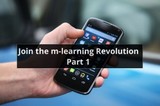
I will be following up on this blog post with a series on m-learning "the m-learning revolution" in coming weeks
~ @rgogos
The post The m-learning revolution part 1: Learning on the go appeared first on Docebo.
Docebo e-Learning Blog
.
Blog
.
<span class='date ' tip=''><i class='icon-time'></i> Jul 15, 2015 05:57am</span>
|
|
The following is an excerpt from the just released - and free to download - m-learning report "Learning on the Go - tips and trends in m-learning"
As presented elsewhere in this report, mobile devices have taken the world by storm. The ready availability of high- powered computing in your pocket opens a new world of possibilities for learning. With this massive rise in accessibility comes many new challenges that will be required for the design team to overcome prior to launching your m-learning course.
There are many strategies for integrating m-learning into your corporate learning structure and there are many pitfalls as well. In this post we will discuss the things to avoid or to be aware of and, then, some best practices that you can use within your learning environment.
Common Challenges when developing a mobile learning strategy:
Desktop Learning is not the same as Mobile Learning
This is a common challenge that many learning departments initially assume when considering the addition of m-learning to their organizational learning strategy. The types of e-learning delivered by different media are different. The way users interact with a desktop/laptop is different from the ways users interact with a tablet (I still haven’t figured out "right click" on my tablet) or smartphone. Building out your learning needs to take into account not only the technology capabilities and limitations but also the Human Computer Interaction (HCI) affordances of each type of technology. You also need a specific strategy for how you want to deliver the learning being created, based on the delivery technology itself.
BYOD - Bring your Own Device - This is a term or concept often associated with mobile learning. Basically it means that you design content once and that, no matter how your learners access it, the content will transform to their particular delivery platform. While this is frequently used as one of the main selling points for including a mobile learning strategy into your overall organizational learning strategy, it is a mistake to think that you can design once and have it applicable to all devices.
This concept goes against the very soul of instructional design as each learning experience should be crafted based upon a studied and analyzed methodology. Knowing how your end user will interact with the learning material is almost as critical as the learning material itself. Understanding how your users will be interacting with your learning content is part of the design methodology employed in building high quality and successful learning. While you can build a multi-platform delivery model, you have to design to the least common denominator (typically mobile). This means that you are doing a disservice to the learners. Different physical settings allow for different levels of concentration and engagement. Different technological capabilities require different learning design and interaction strategies. To implement a best practices approach, design your learning based upon a well-thought-out learning strategy and build an instructional strategy around the device(s) you wish your learners to use, based upon this strategy.
The digital divide still exists - Understanding the end user is paramount to building a successful learning strategy. In many parts of the world, e-learning has always (since the late 1990s at least) been a part of many workers’ professional development plans. Different learners respond differently to digital learning, based upon how they prefer to learn and the content that is being presented to them. As we are presented with an (overall) aging workforce while new generations are entering the workforce, we are still faced with digital divide issues that began to plague our industry in the mid-1990s. With the emergence of Mobile Smart devices as a common feature of the workplace it makes perfect sense to include a mobile learning component as a core or supplemental part of your organization’s learning strategy.
Revisiting the full digital divide challenge from a Learning and Development standpoint is essential. There needs to be a comprehensive strategy around how your learning is approached for tech-savvy learners and how to incorporate your less tech-savvy learners into the fold. This approach is paramount as there are significant differences in how different generations interact and use technology. This has to be taken into account for your m-learning strategy. Generational and tech familiarity gaps exist and the comfort levels of your learners need to be addressed within your m-learning strategy.
Revisit your Learning Strategy
Now that we have taken into account some common challenges when coming up with our m-learning action plan we can begin to strategize methods for integrating m-learning into our overall learning strategy in a well thought out and strategic manner.
Building a learning strategy is hard work, time consuming, underappreciated by most departments outside of L&D/ Training, and often times take years to show ROI. That is the easy part! The hard part is to convince your entire company that the strategy that your team has worked on for years can be enhanced to make their lives easier by adding a mobile element to it. Many learners may have some hesitation to jumping on board the m-learning bandwagon. This is the opportunity to integrate some great knowledge management strategies into your learning strategy.
Integrate your mobile learning strategy into your organizational learning plan
Working for months - sometimes years - around building Key Performance Indicators (KPIs), Performance Objectives, Terminal and Enabling Objectives, and organizing all of these into learning paths and plans can be painful. But, doing all this gives you have a perfect opportunity to revisit these key competencies and objectives and see which ones would be a good fit for an m-learning refresh.
There has been lots of great e-learning over the years - from Serious Games and interactive branching scenarios to highly interactive courses built with rapid authoring tools. So it’s sometimes hard to understand how to jump into an m-learning path.
After all, there are differences between the capabilities of different devices as well as how different users interact with them.
Nonetheless, this is opportunity time. Implementing an m-learning strategy is an excellent chance to reduce time spent on lengthy, time-consuming courses. It’s a chance to take some key competencies and rework them to be delivered either in a just-in-time manner (think "job aids") or to develop a series of bite-sized Learning Pills that allow quick and easy access to consumable content.
The other great option with mobile devices is that most users of smart devices are familiar with messaging capabilities. Integration of some of the new learning standards such as xAPI/TinCan allows your learning management system to capture this data and add it back to your learners’ learning records.
Take your existing organizational competencies, skills, objectives and so on and evaluate what can be broken down into short extremely concise learning chunks (I like the term "Learning Pills") and then build it in a medium that works best for the greatest number of mobile devices (and remember you need to design for the least common denominator). Ideally, small videos or short and not very complex interactive packages work great. Follow them up with a quick knowledge check and you have an excellent standard Learning Pill.
If you’ve mastered the more basic model of m-Learning Design and have the capability to offer and support some real time interactions, build in a messaging component to your Learning Pills that allows for just-in-time communications with and between your learners to enable a true collaborative learning environment.
If you have the ability to unify the mobile learning environment through standardization of smart phones or tablets, think about taking greater advantage of the features contained within the device. Location tracking or delivering content based upon location, integration of cameras or videos recording best practices uploaded via the phone are great methods of supporting m-learning.
The main design goals of your Learning Pills should be that the direct instruction should never be longer than three to five minutes. It should include some form of quick knowledge check and it should align directly to your overall learning plan. Using other features within the device are great but this has to be well planned and have specific goals.
Wrapping it all together
Use m-learning in conjunction with classroom (live or web based) delivered learning and your traditional e-learning courses. There is nothing stopping you from creating a great blended learning strategy that encompasses a wide variety of delivery methodologies. In doing so, you should be keenly aware of your audience. You should also remember that the learning is designed for specific media and should be aligned to your organizational competencies.
The bottom line is that building m-learning programs is all about better enabling learning. Think it through. Get creative - and know your audience.
Josh Squires is currently serving as the Chief Operating Officer of Docebo EMEA. Josh has spent the past 15 years researching and implementing creative learning solutions within corporate and higher education environments. With clients ranging from Motorola to Disney, he has been on the designing and implementing stage of a wide range of learning scenarios with customers spanning the globe. Josh has also taught Instructional Technology theory and tools as a consultant and faculty member for over 8 years in both Corporate and Higher Education environments.
You can contact him directly at josh.squires@docebo.com or connect with him via LinkedIn
The post M-Learning Strategies appeared first on Docebo.
Docebo e-Learning Blog
.
Blog
.
<span class='date ' tip=''><i class='icon-time'></i> Jul 15, 2015 05:57am</span>
|
|
The following infographic is based on the just released - and free to download - m-learning report "Learning on the Go: Tips and Trends in m-learning".
The post Learning on the Go: m-learning infographic appeared first on Docebo.
Docebo e-Learning Blog
.
Blog
.
<span class='date ' tip=''><i class='icon-time'></i> Jul 15, 2015 05:57am</span>
|
|
When managing a complex product, such as a Learning Management System, there is a quasi-infinite number of variables to consider when designing the User Experience. One of the most frequent requests we received in the past was the ability for users to self-register to the platform, so we created a brand new feature in order to satisfy this need and improve the end-user experience.
Docebo is a closed and protected network. This means that only registered users can access the platform.
The super-administrator has the ability to decide between three registration types:
Free self-registration
Moderated self-registration
Only-by-administrator registration
As super-administrator, you can choose one of these types depending on your needs.
The first two types allow the user to register and use the network freely, while the third type is for those administrators who need to directly manage the registration process.
Autoregistration feature
When self-registration is enabled, you just need send the platform link to your potential new users and invite them to register.
To register, the user must fill in the form according to the settings selected.
You can either choose the free or moderated version of self-registration. With the latter you will have a solution between the free registration and the admin-only registration. This mode allows people to freely register to your platform but they only get access upon admin approval.
If you want to know more about this feature of the Docebo LMS you can check the online manual or start your 14-day free trial!
The post New autoregistration feature appeared first on Docebo.
Docebo e-Learning Blog
.
Blog
.
<span class='date ' tip=''><i class='icon-time'></i> Jul 15, 2015 05:56am</span>
|