Blogs
|
Phew! This week’s challenge was an easier one. I figured I could definitely squeeze this challenge in between the swamp of work I’ve been wading through.
The Concept
This week’s challenge was more of an informative type of challenge, and it was all about how you setup your recording space to record audio for online training. For me, this was an easier challenge because I don’t have a whole lot of setup that goes into my audio recording…because I don’t tend to do a lot of audio recording - this is typically a task I sub out to other e-learning professionals because 1 - I find recording audio tedious, 2 - I’m not an audio learner so I find it extra tedious, 3 - I don’t have nearly enough time to prep things as I’d like to have, and 4 - I’m Canadian (and many of my clients aren’t), so the revision cycle tends to be a bit more frustrating with me trying to take on a different dialect for just a couple of words (which is SO HARD if those words are in the middle of sentences…you know…like people use).
The Method
For this challenge, I took a photo (with my iPhone) of my setup, and then I took a screen capture of my software setup. Presto! Tada!
The Result
There were three questions for this challenge:
1. Tell us about your recording setup.
I will say that the setup I have at home versus setups I’ve used in the past is quite different. I’ve married into some software (shout out Camtasia) that I love using, but haven’t taken the leap into purchasing a professional microphone or anything. At the university, there is a real fancy microphone - I don’t even know what brand it is, but it requires a line-in input and it’s HEAVY! Needless to say, a post-secondary institution can definitely afford these luxuries…but I’ll digress! Basically, my set up is the opposite of what you’d find at a university.
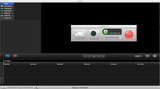
When recording audio, I use my Macbook Pro’s internal microphone. I open Camtasia up to create a ‘new recording’. When you do this, a little window pops up (see below), and I turn the screen off and the camera off, but leave the microphone on. Unless I’m doing a screencast, in which case I leave the screen on and the microphone on.
I record in my office, and once I finish recording, I often have to edit out background noise and/or my beagle’s barking, in Camtasia. Once I finish my recordings, I export the audio files to MP3 (or MP4 in the case of screencasts) format.
2. Show us your audio setup.
3. Share your three favourite audio recording tips.
Here are my tips:
1 - If you’re recording audio often, invest in a professional microphone. I would recommend Blue Microphone’s Yeti Pro or Audio-Technica AT2020 - I’ve heard good things about both of these and have used the Yeti Pro.
2 - Create an audio script - Sure; you might think you can wing it and for a lot of things you can…just not professional anything. Especially not training courses. Especially not if the training course is procedural and the steps are exact. Trust me, it will save you a lot of heartache (and revisions) in the long run.
3 - Be consistent. Try to use a consistent voice, tone, and background whenever you record. It may also be good to record all audio in one fell swoop, if possible. I’ve found in my experience that if I record audio for the same project in different sessions, my tone tends to vary more. When I say background, I mean record in the same space for all recordings. This is important for anyone using their laptop.
4 - Bonus tip: Don’t feel obligated, by a client’s needs, to record the audio yourself. If audio is a component and you really aren’t the best person for the job, sub-contract the audio portion out to someone who knows what’s up. The result will be a lot more professional, and you’ll be able to focus your attention on more important aspects of your role.
Ashley Chiasson
.
Blog
.
<span class='date ' tip=''><i class='icon-time'></i> Jul 15, 2015 12:57pm</span>
|
|
"We are using some instructional videos in our training today, but they are rather poor quality because we are shooting them ourselves." This was the comment made to me recently by a senior manager tasked with training for his $50 million company. He, like many people I’ve spoken with, feels all corporate training videos should be highly polished and professional.
Expand Interactive Team
.
Blog
.
<span class='date ' tip=''><i class='icon-time'></i> Jul 15, 2015 12:57pm</span>
|
|
This week’s term was prompted by a thread I read recently about acronyms. Don’t see the connection? I’ll explain it to you in a few - don’t worry!
Target Audience
Your target audience is anyone who will be participating in the e-learning program you are developing. This is a very small detail, usually discussed in a client’s Statement of Work or a Design Document (or sometimes not at all), but it makes a huge impact on the development of your training materials.
For example, the training materials you develop for a group of 18-21 year old students will likely be different than those developed for a group of 50-60 year old women. For the 18-21 year olds, you might use a more colloquial manner of text or you might use a more interactive, game-based interface. For the 50-60 year old women, you would likely recognize their prior learning experiences and explain the content in a more professional manner.
It is essential to understand and consider your target audience in order to create effective learning experiences!
I’m a huge supporter of conducting an instructional analysis, and while not all clients will see the benefits of paying for anything indicative of an ‘analysis’ phase (many clients may feel as though they’ve conducted this portion), it’s still important as an Instructional Designer to ensure you’re conducting a brief instructional analysis - even if it’s just in your head. If the target audience hasn’t been defined by the client, ASK!
Alright. So how does this connect with acronyms?
Regardless of your target audience you need to avoid use of industry jargon whenever possible. You need to take yourself outside of your industry body and put yourself in the shoes of your target audience. Do they know what TNA means? Because to you, it’s a Training Needs Analysis, but to them it could be an offensive term used to describe several body parts or a popular retail store.
When using acronyms, ensure you are spelling out the first instance of each acronym; this will ensure that your target audience does not become lost in a sea of acronyms, leaving the training more confused than anything. Another suggestion, in acronym or jargon heavy training materials, would be to include a glossary of acronyms or terms; this will provide your target audience with a resource to consult if ever they find themselves confused.
Ashley Chiasson
.
Blog
.
<span class='date ' tip=''><i class='icon-time'></i> Jul 15, 2015 12:57pm</span>
|
|
Training your employees takes up valuable time, money and resources. It can be frustrating to put forth all that effort, only to feel like your investment hasn’t been worth it. You don’t want to finish a training session thinking, "Well, that could have been better."
Expand Interactive Team
.
Blog
.
<span class='date ' tip=''><i class='icon-time'></i> Jul 15, 2015 12:57pm</span>
|
|
My reading has really been placed on the back burner because I’ve been way too exhausted to read at the end of the night lately - not good, I know! Buuuut, I’ve really enjoyed working with my clients, so I won’t argue too much! I have a huge stack of books on my night table, and I’m currently working my way through The Doodle Revolution by Sunni Brown…so you’ll surely see a review for that in the coming month or so. However, the large stack is predominantly fiction, and I’ll save you from those reviews.
ANYHOW! Today I’m reviewing Seth Godin’s The Icarus Deception, a book I truly enjoyed. I will say that I didn’t whiz through it as quickly as I did Linchpin, but I’m really not sure why. His writing style is always very easy to read and enjoyable, and he provides creative anecdotes throughout all of his books. The basic message of this book is that you don’t need to find the fine balance between crashing and burning, you just need to dare yourself to create your art. Screw what you’ve previously been taught and challenge societal norms.
Have fun watching my awkward recap; I’ll apologize for the lighting situation now - it’s hard to find a time of day when the dog isn’t barking : P
Icarus Deception from Ashley Chiasson on Vimeo.
Ashley Chiasson
.
Blog
.
<span class='date ' tip=''><i class='icon-time'></i> Jul 15, 2015 12:57pm</span>
|
|
Allow us to paint you a picture:
Hard Worker Wally hates taking time off to go to the doctor’s office, but that pain in his back just hasn’t gone away. He reluctantly makes an appointment and crosses his fingers for a short wait time so he can get back to the office. There’s a new eLearning training option he’s eager to complete as soon as he gets back to his computer. Wally watches the clock tick past his scheduled appointment time…10 minutes…20 minutes…30 minutes. Impatient, Wally scrolls through his Facebook feed on his smart phone and updates his status on Twitter. He finally beats that level of Angry Birds that he’s been stuck on for weeks. And still, he waits.
Expand Interactive Team
.
Blog
.
<span class='date ' tip=''><i class='icon-time'></i> Jul 15, 2015 12:57pm</span>
|
|
Today I participated in an orientation session, and the folks putting it on had a wonderful slide about work-life balance. As they talked through the slide, I likely stared at them looking confused. Work-life balance? Yeah. I know what it means. But does anyone actually have it?! Can it be purchased? Can I locate it within some lifestyle section of a big box store?
All of the other orientation participants seemed to understand the concept, but I certainly did not. Ever since I can remember, I have enjoyed being busy. I mean…I do enjoy my downtime, but I prefer filling my downtime with other activities - even if those activities are binge watching shows on Netflix. I attribute this quality to living with Generalized Anxiety Disorder. When I was completing my undergraduate degree, I was working 40-60+ hours per week, managing 25 university kids at a local Starbucks; in the mere moments I had between classes and shifts, I pounded out 25 page papers and got As like a boss. When I started my career, I tacked on ‘getting a graduate degree in a year and a half’ to my regularly scheduled 40 hour work week and the freelance work I had grown accustomed too. When I finished school, I let running consume me, training for race after race after race. Before leaving my first big corporate gig, I began collecting a solid clientele for my small business, and now as a small business owner I often juggle 5+ clients at a time.
Upon accepting a full-time role at a university I had been working for on part-time contract, I’ve recently begun to recognize and appreciate my limitations. I can’t do it all, and trying to do so will result in sub-par products. Instead of subjecting myself to that (and there have been a few small hiccups in the offloading process), I have passed along some fantastic clients to former colleagues and other freelancers (or small business owners), knowing that they will have the time to better suit my former clients. Maybe I’ll get to work with some clients again down the road, but right now it’s just not fair for me to subject them to my schedule.
That’s not to say that I’m not accepting new work, because I definitely am! It’s just to say that I’ve scaled back a bit on long-term projects (which are the ones I’ve handed off) and have instead focused on smaller, short-term projects with fewer clients. This allows me to focus on my client’s needs and achieve something closer to work-life balance (according to that orientation presentation at least). I’ve ramped up my fitness level again, and I’m really starting to focus on being happy and healthy in my work life and personal life, and that doesn’t mean I need to sacrifice quality (in any aspect of my life)!
Right now I have several regular clients and I’m still accepting smaller project work between late September and December of 2014.
I’ve talked a lot about what keeps me busy (work, work, work), but it’s also important to enjoy friends and family, stimulate your mind (through reading/research/exercise), and maintain a healthy lifestyle. So I’m trying!
How are you achieving work-life balance? Let me know in the comments!
Ashley Chiasson
.
Blog
.
<span class='date ' tip=''><i class='icon-time'></i> Jul 15, 2015 12:57pm</span>
|
|
"You can’t teach that through eLearning. It’s too complicated."
"I’d just feel better if an actual person was teaching this skill since it’s so intricate."
"An online course can’t possibly explain this concept as well as an instructor."
Expand Interactive Team
.
Blog
.
<span class='date ' tip=''><i class='icon-time'></i> Jul 15, 2015 12:57pm</span>
|
|
This week’s e-learning challenge is a fun one that’s near and dear to my heart! Why? Well - Since building what small portfolio I have, my job prospects have increased exponentially (and therefore so has my profitability) and I’ve been able to become more selective with the projects and clients with whom I engage. Portfolios are also dear to me because my very first professional presentation (at the E-learning Heroes Community Roadshow: Toronto) was on how to build your portfolio.
Portfolios are essential to any e-learning developer and you really shouldn’t sleep on building one out. Even if it’s sparse and not the most well put together portfolio, it’s a jumping off point, and you’ll be able to grow your portfolio and evolve its presentation as time goes on. Truth be told - My website and portfolio page will be undergoing an overhaul in the coming months, and I’m excited to share the new design just as soon as it’s complete!
The Concept
This week, we’re being challenged to share our portfolios, create a header image for the E-Learning Heroes Challenge recap post, create social media images for Twitter/Facebook/Pinterest, and then share our portfolios through various social media postings - WHAT A DOOZIE! So many components!
The Method
First things first, I grabbed the link to my portfolio page. Next, I opened a new document in Photoshop and created a header image for my section of the recap post. Then, I sought after the social media image dimensions from this site and began creating appropriately size social media images. Finally, I went ahead and started sharing these posts all over the social media sphere (Twitter, Facebook, Pinterest)
The Result
Click here (or in the navigation bar above) to access my live portfolio.
Challenge Header Image:
Twitter Post Image:
Facebook Post Image:
Pinterest Thumbnail Image:
Pinterest Post Image:
Ashley Chiasson
.
Blog
.
<span class='date ' tip=''><i class='icon-time'></i> Jul 15, 2015 12:57pm</span>
|
|
Quality not quantity. It’s a good rule of thumb for just about everything. For example, you’d probably rather have fewer delicious pizzas than boxes upon boxes of mediocre pizza, right? So when I say your employees would much prefer fewer quality training courses than hordes of so-so learning courses, that makes sense, right?
But here’s the issue: You have years’ worth of existing training materials—materials that you don’t want to go to waste. For many companies, the sheer amount of time and money already spent on existing training materials is reason enough not to work with an outside agency to create new learning courses. (After all, who’s to say they won’t end up with even more mediocre pizza?)
Expand Interactive Team
.
Blog
.
<span class='date ' tip=''><i class='icon-time'></i> Jul 15, 2015 12:57pm</span>
|