Blogs
|
Elearning teams are made up of many different personalities and often distributed across cities in different geographic regions of the world. To ensure your projects are delivered on time, you need to learn the most effective project management skills.
I’ve curated five of my favorite articles on elearning project management. Take a read and me know what you think of them by leaving a comment below.
1. 5 Project Management Tips for Geographically Dispersed Elearning Teams
When working with elearning teams, or any team for that matter, teamwork and collaboration are an essential for success.
Maricel Rivera believes that while while collaboration is certainly not something you pluck off Walmart’s shelves, there are tried-and-proven ways to make collaboration easier for teams.
Here are Maricel’s five project management tips to encourage collaboration and boost productivity
2. 6 Steps For Holding A Successful Elearning Project Kickoff Meeting
If you’re looking for a comprehensive guide for how to get your elearning project off to an amazing start, then you’ve come to the right place.
In this article, Christopher Pappas offers some helpful advice that you can use to make your next eLearning project kickoff meeting a success.
Learn how to hold a successful elearning project kickoff meeting
3. We Need to Talk: 3 Must-Have Conversations for Better Elearning Project Management
Elearning projects are like any relationship, communication is key. Without the right channels of information at the right time, your relationship with your eLearning company or designer could be more frustrating than fruitful
Simon Casuto’s shares his three must-have conversations you need to have before starting an elearning project
4. Tips for E-Learning Project Management and Pedagogy Fit
Have you ever been caught in the middle between what a project sponsor or subject matter expert (SME) wants to deliver and what you know to be good learning design?
Here are six questions to ask before starting a project
5. 7 Time Management Tips For eLearning Professionals
In this article, Christopher Pappas shares seven helpful tips on how to save time and meet deadlines when designing and developing your eLearning deliverables.
For elearning that is complicated and time consuming, these time management tips can help you to stay on track and significantly boost productivity.
Discover Christopher’s 7 time management tips
The post Elearning project management ideas to help you create more effective elearning appeared first on Elucidat Blog.
Elucidat Blog
.
Blog
.
<span class='date ' tip=''><i class='icon-time'></i> Jul 15, 2015 01:01pm</span>
|
|
(Image credit: David Anderson)
Hat’s off to David for this week’s e-learning challenge - this was a fun one! I’ve never been interviewed, but I feel like it helped me out in chatting candidly (or kind of candidly…alright…not really at all - I scripted myself haha) - something I’m going to be doing next month at the E-Learning Heroes Community Workshop in Toronto…I’m scared!
The Concept
This week, we were tasked with recording our responses to the following 10 questions:
- Tell us a little about yourself and the types of e-learning projects you most enjoy.
- How did you become an e-learning or instructional designer?
- What are the essentials of good e-learning design?
- Tell me about your most successful e-learning project.
- What are the most important criteria in evaluating e-learning?
- What are some common mistakes new course designers make and how can they avoid them?
- How is designing mobile learning different than designing for the desktop?
- How do you evaluate whether your course was effective?
- How do you keep up your skills and stay current in the industry?
- What is the future of e-learning?
The Method
I loathe public speaking and I’m working on getting better, so the first thing I did was script my responses to these questions, because I’m really not great at responding to questions on the fly. After scripting out all of my responses, I hit up Camtasia and recorded (and re-recorded) all of my responses! I exported to .wav format (thanks advanced export options!) and uploaded the entire playlist to Soundcloud, added tags and a description, and saved the playlist - easy peasy!
The Result
You can listen to my recording, below (or by clicking here), in all of it’s awkward glory - hopefully you find my responses insightful or informative - that was the goal!
Ashley Chiasson
.
Blog
.
<span class='date ' tip=''><i class='icon-time'></i> Jul 15, 2015 01:01pm</span>
|
|
First off - I have to admit that as I type this, I’m pushing out a couple of responsibilities…or procrastinating…or not being productive. I’m justifying it by keeping an eye on the lasagna I have in the oven (supper made - productive, no?!) and throwing the frisbee for our dog.
The topic of productivity came up today, so I felt like I should probably chime in and offer my two cents; hopefully someone finds these tips useful!
1. Find productive background noise.
Typically, I will listen to podcasts while I work. However, I have a fairly strict rotation of podcasts I listen to (because change is hard!) and when those run out, I find myself consulting some background noise that allows me to be productive while I work. Here are some examples:
Consult Songza Concierge and choose something that doesn’t overwhelm you! For me, I tend to veer towards the Mellow Indie playlists because I know I’ll get carried away singing along to anything from the 90s (not productive). Alternatively, they have several stations that just play background noise.
Coffitivity claims to increase your creativity, keeping you at your best, by providing some background coffee shop noises. A lot of people find this helps boost their productivity; however, after five years of managing a busy Starbucks, this type of background noise stresses me out as I’m constantly waiting for the ‘rush’.
Stereomood was one of my favourite things to stream in my last cube farm job. 1 - we didn’t have a lot of options for things we were able to stream and this one was obscure enough that it hadn’t been blocked, and 2 - it lets you base your selections based on mood (Songza concierge does this too - but Stereomood came preceded Songza for me).
2. Let technology help you with your productivity.
There are tons of applications out there to help you with your productivity, and a few things I’ve heard good things about include:
Todoist is a to do list and task manager application; it allows you to enter in tasks (and group them under projects), and you can check things off the list as you complete each task (and we all know how fulfilling that can be)!
Inbox Pause - I don’t use this yet because I haven’t reached that level of popularity (either that or my clients have been very considerate), but I have friends and colleagues who use this and swear by it. Inbox Pause lets you set an ‘away message’ of sorts, letting folks know that you’ll respond when you’re available. Your email inbox is then paused and you are no longer distracted by all of the emails coming in (until of course you’re ready for such distraction).
Unroll.me has been the answer to all of my prayers! I cannot even explain to you how life altering this very simple procedure is. It’s free and it lets you select which subscriptions (I know they’re piling up in your inbox) you want to free yourself from (unsubscribe from) and which ones you want to receive in a daily ‘roll up’. This has been AH-MAY-ZING for me! Everyday I get my little digest and scroll through - if there’s been any action in the communities I’m apart of, I’ll take the opportunity to respond at this time instead of distracting myself throughout the day.
3. Group like items.
I’m not the most organized person on the planet, but one thing I find enhances my productivity is to group like items. Initially, I’ll group items based on delivery deadlines. Once that’s done, I’ll try and do all of my Microsoft Word together, all of my Microsoft PowerPoint work together, and all of my Articulate work together (and so on and so on). This has really helped me boost productivity because I’m not jumping around as often as I once was.
I’ve mentioned several times before, but using Parallels for Mac has also helped me out in the productivity department because it’s allowed me to ‘group like items’ in terms of my Operating Systems, and allows me to not jump back and forth between Windows and Mac OS to use some of the programs I use which are only native to one OS or the other.
Ashley Chiasson
.
Blog
.
<span class='date ' tip=''><i class='icon-time'></i> Jul 15, 2015 01:00pm</span>
|
|
Elearning Superstars is a curated list of inspiring elearning examples, published every Tuesday. Subscribe to get weekly updates via email.
This week we have some great elearning by Nobel Media (The Nobel Prize), TalkTalk and McDonald’s.
Showcase your elearning: Have you created a great piece of elearning that you’re really proud of? Showcase your elearning here to win awards and get published on Elearning Superstars.
1. Nobel Prize: Blood Typing Game (Produced by Nobel Media)
2. TalkTalk: Network Understanding
3. McDonald’s: Till Training Game
The post Elearning inspiration: Nobel Prize, TalkTalk and McDonald’s appeared first on Elucidat Blog.
Elucidat Blog
.
Blog
.
<span class='date ' tip=''><i class='icon-time'></i> Jul 15, 2015 12:59pm</span>
|
|
This week I thought I would chat a bit about podcasts, because 1 - the weekly e-learning challenge (you can read about it in my previous post - scroll down) inspired me, 2 - I looooove listening to podcasts, and 3 - they’re commonly used within distance higher education courses (albeit, they’re rapidly being replaced for video).
What is a podcast and why are they popular?
Podcasts can be considered anything requiring a subscription to a digital media download; however, within recent years the subscription part of things is becoming less and less of a necessity. I’ve been seeing more and more folks use podcasts for their opt-in email lists as a way of giving subscribers something extra (and building their lists), but typically, the subscription part is optional nowadays.
Podcasting seems to have come into its own within our new information society and with the emergence of smartphones and other portable devices (e.g. iPods) - people want information and they want it now! Or, they want to numb the commute to work with a little bit of education or entertainment.
Podcasting in Education
One of my contracts is with a local university who was quite the pioneer (at least provincially) with their broadcast distance courses. I remember watching channel 33 when nothing else was on and ‘sitting through’ Psychology lectures as a 10 year old. With the evolution of technology, costly television broadcasts have been replaced by a number of solutions; however, many faculty members I’ve encountered seem to lean in to podcasting as a means for disseminating their lectures; primarily those who were used to the former television broadcast format.
Now, there’s good things and bad things about podcasting in education (in my honest opinion). Some good things are being able to reach audiences and simulate a traditional lecture style. Some bad things are that folks often replace their 1 hour video-based lecture with a 1 hour podcast based lecture, and that can be BAD NEWS…especially for individuals who aren’t audio learners. Personally, I have a hard time learning from audio, so I appreciate visuals with complementary audio. Podcasts for education really aren’t my thing…but, I have seen them done well, and those are usually podcasts that are broken down into palatable chunks of information which support the weekly readings in a meaningful way.
You seem to support the idea of podcasts, yet you don’t enjoy educational podcasts? What podcasts do you enjoy?
I tend to save my learning for more practical and/or visual approaches (supported by audio - sure, but not predominantly audio), but I do really enjoy listening to podcasts. I find myself favouring those podcasts that are interview-based and with hosts who can captivate my attention and make my laugh. Therefore, I listen to a lot of comedian-based podcasts. Some of my favourites include:
Totally Laime, Totally Married, and Totally Mommy - Elizabeth Laime and her husband, Dr. Rosen Rosen (er Andy) really take my week to the next level; I find myself listening to all three of their podcasts each week (Monday/Wednesday/Friday) while I muddle through my work. They make me laugh, dish out tons of unqualified advice, and allow me to effectively multi-task.
Alison Rosen is Your New Best Friend - I enjoy listening to Alison and her gang; they have two streams per week and the interview style is engaging and relatable. I especially appreciate the tangents she tends to go on and her segment Just Me or Everyone.
This Feels Terrible - I don’t tune in on a regular basis, but when I do, I find myself in a McGathy marathon, listening to everything I missed since the last time I tuned in. Erin interviews folks about their experiences with love and relationships, and the stories are often relatable and hilarious (and sometimes sad).
So while not quite educational, these podcasts provide a great background noise solution to my work week and seem to amp up (or at least support) my productivity!
Like this post? Want more Instructional Design tips? Sign up below!
Ashley Chiasson
.
Blog
.
<span class='date ' tip=''><i class='icon-time'></i> Jul 15, 2015 12:59pm</span>
|
|
Is she coherent? Watch this much discussed video of a young beauty pageant contestant answering a question posed by the judges. Thinking Tasks 1. Is Miss South Carolina coherent or not? 2. Read this text and say if it is coherent. Try to answer the following questions: Where was published? Who authored it? What was the author’s purpose for writing it? These children can be said to have two three or more mother tongues neither language is foreign to that child even if one language is a foreign language for the vast majority of people in the childs birth country. On average in Europe at the start of foreign language teaching learners have lessons for three to four hours a week. The Welsh language is also compulsory up to the age of 16 although a formal qualification is optional..In some countries learners have lessons taken entirely in a foreign language for example more than half of European countries with a minority regional language community use partial immersion to teach both the minority and the state language..In 1995 the s White Paper on Education and Training emphasized the importance of schoolchildren learning at least two foreign languages before upper secondary education. Scroll down to the end of the post view the answer. Definitions: Review the following definitions and choose the best one (or the one you understand best): 1/ Coherence (linguistics) Coherence in linguistics is what makes a text semantically meaningful.It is especially dealt with in text linguistics. Coherence is achieved through syntactical features such as the use […]
Marisa Constantinides
.
Blog
.
<span class='date ' tip=''><i class='icon-time'></i> Jul 15, 2015 12:59pm</span>
|
|
Wowee! What a whirlwind of a first quarter this has been! I’m please to say that my greatest fears were not reality, and our house was not foreclosed upon in the first quarter of running my business (I’m sure it takes longer than that to happen…right?). This quarter has been a HUGE learning experience, and I am grateful for all of the help and advice that I have received.
Last quarter, I was debating between PancakeApp and BaseCamp for project management software and I decided on PancakeApp. After the initial annoyance of setting it up (5th time was a charm), it’s up and running and keeping my projects running smoothly like a boss. I’m sure I’m not using it to its full potential, but we’re still early days with the business.
Over the last quarter I have begun to help other freelancers acquire work with some of my overflow, have been able to become choosier in the projects I decide to work on, have almost perfected (I’m sure that’s an over-statement) the art of scheduling my time, have been asked to write a blog post for ASTD (now ATD)(!!!), took the plunge and agreed to present at my first workshop (next week - eeeeep!), and have experienced far more success and happiness (and frustration) than I could have hoped for in such a short period!
I definitely had consistent income this quarter. However, next quarter might be a touch on the low side as I’ve more or less taking July off from work obligations (there are things to be done, but I haven’t taken on many new projects for the month of July) due to a busy wedding season and the workshop. Here’s what you’ve all been waiting for:
Income Report:
Part-Time Contracts - 4,897.01
Business Contracts:
- Storyboarding - 5,497.51
- Authoring - 2,848.08
- Revisions - 458.97
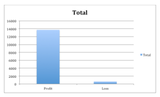
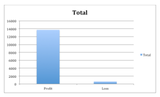
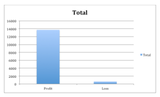
Total Income: 13,701.57
Expense Report:
Workshop Flight - 433.41
Storage - 33.45
Continuous Learning - 150.00 (Leah Kalamakis’ Stress Less & Impress course - check it out!)
Total Expenses: 616.86
Total Profit - 13,084.71 (before taxes)
What do I think? Fantastic! I’ve been so excited about the growth of my business, and I’m really happy to share my progress with everyone. I will say that I didn’t get to do as much authoring as I would have liked, but I have a great deal of that lined up for the next two quarters.
Ashley Chiasson
.
Blog
.
<span class='date ' tip=''><i class='icon-time'></i> Jul 15, 2015 12:59pm</span>
|
|
I would consider it a best practice to ensure that when you cost out an e-learning project you follow your own costing strategy. Otherwise, you risk losing monetary and human resources, which leads to inefficiencies in the flow of your project, and stands to impact future projects/schedules. Here are some tips for saving resources on your e-learning projects:
1. Be specific with your contracts.
If you don’t allow room for client’s to find loopholes in your contracts, you save yourself a lot of headache in the long run. When creating your contracts, be very specific when it comes to deliverables and project requirements. If you aren’t sure of what you should include in your contracts, consult the communities you’re active in…or The Google.
2. Beware of scope creep!
Scope creep…-shudder-…all too often I’ve seen contractors fall victim to scope creep. Heck! I’ve even been guilting of allowing some of it on my own projects. Scope creep occurs when your client asks for things here or there, and being a doting contractor, you aim to please, so you give them things here and there. However, these are things not outlined in your contract (e.g. things you are not being paid for). Now, there’s nothing wrong with a little bit of scope creep - that’s why we have profit margins! But if you give an inch, sometimes you’ll have to go a mile, and that’s where you really run into problems.
Too much scope creep can be expensive! Once you agree on a contract, you should work very hard to stay within the terms of that contract. If you veer, I would recommend that you communicate to your client that X is typically something you charge for, but that you’re willing to waive the fee this once as a courtesy.
Often times scope creep can come in the form of additional review cycles; this lengthens the duration of your project and can be costly. Word to the wise - when being specific with your contracts, include a cap on review cycles and revisions to maintain efficiency.
3. Don’t be an over-achiever.
This one may seem obvious, but before drafting up a contract, be confident with your abilities to meet the contract. There’s nothing wrong with over-delivering on a client’s expectation, but there is something wrong with being unable to deliver because you’ve over-estimated your abilities.
What am I saying? Well - if you’ve just started learning to code, don’t offer to develop a client’s WooCommerce site from scratch with a two-week delivery time. It just ain’t gonna happen. You’ll be disappointed in yourself and your clients will be too. We want to nurture the relationships we have with our clients, not agitate them!
Ashley Chiasson
.
Blog
.
<span class='date ' tip=''><i class='icon-time'></i> Jul 15, 2015 12:59pm</span>
|
|
All Nominated!!! Please vote for them here: http://edublogawards.com/vote-here/ Every year, since I started blogging in 2009, I have made a point of writing an Edublogs Awards nominations blog post; I have got so much out of my own nominations that I always want to pass it on to someone who is getting started or who has contributed to my learning Best individual blog Scott Thornbury’s An A-Z in ELT for the quality of his posts and the great discussions and comments he generates. Every post is an absolute must-read. Best individual tweeter Shellt Terrell @ShellTerrell She has lessons for us all! Best group blog This has to be www.eltchat.org It’s a blog maintained by its moderators but the content is co-created through the conversations of dozens of twitter teachers which are then written up into summaries by a wonderful collection of ELT bloggers!! Best edtech / resource sharing blog Nik’s Learning Technology Blog because he always shares new technology tools but he includes highly reflective posts and discusses and evaluates them; combines technology with sound pedagogy Best twitter hashtagblog #ELTchat because it connects hundreds of ELT teachers every week on Twitter and keeps contributing to their development in a free and autonomous way; because it has created a PLN which is supportive and shares knowledge in a connected world. Best New Blogblog Carol Goodey’s New Blog because it’s the blog of a reflective teacher Best teacher blogblog Box of Chocolates - Cecilia Lemos’ blog; because she reflects so well on her teaching and uses her blog to become an outstanding teacher. Best free web […]
Marisa Constantinides
.
Blog
.
<span class='date ' tip=''><i class='icon-time'></i> Jul 15, 2015 12:59pm</span>
|
|
Pedagogy and andragogy may be mysterious terms to you; I know they sure were when I first became an Instructional Designer, without a background in Education. I would often see these terms crop up in Statements of Work or High-Level Design Documentation to the effect of "following principles of andragogy…" or "adhering to proven pedagogical approaches…". I had heard of pedagogy before this time, but andragogy? That was a new one. It wasn’t until I began my Masters of Education (Post-Secondary Studies) that I fully understood those two terms.
Pedagogy and Andragogy
Pedagogy can be considered the practice of teaching, and when folks refer to ‘pedagogical approaches’, they’re talking about the methods of teaching used to impart knowledge, skills, and attitudes.The term pedagogy is Greek, meaning ‘child’ and ‘lead’ - lead the child - and, in the 21st century, is referenced when specifically discussing the practice of teaching in relation to individuals who have not yet reached adulthood. While the term pedagogy is still used in reference to adults, a newer term has been delegated to the adult learner population - andragogy.
Andragogy focuses on the practice of teaching as it relates to adult learners and uses prior learning and life experiences as a basis for relating information. While perhaps not as well-used as the former term, andragogy emphasizes self-directed learning, and the adults tendency toward this approach to learning. Andragogy is a term you may often hear tossed around with greater frequency due to the growth and emphasis of the lifelong learner.
Still confused? Check these resources out:
MERLOT Pedagogy Portal
Introduction to Andragogy + Pedagogy
Learning in Adulthood: A Comprehensive Guide
Andragogy (Malcolm Knowles)
Ashley Chiasson
.
Blog
.
<span class='date ' tip=''><i class='icon-time'></i> Jul 15, 2015 12:59pm</span>
|