Blogs
|
This week’s ELTchat topics are once again influenced by the rich set of resources provided by the IATEFL recordings. The 12 BST #ELTchat will revisit the topic of coursebooks. Since we’ve covered this topic before often from the why do we need course books point of view, we realise it might cover some of the same ground but we’d though we’d call the chat "The coursebook authors fight back". Your source material for this chat is, amongst others: The ELTJ Debate You can also read Scott and Catherine‘s follow up blog posts. The decline and fall of coursebooks - Simon Greenall For the 21 BST ELTchat: We’re exploring the criteria put forward by Nik Peachey in his talk ‘evaluating web-based tool for learning’
Marisa Constantinides
.
Blog
.
<span class='date ' tip=''><i class='icon-time'></i> Jul 15, 2015 12:59pm</span>
|
|
Today I’ll be presenting at the E-Learning Heroes Community Event in Toronto, alongside some amazing folks, and I’m terrified! If you’re here, please be gentle!
I plan to share a bunch of anecdotes, but most importantly, I’ll be sharing some work done by several other E-Learning Heroes.
[Update: The presentation went well; I had a lot of fun!]
Basically, I wanted to discuss portfolio building, why an e-learning portfolio is so important, why creating a portfolio can be a challenge, and why it really doesn’t need to be! You can check out the slides below!
How to Build Your E-Learning Portfolio from Ashley_Chiasson
Here is a link to the relevant Resource Sheet - Please download this PDF and check out the links at your leisure:
RESOURCE SHEET
Ashley Chiasson
.
Blog
.
<span class='date ' tip=''><i class='icon-time'></i> Jul 15, 2015 12:59pm</span>
|
|
I recently used the same idea which I wrote about when this blog turned one year old, but here I am reposting it, as I simplified it to make it more accessible to teachers and learners new to blogging. A variation of this post for learners of English was also posted at My English Club and it was great to see how enthusiastically some of them were and how many blog posts they send me every day into my inbox! So here I am reposting to share my enthusiasm about blogging with you and to make you start blogging too! Why do I blog? Richard St. John shares his eight secrets of success in a fantastic video and I want to talk about blogging and how I think it is connected to these eight great secrets. Here are the eight secrets in a word cloud I blog for all the reasons in the word cloud: I blog because I want to be an excellent educator (Excellence) I blog because I want to share my ideas (Serve Others) I persist even when I am tired; good results need hard work! (Work!) I blog to focus more on my interest and learn more about it (Focus) I blog because this makes me think and learn new things (Push Yourself) I get more ideas by trying to explain my ideas to other people. (Ideas) I blog because I love my job and I am passionate about teaching (Passion) I persist because I believe communicating your ideas is important […]
Marisa Constantinides
.
Blog
.
<span class='date ' tip=''><i class='icon-time'></i> Jul 15, 2015 12:59pm</span>
|
|
This week’s e-learning challenge is all about smartphone video training. In a world where smartphones are ever-present, it seems like a really cost-effective solution to record your own training videos to meet basic training needs. Heck. I still consult YouTube for basic procedural information - have you ever had to auger your toilet? It took 29 years for me to get there, and when I did, I swiftly consulted a video tutorial.
The Concept
This challenge encouraged participants to use their smartphones to record, edit, and publish a training video. Personally, I find video training basic for procedural demonstrations, so I chose to show you the Dos and Don’ts of something I feel most folks can relate to - inserting a duvet into a duvet cover. For YEARS I hated this chore; the Internet wasn’t around when I first started dealing with duvet covers, and I always thought I had to physically insert myself into the cover to complete the task. The end result is cranky and sweaty and no fun - maybe this was my mother’s way of paying me back for the teenage years I made her deal with? Hmmm…
In any event, there is a right and wrong way of putting a duvet inside of a duvet cover, and I show you both ways!
The Method
I set my iPhone up to record video, and had my husband record the two videos, balancing the iPhone on the baby gate to our room (anyone with a herding dog and cats will understand), for stability, while I demonstrated both approaches.
Once recorded, I sought out my iMovie app…only to realize I had removed it from my computer in favour of Camtasia. Here I had to do a little bit of challenge cheating, using Camtasia instead of my smartphone app to edit and publish the video. Now, had I not removed iMovie, I would have edited in that - but hey. It’s the thought that counts!
I added in some annotations, steps, removed the original audio, and added some background music (in retrospect, there’s a song called Duvet I used to really enjoy…maybe that would have been more appropriate? Ah well!). Once completed, I published and uploaded to Vimeo.
The Result
Duvet Dos and Donts from Ashley Chiasson on Vimeo.
Ashley Chiasson
.
Blog
.
<span class='date ' tip=''><i class='icon-time'></i> Jul 15, 2015 12:59pm</span>
|
|
This is a kind of a chain blog post in which one blogger tags you on their blog and challenges you to answer some questions and then pass the ball to eleven more bloggers! Photo Credit: SnaPsi Сталкер via Compfight Doug Peterson tagged me in this blogging meme. This is the first time I take part in a blog tagging sort of challenge and am doing it as a break from a pretty heavy weekend of work. This will also give me a chance to tag some pretty cool bloggers myself (who may or may not take up the challenge) but it will give my readers the opportunity to pop over and have a look at their blogs. So here is the task… Acknowledge the nominating blogger- in this case it would be me… Share 11 random facts about yourself. Answer the 11 questions the nominating blogger has created for you. List 11 bloggers. Post 11 questions for the bloggers you nominate to answer, and let all the bloggers know they have been nominated. Don’t nominate a blogger who has nominated you. 11 Random facts about myself I love playing word games - like Scrabble on Facebook, which I play with Shaun Wilden - and that’s how I met Doug online - he beats me senseless on Word Scramble but I retaliate on Words with Friends (helps to keep some of my dignity…) I am not a bad watercolour artist, albeit an erratic one and even as I write these lines, I feel a watercolour coming […]
Marisa Constantinides
.
Blog
.
<span class='date ' tip=''><i class='icon-time'></i> Jul 15, 2015 12:59pm</span>
|
|
Now, I wouldn’t necessarily classify this as an e-learning term…it’s really more of a User Interface (UI) term, but because the e-learning industry works within a plethora of UIs, I thought it fitting. Also - I met a fantastic lady, Tracy Parish, who developed a presentation on Flat Design, and I really appreciated some of the visuals used within her presentation. Long story short, I’m defining flat design for you folks - hooray!
Flat Design, you say?
Contrary to what you might be thinking, flat design doesn’t equate to boring or stale design (think flat soda - not the tastiest). Instead, flat design is an aesthetic approach which highlights two dimensional, minimalist design, using sharp edges, bright colours, and flattened (2D) icons or imagery. Moving with the minimalist approach, flat design does not include text, instead letting the icons or imagery used speak for itself, creating a sleek and clean design. The flat design approach to UI is really a shining example of the Keep It Simple, Stupid (KISS) principle! Why overcomplicate things?
I really dislike the functionality of Windows 8, so if you want to google their interface, do so at your leisure - I won’t be linking it here. However, their main navigation interface can be considered flat design, and it’s likely one of the more recognizable examples of flat design in practice.
Some other examples can be found on the Articulate Community’s Download section, for example: Flat Desktop Exploration Interaction by Tom Kuhlmann or Flat Design Portfolio by Paul Alders.
As for my original inspiration for this post, here is a sample from Tracy’s presentation on flat design.
Tracy Parish, Used with Permission
Resources
If you’re interested in checking out some tutorials or additional information about flat design, here are a few resources:
- Design a Flat Website Mockup in Photoshop
- Flat UI Tutorials
- How to Nail the Coveted Flat Design Look (9 Actionable Tips)
- Flat Dropdown Menu Tutorial
- Principles of Flat Design
Ashley Chiasson
.
Blog
.
<span class='date ' tip=''><i class='icon-time'></i> Jul 15, 2015 12:58pm</span>
|
|
Storytelling is one of the most important acts of communication. Every day, in our contacts with friends, relatives, colleagues and acquaintances we share stories, anecdotes - things that happened to use, stories we read about in the news, on social media, stories we heard through others. _______________________________ In class, story building and storytelling can get somewhat neglected. Most modern coursebooks have little by way of getting learners to narrate. Photo Credit: Gisela Giardino via Compfight And yet storytelling for fun, storymaking and sharing can be serious or playful, and learners can be given the opportunity to practise producing sustained talk/long turns or write imaginative fiction producing their own stories or story episodes. In another post on this blog, on Digital Storytelling, I talked about the many benefits of using such activities for younger and older learners. Digital tools are wonderful but not available to every teacher and even though I have found some wonderful apps and online tools which you can read about in my other post, paper and pen, the board and our imagination are sometimes the best tools available. My Storymaking Machine Here is a simpe tool borrowed from surrealist writers’ workshops; apologies for not being able to trace the originator of this idea - not mine originally. Apparently, surrealist writers used the matrices below as a source of inspiration for their writing!!!!! I thought it was a wonderful idea when I saw this and translated it into language learning activities, quite a while ago; in fact this was the topic of a […]
Marisa Constantinides
.
Blog
.
<span class='date ' tip=''><i class='icon-time'></i> Jul 15, 2015 12:58pm</span>
|
|
Alrighty - A few weeks back, I hopped on a new project that I’ve really been enjoying. The only downside was that I married into an Articulate Storyline file that was organized in such a way that it quickly became unruly.
Unruly? How?
This one particular aspect of the project involved creating a sort of library to house seminar videos. Each month, a 4-5 hour seminar would be recorded and I would use Camtasia to break the videos up into more manageable chunks. Each seminar ended up having 18-24 videos…for a duration of 6 months.
The original file quickly became unruly because I think there wasn’t as much understanding of how quickly 130+ videos/screens could get out of hand. What transpired was one scene within the Storyline file; this one scene contained all 130+ videos, which made it incredibly difficult to hunt down individual screens when making to the file later on.
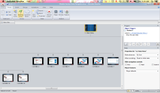
I know it doesn’t look too unruly from this screenshot, but note the horizontal scrolling. Oof.
We ended up resolving to leave this file as is, after all revisions had been made, but I explained that I would be a bit more purposeful and organized in my development of the next 6 month period.
But, Ashley…How did you tame the unruliness?!
I used scenes! Scenes are basically boxes which contain slides; you can link to scenes just as you would like to slides, but it creates a more organized look and makes managing your Storyline file a biiiiit more manageable. Now, different strokes for different folks - some people might use scenes for different reasons, but for this project - the scenes were set up for ease of use from a development perspective.
The starting scene houses the Main Menu. From here, each ‘button’ trigger links to a new scene (which is a Menu for the relevant seminar). All seminar videos are housed within these new scenes. The outcome is this:
Phew! SO MUCH easier to look at, eh?! If you don’t give me a resounding ‘yes’, I might cry. In this project, we have 2 seminars (1 of which has yet to be populated). At the end of the 6 month period, there will be 7 scenes: 1 that houses the main menu, and 6 that house each of the seminar videos. I can easily locate the relevant seminar that requires revisions, and life is a lot easier.
I realize that talking about scenes may seem incredibly basic, but when you’re a first-time user of Storyline, tasked to find a way of organizing 130+ videos, you will likely end up with an story view as illustrated in the first screenshot, only to realize you’re causing a lot more heartache than necessary. Trust me. If you need to organize a vast amount of slides, USE YOUR SCENES!
Hopefully this was relatable and/or helpful to someone! If you have any other questions about using Scenes in Articulate Storyline, definitely reach out to me, and I’ll help out as best I can.
Ashley Chiasson
.
Blog
.
<span class='date ' tip=''><i class='icon-time'></i> Jul 15, 2015 12:58pm</span>
|
|
I was first tagged by Doug Peterson and did my first post here but then Maria Theologidou tagged me again with a fresh set of questions. Photo Credit: SnaPsi Сталкер via Compfight Normally, I would have thought, this is quite enough - but the whole ELT blogosphere has been having a blast tagging one another and even those who claim this is rubbish and are doing it, albeit claiming great reluctanc,e are having (we are all having, I should correct myself) a grand time. There is a time to be serious and a time to play and this just as good a place as anywhere to be playful. The other reason, is that I was very pleased to discover Maria’s blog so it’s a good opportunity for you to pop over there and have a look!! Plus, she is Greek and I am really happy to see Greet ELT teacher bloggers in the blogosphere Apologies if anyone else has tagged me - but you know the rules state you have to let the blogger know in some way Maria’s 11 Questions and my answers 1. How has your job changed the way you perceive the world? Good question!!! In the beginning….(drum roll), …. In the beginning, I used to look at everything and think thoughts like "Oh, I could use this to teach X or Y". Well, the sad fact is that I still do that pretty much but not quite with the same intensity. So I guess you could say, my perception […]
Marisa Constantinides
.
Blog
.
<span class='date ' tip=''><i class='icon-time'></i> Jul 15, 2015 12:58pm</span>
|
|
It’s only been a few mere months since I took my business full-time, and one of the best things that has come of it has been that I’m able to be selective, capture my dream clients, and increase my overall work life happiness.
When I put together my presentation on How to Build Your Portfolio, I really had to consider some of the most important positives that having a portfolio has garnered for me. The top one was that it allows me to be selective. Now, being selective doesn’t mean that I don’t jump at new opportunities; it just means that I consider the new opportunities before jumping in feet first. This saves me a lot of time and heartache when I realize that I’ve jumped into a contract well below my going rate.
With that being said, there are some contracts I would gladly work on for less than what I’m worth because I’m passionate about the organization or the project or both. This doesn’t happen often, but with a stream of steady clients (that my portfolio helped funnel in), I’m able to be choosier about my work.
This week I was offered a full-time contract with a local university. I had been working on contract part-time since February, and I had always wanted to move into the Higher Education sector. Where I’m from, it is incredibly difficult to score such a gig by applying the old fashioned way, and I was shocked that a cold email a year earlier had resulted in the procurement of my part-time contract. In any event, I’ll be taking on full-time hours starting in the fall, and this is really where being selective comes into play.
I’ll still be running my business, albeit I’ll end up lightening my workload in the coming year, being more selective, and choosing to work on contracts that I’m truly passionate about. The security that the full-time contract brings will allow me some flexibility with regard to my business workload, and I’ll be able to focus on both aspects of my work life that I’m happy to focus on. It’s been a long road to reach both goals: working within Higher Education and starting my own business, and I want to give both roles 100%. At the same token, I want to ensure that the contracts I accept within my business are ones that align well with my beliefs and serve to enhance my current portfolio.
It’s going to be an interesting journey, and I’m excited to take you all along for the ride!
Ashley Chiasson
.
Blog
.
<span class='date ' tip=''><i class='icon-time'></i> Jul 15, 2015 12:58pm</span>
|