Blogs
|
© 2007 ka cheng ho, Flickr | CC-BY-SA | via Wylio
Tomorrow is our last day of school, and during the week I’ve been doing little good-bye exercise with each of my students that I don’t think is particularly innovative, but was nevertheless a nice way to end the year (many students won’t show up for the last day).
After students completed their final and were just relaxing, I began to call up each student up to my desk. I started a thirty second or so conversation with each by saying "It’s been a pleasure having you in class this year." I then share a specific quality/action they had taken that I appreciated and admired ("I appreciated your willingness to help other students who were having trouble with their assignments"; "I was impressed by how you stuck with completing that essay even though it was frustrating"); and then ended with a handshake or hug.
The exercise clearly created a "buzz" in the room as students began sharing what I was doing and what I had shared with them.
I know that some teachers who are more energetic and committed actually write a letter to each student at the end of a year, though that’s far beyond my capabilities with the number of students I have (though I did have ten-minute "walk-and-talks" with a number of my new English Language Learners where we discussed their hopes and dreams and what they could do over the summer to help them move closer to achieving them).
Spending fifteen minutes of each class in these brief conversations is a much more realistic proposition for me and, based on student reactions, it’s time well-spent.
I’m adding this post to The Best Ways To Finish The School Year Strong.
Larry Ferlazzo
.
Blog
.
<span class='date ' tip=''><i class='icon-time'></i> Jul 16, 2015 06:24am</span>
|
|
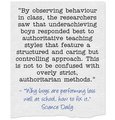
A couple of years ago, I wrote about what I thought was a pretty important study (see Parental Style Study Makes Sense For Teachers, Too). It found that parents who were authoritative — strict, but relational, listeners, etc — were more successful in raising kids who were self-reliant and self-controlled than those who were authoritarian.
A new study was released today that reinforced that conclusion for the classroom - especially for boys. You can read a summary in Science Daily or read the entire research paper itself (it’s not behind a paywall).
Here’s an excerpt:
I’m adding this post to The Best Posts On Classroom Management.
Larry Ferlazzo
.
Blog
.
<span class='date ' tip=''><i class='icon-time'></i> Jul 16, 2015 06:24am</span>
|
|
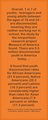
Nearly 1 in 6 Latino Youths "Disconnected" From Work, School: Report is the headline of an NBC News article about a new Measure of America report.
Here’s an excerpt:
Larry Ferlazzo
.
Blog
.
<span class='date ' tip=''><i class='icon-time'></i> Jul 16, 2015 06:23am</span>
|
|
Every month I make a few short lists highlighting my choices of the best resources I through (and learned from) Twitter, but didn’t necessarily include them in posts here on my blog.
I’ve already shared in earlier posts several new resources I found on Twitter — and where I gave credit to those from whom I learned about them. Those are not included again in post.
If you don’t use Twitter, you can also check-out all of my "tweets" on Twitter profile page.
You might also be interested in The Best Tweets Of 2014 — So Far and The Best Tweets Of 2014 — Part Two.
[View the story "June’s (2015) Best Tweets — Part Two" on Storify]
Larry Ferlazzo
.
Blog
.
<span class='date ' tip=''><i class='icon-time'></i> Jul 16, 2015 06:23am</span>
|
|
Though slightly depressing at the end, the Oscar-nominated short would be great for English Language Learners to watch and describe what happened:
Larry Ferlazzo
.
Blog
.
<span class='date ' tip=''><i class='icon-time'></i> Jul 16, 2015 06:23am</span>
|
|
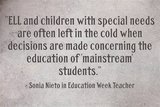
Don’t Leave English Language Learners ‘In The Cold’ is the title of my latest Education Week Teacher column.
In it, educators Sonia Nieto, Alicia López, Diane Staehr Fenner, Sydney Snyder, Katie Brown, Judie Haynes, and Virginia Rojas share their suggestions on how we can encourage our colleagues to support English Language Learners.
Here are some excerpts:
Larry Ferlazzo
.
Blog
.
<span class='date ' tip=''><i class='icon-time'></i> Jul 16, 2015 06:22am</span>
|
|
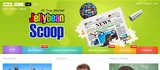
Jellybean Scoop provides free daily new content for students to read. They don’t "level" the same text, they do provide different articles at different levels of accessibility. Each article provides audio support for the text.
More importantly, they also provide a number of interactive exercises for each article. Thankfully, they are not just comprehension questions (though they do have that, too). The other activities include sentence scrambles and vocabulary exercises. They also provide an opportunity for readers to record their voice reading portions of the articles after they hear it read to them.
Teachers can create an account for up to twenty-five students for free and track student progress. Teachers register and then easily create student accounts.
The site is having a problem letting people who log-in with a student account access the stories right now, but they promise to fix it over the weekend. In the meantime, you can log-in as a teacher to check-out all their features (including one that lets students create online books that can be saved).
I’m adding the site to The Best Sites That Students Can Use Independently And Let Teachers Check On Progress.
Larry Ferlazzo
.
Blog
.
<span class='date ' tip=''><i class='icon-time'></i> Jul 16, 2015 06:21am</span>
|
|
© 2009 Chuck Coker, Flickr | CC-BY-ND | via Wylio
Here are new additions to my lengthy and popular The Best Sites For Learning About The World’s Different Cultures:
Good Morning! Breakfasts Around the 16 Countries of Eastern Europe is from When On Earth (thanks to Michelle Henry for the tip).
Exams Around the World is a fascinating photo gallery from The Atlantic.
A history of cities in 50 buildings - interactive is from The Guardian.
Cultural Jambalaya looks like a fascinating site. Thanks to Wendi Pillars for the tip.
Larry Ferlazzo
.
Blog
.
<span class='date ' tip=''><i class='icon-time'></i> Jul 16, 2015 06:20am</span>
|
|
I continue my mid-year "The Best…" lists…
The title of this "The Best…" list is pretty self-explanatory. What you’ll find here are blog posts and articles this year (some written by me, some by others) that were, in my opinion, the ones that offered the best practical advice and resources to teachers this year — suggestions that can help teachers become more effective in the classroom today or tomorrow. Some, however, might not appear on the surface to fit that criteria, but those, I think, might offer insights that could (should?) inform our teaching practice everyday.
For some, the headlines provide enough of an idea of the topic and I haven’t included any further description.
You might also be interested in:
The Best Articles (And Blog Posts) Offering Practical Advice & Resources To Teachers In 2014 - Part Two
The Best Articles (And Blog Posts) Offering Practical Advice & Resources To Teachers In 2014 - So Far
The Best Articles (And Blog Posts) Offering Practical Advice & Resources To Teachers In 2013 - Part Two
The Best Articles (And Blog Posts) Offering Practical Advice & Resources To Teachers In 2013 - So Far
The Best Articles (And Blog Posts) Offering Practical Advice & Resources To Teachers In 2012 — Part Two
The Best Articles (And Blog Posts) Offering Practical Advice To Teachers In 2012 — Part One
The Best Articles (And Blog Posts) Offering Practical Advice To Teachers In 2011
The Best Articles (And Blog Posts) Offering Practical Advice To Teachers — 2010
The Best Articles (And Blog Posts) Offering Practical Advice To Teachers — 2009
In addition, you might find these useful:
The Best Reflective Posts I’ve Written About My Teaching Practice In 2011
The Best Reflective Posts I’ve Written About My Teaching Practice — 2010
The Best Reflective Posts I’ve Written About My Teaching Practice — 2009
Here are my choices for The Best Articles (And Blog Posts) Offering Practical Advice & Resources To Teachers In 2015- So Far:
I’ve got to recommend my Ed Week Teacher column and its accompanying BAM! Radio Shows.
All of the many - and I mean many - student hand-outs in my new book on student motivation are now on the publisher’s site and can be downloaded for free — no registration is required. Just click on the "eResources" tab. And Routledge has been kind of enough to do the same for the zillion student hand-outs in my previous two student motivation books, too, though for those books they’re called "Supplemental Downloads." Jossey-Bass has done the same with hand-outs from my last book on teaching English Language Learners (by the way, a sequel to that popular title will be published in 2016).
"It’s Been A Pleasure Having You In Class This Year"
How I Learned Differentiation appeared in Teach Thought, and is excellent. I’m adding it to The Best Resources On Differentiating Instruction.
I think these excerpts from my third book on student motivation are useful:
Help Your Students Get Into the Learning Flow
What Motivates A Student’s Interest in Reading and Writing
Creating the Conditions for Student Motivation
Strategies for Helping Students Motivate Themselves
The real stuff of schooling: How to teach students to apply knowledge
Why Viewing Classroom Management as a Mystery Can Be a Good Thing
Modelling Writing and Rich Tea or Hob Nob? from Class Teaching both make great points and offer suggestions about the role of teacher modeling in writing instruction.
Useful Collection Of "Growth Mindset" Animations
Adventures with gallery critique is by Andy Tharby. I’m adding it to The Best Posts On Writing Instruction.
Last year I briefly referred to a study done in the United Kingdom evaluating what teaching strategies work best. A recent post by John Tomsett prompted me to revisit that meta-analysis from The Education Endowment Foundation, and it’s clearly worth exploring deeply (it’s official title is "The Teaching and Learning Toolkit). The report provides a John Hattie-like list of various interventions, along with their costs, the quality of evidence supporting each one, and the number of learning months research has showed it to gain for students. Though I say it’s Hattie-like, some of its findings seem to conflict with his. I’m very impressed with the UK analysis, and am planning on digging into it over the summer.
Google’s New "Expeditions" Looks Like An Insanely Cool Way For Students To Take A Virtual Field Trip
Read This: "Teachers More Likely to Label Black Students as Troublemakers" is by Renee Moore.
A Teacher’s Role in Fighting Racism is from Education Week.
Uncomfortable Conversations: Talking About Race In The Classroom is from NPR.
History Lesson: Giving Students Freedom to Create Their Own Projects is by Brison Harvey at Ed Week. One point he makes that I think is particularly intriguing is letting his students develop individualized rubrics for their independent projects.
Tips for Using iPads in the Classroom is from Edudemic.
Why I Prefer Pre-Teaching to Remediation for Struggling Students is by Justin Minkel.
Here’s My Chapter On Elements Of A Successful Lesson, Along With Student Hand-Outs THEY Use To Teach
"Quizizz" Is A Great Game-Playing & Game-Creating Site For Classes!
Justin Baeder at Principal Center Radio interviews me about student motivation and my new book, Building A Community Of Self-Motivated Learners. It was a fun conversation, and you might find it interesting…
Thanks to reader Vincy Murgillo for letting me know about the Smithsonian’s Tween Tribune. It provides daily news stories, with the same one edited several times for different reading levels. The stories also have self-scoring quizzes and provide decent "critical thinking" questions that students can respond to in the comments. On top of that, teachers can create virtual classrooms to monitor it all, as well as moderating student comments. And it’s all available for free!
Reading Strategies, Student Engagement, & The Question Of "Why?"
Help Students Close Read Iconic Images is an excellent post by Frank Baker in Middleweb.
Concise and Precise Micro-writing is from Alex Quigley, and offers some very good suggestions.
Here Are Some Examples Of Using "Concept Attainment" In Writing Instruction
Goal-Setting Lesson Plan
The Limits To The Power Of A Growth Mindset (& The Dangers When We Don’t Recognize Them)
Three Useful Growth Mindset Resources
I’ve previously posted about Reading Teacher, a great site for beginning readers that’s been around for awhile, but just stopped charging for its use (see "Reading Teacher" Is A Good Site For Very Beginners). At that time, though it was free for individual use, you still had to pay if you wanted to create a virtual classroom. They recently announced that it’s now free to create a virtual classroom of 30 students to track their progress. The site says that if you have more students, you can just create another free account using a different email address to create a second virtual classroom.
Top 20 Principles from Psychology for PreK-12 Teaching and Learning is a brand-new report from the American Psychological Association (APA). Though there’s nothing in it that regular readers of this blog wouldn’t already know, it nevertheless provides what might be the best readable compilation of important strategies around Social Emotional Learning Skills, assessment, and classroom management that can be found anywhere.
Apps, Apps Everywhere: Are Any Good, You Think? is the title of my article in ASCD Educational Leadership. In it, I share my choices for the best eleven mobile-learning apps out there.
"Edueto" Has Got To Be One Of The Best Teacher & Web 2.0 Sites Of The Year
Hands-Off Teaching Cultivates Metacognition is from Edutopia. I’m adding it to The Best Posts On Metacognition.
Teaching MS History: Themes or Timelines? is from Middleweb.
Every Teacher’s Guide to Assessment is from Edudemic. I’m adding it to A Collection Of "The Best" Lists On Assessment.
The Best Resources For Learning About Restorative Practices - Help Me Find More
Two Good Pieces Of Simple Writing Advice For Students - Share Your Own
The Question-Asking Exercises I Did With My Students Last Week (Hand-Outs Included)
Two "Must Use" Resources From The UK On Education Research
Here’s an exceptional older post by UK educator/blogger Alex Quigley. It’s titled Questioning - Top Ten Strategies and, as you’ll see, it has to be one of the best and most practical list of recommendations out there. I suspect that many educators, including me, are going to be referring to it often.
8 HABITS OF CURIOUS PEOPLE is from Fast Company, and could be a very accessible article for students to read. I’m adding it to The Best Posts On Curiosity.
The Best Ways To Finish The School Year Strong
Managing Student Cellphone Use In Class
Options, Options, Options….
The Purposeful Pause: 10 Reflective Questions to Ask Mid-Lesson is by Angela Stockman.
The Best Resources On - & Advice For Using - Donors Choose (Please Share Your Experiences!)
The Best Commentaries On "Teach Like A Champion" - Help Me Find More
3 Tips to Make Any Lesson More Culturally Responsive (and it’s not what you think!) is by Zaretta Hammond.
You Can Read The Entire Ed Week Chat We Did On Classroom Management
I have previously posted about Richard Byrne’s fabulous search engine for video sites other than YouTube (see If You Don’t Have Teacher Access To YouTube At Your School, Then This Search Engine is a "Must"). He’s just updated it. Now, with the limitations YouTube’s Safety Mode is putting on teachers whose schools have been allowing YouTube, his search engine will be a "go-to" tool for many of us who haven’t needed it previously. You can read about the Safety Mode issue at my unfortunately very popular previous post, Our District Just Activated Awful YouTube Safety Mode - What’s Been Your Experience?
Thinking Creatively About Homework is from John Spencer. I’m adding it to The Best Resources For Learning About Homework Issues.
3 Simple Ways to Differentiate Instruction in Any Class is by A. J. Juliani. I’m adding it to The Best Resources On Differentiating Instruction.
Lesson On Importance Of Asking Good Questions
American Educator, the quarterly magazine of the American Federation of Teachers, always has interesting and useful articles in it, and this Spring edition is no different. The most useful one to teachers, though, is clearly the one by Daniel Willingham. For The Love Of Reading: Engaging Students in a Lifelong Pursuit is a must-read article for every educator. It’s adapted from his new book, Raising Kids Who Read: What Parents and Teachers Can Do. I’m adding it to The Best Resources Documenting The Effectiveness of Free Voluntary Reading.
Here’s A New Strategy I’m Trying To Help Students Develop Intrinsic Motivation
Good Videos On A Growth Mindset, The Importance Of Learning From Mistakes & A Lot More
The Best Posts On Reading Strategies & Comprehension - Help Me Find More!
It’s "Question Week" - Here Are All My Related "Best" Lists In One Place
The Best Resources On The Educational Value Of Doodling
The Best & Most Useful Free Student Hand-Outs Available Online - Help Me Find More
Expeditionary Learning has created a number free, and good, curriculum units for English Language Arts, Science and Social Studies. You can download them here, and read more about them at Middleweb.
(Not) Blooms. is from The Agility Teaching Toolkit(@ASTsupportaali), and offers a unique perspective on explaining Bloom’s Taxonomy to students. I’m adding it to The Best Resources For Helping Teachers Use Bloom’s Taxonomy In The Classroom.
10 Intriguing Photographs to Teach Close Reading and Visual Thinking Skills is an excellent post from The New York Times Learning Network. I’m adding it to the close reading list and also toThe Best Ways To Use Photos In Lessons.
Three-Two-One Is A Simple & Effective Summarizing Strategy
Quote Of The Day: "There Was A Misunderstanding" About CCSS & Non-Fiction Texts
Here’s The Writing Prompt I’m Using With "Smartphones Don’t Make Us Dumb"
Great Article On "Being The Best At Anything" & How I’m Using It In Class
Ways To Prioritize Social Emotional Learning Without Grading It
Should Teachers Be Allowed to Touch Students? is from The Atlantic. I’m adding it to The Best Posts About The Power Of Light Touches In The Classroom.
Amy Mayer has created what I think is an excellent visual about student choice, and has given me permission to publish it here. You can see/read more of her at work at the FriEdTechnology blog and follow her on Twitter at @friEdTechnology. I originally saw the visual on a tweet by Aaron Brengard.
The Best Resources About Inductive Learning & Teaching
I’m going to add this post to two "Best" lists:
The Best Posts & Articles About Providing Students With Choices
The Best Posts & Articles On "Motivating" Students
Larry Ferlazzo
.
Blog
.
<span class='date ' tip=''><i class='icon-time'></i> Jul 16, 2015 06:19am</span>
|
|
Another day, another mid-year "The Best…" list…..
You might also be interested in:
The Best Resources, Articles & Blog Posts For Teachers Of ELLs In 2014 - Part Two
The Best Resources, Articles & Blog Posts For Teachers Of ELLs In 2014 - So Far
The "All-Time" Best Resources, Articles & Blog Posts For Teachers Of English Language Learners
The Best Resources, Articles & Blog Posts For Teachers Of ELLs In 2013 - Part Two
The Best Resources, Articles & Blog Posts For Teachers Of ELLs In 2013 - So Far
The Best Resources, Articles & Blog Posts For Teachers Of ELL’s In 2012 — Part Two
The Best Resources, Articles & Blog Posts For Teachers Of ELL’s In 2012 — Part One
The Best Resources, Articles & Blog Posts For Teachers Of ELL’s In 2011 — Part Two
The Best Resources, Articles & Blog Posts For Teachers Of ELL’s In 2011 — Part One
The Best Resources, Articles & Blog Posts For Teachers Of ELL’s — 2010
The Best Sites For Teachers Of English Language Learners — 2009
Here are my choices for The Best Resources, Articles & Blog Posts For Teachers Of ELL’s In 2015 - So Far:
Jellybean Scoop provides free daily new content for students to read. They don’t "level" the same text, they do provide different articles at different levels of accessibility. Each article provides audio support for the text. More importantly, they also provide a number of interactive exercises for each article. Thankfully, they are not just comprehension questions (though they do have that, too). The other activities include sentence scrambles and vocabulary exercises. They also provide an opportunity for readers to record their voice reading portions of the articles after they hear it read to them. Teachers can create an account for up to one hundres students for free and track student progress. Teachers register and then easily create student accounts.
I’ve got to recommend my Ed Week Teacher column and its accompanying BAM! Radio Shows, both which contained a number of columns/episodes on teaching English Language Learners.
I write a regular monthly post for the British Council, like this one on ESL/ELL error correction - Yes, No or Maybe?
Using Video In The Classroom - A Teacher’s Handbook is from David Deubelbeiss.
I wrote several more posts for The New York Times, and you can see them all at All My NY Times Posts For English Language Learners - Linked With Descriptions
Here’s How My ELL Beginner/Intermediate Class Evaluated Me
Here Are The Results Of Anonymous Class Evaluations From My English Language Learner History Class
Make Beliefs, the popular comic-creator that is on The Best Ways To Make Comic Strips Online list, has just unveiled a new and expansive resource section filled with free materials for teachers of English Language Learner students.
This Is The Geography "Final" For My ELL Students
ELL teachers and students might be interested in my revised U.S. History, World History, blogs. Also, you might want to check out my ELL English and Geography class blog.
A Simple Game Using Academic Language
Here’s A Successful Music Lesson We Did With Beginning ELLs (Hand-Outs & Student Examples Included)
"Edueto" Has Got To Be One Of The Best Teacher & Web 2.0 Sites Of The Year
Inductive and deductive grammar teaching: what is it, and does it work? is from the English Language Teaching Global Blog. I’m adding it to The Best Resources About Inductive Learning & Teaching.
The Best Advice On Creating Materials For ELLs (& Other Students) - Help Me Find More
Academic Language Function Toolkit is from the Sweetwater School District and looks very useful. Maria Dove shared it on Twitter. I’m adding it to The Best Websites For Developing Academic English Skills & Vocabulary.
Video For All has a ton of resources about using video in language-teaching. I’m adding it to The Best Popular Movies/TV Shows For ESL/EFL (& How To Use Them).
Games for the language classroom: Who wants to be a millionaire is another great post by Adam Simpson. I’m adding it to The Best Ideas For Using Games In The ESL/EFL/ELL Classroom.
Simple ELL Writing Assignment On Imperialism
The "All-Time" Best 2.0 Tools For Beginning English Language Learners
Here’s How We’re Using "WhatsApp" For Language-Learning
"Photographer Writer Illustrator" Would Be Unique Way To Use Photos With ELLs
Here’s The End-of-Year Goal-Setting Activity I’ve Done With English Language Learners - Including Worksheet & Video
I Like "ThinkCERCA" For ELL Reading Practice In Free Virtual Classrooms
"Animal Translations" Are Great For ELLs
Kieran Donaghy has a great new blog called Film in Action.
Word Jumble: Practicing sentence structures is from tekhnologic. I’m adding it to The Best Sites For Creating Sentence Scrambles.
Free e-book: Using Games in the Language Classroom is from Adam Simpson. I’m adding it to The Best Ideas For Using Games In The ESL/EFL/ELL Classroom.
Revision With Games comes from Cristina Skybox. I’m adding it to the same list.
How to use songs in the English language classroom is a great post by Adam Simpson. I’m adding it to The Best Music Websites For Learning English.
Study Finds Another Reason To Look At ELLs Through Lens Of "Assets": They Are Likely To Be More Creative
Here’s a useful list of activities from the British Council that ELL teachers can do with "Zero Materials."
This Resource Might Be A Huge Help For Applying Common Core To Teaching ELLs
English teachers, are you asking the right questions? is a really interesting post from The British Council. I’m adding it to The Best Resources For Learning About Formative Assessment.
THE REAL TRICK: TURNING A TEST INTO A GAME is from tekhnologic. I’m adding it to The Best Ideas For Using Games In The ESL/EFL/ELL Classroom.
How to set up an information gap is by Sandy Millin. I’m adding it to The Best Online Resources For "Information Gap" Activities.
No Surprise In This Study: Language Learners Retain Vocabulary Better When Connected To Gestures & Images
Jimmy Fallon Models Yet Another Game Useful For English Language Learners
What Are People In This Painting Thinking?
New "Warm-Ups" I’m Doing With My English Language Learners
I was browsing Pinterest and came upon this page after searching "infographic language ell". Wow, what a treasure chest of useful visualizations!
Here Is The New Student Self-Assessment I’m Using At The End Of Our Semester
Duolingo For Schools Opened Today - Here’s How It Works
The Best Resources About Inductive Learning & Teaching
Rachael Roberts - Motivating students to write is from The British Council. I’m adding it to The Best Posts On Writing Instruction.
Learning to Write Like a Reader: Teaching Students How to Edit and Do Peer-Review is from Teaching Learning/Learning Teacher.
I’m going to add the resource shared in this tweet to The "All-Time" Best Resources, Articles & Blog Posts For Teachers Of English Language Learners. It’s a gold mine!
@katrocada Here’s the link to the "Go to Strategies" from CAL http://t.co/ZBHdrtVv5p #TESOL15
— Shaeley Santiago (@HSeslteacher) March 28, 2015
Larry Ferlazzo
.
Blog
.
<span class='date ' tip=''><i class='icon-time'></i> Jul 16, 2015 06:19am</span>
|