Blogs
|
© 2008 tonynetone, Flickr | CC-BY | via Wylio
The Washington Post has just published a piece by my good friend and exceptional colleague, Dana Dusbiber. It’s titled Teacher: Why I don’t want to assign Shakespeare anymore (even though he’s in the Common Core).
Here’s an excerpt:
Larry Ferlazzo
.
Blog
.
<span class='date ' tip=''><i class='icon-time'></i> Jul 16, 2015 06:19am</span>
|
|
Here’s my latest mid-year "The Best…" list.
You might also be interested in:
The Best Tweets Of 2014 — Part Two
The Best Tweets Of 2014 — So Far
The Best Tweets Of 2013
The Best Tweets Of 2013 - So Far
Best Tweets Of 2012
Best "Tweets" Of 2011
Best "Tweets" Of 2010
Best "Tweets" Of 2009
I’ve used Storify to "curate" them:
[View the story "The Best Tweets Of 2015 - So Far" on Storify]
Larry Ferlazzo
.
Blog
.
<span class='date ' tip=''><i class='icon-time'></i> Jul 16, 2015 06:19am</span>
|
|
Time for another mid-year "The Best…" list.
As usual, In order to make it on this list, games had to:
* be accessible to English Language Learners.
* provide exceptionally engaging content.
* not provide access to other non-educational games on their site, though there is one on this list that doesn’t quite meet this particular criteria.
* be seen by me during 2015. So they might have been around prior to this time, but I’m still counting them in this year’s list.
You might also be interested in:
The Best Online Learning Games Of 2014
The "All-Time" Best Online Learning Games
The Best Online Learning Games Of 2013 - Part Two
The Best Online Learning Games Of 2013 — So Far
The Best Online Learning Games Of 2012 — So Far
The Best Online Learning Games — 2011
The Best Online Learning Games — 2010
The Best Online Learning Games — 2009
The Best Online Learning Games — 2008
The Best Online Learning Games — 2007
Here are my choices for The Best Online Learning Games Of 2015- So Far:
Johnny Appl is an online trivia game that donates money to plant trees every time you answer a certain number of questions correctly. You can learn more about it at Richard Byrne’s blog. I’m adding it to The Best "Cause-Related" Online Learning Games.
"Quizizz" Is A Great Game-Playing & Game-Creating Site For Classes!
Sam Chaltain is co-producer of a PBS online series called 180 Days: Hartsville that looks like it’s definitely worth watching. Along with the documentary, Sam and his colleagues have created a "game" called 180 Days: Challenge. In it, you choose the role of a teacher, principal or parent and are then asked ten questions — in effect, problem-based scenarios — that each have very well-thought out potential options as responses. At the end of a game, you’re given a "personalized" analysis based on your answers but, more importantly, a very realistic and sophisticated analysis of how it all fits into the education landscape.
Google Feud would be a super-helpful and fun game for high school English Language Learners if you could be guaranteed of classroom appropriate responses, but that’s never going to happen so it will only be usable in adult classes. You pick a category in the game (culture, people, etc.) and then it gives you a phrase, like "wrestling is." Then you have to guess the top ten responses that would come up in a Google autocomplete box.
I’ve shared a lot of online "choose your own adventure games" that are engaging for English Language Learners and others (see The Best Places To Read & Write "Choose Your Own Adventure" Stories). Here are two that have recently been created and, even though I suspect students won’t be enthralled by them, nevertheless provide models for teachers to show for student assignments:
Play this game to see what it’s like to be John Boehner is from Vox.
How To Win An Oscar is from The Los Angeles Times.
Magical Moments is a really interesting sort of "choose your own adventure" interactive where you experience a day of school through the eyes of a young student, including making various choices along the way. The audio is in Norwegian, but it has English subtitles.
Traveling The World is an online geography game from Air France that works like a sort of scavenger hunt. You’ve got to register in order to play it, but it takes seconds and, like me, you can log in with a fake name and made-up email address quickly.
The Internet Archive has brought over 2,000 MS-DOS games, including the famous Oregon Trail game. In the past, I’ve had students try-out a poor substitute for the class game. It’s called Westward Trail. But now they get to play the original!
Quizzity is an online geography game where you have to choose the city in which a photo has been taken. You can read more about it at Richard Byrne’s blog. I’m adding it to The Best Online Geography Games.
Larry Ferlazzo
.
Blog
.
<span class='date ' tip=''><i class='icon-time'></i> Jul 16, 2015 06:19am</span>
|
|
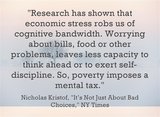
Nicholas Kristof has written a useful column in today’s New York Times that reviews some of the research that I’ve previously written about (see The Best Articles About The Study Showing Social Emotional Learning Isn’t Enough) related to poverty’s effect on "cognitive bandwidth."
Here’s an excerpt:
Larry Ferlazzo
.
Blog
.
<span class='date ' tip=''><i class='icon-time'></i> Jul 16, 2015 06:19am</span>
|
|
As regular readers know, I teach an International Baccalaureate "Theory of Knowledge" class (in fact, this year I teach two of them!). Our school structures our IB program a bit differently from many others by having a whole lot of students take individual IB classes; we have relatively few who are taking all IB classes in order to get the IB diploma. I really like this set-up, and it opens up my TOK class to a lot more students.
As I’ve said before, I can’t think of a high school class that would be more fun to teach or more fun to take…
You might also be interested in:
The Best Theory Of Knowledge Resources In 2014 - Part Two
All Of My Theory Of Knowledge "Best" Lists In One Place!
The Best Theory Of Knowledge Resources In 2014 - So Far
The Best Theory Of Knowledge Resources In 2013 - Part Two
The Best Theory Of Knowledge Resources In 2013 - So Far
The Best Theory Of Knowledge Resources In 2012 — Part Two
The Best Theory Of Knowledge Resources In 2012 — Part One
The Best Theory Of Knowledge Resources In 2011
The Best Theory Of Knowledge Resources — 2010
Here are my choices for The Best Theory Of Knowledge Resources In 2015 - So Far:
How Can We Help Students Feel That Theory Of Knowledge Class Is More Relevant To Their Lives
Teaching Knowledge Questions In IB Theory Of Knowledge
I’ve written in my New York Times column about how I use optical illusions with English Language Learners, and I certainly use them when teaching perception in my Theory of Knowledge class. You can many that I’ve previously posted here. The BBC has now published what is probably the "be all and end all" of resources on optical illusions over the years. It’s titled How your eyes trick your mind and will certainly come in handy.
The Best Videos About The Famous "Trolley Problem"
Here’s a video and article about turning a Van Gogh painting to 3D. I think it would be useful in a Theory of Knowledge discussion of perception and art…
I have added a number of new resources and also redesigned my IB Theory of Knowledge class blog. It’s filled with years of very, very practical classroom resources, including many lessons I use and lots of examples of student work (including oral presentations, TOK essays, etc.).
I’ve previously shared the essay planning form I developed last year for my IB Theory of Knowledge students and, in case you missed it,you can download it here. Even better, though, is a great student model I’ve been given permission to share here. You can download it here.
This Is The Easiest Way I’ve Found To Upload Multiple TOK (Or Any Student) Presentation Videos
Here’s The Evaluation Form I Created For TOK Oral Presentations
Reading With Imagination is the title of an intriguing column in The New York Times. It’s written by Lily Tuck. I thought it made some points of particular interest to IB Theory of Knowledge teachers related to… imagination.
Here’s an excerpt:
As International Baccalaureate Theory of Knowledge teachers know, emotion and imagination are two "Ways Of Knowing" (for people unfamiliar with TOK, the curriculum defines a number of qualities as ways we acquire knowledge, and then divides that knowledge into "Areas Of Knowing" like history, math, etc.). Here’s the video trailer for the new Pixar movie titled "Inside Out." Not only does it look great for anyone, it looks like it will also be perfect for TOK classes.
Science Daily reported on research that provides more evidence of why we might be resistant to new ideas (sort of, but I don’t think exactly, like confirmation bias). Here’s an excerpt from the article titled Why good solutions make us oblivious to better ones:
TED Talks uploaded a fascinating one — Can we create new senses for humans? with David Eagleman.Here’s how they describe it:
As humans, we can perceive less than a ten-trillionth of all light waves. "Our experience of reality," says neuroscientist David Eagleman, "is constrained by our biology." He wants to change that. His research into our brain processes has led him to create new interfaces to take in previously unseen information about the world around us. You can read the transcript here. It’s perfect for International Baccalaureate classes studying Perception.
Learning about Plato’s Allegory of the Cave is a key lesson in most IB Theory of Knowledge courses, and I’ve also been able to integrate it into my English Language Learner classes, too. You can see many of the resources I use in the classroom, including student-made videos of modern parable versions, at our class blog. TED-Ed released a lesson and accompanying video that will be a nice addition.
Quote Of The Day: "Teaching Doubt" (& How I’m Going To Use It In Class)
Nearly 2,000 Categorized Resources For IB Theory Of Knowledge Classes
Quote Of The Day: How Language Affects Our Perception Of The World
The Value Of Students Creating Their Own Evidence
The Best Resources On "The Dress"
Student Examples From Theory Of Knowledge Project
"What If?" Projects From My Theory Of Knowledge Class
This video would be great to use in IB Theory of Knowledge classes when we discuss language:
The question, "Was Mathematics invented or discovered?" is discussed in almost every IB Theory of Knowledge class.
I’ve previously posted about a a TED-Ed video on this topic that I didn’t think was a very good one.
The World Science Festival has just published a much better video responding to this question, and which I’ll definitely be using in class:
The Problem With History Classes is a thought-provoking article in The Atlantic. It’s perfect for IB Theory of Knowledge teachers, as well as history educators.
Here’s an excerpt:
Larry Ferlazzo
.
Blog
.
<span class='date ' tip=''><i class='icon-time'></i> Jul 16, 2015 06:19am</span>
|
|
Here are two good videos for English Language Learners to watch and describe what they see. The second one was recommended by reader Lorna Larson:
Larry Ferlazzo
.
Blog
.
<span class='date ' tip=''><i class='icon-time'></i> Jul 16, 2015 06:19am</span>
|
|
© 2006 Will, Flickr | CC-BY-SA | via Wylio
As everybody knows, "Jurassic World" is opening this weekend.
If it peaks your - or your students’- interest in dinosaurs, you might be interested in The Best Sites For Learning About Dinosaurs.
Larry Ferlazzo
.
Blog
.
<span class='date ' tip=''><i class='icon-time'></i> Jul 16, 2015 06:19am</span>
|
|
This list focuses on sites that ELL students would use directly. Of course, many other sites on my other lists can also be used effectively with ELL’s.
You might also be interested in:
The Best Beginner, Intermediate & Advanced English Language Learner Sites
The Best Websites For English Language Learner Students In 2014 - Part Two
The Best Websites For English Language Learner Students In 2014 - So Far
The Best Websites For English Language Learner Students In 2013 - Part Two
The Best Websites For English Language Learner Students In 2013 - So Far
The Best Websites For English Language Learner Students In 2012 — Part Two
The Best Websites For English Language Learner Students In 2012 — Part One
The Best Websites For English Language Learner Students In 2011
The Best Websites For English Language Learner Students — 2010
The Best Websites For English Language Learner Students — 2009
The Best Internet Sites For English Language Learners — 2008
The Best Internet Sites For English Language Learners — 2007
The Best Web 2.0 Applications for ESL/EFL Learners — 2007
Here are my choices for The Best Websites For English Language Learner Students In 2015 - So Far:
Words Can Save is an interactive designed to raise awareness of cyberbullying. You’re prompted to provide advice to a child who is a victim by completing gap-fills/clozes like the one above. Unfortunately, though, for some odd reason you’re supposed to be eighteen to use it. If you say you’re under that age, you’re transferred to a much less engaging site.
WaitChatter Helps You Learn A New Language While You Wait For IM Replies
The English Game is a very British-oriented video interactive site for learning English. It’s impressive.
The "All-Time" Best 2.0 Tools For Beginning English Language Learners
"Google Translate" Starts A Big Time Update Today
Duolingo For Schools Opened Today - Here’s How It Works
I’ve previously posted about the Lingual.ly app and web version. It basically lets you say what language you speak and what language you want to learn; provides a ton of current newspaper articles in your target language; lets you click on words new to you to find out their translation; and then turns them into saved virtual flashcards you can study. It’s accessible to high-intermediate and advanced language learners. TechCrunch reports they have raised a bunch of money, and they plan on spending some of it to provide resources for Beginners, along with the ability for teachers to create virtual classrooms. I’ll be very interested in seeing what they end up developing — depending upon on how engaging they make their new resources, it might be more useful for ELL students and teachers.
I’m adding this infographic to The Best Resources For Learning The Advantages To Being Bilingual Or Multilingual:
Source
Larry Ferlazzo
.
Blog
.
<span class='date ' tip=''><i class='icon-time'></i> Jul 16, 2015 06:19am</span>
|
|
I’ve been trying to "clear the decks" so that I can begin focusing on writing my next book on teaching English Language Learners this summer, and getting these mid-year "Best" lists published was one of the tasks I needed to get accomplished.
Here are links to all of them (I’ll probably add one or two more in the coming weeks).
Though I’ll still be publishing posts daily over the summer, I won’t be keeping to my usual five each day schedule. I’ll get back to that average after September 1st, when the manuscript is do. Please wish us (Katie Hull Sypnieski is my co-author) luck!
The Best Websites For English Language Learner Students In 2015 - So Far
The Best Theory Of Knowledge Resources In 2015 - So Far
The Best Online Learning Games Of 2015 - So Far
The Best Tweets Of 2015 - So Far
The Best Resources, Articles & Blog Posts For Teachers Of ELLs In 2015 - So Far
The Best Articles (And Blog Posts) Offering Practical Advice & Resources To Teachers In 2015 - So Far
The Best Articles I’ve Written In 2015 — So Far
The Best Fun Videos For English Language Learners In 2015 - So Far
The Best Social Studies Sites Of 2015 — So Far
The Best Articles & Posts On Education Policy In 2015 - So Far
My Best Posts On New Research Studies In 2015 - So Far
The Best Videos For Educators In 2015 - So Far
The Best Web 2.0 Applications For Education In 2015 - So Far
Larry Ferlazzo
.
Blog
.
<span class='date ' tip=''><i class='icon-time'></i> Jul 16, 2015 06:18am</span>
|
|
© 2011 Howard Lake, Flickr | CC-BY-SA | via Wylio
Thousands of people subscribe to this blog for free so they can be notified of new posts.
I’ve just created a Flipboard Magazine for this blog, so that’s a new way way to read my posts. The posts seem to sometimes be delayed by a few hours but, other than that, it seems to work fine. You can read Sue Waters post to learn about other ways Flipboard can be used.
There are many other ways you can subscribe to this blog for free, too. You can:
Subscribe by a RSS Reader. One popular RSS Readers is Feedly (though there are many others). You can read about Feedly in this New York Times guide.
Subscribe to email updates through Feedblitz.
Follow me on Twitter, where I share my posts and many other resources.
Follow me on Pinterest, where I share posts and other resources.
"Friend" or "Follow" me on Facebook, where I also share my posts.
Add me to one of your Google+ Circles. If you send me a message there saying you would like to be notified of new blog posts, I will put you in that "circle" so you receive those notifications.
Subscribe to a monthly email newsletter where I share my "Best" lists and my other picks of the best posts of the month.
Hope you find this list of choices helpful!
Larry Ferlazzo
.
Blog
.
<span class='date ' tip=''><i class='icon-time'></i> Jul 16, 2015 06:18am</span>
|