Blogs
|
Today’s inspiring guest post is from Joy Kirr, a 7th grade literature and language arts teacher in Arlington Heights, Illinois. During Genius Hour, she engaged her students in mapping the things that break their hearts and the actions they can take to resolve these issues. Please read on to see how Mrs. Kirr guided her classes through the Hearbreak Mapping exercise and what they came up with! You can keep up with Mrs. Kirr and her students on her blog, or find her on Twitter @JoyKirr.
*****
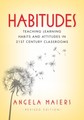
I read Angela Maiers’ two books this summer, but the one I’m still getting a lot out of is Classroom Habitudes: Teaching Habits and Attitudes for 21st Century Learning…
For one week of Genius Hour, I was going to do the lesson on pages 61-62 - a heart-mapping activity. But then I saw in my Evernote notes a link to Angela’s website where she talks about what BREAKS your heart. Forget Following Your Heart: Follow Your HeartBREAK. I followed this lesson, almost exactly.
This was my script:
We have experienced what a little of what it means to be Caine Monroy. The day prior, as we shared our writing prompts, we heard some people share very personal stories. Being able to hear these stories or experience something similar to what they’ve experienced helps us understand each other more, and helps us to build empathy. Because I don’t want to ever put someone on the spot, but we still need to know more about one another, I’m asking you today to create what’s called a Heartbreak Map.
One of the best ways we can get to know one another is through our story. We know Caine now more because of his story, and each one of us in this room has a story. Great writers and storytellers speak from their hearts. I’ve asked you to blog about your passion, I’ve asked you many times to let us know what you love in life, but today I’m going to ask you what breaks your heart. It is this pain in your heart, or this anger that eats you up inside that will help you to act.
Some people still have no clue what they want to learn about for Genius Hour. Many of us are still reading fiction and just waiting for inspiration to come to us. Today I’m going to give you a tiny push towards emotions that will spur you to act. We don’t always act if we’re thinking of solely what we love. We act when we’re sad, upset, or angry. So let’s begin. Ask yourself: What matters to you?
This is what I put on the board, and I paused to give time to think between each one:
What makes you happy?
What do you love?
What is the most fun you have ever had?
What memory is your favorite?
What things or objects are important to you?
Who is important to you?
What things in your heart are sad? Make you cry?
What secrets are in your heart?
What activities do you love?
Now… what breaks your heart about these things?
I jumped in with my own example right about here…
When I think of one of my favorite memories, I think of when my husband and I were dating, and we were in an awkward situation one time. We just started giggling. It was one of those infectious giggles that you have a hard time stopping. If you’ve ever heard a grown man giggle, you’d giggle, too - it’s a precious sound that doesn’t happen every day.
What breaks my heart about this, though? (A student in each class answered, "It had to end.")
Yes. He lived in Detroit, and I lived here, and we had to say goodbye.
So what do I do about it? (One answered, "You marry him!")
Well, yes, but every day - EVERY DAY - I do something so that it doesn’t break my heart as much, as I know we’ll be separated some day in the future… I make every moment with him count. I don’t argue with him, I don’t push him to do things he doesn’t want to do, and I, corny as it sounds, give him hugs and kisses and do small tasks for him whenever I can, so that he knows how much he is loved.
Now… what matters to you? REALLY matters to you? And what breaks your heart about it? THIS is what will motivate you to ACT.
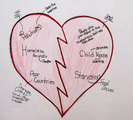
I showed these pictures from Aaron Maurer’s (@coffeechugbooks) students as examples.
Then I left this on the board for directions:
Give it a try:
* In the center of your map, write and/or draw the things that you are passionate about.
* In the next level or circle, write and/or draw what breaks your heart about these things.
* In the final level or circle, write and/or draw your ideas for the ways to resolve these heartbreaks.
I let students know they might not know what to put in their final step, and that’s okay. We can work on that together if they want our help. If not, it’s something they can work towards during Genius Hour. Or, sadly, it might be something they have no control over right now.
When students came up to me to ask, "Is this right?" I told them that as long as it includes things that break their heart, there is no right or wrong answer. It’s all very personal.
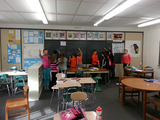
This is how they turned out… Check out our slideshow! These are on our bulletin board right now.
Hopefully this is not all of them… Many students decided to keep theirs. But I think it’s a very good start, and even though it makes me sad they have these heart breaks, I’m happy at the thought of them thinking they can do something about it. I wonder where they’ll go from here…
Angela Maiers
.
Blog
.
<span class='date ' tip=''><i class='icon-time'></i> Jul 16, 2015 09:17am</span>
|
|
I’m blessed to follow literally hundreds of education blogs that help me learn and grow as an educator. When it comes to the Edublogger Awards, it’s quite difficult to choose which ones to single out.
However, because I am a firm believer in recognizing excellence in the education field, I’ve done my best to select some of the more worthy bloggers, blogs and blog posts in this list of nominations for the Edublogger Awards 2013:
Best individual blog- The Innovative Educator, by Lisa Nielsen
Best group blog- Connected Principals
Best new blog- Hate Chalk, by Arin Kress
Best class blog- Ms. Cassidy’s Classroom Blog
Best student blog- Burlington High School Student Help Desk
Best Teacher Blog- Coffee for the Brain, by Aaron Maurer
EdTech Blog - FreeTech4Teachers, by Richard Byrne
Best library / librarian blog- Never Ending Search, by Joyce Valenza
Best administrator blog- Education is My Life, Jimmy Casas
Most influential blog post of the year- Where Does World Changing Fit Into the #CCSS, by Lisa Nielsen, The Innovative Educator
Best individual tweeter- Erin Klein
Best twitter hashtag- #EGHSMatters
Best free web tool - Zoom
Best educational use of podcast- Edu AllStars
Best Use of Video- Two Guys Show
Best educational wiki- Genius Hour Wiki/Live Binder
Best open PD / unconference / webinar series: RSCON 4, because it included students
Best educational use of a social network - Choose2Matter at Downingtown STEM Academy
Best mobile app-Remind 101
Lifetime achievement- Jerry Blumengarten, aka Cybraryman
Angela Maiers
.
Blog
.
<span class='date ' tip=''><i class='icon-time'></i> Jul 16, 2015 09:17am</span>
|
|
This wonderful guest post comes from Josh Stumpenhorst, a teacher who found a creative way to introduce philosophy and deeper thinking into his classroom. Read on to see how his junior high students surprised him with their reactions.
You can keep up with Josh at his blog, Stump the Teacher, and find him on Twitter @stumpteacher.
*****
Those of you that know me know that I run. I run a lot. On December 11th I will hit my 700th consecutive day of running without missing a single day. For those of you that run on a regular basis, you know the reflective and meditative power a good peaceful run can bring. I often find myself reflecting on life, on teaching, on my family and just about anything and everything in between. On one of those 4am runs, I found myself thinking about my students and specifically about what I was asking them to do in class.
We were in the middle of the Ancient Greece chapter in social science and coming up on the section covering the work of Aristotle, Socrates, and Plato. As I was looking through the content I began thinking of my good friend Chad Miller, a fellow teacher of the year from Hawaii. Chad is a pretty amazing guy who teaches philosophy and English in a high school as well as some graduate level coursework at a college. I have learned a great deal from Chad over the past two years specifically about philosophy and thinking and how to get kids to be philosophers and thinkers.
Around the same time these ideas were rumbling in my head, I stumbled across a tweet from John Robinson about a board they had up in his school. This white board was located in a common space in the school. It was used to write thoughts, questions, and ideas in a public space to spark thinking in an interactive way. This got me thinking about how I could do something in my class to encourage real thinking.
Now some of you are thinking to yourself, "well, wait a minute, aren’t you thinking in class everyday?" I would like to believe that is true. I understand the vast majority of the content in the curriculum that I teach requires very low-level thinking. That’s not to say I don’t use activities that require a great deal of critical thinking but it just didn’t feel like I was doing enough "real thinking". As I looked through the standards and content I was teaching, there seemed to be a lot of "identifying" and "defining" but not a great deal of actual thinking required. If I am being completely honest, even those areas where thinking was needed, I am not sure it was truly valuable thinking.
With this in mind, I touched based with Chad and got a couple of resources from him about how to get my kids thinking. The following day I had a conversation with one of my classes, which happened to be my language arts class. We started talking about thinking and how we could do more of it in school in a real and authentic way. I told them about my idea of starting a board we would post questions and thoughts.
I wasn’t sure how the kids would react to it but they were totally all for it. That very afternoon one of the young ladies in my class designed a little sign to put up on the wall that is now called the Thinking Wall. The following morning I posted the first question "What does it mean to grow up?" I didn’t think this was too difficult or too abstract of a question because I know that plenty of kids in junior high think about growing up.
What I didn’t expect was what really happened. I had only explained the idea of the wall to my language arts class. However, as I stood in the hallway waiting talking to a fellow teacher before social science class started I then turned and looked into my room. What I saw was nearly every single student standing at the wall either reading, talking or writing about the question. It was one of those organic moments that just happened. I had not even told them what to do, how to interact or what my expectations of the activity were going to be. They simply saw the question and ran with it. By the end of that first day, the chalkboards were full of comments and questions and ideas. Naturally there were some very superficial comments about being more mature or being taller. Yet, there was some pretty heavy ones I wrote down because I want to make sure that I use those are some follow-up discussions.
To take it a step further, I introduced the idea of the kids submitting their own questions or thoughts to be put on the wall. My ultimate goal is for them to generate the questions that will go on the board on a weekly basis. Some of the questions the kids have come up with for future use are already exceeding my expectations. One student wants to delve into the difference between knowledge and wisdom.
I asked some of the students after the first couple of days of this first question be on the wall what they thought this new thing. The first response was from Rachel, who said, "I think the wall really brings out a different side of people…what surprised me was that the quiet people had some of the best things to say." As with many projects in my class, I don’t know where it’s going to go. However, I have high hopes as my student Sarah wrote, "I hope this continues the whole year!"
In one short week with one simple question, I am beginning to see great value in intentionally bringing philosophy and thinking into my classroom. It feels as though we are too busy chasing numbers and tracking data to actually allow kids time to think. I can tell you personally, that as soon as I started letting kids think they surprised me with what they were able to do and just how much they had to say.
*****
One of Josh’s students wrote this blog post in response to the Thinking Wall and the question, What does it mean to grow up?
Isn’t it exciting and encouraging to see such genuine critical thinking coming from young minds?
Angela Maiers
.
Blog
.
<span class='date ' tip=''><i class='icon-time'></i> Jul 16, 2015 09:17am</span>
|
|
2013 was an utterly transformative year for me.
It was when Choose2Matter morphed from a concept into a movement, producing many blessed moments.
I began a relationship with Huffington Post that saw me regularly publish posts and appear on Huffington Live.
I started writing for Switch and Shift.
I entered into a partnership with Mark Moran, founder of Dulcinea Media; he became my co-founder at Choose2Matter and helped me process the staggering pace of change we’re witnessing.
I could not have done any of this without you.
With your comments, Tweets, replies and hugs, you have helped me grow as a learner, leader and human being.
Thank you for taking the time to share your time and talents with me.
I am smarter because of you.
My 13 Favorite Posts of 2013
1. People Know They Matter When…
The beginning of this year marked my blog partnership with The Huffington Post, which made 2013 a winning year for us right off the bat! Thus, I chose HuffPost to publish one of the most important posts I’ve ever done - one that teaches all of us how to let the people in our lives know that they matter to us - in other words, to ACCELERATE the message of You Matter.
2. An Open Letter to Millennials - Thank You for What I See in You
This year I began writing for Switch and Shift, a blog about the "human side of business." My focus is on how adults can help guide today’s youth, with their considerable energy and passion, to change the world. These articles are cross-posted to SAP’s Business Innovation blog. This post, one of the most popular posts on Switch and Shift this year, expresses my appreciation for millennial’s passion, impatience and desire to change our world.
3. Whose Hope Were You Today?
One morning, I asked my friends on Facebook to consider the question, "Am I Serving as Only I Can Serve?" My beautiful friend Joli Barker-Erwin shared it with her third grade class in McKinney, Texas. This is no ordinary class; it has its own moniker: The Fearless Classroom. With Joli’s leadership, these students are intrepid, determined and fully living up and into their genius. This post reports their incredible responses.
4. The Intersection Between Structure and Spontaneity
Serendipity is the name given to those "happy accidents" we experience throughout life - finding a person, idea, or resource we didn’t expect, but greatly needed. These encounters enrich our lives with new experiences, connections, and insights. I have built a network of fascinating and generous people online, and these connections have blossomed into everything from meaningful conversations to significant partnerships. I wondered how much of this was truly random, and found that my personal serendipity could be traced back to certain consistent, actionable, and replicable behaviors.
I call this process "Tactical Serendipity."
5. The Sandbox Manifesto
Play isn’t something we do as a part of our life — it is life. The Sandbox Manifesto is both a declaration and an invitation to keep the experience of the sandbox alive and to recognize and honor the wisdom we acquired through our experiences on the inside. As you read these ten tenets, think about these simple truths of leading and influencing others, managing failure, strategic thinking, and resolving conflicts and apply them to the global sandbox we now live and play in.
6. Student Innovators Take Center Stage
As the Choose2Matter movement has accelerated and begun to coalesce into a formal program, we’ve sought out opportunities for students to present their ideas to audiences outside of the classroom, and to be recognized by the world at large. We WILL NOT LET STUDENT GENIUS LIE DORMANT!
7. The Science Behind Mattering
I often write and speak about the importance of mattering and in May, I backed my voice with research studies that show just how important mattering is to every human being.
8. Secure Students’ Hearts, or You Don’t Have a Shot at Their Brains
In May, I wrote about the importance of reaching students’ hearts before we can reach them as learners. This was part of a tribute to the great educator Rita Pierson, who tragically passed away just a few weeks later.
9. The Passion Gap
In January, I spoke at a Dell Innovation in Education Panel. Out of that came this post on the cavernous passion gap between schools and the workplace.
10. To Be List for Aspiring Women Leaders
At Choose2Matter, we encourage our students to be the change they want to see in the world. To that end, in February we wrote a detailed to be list for aspiring women leaders.
11. Two Letters That All Students Should Receive
In August, I featured two "Dear Student" letters that I wish all students, of all ages, everywhere would receive from their teachers. The first letter encourages students to think about what their genius is. The second tells students they matter, and encourages them to let others know they matter as well. The letters were written by Arin Kress, a self-described "5th grade teacher in Ohio who is constantly learning." Arin is on Twitter @KressClass and her blog is Hate Chalk.
12. Lessons Learned in the Wake of a Suicide
The pain and loss of my brother’s death from suicide last July will always remain, but my grief is beginning to be transformed into grace. His memories remind me how ephemeral life is and how fortunate I am to be blessed with family, friends, and work that fill me up. The death of my beloved brother, my box of darkness, was a gift. It just took a while to unwrap it completely. Here are some of the things that I’ve learned in the wake of my loss.
13. Students Who Rescued a Heroic Legacy
In 1999, students at a rural Kansas high school began work on a National History Day project, with the goal of honoring the classroom motto: "He who changes one person, changes the world entire." When our team at Choose2Matter speaks of changing the world, this is the essence of what we mean. The students wrote a play about Irena Sendler, then a little known heroine of the Polish resistance in WWII. In Sendler’s own words to the students, "Before the day you had written Life in a Jar, the world did not know our story; your performance and work is continuing the effort I started over fifty years ago….You have changed Poland, you have changed the United States, you have changed the world. I love you very, very much."
How are WE going to change the world in 2014?
With Love,
Angela
Angela Maiers
.
Blog
.
<span class='date ' tip=''><i class='icon-time'></i> Jul 16, 2015 09:16am</span>
|
|
As you surely know, I am deeply passionate about literacy and leadership in this digital age. Thus, I am so excited to announce the forthcoming publication of a new book by my dear friend, Eric Sheninger. I’ve known Eric for many years and I never miss an opportunity to learn from him.
Eric is a highly accomplished principal and respected digital leader. His new book, Digital Leadership: Changing Paradigms for Changing Times, due out on January 14th, is essential reading for educators seeking to get technology right.
With expertise, clarity of vision, and personal testimonies, Eric helps readers navigate the waters of teaching and learning in the digital age, and opens our eyes to how technology can enhance and transform learning. I hope you’ll read Eric’s book as avidly as I did, and join us in promoting digital leadership and literacy in education!
You can order the book here.
Angela Maiers
.
Blog
.
<span class='date ' tip=''><i class='icon-time'></i> Jul 16, 2015 09:16am</span>
|
|
image credit: Jomphong via freedigitalphotos.net
When it comes to tech tools, this past year has been a year of discovery! The following tools have helped me and my team get organized, manage workflow, assign tasks, and more. I’m excited to share with you my top picks for the new year!
Bulb — Bulb is a new player in the app scene! It’s a beautiful and fun space where individuals and groups can share their knowledge with the world. Users can publish collections of their work - anything from videos to writing to art projects - and can peruse the collections of other Bulb users. Bulb is currently still in beta, but I think it will become a great space for creating connections through the free exchange of knowledge!
AroundMe - Having this app is like having a local guide with you no matter what city you’re in! As someone who travels frequently with a lot packed into the time on the road, AroundMe is invaluable when I need to locate a place to eat, an ATM, a gas station - anything! It’s so simple to use and helps me quickly get from point A to point B. AroundMe could even be useful for discovering a hidden gem in your own town!
Snippet — Snippet is an inventive new way to create, disseminate, and take in content. Writers use the app to share their work in bite-size pieces (no limit to the number of chapters you can create, but each chapter is limited to 1000 characters), to make it more easily digestible for today’s busy readers. Media and social tools can also be integrated into the writing to add vibrancy and connection to the work. Readers will find that Snippets (from $.99 to $4.99) are sleek, pleasing, quick ways to ingest great writing on a daily basis.
Evernote — I’ve found Evernote to be one of the best and simplest organizational tools. Evernote lets you create notebooks within which you can store notes, which act as folders, chapters, or whatever subdividers you require. Notebooks can be kept private or shared with others for collaboration. Whether you seek to compartmentalize information or need a digital space for your writing projects, Evernote could be the thing for you! I’m currently using it to organize information for my website redesign, keep a list of potential new tools for my team, and collect recipes, among other things!
Google Queues — After searching and searching for a basic, no-nonsense task management app, I finally came across Google Queues, or GQueues. With this tool, you can create tiered lists of tasks which can be filed within customizable categories. Then, through integration with your Gmail and Google calendar, you can easily assign tasks to team members and label each with a due date. GQs has been essential for keeping me and my team on schedule with our time-sensitive tasks and I know we’ll be happy to have it in the busy year to come!
Smore — Smore filled a huge need for my team as we searched for a way to send out information in response to requests. We needed a way to consolidate links, information, and photos related to Choose2Matter, for example, in a digestible and visually-pleasing manner. Smore lets us do just that! It’s a totally free, fun, and easy way to create lovely digital flyers that can be customized with different colors, fonts, and backgrounds, depending on your information and/or audience. These flyers can be shared through social media, distributed as an email, or simply linked to on a website.
I hope you find these goodies helpful through the year ahead! Which tech tools are you pumped about?
Angela Maiers
.
Blog
.
<span class='date ' tip=''><i class='icon-time'></i> Jul 16, 2015 09:16am</span>
|
|
Image credit: stockphoto via freedigitalphotos.net
It can be a real struggle to keep students enthusiastic about learning, especially once the holiday break ends and the second half of the school year begins. This very challenge makes January a great time to introduce new methods for engaging students and getting them excited to be in your classroom. I’ve compiled some resources in this digital flyer - I hope you find them useful for engaging your students and shining the light on their genius and yours!
Angela Maiers
.
Blog
.
<span class='date ' tip=''><i class='icon-time'></i> Jul 16, 2015 09:15am</span>
|
|
Just six months ago, we conducted our first Choose2Matter event, with a class of 350 sophomores at Dowingtown STEM Academy. The results were brilliant.
In September, we conducted another event with 200 8th graders at Bettendorf Middle School, and those students have been pursuing world-changing initiatives ever since.
So last month, we stepped up our game, presenting to an entire school of 800 students at Daisy Gibson Elementary School in Palmdale, CA. Those students are returning from winter break ready to tackle the problem of childhood hunger in this country.
Now, we’re taking it up another notch. Because of the bold leadership of Douglas Killian and Steve Snell, we are visiting this week with Hutto ISD in Hutto, Texas and spending two days with all 5,923 students in the entire district! It will be unpredictable, nerve-wracking, chaotically beautiful, and utterly, gloriously life-changing for everyone present.
Hutto ISD and all of its people will never be the same, and neither will we.
Let the wild rumpus begin!
Nearly 6,000 Hutto ISD Students to Choose2Matter
Students challenged to collaboratively develop innovative solutions to social problems
January 21, 2014 - Hutto, TX - This week, the nearly 6,000 students in Hutto ISD will be asked a simple question:
"Do you believe that you are a genius, and that the world needs your contribution?"
Studies suggest that nearly 100% of Hutto’s first graders will answer this question with an emphatic "Yes." For the second graders, the expectation is below 50%. For students approaching their high school graduation, typically only 2% still believe that they can contribute something meaningful to the world.
Fortunately, the conversation won’t end there. All students in the district will attend a two-day live event at Hutto High School on January 21 and 22 to learn about changing the world as part of a social movement called "Choose2Matter."
Students, educators and adults from around the world are also invited to virtually participate in and support the event.
Opening and closing sessions will be broadcast from approximately 8:30 am to 10:00 am CST and from 3:00 to 3:30 pm each day, and also archived, on Choose2Matter’s YouTube channel athttp://www.youtube.com/choose2matter
Updates will be posted regularly to Choose2Matter’s Facebook page athttps://www.facebook.com/Choose2Matter and to the Hutto ISD Facebook page athttps://www.facebook.com/HuttoISD
Huffington Post will be collecting and publishing pictures, video and first-person accounts from the event.
Pictures, videos and other content will be shared by participants on Twitter and other social media channels using the hashtag #C2MHutto
The Choose2Matter team is led by Angela Maiers, a nationally renowned speaker and veteran educator; Mark Moran, a corporate lawyer and online research expert; and Laura Thomas.
They will be joined by:
Mark J. Carter of ONE80 Solutions, a mentoring expert;
Frank Hughes, who worked in Space Training for NASA for 33 years and now focuses on STEM education;
Robert Pohl, an education consultant on 21st century classroom collaboration technologies & Director of Professional Learning for Collaboration Solutions, Inc.
Sam Read, online organizer for No Kid Hungry; and
Bryan Wempen of ceVoke and BTC Revolutions, an expert on leadership, entrepreneurism and talent management.
A lineup of special guests will appear via videoconference, including General John Michel, the Commanding General of the NATO Air Training Command in Kabul, Afghanistan, who will discuss courage and bravery with the students.
General John Michel
The Choose2Matter team will work with Hutto students, staff and community members on the concept behind Choose2Matter - that when someone believes that they matter, they approach life and work in a manner that understands that their actions can have an impact on the world.
This will be by far the largest group of participants at a Choose2Matter event to date.
Angela Maiers, Founder of Choose2Matter, says, "I applaud the courage of the Hutto ISD leaders in bringing this movement to all of their students. Choose2Matter changes hearts, changes minds, and changes lives. It is an awe inspiring message that must be heard, and we don’t want a single student to miss the opportunity."
Steve Snell, Assistant Superintendent for Curriculum at Hutto ISD, said "It will be a tremendously rewarding experience for students to articulate their passion, communicate their idea for solving a problem, begin the process of doing so and see it through to completion. This is more valuable than any worksheet or textbook we can give them."
During a 2011 TEDxDesMoines presentation, "You Matter," Angela Maiers spoke of how these two words can change lives and change our world, if we understand them and we leverage them in the right way. Students everywhere reacted powerfully to this call to action, completing jaw-dropping quests to address problems in our world.
Choose2Matter was created in response to this breathtaking response. It is a call to action that challenges students to make "mattering" a way of life.
Choose2Matter is developing a program of "mentoring at mass scale." It will leverage the wisdom and experience of adults to guide the energy and passion of youth. For students, the mere knowledge that adults take their ideas seriously profoundly impacts that seriousness with which they approach their contribution.
Hutto students and staff will begin work on their call to action, develop an action plan, work with experts and professionals, review plans, and implement their plans. The goal is to create an authentic, social entrepreneurship learning experience for students, in which they learn skills that are relevant to the modern world.
"This is going to be a unique experience for students. It’s going to be messy and chaotic but it’s going to empower students to take ownership of their learning and do something that will better their community," said Emily Grobe, Information Director at Hutto ISD.
Mark E. Moran, Co-founder of Choose2Matter, said, "Most schools pay lip service to producing students who are college and career ready, but fall short on both accounts. Choose2Matter liberates the genius of students and reminds them that they can achieve great things, even at a tender age. Hutto ISD has embraced the notion that passionate students who believe in themselves are unstoppable."
####
Contacts:
Emily Grobe, Public Information Officer, Hutto ISD
Emily.Grobe@Hutto.TxEd.net; (512) 759-3008
Mark E. Moran, Co-founder, Choose2Matter,
MarkMoranMES@Gmail.com; (917) 597-3815
Angela Maiers
.
Blog
.
<span class='date ' tip=''><i class='icon-time'></i> Jul 16, 2015 09:15am</span>
|
|
image credit: khunaspix via freedigitalphotos.net
This powerful guest post by English teacher Brian Denesha challenges us to deepen our students’ experience of learning by infusing lessons with emotion and storytelling. In making this leap, we can take students’ experience of stories to the next level and create a more memorable and formative learning environment for them — something that will stay with them for years. Please read on to see how Brian incorporated this idea into his teaching!
*****
Too often, I feel that we as teachers take for granted the opportunities that we are presented on a daily basis to truly affect the lives of our students. Just the other day, upon completing a text that is near and dear to my heart, I let my true emotions spill out in front of my class of seniors. While we have built a great relationship, and are unfortunately coming to the end of our one semester together, I don’t think I would have been able to say that I had impacted all of them in a way that could stick with them and make an indelible mark on their lives…that is until the moment I thought of my own father’s mortality.
The text, "Big Fish" by Daniel Wallace, ends with the main character dying and his son finally understanding that the stories and memories of those we love are the gifts that are left behind long after their physical presence has left us for the Elysian Fields that mythology promises for the truly great…our parents.
My own father is dealing with his fourth bout of cancer, the same evil that steals Edward Bloom’s life in "Big Fish", and I took the opportunity to share what I have learned from reading the text multiple times over the past few years.
My own father is a storyteller, a jokester, and man of words and wisdom, so the connection to Edward Bloom is a beautiful and cruel one for me each time I read the book. As we finished the last chapter, when Edward’s son William finally realizes the "truth" that he has been wanting from his father for so many years has always been within his reach and memories, just as our truths are within our own stories; some that are still waiting to be told. The stories that we share, the jokes we tell, the moments we spend with those we love are the snapshots that will linger for years and years.
It was this realization, plus the realization that my own father is in truth mortal and will leave me someday, that brought out of me my true self.
How many times have we as teachers wondered what our students will remember from our lessons tomorrow, next week, next year, or even further down the road of their lives? Will they stop and think about the grammar rules we struggled through, or how we tried to find the writer’s voice that was hiding in them all this time? I know I do.
What I know now is that my seniors will remember the class period we shared; the class period where I cried for my own father, the still living Edward Bloom. Literature is emotion. It is the emotion that the author brings to the text as well as what we bring to the text as readers. We are the collection of stories we read, hear, and sometimes tell.
I heard my dad’s voice telling me the story of the two young Indian Warriors challenging the wisdom of the Medicine Man, just as William heard his father’s stories over and over throughout his life. I shared my emotions with my students. I let them see me cry. I let them feel what I was feeling. I helped them understand what Wallace was trying to teach us all: cherish every word, every story, every joke (even the bad ones) that our loved ones share with us throughout their lives. I encouraged them to listen to the stories of those they love, as those will be the memories that will live on long after the tellers are gone. I implored them to celebrate the lives of their friends and family everyday. I reminded them that the lives we lead and the stories we tell are what live on forever.
I can only hope that this one period in time affected them as much as it affected me. I truly felt that I TAUGHT them something that transcends the four walls of our classroom…a life lesson that I hope they remember and use for the rest of their lives. In this way, I hope to live on beyond this moment.
We are teachers. We are the ones that form the future. We are the storytellers and the main characters in the stories of our students. How humbling and beautiful to think that we will be the main characters in at least one chapter in the story of each one of our students. The question I have to ask is, "What kind of story am I writing each time I step in front of my class?"
No matter what the story is, I can only hope that it is a story that will be told over and over again; even many years after I join my father in the fields of paradise. In this way, I will live on just as all of us can. That is the power of story, the power of teaching, the power of loving what we do.
We are teachers…we are immortal!
Angela Maiers
.
Blog
.
<span class='date ' tip=''><i class='icon-time'></i> Jul 16, 2015 09:14am</span>
|
|
As I wrote last May, Classroom Habitudes, published in 2008, is more popular now than ever, with book studies popping up every week and entire districts and even states full of teachers reading the book.
To celebrate, we’ll be announcing an online course about the Habitudes next month, and we’ve launched this Facebook page that spotlights a different Habitude each day. It is curated by the remarkable teacher-in-training, Maggie Moran.
Click here to LIKE the Facebook page and enjoy Maggie’s work each day and to keep abreast of new developments relating to the teaching of Classroom Habitudes.
Some recent examples:
Habitude: Curiosity
"I keep six honest serving-men,
They taught me all I knew;
Their names are What and Why and When
And How and Where and Who."
- Rudyard Kipling
Habitude Quote of the Day: Adaptability
"When we are no longer able to change a situation - we are challenged to change ourselves."
-Viktor E. Frankl
Habitude Quote of the Day: Perseverance
"The road to success is dotted with many tempting parking places." -Author Unknown
Angela Maiers
.
Blog
.
<span class='date ' tip=''><i class='icon-time'></i> Jul 16, 2015 09:14am</span>
|