Blogs
|
Hey guys, today I have a set of mixed wooden textures that you can use for your next project. Wooden textures are great to use as overlays on your photographs, or as backgrounds or design elements. I hope you can use them, enjoy!
Download all textures as ZIP from copy.com (28.7Mb)
Did you like these textures?
Let us know by leaving a comment, and you can even post a link if you used them in your artwork.
Related Posts
Free Texture Friday - Smoke
Free Texture Friday - Rusted Metal 4
Free Texture Friday - Black Leather
Free Texture Friday - Grunge Metal 2
Free Texture Friday - Wooden Chips
Stockvault Blog
.
Blog
.
<span class='date ' tip=''><i class='icon-time'></i> Jul 16, 2015 12:07pm</span>
|
|
This video discusses the need to align the key components of your instruction: learning objectives, teaching strategies, learning activities, and assessments. It explains what instructional alignment is, provides examples, and explains why it is important.
Jason Rhode
.
Blog
.
<span class='date ' tip=''><i class='icon-time'></i> Jul 16, 2015 12:06pm</span>
|
|
From time to time I’m asked what books I recommend for someone interested in learning more about blended learning. For those interested in a more in-depth read, here are a few on my bookshelf that I highly recommend. Most of these should be available via your local institutional library.
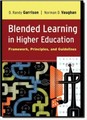
Blended Learning in Higher Education: Framework, Principles, and Guidelines by D. Randy Garrison and Norman D. Vaughn. (2007). ISBN: 0787987700
In this much-needed book, authors D. Randy Garrison and Norman D. Vaughan present the foundational research, theoretical framework, scenarios, principles, and practical guidelines for the redesign and transformation of the higher education curriculum.This groundbreaking book offers a down-to-earth resource for the practical application of blended learning in higher education as well as a comprehensive examination of the topic. Well-grounded in research, Blended Learning in Higher Education clearly demonstrates how the blended learning approach embraces the traditional values of face-to-face teaching and integrates the best practices of online learning. This approach has proven to both enhance and expand the effectiveness and efficiency of teaching and learning in higher education across disciplines.
Blended Learning in Higher Education
Outlines seven blended learning redesign principles
Explains the professional development issues essential to the implementation of blended learning designs
Presents six illustrative scenarios of blended learning design
Contains practical guidelines to blended learning redesign
Describes techniques and tools for engaging students
Available in paperback or Kindle versions from Amazon
How to Design and Teach a Hybrid Course: Achieving Student-Centered Learning through Blended Classroom, Online and Experiential Activities by Jay Caulfield (2011). ISBN: 1579224237
This practical handbook for designing and teaching hybrid or blended courses focuses on outcomes-based practice. It reflects the author’s experience of having taught over 70 hybrid courses and having worked for three years in the Learning Technology Center at the University of Wisconsin-Milwaukee, a center that is recognized as a leader in the field of hybrid course design.
Jay Caulfield defines hybrid courses as ones where not only is face time replaced to varying degrees by online learning, but also by experiential learning that takes place in the community or within an organization with or without the presence of a teacher; and as a pedagogy that places the primary responsibility of learning on the learner, with the teacher’s primary role being to create opportunities and environments that foster independent and collaborative student learning.
Starting with a brief review of the relevant theory - such as andragogy, inquiry-based learning, experiential learning and theories that specifically relate to distance education - she addresses the practicalities of planning a hybrid course, taking into account class characteristics such as size, demographics, subject matter, learning outcomes, and time available. She offers criteria for determining the appropriate mix of face-to-face, online, and experiential components for a course, and guidance on creating social presence online.
Available in paperback from Amazon
Blended Learning: Across the Disciplines, Across the Academy (New Pedagogies and Practices for Teaching in Higher Education) edited by Francine Glazer. (2011). ISBN: 1579223249
The book constitutes a practical introduction to blended learning, illustrated by implementations across a broad spectrum of disciplines. It enables faculty unfamiliar with this mode to address the core challenge of blended learning―to link the activities in each medium so that they reinforce each other to create a single, unified, course―and offers models they can adapt.
This book contains examples of specific blended courses and frank discussions of the challenges unique to each course. Each instructor used blended learning differently to address those challenges, so five different types of course design are presented. Blended learning is a flexible pedagogical tool that can be used in many different disciplines and implemented as many different ways to engage students and enhance their learning.
Available in paperback or hard cover from Amazon
Essentials for Blended Learning: A Standards-Based Guide by Jared Stein and Charles R. Graham. (2013). ISBN: 0415636167
Essentials for Blended Learning: A Standards-Based Guide provides a practical, streamlined approach for creating effective learning experiences by blending online activities and the best of face-to-face teaching.
This guide is:
Easy to use: Clear, jargon-free writing; illustrations; and references to online resources help readers understand concepts.
Streamlined: A simple but effective design process focuses on creating manageable activities for the right environment.
Practical: Real-world examples from different subject areas help teachers understand principles in context.
Contemporary: The variety of modern, connected technologies covered in the guide addresses a range of teaching challenges.
Forward-Looking: The approach bridges the gap between formal classroom learning and informal lifelong learning.
Standards-based: Guidelines and standards are based on current research in the field, relevant learning theories, and practitioner experiences.
Effective blended learning requires significant rethinking of teaching practices and a fundamental redesign of course structure. Essentials for Blended Learning: A Standards-Based Guide simplifies these difficult challenges without neglecting important opportunities to transform teaching. This guide is suitable for teachers in any content area.
Available in paperback, hardcover, and Kindle from Amazon
What favorite books of yours regarding blended learning did I leave off my list above? Leave a comment with your recommendations.
Jason Rhode
.
Blog
.
<span class='date ' tip=''><i class='icon-time'></i> Jul 16, 2015 12:06pm</span>
|
|
Hunting is the pursuit of an animal or other prey, usually with the intent of killing it. While most people think of humans when it comes to hunters, most animal species that are carnivorous engage in hunting (with the exception being scavengers).
Hunting involves careful and cautious approach of the prey, to get to a distance that is possible to attack from with a high chance of success.
Photographing hunting animals can be tricky, as photography itself is similar to hunting, as a photographer must search for the perfect shot, and get close enough to be able to capture it:
Hunt by Anna
Hunter by Kasper Nymann
Tom with Jerry. C’est la vie. by PatrickJansen
APH: Hunting by ECCG
Hunting ! by Khalil-ur-Rehman
möwe by Florence Merlote
Hunting for breakfast by Benyamin Lakitan
nêçîr (hunting) by zerder yasin
IMG_5498 by Kesgaroth
Get off my back by Giulio Zanni
Predator and Prey by Morkel Erasmus
Little Hunterby KomplexDelyrium
Great_White_Shar_4c444491819ab by Chris Fallows
The white hunter by Mircea Costina
Little Egret vs Mudskipper by igano Kabamaru
Family Feast by Martin Helgan
Trophy hunter by Santanu nandy
Nice Catch by Harry Eggens
IMG_4543 by Huw Lougher
Turkestan Shrike ‹Lanius phoenicuroi by igano Kabamaru
hunting stoat by WildlifeUK
sandrasalaskarecipesphotographyretail by SANDRA’S ALASKA PHOTOGRAPHS
San hunting by Ben McRae
New year’s hunter by Robert Nemeti
This Is How We Do It by Debbie
World’s worst hunting dog by Mircea
Croc eats fish by Dax Pandhi
Malayan Tiger by Jöshua Barnett
I see you by Bjorn A Hveding
WoW by Sonja Horvath
Related Posts
30 Marvelous Underwater Photographs
Out of this World Starry Photographs
30 Fields and Meadows Photographs
Rocks, Stones and Pebbles in Photography
On The Road: 30 Road Trip Photographs
Stockvault Blog
.
Blog
.
<span class='date ' tip=''><i class='icon-time'></i> Jul 16, 2015 12:06pm</span>
|
|
Need some money? Most people realize, including the Internal Revenue Service (IRS), that teachers pay for classroom materials and supplies out of their own pockets. The following resources can fund various classroom project proposals and send either a check to purchase the materials or send the actual materials the project proposal asks donors to fund.
For each site below, be sure to check the requirements necessary for submitting a successful proposal. Some may have rolling due dates or specific end dates when the project proposal or request is removed from the site if it isn’t funded. The proposals can cover online class needs for funds for projects that may include credits to download individual Voicethread projects, purchase membership subscriptions to pay for web tools like Animoto or GoAnimate, or to fund a software site license to enhance the curriculum of a hybrid/blended or e-learning course.
Donation Sites
http://classwish.org/
http://www.donorschoose.org
http://digitalwish.com
http://adoptaclassroom.org
http://supplyourschools.org
http://supportmyclass.org (appears to be limited to Hawaiian classrooms)
Tips for Excellent Proposals
Include specific demographic information whenever possible. Many donators fund projects in areas of poverty or areas that are in the greatest need. That doesn’t mean classrooms from wealthier schools won’t get projects funded; it just means that if a classroom is from a school in a high poverty area it is more likely to get funded. Regardless of the socio-economic status of your students, include statistics or basic demographic data.
Craft your proposal with an eye-catching title. You want to grab the attention of possible donator resources and a clever or catchy title can really help draw attention to your proposal.
Try to keep wish lists or project proposals under $400 - $500. Funding projects are expensive or you wouldn’t be soliciting funds and projects with lower amounts seem reasonable to donators and are funded more often. Don’t limit your project though. Cut it in half if you have and submit it twice or submit to more than one donation source for different portions of your proposal’s wish list.
Inform everyone you come into contact with your proposal. Explain to parents and students that you have submitted a proposal and ask parents to consider submitting the wish list to their employers or neighbors, etc., to help secure funding for your project. This is paramount if your school is in a wealthy area. When you involve the community, you often have a better chance of getting your project funded.
If your wish list isn’t funded the first time around, don’t give up. Try other sites or look at the proposals of successfully funded projects as a guide for a second submission. Lower the amount or number of items you are soliciting funding for and continue submitting to donation or crowdfunding websites. There are others out there but the above are specific to education.
Getting a project proposal successfully funded may seem like a daunting task but doing your homework before you submit will greatly pay off, pun intended. Follow the above tips, research successful proposals, check out sites like Grant Wrangler to find out how to write quality grants or project proposals and help get supplies and materials for your classroom projects that would ordinarily be out of reach due to a lack of funding.
Kim Caise
.
Blog
.
<span class='date ' tip=''><i class='icon-time'></i> Jul 16, 2015 12:06pm</span>
|
|
In Spring 2015, Northern Illinois University Faculty Development and Instructional Design Center developed and offered for the first time a series of 7 online workshops sharing principles, best practices, and tips for designing and developing quality online courses. The workshops were archived and available for on-demand viewing below or directly within the series playlist on YouTube. Kudos to my NIU colleagues, Stephanie Richter and Tracy Miller, for developing and offering the series!
Ensuring Quality in Your Online Course
How do you know if your online course is good? More importantly, how do you make it better? In this archived workshop offered 1/23/15, you will learn about why quality is important and how to create more student-centered online courses by using the Quality Matters rubric (a nationally-recognized benchmark for online course design based on research-supported best practices). After viewing this archived online workshop, you will be prepared to develop or improve an online course that is designed to promote student learning. View archived workshop »
Learning Objectives and Assessments
Once you have established objectives and the assessments to measure them, the next step is to create and/or curate course content and instructional materials to support the learning objectives. It is also important to clearly explain the purpose, source, and alignment of instructional materials. In this archived online workshop offered 2/13/15, you will learn about creating and curating course content from quality sources as well as communicating them to your students. View archived workshop »
Course Content & Instructional Materials
Once you have established objectives and the assessments to measure them, the next step is to create and/or curate course content and instructional materials to support the learning objectives. It is also important to clearly explain the purpose, source, and alignment of instructional materials. In this archived online workshop offered 2/27/15, you will learn about creating and curating course content from quality sources as well as communicating them to your students. View archived workshop »
Course Activities & Student Engagement
How do you encourage students to be fully engaged in an online course? By designing engaging and active, which foster interaction with you, the other students, and the content. In this archived online workshop offered 3/6/15, you will be introduced to some strategies to build learning activities which connect to your course objectives, as well as engage students in their own learning. View archived workshop »
Promoting Learning with Technology
In an online course, technology is necessary for connecting with students, engaging them in learning, and assessing their knowledge. It’s important to choose the right tools that support the learning objectives but are also obtainable and suitable for student use. In this online workshop offered 3/20/15, you will learn how to ensure technology in an online course supports learning and discover some tools you can incorporate into an online course. View archived workshop »
Accessibility, Usability, & Student Support
Online students can feel isolated, but they don’t have to be. In this online workshop offered 4/10/2015, you will explore how usability and accessibility can set students up for success. You will also learn how to connect students with valuable support services. View archived workshop »
Getting Students Started
Now that you have designed a high quality online course based on the other standards, you are ready to introduce it to your students. Set the right tone and support student success by helping them get started with a welcome message, a course tour, or a navigation guide. In this online workshop offered 4/24/2015 we will explore best practices for introducing course structure to your students and building community View archived workshop »
Jason Rhode
.
Blog
.
<span class='date ' tip=''><i class='icon-time'></i> Jul 16, 2015 12:05pm</span>
|
|
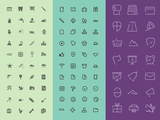
One of the most popular design trends of the past few years has been the flat design style. With little depth and effects, it can help make a website or design have a unique, clean style that doesn’t overwhelm the viewer.
To create a flat design, most (if not all) of the elements need to have a flat style. This includes the icons, if used.
In this post, I’ve gathered up some great free flat icon sets to download.
Icons by Min Tran
Business Icons
Business Icons by Peachy
Arrow Icons
eCommerce Icons
Weather Icons
CSS Ready Icons
Fruity Icons
Swifticons
Hope and Rise
Related Posts
Free Flat Icon Sets You Must Download
Fresh Icon Sets You Must Have
10 Great Free Icon Sets
Stunning Examples of High Quality Icon Design
10 High Quality Icon Sets from deviantART
Stockvault Blog
.
Blog
.
<span class='date ' tip=''><i class='icon-time'></i> Jul 16, 2015 12:05pm</span>
|
|
No, that isn’t a typo in the title. One of the former radio announcers writes a column for the local suburb newspaper for the area we live. He stated that he uses Google analytics to find out how people find out about his website of http://www.sonnyradio.com maintained by himself, Sonny Melendrez.
He was sharing how honored he felt that someone found his website using the search term "how feel better in life" and spent time reading different postings. I know I feel that same way whenever I see the hit counter go for the blog posts I write. I feel honored that someone took time to read my blog, leave a comment or both. It is always daunting for small blogger or new bloggers to write posts thinking no one will be interested or read what I have to say.
I wrote a book that was recently released around September 1, 2014 titled, "Kid Detectives - Classroom Gamification Learning Activities: Mystery Adventure Quests." I have only sold one book but whomever purchased that book I would like to thank them personally for believing in me and taking a chance on the content presented in the book as being a value to them. I was re-reading it recently and told my husband that the book was actually really well written and I could see how teachers new to mystery adventure quests, gamification, or using technology in the classroom would find some golden nuggets of truth and value in the book. Designing and implementing quality mystery adventure quests is a difficult and challenging task and implementing learning activities like mystery adventure quests is so rewarding.
It goes back to every hit my blog receives, every person who subscribes to my blog and any individual that takes time to leave a comment. I am honored beyond means when this happens and feel so blessed at the smallest of successes. I do not take writing a book or writing a blog for granted - both are ways that I share my knowledge to help educators around the globe transform their teaching and make school interesting, valuable and meaningful for all students. I didn’t enjoy going to school as a student and believe that my ‘gift’, as Steve Harvey talks everyone having a specific gift in his latest book "Act like a Success, Think like a Success", is to make a difference for students by impacting instruction via their teachers.
Upon personal reflection, what is your unique gift? How do you share your gift with others? Feel free to leave a comment and let’s share our gifts!
Kim Caise
.
Blog
.
<span class='date ' tip=''><i class='icon-time'></i> Jul 16, 2015 12:04pm</span>
|
|
Today we have a set of grunge, cracked and worn concrete surfaces that can be used to spice up your designs. Enjoy!
Download all textures as ZIP from copy.com (22.4Mb)
Did you like these textures?
Let us know by leaving a comment, and you can even post a link if you used them in your artwork.
Related Posts
Free Texture Friday - Gritty Concrete Wall
Free Texture Friday - Smoke
Free Texture Friday - Abstract Grunge 4
Free Texture Friday - Black Leather
Free Texture Friday - Crystallized Silica
Stockvault Blog
.
Blog
.
<span class='date ' tip=''><i class='icon-time'></i> Jul 16, 2015 12:04pm</span>
|
|
Al Roker, weather forecaster for the Today morning show, is hosting a 34 hour weather-a-thon where he will be on air talking about weather in an effort to raise money for the USO while attempting to set a Guinness world record for the longest uninterrupted live weather broadcast. He is using a Crowdrise campaign to raise money for the USO from donations submitted by viewers.
Al gets a five minute break every hour on the hour or he can save the time and take a longer break with the five minutes per hour he builds up and saves. I love how he is using social media to raise money and attempt this world record.
You can go to http://today.com and click on the #Rokerthon image to view the live broadcast. He started at 9pm CST and will continue until 7am CST Friday morning.
In order to break the world record, he has to follow the rules below:
He must talk about weather for the entirety of the time, outside of breaks.
He can talk about current weather, and weather seven days in the past or seven days ahead.
For every 60 minutes completed, he can take a five-minute break. The breaks can carry over and be combined, so if he goes four hours without stopping, he can take a 20-minute break.
Two independent witnesses must also be there at all times.
This will be a difficult, but worthy challenge for Al Roker and a great way to bring attention to the amazing things the USO does for the military community. Join in the fun and be sure to share this with your colleagues and students!
Kim Caise
.
Blog
.
<span class='date ' tip=''><i class='icon-time'></i> Jul 16, 2015 12:04pm</span>
|