Blogs
|
Imagine you just landed a job and its your first day, you go in ready to be trained so you can do the best you can and be successful at this new job of yours. After you’re introduced to a few of your co-workers, they show you to the area where you’ll be working, but instead of training you they tell you they train with the trial by fire method and you’re on your own, no walk through, no asking questions, nothing. They just leave you alone to your own devices and you have to figure it out. May the odds be ever in your favor.
Some people can learn through the trial by fire method, but a lot of people just get confused and fumble around until someone corrects them. So why would you extend the process by making them suffer through that? Lets make things easier on everyone and properly teach people.
Everyone has his or her own way to learn or a way that helps them understand the best, but some methods don’t help anyone and usually make things harder or could put people in danger. So we’ve come up with a short list of methods you should never ever use when trying to teach someone.
Trial By Fire
With this method the ‘victim’ is basically going into the situation blind, they don’t know what to expect, and if they’re operating machinery they could hurt themselves or someone else because they don’t have the proper training. Just remember, if you play with fire you get burned.
The Pacifist
Don’t be this guy. If you can’t take a stand and lead the person you’re teaching it’s basically the same as the trial by fire method. People want to be taught, it’s in our nature, so take a stand and lead them. If you do take the lead, they’ll respect you more and see you as a mentor or someone who they can ask questions, and they’ll do the job correctly. It’s a win win.
The Drill Sergeant
Attention! If you’re super aggressive and down right intimidating to your student, they’ll be scared to ask you questions or approach you when they need help with an issue. This can be especially harmful because they wont ask you when they’re unsure of something, and when they fail because they don’t understand chances are they’ll probably give up. Can I get a sir yes sir?!
The Riddler
Do you like it when someone answers your questions with another question? Do you like having to do way more work to get the information you need, when someone could have just told you it? Do you like risking the chance of entirely failing because instead of answering your question they asked you one? Or do you like when someone is straightforward and tells you how it is, and exactly what you need to know? Just tell people how it is, don’t ask questions. If this is you, watch out for a bat themed superhero, he might be after you.
No Supplement
Most people can’t learn just from hearing, they need examples and visual references to remember what they’re learning by. If you don’t supplement what you’re trying to teach with visual aids or some way to remember what you’ve taught then nothing with stick with the learner, it will go in one ear and out the other. How do I do this again?
With the pace that society moves today people expect learning to be quick, easy, and even enjoyable. The issue with learning being quick and easy is that if it’s too quick then they most likely didn’t learn much. The hard part is finding an easy way to make learning quick, easy, and enjoyable for the trainee. Luckily, KMI learning can make that happen, they can tailor an e-learning program to your standards; it can be basic or completely customized to your needs.
E-learning makes the process interesting by integrating interactions so the user isn’t just watching a video and attempting to soak up all the information.
While e-learning isn’t the answer for everyone, it definitely can be a HUGE tool for anyone.
If you liked this article you might also enjoy Audience Based eLearning: eLearning has Redefined the Learner, but the Learner has to Define eLearning and The road to eLearning hell is paved with great intentions, good content… and lousy delivery.
The post 5 Methods you Should Never Ever use when Trying to Teach Something appeared first on KMI Learning.
KMI Learning
.
Blog
.
<span class='date ' tip=''><i class='icon-time'></i> Jul 16, 2015 11:59am</span>
|
|
Todays pack of textures features gritty rusted metal textures that I shot yesterday at an abandoned industrial building. As always, these are nice as overlays and design elements, free for personal and commercial usage. Enjoy!
Download all textures as ZIP from copy.com (68.5Mb)
Did you like these textures?
Let us know by leaving a comment, and you can even post a link if you used them in your artwork.
Related Posts
Free Texture Friday - Grunge Metal 3
Free Texture Friday - Gritty Rust
Free Texture Friday - Grunge Metal 2
Free Texture Friday - Smoke
Free Texture Friday - Black Leather
Stockvault Blog
.
Blog
.
<span class='date ' tip=''><i class='icon-time'></i> Jul 16, 2015 11:59am</span>
|
|
I’ll bet you’re not surprised to hear that the answer is "it depends". Let’s look at a possible scenario. We’ll use as an example a growing company with 500 employees that needs an eLearning module on regulatory compliance that all employees must complete. The three options they explore are to build it themselves, to purchase a generic library course at $20.00/learner or to have a custom content developer build a highly interactive course module just for them for the cost of $15,000. They reject the first option because they wisely recognize that they lack the skills and resources they need to do it well. So, for option two the math looks simple. 500 X $20= $10,000. Clearly less expensive than option three, right? Yes, for year one, but remember, we said that they are growing so let’s say they add 100 employees a year for the next 5 years. That’s an additional 500 and an additional $10,000. So now the total investment in the library course is $20,000 and growing each year. Meanwhile the custom content is still $15,000.
But "wait", you say, "regulations change. The course will need to be updated" You are right but our experience has been that on average the changes, when they do come are quite small, costing less than $500 per update. So let’s say that over the course of the five years the module needs to be updated twice. So the total investment in the custom course is $16,000. They’re still ahead.
Now let’s say that all employees need to retake the module every two years. Hold on now, the math gets complicated:
Learners
Catalog
Custom
Year 1
500
$ 10,000
$ 15,000
Year 3
700
$ 14,000
$ 3,500
Year 5
900
$ 18,000
$ 3,500
Total
$ 42,000
$ 22,000
So it looks like, in this case, things have tilted toward custom content from a price standpoint alone. (There are lots of other benefits to custom content but we’ll cover them elsewhere) I guess I should explain what the $3500 is under custom in years 3 and 5. That is the cost of refreshing the module. It’s more than just minor updates. It’s building a couple new interactions or a new scenario. It’s replacing a video message from the CEO. It’s that kind of thing. We surely don’t want people having to take exactly the same course over and over even if there are two years in between completion.
I admit that this is a simplistic scenario and there are a number of variables that are not accounted for. For example, most catalog providers offer sliding scales for usage and for length of contract. That said, I believe the point is a valid one. Custom content requires more upfront money but in many cases is less expensive over time.
If you liked this article you might also enjoy The road to eLearning hell is paved with great intentions, good content… and lousy delivery and The intangible Return On Investment of Custom e-Learning
The post Is Custom Content Really More Expensive Than Catalog eLearning Content? appeared first on KMI Learning.
KMI Learning
.
Blog
.
<span class='date ' tip=''><i class='icon-time'></i> Jul 16, 2015 11:59am</span>
|
|
One of the most common types of travel is taking a road trip, which is a trip by car or other vehicle using roadways in a given country to travel from destination to destination.
Road trips can be of any length, but usually they are relatively long, involving travel on interstate highways or expressways, and can involve staying at hotels, camping, or taking shifts while driving to reach the final destination.
One of the common things people do on road trips is to take photographs along the way, and here’s 30 road trip photographs to inspire you:
Road Trip by Aleksander Smid
Driving by Cristian Negroni
Road Trip by Dynnnad
Fieldtrip by Andrei lancu
Hit The Road by Neelima Muneef
Road Trip by Gabriella Corrado
Road Trip by David Freid
Road Trip by David Aide
Road trip by Nicole D Maya Ñ
Soon by Sebasten A
Road Trip by Michelle Kerr
Road Trip by Amarate Tansawet
Road trip by Graham Holiday
Road Trip by Zerda-Fox
Road Trip by Afonso Martins
The Road Trip by Debbie
On The Road by Mazzman
Road Trip by jess WB
Road Trip - Hungary 2014 by Barbasboth
Road Trip by OliviaBolivia
Road Trip to Bike Fest 2010 by Marius Mellebye / 276ccm
Foggy Road Trip by Arturo Lopez
Road Trip by Eric Lowenbach
Road Trip! 1280 x 800 by Milkystepsx3
Desert by Loic Kernen
Road Trip by Katie Mead
Road Trip Red by tundra-timmy
Sunrise in the side view mirror by Umut Dogan
Road Trip by Sonia Stone
Going to the Sun Road, Glacier National Park, Montana by Digital Artwerks Media
No related content found.
Stockvault Blog
.
Blog
.
<span class='date ' tip=''><i class='icon-time'></i> Jul 16, 2015 11:59am</span>
|
|
Comprehensively defining eLearning can be a challenging and daunting prospect. But in his article, "Starting an eLearning Program - Here Are The Basics," (2015) Ted Stoecker does just that. In addition, Stoecker makes the world of eLearning accessible to organization leaders and managers who are looking to increase the effectiveness of training. He also addresses other important aspects of eLearning programs, such as cost, user-friendliness, and some of the challenges faced by organizational decision-makers who are grappling with the dynamic arena of employee training.
eLearning is a phenomenon of the technological age. Even so, this technical approach to training may seem futuristic. In fact, we are increasingly dependent on technology to learn new information, or to augment information that we already have. Broadly stated, even those of us who were trained by shadowing a senior employee have used more modern methods to augment what we’ve learned at the workplace. A large percentage of the general population uses mobile technology, and uses mobile devices to query, and obtain, information. This is even more pronounced when one considers Millennials: an entire generation of people for whom technology is simply part of the fabric of daily living. So, while employing an eLearning program for training a new generation of employees is a must, it is fast becoming vital to effectively training our existing workforce as well.
eLearning can be used to provide the information that is common to the entire industry of Logistics and Warehousing. Federal and State regulations, health and safety guidelines, general equipment operations and other standard operational practices can all be taught using training programs customized for that use. The eLearning program can also be customized for organization- or even department-specific needs. Such is the flexibility and adaptability of eLearning.
Rather than creating and developing an entire department within your organization to address this aspect of training, talk to an eLearning specialist about the programs and methods that work best for you and your organization. The original article was posted on the P&O blog, an e-learning resource for the distribution and manufacturing industry. To read the whole article on how eLearning can enhance the effectiveness of your training programs click here.
The post Summary: Starting an eLearning Program-Here are the Basics appeared first on KMI Learning.
KMI Learning
.
Blog
.
<span class='date ' tip=''><i class='icon-time'></i> Jul 16, 2015 11:58am</span>
|
|
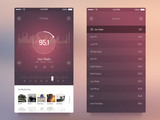
One of the most popular types of applications, both web and mobile, are music applications. People love music, and especially being able to listen to it anywhere, anytime, whether they are on the go, or at their computer.
As such, it’s important to have a creative app interface that is friendly for both mobile, web and desktop, and that gives access to the music features users want. This challenge makes music app design a great study topic for designers.
In this post you’ll find some creative music app interface designs that get the execution right:
FM Radio UI
M Zone
FM Radio UI
Deezer
FM Radio UI
Radio
Music App
YouRadio
Voice
Imagine
Related Posts
Pixel Perfect Audio and Music Player Designs
Free Browser PSD Mockups to Download
Free Flat Icon Sets to Download
Creative Transparent Business Card Designs
Flashy Audio Player Designs
Stockvault Blog
.
Blog
.
<span class='date ' tip=''><i class='icon-time'></i> Jul 16, 2015 11:58am</span>
|
|
What is Millennialish? Well, let’s be honest: we made that one up. But when we say "Millennialish,", we mean more than just the language of Millennials. It’s a worldview — a mindset — of an entirely new generation that is now entering the workforce.
Let’s face it: those of us who have been in the workforce for a while may have noticed that there are some new kids on the block. Those of us who have been paying closer attention may notice that they’re… rather different. And it’s not just the violently purple, green, cobalt or red hair. They dress differently, they communicate differently, they think differently. They use English words, yet it sometimes seems like they’re speaking another language. They "BTW," "IDK" and "LOL" their way through the day, connecting through phones and devices more than they seem to connect in person. Apparently it is even possible for these folks to "ROTFL." These are the young people of the Millennial generation. And they’ve been creating quite a stir in the professional journals since they started entering the workforce. In case you need it, a dictionary of text messaging abbreviations is available here.
Meet the Millennials: the next generation of young folks who are the new-hires of the present and the future. This series, "Do You Speak Millennialish…" looks at the training issues that arise when 2 distinct mindsets coexist in the same workspace. We’ll look at some of the potential barriers to realizing training objectives and goals that can come between people from either side of a generational divide. And we’ll discuss the impact of recognizing, and creating space for the new worldview that Millennials represent.
Here’s an interesting point: the need to classify Millennials as Millennials is a terribly un-Millenniallish thing to do. Categorizing and classifying societal groups of people in a population is a practice common to previous generations. Millennials themselves tend to be far more cosmopolitan, accepting and community-oriented. This is a generation that grew up surrounded by the world-wide web: the world is literally at their fingertips. Their upbringing included internet access to an entire planet’s cultures, religions, ideologies. Most Millennials in the workforce are profoundly unconcerned with age, sex and gender, dress codes, ethnicity and religion, and other distinctions which helped define the world for us more senior types. Being accepting is a common value for Millennials. Community, innovation and creative ways of looking at issues is a practice far more common than with previous generations. And this allows for a level of individuality and personal self-expression previously reserved for the likes of Cyndi Lauper, Cher, and Prince.
Those of us who are Gen-X and older may still think of cellphones and tablets as "gadgets" and "toys." And we have varying degrees of a love-hate relationship with our devices. Millennials, grew up with internet technology the way the rest of us grew up with light switches. It’s part of the background of life. Whether it pertains to work, play, leisure or personal interest, almost any piece of information can be obtained from the internet, instantly accessible by one device or another. Most Millennials cannot conceive of a time when people didn’t communicate globally, and instantly.
This all has a profound impact on learning in general and eLearning in particular. In this series, we’ll check out how "traditional" training methods impact this new generation of employee. And we’ll explore the vital role of technology in training, both for Millennials, and for the workforce at large. We’ll look at matching the content and delivery methods of eLearning to the attitudes and mindsets of the Millennial employee. And we’ll also take a look at the "why" of developing innovative ways to train all employees.
In the next blog post, we’ll talk about how our time-honored, traditional training methods affect the Millennials in our workforce, and the impact that effect has on our organizations. We’ll also look at creating eLearning systems that speak to, and incorporate, Millennials’ core values. We’re looking forward to discussing training and eLearning for Millennial with you.
To learn more about eLearning check out The road to eLearning Hell is Paved with Good Intentions… and Lousy Delivery and Audience Based eLearning: eLearning has Redefined the Learner, but the Learner has to Define eLearning
The post Do You Speak Millennialish? Navigating a Workforce of Millennials with a Gen-X Mind appeared first on KMI Learning.
KMI Learning
.
Blog
.
<span class='date ' tip=''><i class='icon-time'></i> Jul 16, 2015 11:58am</span>
|
|
Todays textures are from an old gritty and dirty concrete wall that I edited with Photoshop to give it a old and vintage feel. I hope you can use them for something cool. Enjoy!
Download all textures as ZIP from copy.com (53.5Mb)
Did you like these textures?
Let us know by leaving a comment, and you can even post a link if you used them in your artwork.
Related Posts
Free Texture Friday - Gritty Rust
Free Texture Friday - Vintage Stone Wall 2
Free Texture Friday - Gritty Wall
Free Texture Friday - Worn Concrete
Free Texture Friday - Gritty Grunge Wall
Stockvault Blog
.
Blog
.
<span class='date ' tip=''><i class='icon-time'></i> Jul 16, 2015 11:58am</span>
|
|
Have you ever watched one of those really great documentaries? You know, the kind where you’re pulled into the material, even if you may not be terrifically interested in the topic to begin with? Then you suddenly find you’re able to have a really intelligent conversation about the topic later. How did that happen? It’s simple: you were entertained, and the creators captured, and held your attention.
That’s one of the ways that eLearning works. Learning is fun and engaging, even entertaining. You retain more. And it’s effective.
Think back to your first day on your first job. You might have participated in an orientation, during which management addressed you as a new hire. You might have gotten a tour of the company. You would have been given handbooks and manuals, and reviewed those folders throughout your orientation experience. You would have sat through lectures about policies and procedures. You might have been one of several people in that batch, or you may have been a single new hire for your specific position. Having completed that part of the training, you would then "shadow" someone for a period of time, then eventually take on the full responsibilities of your job. And you would have gone through the process dutifully and confidently — perhaps even stoically — hoping that you would eventually feel comfortable with your coworkers and colleagues, and with your new position and accountabilities.
If you’re a Millennial entering the workforce, you would find the above scenario frustrating, and in a word, boring.
And boring almost inevitably leads to employee turnover. Which costs. A lot!
Resources that are spent hiring, training and developing new employees often walk right out the door because the employee is not satisfied with his or her experience of that company, and they leave. That experience begins on day one of training.
Consider that the Millennial generation has no qualms about seeking employment elsewhere if they don’t experience immediate satisfaction with their job. And satisfaction to this new generation means: a personal connection to what they are doing, a company that shows it cares, interactive learning, and way to discuss their training socially. Embedded within these core values is a need to trust their employer, and to be well-informed about the company with whom they are working. In addition, Millennials are resourceful, independent and adventurous.
So how does an employer effectively harness the power of eLearning for a new generation? It’s actually very simple: find out what Millennials need, and address those needs.
First, present the material in an engaging, even entertaining way. eLearning blurs the line between entertainment and training. This is not to say that everything is a sitcom. But, communicating the content in everyday language allows for a space of relatedness between the organization and its employees. Many eLearning systems employ scenarios or real-life situations as teaching tools. Learners experience and participate in the training rather than simply "downloading" the information into their brains.
Next, break up the learning content into bite-sized chunks of information, rather than a huge lump of lessons or lectures. Vary the presentation. Only a few people from any generation learn effectively if presented with an hour-long lecture. Different characters, changing screens, even changing background music, can all enhance and enliven the learning experience.
Further, make room for interactivity. Allow for learners to discuss the material. Learners can review the material independently, and also as a community. Include "knowledge checks" in the Learning Management System so that learners can track their own progress. This gives each person the experience of personal involvement in their training process.
Along the way, be aware of the flexibility and informal nature of eLearning. This provides a low-pressure, highly effective way of learning important and vital information for all employees, not just Millennials. In turn, this means that all employees can receive ongoing training as the company grows and adapts to a changing world. Additionally, creating ways to engage your learners gives the impression that the organization cares about what their employees are learning, and how they are learning it.
People respond very positively when they know that their organization cares.
In our next blog post, we’ll talk about how eLearning benefits people by developing skills and skill sets. We’ll look at eLearning in terms of personal and professional growth.
The post Do You Speak Millennialish? Traditional Training vs. eLearning for a New Generation appeared first on KMI Learning.
KMI Learning
.
Blog
.
<span class='date ' tip=''><i class='icon-time'></i> Jul 16, 2015 11:58am</span>
|
|
We discuss the trends and issues we observed during the weeks of December 22 through January 5. Understandably, several of the resources we flipped into our Flipboard magazine (http://bit.ly/trendsandissues) were reflections or "look-backs" on what took place in 2013. Major trends and issues that were discussed were big data, gamification, MOOCs, mobile devices (specifically tablets [&hellipThe post Episode 4: A Review of Trends & Issues in Instructional Design, Educational Technology, and Learning Sciences for December 22, 2013 - January 5, 2014 appeared first on Trends & Issues.
Trends and Issues team
.
Blog
.
<span class='date ' tip=''><i class='icon-time'></i> Jul 16, 2015 11:58am</span>
|