Blogs
|
A colleague of mine has identified that she would like to progress her career into instructional design, and I was called in to suggest ways in which she might achieve this goal. So I thought I'd turn it into a post.Many companies are developing internal learning materials without recourse to an ID, with varying results. But if you're developing third party learning resources for someone else - particularly someone who's going to pay you for it, you'd probably be best advised to have some instructional design skill on your team.I'm not going to reinvent the wheel, here. The subject has been covered by others, so I'm going to point at some of those. There are formal qualifications out there that can be obtained: diplomas, Bachelor's degrees, Master's degrees and beyond.But I'm not convinced that that's necessarily the best way to go. While I consider it more important to understand learning theories than some appear to do, and acquiring skills is always useful, I think the core of a good instructional designer is an ability to champion the learner/user. The one person who is seldom present in any of the conversations or planning meetings is the person who is going to use the resource after go-live. In my view, the ID's job is to represent that person. And this requires a level of empathy and insight which I don't think can be taught. A person who has this sort of empathy and insight will be able to learn the theory and acquire the skills as they go, and with a useful sense of context from the outset, in my opinion (with which you may differ, of course).I would expect far more value out of a programme such as the one offered by the Ministry of Instructional Design. The contributors are genuine movers and shakers in the field. I'm not sure if they still run them, but it would be well worth finding out.I would also suggest making yourself a virtual apprentice of some of the luminaries in the field. there are a few ways of doing this:Participate in something like #lrnchat - a tweet chat for learning professionalsRead blog posts such as this one by Cathy Moore and this one by Christy Tucker. Both blog posts contain a fair amount of 'link love', so there's a wealth of information to be mined there.Participate in MOOCs like this oneAttend conferences and choose seminars that will help you move towards your goal. There is such a long list of suitable ones, and I'm aware that you may live in a different part of the world from me, so I will resist the temptation to list all the ones that I try/would like to attend.I hope you find this helpful. It's not meant to be exhaustive, but it should provide a useful 'starter for ten' as the saying goes.
Karyn Romeis
.
Blog
.
<span class='date ' tip=''><i class='icon-time'></i> Jul 23, 2015 07:49am</span>
|
|
SMART Technologies recently released a new iPad app, called SMART Notebook app for iPad. This might be big news for a lot people who have a SMART Board and an iPad in their classroom. My school has three SMART boards on campus, and I have access to one of them in my computer lab. We also have been testing out iPads in the education setting, with teachers and students, over the past year or so. I was really excited to hear about an iPad app for SMART Notebook, but initially, I wasn't sure what to expect from it. Does it allow a user to connect to the SMART Notebook software on their computer? Is it a standalone "whiteboard" app that allows the user to draw and create slides? Will the app display on an overhead projector?Well, I took the hit and purchased the app for $7.00 to see what the app is all about. $7.00 is quite expensive for an iPad app, especially since I'm working with a public school budget and I'm always on the hunt for FREE or, at the most, $0.99 apps.Up front, SMART Notebook app for iPad is a very basic "whiteboard"app. You can create notebook files and slides within each file. You have a set of 5 tools to use with the whiteboard space. The Select Arrow, a Pen, an Eraser, a Text Tool, and an Insert Photo tool.The Pen Tool comes with a set of 4 colors (black, blue, red, and green) and 2 highlighters (yellow and green). The text box comes with an assortment of options, such as Size, Font, and Color. You can also set you text to bold, italics, or underline, and you can align the text within the box. The one thing I dislike about the text options is the layout of the color selection. The colors are organized in a long column. I would much prefer a color wheel, where I have more options to choose from. It would also make finding a color much easier as I wouldn't have to scroll through a list to find what I want.The Insert Photo tool gives the user the choice of either inserting a picture from their camera roll or a photo can be taken with the built in camera.Overall, I think $7.00 makes this app way overpriced for what it offers. There are many other "whiteboard" apps available on the market, some a lot cheaper and others in the $7 range offer more features.If you already have SMART Notebook 11 installed on your computer (which is free with a SMART board), you may just want to consider an app like Splashtop 2. The iPad app is $4.99. It allows you to remotely connect to your computer. Going this route will give you access to SMART Notebook 11 on your iPad with all the other features for a smaller pricetag.If you're using SMART Notebook app for iPad, let me know what you think in the comments below.
Michael Fricano II
.
Blog
.
<span class='date ' tip=''><i class='icon-time'></i> Jul 23, 2015 07:49am</span>
|
|
Today, I had the privilege of observing 7th grade classes that participate in a 1:1 laptop program. I sat in on four periods, Science, Math, Social Studies, and Language Arts, during the school day at the University Laboratory School, a public charter school in Hawaii.Each student in the 7th grade is given a Chromebook and a school issued Google Apps for Education account.A teacher at my school initiated this observation in part because our school has been told that we will likely participate in a 1:1 laptop program sometime next school year, as some part of a Race to the Top Common Core Technology Initiative. About all the information we've received so far comes from a local newspaper article, Hawaii joins laptops-in-schools talks (if you can't view that link, the article can also be found at NPR, Main School Laptop Contract To Be Open to Others).I made the following observations during my visit today:1. GAFE (Google Apps for Education) is deeply integrated into almost everything the students do during class. Teachers use Google Drive to display and archive the daily agenda.During a math class, students shared a Google Slide to work on daily math problems, with students working in groups, and groups were assigned to one slide that they were responsible for filling in with their observations, questions, solutions, and diagrams. In a language arts class, students worked in groups of four and were wrapping up a Google Site full of student generated book reviews and novel excerpts. The students even created their own artwork with photo apps and Google Draw to match their reviews and excerpts.In a Science class, student took a quiz by creating a chart in Google Draw. They then added it to a shared folder with the teacher.In Social Studies, students created their own Google Slide presentation and a handful of students presented a current event they found in the news a few days prior. The rest of the class took notes on the current event in their own Google document, likely shared with the teacher for record keeping. They also created their own Inca Quipus using Google Draw and then turned it into somewhat of a game. They shared their game with another student in class through Google Drive.2. Most classes took full advantage of the 1:1 program by going completely paperless. However, a few classes where about 50/50. I found this perplexing, because in one instance a teacher would have the students take a quiz in Google Drive, and then they would pull out their composition books and start writing down notes. I suppose this has to do with the level of comfort that teacher has with GAFE. But why note keep those notes in Google Drive?3. Work stored in Google Drive becomes an archive and a Portfolio. In a math class I observed, the teacher used one Google Slide for all the math problems the class worked on since the beginning of the semester. The file was shared with every student in the class so that everyone had access to all of the work and all of the notes generated during class. This creates a running record of the learning going on in class and shows how the math they are learning scaffolds through the semester.4. Parents need to be stakeholders in this initiative. There needs to be some sort of buy-in from parents so that they are comfortable with their child's increased access to technology and the internet both in school and at home. The University Lab School approaches this buy-in by conducting the following:Students are given an extensive AUP and are also required to pass an AUP test before given a laptop. I think the idea of an AUP test is great! It tells the student and the parent, "This document is important!"All students go through extensive cyber-bullying and internet safety training/workshops.Parents also receive workshops on cyber-bullying and internet safety conducted during Parent Nights.Students create safety videos in school and then upload them to Youtube and share them with their families. I love this idea! It allows the students to be creative. It reinforces the training they receive and the purpose of the AUP. And they have an authentic audience.5. Teachers need Professional Development before they receive the technology! I find this part so extremely important, as do the teachers and leaders at the University Lab School. And frankly, this scares me the most with our own 1:1 laptop program. You can't just give a class technology and expect them to understand it. Well, maybe you can with the students. But not the teachers! I think the approach that this school takes with PD is a great model. Teachers received one full year of PD. Teachers also became the leaders of their own PD and each teacher was required to learn a skill and then provide at least one workshop to their peers. Learning Communities were also set up, and based on the social structure of the school, "Pillars of the Community" were selected to provide the tech support within the school. I see a "Pillar of the Community" as an expert of sorts; someone that the rest of the grade level, or building, can go to for help.Seeing a 1:1 program in action is exciting! And seeing GAFE integrated into that program is even more exciting! The process isn't easy, but once a school is organized and the students and teachers have received proper professional development and training, the possibilities are endless!Has your school initiated a 1:1 program? What benefits have you found with you and your students? What pitfalls have you run into and how did you resolve them? Leave a comment below and join the discussion!
Michael Fricano II
.
Blog
.
<span class='date ' tip=''><i class='icon-time'></i> Jul 23, 2015 07:49am</span>
|
|
Yesterday, from several quarters, I found myself listening to statistics, reports and predictions on the subject of university education in the UK (and a little about the global situation). I'm not a futurologist. In fact, my stomach twists into a knot when I am asked to make any predictions about the future of learning. However, I can't help wondering whether universities are going to start disappearing or being 're-imagined' pretty soon. I have provided links wherever I have them. Please feel free to follow those for further information. First, some background.Up to 1998, there were no tuition fees for first degrees in the UK. In 1998, universities were required to pay up to £1,000 per year for tuition. In 2004, that increased to £3,000 (in England - other fee structures apply elsewhere). In 2010 that trebled to £9,000 a year. From a personal perspective, this was right at the time my sons would be looking at starting a university education. Neither of them went that route, and one made the decision based on cost.The average predicted debt on leaving university in England, for those who started in 2012 is over £59,000. Graduates 'only' have to start paying back their study debts once they start earning at least £21,000 per year. Outstanding debt will be written off after 30 years. 30 years! By this time, these people will be in their early fifties. My age. By which point in their lives most of them will also have wanted to have had a wedding (£15,000+), take out a mortgage (£30,000 deposit and a mortgage of £120,000), buy cars, do some travelling and generally live their lives. They will have needed to look into educating their own children. Many of them may, in fact be grandparents by then. The thought of still having a study loan hanging over my head at this stage of my life is just beyond depressing.61% of graduates find work within six months of leaving university, and will earn an average of £18,000-£24,000 in their first job. So there might not be a lot of time between graduation and the beginning of loan repayment for that group. What of the 39% who take longer? (rhetorical question)Organisations are finding that graduates don't leave university with skills that can be applied on the job. This might be due to a disconnect between what academia considers important and current practice within the corporate world. Whatever the reason, large investments often need to be made into the development of graduates before they begin to play a useful part in the achievement of the organisation's strategic objectives.Having paid a fortune for their university education, students are becoming more inclined to complain when their expectations aren't met. Universities are self-regulating, unlike schools. This, I learned yesterday, is a major issue for several graduates. There is no body they can go to, to escalate the situation when they are dissatisfied. And many of them are dissatisfied. More than 20,000 students complained to their universities in 2013. They have begun to see themselves as consumers and believe they have been sold a sub-standard product. According to a programme on BBC Radio 4 yesterday, students find that the reality of a module often doesn't match the description which formed the basis on which they chose it. They find that they are unable to enrol on the modules they want, and must accept less-preferred alternatives for the same price (you can't have this Porsche 911, but here is a Fiat Punto for the same price). One student's dissertation supervisor was unavailable to him for five months leading up to his submission date, and the poor grade he got for his dissertation pulled his overall degree down from a 2.1 to a 2.2. Students are finding that the degree they have paid so much for doesn't qualify them for anything in particular - one young lady I know has just left university with a degree in German and has discovered that it doesn't open any doors that weren't already open before she earned her degree.When I was in my final year of school (a long time ago), the field of computing (IT wasn't a term yet) was exploding. It wasn't yet the time of the personal computer, but the computerisation of organisations - both public and private - was rampant. In desperation, organisations approached schools. One day, some captains of local industry came into our (higher grade) maths class and offered to test us all for the aptitude to work with computers. I declined, but that's another story. Those who showed aptitude were offered jobs straight out of school at decent starting salaries (more than my Mom was earning at the time) and the opportunity to gain a qualification on the job.Might we be seeing a return to that? We're certainly seeing an increase in apprenticeship programmes. Not just in number, but in disciplines. In my office alone, we have three apprentices: one in admin, one in HR and one in Finance.Considering the cost of training up their graduates anyway, and they higher salary they can command. Organisations may start recruiting straight from school. Offering young people the opportunity to earn-while-you-learn and to obtain accredited qualifications on a personal portfolio basis which can eventually build up to the equivalent of a degree... and beyond.Will universities become irrelevant and even disappear? Will they begin to partner with organisations and run programmes that meet the needs of the organisations, with a changed accreditation model?I can see this approach being more feasible in some fields than others - the corporate world is one such example. Neuro-surgery, maybe not so much. But maybe over time, models can be developed for the most unexpected fields to be able to move to a learn-on-the-job approach.I will be watching with interest. To close, though - it is my observation that the recruitment industry is lagging behind. They're a little too wedded to the 'piece of paper' as an easy way to identify suitable candidates. The current situation must surely be a strong motivation for finding a different way. But perhaps that is a post for another day.
Karyn Romeis
.
Blog
.
<span class='date ' tip=''><i class='icon-time'></i> Jul 23, 2015 07:49am</span>
|
|
I've had somewhat of a disdain for the black navigation bar that Google gave us a while back ever since it's release. I do like it for it's easy access to Google apps but I hated it for having access to apps that I rarely ever use, and hiding other apps I do use very often in the More and Even More tabs.Well, I was listening to the EdReach Google Educast Podcast #090 this morning on my drive in to work and they mentioned a Google Chrome extension that calmed my nerves and made my day!Ala, Big G Black Bar Sorter!This chrome extension is very simple and easy to use and allows you to fully customize Google's black navigation bar. You can add any of the Google apps to the bar and now, with the most recent update, you can visit their website, http://biggblackbarsorter.com/ to add even more custom links that are not part of Google (i.e. Dropbox, Facebook, Twitter, etc.)!Check out my video on how the Big G Black Bar Sorter works!Video made with Camtasia 2!Thanks for watching! If you know of any other great Chrome Apps or Extensions, please share in the comments!
Michael Fricano II
.
Blog
.
<span class='date ' tip=''><i class='icon-time'></i> Jul 23, 2015 07:48am</span>
|
|
For the past few years in the UK, there has been a campaign to try to de-stigmatise the concept of mental illness. I guess this is my contribution. I'm not an expert. I have no training in psychiatry. My understanding of psychology and the human mind is rudimentary at best - mostly acquired as a result of working in the field of learning and development. Marginally enhanced by a personal, strictly amateur interest in the subject.When I was growing up, and even into my adulthood, terms like 'mental illness' were just euphemisms for other, less kind words, like 'mad' or 'insane'. I used terms like 'insane asylum' and 'mental hospital' without giving them a second thought. Mental illness was something that happened to other people. Abnormal people. Scary people.Then, in the early 90s, the wife of one of my husband's colleagues had what is still usually referred to as a nervous breakdown. She was placed in a facility that we referred to in hushed tones as a mental hospital. I had no problems asking her husband after her health and progress and offering him help and support - all in that exaggeratedly self-congratulatory sympathetic way, with the slightly tilted head. But I was less brave when it came to speaking to her - it was the elephant in the room that we didn't talk about. So I sort of avoided her altogether, which was unspeakably cruel.I knew that people like Spike Milligan had had what used to be called manic depression, and I saw the evidence of it in his brilliant work. I began to wonder about people like Mozart and van Gogh.It took a long time before I was prepared to admit to myself that I, too, experience mental illness from time to time. And I don't mean in that "my kids drive me nuts" kind of way. Nor am I 'insane'. My battle is with depression.I had always had a tendency to 'get a bit down' from time to time. Something which got no sympathy at boarding school. At other times, the smallest thing would send me off into a towering rage from which I struggled to return. The towering rages were shrugged off as PMS. I wonder how often women with mental illness are misdiagnosed with PMS.For me, the 'getting a bit down' thing became a bit more problematic. I was eventually diagnosed as having depression and given anti-depressants. The first lot gave me the raging munchies and caused me to gain weight, which made me more depressed. So I was switched to that miracle drug of the 90s: Prozac.I decided I didn't want to be dependent on chemicals to deal with the day-to-day reality that is my life, and I weaned myself off them - cold turkey is not advised.I have had repeat bouts of depression over the years - some of them so deep and so dark that I have not expected - or even wanted - to emerge from the other side. Calm, rational (or so they seem to me) thoughts of suicide have been very much the order of the day at times. During my studies in 2007-2010, an unexpected setback pushed me over the edge, and I suspect I had a nervous breakdown. It was a year before I was able to return to my studies without having a full-blown panic attack. I really should have sought professional help. As it was, my poor dissertation supervisor had to deal with tears and tantrums befitting a child, even after I got back to my studies.I have learned to distinguish between being unhappy and being depressed, for the most part. It took a while, and I still don't always get it right. I have managed to avoid drugs as a long-term solution, but I don't rule out the possibility that I might have to go that route at some point in the future. I know the view at the bottom of that dark pit, and it's not one I am keen to see again, but the odds are against me.Everybody is different. Each person will have their own experience of what works and what doesn't work. For me, it's as follows:Telling me 'I'm there for you' doesn't do it for me. I have no idea what that means. They're just words, as far as I'm concerned.Any sentence that starts with "At least..." isn't going anywhere helpful.Do not EVER ask "What have you got to be depressed about?" and then proceed to enumerate all the wonderful things in my life. I know I have a well-paid job. I know my husband adores me. I know I have a lovely home - which is a tip right now, because I'm wallowing. I know my kids are wonderful. And now I also feel guilty that that 'isn't enough for me', as some people perceive it, and I sink lower into the mire.Some people know exactly what the solution is, and they declare it with great confidence. When my depression continues, they either (a) feel helpless because they don't know what else to suggest or (b) get impatient because I should be over this by now.Being 'given space' is not helpful. People often politely step back and leave me to get on with it, on the understanding that I will contact them when I once again feel ready for human contact. All that happens is that I feel abandoned. Politeness is over-rated. When I do emerge, I will probably just continue to respect the space that you have created between us.I've made a nestOther people ask me what they can do for me and then disappear when I say I don't know or that there isn't anything they can do. When I am in that pit, I just want to relieve people of the burden of my company, and I'm useless at making decisions. I'm not going to ask for anything. Someone who pitches up, sits me down on the sofa with a chick flick and then sets about cleaning my kitchen or my bathroom will make more difference to me than someone who tries to dispense wisdom. Having a clean kitchen and bathrooms give me an enormous boost, but when I'm depressed I can't motivate myself to do it, which makes me feel worse.When I'm depressed, I can't bring myself to spend money on myself. I try to take up as little space in the world as possible, so I look a fright, which also makes me feel worse. Taking me to have my hair cut or giving me a home-spun makeover will also give me a boost.Bringing a home-cooked meal and relieving me of the anguish of watching my husband have to shoulder more than his fair share of the household chores would also help.Coming over with the makings for a day of crafting-and-making would get me up and busy, and the fact that we're not making direct eye contact might even enable me to talk more easily about what I'm going through. Don't feel under pressure to have answers.Coming over with your dog, and taking me and my dog out for a long and strenuous walk would get me out of the house and the endorphin flowing.On the subject of endorphin - an exercise session would help, too. So bring along your Davina McCall fitness DVD and do a workout with me.Popping over for a day of bad movies and worse snacks would help, too.When I start to emerge from the pit, don't avoid talking to me about it. Don't adopt falsely cheerful tones and ignore the elephant.Don't be astonished if there's a relapse. Recovery isn't linear.Don't patronise me. I might be acting like a petulant child at times, but I'm still an intelligent adult.Talk to me about your own experience. Ask me what I find helps me. Have a rational conversation with me. Don't treat me like a victim and steer me away from treating myself as such. For the most part, I don't want someone to 'fix' me. I'm not looking for a problem-solver. I need people who will demonstrate that they aren't going to be driven away by me at my unlovely worst.I have shared a cartoon, as you can see. I wish I could track down the original and give credit to the person who created it. If you recognise it, please let me know. It resonates with me.
Karyn Romeis
.
Blog
.
<span class='date ' tip=''><i class='icon-time'></i> Jul 23, 2015 07:48am</span>
|
|
I was browsing Pinterest this evening and came across an interesting Pin. The pin showed a picture of a QR Code printed on a piece of white paper with instructions to scan it with a QR Code Scanner. The pin originates from a 2011 blog post at Pencils, Paper and Pixie Dust which suggests to use the QR Code during Open House Night as an easy way for parents to get your contact information. I was intrigued by that idea and felt the urge to scan the QR code with my phone. When scanned, it took me to a simple page with school contact information for that teacher. What a wonderful idea! Its a quick and simple way to share your contact information with your (older) students and parents.So I had to explore this a little further. The blog post didn't really explain the "how". So how did this person create a QR Code that directs you to their contact information? After conducting a simple Google Search, I found this website which actually suggests readers use a QR Code generator at the Google Developer's Chart Wizard website. Added (7/25/14): I found a much better alternative to creating QR Codes with more customization and options! Try out QRstuff.comHere's how to create a QR Code that, when scanned, will provide contact information.Visit the Google Developer's Chart Wizard QRstuff.com (added 7/25/14)Click the "Editor" tabChoose "QrCode" from the Chart Type drop down boxIn the Text box type the contact information you want to include (email addresses and website links will automatically be hyperlinked once created)Adjust the size, background color, and margins (Create a large enough QR Code so it's easy for people to scan)You can Right+Click on the QR Code to save it as an image or copy the HTML code to paste into a websiteVoila! Now you have your own personal QR Code that, when scanned, will direct a person to a page with your contact information and appropriate hyperlinks. If you ever need to update your contact information, just return to the Chart Wizard, recreate the QR Code, and replace the old one.Now for the neat Open House idea!Once I created my QR Code, I saved it as an image to my computer. Then I created a quick and simple sign using a Google Drive document. I can print the sign and attach it to my front door in my classroom for any visitors to scan!You can see the Google Drive document here: http://goo.gl/GOwDQ"Make a Copy" for yourself and edit it to fit your needs!You may also want to suggest a QR Code Scanner app for your parents and students to use.Scan (iPhone) - https://itunes.apple.com/us/app/scan-qr-code-barcode-reader/id411206394?mt=8Scan (Android) - https://play.google.com/store/apps/details?id=me.scan.android.client&hl=en
Michael Fricano II
.
Blog
.
<span class='date ' tip=''><i class='icon-time'></i> Jul 23, 2015 07:48am</span>
|
|
Today, I came across a post on Google+ by +George Station about a MOOC being offered through Leeward Community College, a local college in my state, by Dr. Melissa Kaulbach. It begins on Sept. 2 and the focus is on "How to Teach Online!"News Article: http://facultyecommons.org/moocing-in-hawaii/How to Teach Online MOOC Blog Post: http://blogs.leeward.hawaii.edu/teachonline/Register for the MOOC: https://docs.google.com/forms/d/1ns58fQzCIOk6yTNqpIOBKXxiE19Oprs27xRcalI9mmU/viewformI'll be participating as much as I can, as I am both interested in the power of a MOOC as well as teaching online.
Michael Fricano II
.
Blog
.
<span class='date ' tip=''><i class='icon-time'></i> Jul 23, 2015 07:48am</span>
|
|
As part of the Financial Times digital learning week, I attended an early session today on women in digital leadership. Chaired by Megan Murphy head of Fast FT, the panel consisted of Molly Flatt from 1000 Heads (among other things), Anne Marie Imafidon from Deutschebank and Stemettes, Claire Koryczan from Decoded and Karla Geci from Facebook. Molly Flatt, Anne Marie Imafidon, Megan Murphy, Claire Koryczan, Karla GeciFor me, it is a frustration that we even still have to have sessions like this. When they are no longer needed, we will have arrived. Maybe.What came out of today's session is that the number of women in tech has actually declined over the last 30 years - in the US, at any rate. This saddens me. You see, when I was in high school in South Africa (far more than 30 years ago!), local industries were so desperate for computing staff (the term 'IT' wasn't being used, yet) that they were recruiting straight out of schools off the back of an aptitude test offered to kids with maths skills. Starting salaries were really good, and there was the promise of being able to work towards a degree while working. Right in the thick of the patriarchal, apartheid era it was the first profession in which gender and race were shoved aside and demand became the sole driver. So the declining numbers being reported today are disappointing - all more so since the skills around the field of tech have become more blurred. It's not just a case of writing code any more - there is a need for community management skills, social engagement skills... all those 'soft' skills have found their way into tech. And those are areas which have traditionally attracted a large percentage of women.The question was asked whether women have a problem with tech or the tech industry has a problem with women, and the general consensus was that it must be the latter, because the former was simply not true, based on the experience and research of the panel members.So having these women as role models for women starting out in tech is important. Having organisations like Stemettes giving girls confidence to operate in the science/tech space perhaps even more so, since this addresses the matter at grass roots level (because, let's be real - few kids will have heard of these women, yet - they don't really blip on the average young person's radar). I'm not sure that I came away with a fistful of answers, but I would suggest that perseverance in raising awareness is at the very least a start.However, I would be loathe to see women pressured to move into senior management roles or risk being seen to be letting the side down. Leadership is not the same thing as management or seniority (for example, I would contend that Malala Yousafzai's achievements make her a leader), and we need to take care not to conflate the two concepts. I would also like to see women in the role of specialist practitioner, becoming leaders in their field by dint of the sheer quality of their work and the level of expertise they gain, and being afforded the same level of respect, support and mentoring as captains of industry.
Karyn Romeis
.
Blog
.
<span class='date ' tip=''><i class='icon-time'></i> Jul 23, 2015 07:48am</span>
|
|
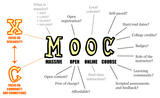
Author: Mathieu Plourde {(Mathplourde on Flickr)This week marks the beginning of the How to Teach Online MOOC (Massive Open Online Course). What is a MOOC you may ask? According to the Mooc-List.com, a repository of MOOCs across the web, MOOC is "an online course aimed at large-scale participation and open (free) access via the internet." A MOOC is very similar to university courses but typically do not offer course credits.This will be my first time participating in a MOOC, and I'm excited that it is being offered through my local community college, Leeward Community College!The first activity of this MOOC is to introduce yourself to the community, so here it goes!1. What is your intention for this course (why are you here)?My intention for participating in this course is first to get an idea of how a MOOC works. I've heard of MOOCs in the past and have heard about some great MOOCs that have been offered. If you check out Mooc-List.com, there are some great MOOCs being offered all the time, for many different categories and professions. My other intention, of course, is to become more familiar with the concept of Online Teaching and the tools available for being an online teacher.MOOC Crib Sheet created by Jeannette Shaffer(for a 2011 ISTE Workshop)2. What issues do you think are important?I think, first and foremost, we need to have an open mind about Online Teaching. Many universities now offer degrees online, but we are still slowly venturing into the world of online teaching/learning with younger students, especially in elementary and middle school. There are two sides to the concept of online teaching for younger students, but I feel there are many benefits to this option.3. How will you contribute?I feel it is extremely important for anyone to be an active participant and a community contribute in their Professional Learning Network and in any MOOC. Because a MOOC is free and typically doesn't offer any sort of credit, most people that choose to participate are there because they want to gain new knowledge and meet new people in their profession. To get the most of your PLN or MOOC, you have to be active and you have to contribute. You won't get much out of the experience or if you are a lurker.4. How would you like to see the community develop among participants?I want to see deep, rich conversations about the topics of this MOOC. Only through these conversations, will this MOOC be successful and participants come out of it with a deeper understanding and plethora of resources for Teaching Online.5. How will you overcome the fear of learning in the open and the frustration of using new technology?I find it amazing that 90% of the people that register for a MOOC, usually don't even participate. For me, learning and gaining a better understanding of my profession is a passion and a driving force. We have to be more comfortable with new technologies, because they are constantly arriving almost on a daily basis.It's not too late to register for the How to Teach Online MOOC yourself!
Michael Fricano II
.
Blog
.
<span class='date ' tip=''><i class='icon-time'></i> Jul 23, 2015 07:48am</span>
|